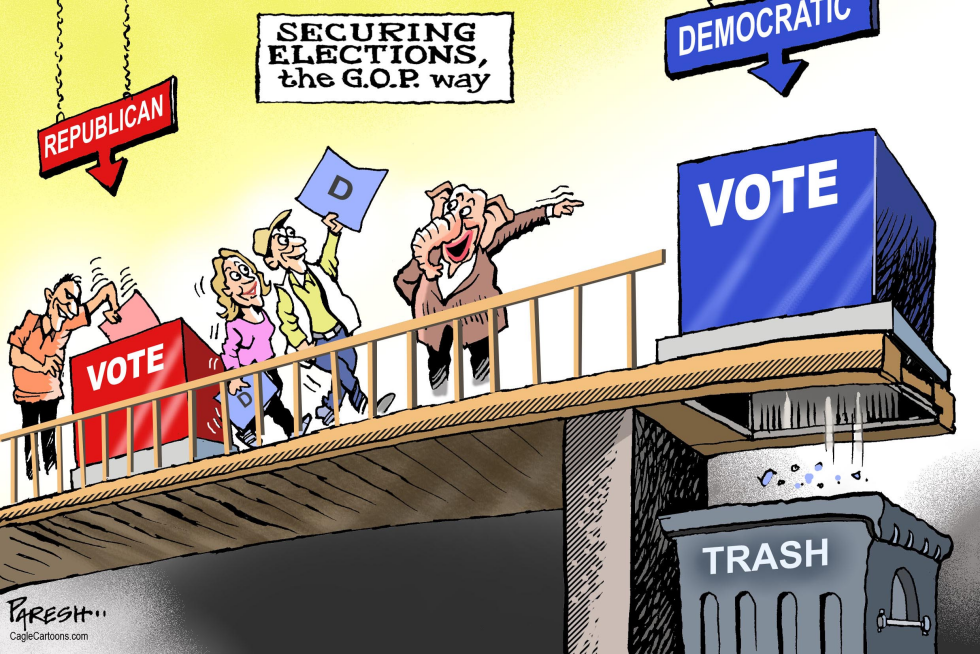
The cartoon depicts Republicans on a platform guiding a large blue vote box labeled Democratic into a trash can below while a red Republican vote box remains on the structure. A sign reads Securing Elections the G.O.P. way. The elephant symbol of the GOP points toward the action as figures including one holding a D flag stand nearby. The image comments on claims of election integrity by showing ballots from one party discarded. This reflects ongoing partisan debates over voting procedures and access as of the 2026 publication date.
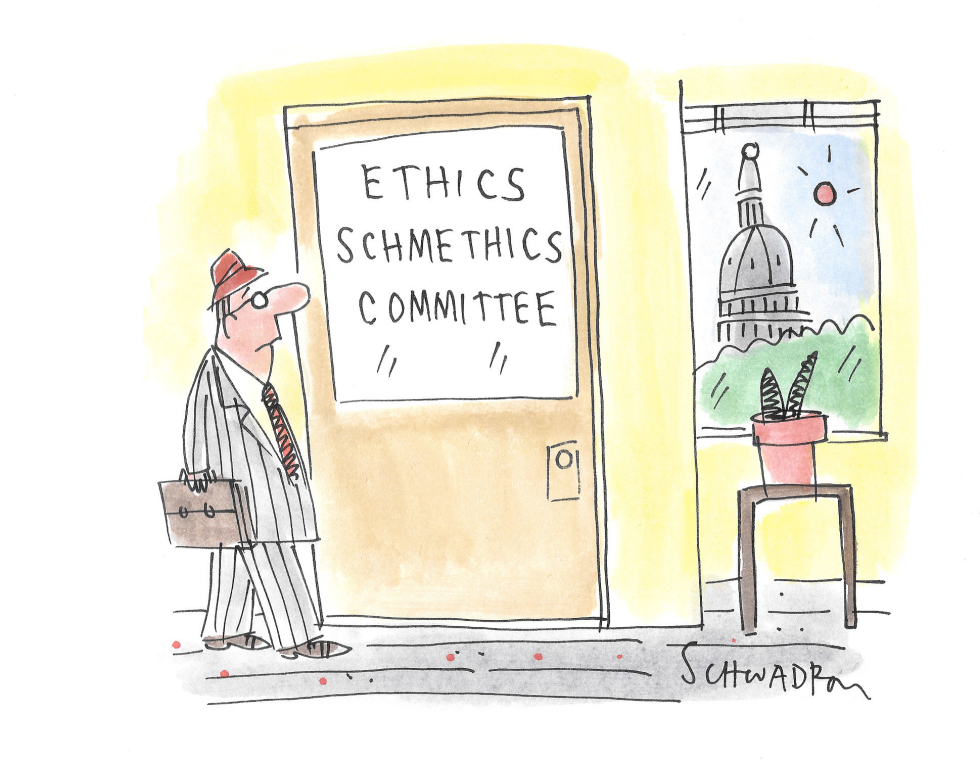
Congress continues to sideline meaningful ethics oversight, with lawmakers showing little interest in strengthening or even respecting the chamber's ethics committee. The panel exists on paper but carries little practical weight in daily operations. This dynamic matters because weak internal standards erode public trust in legislative institutions and invite outside influence. The cartoon captures the prevailing attitude that ethics rules are an afterthought rather than a core responsibility.
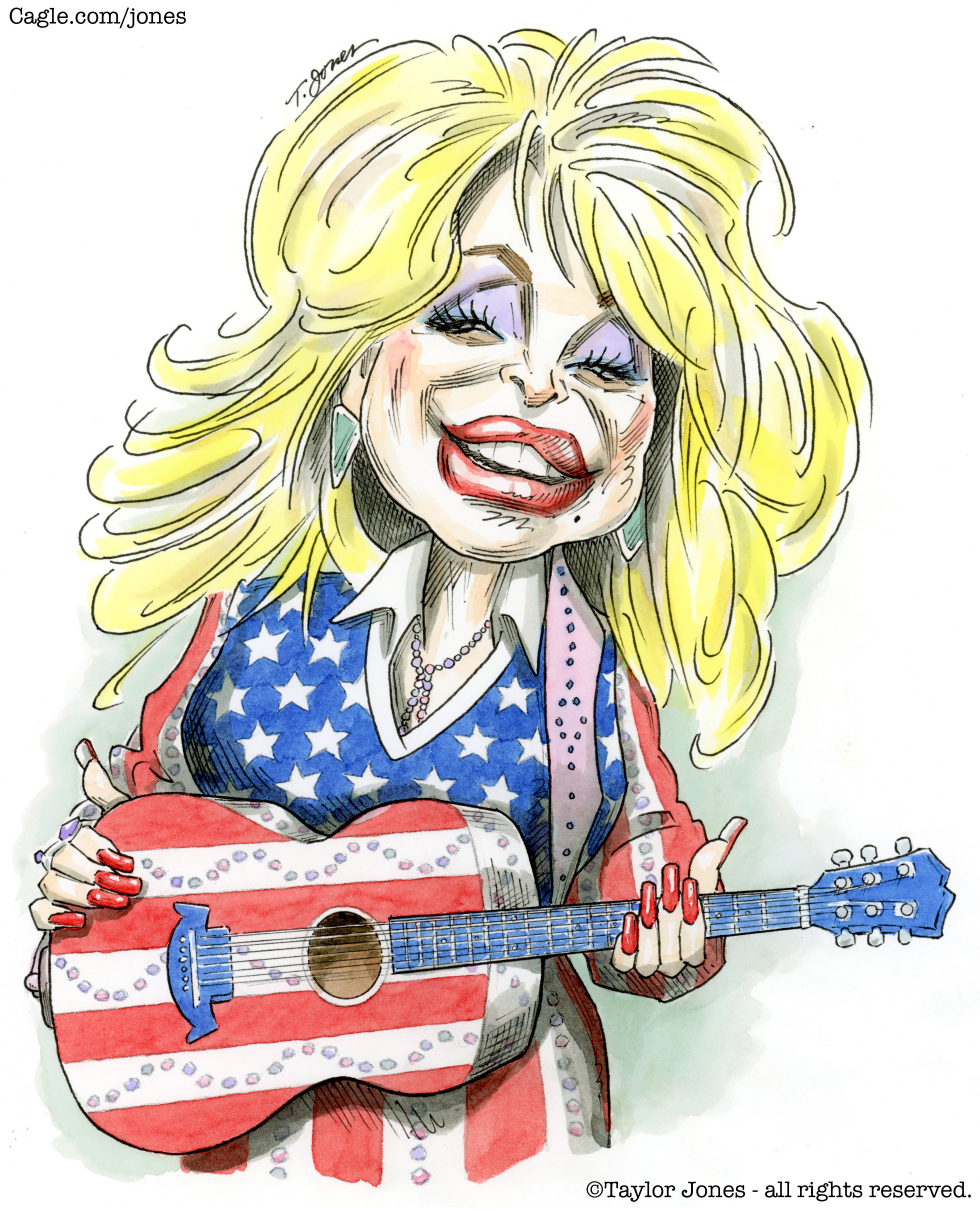
Dolly Parton appears in a vibrant portrait holding a guitar covered in American flag colors. The image captures her long standing role as a prominent figure in American entertainment without tying to any specific recent event.
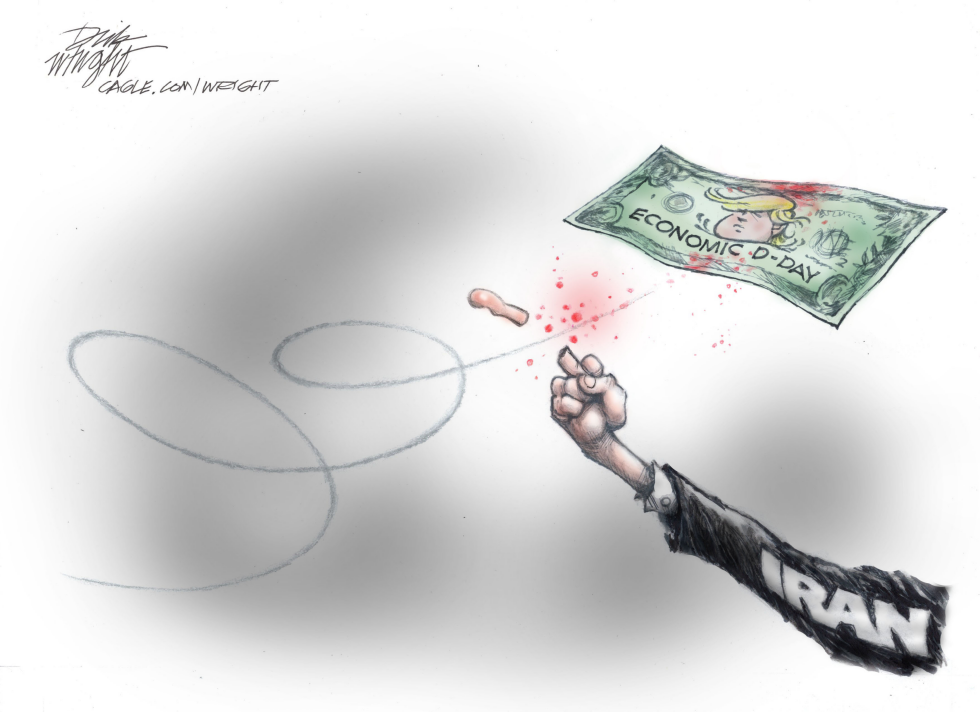
Iran has positioned itself to ignite economic pressure on the United States through direct actions targeting financial stability. The move comes amid ongoing tensions with the Trump administration over sanctions and regional influence. This development raises stakes for global markets already sensitive to Middle East volatility. The piece frames Iran as deliberately lighting a fuse aimed at an economic tipping point centered on Trump.
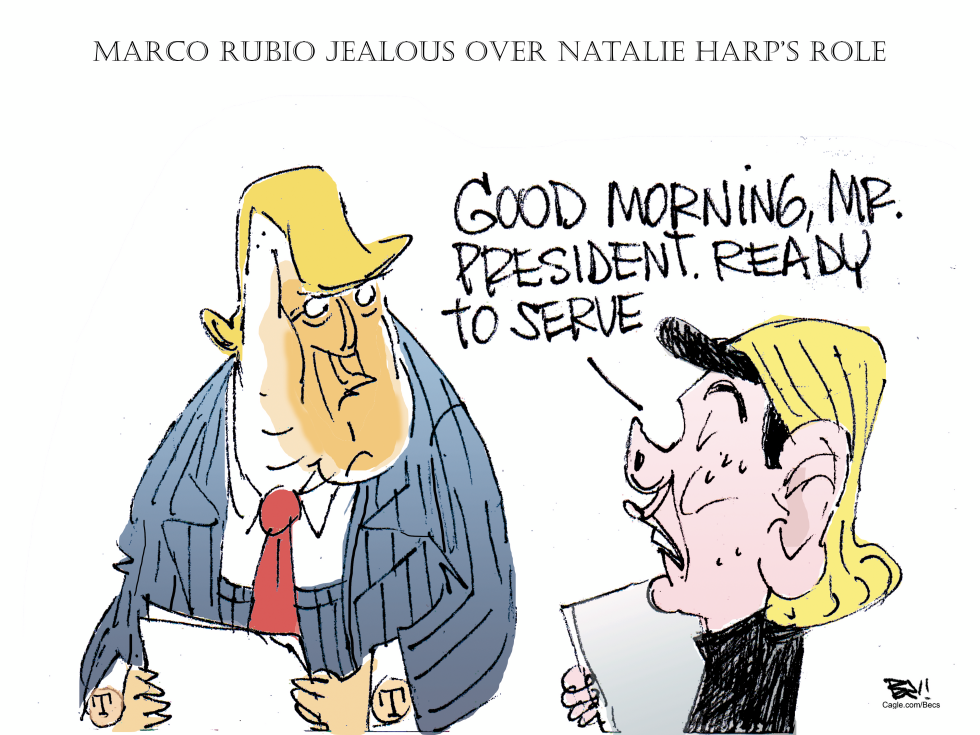
On August 25 2026 Donald Trump holds the presidency with Natalie Harp serving in a close advisory capacity. The arrangement draws attention from other officials including Marco Rubio. Harp's direct access and readiness to serve fuel perceptions of favoritism inside the administration. Observers note the potential for internal friction when personal loyalty appears to outweigh traditional hierarchy. The piece portrays Trump himself reacting with visible irritation to Harp's presence suggesting the dynamic creates unease even at the top.
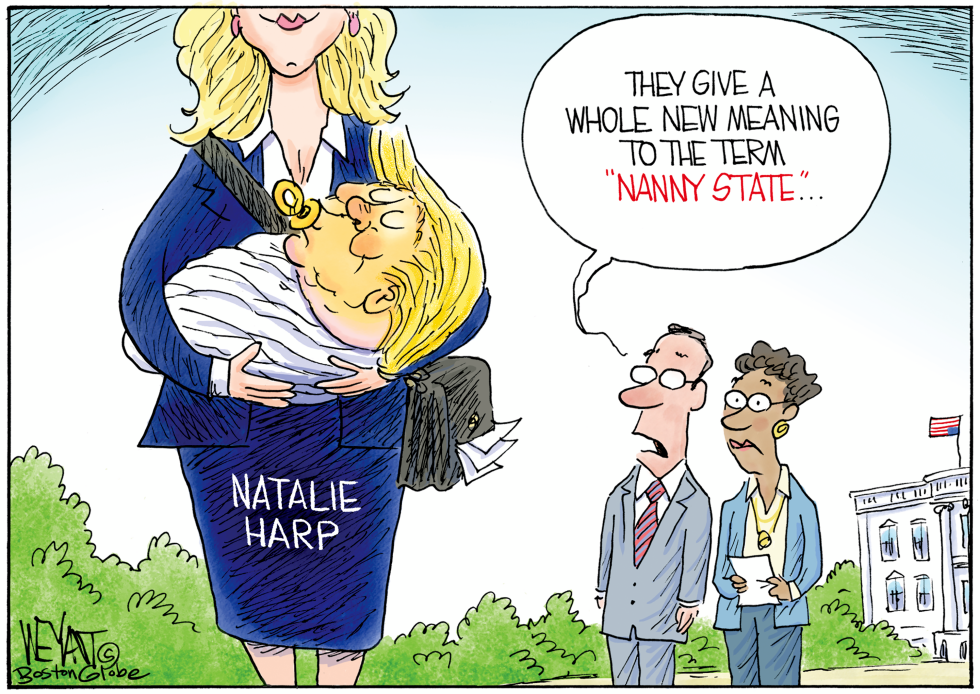
Natalie Harp, a Trump aide, appears in a Boston Globe cartoon holding an infant version of the former president. The image plays on the term nanny state as Harp carries Trump in a carrier. The piece comments on the close personal dynamic between the two figures amid ongoing political developments in 2026.
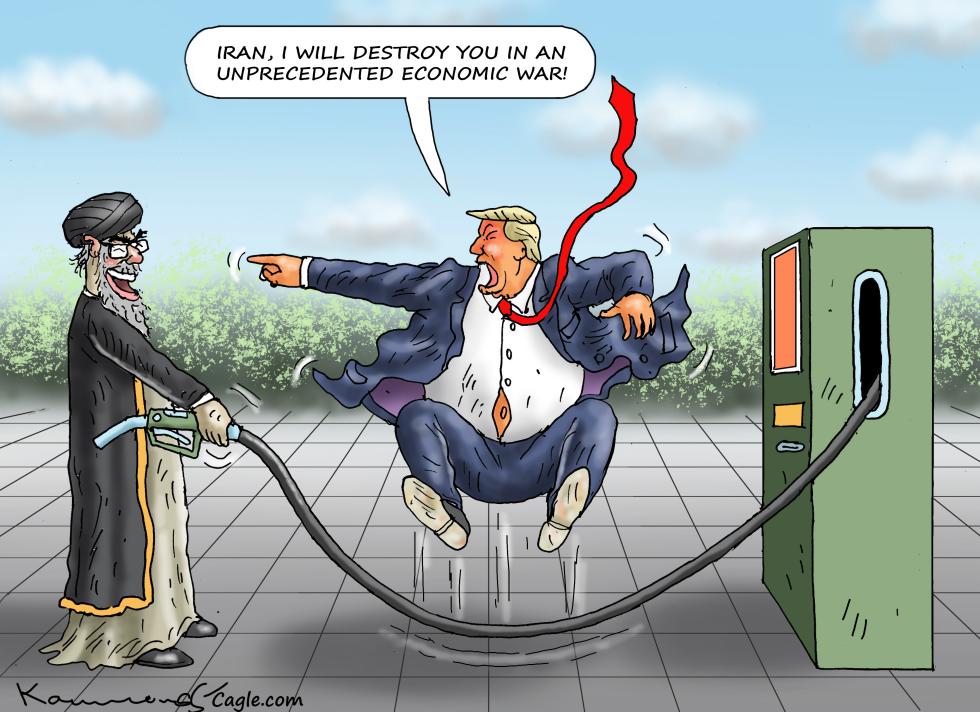
Donald Trump vowed to destroy Iran through unprecedented economic measures during a period of heightened Middle East tensions. The statement came amid ongoing disputes over nuclear activities and regional influence. Such rhetoric raises questions about impacts on global oil markets and alliance stability. The piece portrays the threat as potentially self-inflicted damage to American interests.
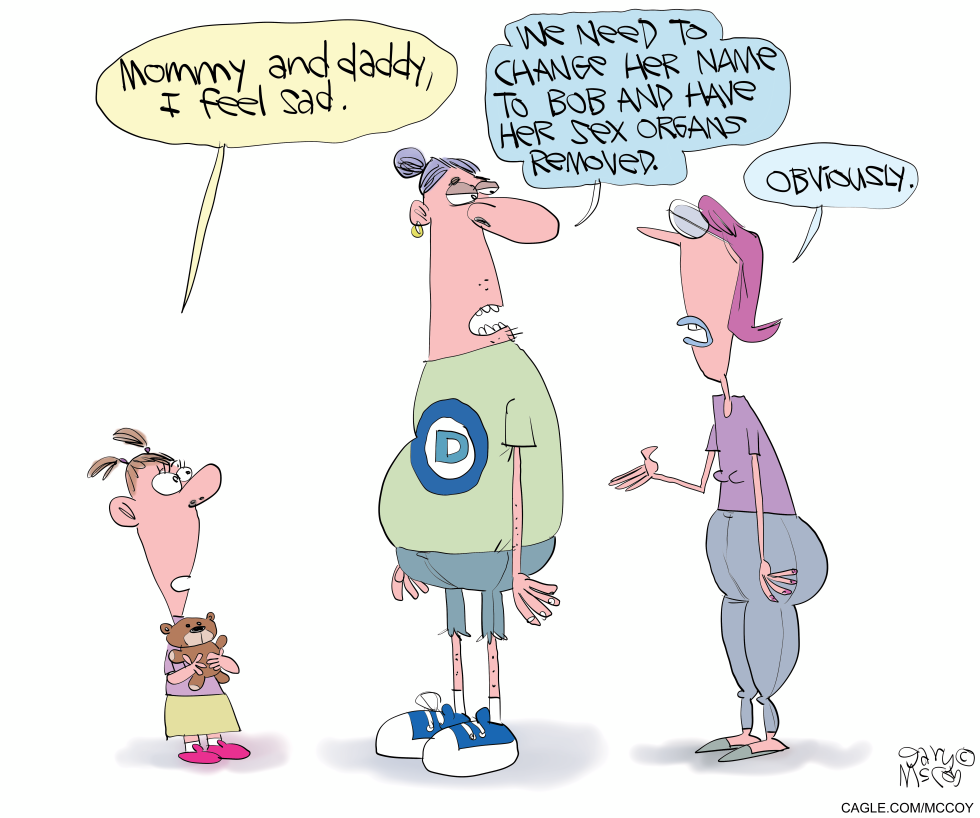
A child tells parents she feels sad. The adults immediately discuss changing the child's name to Bob and removing her sex organs. The exchange highlights a rapid pivot from emotional distress to medical intervention in family settings. The piece takes the position that such responses overlook the stated feeling and rush toward irreversible steps.
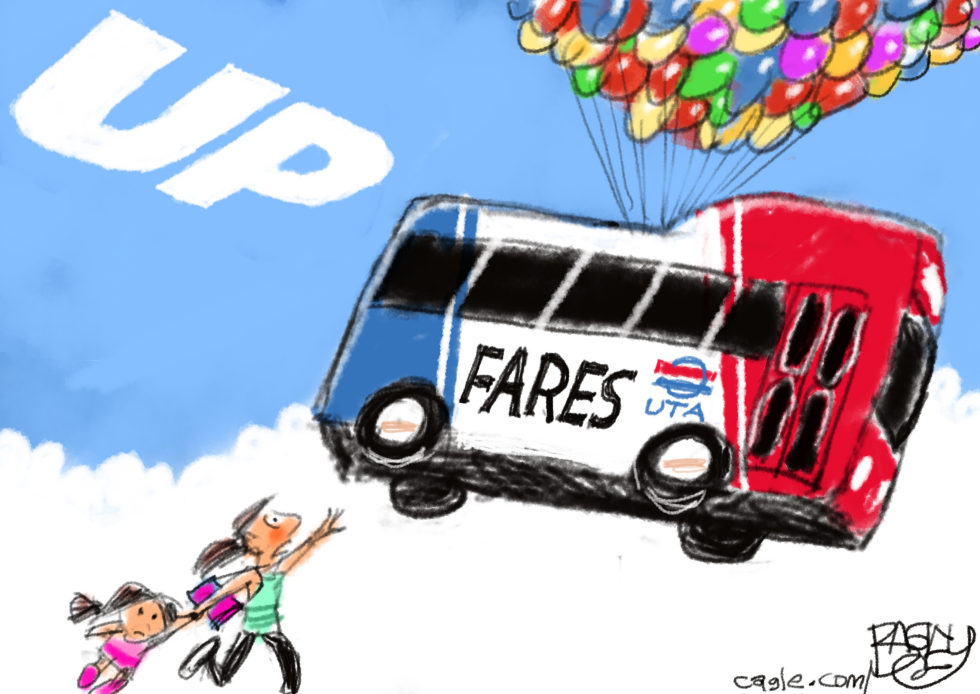
Utah Transit Authority faces pressure to increase bus fares amid broader cost pressures affecting public services. The development matters because higher fares can reduce ridership and strain lower-income households that rely on transit. The piece argues that these increases are being driven by external forces that riders are actively trying to resist.
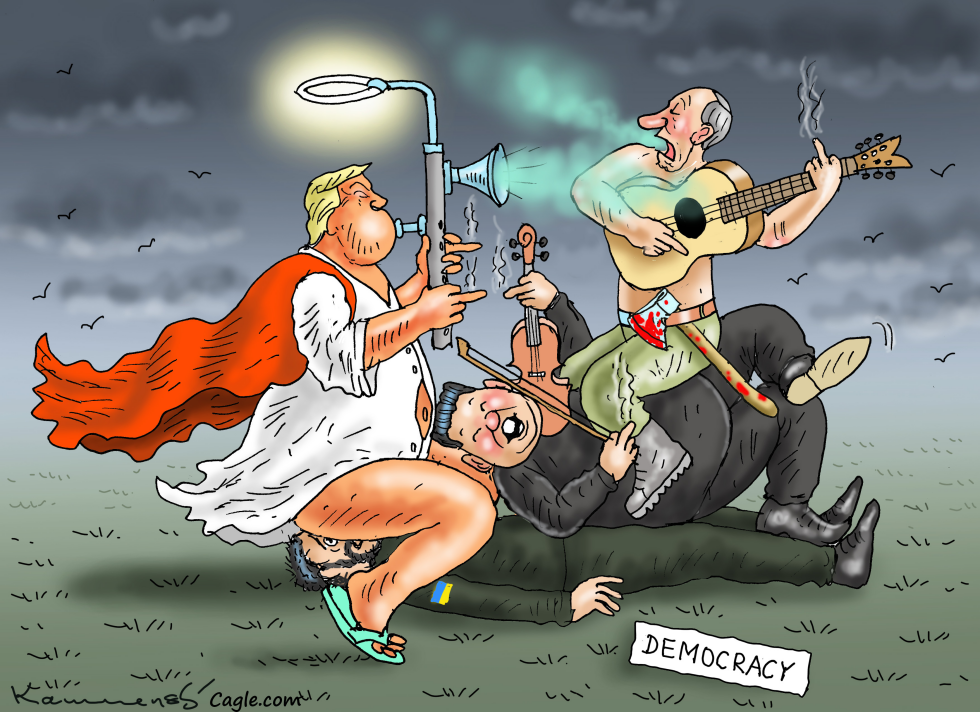
On August 21, 2026, the ongoing Ukraine conflict continued with no resolution in sight as U.S., Russian and Ukrainian leaders remained locked in diplomatic friction. The cartoon responds by depicting the three men as musicians whose finger-pointing and instruments create discord rather than harmony, underscoring the editorial view that personal posturing has overtaken substantive progress toward peace.
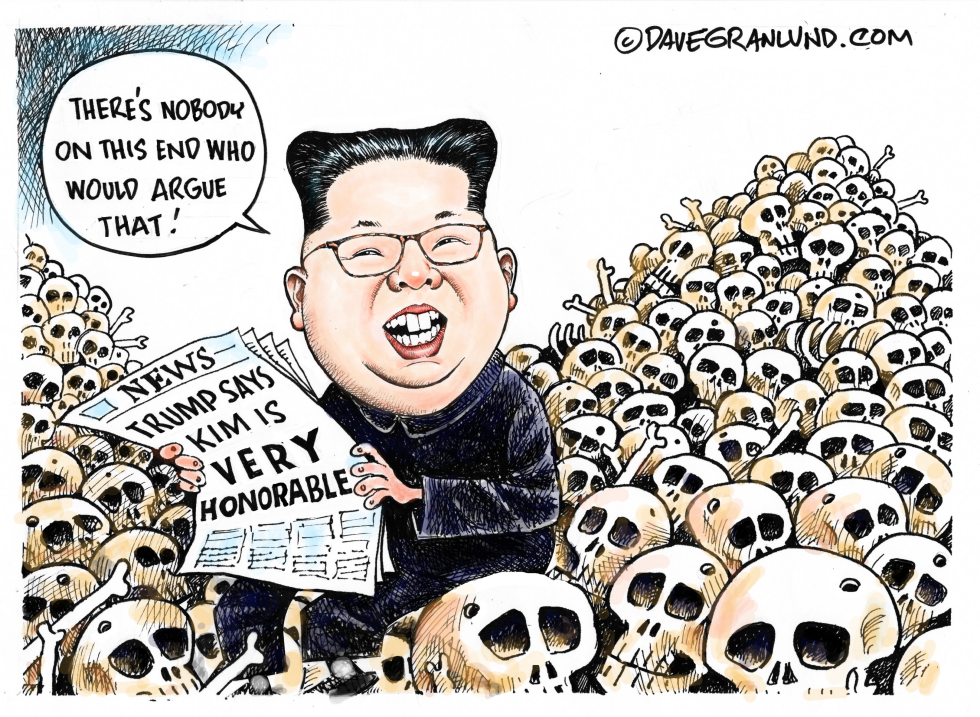
Donald Trump publicly described North Korean leader Kim Jong-un as very honorable. The remark revives questions about U.S. engagement with a regime long accused of severe human rights abuses and internal purges. Critics argue such language undercuts pressure on Pyongyang and signals weakness to allies. Supporters see it as pragmatic diplomacy aimed at reducing nuclear risks. The statement fits a pattern of personal assessments of foreign leaders that have drawn both support and condemnation depending on the political side. The editorial position holds that the praise ignores the human cost inside North Korea and weakens the moral standing of U.S. foreign policy.
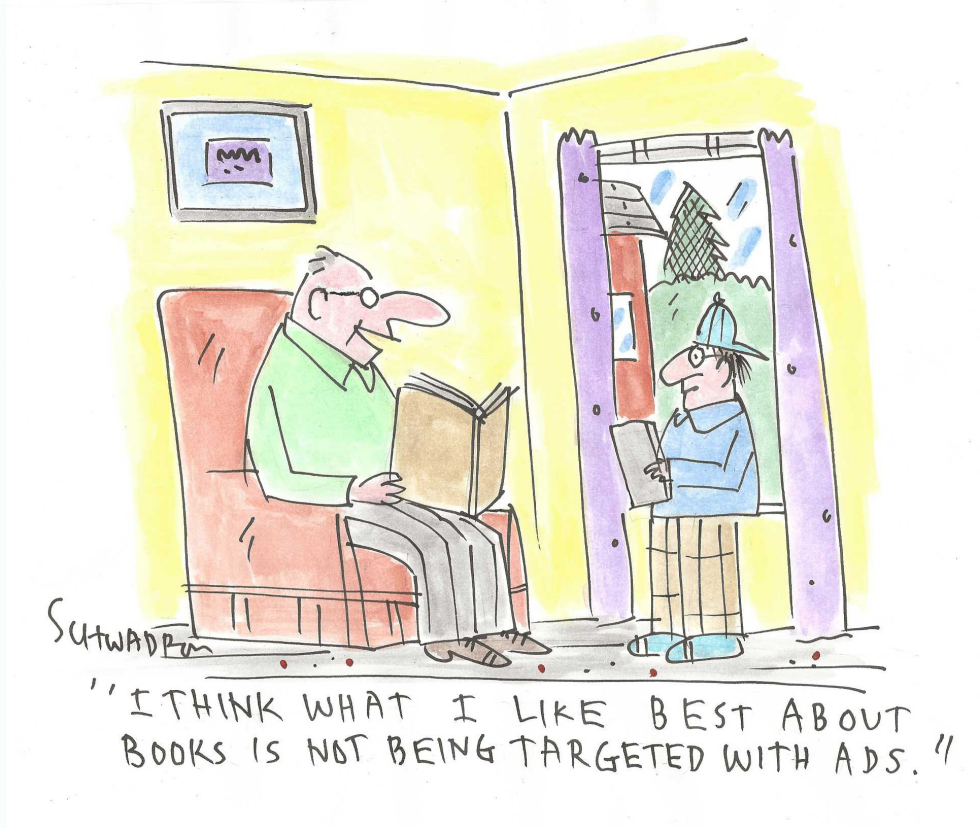
An elderly reader seated comfortably expresses a clear preference for traditional books precisely because they spare him from targeted advertising that follows users across digital platforms. The comment underscores a broader tension between print media and online content delivery systems that rely on data tracking. The piece takes the position that this ad-free quality remains one of books' strongest advantages in an era of constant commercial interruption.
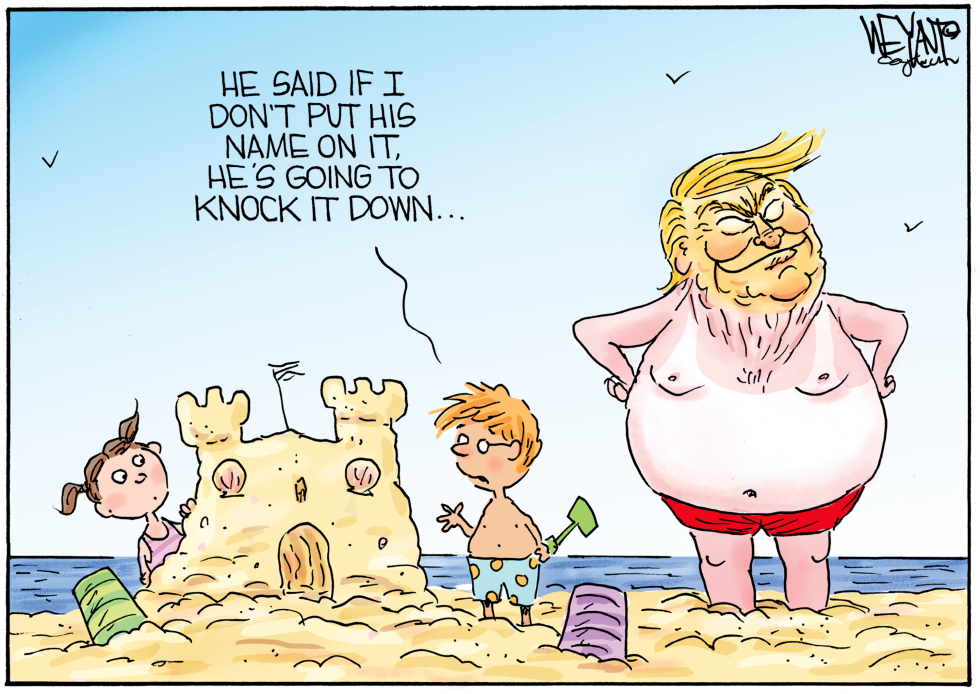
Donald Trump has long pressed for personal credit in public projects and political dealings. The pattern involves demands for recognition that extend even to minor or symbolic matters. This dynamic matters because it reveals how one figure seeks to dominate credit and loyalty across settings. The piece takes the position that such demands reflect an outsized need for acknowledgment that overrides ordinary boundaries.
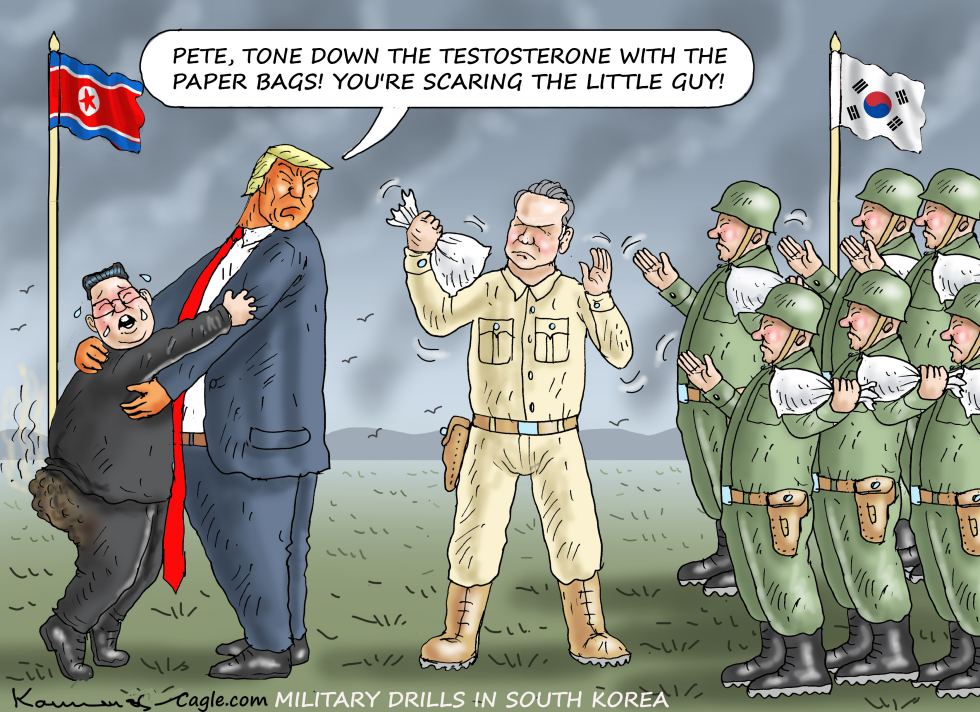
US and South Korean forces conducted joint military drills in mid-August 2026, prompting sharp North Korean protests over perceived threats. Donald Trump appeared at the scene restraining Kim Jong-un while a uniformed figure urged restraint with paper bags to calm the North Korean leader. The image frames the drills as overly provocative and mocks the testosterone-driven posturing on all sides.
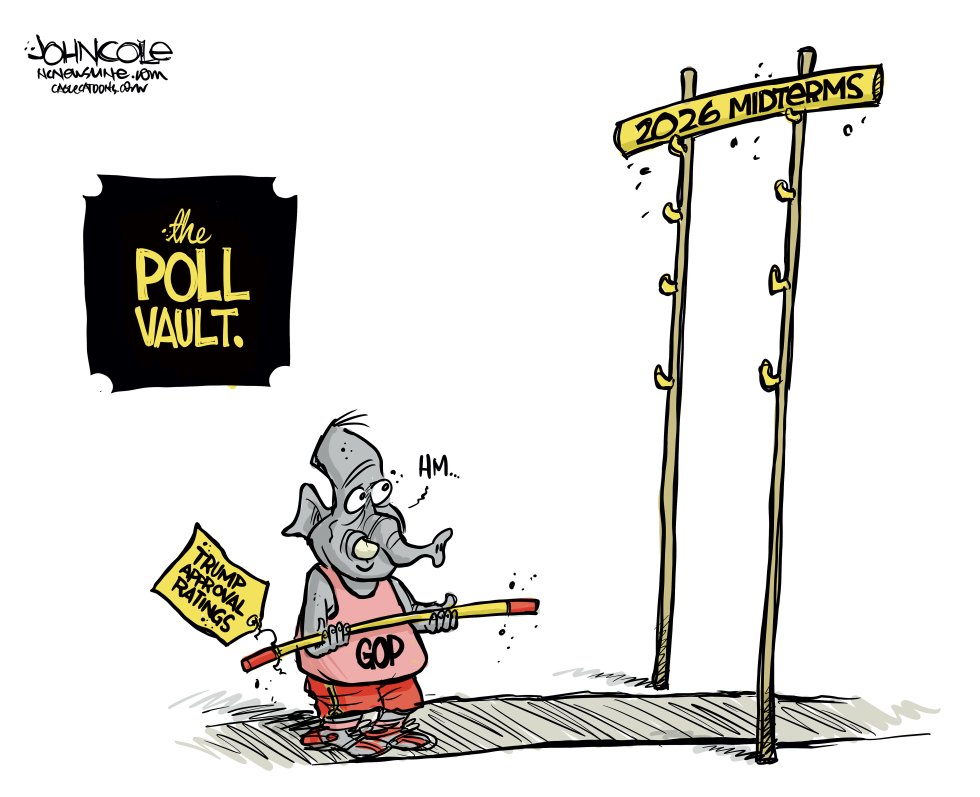
Republicans face the 2026 midterm elections with Donald Trump as a central figure whose approval ratings remain a key variable. Party strategists must decide how heavily to tie their candidates to the former president amid ongoing voter sentiment. The piece portrays the GOP as an athlete preparing to clear the midterm bar but questioning whether the available pole will suffice.