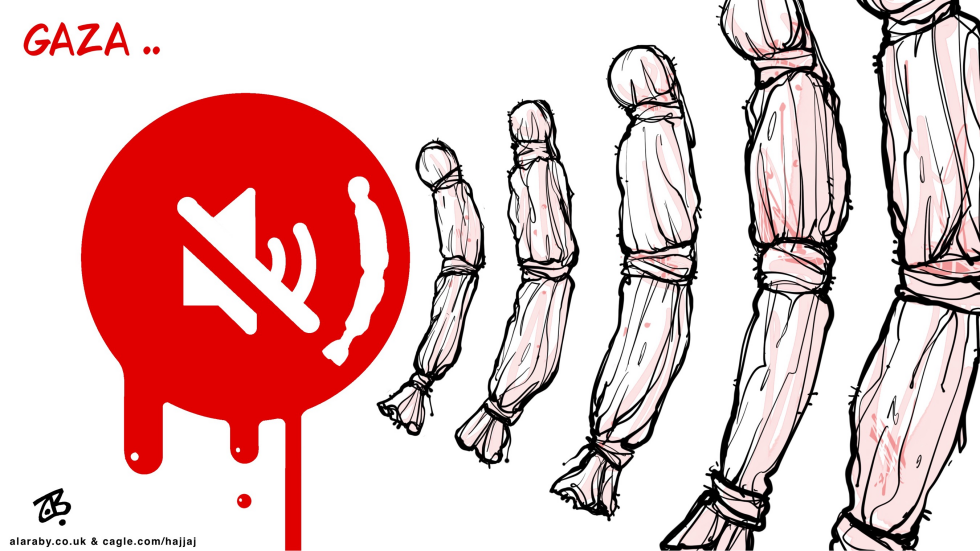
Ongoing conflict in Gaza continues to draw international attention to civilian casualties and restrictions on reporting. The piece responds to persistent calls for attention amid claims of media and global silence. It positions the mute symbol as a direct critique of inaction on reported suffering. The editorial stance emphasizes the need to break that silence and acknowledge the human cost in the region.
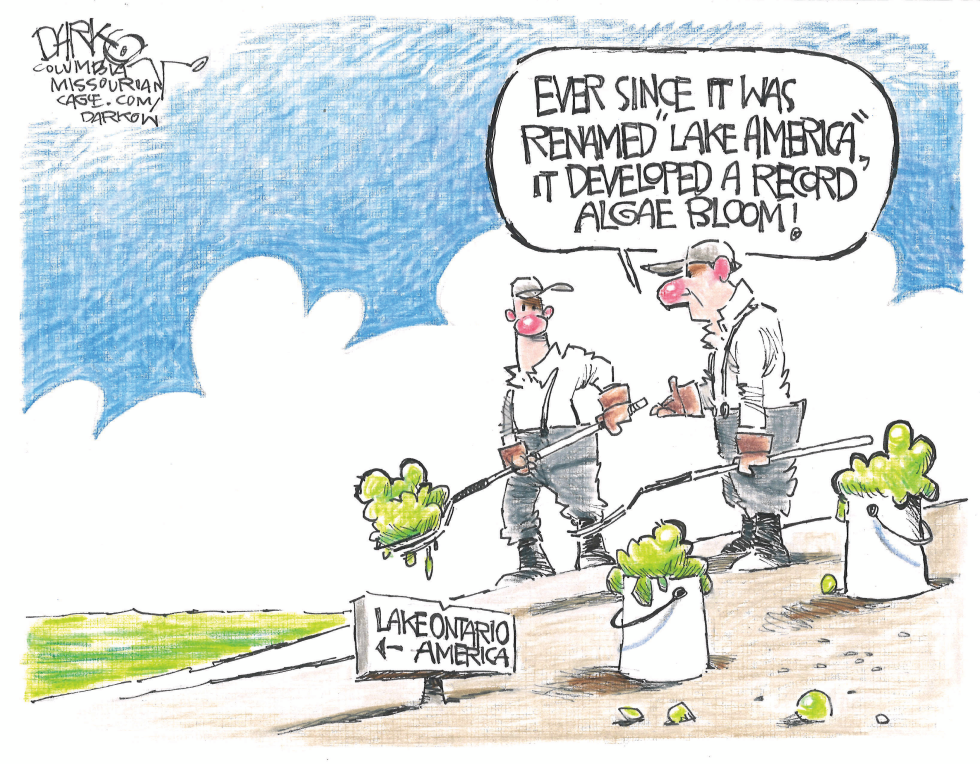
Workers clean a massive algae bloom from a lake recently renamed Lake America, formerly Lake Ontario. The outbreak follows the rebranding and draws attention to environmental conditions. The piece argues that superficial political gestures fail to address underlying ecological problems and may even coincide with worsening conditions.
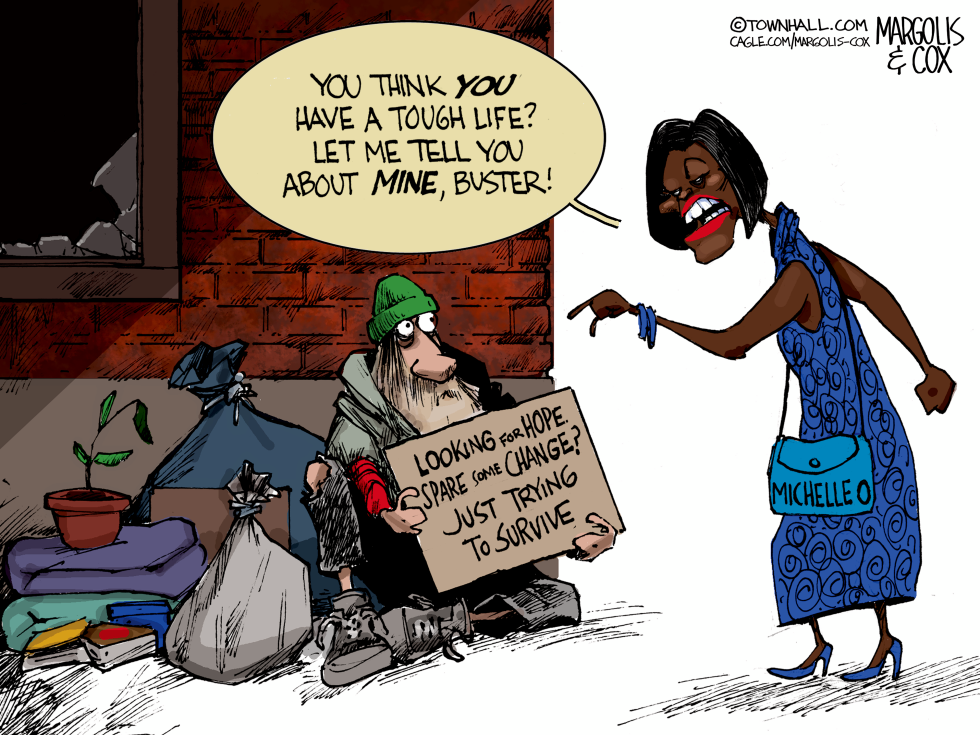
A cartoon depicts Michelle Obama confronting a homeless man on the street, with her declaring her own life tougher than his. The piece highlights perceived disconnects between political elites and everyday struggles with poverty. It critiques the tendency of prominent figures to center their personal narratives even in encounters with those facing severe hardship.
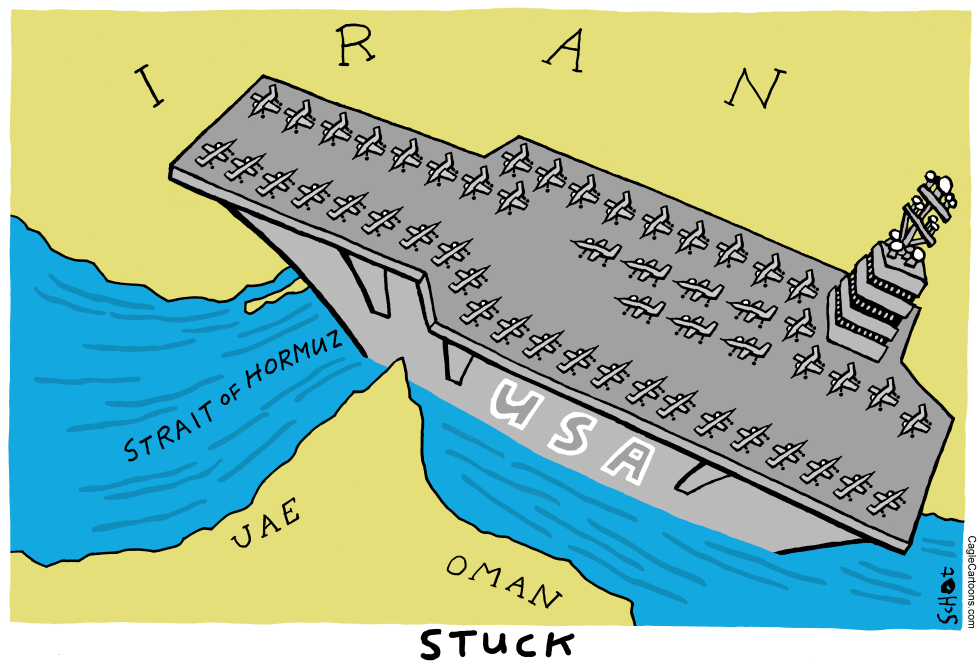
A political cartoon depicts a large US aircraft carrier marked USA jammed in the Strait of Hormuz between land labeled Iran, UAE and Oman. The vessel carries dozens of fighter jets on its deck. The word STUCK appears prominently below the scene. The image responds to persistent concerns over freedom of navigation in the vital oil shipping route. Iran has long threatened to close the strait during conflicts. The cartoon uses the visual of a grounded carrier to illustrate potential US military vulnerability in the narrow passage.
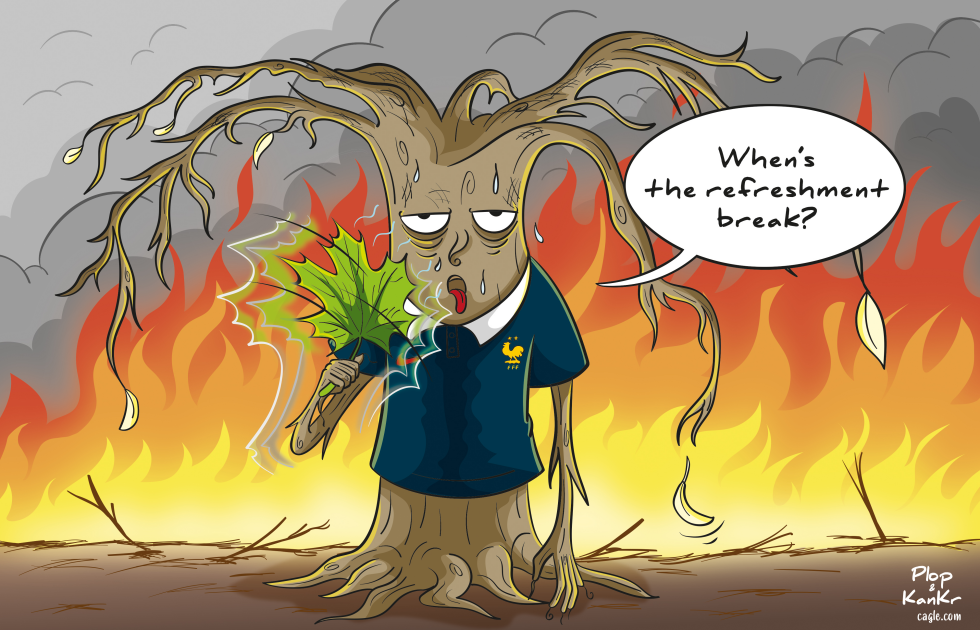
A tree figure dressed in a French national football jersey stands engulfed in flames while holding a smoking maple leaf. The figure sweats heavily and asks in a speech bubble when the refreshment break will occur. The scene uses fire and withered branches to depict environmental stress on a sports-themed character.
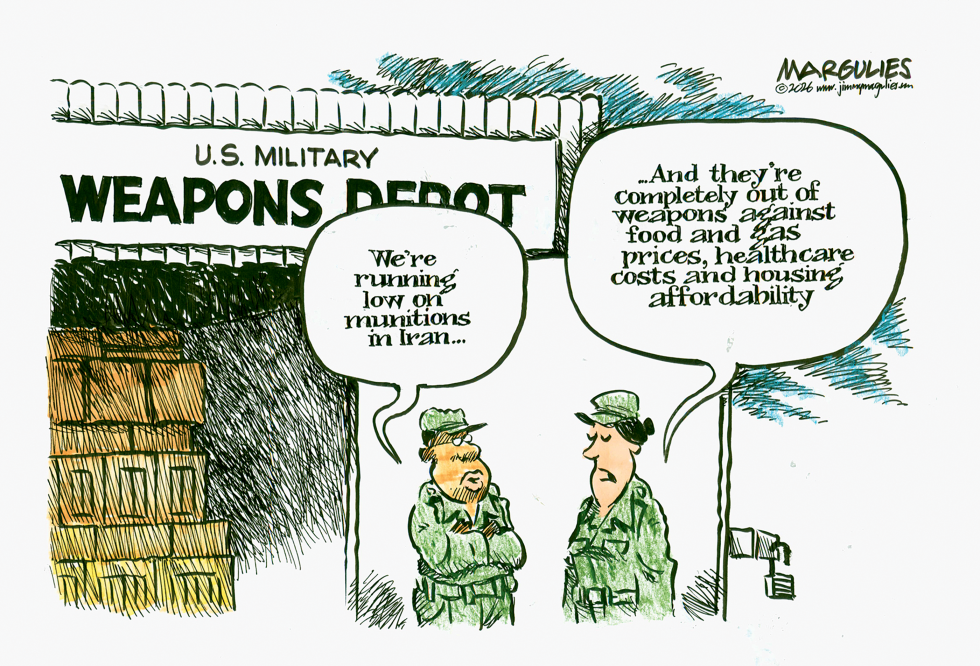
The cartoon depicts two U.S. soldiers outside a weapons depot labeled U.S. Military Weapons Depot. One soldier states the facility is running low on munitions in Iran. The second replies that domestic fronts are out of weapons against food and gas prices, healthcare costs and housing affordability. The image responds to ongoing debates over U.S. military aid commitments abroad and competing budget pressures at home as of the August 2026 publication date. It uses the depot setting and dialogue to contrast foreign military demands with economic challenges facing American households.
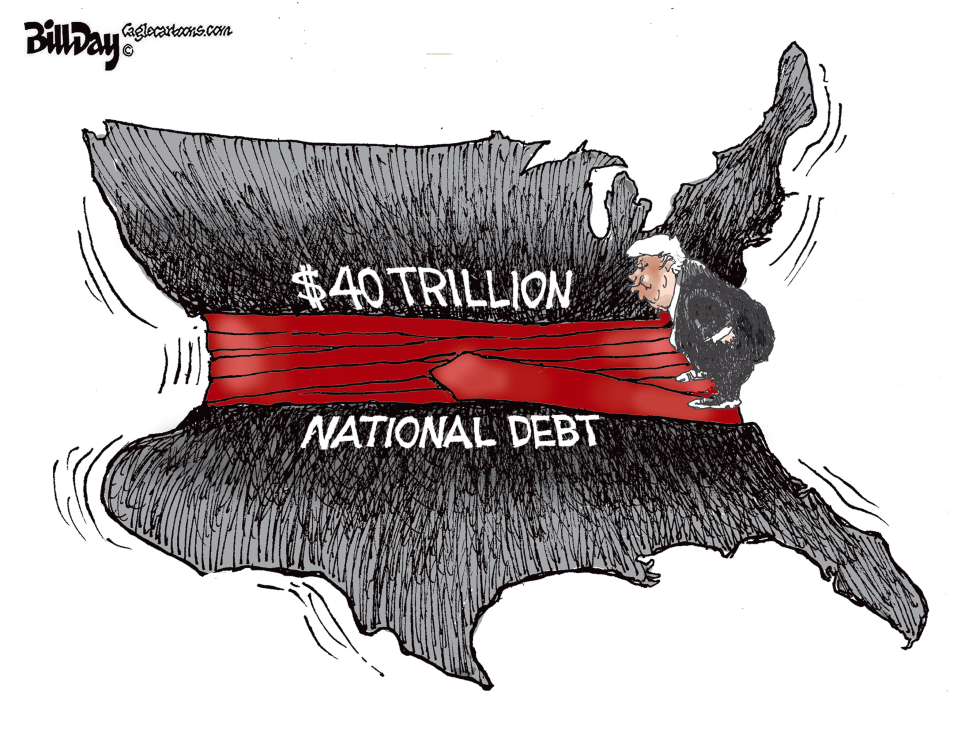
The cartoon shows Donald Trump positioned next to a red band labeled $40 trillion national debt stretched across a shaded map of the United States. The red band cuts through the map with motion lines suggesting strain. Text identifies the debt amount and the national debt label below it. The image responds to ongoing concerns about federal debt levels projected to reach that figure. It places the president in direct visual association with the fiscal challenge.
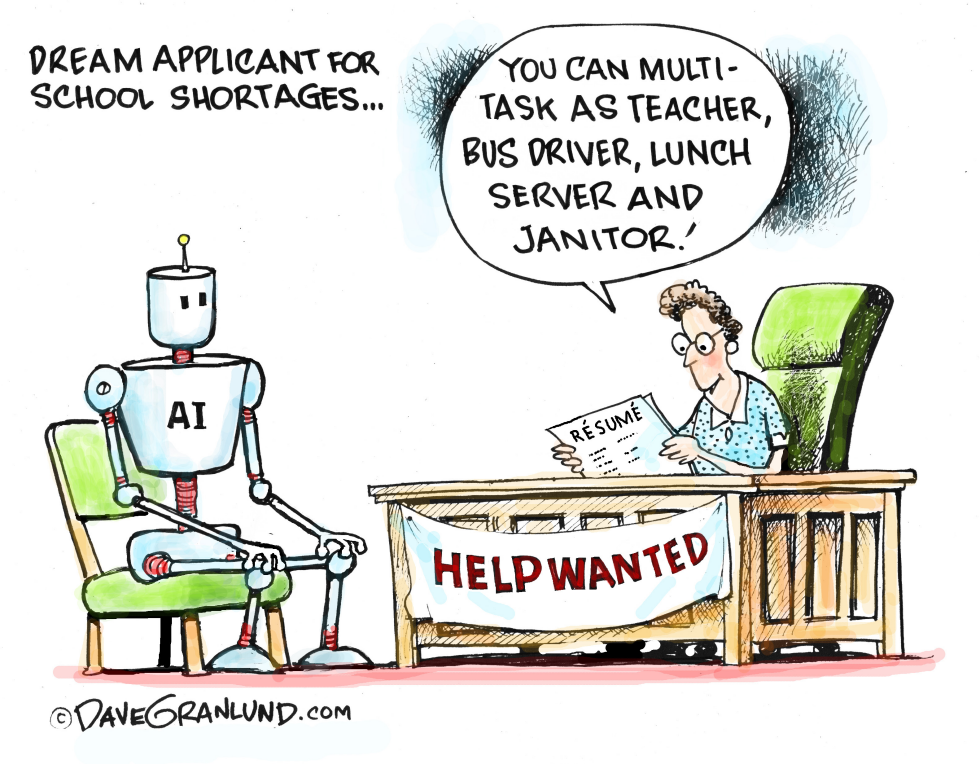
A political cartoon depicts a robot marked AI seated across from a school administrator during a job interview. The administrator holds a resume and states the applicant can serve as teacher, bus driver, lunch server and janitor. Text in the upper left identifies the robot as a dream applicant for school shortages. A help wanted banner hangs on the desk. The image comments on ongoing efforts to use artificial intelligence to ease teacher and support staff shortages in schools.
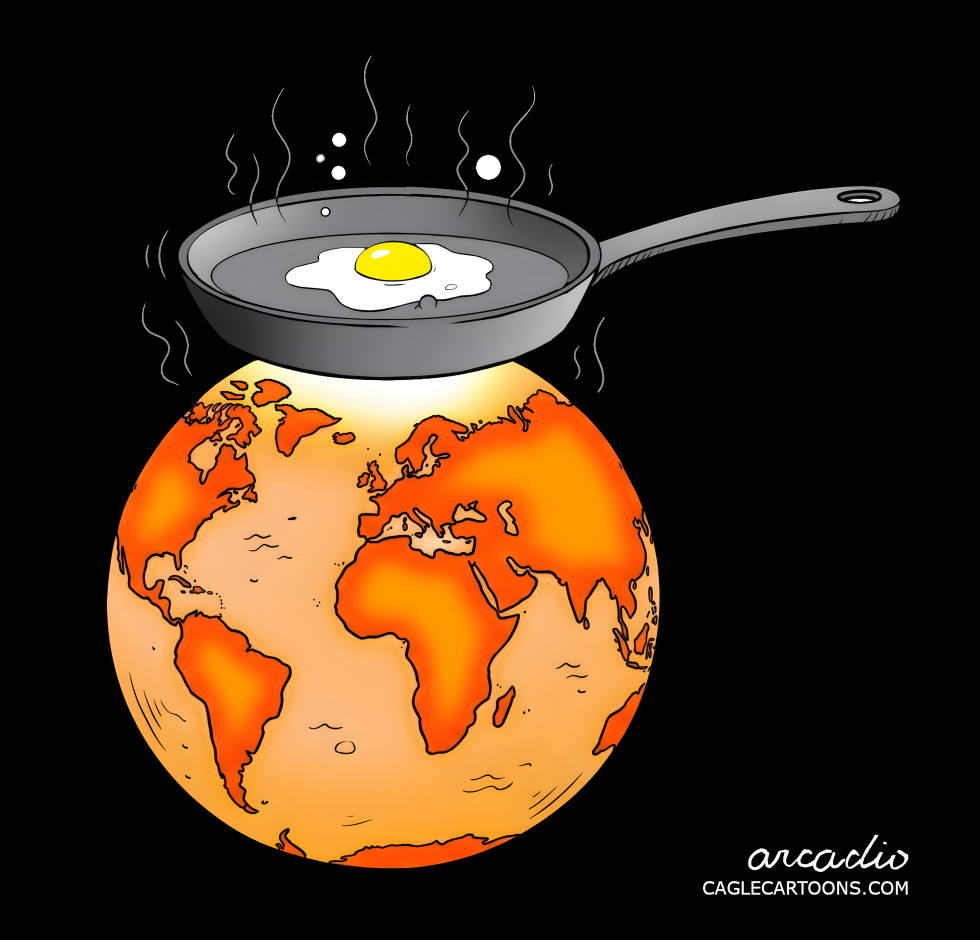
Rising global temperatures continue to break records as heat waves intensify across continents. Scientists link the trend to greenhouse gas emissions from human activity, raising risks for ecosystems and populations. The piece frames the ongoing warming as an urgent crisis demanding immediate policy response.
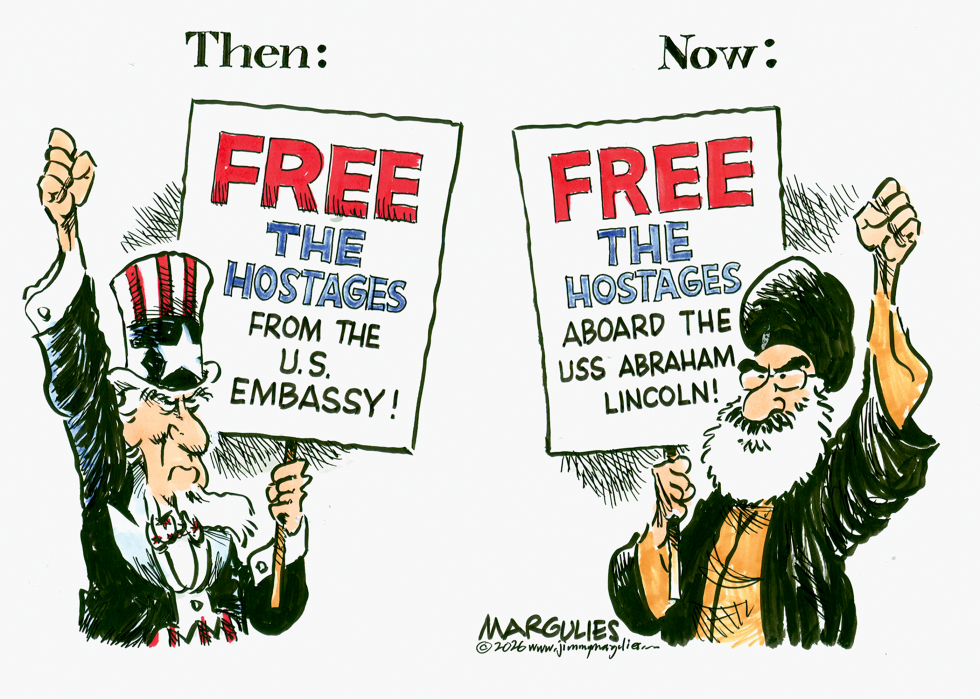
The 1979 Iran hostage crisis saw militants seize the US embassy in Tehran, holding 52 Americans for 444 days. In 2026, renewed tensions involve US naval assets like the USS Abraham Lincoln amid Middle East conflicts. The cartoon draws a parallel between past embassy demands and present calls involving the carrier, critiquing the recurring cycle of hostage rhetoric from Iranian leadership.
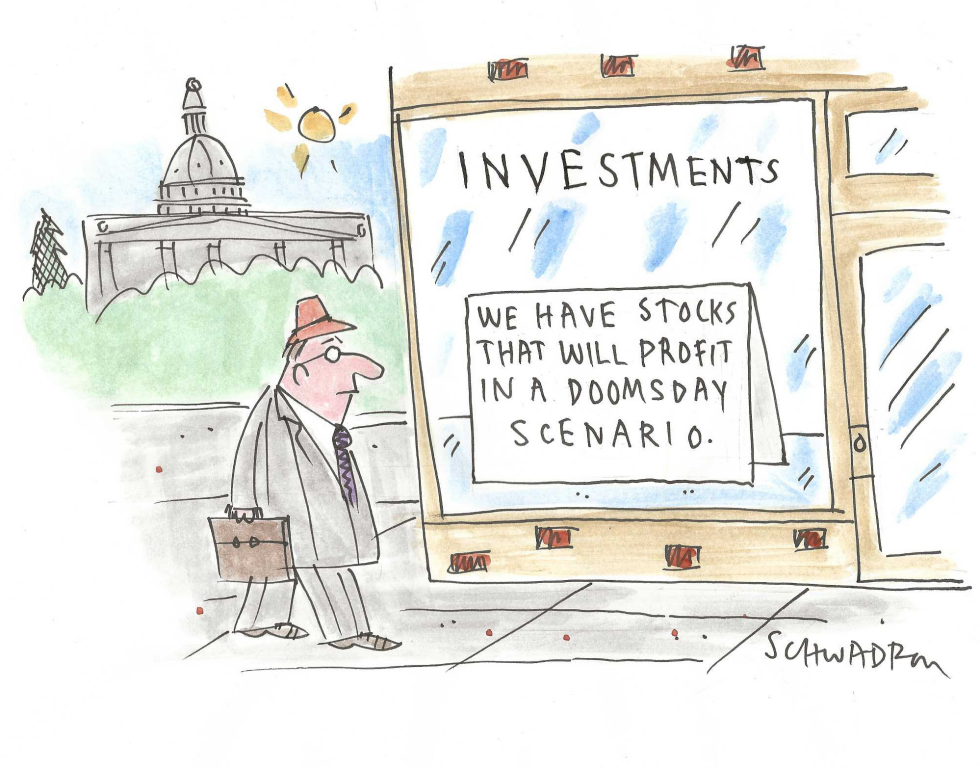
Investment firms continue to market specialized stock offerings designed to gain value during periods of widespread economic or geopolitical turmoil. Such products attract attention from clients seeking protection against market downturns or global instability. The cartoon highlights the persistent appeal of these instruments even as broader uncertainty lingers around policy and international developments.
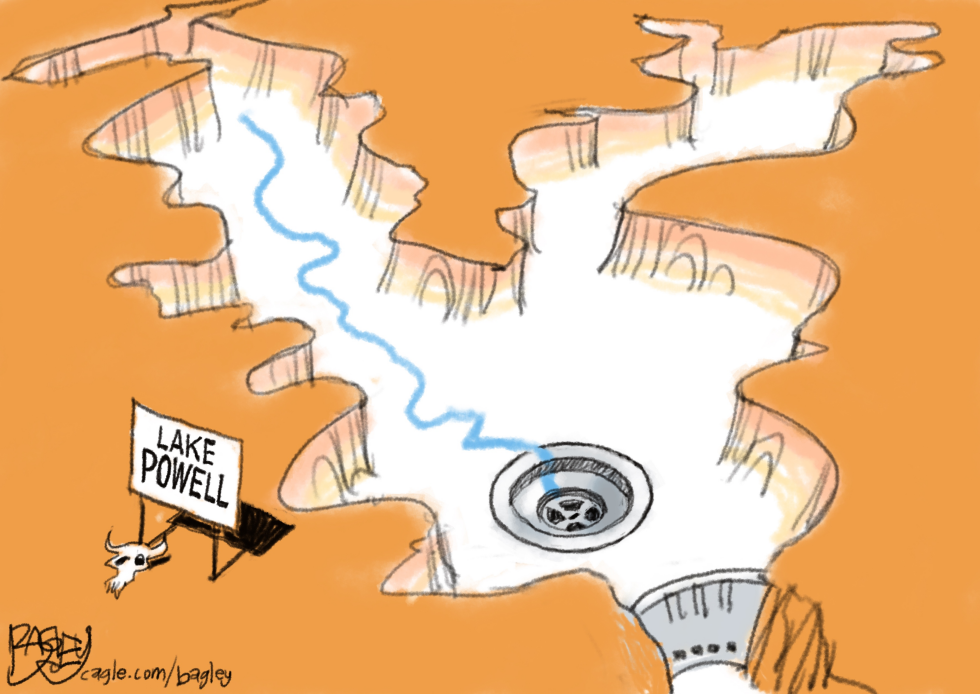
Ongoing drought has pushed Lake Powell to critically low levels along the Colorado River, threatening water supplies for millions across the western United States. The reservoir's continued decline raises urgent questions about allocation agreements among seven states and Mexico. The editorial highlights the severity of the water loss and calls for immediate policy action to address overuse and climate-driven shortages.
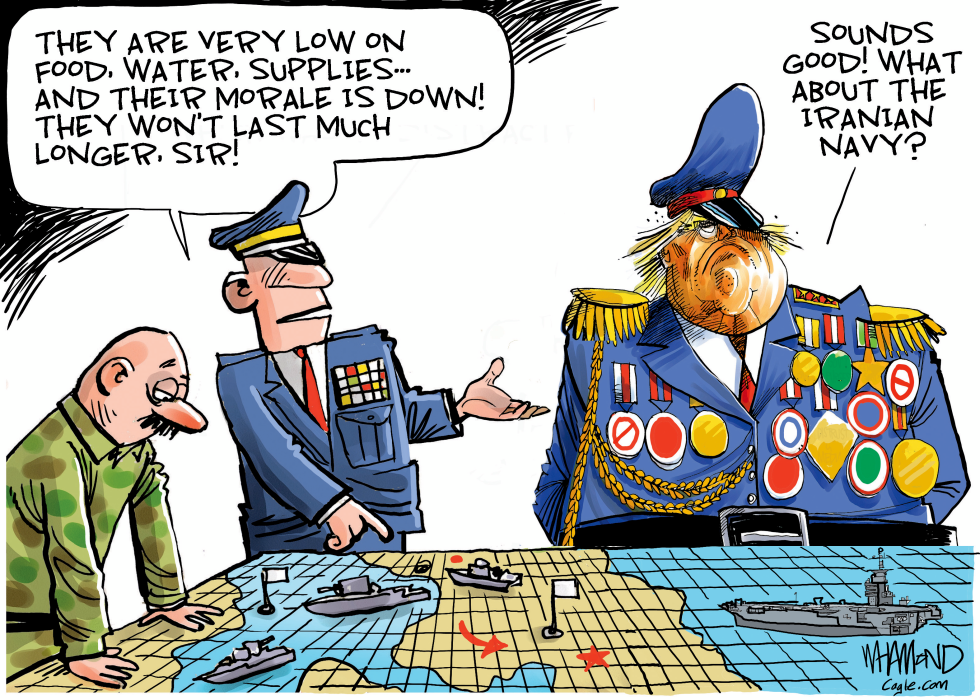
A U.S. Navy carrier faces reported shortages of food, water and supplies along with declining morale in mid-2026. Senior officers brief the president on the situation. The president responds by inquiring about the Iranian Navy instead. The piece portrays the administration as detached from operational readiness concerns in the region.
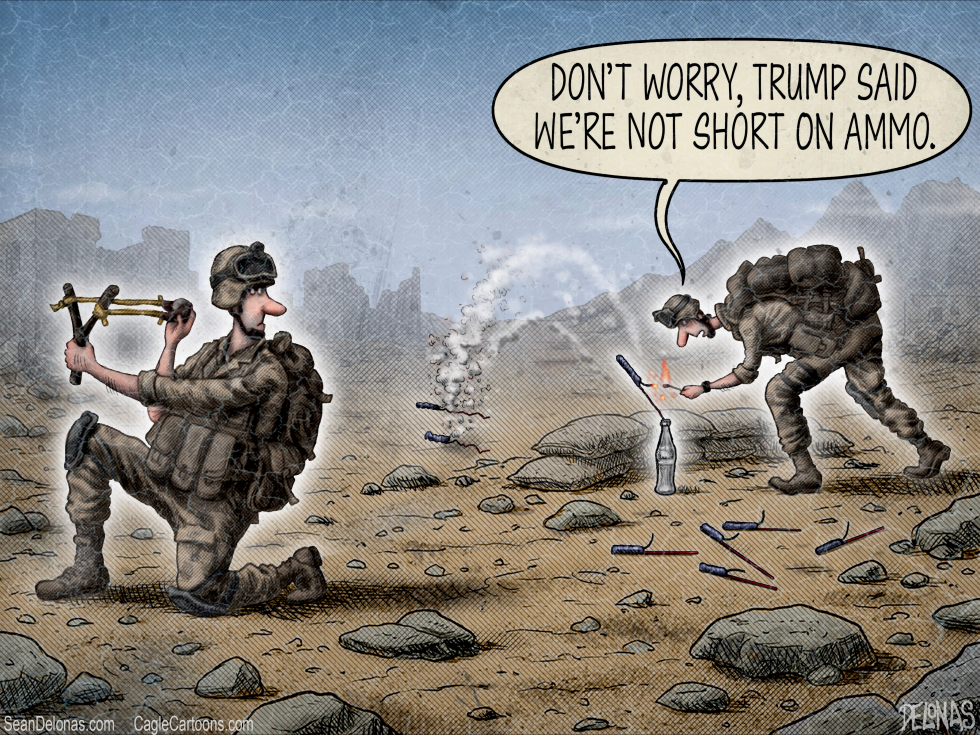
U.S. forces in a desert conflict zone report ammunition shortages forcing improvised weapons. The situation highlights strains on military logistics during ongoing operations. The piece critiques assurances from leadership that supplies remain adequate.
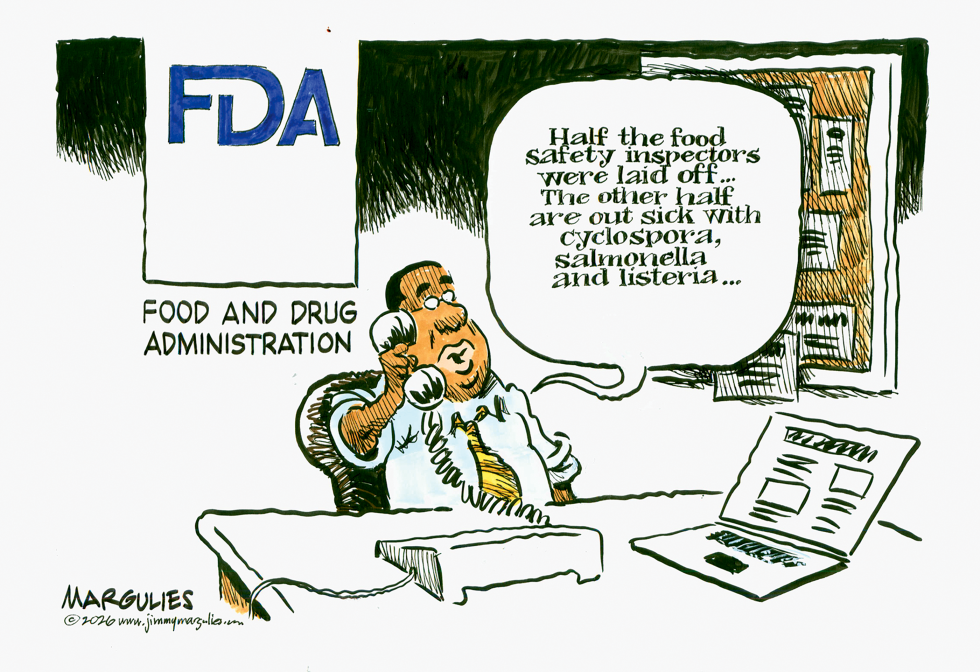
The FDA confronts a critical shortage of food safety inspectors after half were laid off and the remainder fell ill with cyclospora, salmonella and listeria. This development directly threatens public protection against contaminated food supplies. The editorial highlights how these staffing gaps undermine the agency's core mission and calls for immediate restoration of inspection capacity to prevent wider health consequences.