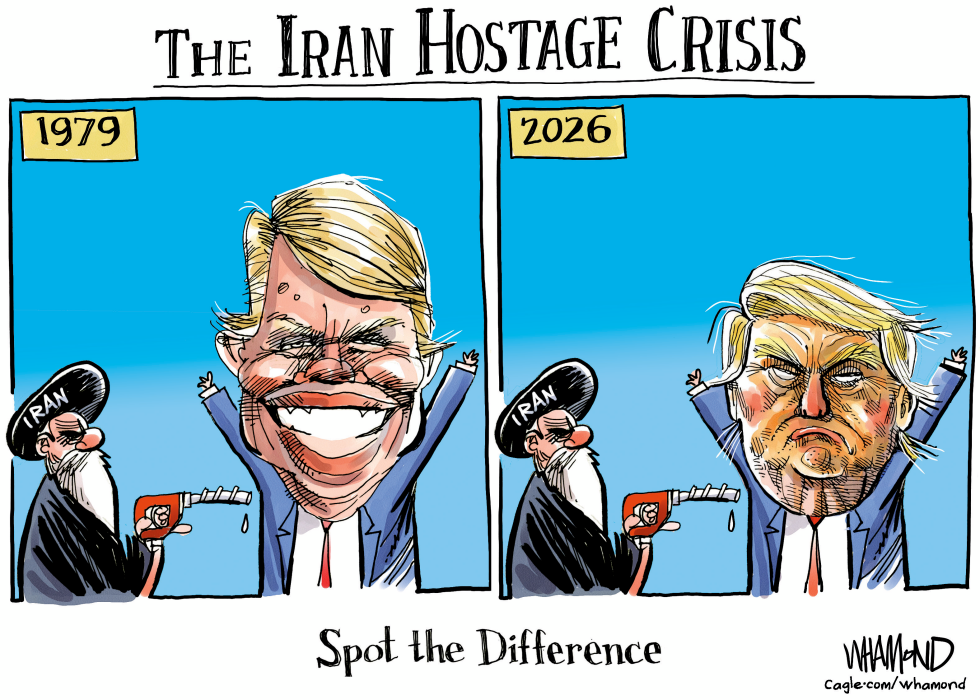
The cartoon splits the Iran Hostage Crisis into 1979 and 2026 panels. In the first Trump appears elated while an Iran-labeled figure holds a gas pump. In the second Trump looks distressed with the same figure present. The piece uses the visual contrast to comment on how Iran-related pressures affect US political figures differently over time.
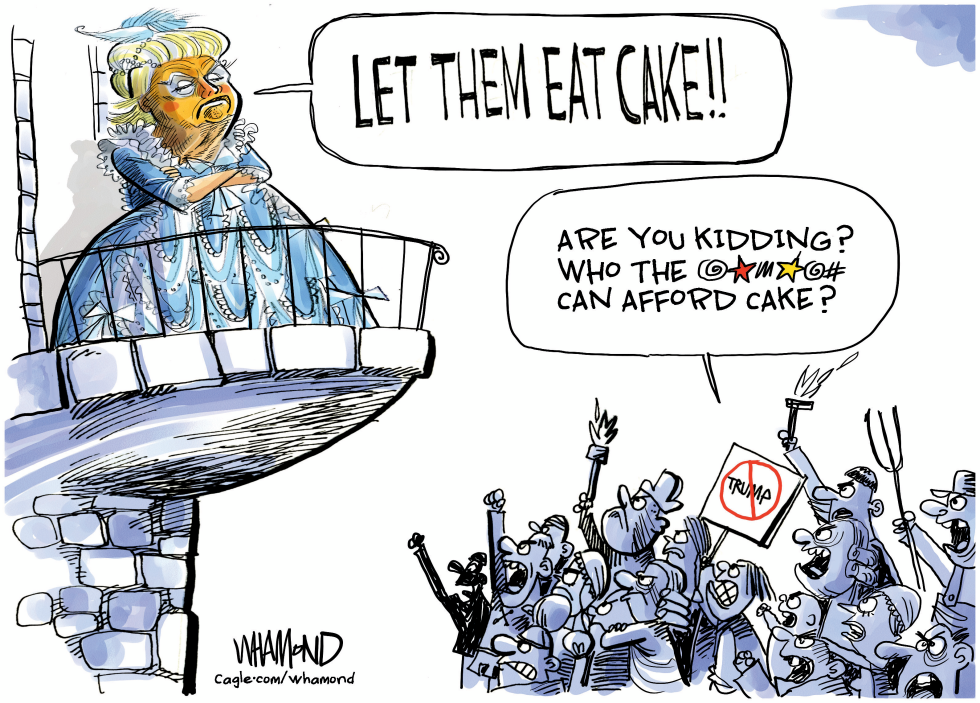
The cartoon by Dave Whamond depicts Donald Trump as Marie Antoinette on a balcony declaring 'LET THEM EAT CAKE!!' while a crowd below protests with signs and questions who can afford cake. Published on September 15, 2026, the image draws on the historical quote to comment on contemporary affordability concerns during Trump's term. The visual contrasts the elevated figure with an agitated crowd holding anti-Trump signs. It captures ongoing public discontent with rising costs. The piece uses the famous anecdote to underscore perceptions of detachment from everyday economic pressures.
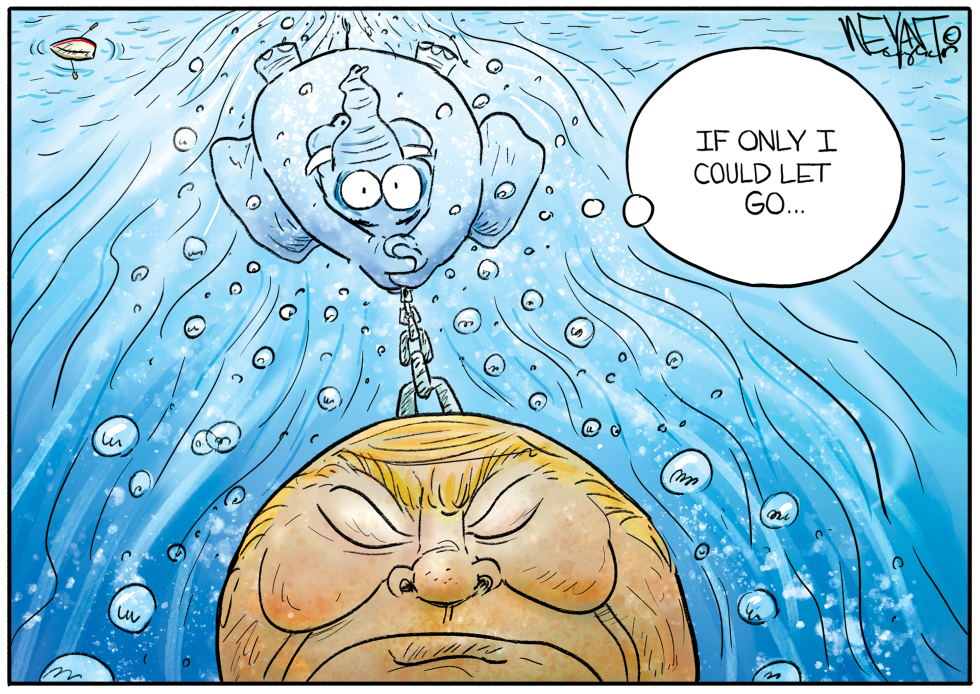
The Republican Party continues to grapple with its deep ties to Donald Trump as the 2026 election cycle approaches. Trump remains the dominant force within the GOP, and efforts to distance the party from him have repeatedly failed. This dynamic risks further electoral damage as voters grow weary of the internal conflict. The cartoon argues that the GOP's inability to break free from Trump is self-inflicted and will lead to its continued decline.
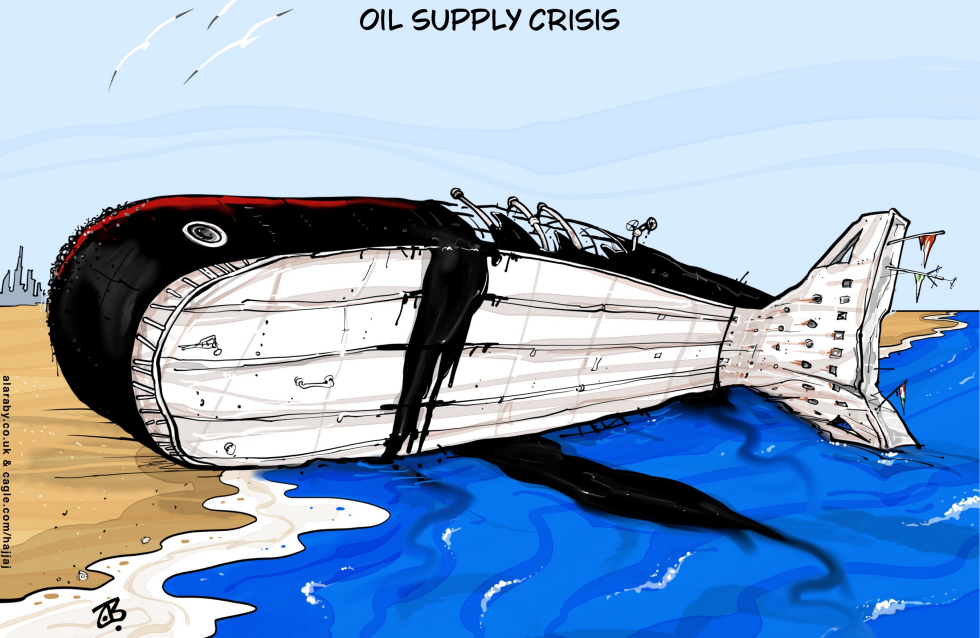
A major oil tanker has run aground, disrupting supply routes and releasing crude into coastal waters. The incident underscores vulnerabilities in global energy transport networks that rely on aging or poorly maintained vessels. Such events can spike fuel prices and trigger immediate cleanup costs for affected regions. The cartoon frames the grounding as a direct cause of the broader supply crisis rather than an isolated accident. It points to systemic weaknesses in oversight and infrastructure that allow one failure to cascade into wider shortages and ecological harm.
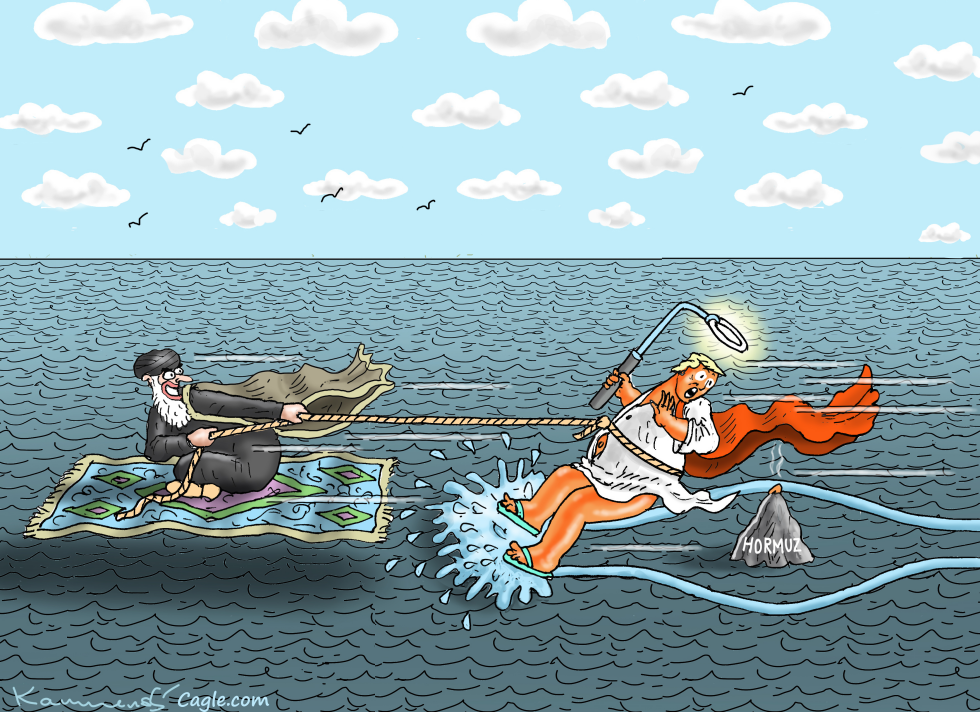
Tensions in the Strait of Hormuz have escalated with threats to shipping lanes critical for global oil supplies. Israeli and U.S. leaders face mounting losses from disruptions. The cartoon argues that involvement risks dragging both into deeper conflict without clear gains.
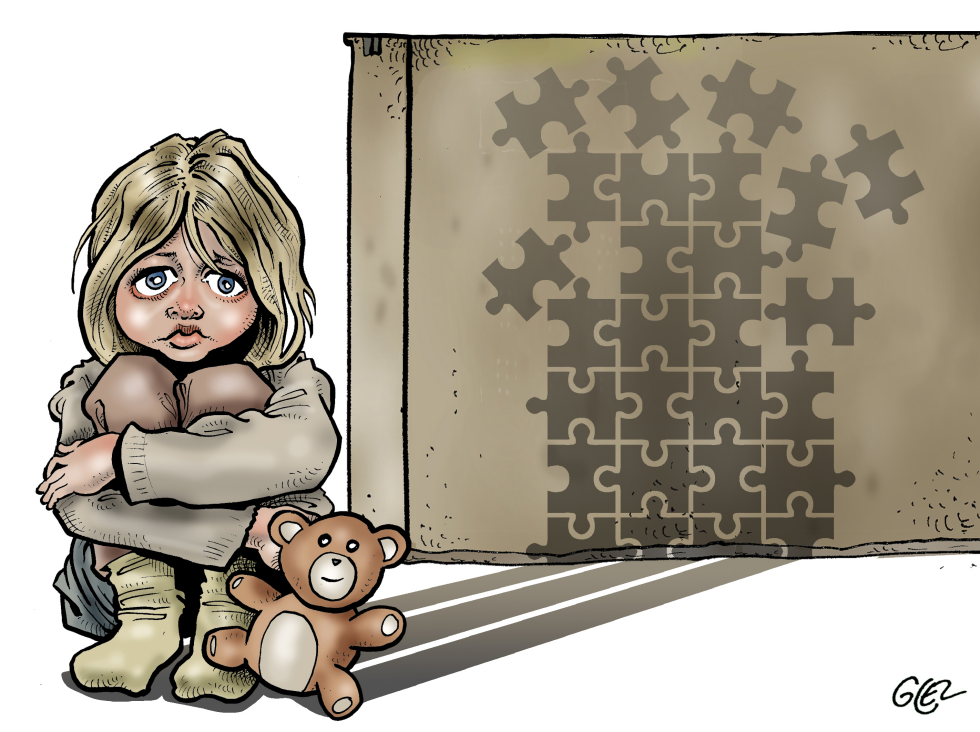
Children continue to experience emotional strain amid incomplete support networks that fail to address core developmental needs. Fragmented services in mental health and family aid leave many young people without resolution. The piece argues that society must prioritize comprehensive care to prevent lasting harm from these unresolved challenges.
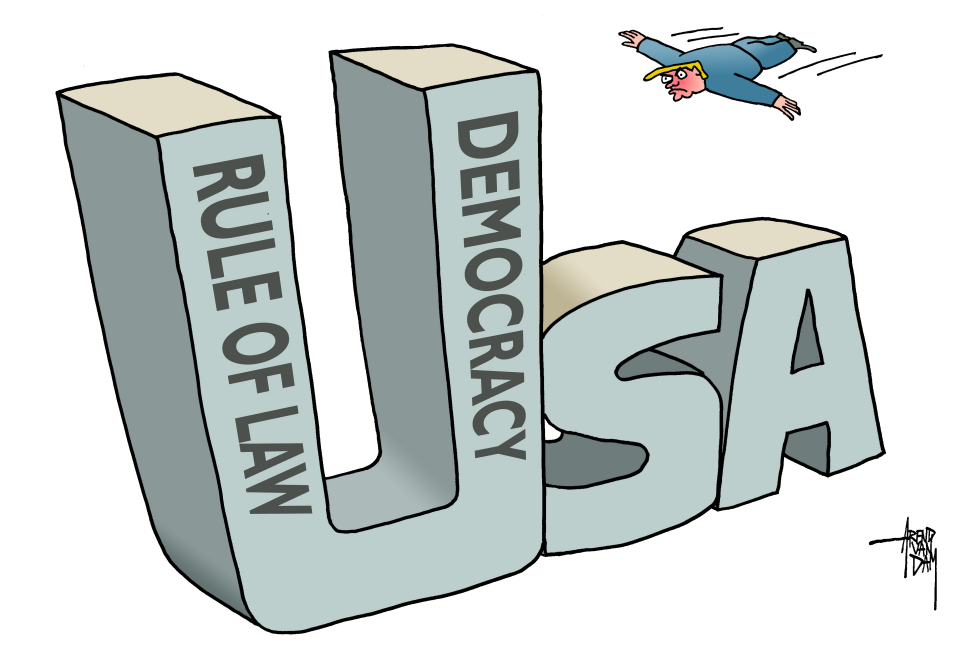
On September 11, 2026, political commentary focused on former President Donald Trump's ongoing conflicts with legal and democratic norms. The cartoon illustrates his ejection from structures labeled rule of law and democracy. This reflects broader concerns over accountability for high office holders. The piece argues that U.S. institutions remain capable of expelling those who undermine core principles.
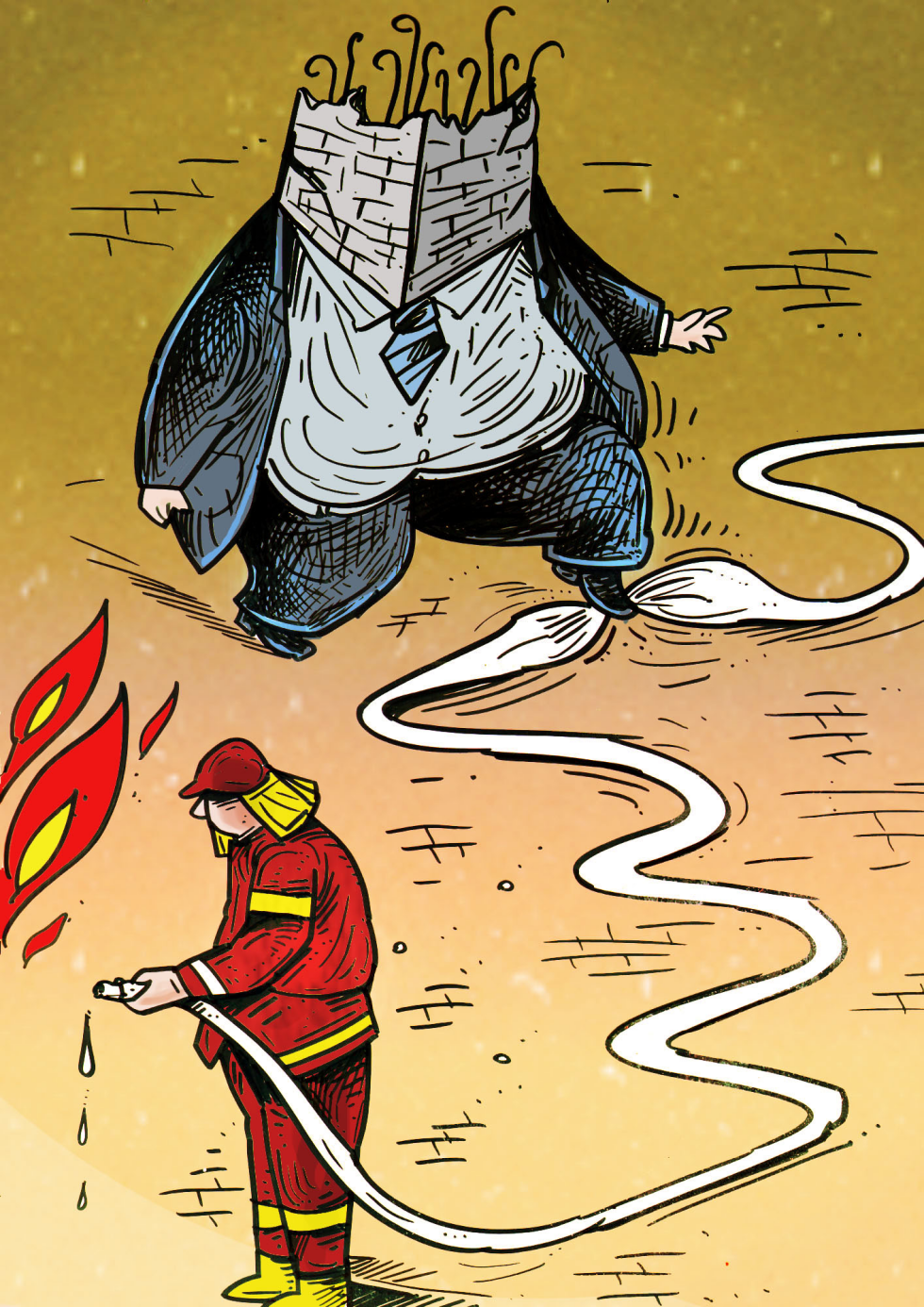
Government bureaucracy continues to slow emergency services through layers of procedure and obstruction. Officials embedded in routine create barriers that delay response times when speed matters most. The cartoon argues that such entrenched processes turn routine oversight into active hindrance during crises.
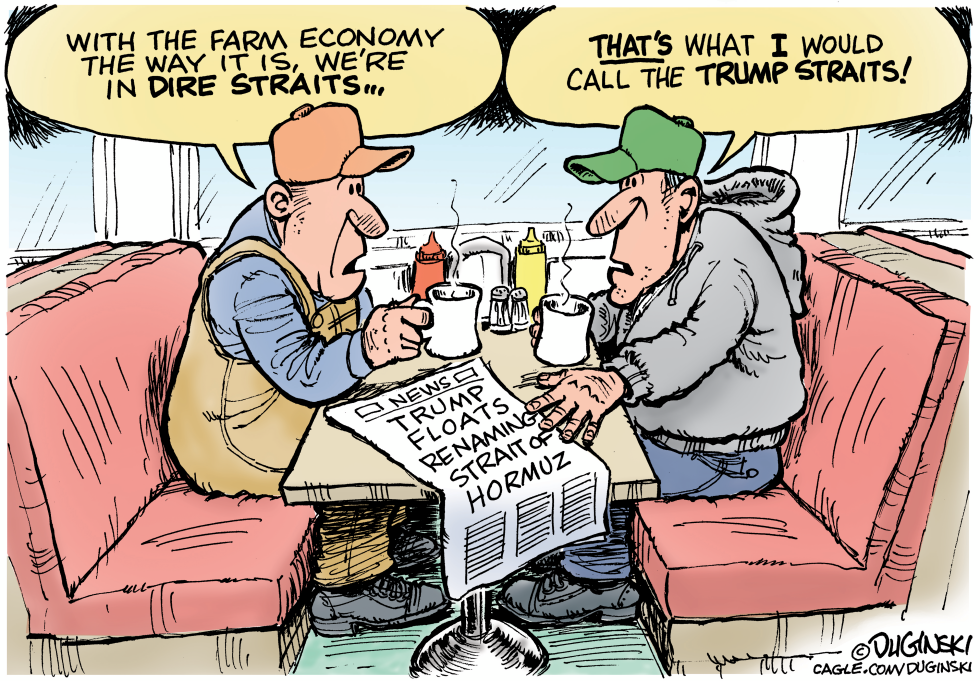
Donald Trump has floated the idea of renaming the Strait of Hormuz, a key Middle East shipping route, drawing attention to its potential effects on global trade and domestic sectors. The proposal arrives as agricultural producers face persistent economic challenges including high input costs and market volatility. The cartoon uses the pun on "dire straits" to connect the foreign policy suggestion to farm belt hardships, implying the rename distracts from or worsens real economic pressures on rural communities.
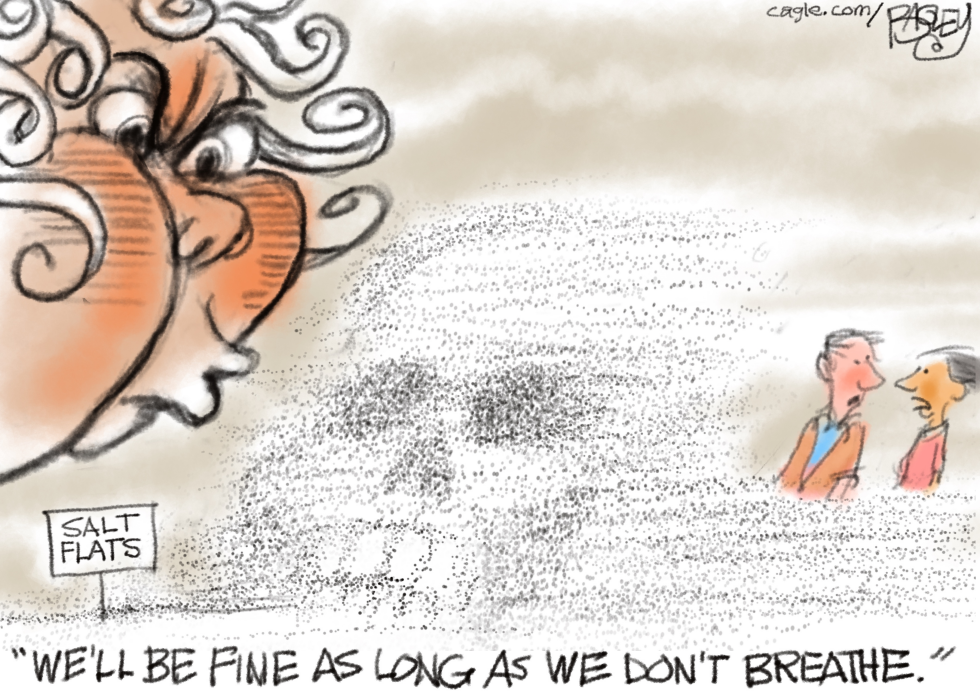
Air quality at the Salt Flats has deteriorated due to persistent dust storms, creating hazardous conditions for nearby residents and visitors. The situation underscores ongoing environmental degradation in the region and the urgent need for mitigation efforts to protect public health.
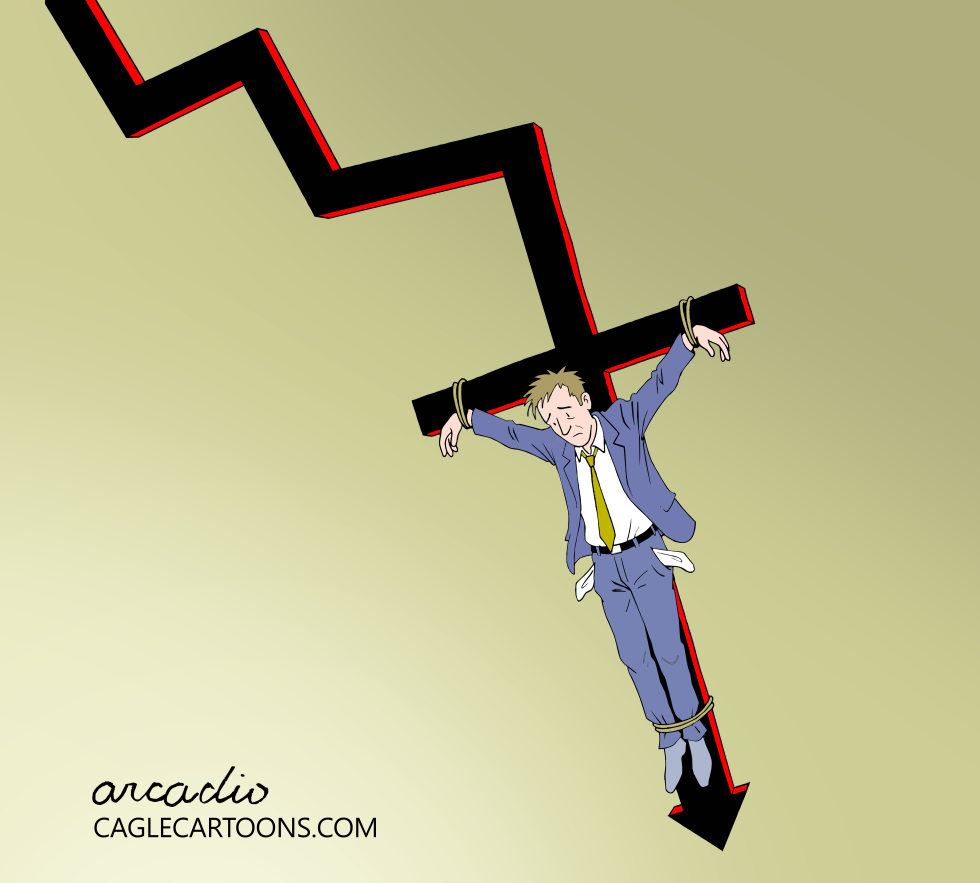
Corporate leaders continue to confront sharp market drops that directly affect company performance and investor confidence. The situation underscores how executives remain closely tied to negative financial trends rather than insulated from them. The piece argues that such binding reflects the reality of accountability in failing markets.
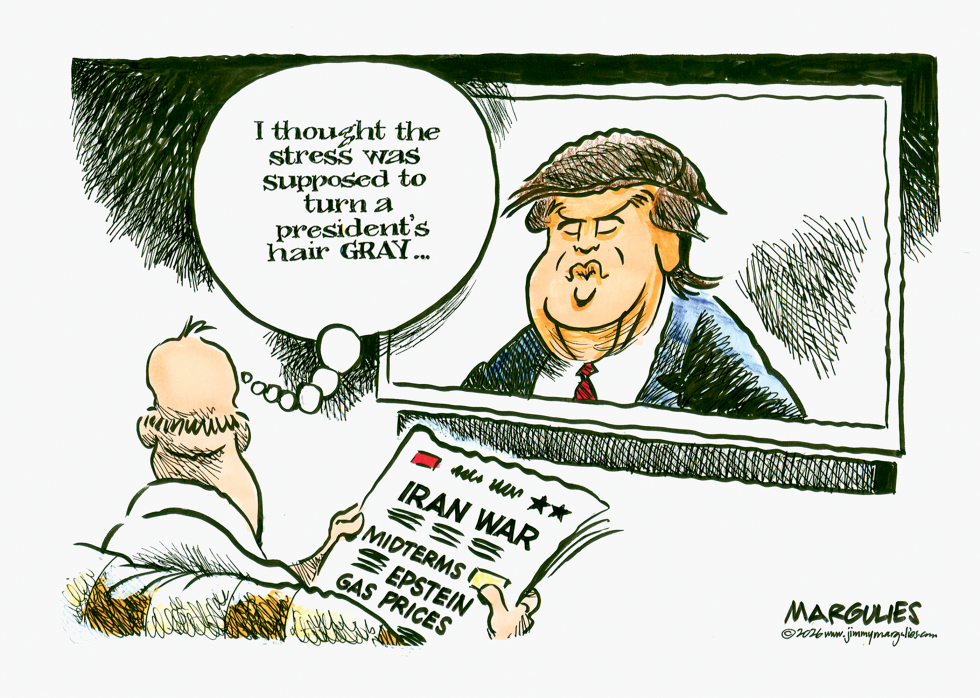
President Donald Trump confronts an Iran war, midterm election pressures, Epstein-related revelations and rising gas prices in September 2026. These overlapping challenges test the administration's capacity to manage foreign conflict and domestic economic strain simultaneously. The cartoon argues that the expected physical toll of such stress on the president has not materialized in the anticipated way.
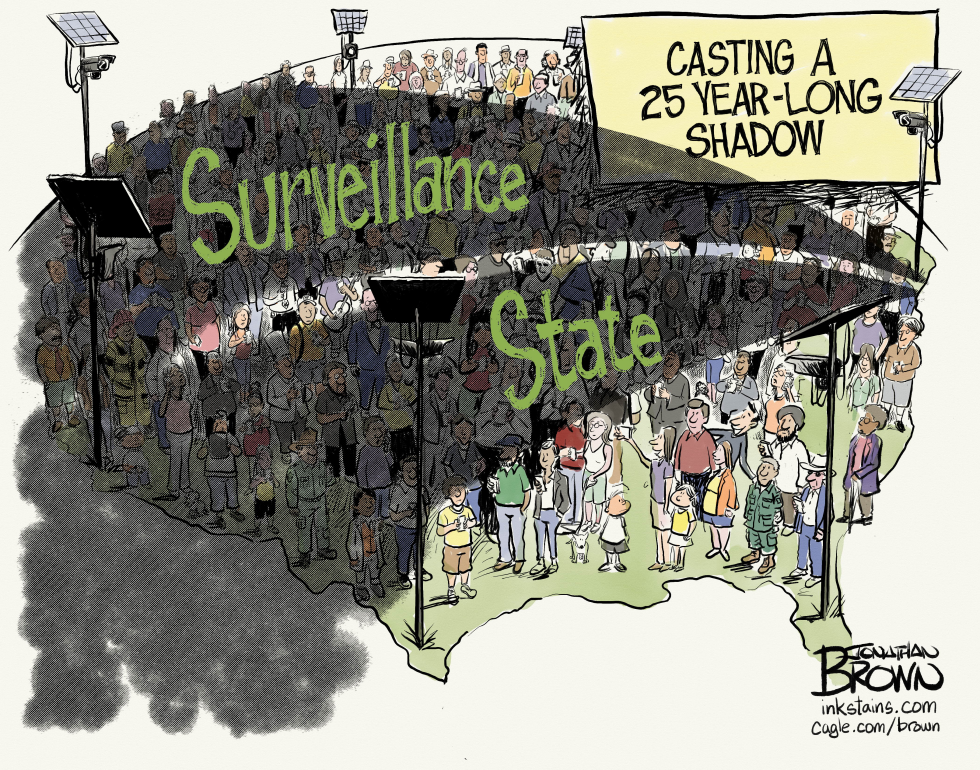
The cartoon depicts a dense crowd of Americans standing on a map of the United States, partially obscured by a large dark shadow cast by surveillance cameras mounted on poles. The words 'Surveillance State' appear prominently in green lettering across the scene, while a sign in the upper right reads 'CASTING A 25 YEAR-LONG SHADOW.' The image comments on the lasting effects of expanded government surveillance programs that began after the September 11 attacks, now spanning a quarter century. It illustrates how these measures continue to influence daily life and public spaces in 2026.
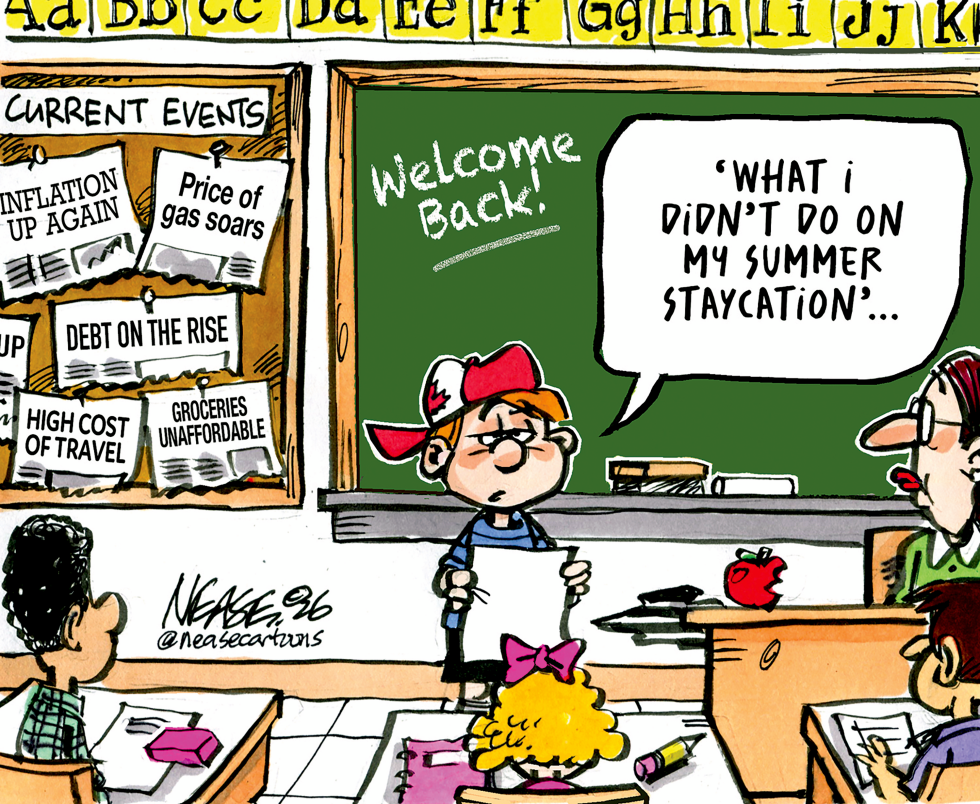
Rising inflation, gas prices, and household debt have made traditional summer vacations unaffordable for many families, leading to increased staycations as the new school year starts. The cartoon captures this cost-of-living squeeze through a classroom presentation on what students did not do over the break. It underscores how everyday expenses now dominate family decisions and limit leisure options.
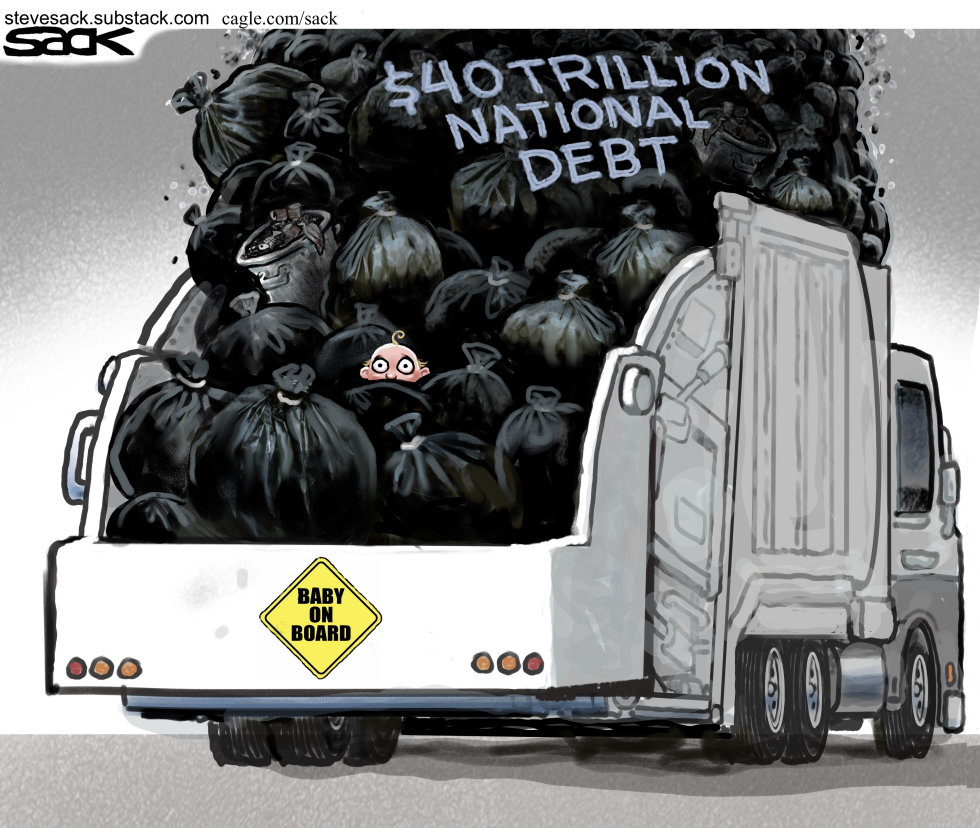
The national debt has climbed to $40 trillion amid persistent federal deficits and rising interest costs. This trajectory threatens long-term economic stability and shifts repayment burdens onto younger Americans. The cartoon argues that current fiscal policies treat future citizens as disposable, loading them into the refuse of unchecked borrowing.