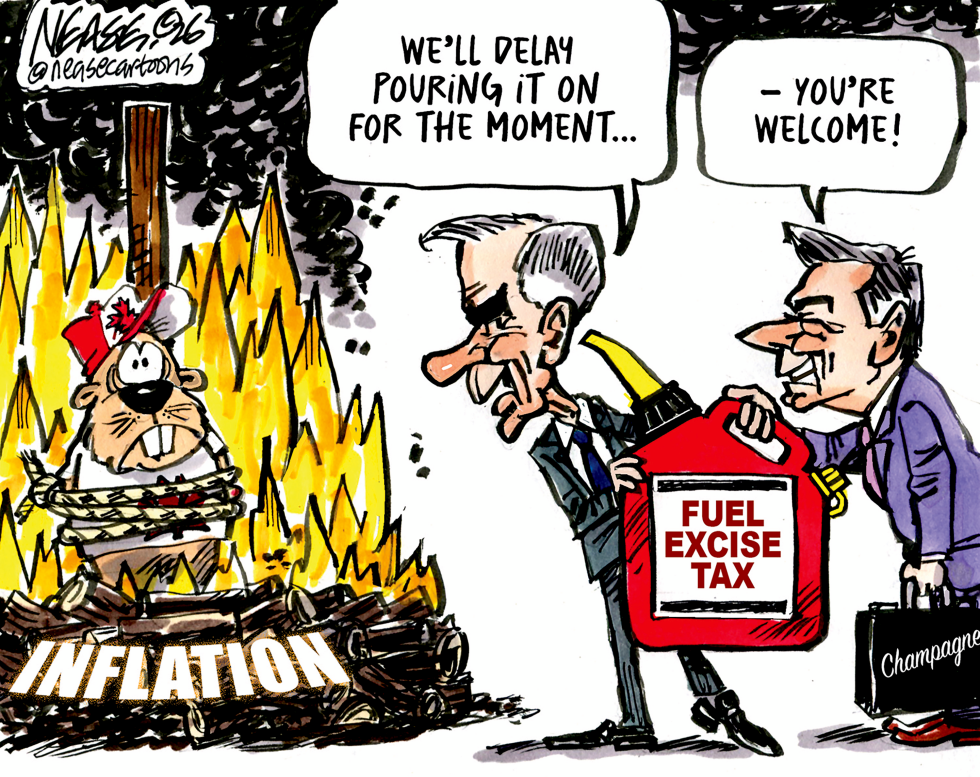
President Biden announced a delay in implementing a fuel excise tax increase amid ongoing inflation pressures. The move aims to ease costs at the pump for consumers. Critics argue the delay offers only temporary relief without addressing root causes. Supporters see it as a pragmatic step to stabilize prices. The editorial takes the position that such delays highlight inconsistent economic leadership.
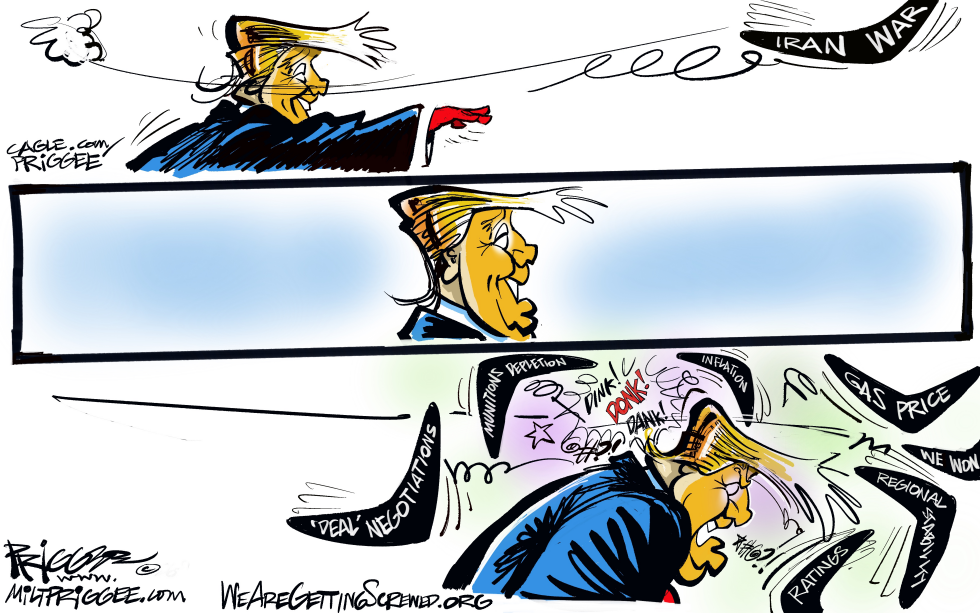
A political cartoon depicts Donald Trump launching an Iran war boomerang that returns to strike him with multiple crises. The image shows the former president hit by labels including inflation, gas prices, munitions depletion and falling ratings. The cartoon responds to ongoing tensions with Iran and the domestic fallout from military engagement. It illustrates how the conflict decision led to economic pressures and political damage as of the September 2026 publication date.
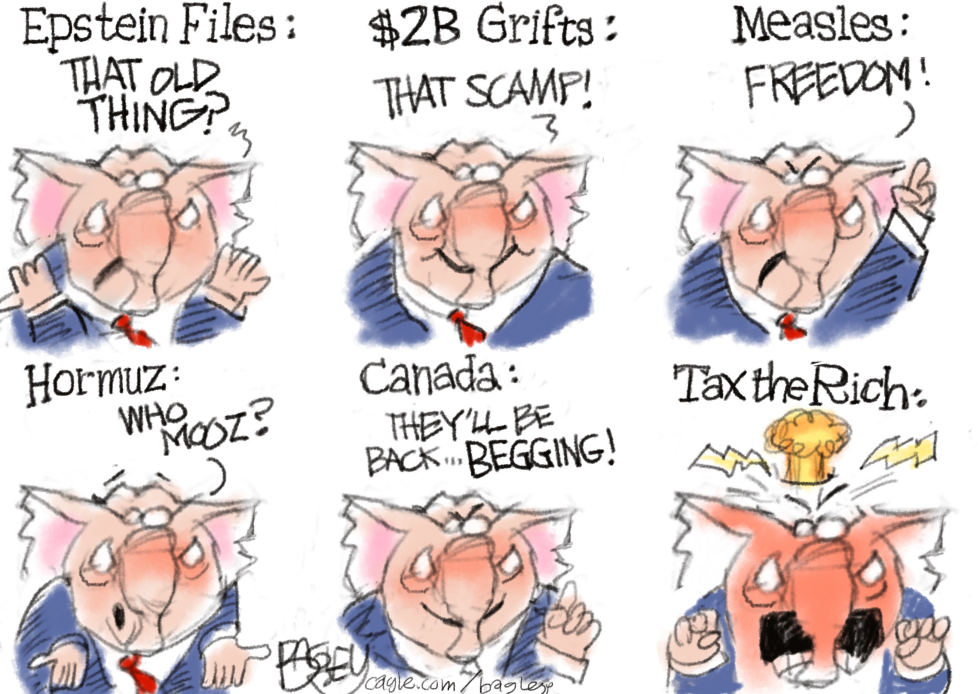
A political figure downplays the Epstein files, billion-dollar grifts, measles outbreaks, Hormuz tensions, Canada relations and wealth taxes. The piece critiques selective indifference to ongoing controversies and policy flashpoints.
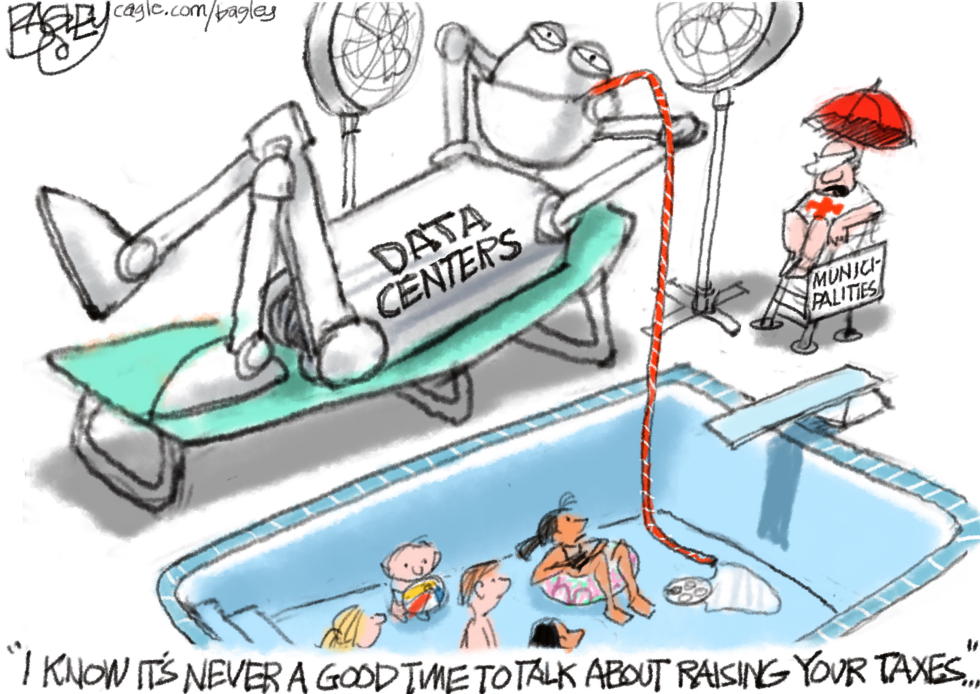
Data centers are expanding rapidly and placing heavy demands on local water and power supplies. Municipalities must decide whether to raise taxes to cover the costs. The piece argues that residents bear the burden while data centers consume resources without contributing enough back.
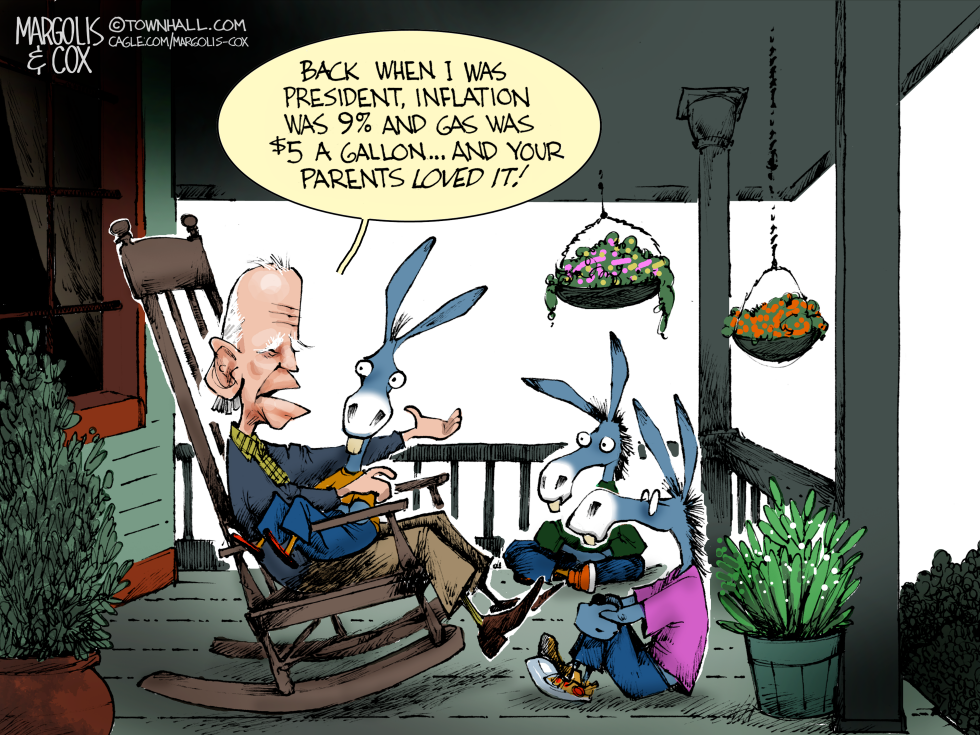
Former President Joe Biden addressed young Democrats on a porch, recalling the 9 percent inflation and $5-per-gallon gas prices from his term as something their parents loved. The remark comes amid ongoing Democratic efforts to move past the economic record of the Biden years. The cartoon presents the comment as tone-deaf revisionism that highlights the party's difficulty distancing itself from those results.
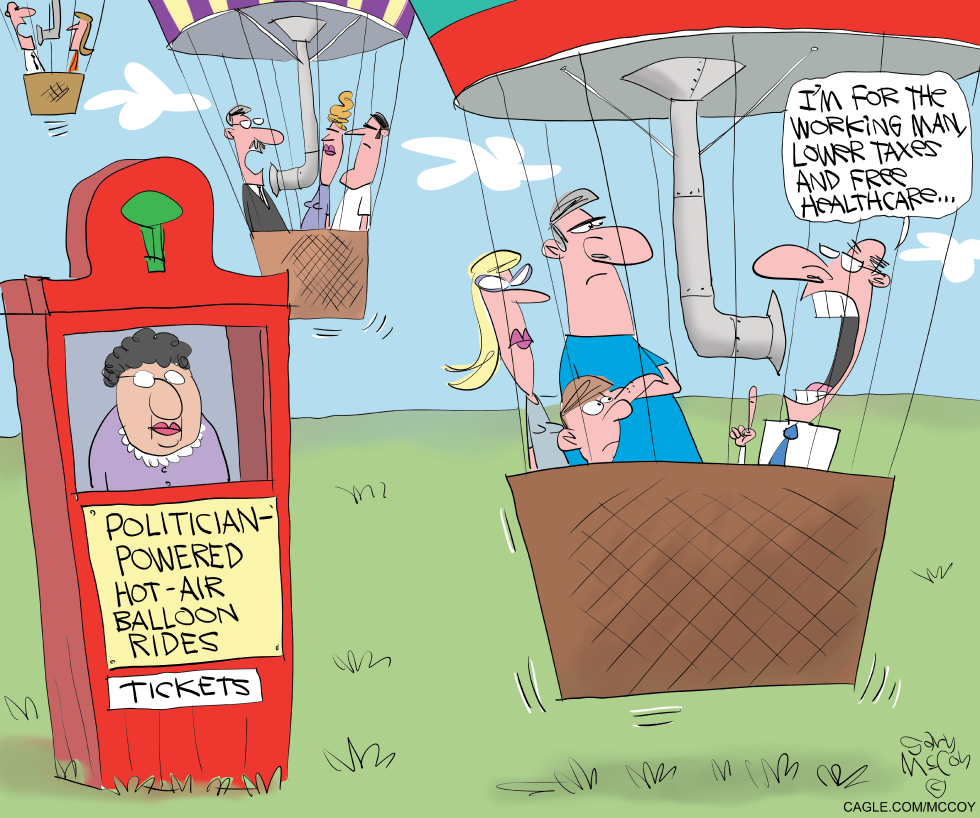
Politicians continue to campaign on lower taxes for workers and free healthcare access. These pledges remain central to attracting voter support ahead of elections. The piece portrays such promises as inflated rhetoric detached from delivery.
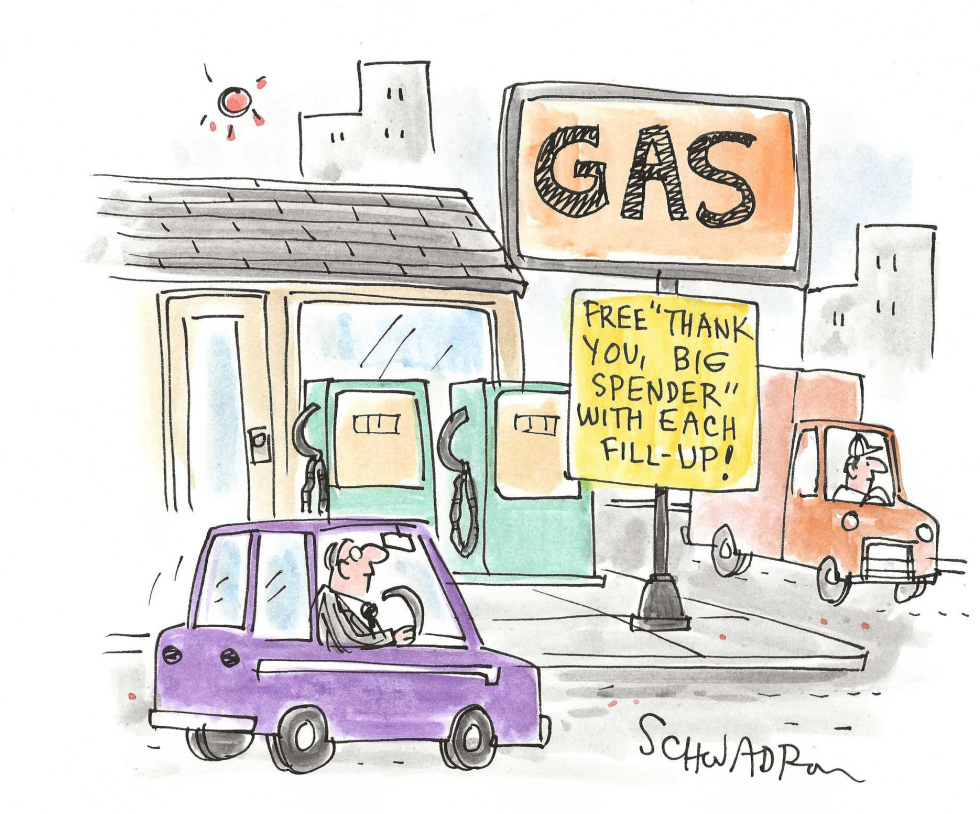
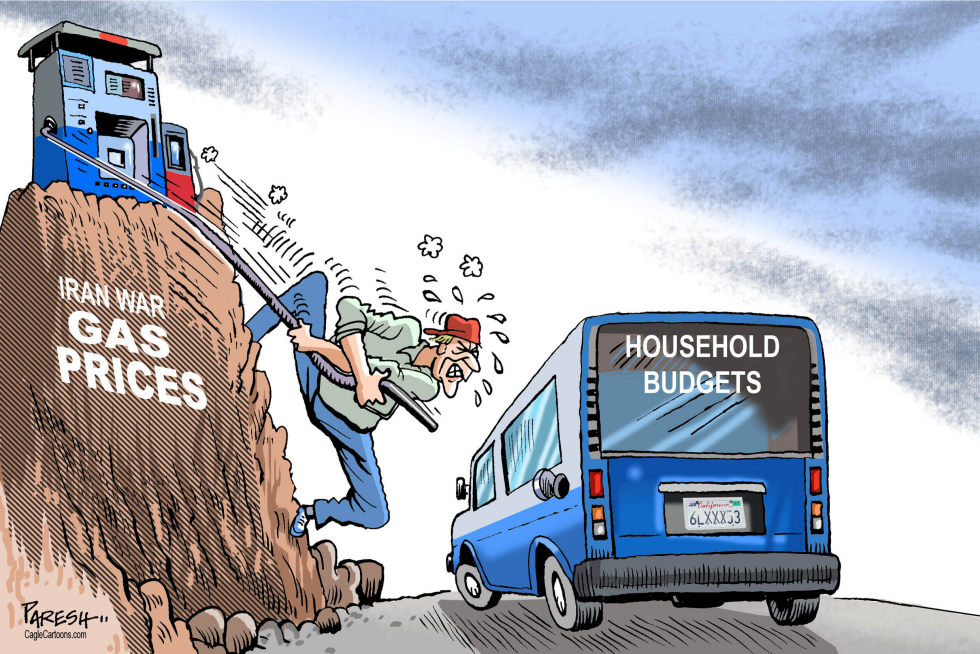
High gasoline prices continue to strain household budgets as drivers face elevated costs at the pump. The cartoon depicts a gas station using a sarcastic promotion that labels every fill-up customer a big spender. This reflects ongoing public frustration with energy costs and their impact on daily commuting and small business operations. The piece takes the position that such prices make routine purchases feel extravagant.
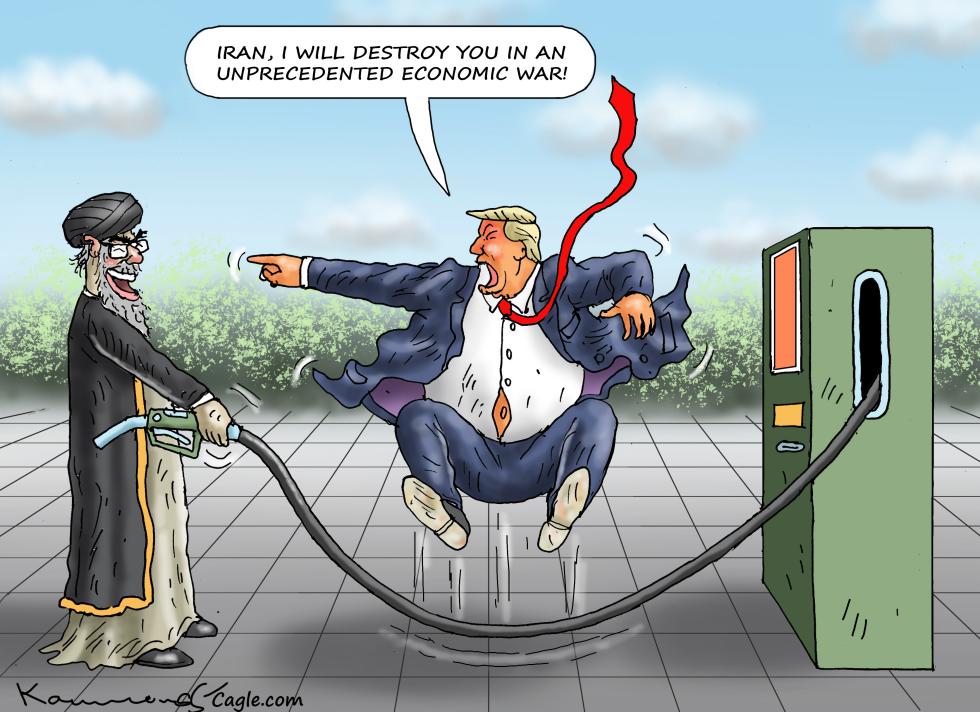
Donald Trump vowed to destroy Iran through unprecedented economic measures during a period of heightened Middle East tensions. The statement came amid ongoing disputes over nuclear activities and regional influence. Such rhetoric raises questions about impacts on global oil markets and alliance stability. The piece portrays the threat as potentially self-inflicted damage to American interests.
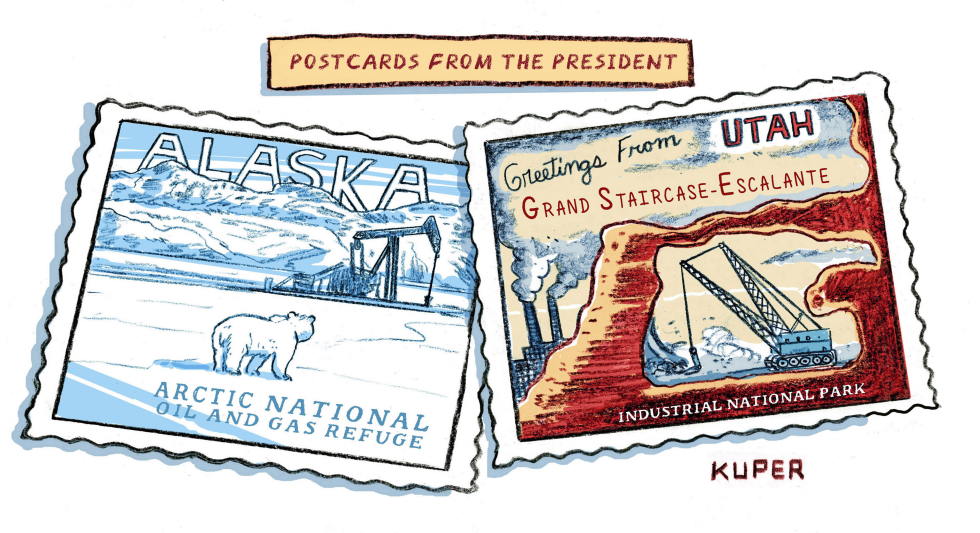
The president has advanced policies opening Arctic National Wildlife Refuge and Grand Staircase-Escalante to expanded oil and gas development. These moves prioritize domestic energy production over prior conservation designations. The editorial uses postcard imagery to critique the transformation of protected lands into industrial zones, arguing that short-term extraction gains undermine long-term environmental protections and public lands legacy.
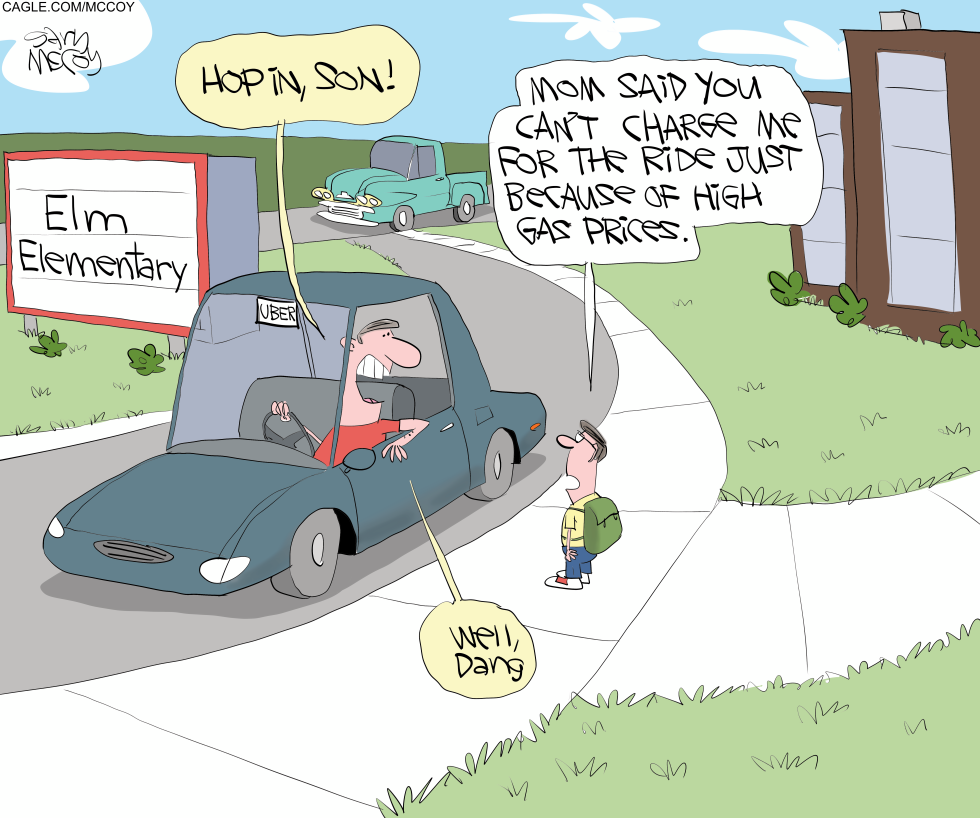
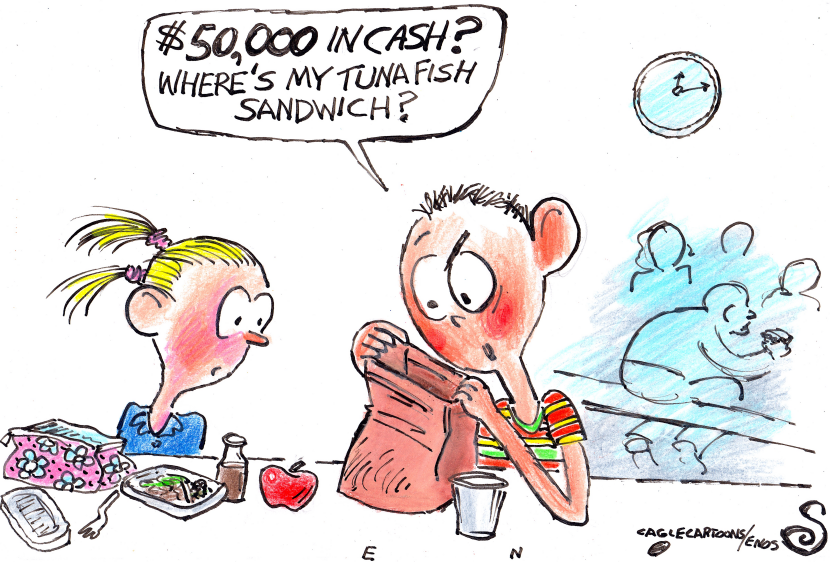
Families continue to feel pressure from elevated fuel costs during routine activities such as school transportation. Parents weigh creative ways to offset expenses while children and spouses push back on new charges. The cartoon highlights the everyday tension between household budgets and parental expectations around shared rides.
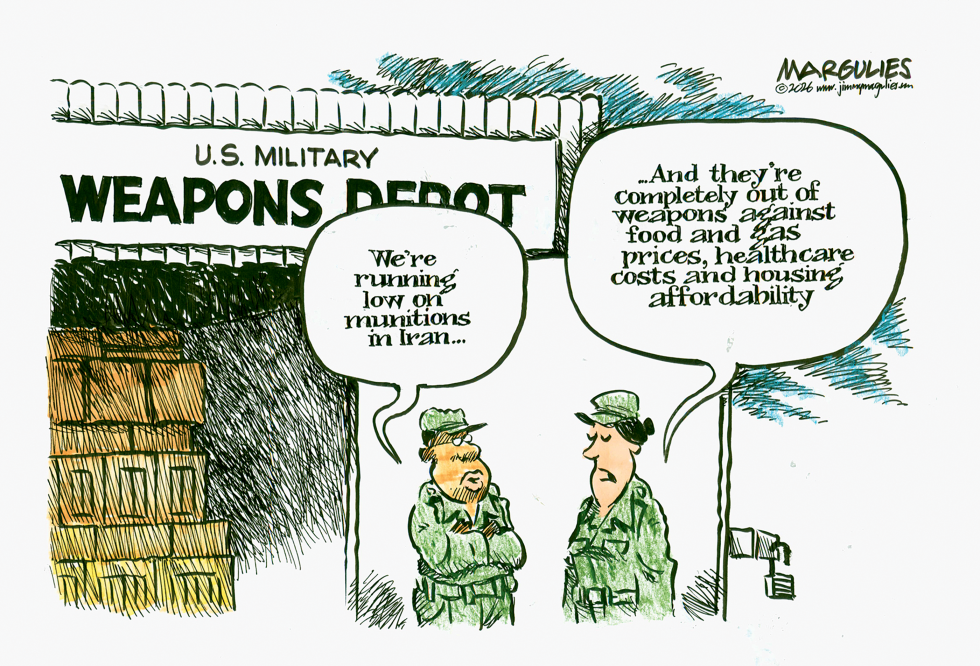
The cartoon depicts two U.S. soldiers outside a weapons depot labeled U.S. Military Weapons Depot. One soldier states the facility is running low on munitions in Iran. The second replies that domestic fronts are out of weapons against food and gas prices, healthcare costs and housing affordability. The image responds to ongoing debates over U.S. military aid commitments abroad and competing budget pressures at home as of the August 2026 publication date. It uses the depot setting and dialogue to contrast foreign military demands with economic challenges facing American households.
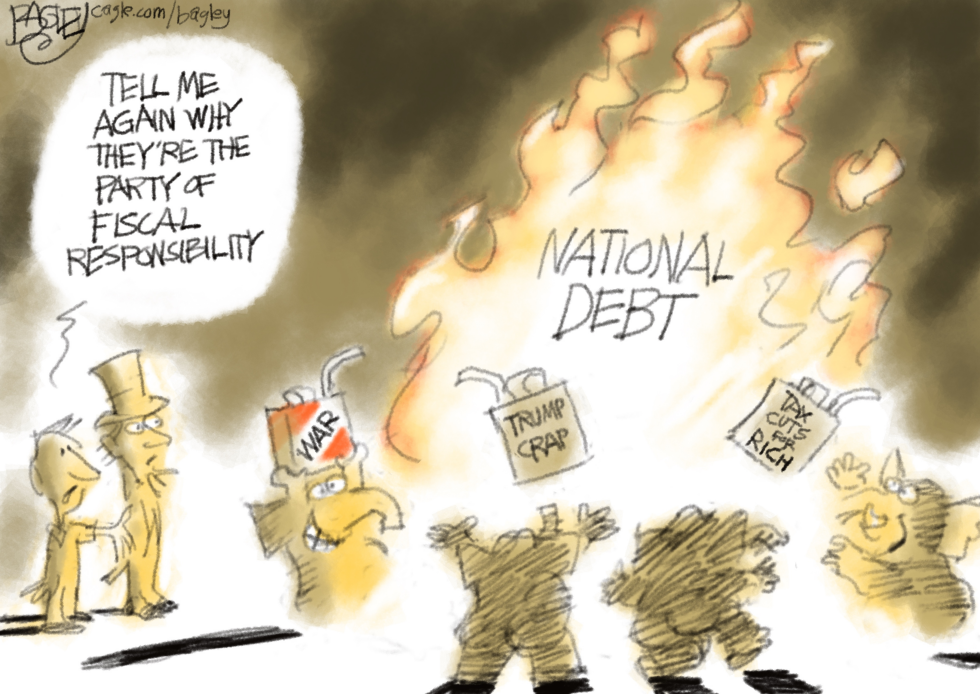
Republicans continue to promote themselves as the party of fiscal responsibility even as national debt rises sharply from sustained war spending and tax cuts favoring the wealthy. The editorial takes the position that these policies directly contradict the fiscal responsibility label.
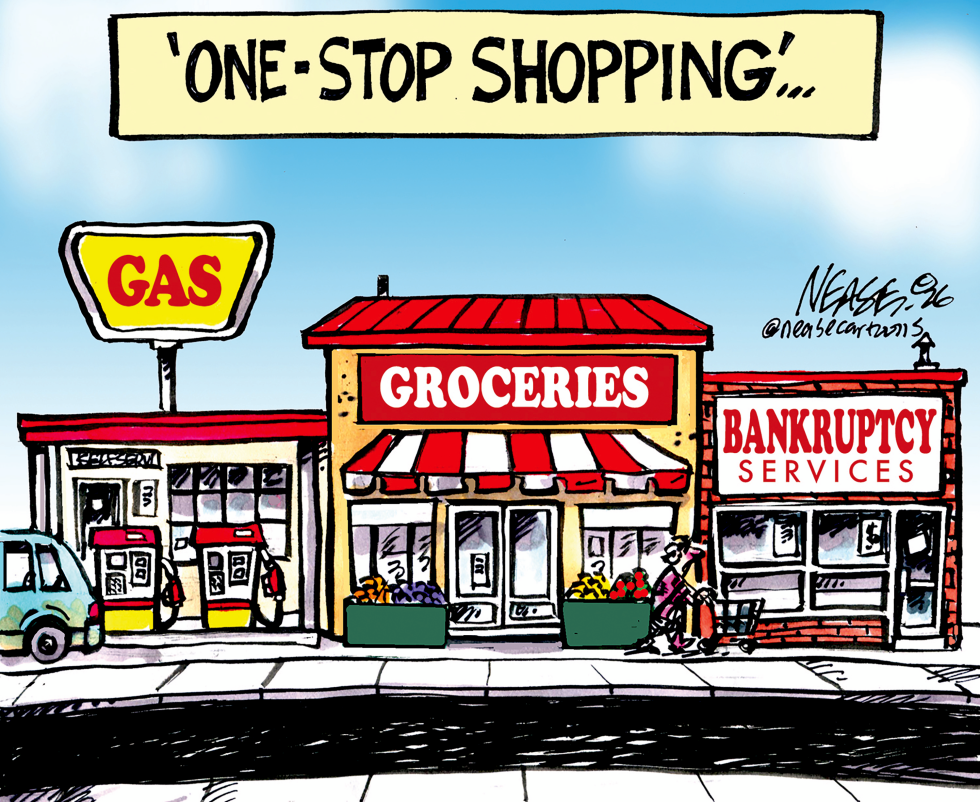
Consumers face persistent inflation that raises the cost of essentials such as fuel and food. A strip mall now groups gas, groceries and bankruptcy services together, highlighting how household budgets stretch thin. The editorial position criticizes the normalization of bankruptcy as a routine stop in everyday commerce.
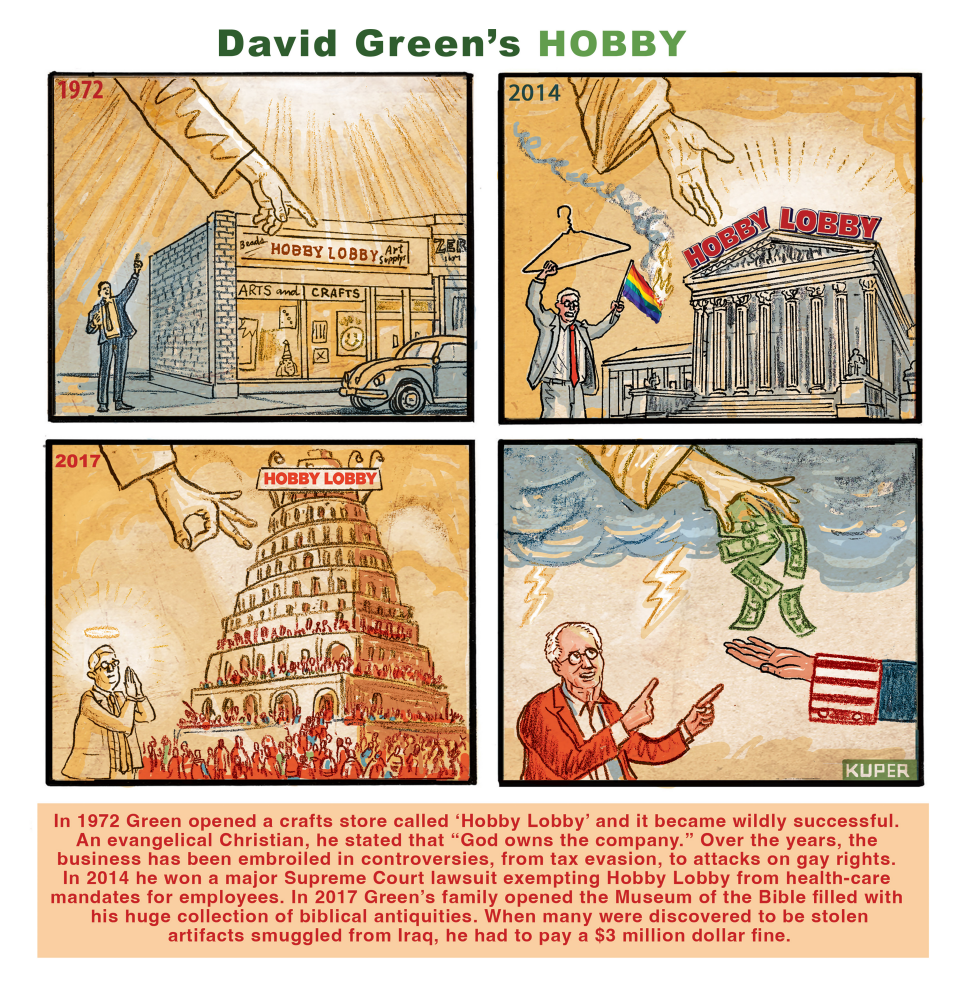
David Green opened Hobby Lobby in 1972 and built it into a major chain while declaring God owns the company. The business faced repeated controversies including a 2014 Supreme Court case on health care mandates and a 2017 Bible Museum scandal involving smuggled Iraqi artifacts that resulted in a $3 million fine. The piece presents these events as a pattern of legal and ethical issues tied to the company's evangelical leadership.