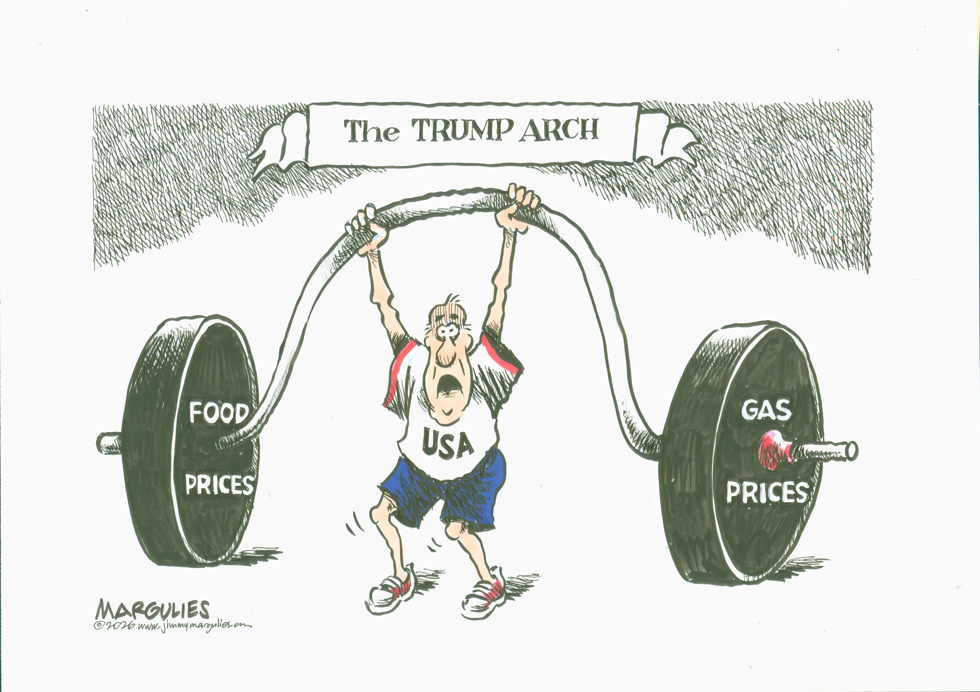
Food and gas prices remain elevated in 2026 under the Trump administration, adding to household costs across the country. The administration's economic approach has not delivered relief on key consumer expenses. Critics argue the policies prioritize other goals over inflation control. The cartoon depicts the USA as overburdened by these dual price burdens. It takes the position that Trump-era governance has left ordinary Americans carrying unsustainable economic weight.
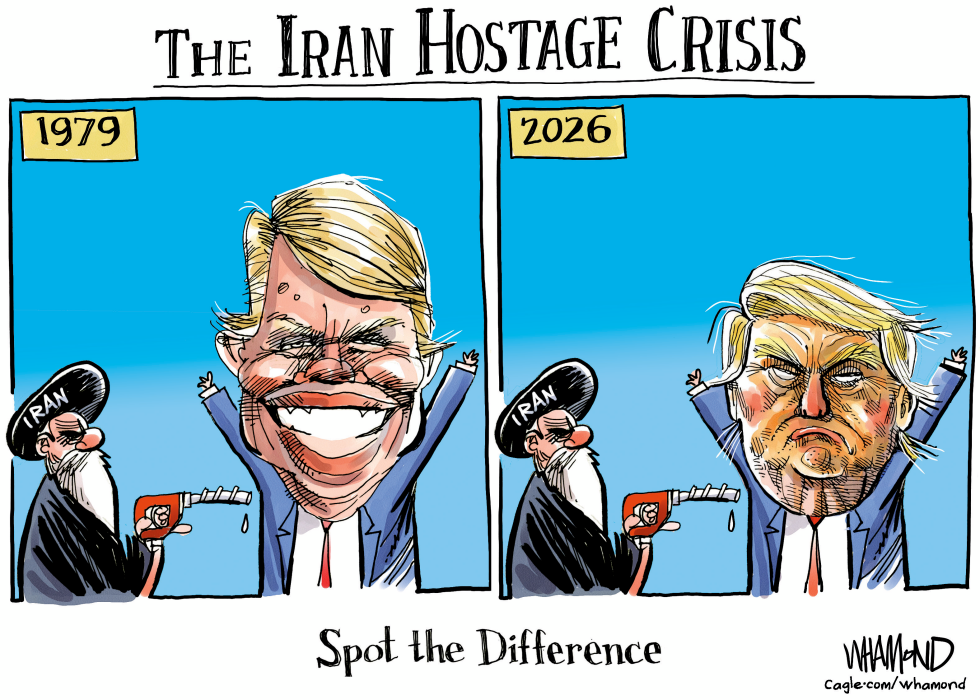
The cartoon splits the Iran Hostage Crisis into 1979 and 2026 panels. In the first Trump appears elated while an Iran-labeled figure holds a gas pump. In the second Trump looks distressed with the same figure present. The piece uses the visual contrast to comment on how Iran-related pressures affect US political figures differently over time.
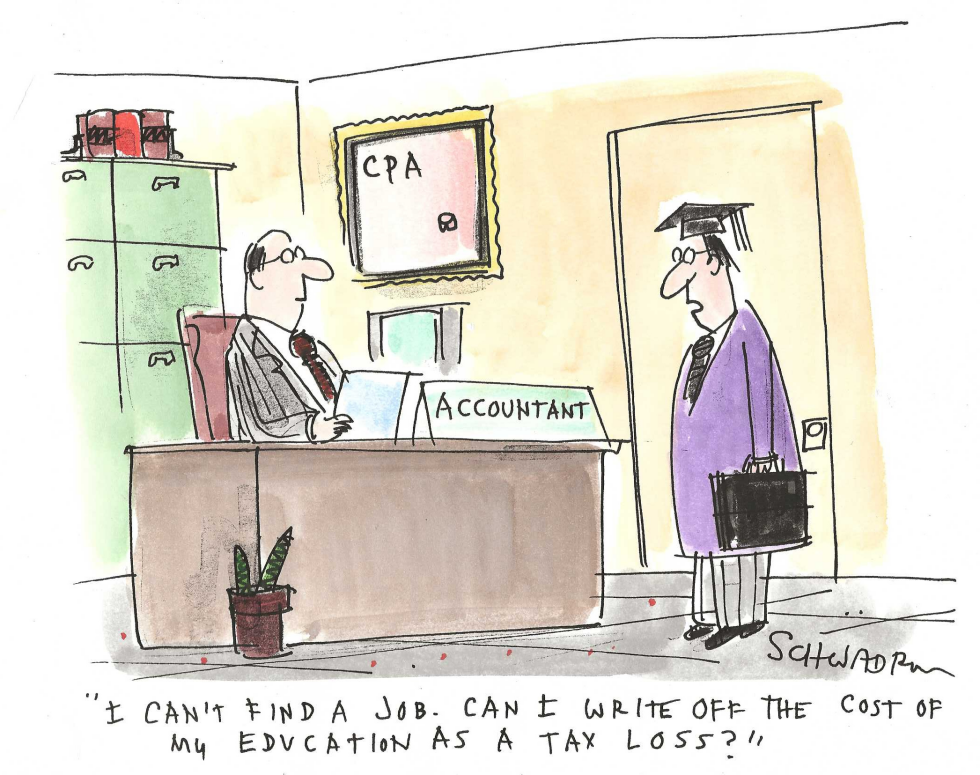
Recent college graduates facing extended unemployment have begun inquiring whether the cost of their degrees can be treated as a tax-deductible loss. Accountants report fielding more such questions as hiring in some sectors remains slow. The inquiry reflects broader frustration with the return on investment for higher education when entry-level positions are scarce. The cartoon captures this practical, if unconventional, approach to offsetting student debt through the tax code. It underscores ongoing debates about the value of degrees and the limits of existing tax relief for education expenses.
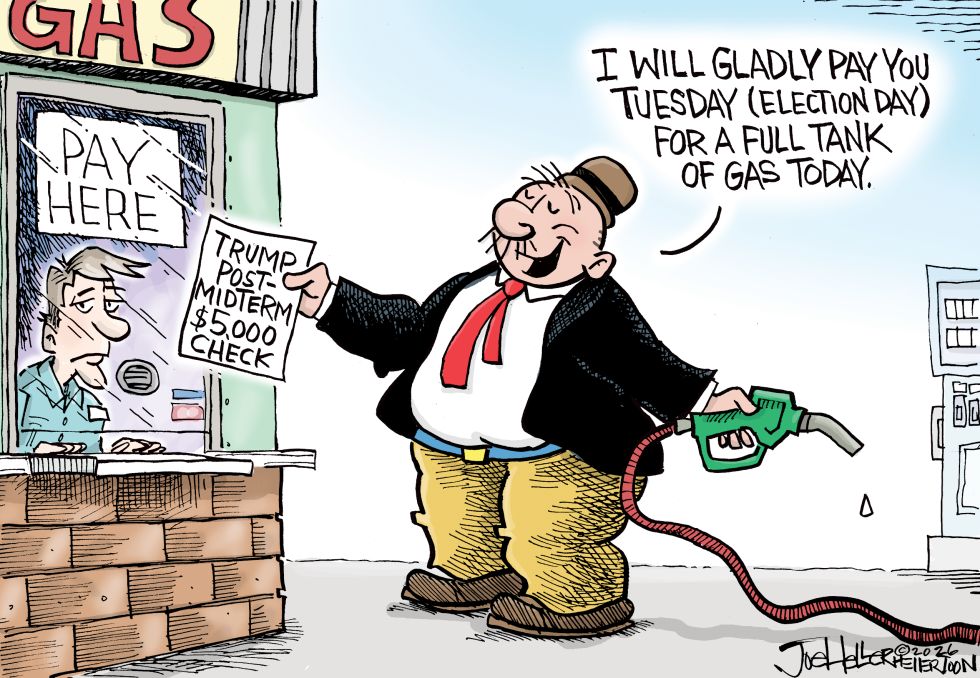
Donald Trump issued a post-midterm gas payment pledge tied to the 2026 election cycle. The promise revives a classic deferral line to link fuel costs with voting day. The cartoon argues the offer functions as an empty election tactic rather than a concrete policy step.
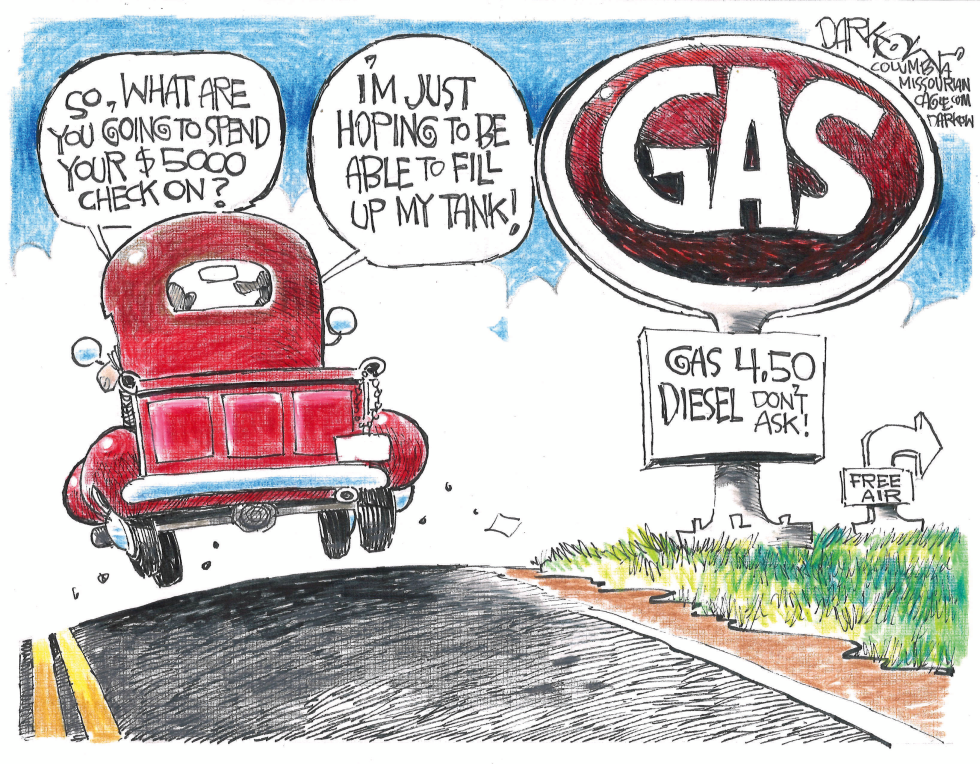
Proposed dividend checks of five thousand dollars are being discussed as economic relief measures. High gas prices at four dollars and fifty cents per gallon mean the payments would cover little more than a single fill up for many drivers. The situation underscores how energy costs continue to outpace targeted relief efforts. The cartoon argues that such checks provide minimal practical benefit when fuel expenses remain elevated. It highlights the disconnect between announced payments and real world household burdens from inflation in the energy sector.
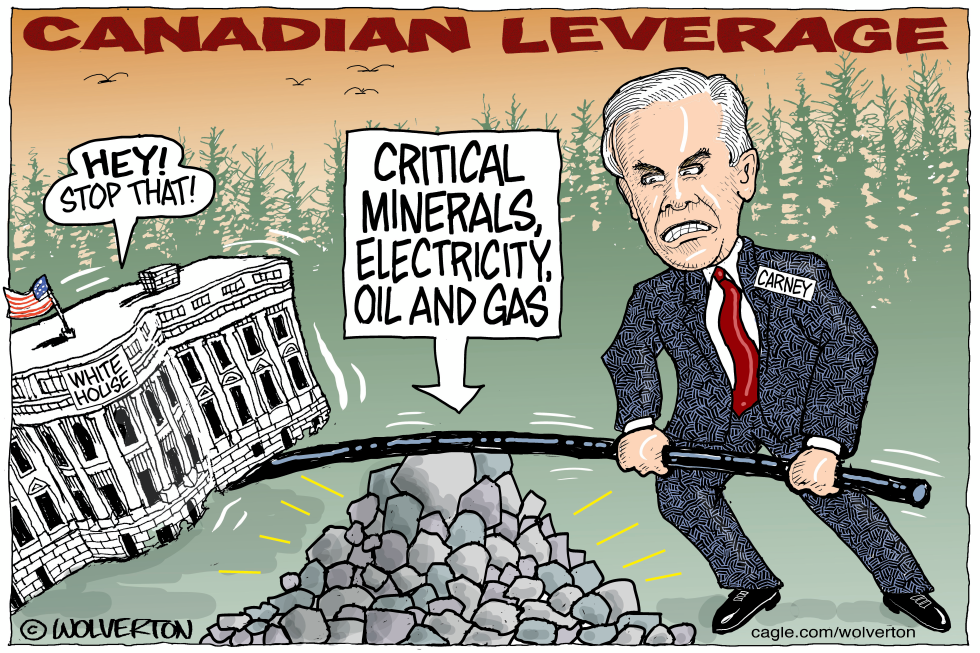
The cartoon depicts former Bank of Canada governor Mark Carney using a pipe labeled critical minerals, electricity, oil and gas as a lever to damage the White House. A speech bubble from the building protests the action. Published on September 12, 2026, the image comments on ongoing Canada-US tensions over resource exports and trade policy. Carney is shown in a suit with a determined expression, standing on rubble. The visual underscores Canada's potential to restrict supplies vital to the American economy. It reflects real-world discussions about critical minerals and energy interdependence between the two nations.
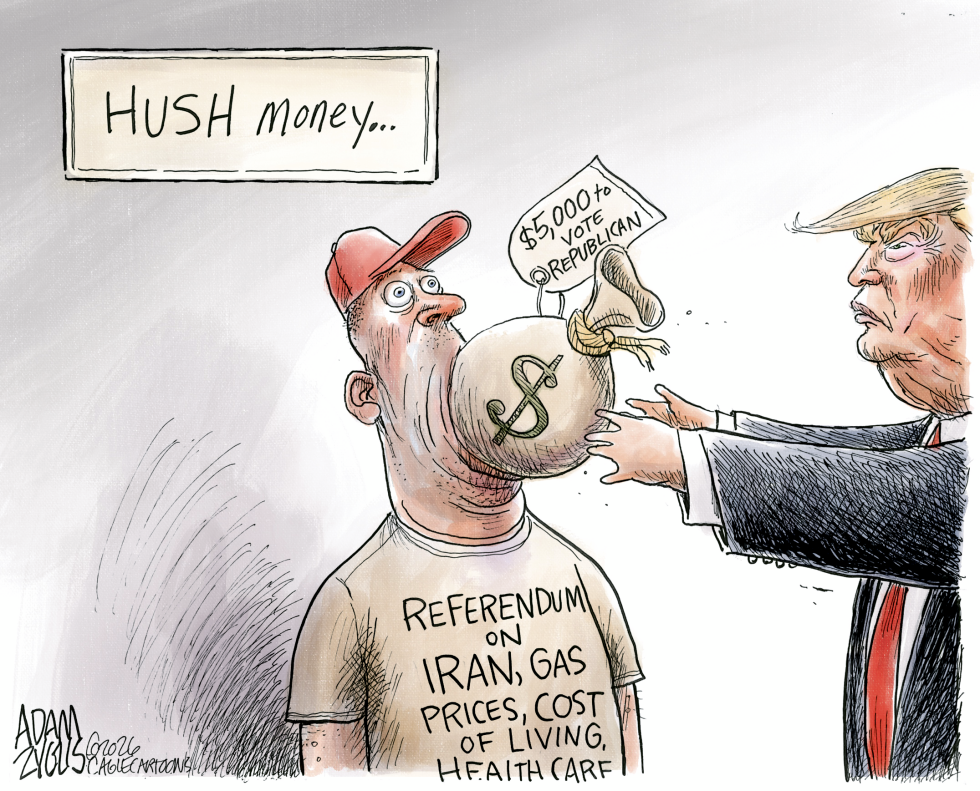
The cartoon shows Donald Trump handing a large bag of cash labeled as hush money to a man in a referendum shirt covering Iran, gas prices, cost of living and health care. A tag on the bag promises $5,000 to vote Republican. The scene responds to ongoing debates over election integrity and foreign policy issues involving Iran as of September 2026. It uses the visual metaphor of a bribe to comment on alleged attempts to influence voter priorities through financial incentives.
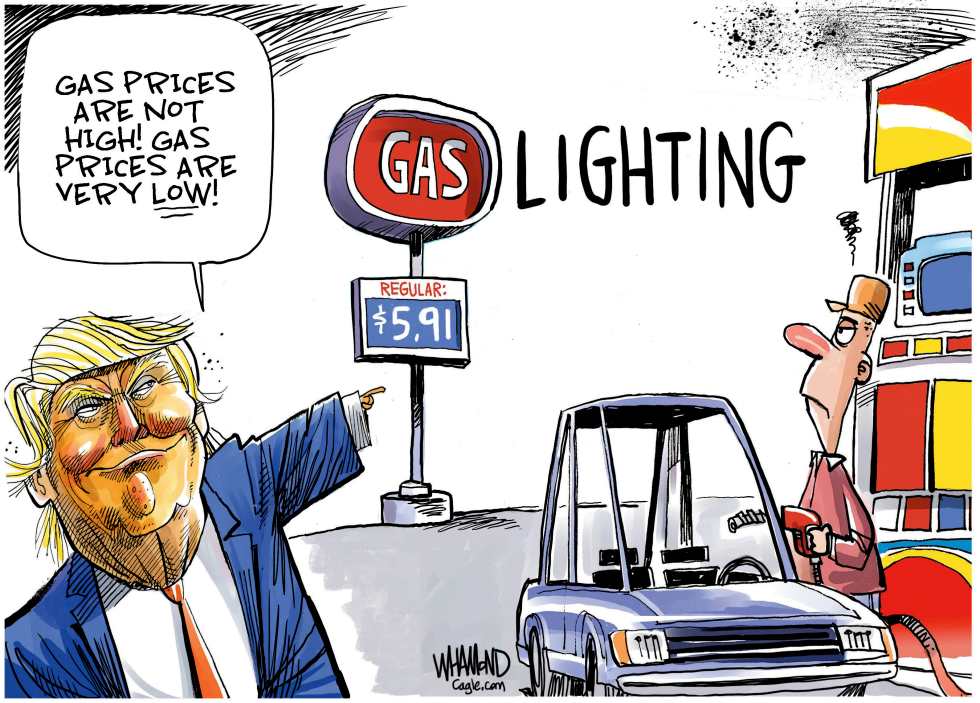
Donald Trump has repeatedly asserted that gas prices are very low even as national averages hover near record territory. The statement comes amid ongoing public frustration with energy costs that have remained elevated for months. The editorial takes the position that such denials amount to deliberate misdirection rather than engagement with economic data.
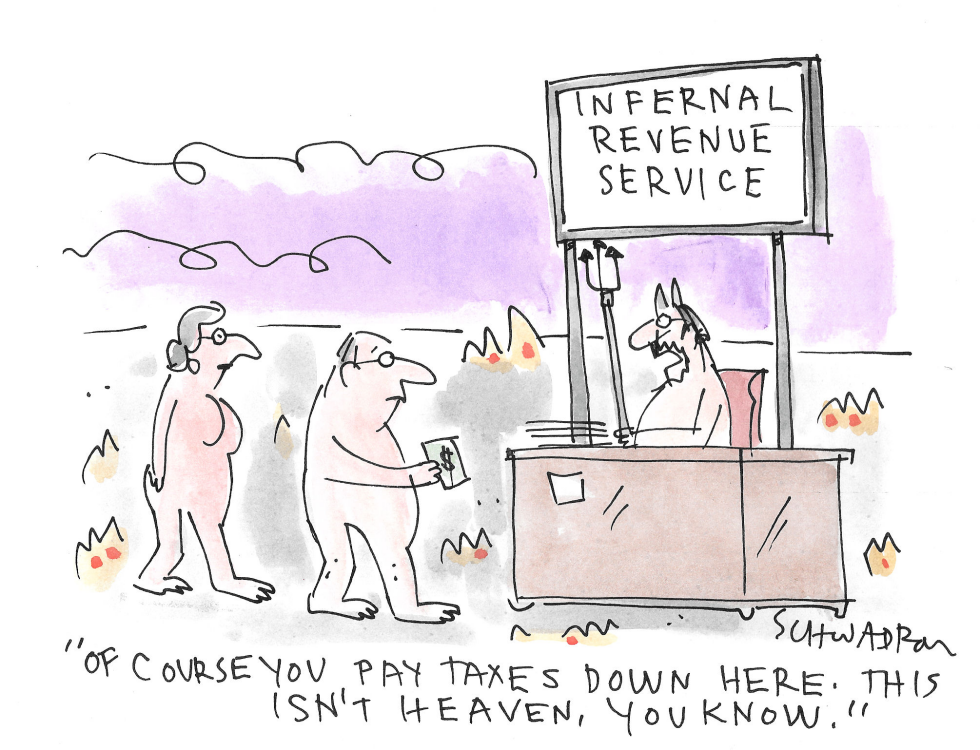
The long-standing adage that only death and taxes are certain receives fresh treatment in a cartoon depicting an IRS outpost operating in hell. No specific policy change or ruling prompted the piece, which instead plays on the enduring public frustration with tax collection as an inescapable force. The editorial stance pokes at bureaucratic persistence, suggesting the tax man follows citizens beyond the grave with the same relentless efficiency seen in life.
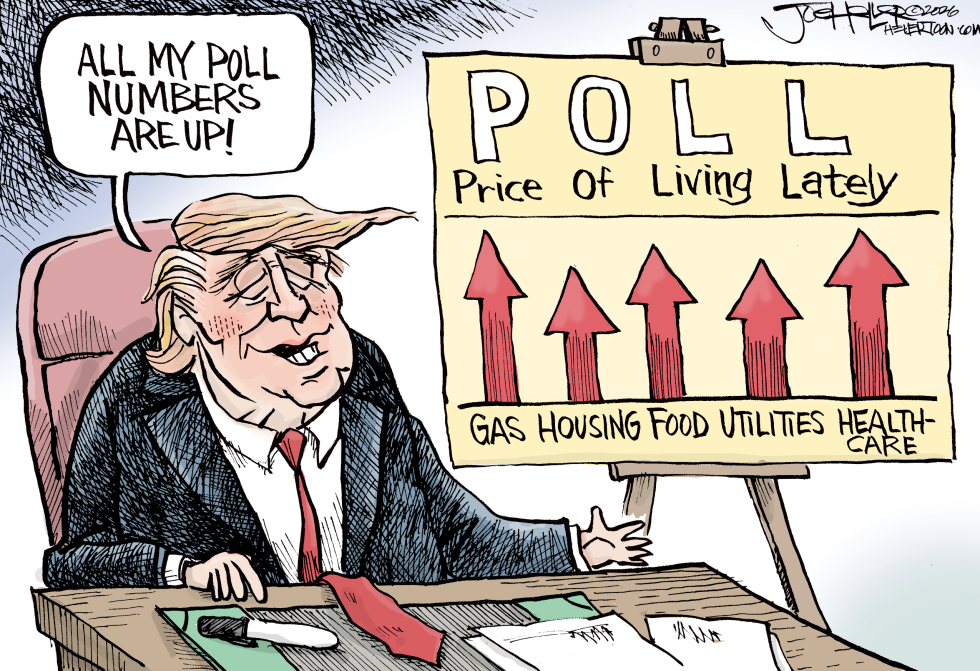
Donald Trump stated that his poll numbers were rising even as the price of living continued to climb across multiple categories. Gas, housing, food, utilities and healthcare costs all posted increases according to the visual data presented. The development matters because household expenses directly affect voter sentiment ahead of upcoming elections. Trump positioned the poll improvement as positive news despite the economic pressures shown. The piece takes the position that any reported poll gains are closely tracking the same upward pressure on everyday costs rather than reflecting broader approval.
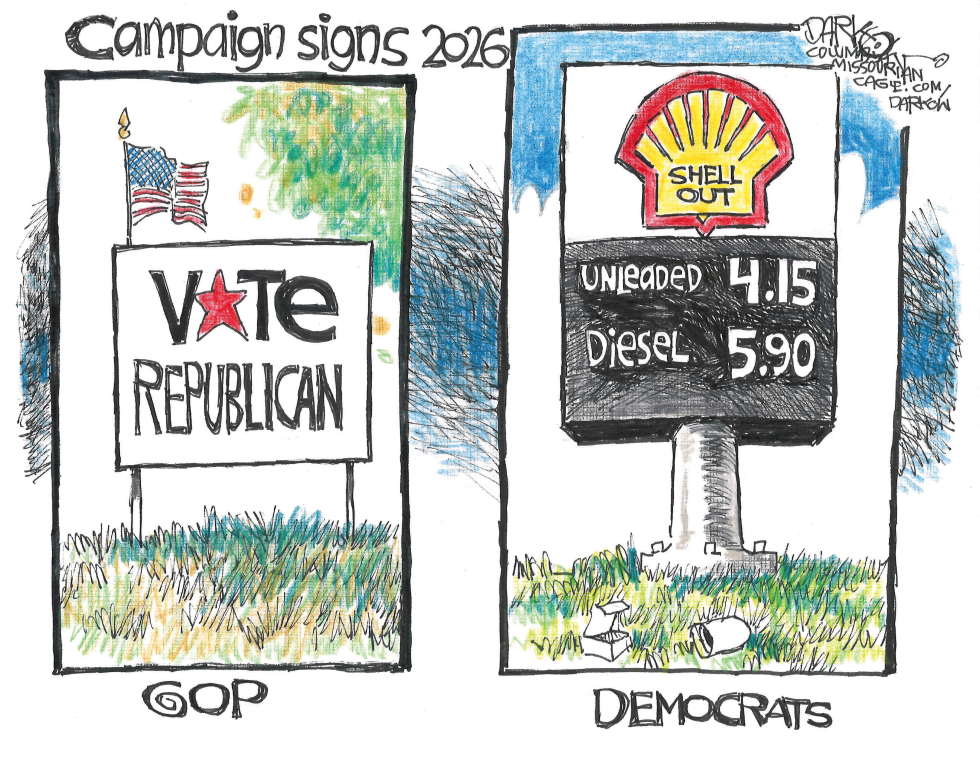
As the 2026 midterm campaigns intensify, Democrats confront voter frustration over elevated gasoline and diesel prices at the pump. The Shell station sign reading Shell Out with unleaded at $4.15 and diesel at $5.90 underscores how economic pressures can overshadow traditional political messaging. Republicans benefit from straightforward campaign signage while Democrats appear tied to the cost increases. The cartoon argues that fuel prices serve as a more potent electoral signal than yard signs for one party.
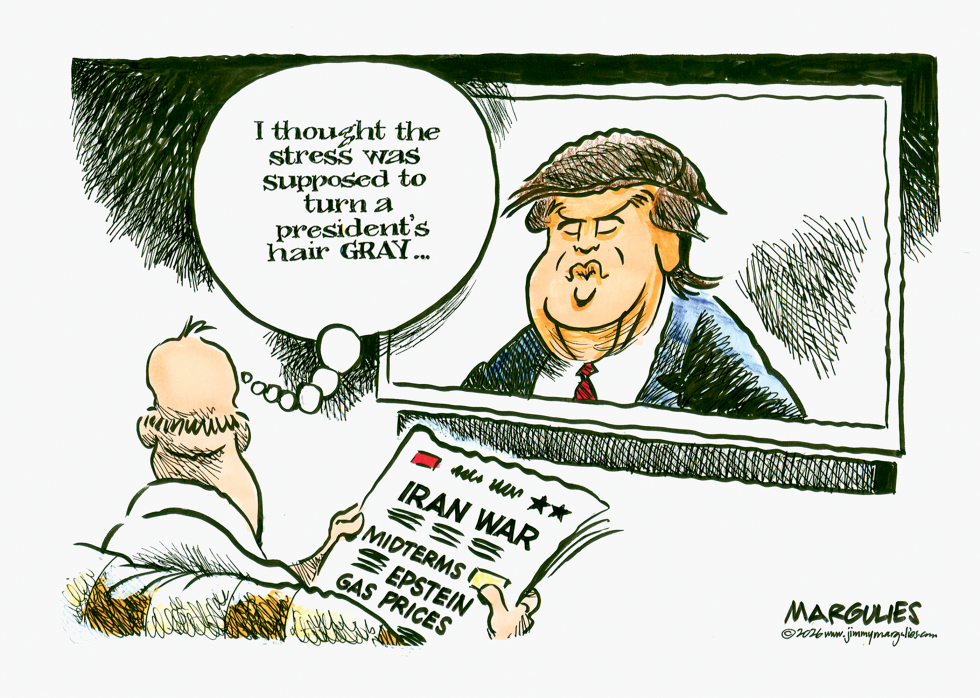
President Donald Trump confronts an Iran war, midterm election pressures, Epstein-related revelations and rising gas prices in September 2026. These overlapping challenges test the administration's capacity to manage foreign conflict and domestic economic strain simultaneously. The cartoon argues that the expected physical toll of such stress on the president has not materialized in the anticipated way.
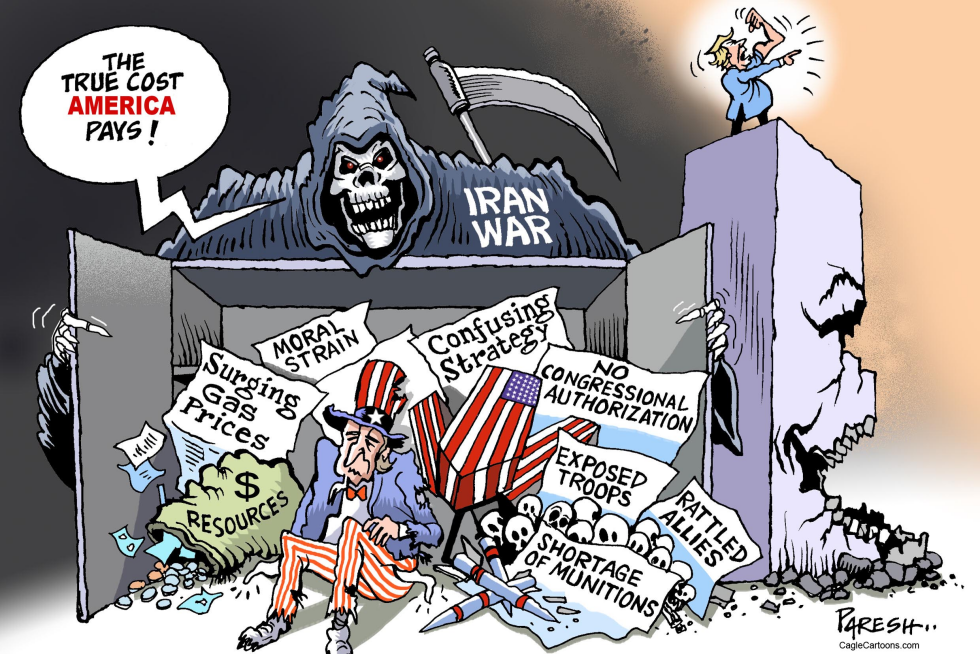
The cartoon depicts the Grim Reaper personifying the Iran War looming over a box of American costs including surging gas prices, moral strain, confusing strategy, no congressional authorization, exposed troops, shortage of munitions and rattled allies. Uncle Sam sits defeated among the debris with a broken flag and skulls. Donald Trump stands on a pedestal pointing upward. A speech bubble declares the true cost America pays. Published September 4, 2026, the piece critiques the drain on U.S. resources and lack of oversight in the conflict.
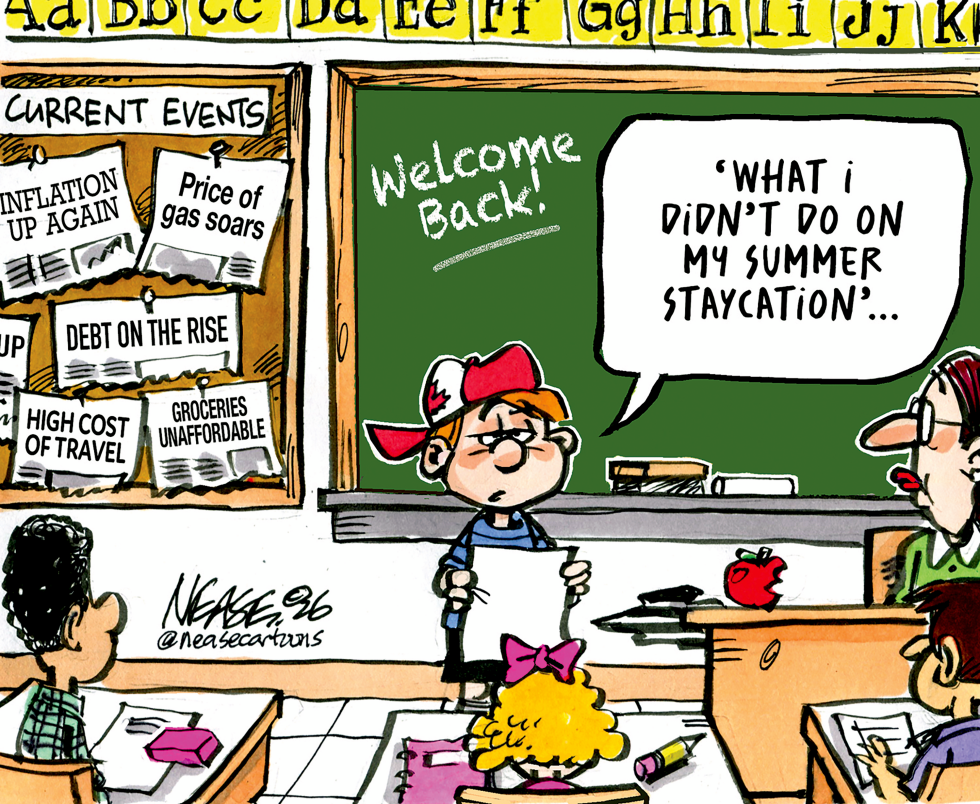
Rising inflation, gas prices, and household debt have made traditional summer vacations unaffordable for many families, leading to increased staycations as the new school year starts. The cartoon captures this cost-of-living squeeze through a classroom presentation on what students did not do over the break. It underscores how everyday expenses now dominate family decisions and limit leisure options.
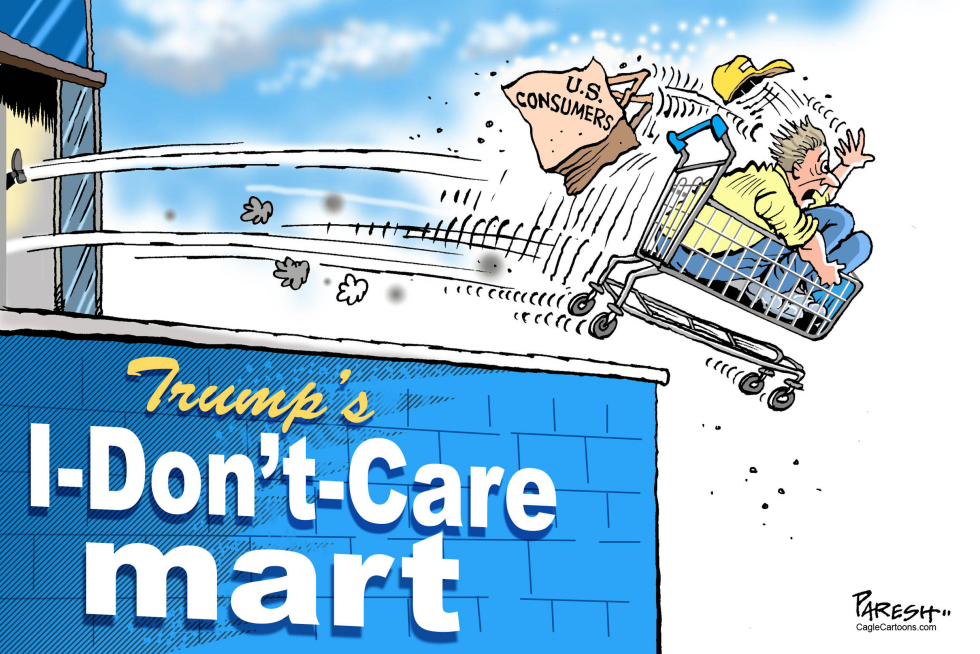
Trump administration policies on trade and spending have contributed to higher prices for everyday goods. American households face increased costs at stores as tariffs and other measures take effect. The cartoon argues these policies prioritize other goals over consumer welfare and leave families paying more.