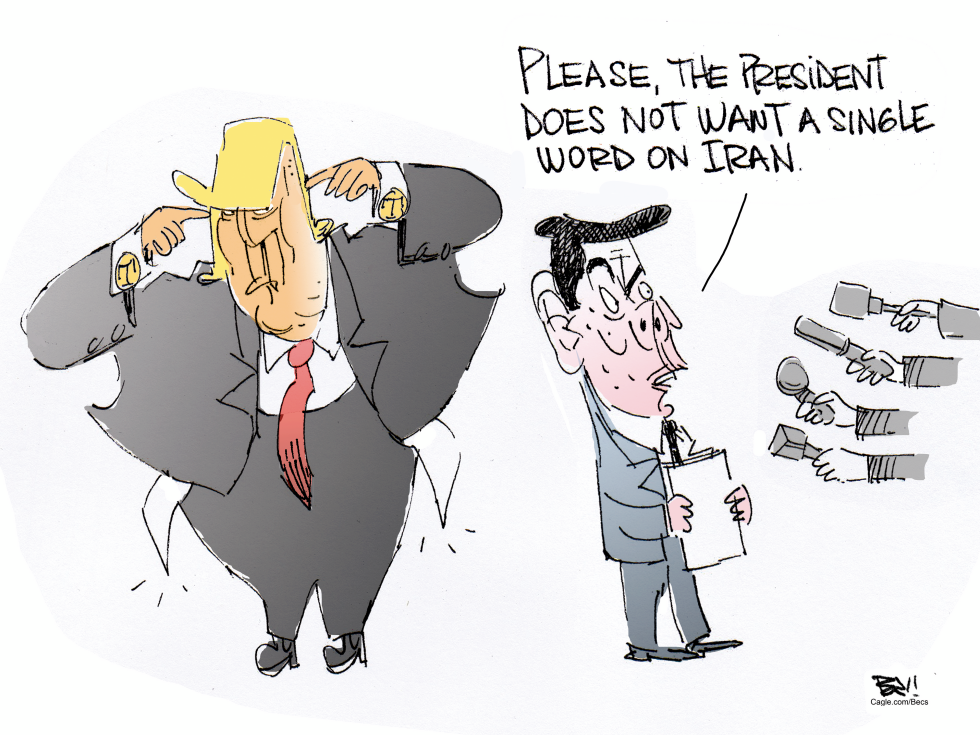
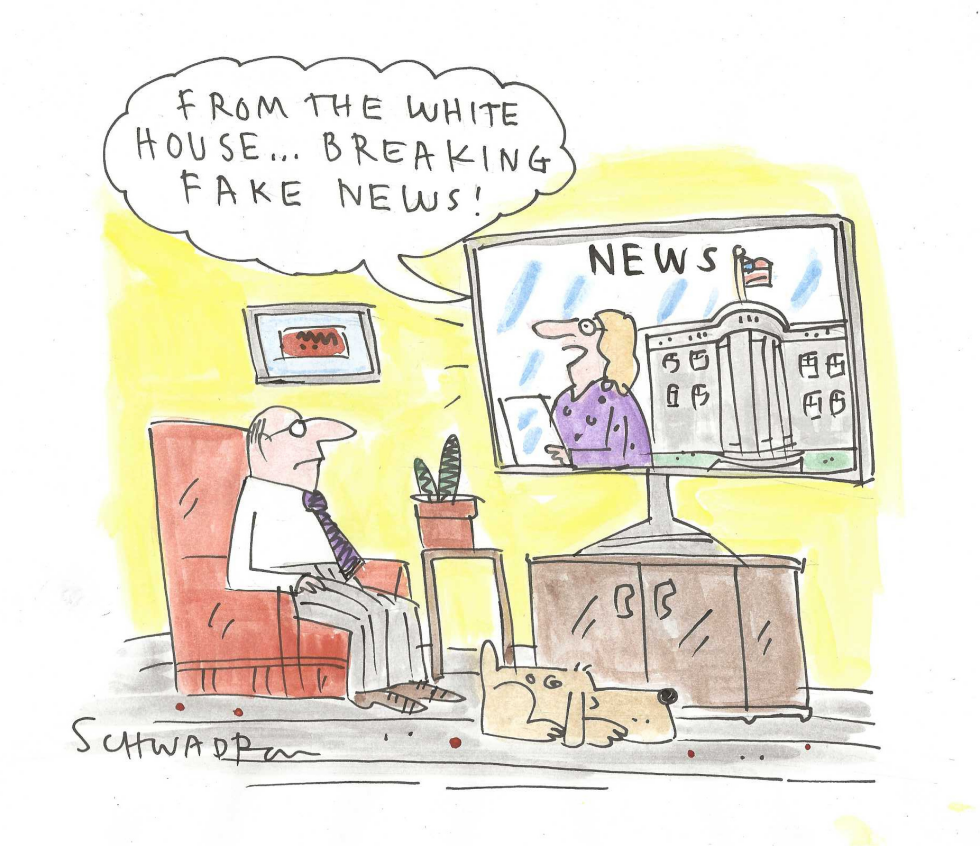
President Trump directed staff to avoid any public discussion of Iran policy. The move drew immediate pushback from reporters seeking clarification on administration plans. The editorial takes the position that the order reflects an effort to avoid accountability on a key foreign policy issue.
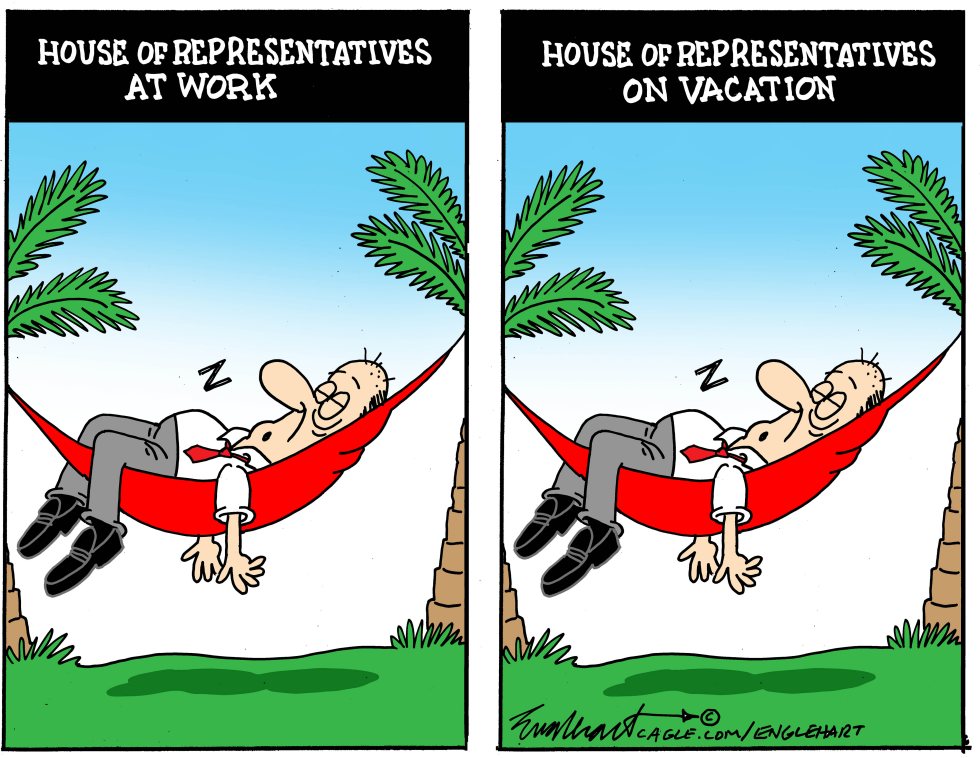
The House of Representatives faces ongoing criticism for extended recesses and perceived inactivity even during session periods. Members often balance legislative duties with breaks that critics say resemble full vacations. The piece argues that the distinction between official work time and time off has blurred to the point of being meaningless for the chamber.
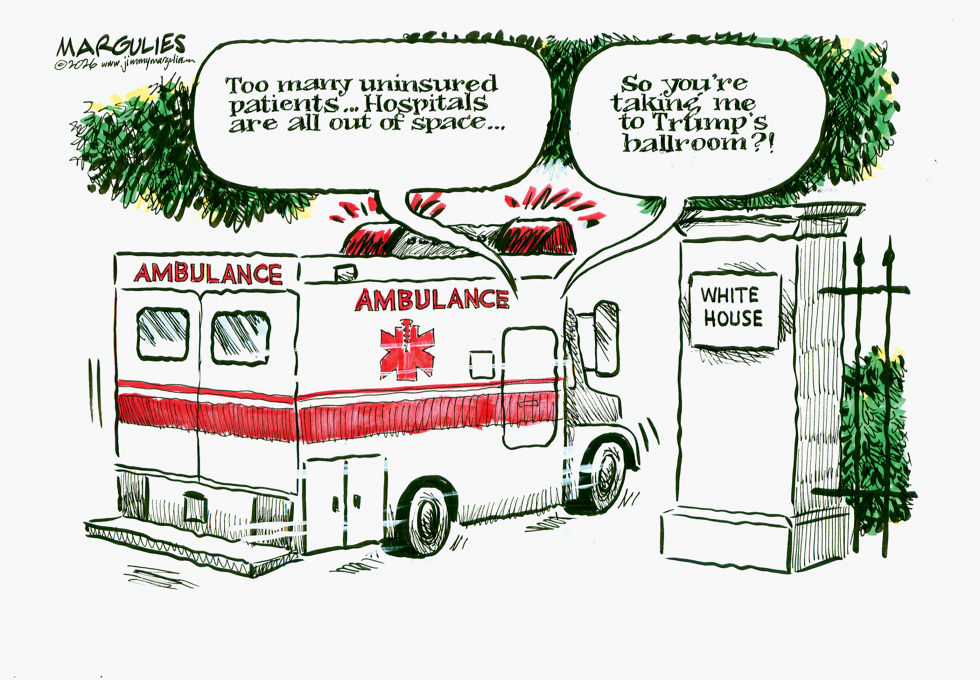
Hospitals across the country report severe overcrowding driven by rising numbers of uninsured patients seeking emergency care. The situation has prompted unusual measures, including the diversion of ambulances. In this context the cartoon depicts an ambulance being directed toward the White House ballroom associated with President Trump. The piece criticizes the administration's handling of the healthcare access problem by highlighting the contrast between medical need and the use of presidential property.
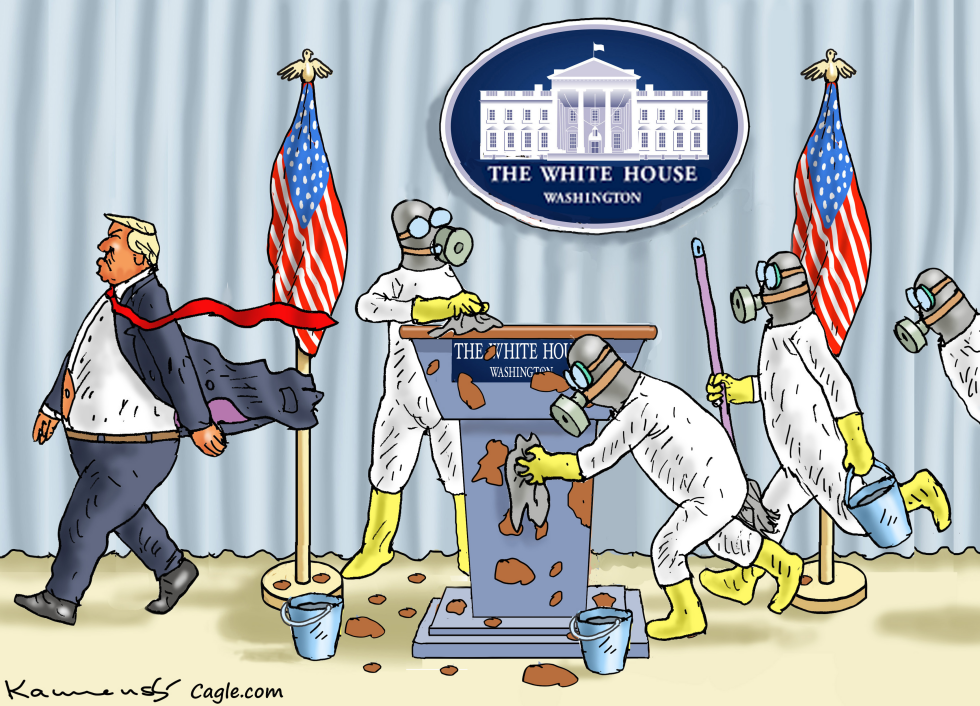
Donald Trump left the White House on August 4 2026 after his term. Hazmat-suited workers immediately began cleaning the podium and surrounding area marked with brown stains. The scene reflects the transition process and the physical state of the space left behind.
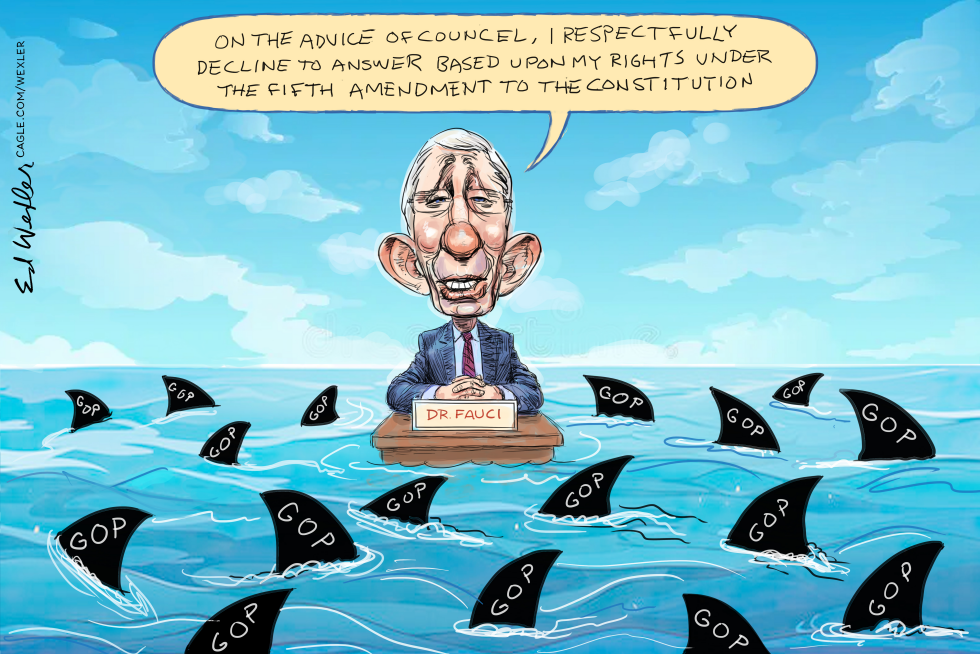
Dr. Anthony Fauci declined to answer questions at a House hearing, invoking his Fifth Amendment protections. The piece responds to Republican-led scrutiny of his role in pandemic-era public health decisions. It depicts the proceeding as a hostile setting rather than a neutral fact-finding exercise.
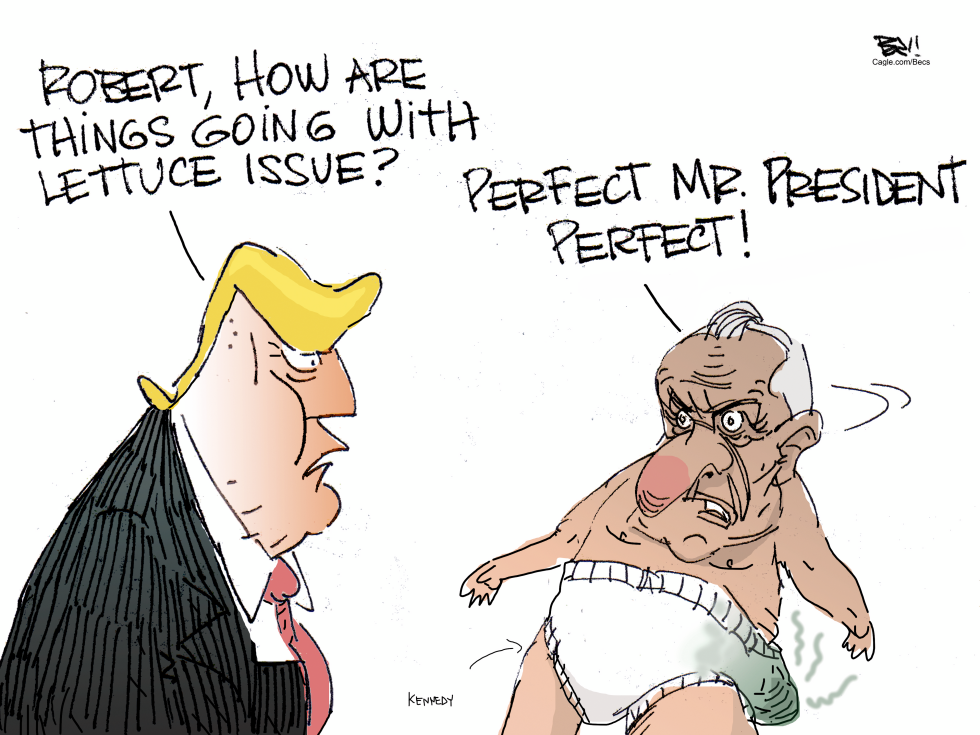
President Trump questioned a senior official named Kennedy about the lettuce issue in a recent exchange. The official responded that everything was perfect. The moment underscores persistent questions about competence and oversight in key government roles handling public health and food matters.
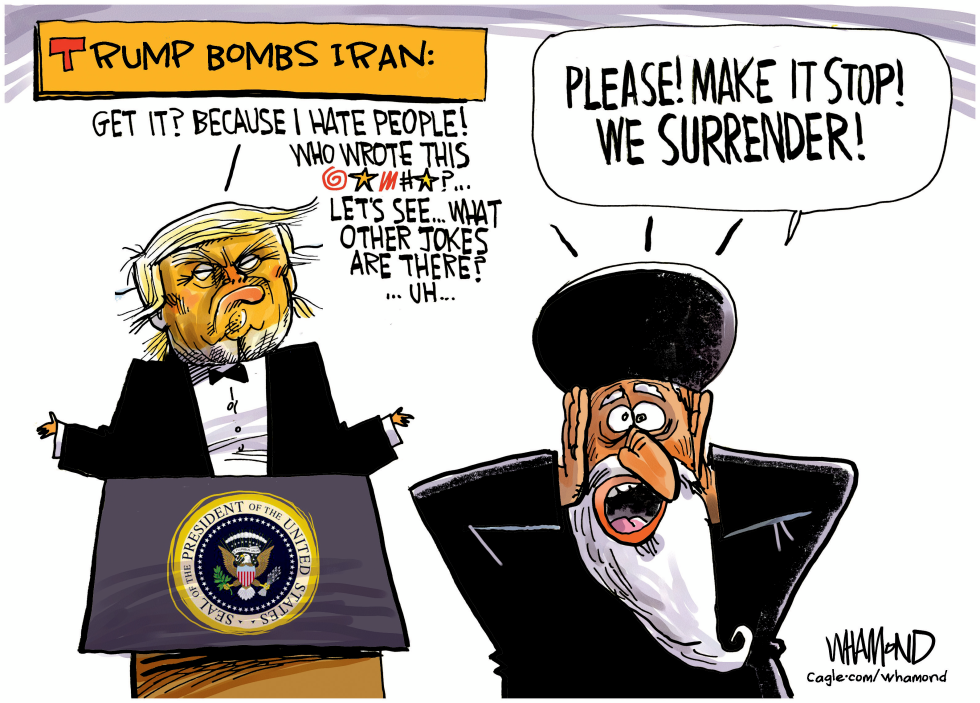
President Trump ordered strikes on Iran in late July 2026, prompting an immediate public plea for surrender from Iranian leadership. The action escalates tensions in the Middle East and raises questions about U.S. military objectives. The editorial takes the position that the strikes reflect personal animus rather than strategic necessity and mocks the president's framing of the operation.
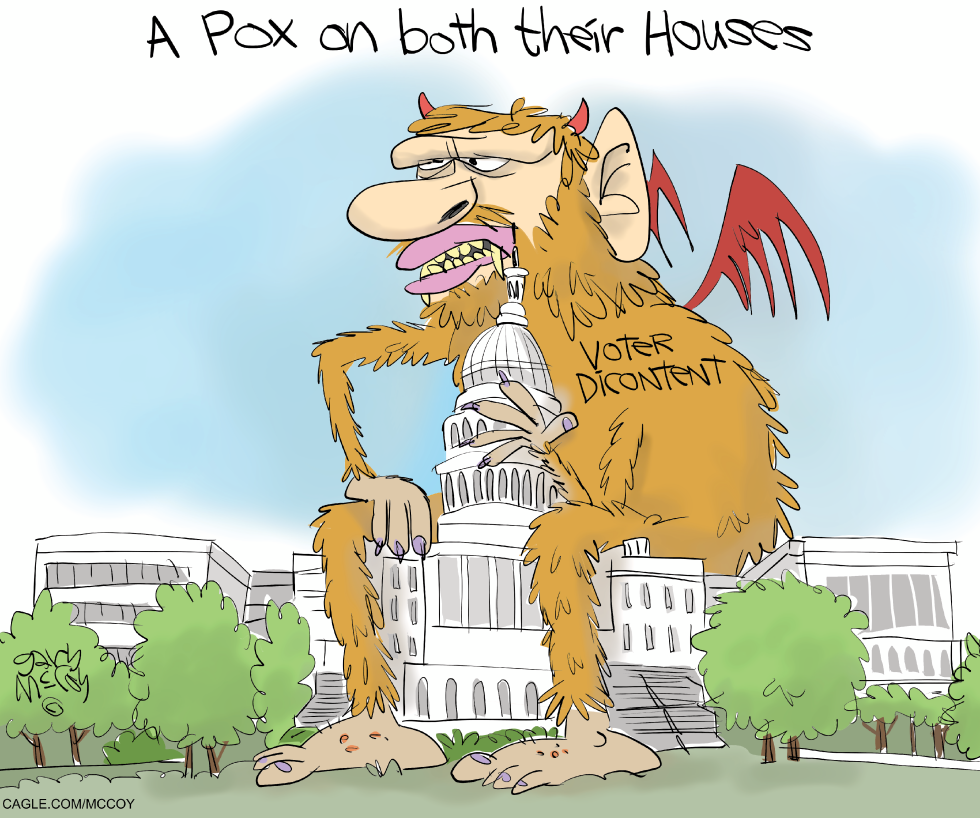
Voter frustration with Congress has grown amid stalled legislation and partisan gridlock on Capitol Hill. The piece portrays this sentiment as a towering monstrous force looming over the legislative branch. It argues that public anger targets both parties equally for failing to address key issues.
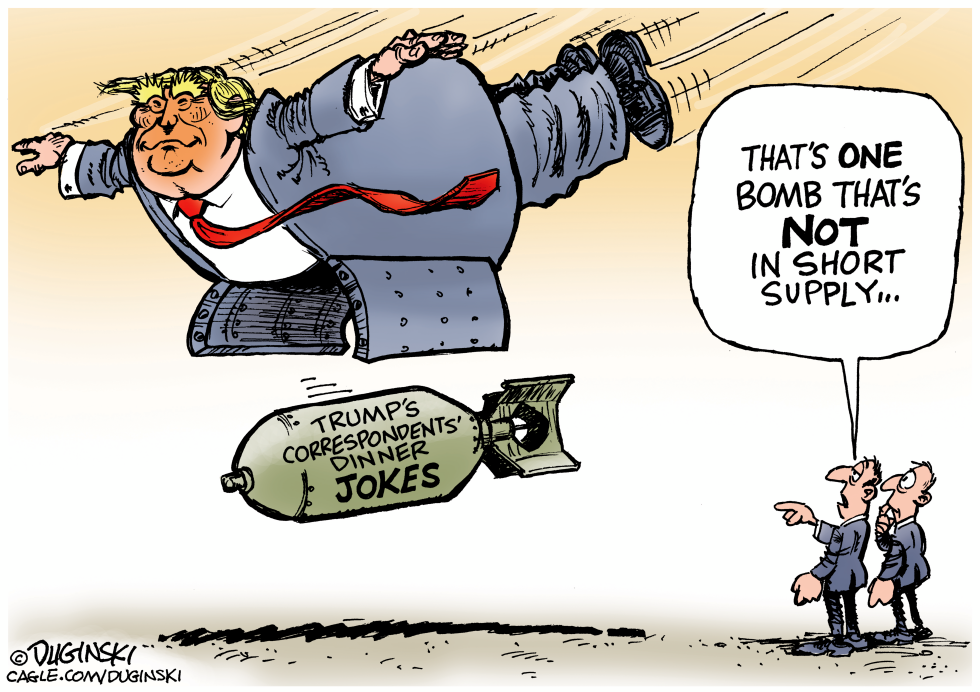
Donald Trump delivered jokes at the 2026 White House Correspondents Dinner that landed poorly with the audience. The event drew attention for the president's comedic missteps amid ongoing tensions with the press. The piece argues the routine exposed a persistent pattern of tone-deaf delivery rather than isolated misfires.
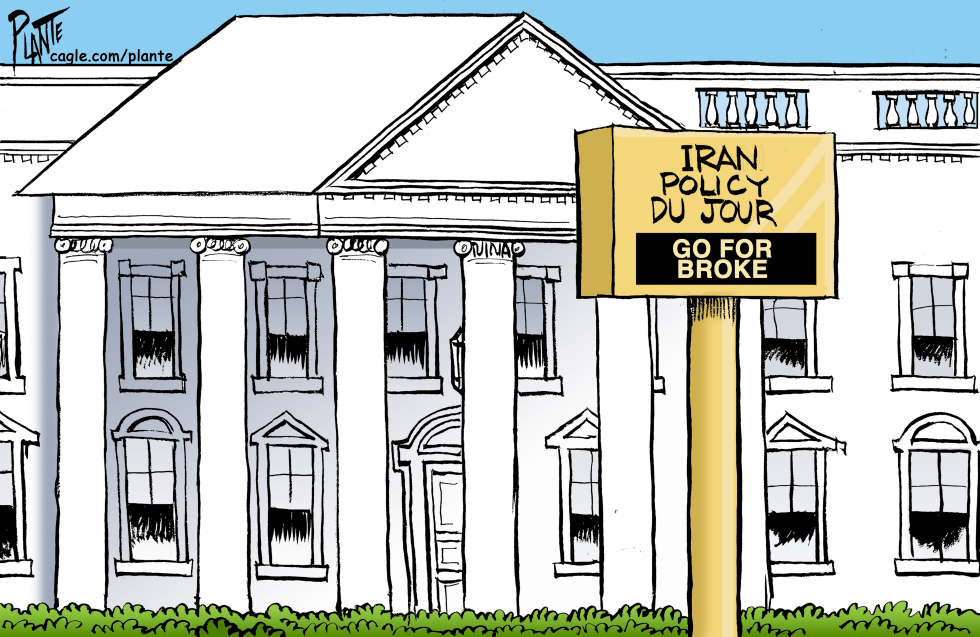
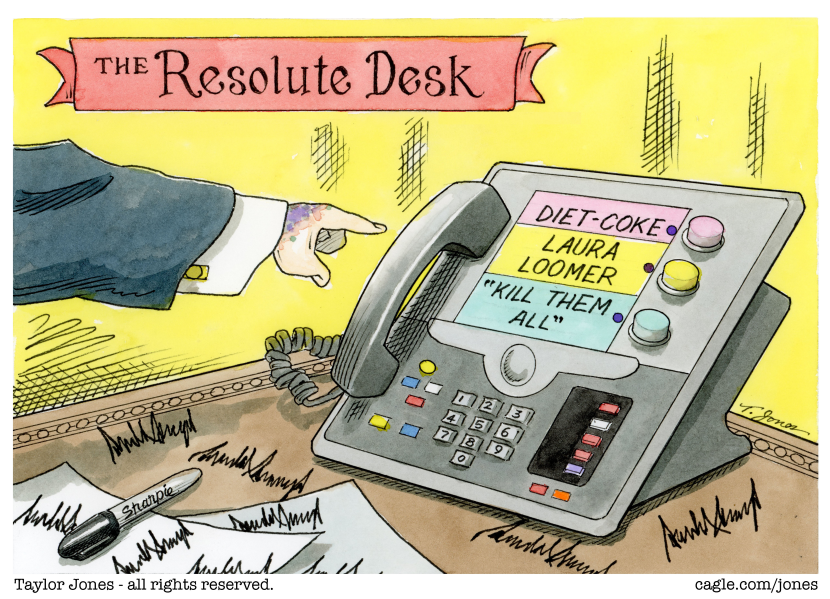
The White House has signaled a more aggressive posture toward Iran through public messaging that emphasizes risk-taking. The move comes amid persistent tensions over nuclear issues and regional influence. The editorial takes the position that such an approach lacks consistency and invites unnecessary escalation.
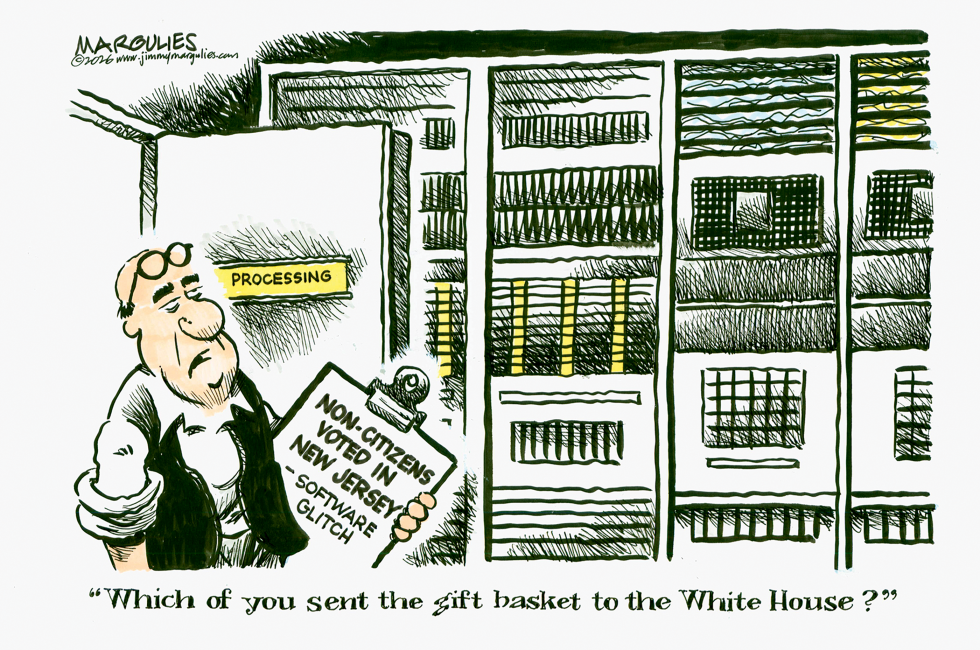
A software glitch in New Jersey allowed non-citizen votes to be counted during recent election processing. Officials are now under scrutiny after the error surfaced. The incident raises concerns about election integrity and data handling systems. The cartoon depicts a processing center where staff receive pointed questions about a gift sent to the White House. It highlights accountability issues in managing voting technology.
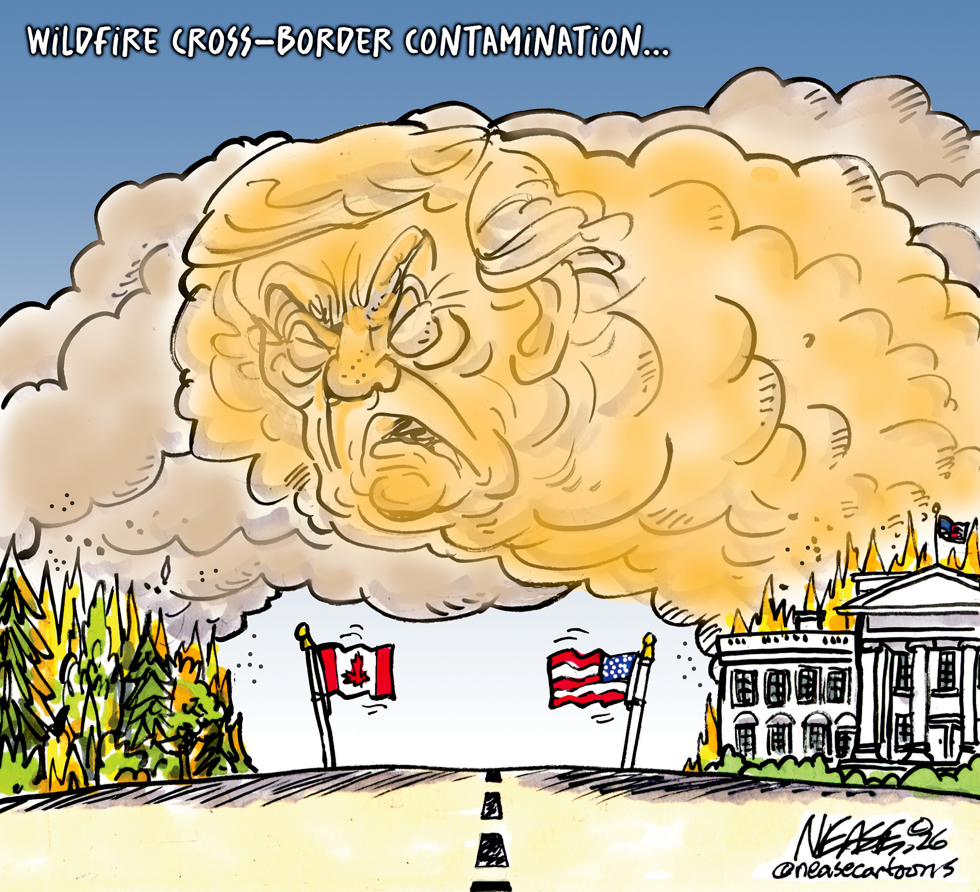
Wildfires in Canada have periodically sent smoke into the United States, creating air quality issues and diplomatic friction over environmental management. On the 2026 publication date the cartoon frames Donald Trump as the source of the drifting smoke that reaches the White House. The piece presents the former president as an ongoing source of political contamination that crosses borders and affects American institutions.
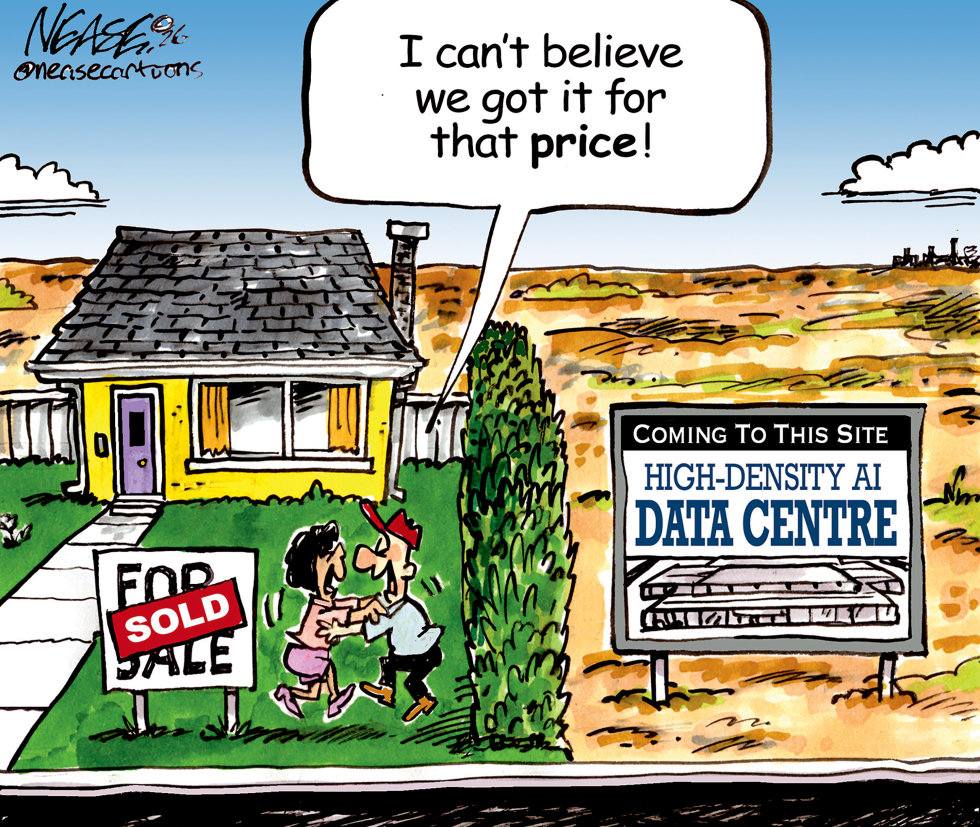
A couple has purchased a home directly beside a site slated for a high-density AI data centre. The buyers express delight at the low price without apparent concern for the industrial development. The situation highlights growing tensions between residential real estate and expanding technology infrastructure needs. Local communities increasingly face similar land-use conflicts as data centre construction accelerates. The piece portrays the purchase as shortsighted amid rapid AI-driven expansion.