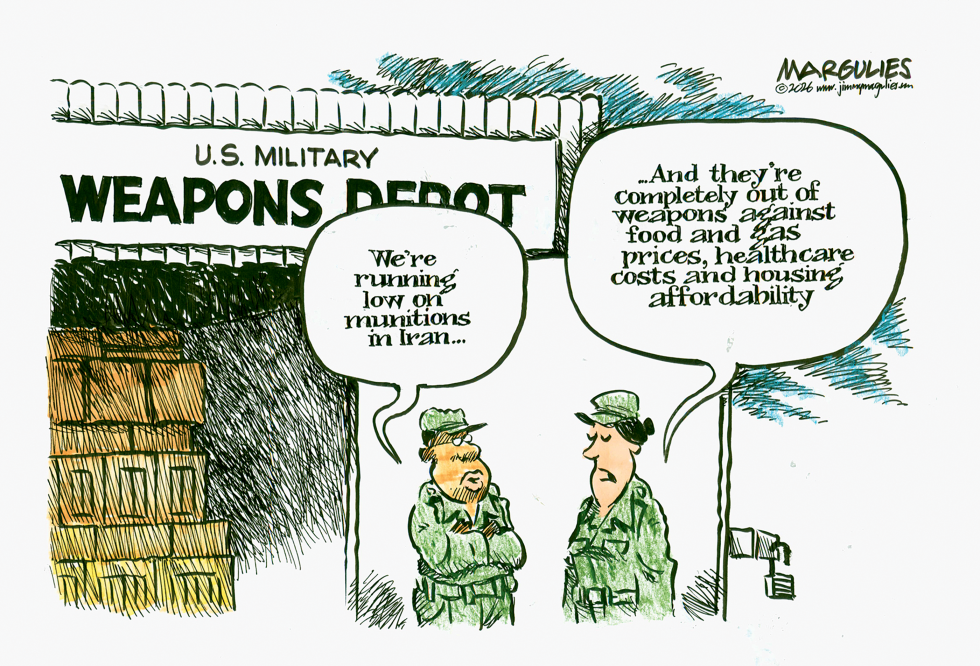
The cartoon depicts two U.S. soldiers outside a weapons depot labeled U.S. Military Weapons Depot. One soldier states the facility is running low on munitions in Iran. The second replies that domestic fronts are out of weapons against food and gas prices, healthcare costs and housing affordability. The image responds to ongoing debates over U.S. military aid commitments abroad and competing budget pressures at home as of the August 2026 publication date. It uses the depot setting and dialogue to contrast foreign military demands with economic challenges facing American households.
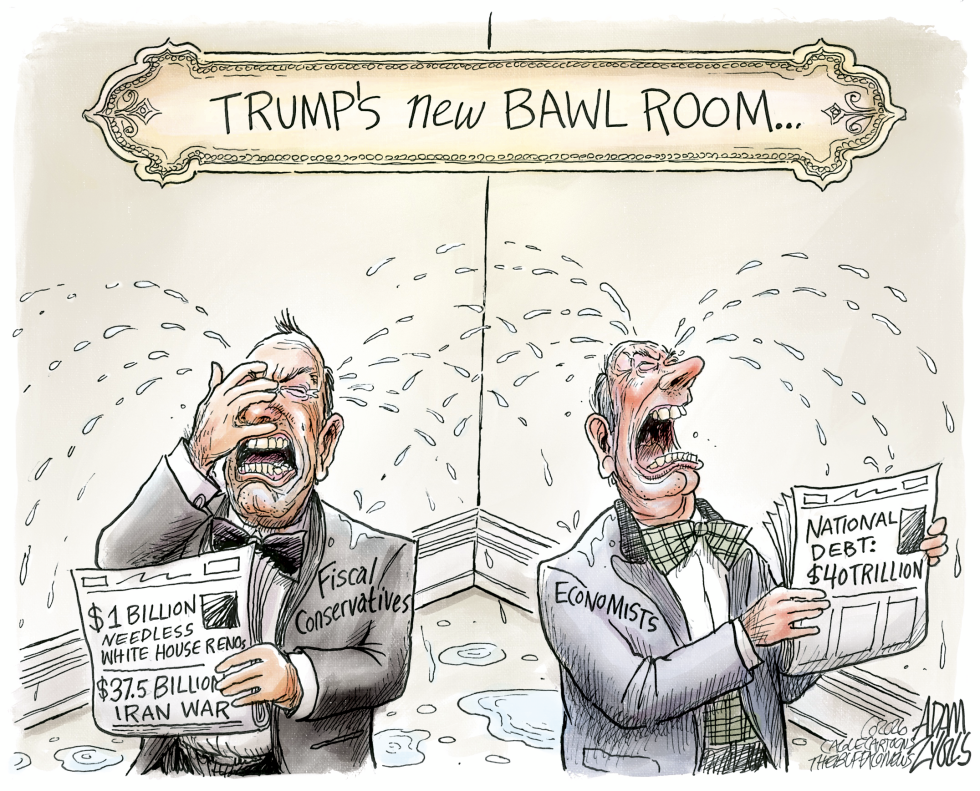
The cartoon depicts fiscal conservatives and economists weeping in a room labeled Trump's new bawl room. One holds documents citing a needless one billion dollar White House renovation and thirty seven point five billion dollar Iran war. The other displays a national debt of forty trillion dollars. The image highlights concerns over federal spending priorities.
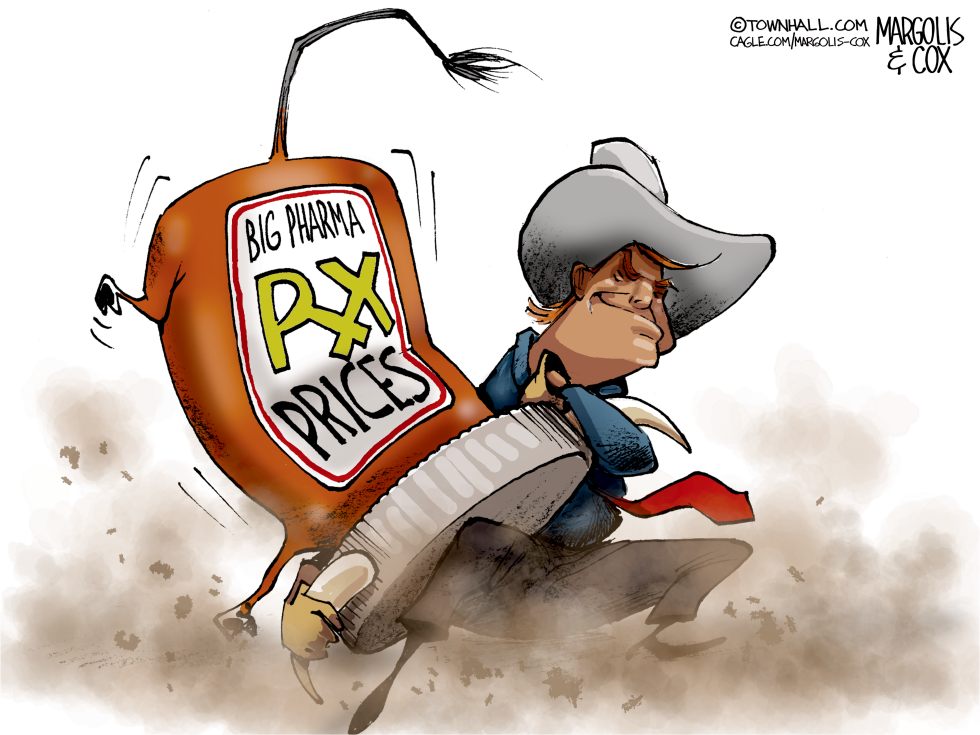
Ongoing debates over high prescription drug costs from major pharmaceutical companies continue to draw political attention. Lawmakers and regulators have pushed measures aimed at lowering prices for consumers. The cartoon depicts the challenge of reining in those costs as a high-stakes contest. It takes the position that aggressive action is needed to bring relief despite industry resistance.
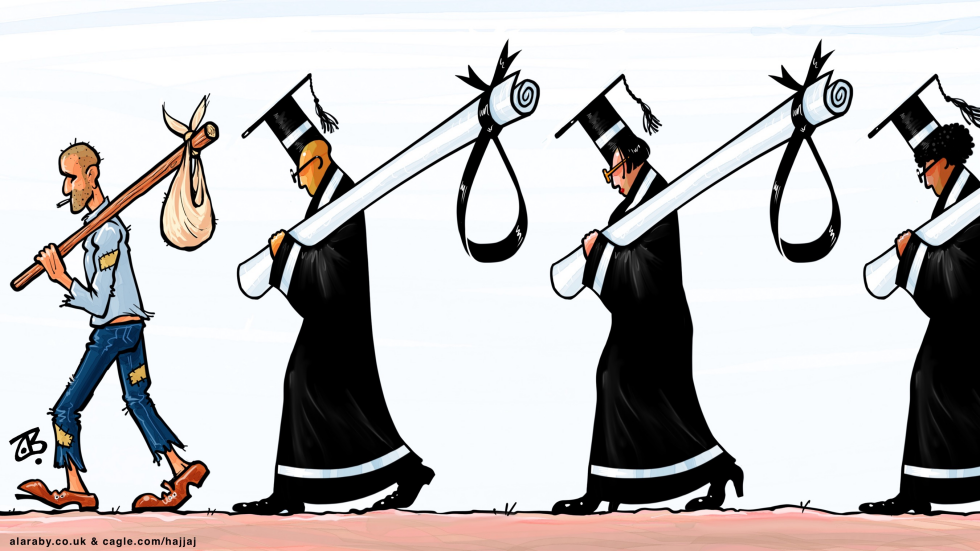
Graduates face mounting education costs that turn diplomas into symbols of debt. The image captures the procession of students weighed down by financial obligations after completing their studies. It critiques the ongoing burden placed on new degree holders.
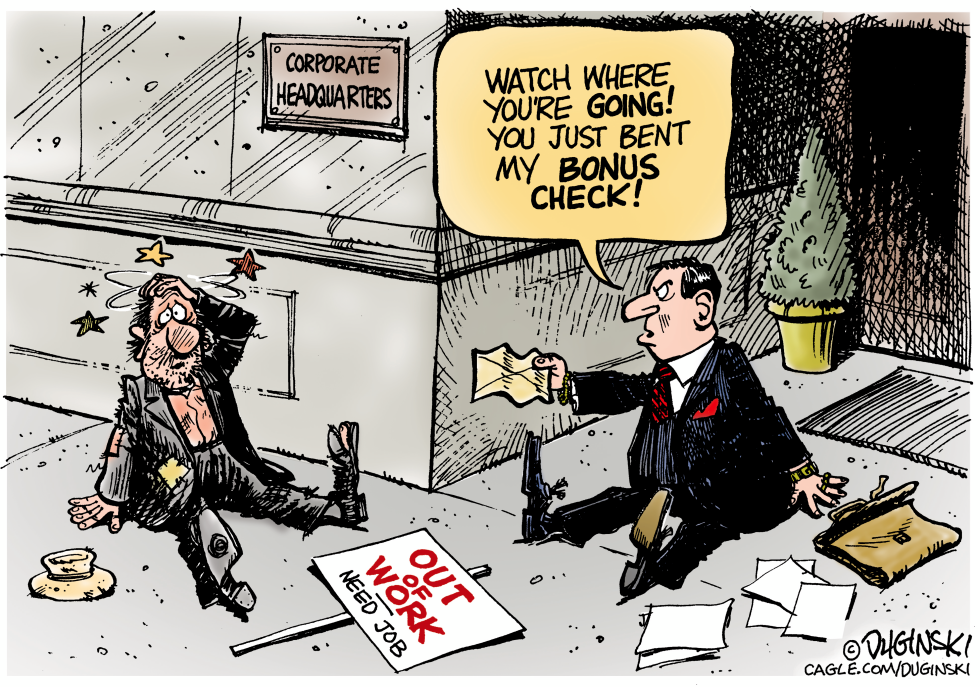
Corporate executives continue to receive large bonuses even as layoffs persist across sectors. The piece responds to ongoing debates over executive compensation packages during periods of workforce reduction. It takes the position that such bonuses appear disconnected from the realities facing displaced employees.
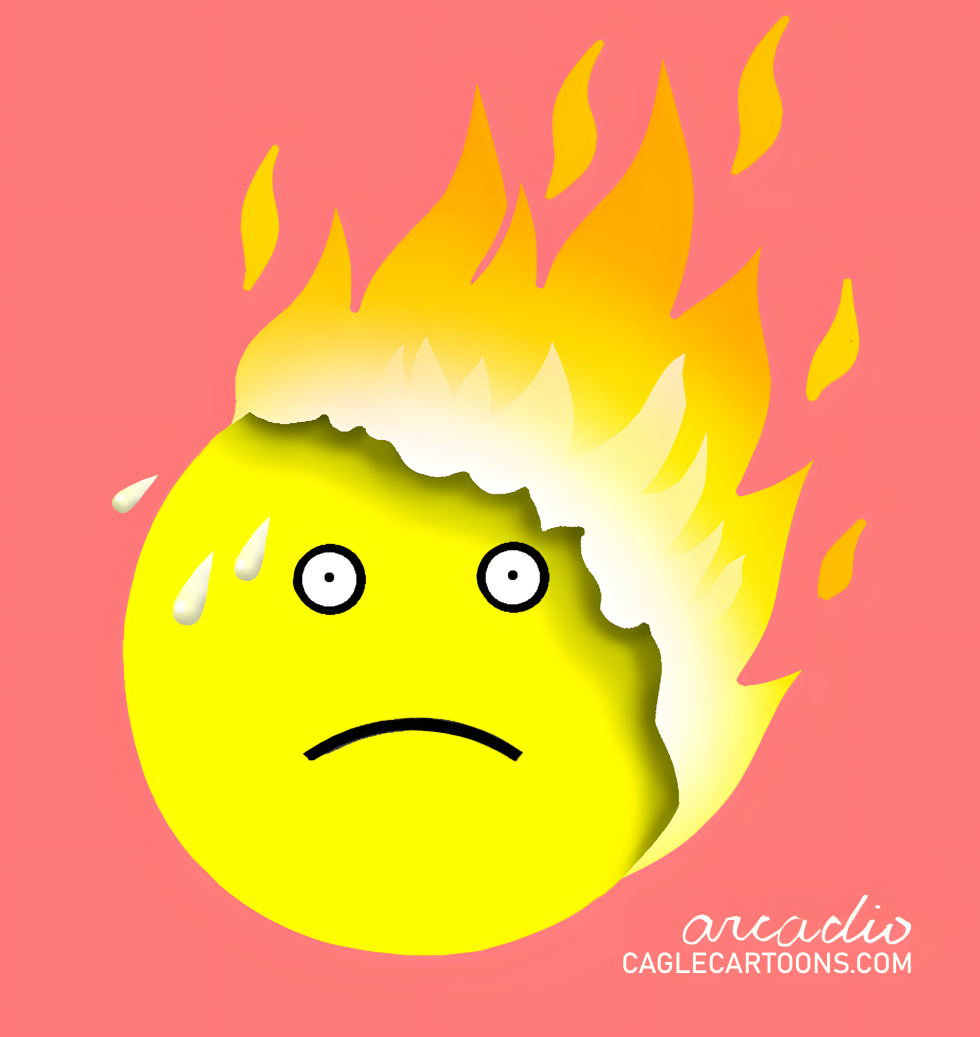
Ongoing wildfire seasons and fire-related disasters continue to disrupt communities and personal well-being across affected regions. The piece frames these events as forces that directly eliminate everyday happiness and security for those impacted. It presents fire as an eraser of positive emotion rather than a manageable natural occurrence.
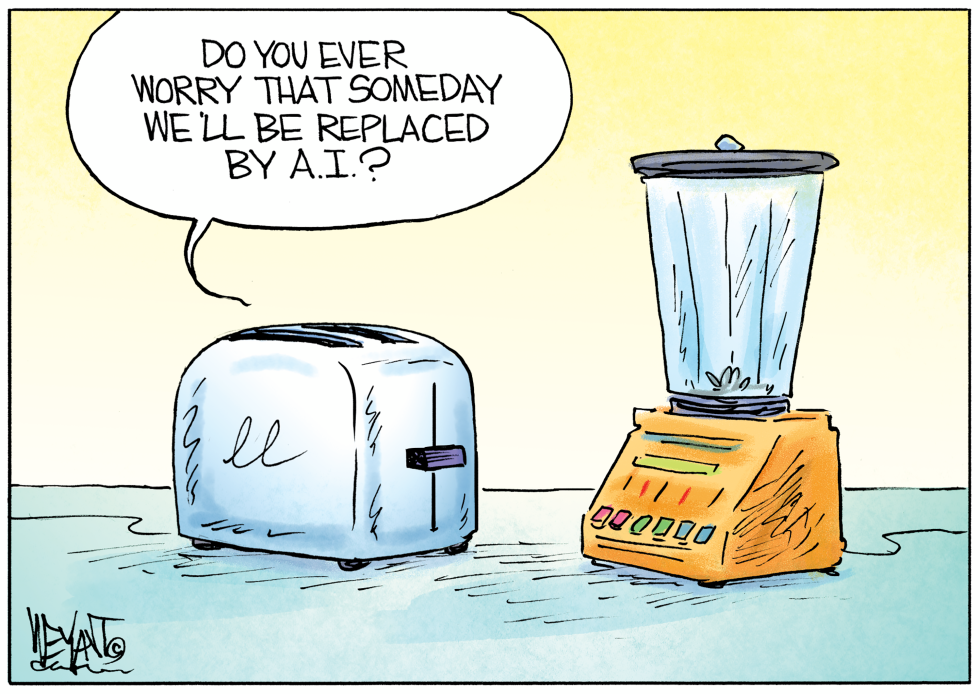
Anxiety about artificial intelligence replacing human work has spread across industries. The piece responds to widespread uncertainty over which roles automation will absorb next. It treats the worry as universal enough to reach even household appliances.
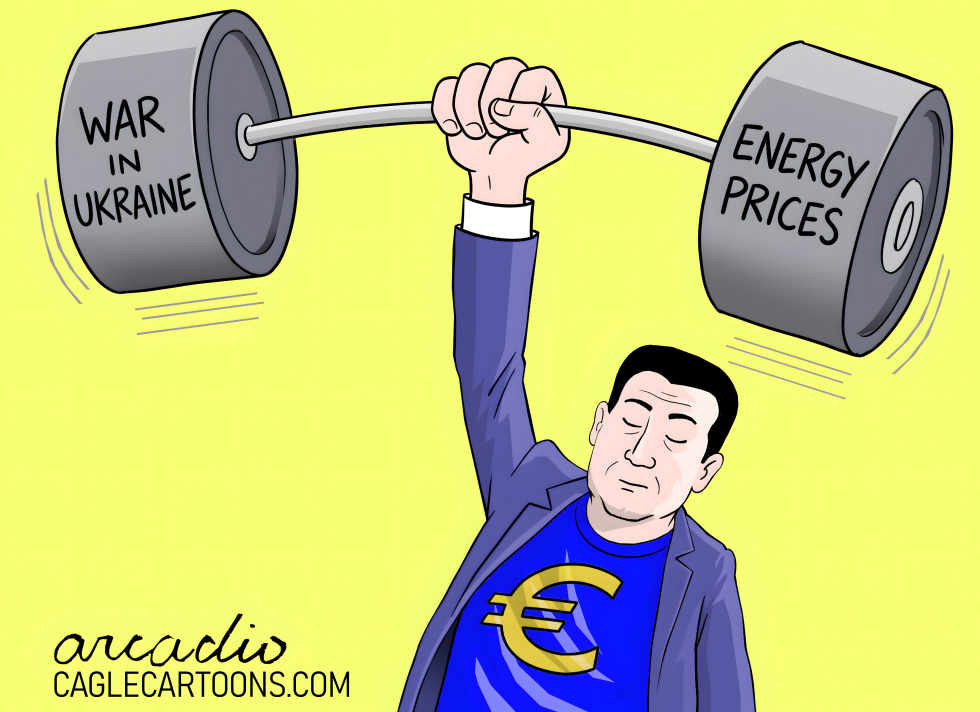
The Eurozone continues to absorb economic shocks from the Ukraine conflict and elevated energy costs. These pressures test the currency's stability and the broader European economy. The image portrays the Euro successfully shouldering both loads, underscoring its capacity to endure without collapse.
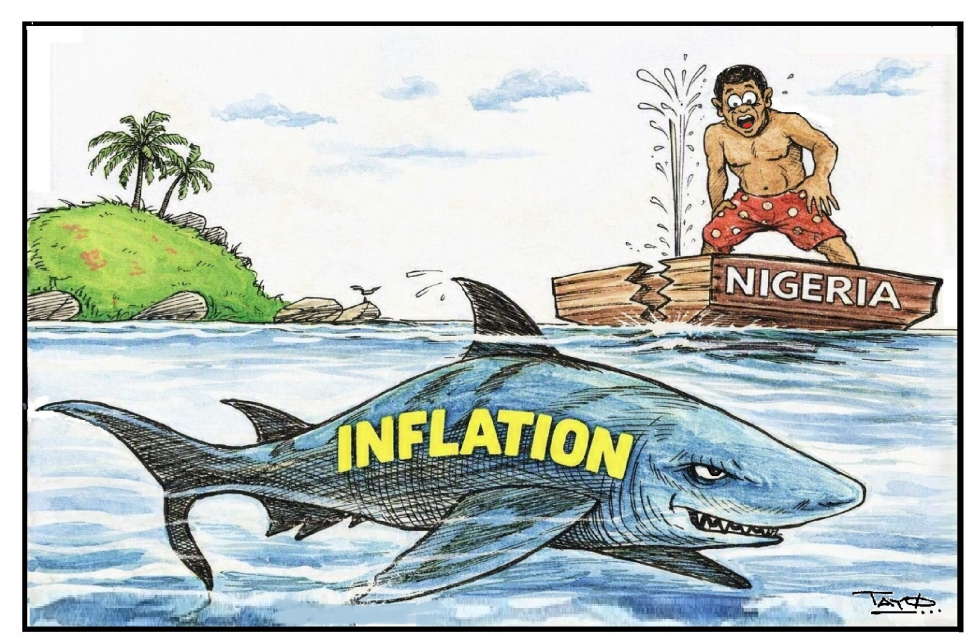
Nigeria continues to contend with sustained inflation and rising living costs. The piece responds to persistent price pressure on households and the strain it places on the wider economy. It presents inflation as a predatory force circling a vessel already taking on water.
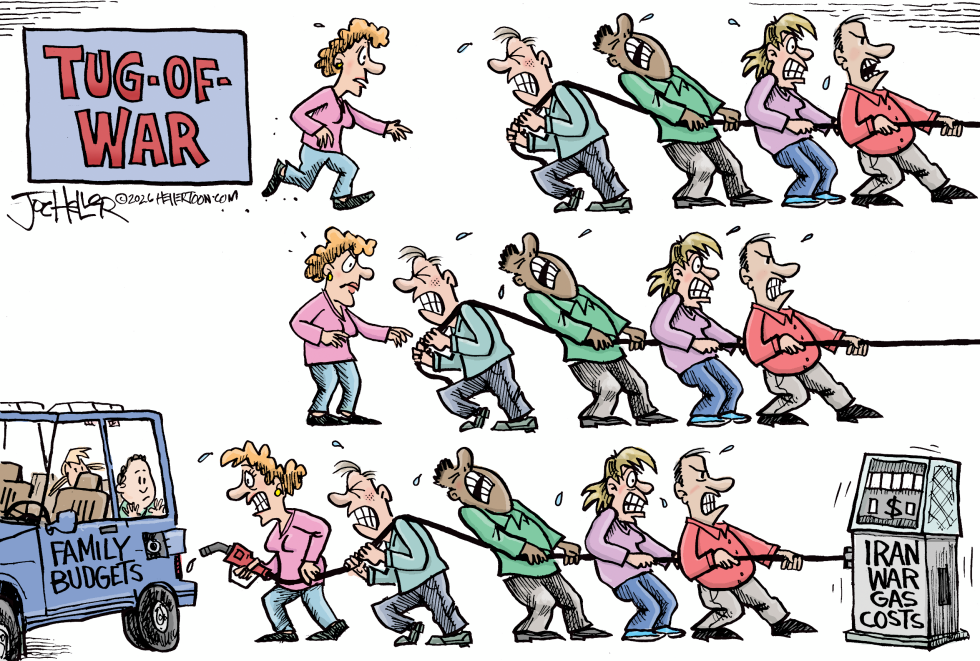
Rising gas prices linked to potential conflict with Iran are pressuring household budgets across the country. The cartoon illustrates the direct economic tug between military action abroad and everyday costs at the pump, arguing that families bear the immediate burden of such decisions.
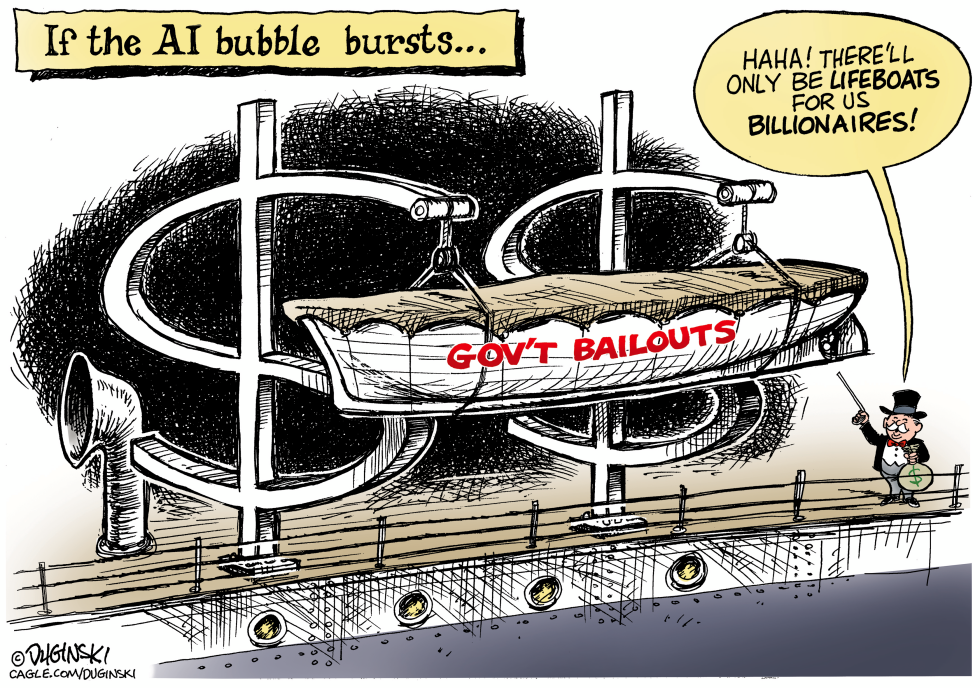
Speculation grows over potential government intervention if the artificial intelligence sector experiences a sharp downturn. Industry leaders and investors face questions about whether public funds would support failing companies. The editorial argues that any such support would primarily protect billionaires rather than address wider economic fallout from overvalued tech assets.
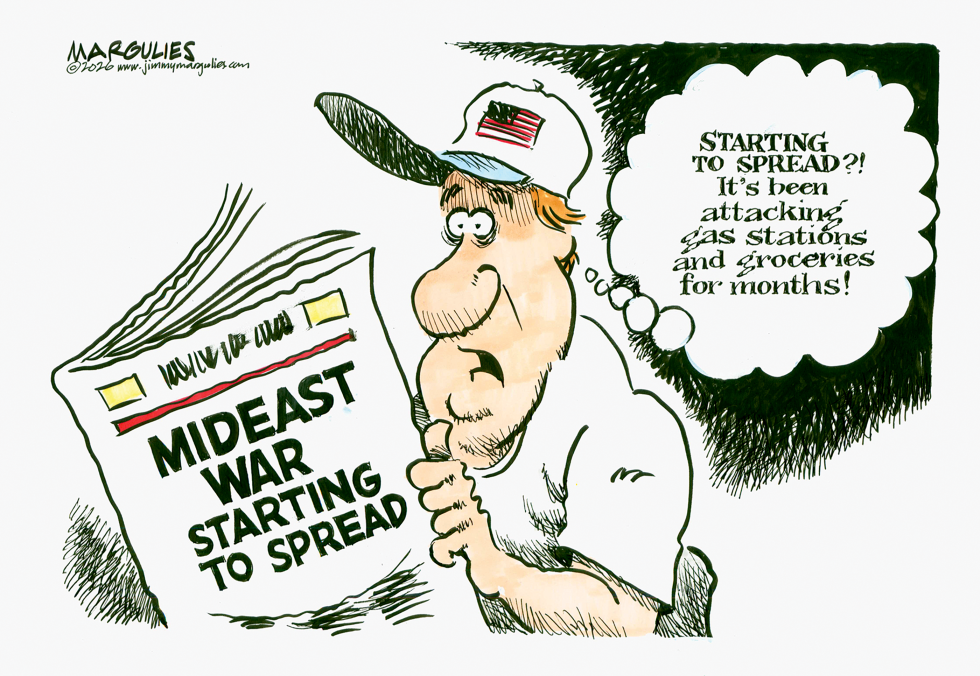
A newspaper headline declares the Mideast war starting to spread, prompting public reaction over its effects on daily costs. The piece highlights how energy and food prices have already risen due to ongoing regional conflict. It takes the position that the economic consequences for Americans have been evident long before any formal expansion of the fighting.
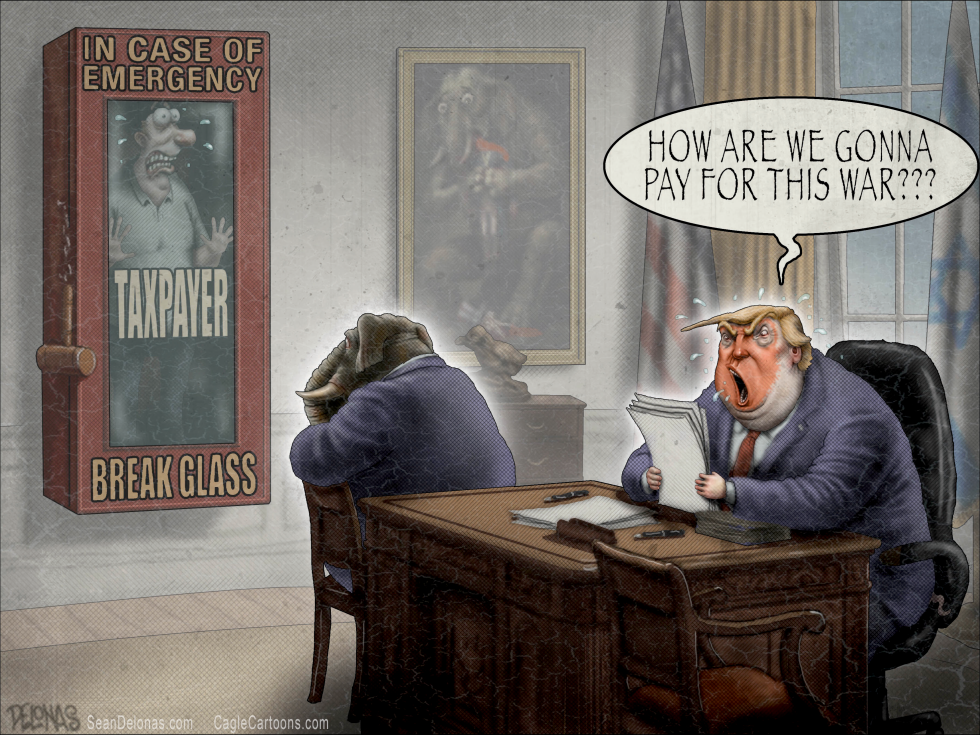
Donald Trump publicly questions the costs of ongoing war funding in mid-2026, highlighting taxpayer burdens during budget debates. The move underscores tensions within Republican circles over defense spending priorities and fiscal responsibility. The piece portrays the concern as an emergency response to mounting expenses.
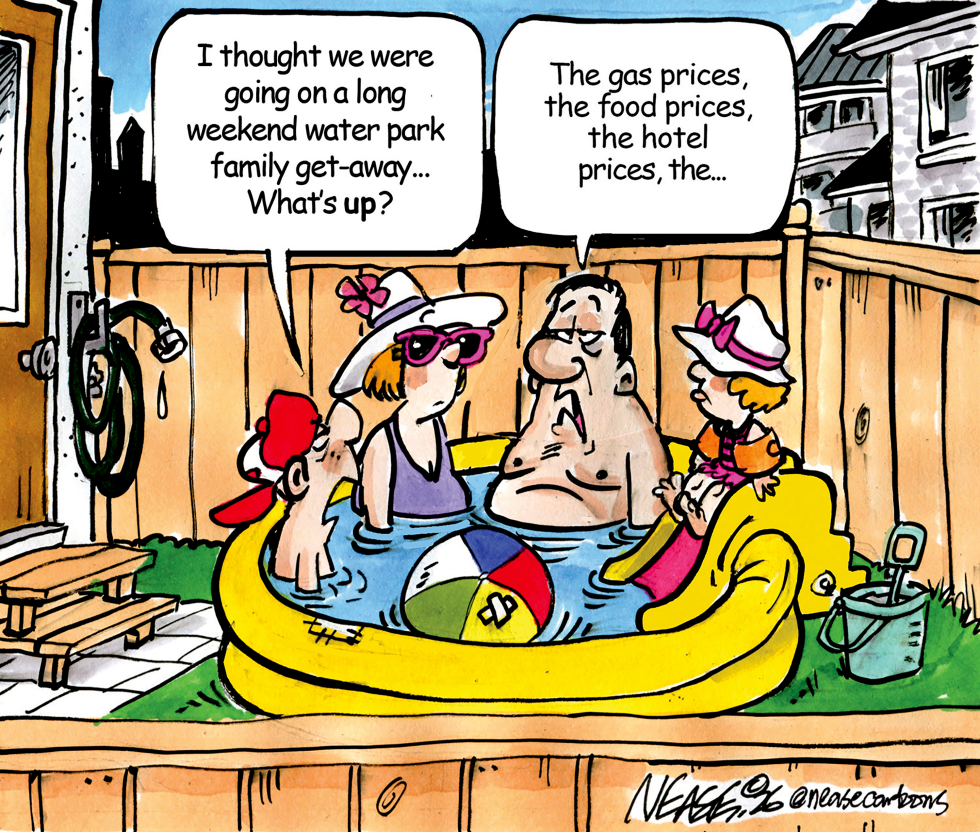
Families planning summer getaways face steep increases in gas, food, and hotel costs that disrupt long weekend plans. The piece highlights how these expenses push households toward simpler backyard alternatives while underscoring the persistent strain inflation places on everyday leisure.