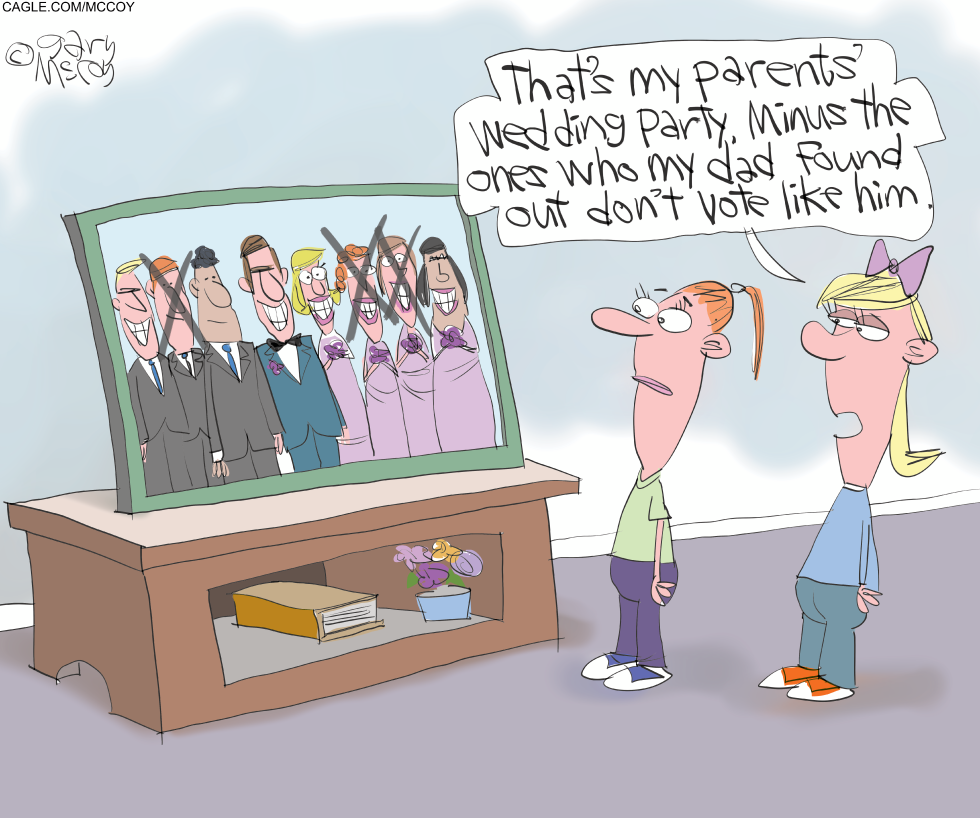
A television displays a wedding party photo with multiple guests marked out by large X's. Two children stand in front of the screen. The girl with the ponytail explains that her father removed family members from the wedding party after discovering they do not vote the same way he does. The scene highlights how political disagreements can fracture family events and relationships.
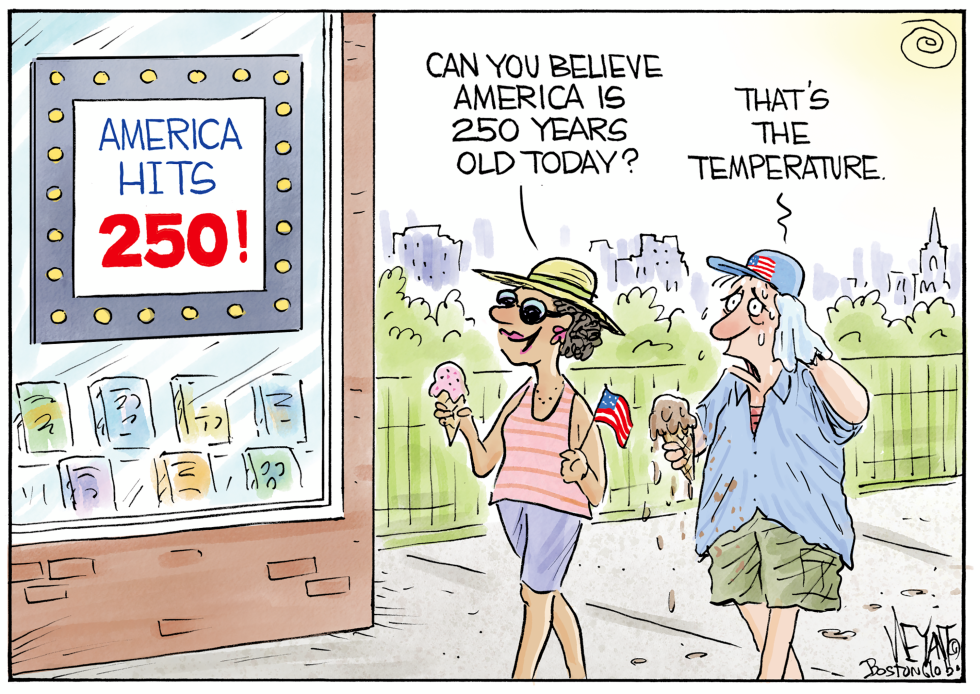
On July 2 2026 two figures pause outside an ice cream shop whose sign proclaims America Hits 250. The woman in a flag tank top asks if anyone can believe the country is 250 years old today. Her companion replies that the figure matches the current temperature as his cone melts onto the pavement. The exchange occurs two days before the July Fourth holiday during a period of elevated summer readings. Background buildings and greenery place the scene in an urban park setting.
A sketched dog sits on its haunches and stretches one paw toward a tall cup resting on a low pedestal. The cup carries bold labels reading POW, BANG and BOOM along with starburst graphics. Large capital letters at the bottom of the frame spell out FOR DOG'S SAKE. The drawing appears on a plain white background with minimal shading and loose line work typical of daily comic strips.
The image presents a coach figure positioned in front of a green chalkboard filled with a dense collection of white lines boxes arrows circles and x marks beneath the heading Iran Plan. The figure wears a red shirt with a whistle and the word Coach visible on the chest. Two speech bubbles contain the phrases That's the play and Now could someone explain it to me. A signature reading sack appears at the lower left along with website text at the bottom edge.
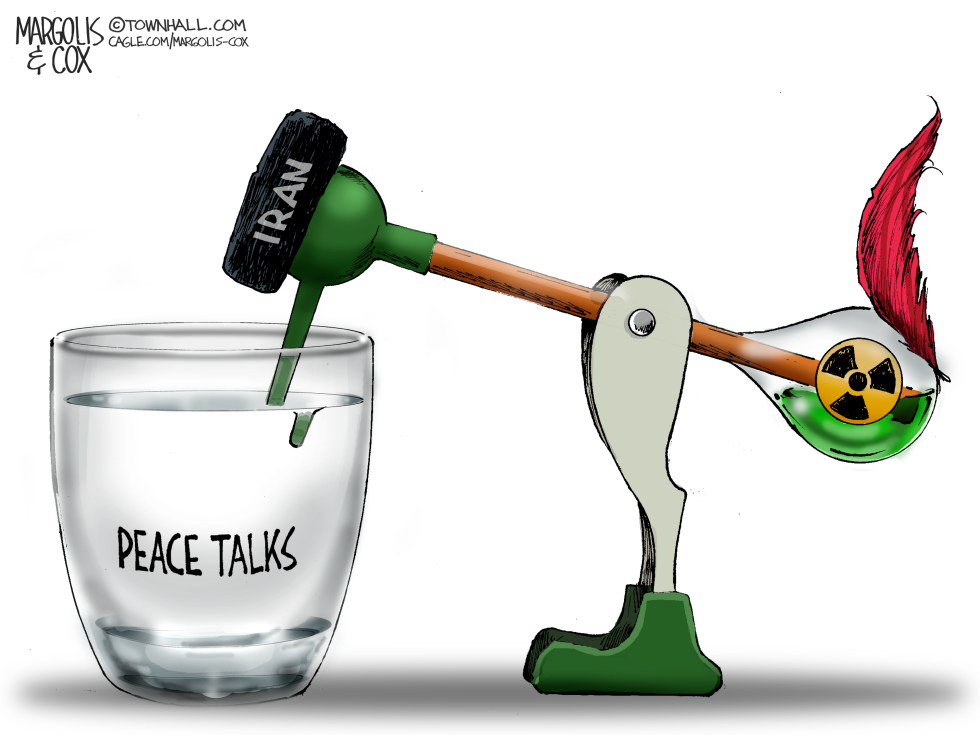
The image displays a glass marked peace talks containing liquid. A drinking bird device with Iran written on the head repeatedly dips its beak into the glass. The balancing arm has a nuclear symbol on a green section and a red element at the end. The base is green and the setup shows the bird in motion toward the glass.
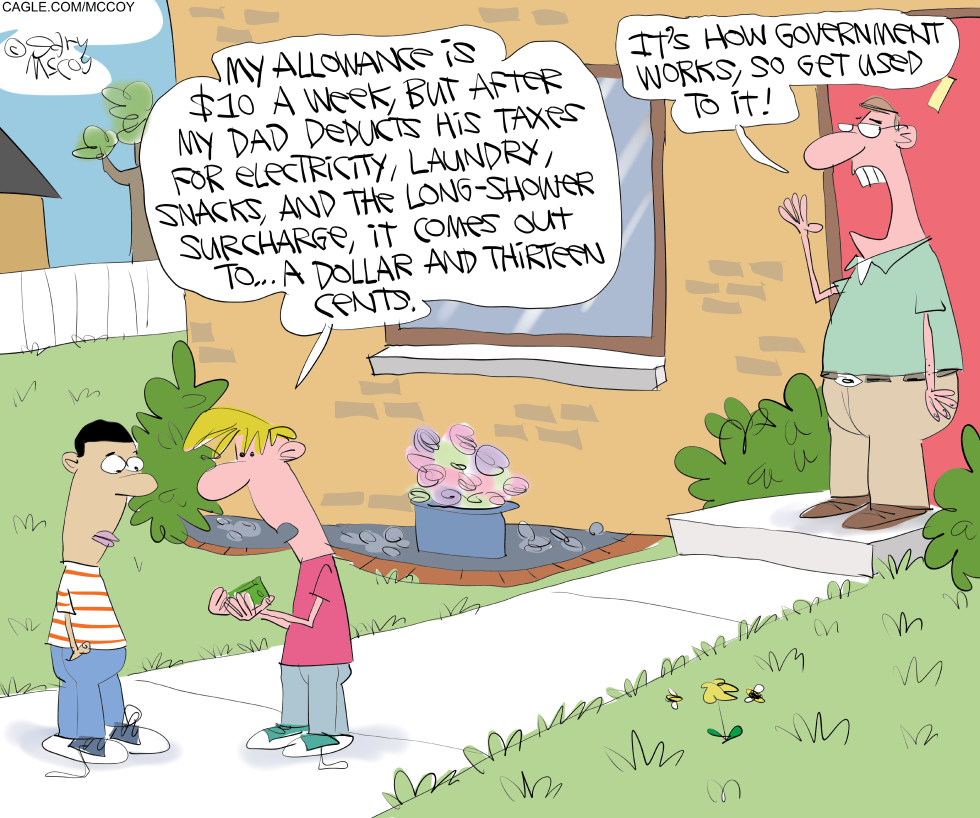
In the cartoon a blond boy in a pink shirt tells a friend in a striped shirt that his ten dollar allowance drops to a dollar thirteen after his dad deducts taxes for electricity laundry snacks and a long shower surcharge. The father stands on the porch in a green shirt and khakis waving one hand while stating that is how government works so get used to it. The scene includes a flower pot a sidewalk and green lawn with the artist signature visible.
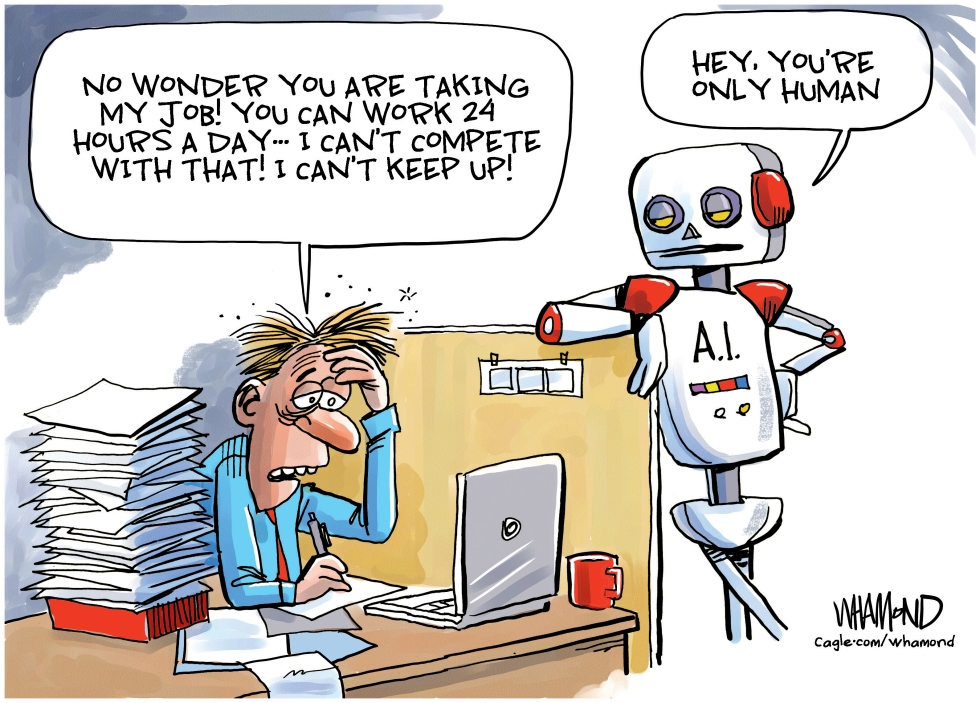
The image shows a man seated at a desk covered with stacked papers and a laptop, appearing overwhelmed while writing. A robot marked A.I. stands to the right with one arm extended. Two speech bubbles contain text about job competition and human limitations. A red coffee mug sits on the desk. The scene includes office elements like a wall outlet and the artist's signature at bottom right.
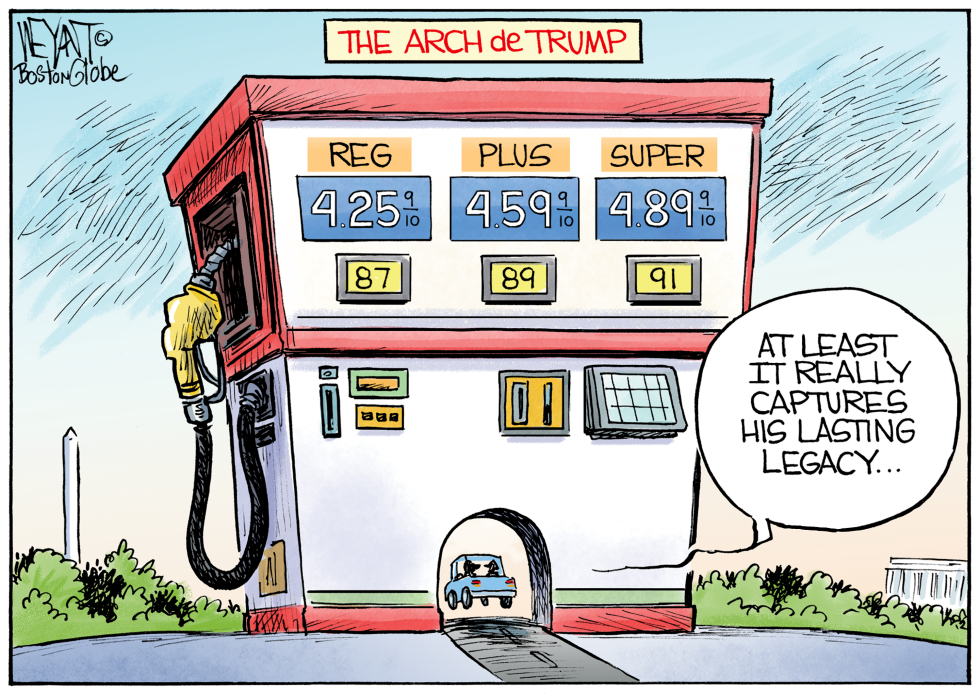
The cartoon illustrates a massive gas pump designed as an arch, prominently labeled 'The Arch de Trump,' with prices listed for regular at 4.25 per gallon, plus at 4.59, and super at 4.89, alongside octane ratings of 87, 89, and 91. A car drives through the arch, set against a backdrop of the Washington Monument and another structure resembling the Lincoln Memorial. A speech bubble comments, 'At least it really captures his lasting legacy...' This setup parodies monumental architecture, tying into themes of trump, gas prices, inflation, vanity, and Washington. The image uses dry humor to highlight economic elements without depicting any figures, focusing solely on the structure and text for its satirical punch. Tags like Middle East, Iran, and oil underscore the visible high prices, while the arch form evokes famous landmarks.
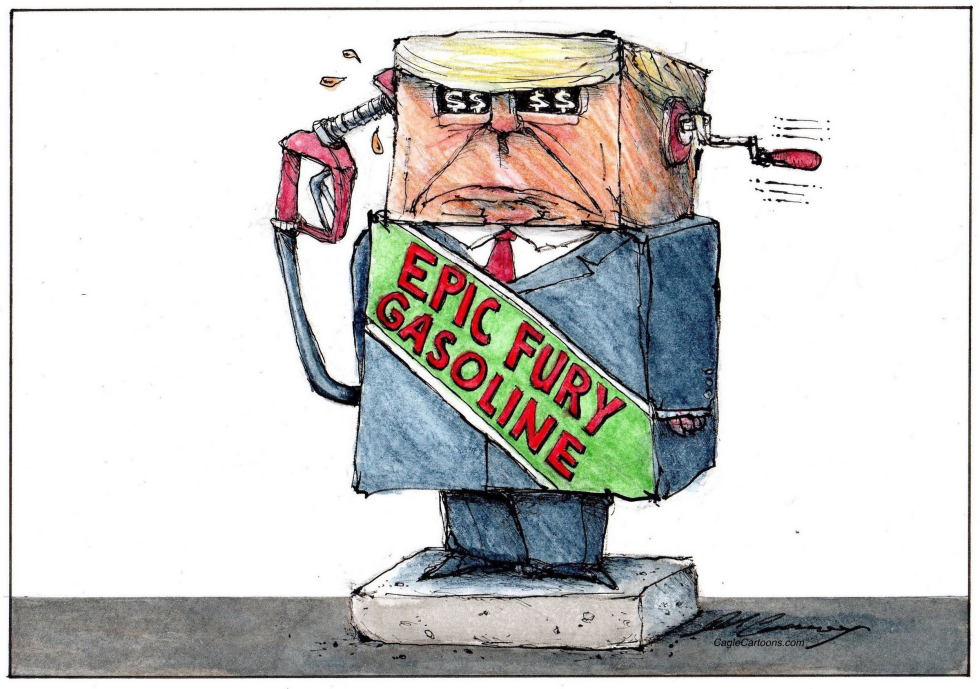
Dale Cummings draws Trump as a boxy gas pump, head topped with a dripping nozzle and $5.55 price tag, frowning in a suit with a green sash screaming Epic Gasoline Fury. Standing on a pedestal, the figure captures the essence of high gas prices tied to War in Iran and Operation Epic Fury. The cartoon skewers oil prices and Strait of Hormuz affordability, blending humor with commentary on economic fallout. It's a straightforward jab at political decisions driving up costs at the pump, rendered in watercolor style for punchy effect. Tags like War in Iran, Operation Epic Fury, oil prices, gas prices, Strait of Hormuz affordability, and affordability underscore the timely critique.
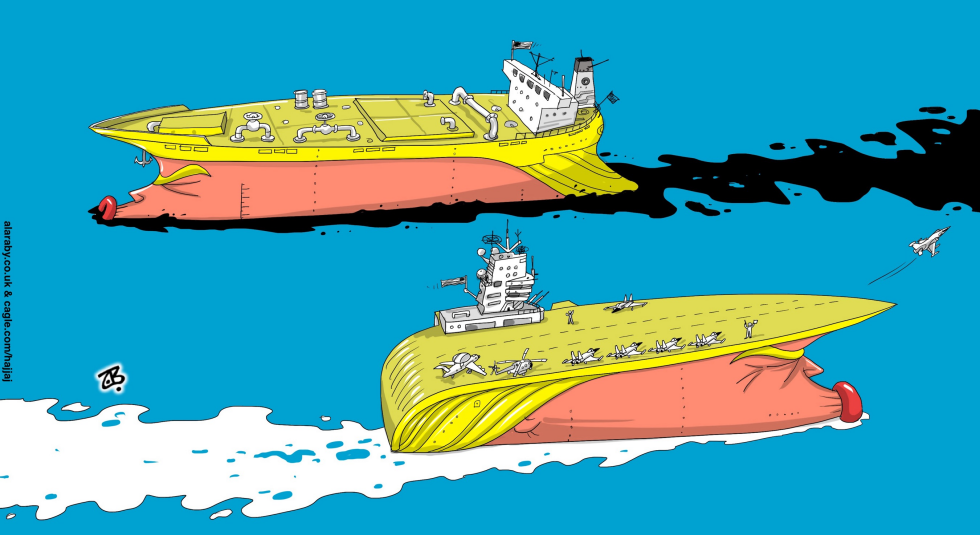
This political cartoon features two yellow vessels stylized as pigs with pink undersides. The upper one, resembling a tanker, emits a black trail from its curly tail-like rear. Below, an aircraft carrier version shows deck equipment, tiny figures, and a fighter jet flying toward it, while the vessel tilts downward into white foam. The satirical illustration employs humorous cartoon elements to depict maritime mishaps, with porcine vessels highlighting absurdity in a blue background. Insightful satire underscores the leaking pig tanker and sinking pig carrier, blending editorial art with irreverent drawing for a visually striking commentary on potential disasters.
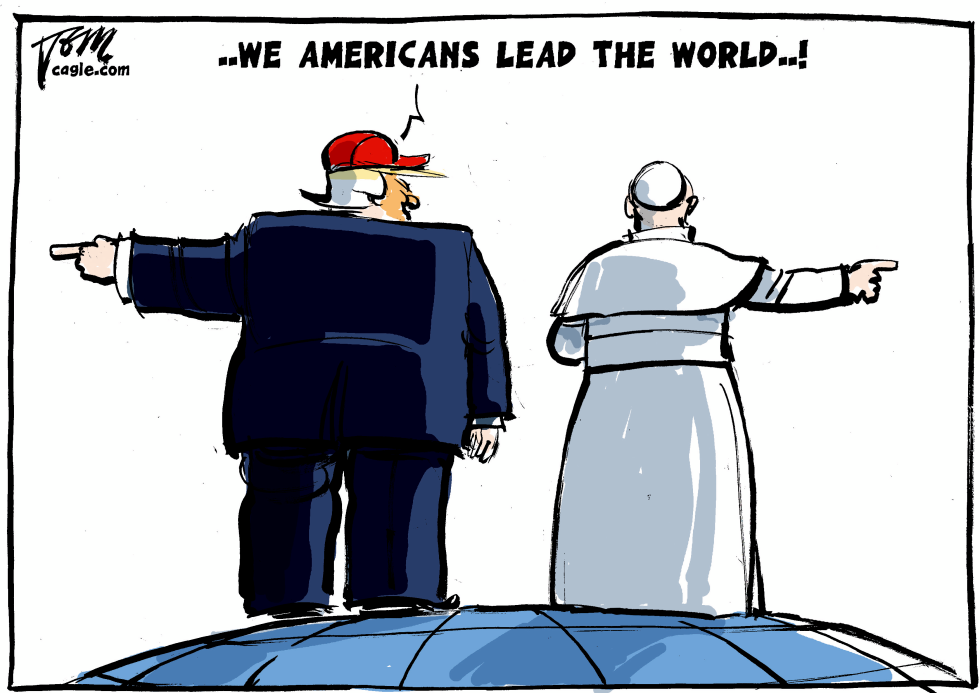
Tom Janssen's cartoon captures a Trump caricature, complete with red cap, standing beside a Pope figure on a blue globe, both pointing ahead. The speech bubble reads '...WE AMERICANS LEAD THE WORLD..!' This satirical image pokes at American exceptionalism, global leadership, and perhaps the blending of political and religious authority. With dry humor, it illustrates how figures like Trump assert dominance, while the Pope's presence adds a layer of irony to claims of leading the world. The composition is simple, emphasizing the oversized characters atop the planet, symbolizing oversight or control.
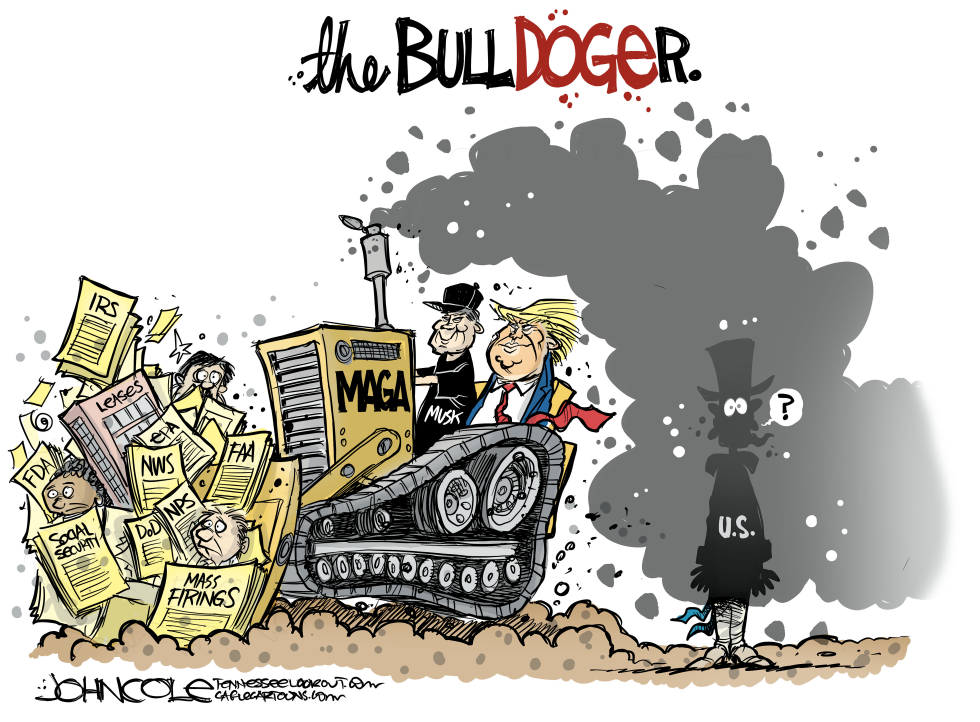
The cartoon depicts Donald Trump and Elon Musk operating a bulldozer marked MAGA and MUSK that is destroying documents from multiple federal agencies. Papers labeled IRS, EPA, FDA, FAA, NPS and Social Security fly from the tracks along with a sign reading MASS FIRINGS. A dark silhouette labeled U.S. stands to the right with a question mark overhead. The title reads the BULLDOGEr.
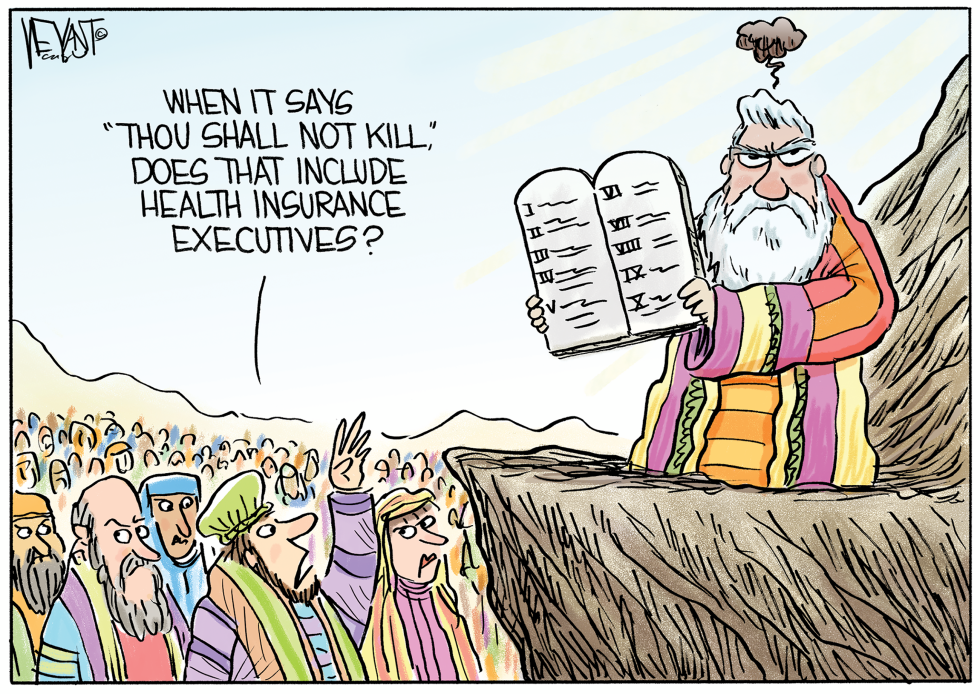
The cartoon shows Moses atop a rocky peak, stone tablets in hand, with Roman numerals visible on them. A crowd of robed figures gathers below, one raising a hand. The question in the speech bubble ties the ancient commandment to modern frustration with health insurance executives. This piece uses biblical imagery to critique the health care system, where denials and costs can feel life-threatening. The dry humor underscores public anger toward corporate figures in insurance, making a pointed satirical statement without overt violence.