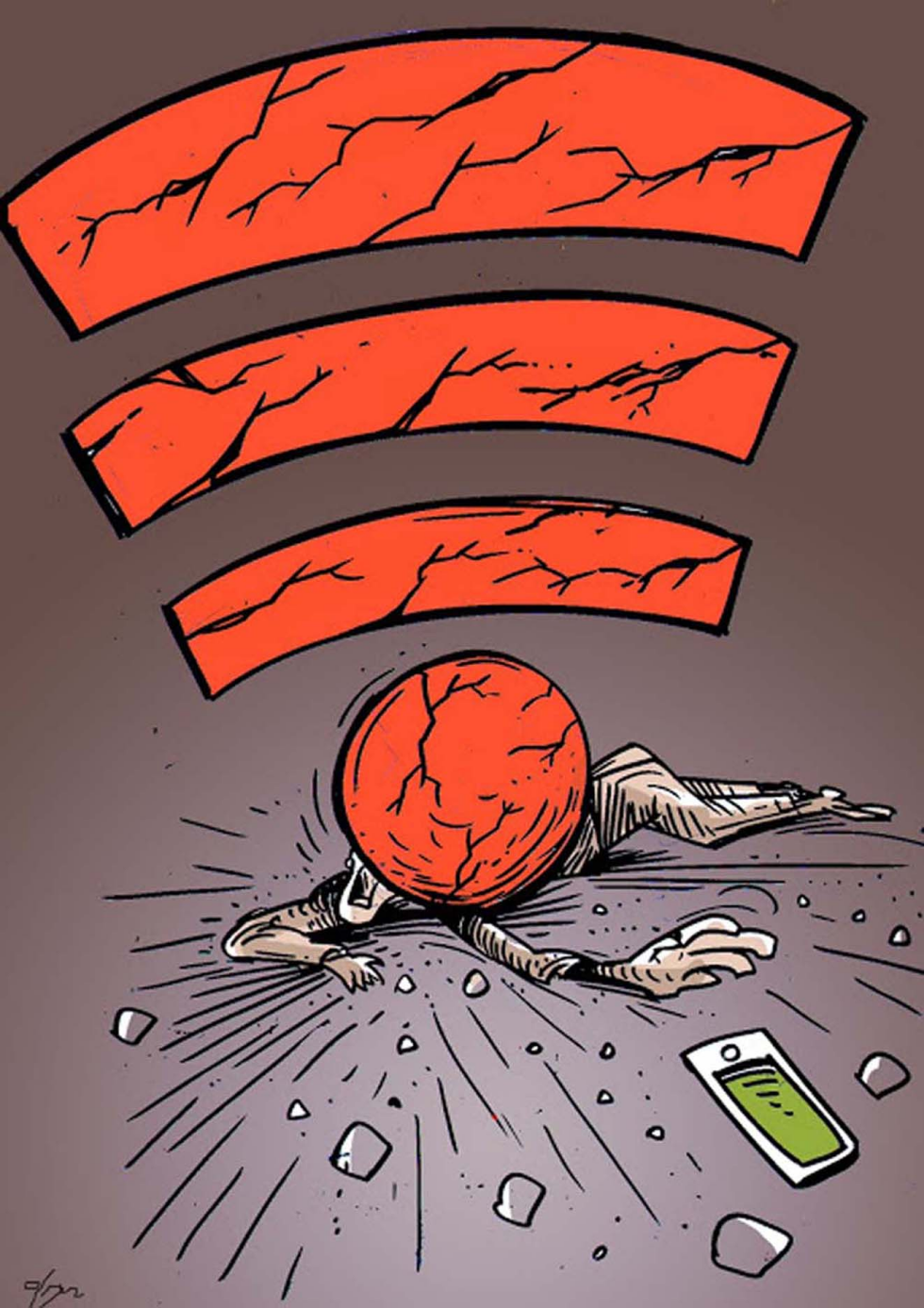
Wireless networks face mounting pressure from rising demand and aging infrastructure, leaving users stranded when signals falter. A dead phone battery compounds the isolation during outages. The piece frames this as a cautionary view of overreliance on fragile digital systems that can collapse without warning.
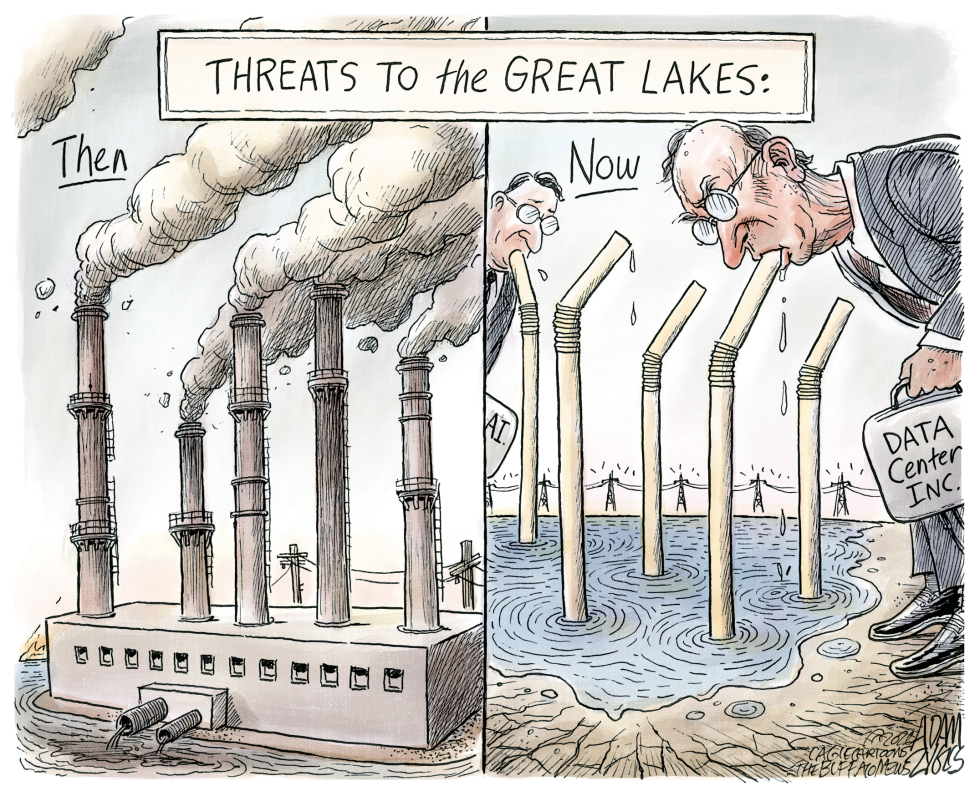
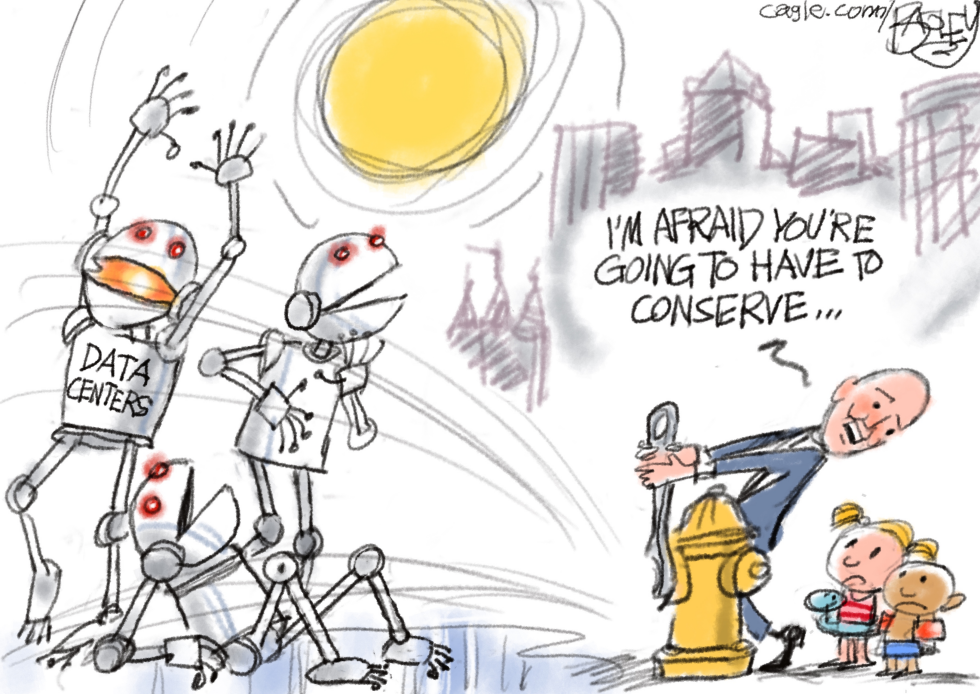
The cartoon contrasts historical industrial pollution of the Great Lakes with modern data center water consumption driven by artificial intelligence growth.
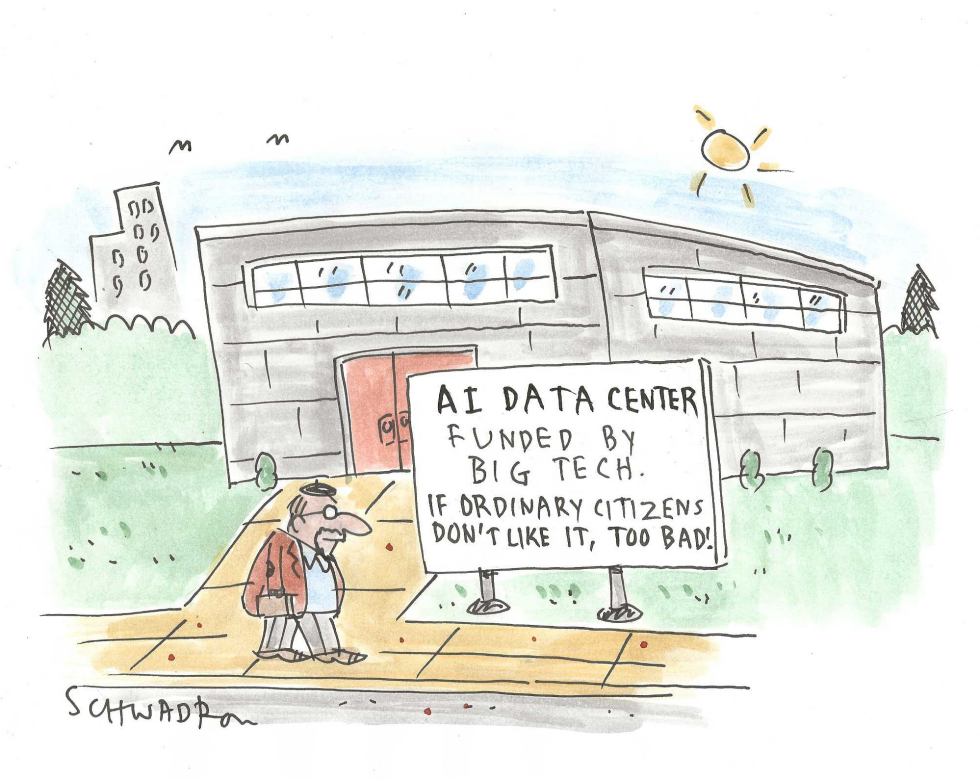
On June 6, 2026, a political cartoon depicts a man approaching an AI data center funded by big tech. The facility's sign bluntly informs ordinary citizens that their objections do not matter. The drawing highlights tensions between rapid AI infrastructure growth and public concerns over environmental consequences such as pollution and resource use. The cartoonist uses the dismissive message to underscore how technology companies often proceed without community consent.
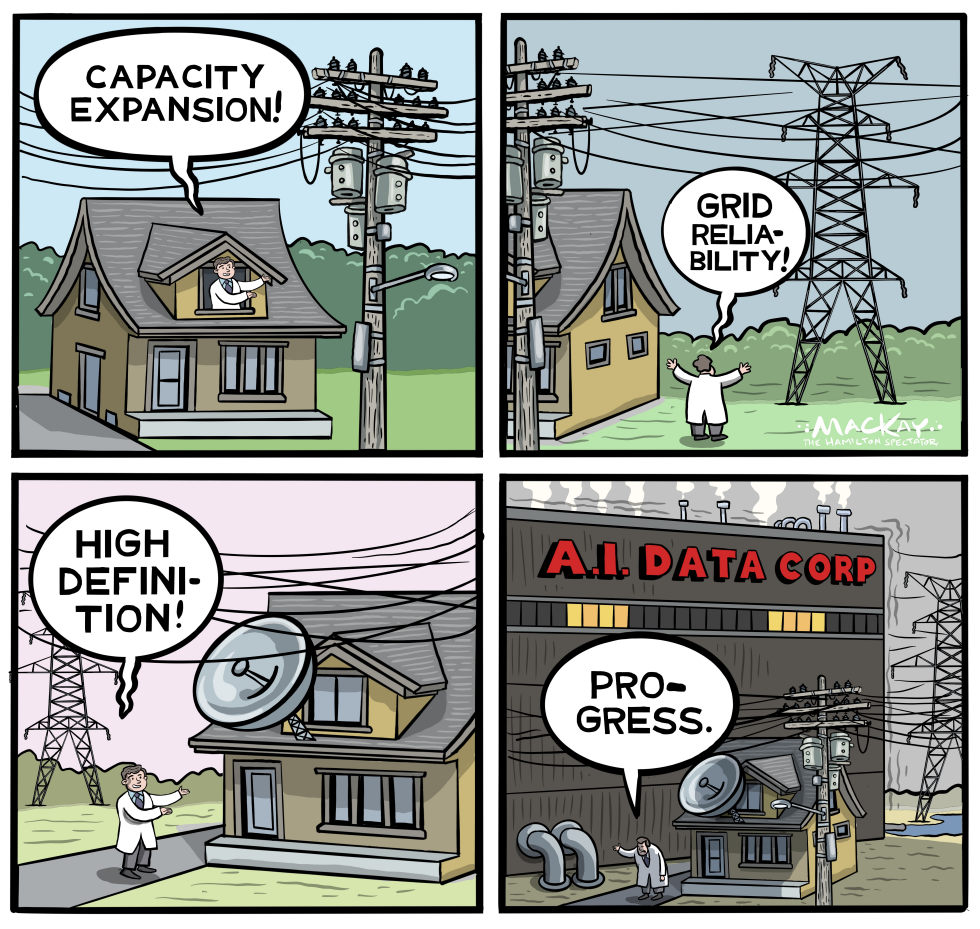
A four-panel comic depicts a man in a lab coat outside a suburban house promoting successive infrastructure upgrades. Early panels show utility poles and power lines added for capacity expansion and grid reliability. Later scenes introduce satellite dishes for high definition service. The final panel reveals an industrial A.I. DATA CORP building releasing smoke amid pipes and additional towers. The sequence highlights how artificial intelligence facilities intensify energy use and visible environmental effects on residential areas.
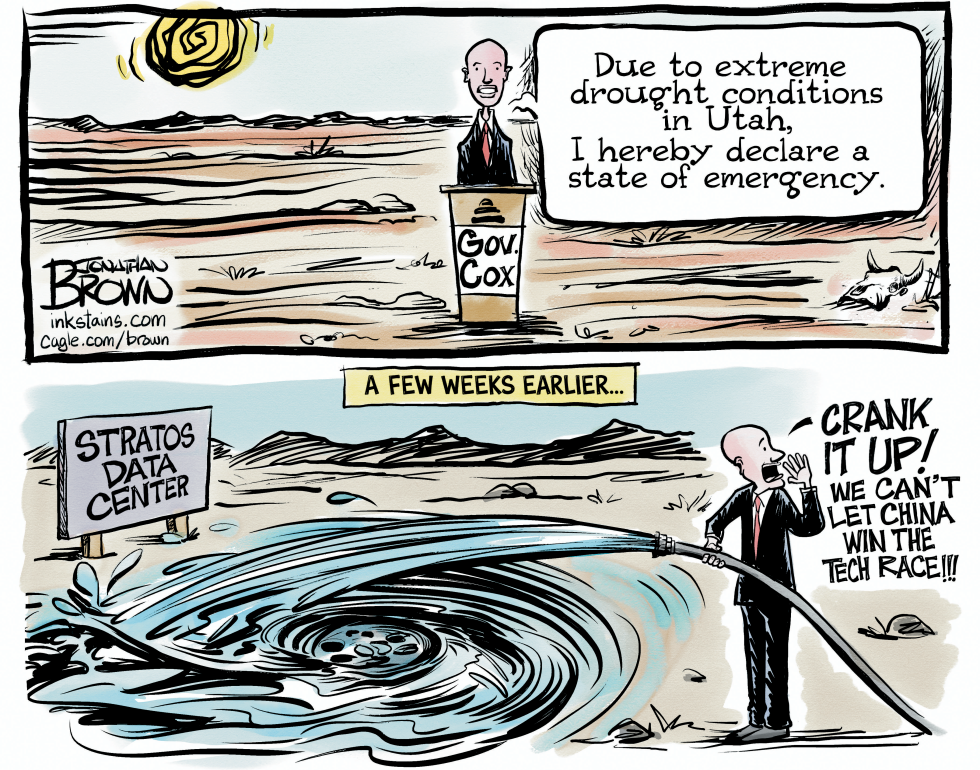
The cartoon by Jonathan Brown depicts Utah Gov. Cox declaring a state of emergency over extreme drought conditions. In a panel set a few weeks earlier, the governor is shown directing a fire hose of water into the Stratos Data Center while urging to crank it up to keep China from winning the tech race. The split-panel format highlights the contrast between the water-intensive data center project and the subsequent drought response. The image uses a desert backdrop with a swirling water vortex to emphasize resource strain. Publication occurred on May 26, 2026.