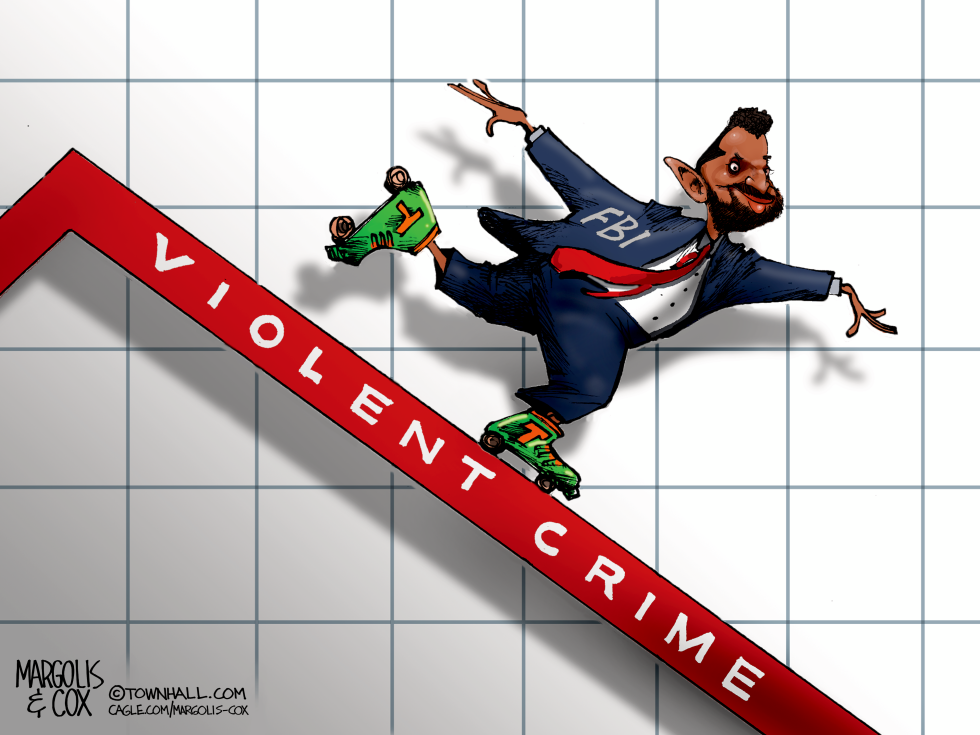
FBI statistics released around mid-2026 show violent crime continuing its downward trajectory across major categories. The decline matters because it affects public safety perceptions and resource allocation for law enforcement. The piece presents the trend as a clear, measurable improvement under federal tracking.
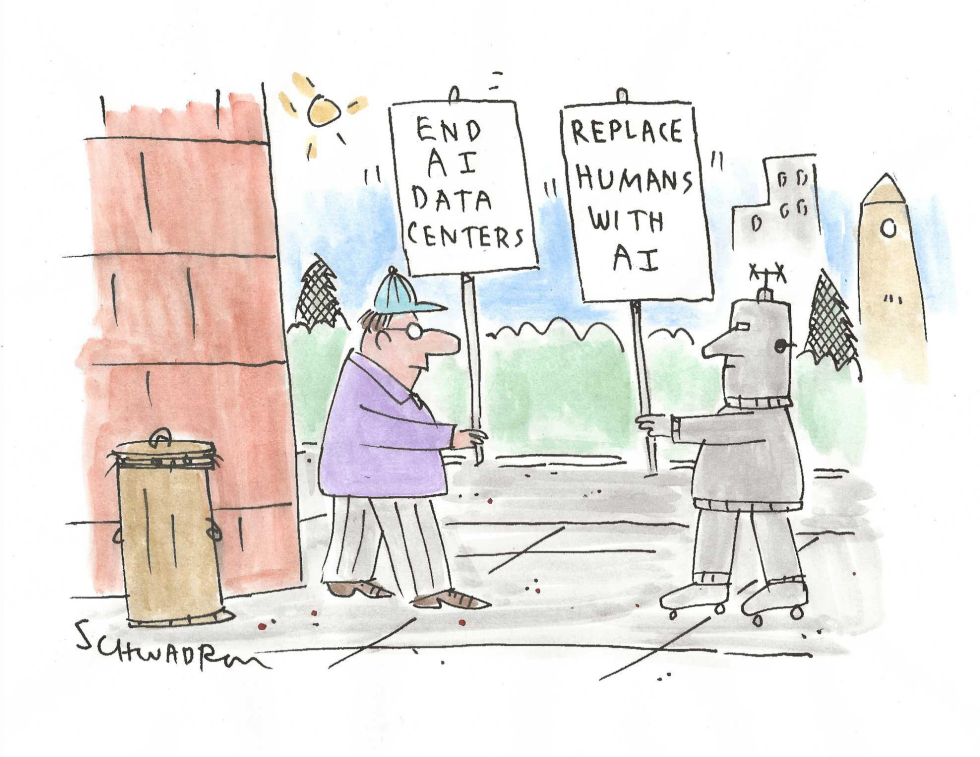
Public demonstrations against AI data centers and for replacing human workers with artificial intelligence underscore growing societal friction over the technology's rapid expansion. Data centers powering AI systems face criticism for energy demands and environmental costs, while automation threatens widespread job losses across sectors. The cartoon illustrates these contradictory positions through direct confrontation between a human protester and a robotic counterpart. This reflects ongoing debates where environmental concerns clash with arguments for efficiency gains from AI. The piece takes a neutral stance, simply presenting the absurdity of simultaneous opposition to and advocacy for AI dominance without resolving the tension.
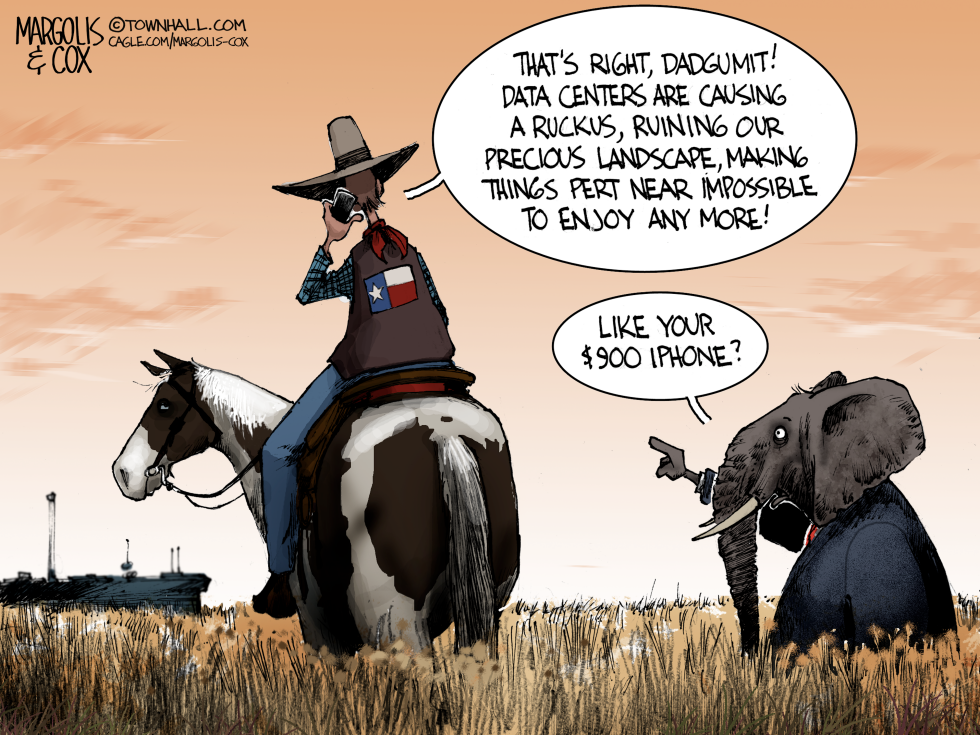
Data centers are expanding rapidly across Texas to support growing digital demands, drawing complaints from local residents and officials over land use and visual impact. Republicans in the state have voiced concerns about the facilities altering rural scenery and affecting quality of life. The cartoon highlights the inconsistency in such criticism given widespread reliance on smartphones and other tech products that necessitate these centers.
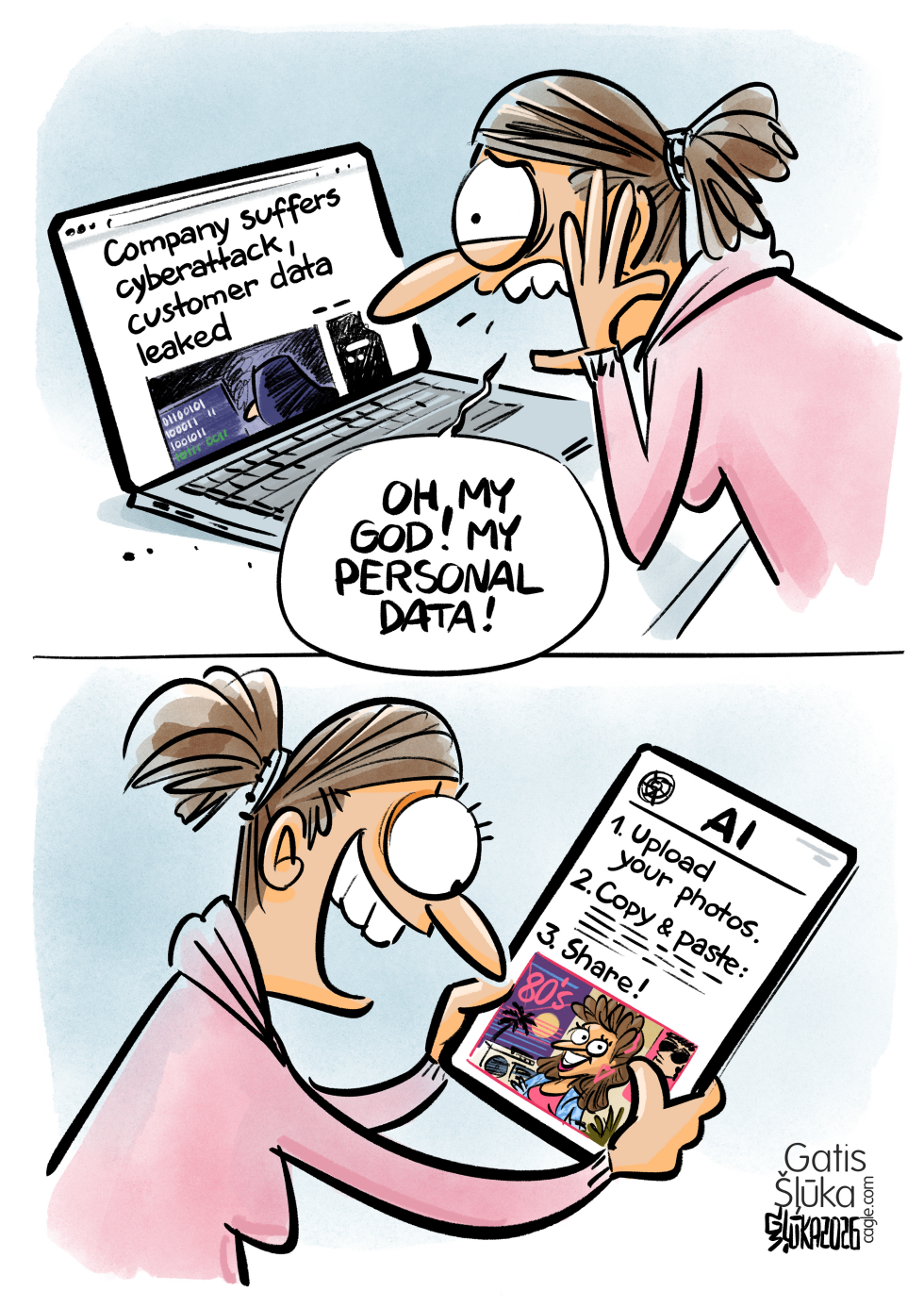
A company cyberattack exposes customer records, prompting widespread alarm over personal data security. The incident highlights ongoing vulnerabilities in corporate networks and the ease with which private information spreads online. At the same time, users continue to upload photos and details to AI platforms that copy and share content. The piece argues that public outrage over breaches often proves selective when convenient AI features are involved.
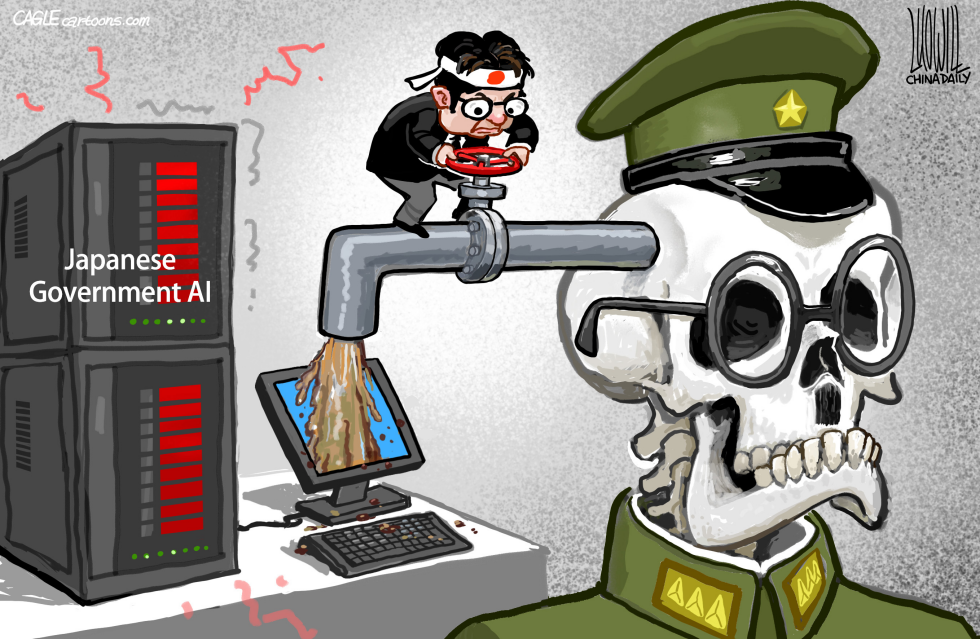
The cartoon depicts a Japanese Government AI server connected by pipe to a skull representing the Chinese military. A figure turns a valve as sludge flows from the server into the monitor and onward. The image comments on the quality of AI output reaching Chinese forces through this visual metaphor of contaminated data flow.
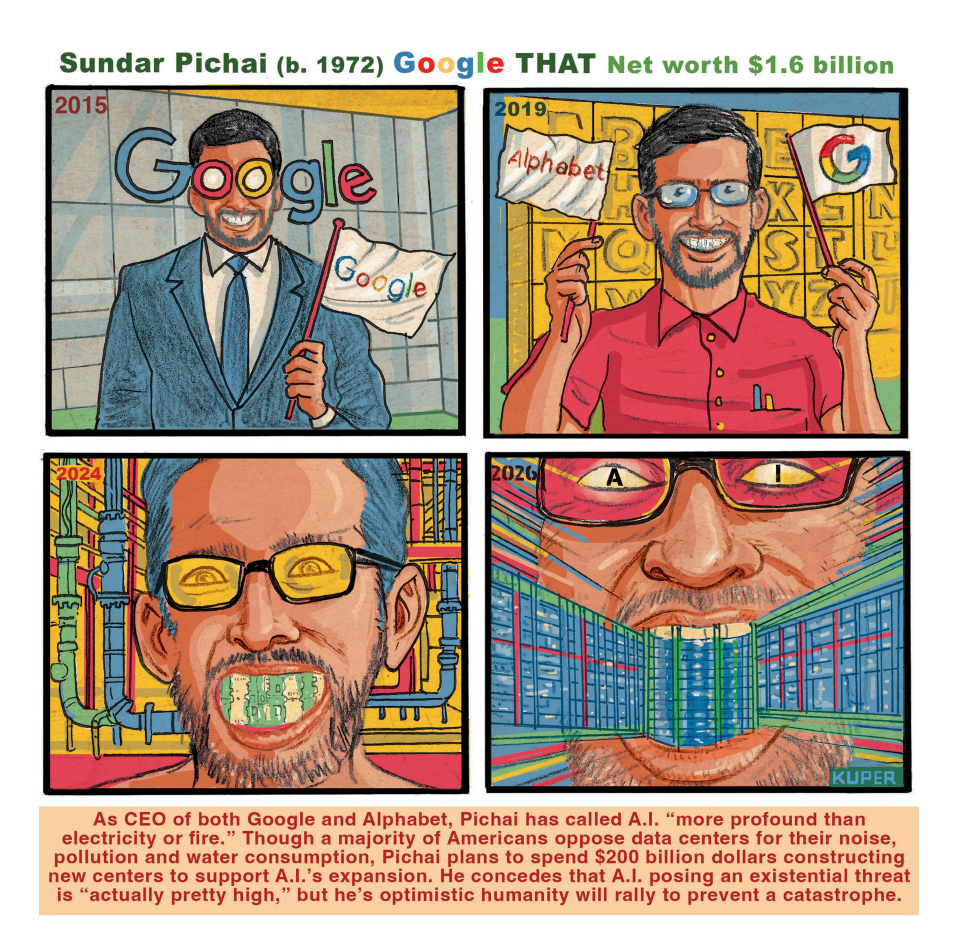
Sundar Pichai, CEO of Google and Alphabet, announced plans to invest $200 billion in new AI data centers to support rapid expansion of artificial intelligence systems. The move comes as polls show most Americans oppose such facilities due to noise, pollution, and heavy water consumption. Pichai has described AI as more transformative than electricity or fire and has acknowledged a high risk of existential threats from the technology, while expressing confidence that humanity can avoid catastrophe. The editorial cartoon frames this corporate push as aggressive and tone-deaf to local opposition and environmental limits.
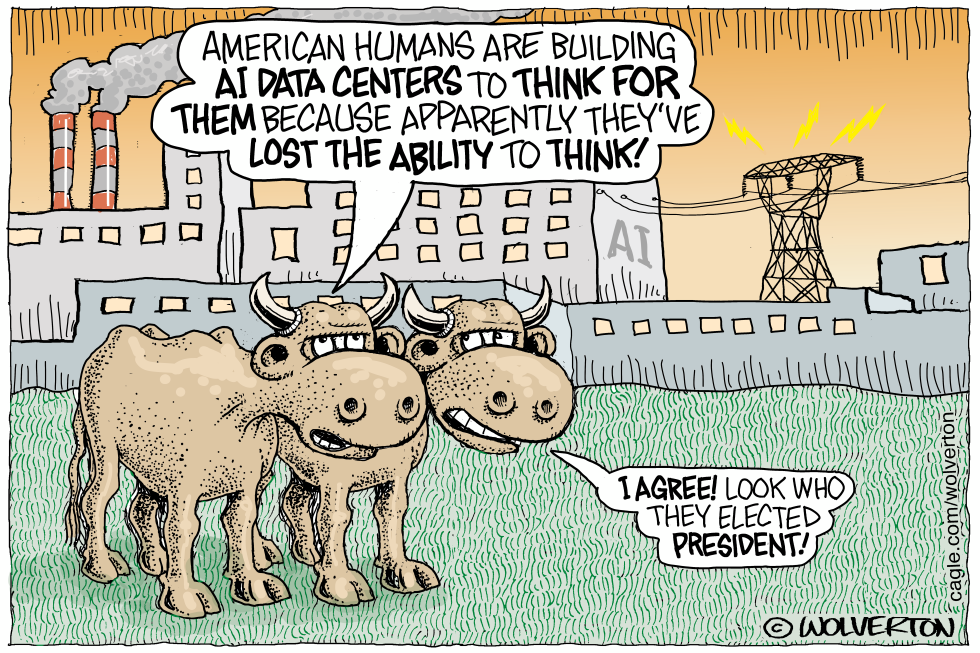
The drawing shows two cows in a field before industrial structures labeled AI. One cow states that American humans build AI data centers to think for them after losing that ability. The second cow agrees and points to the elected president. Smokestacks and an electricity tower appear in the background. The piece responds to ongoing debates over AI infrastructure demands and the 2026 election context by connecting energy use to political decisions.
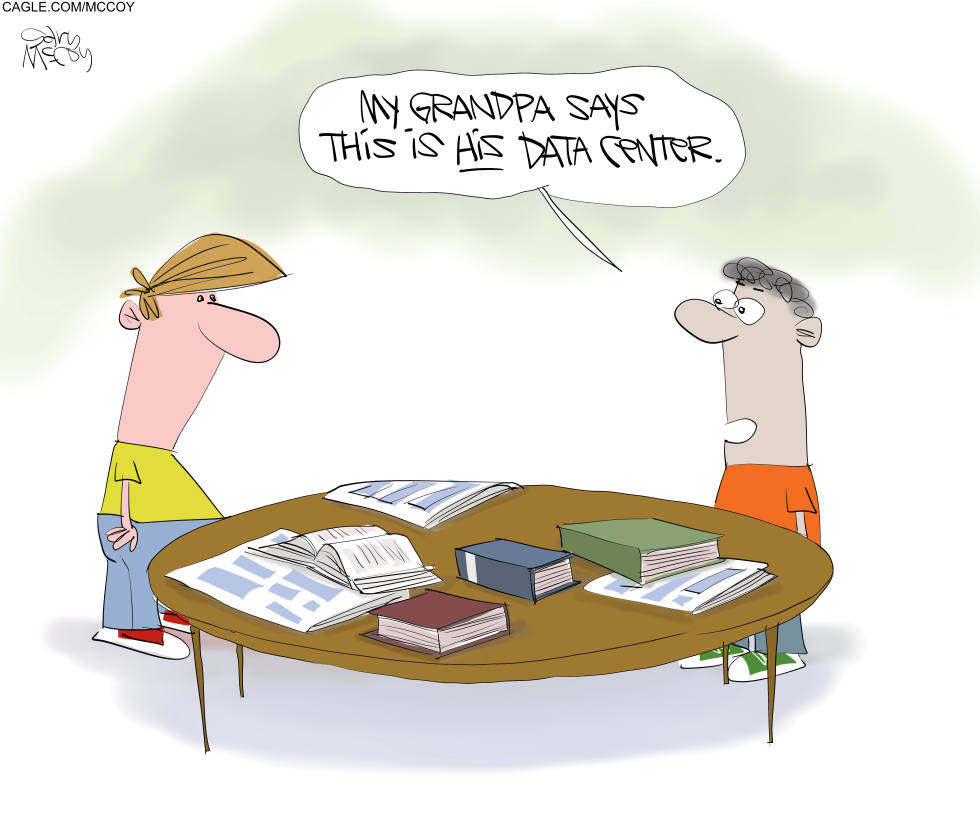
Rapid expansion of AI data centers has drawn scrutiny over energy demands and necessity by 2026. Companies and governments push massive builds to support growing artificial intelligence workloads. Critics question whether the scale matches real needs or reflects hype. The cartoon uses a grandfather's table of books and papers to suggest traditional methods still hold value. It argues the push for ever-larger facilities may overlook simpler realities.
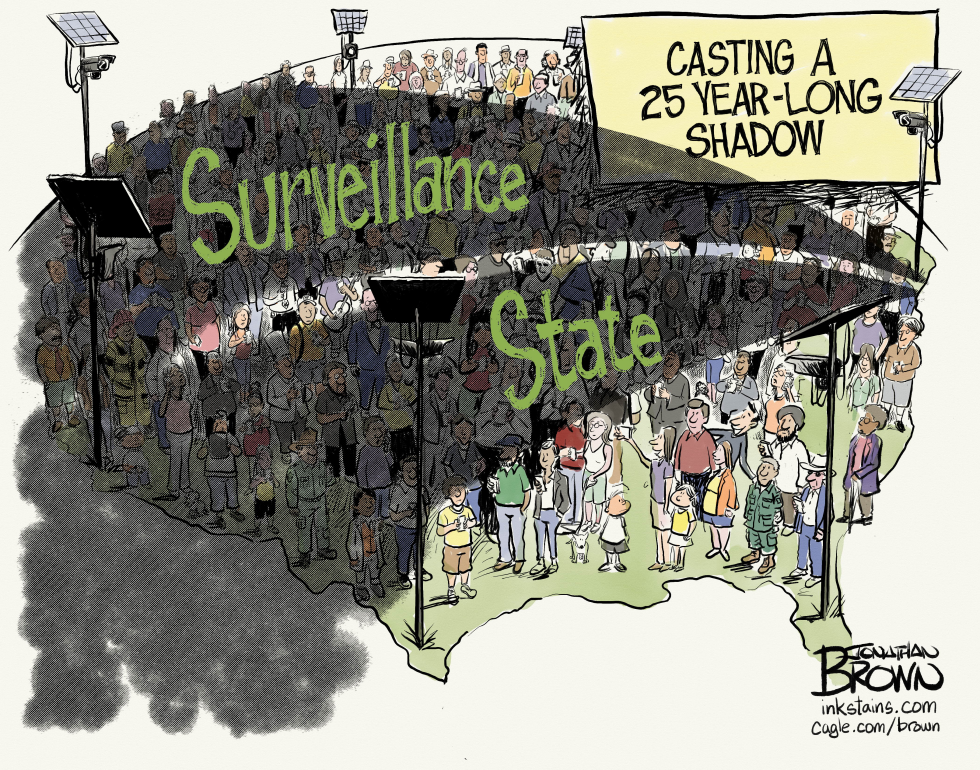
The cartoon depicts a dense crowd of Americans standing on a map of the United States, partially obscured by a large dark shadow cast by surveillance cameras mounted on poles. The words 'Surveillance State' appear prominently in green lettering across the scene, while a sign in the upper right reads 'CASTING A 25 YEAR-LONG SHADOW.' The image comments on the lasting effects of expanded government surveillance programs that began after the September 11 attacks, now spanning a quarter century. It illustrates how these measures continue to influence daily life and public spaces in 2026.
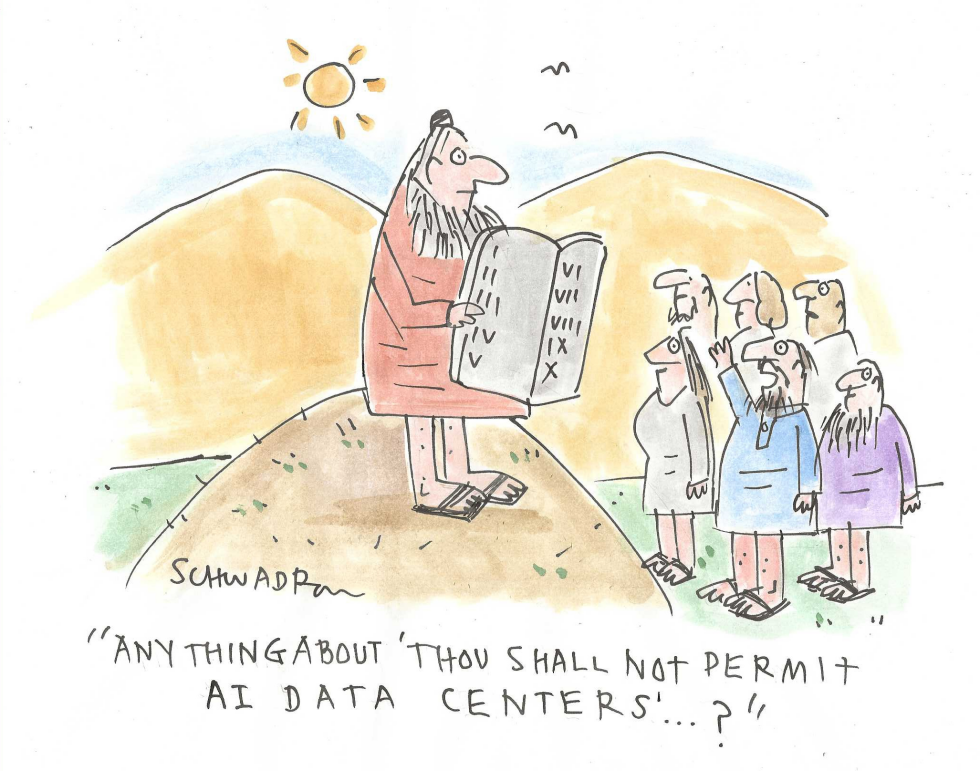
AI data centers face growing regulatory scrutiny over energy use and land impact in 2026. Lawmakers weigh new permitting standards as facilities expand rapidly. The cartoon uses the Moses figure to highlight the absence of explicit restrictions in foundational rules. It suggests modern governance struggles to apply old frameworks to new infrastructure demands. The editorial stance favors clearer limits on data center approvals.
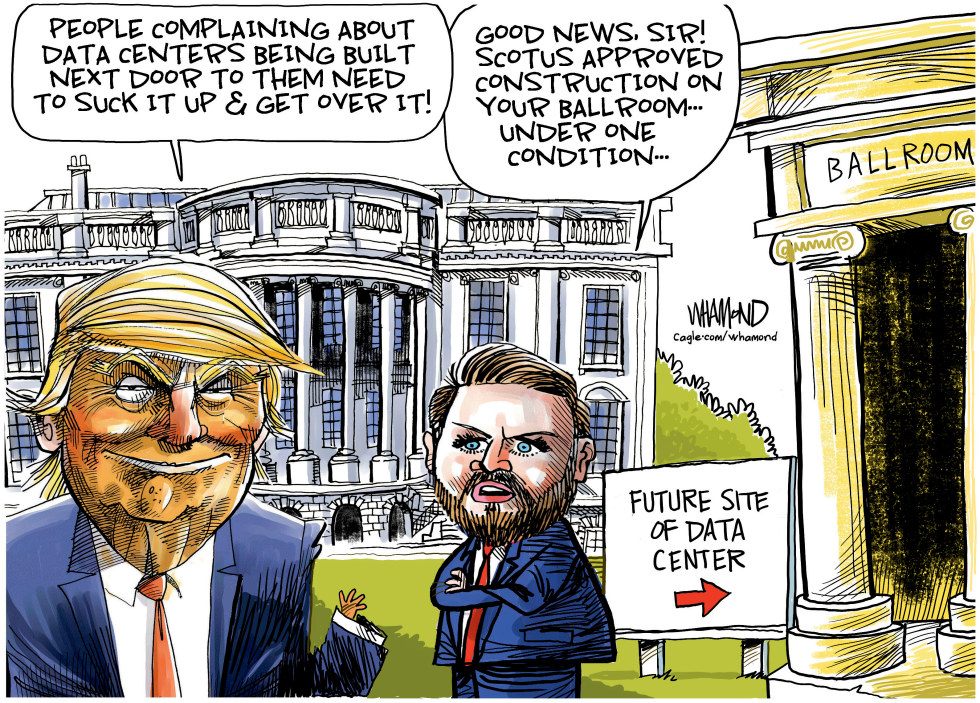
On September 2, 2026, reports emerged that the Trump administration secured Supreme Court approval for a new White House ballroom with the condition that the site also host a data center. The decision comes as communities nationwide protest data center construction near homes. The cartoon depicts Trump dismissing resident complaints while an aide delivers the conditional news. It highlights tensions between executive ambitions and local opposition to large-scale tech infrastructure. The piece argues that such projects prioritize political vanity over community concerns.
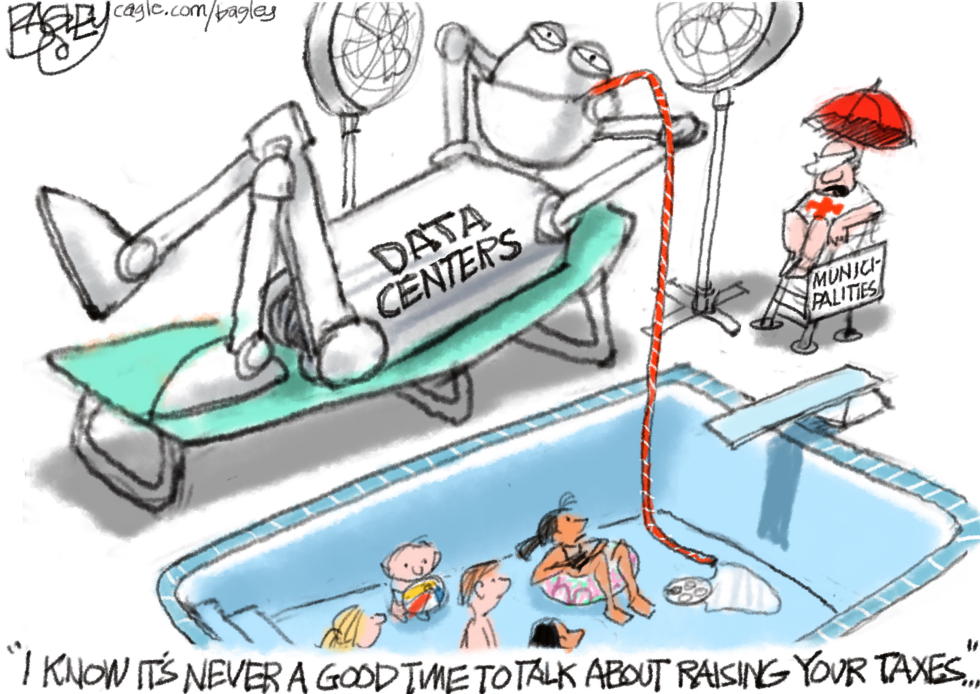
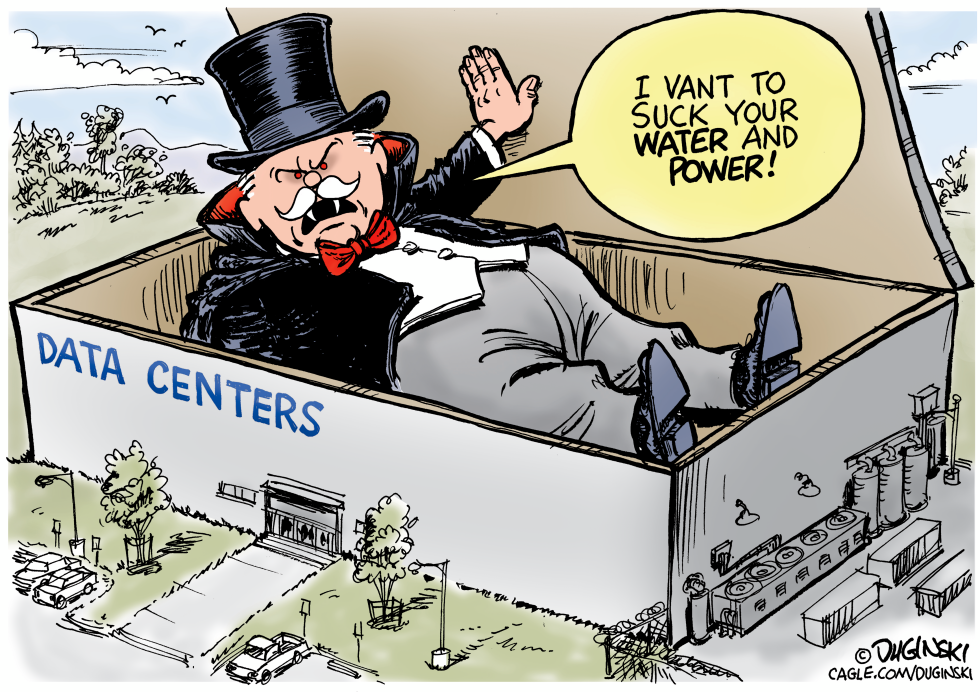
Data centers are expanding rapidly and placing heavy demands on local water and power supplies. Municipalities must decide whether to raise taxes to cover the costs. The piece argues that residents bear the burden while data centers consume resources without contributing enough back.
Data center operators continue rapid expansion to support cloud computing and artificial intelligence workloads, driving sharp increases in electricity and water consumption across multiple states. Local utilities report strain on grids and aquifers as facilities require constant cooling and backup power. The editorial takes the position that unchecked growth treats public resources as unlimited, urging stronger oversight before shortages worsen.
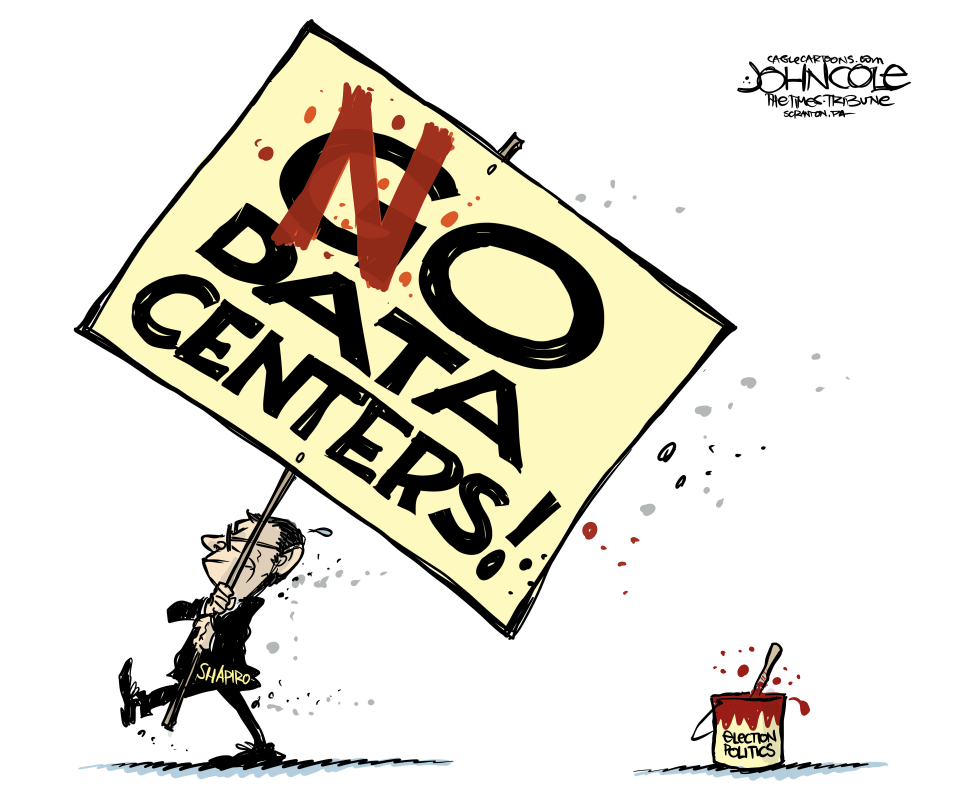
Pennsylvania Governor Josh Shapiro has adjusted his public position on data centers during the 2026 election cycle. The move comes as local communities raise concerns over energy use and land development tied to new facilities. Shapiro now appears to soften earlier opposition. The editorial takes the view that the shift reflects standard campaign maneuvering rather than a substantive policy evolution.
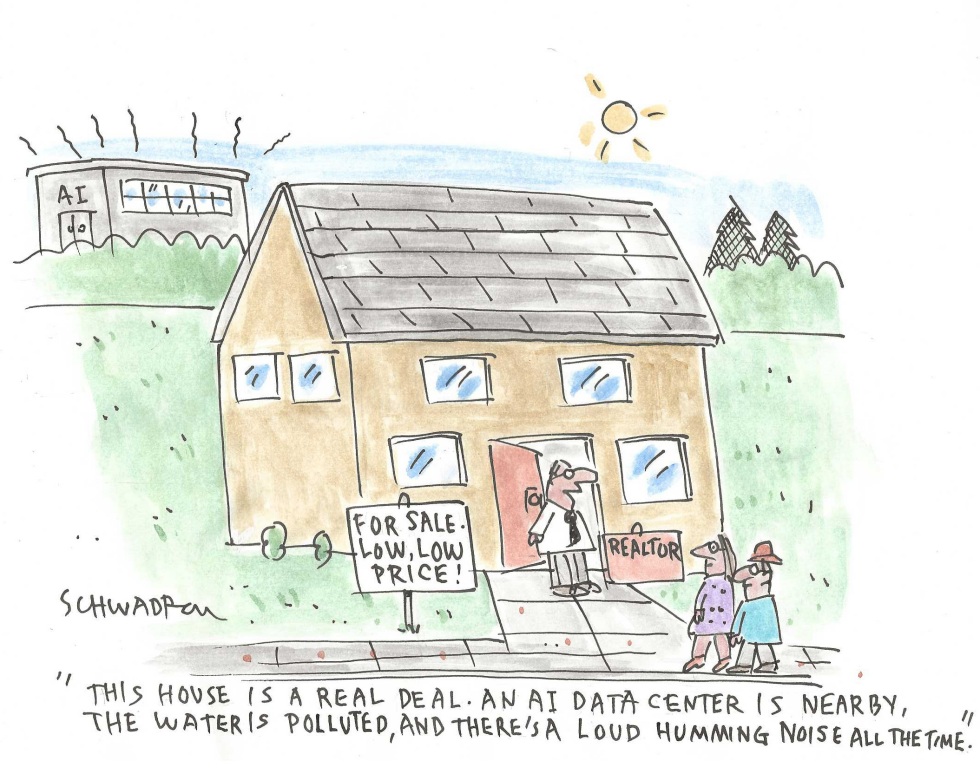
AI data centers are expanding rapidly across suburban areas, bringing jobs and infrastructure but also raising local concerns over noise, water use, and environmental effects. Home values near these facilities have begun to soften as buyers factor in constant humming and potential pollution. The cartoon highlights how real estate agents market such properties at steep discounts while openly disclosing the drawbacks to prospective buyers.