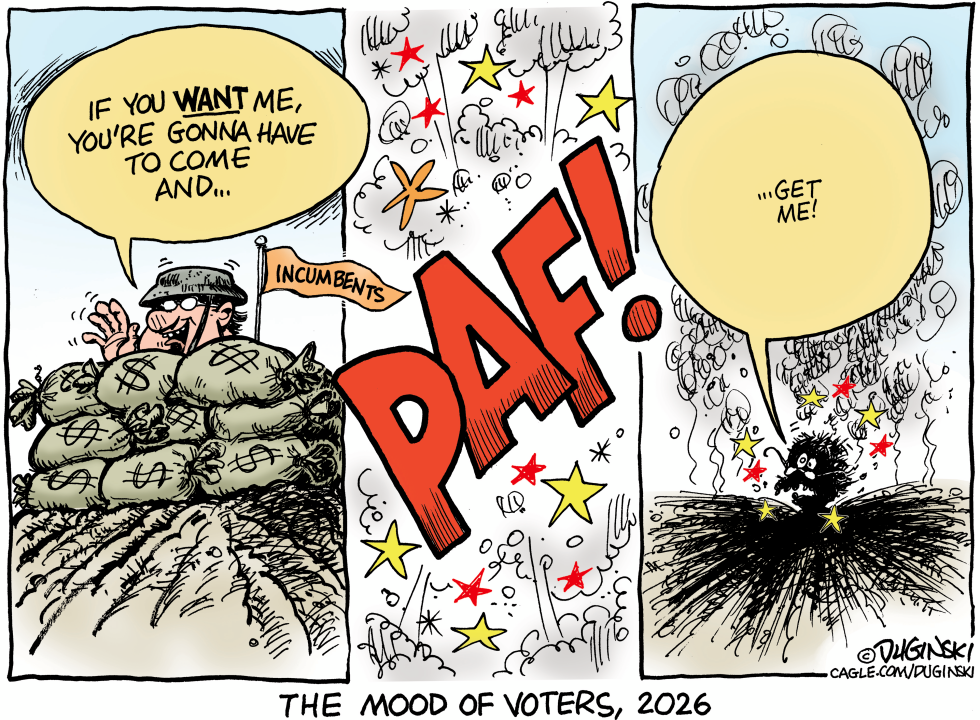
Voters are showing clear signs of turning against sitting officeholders as the 2026 election cycle advances. Incumbents face mounting pressure from constituents frustrated with long-term entrenchment and perceived insulation from accountability. This shift reflects broader discontent with the status quo in Congress and state legislatures. The cartoon argues that the protective barriers incumbents have built around themselves are proving ineffective against rising voter anger.
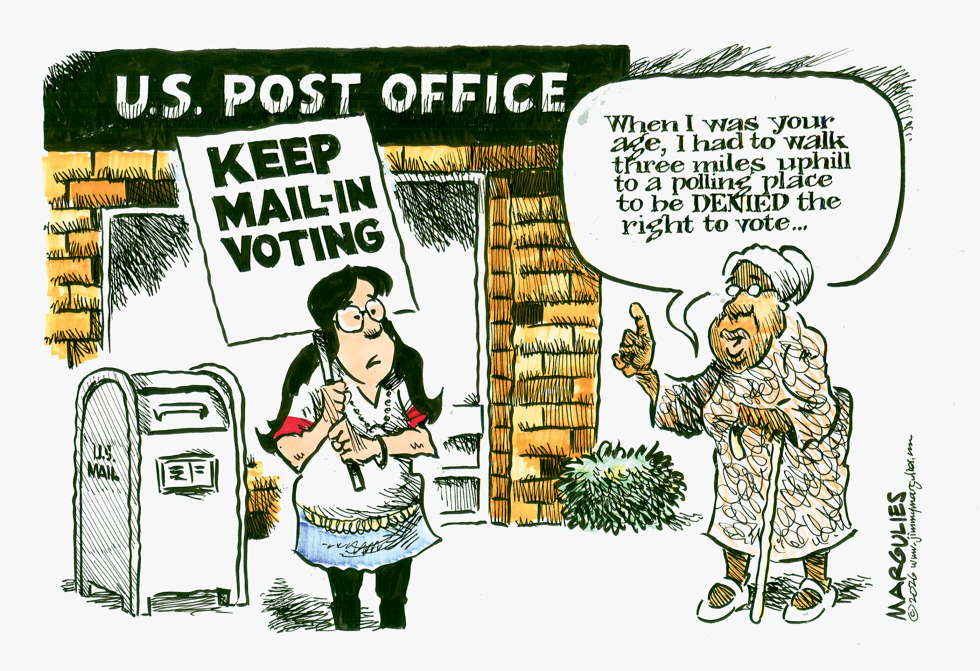
A protest sign at a U.S. Post Office calls for an end to mail-in voting. The cartoon responds to ongoing state-level efforts to restrict mail ballots after expanded use in recent elections. Such limits disproportionately affect older voters and those with mobility issues who previously faced physical barriers at polling places. The piece argues that rolling back mail-in options revives the very obstacles elderly citizens once endured, undermining broader access to the ballot.
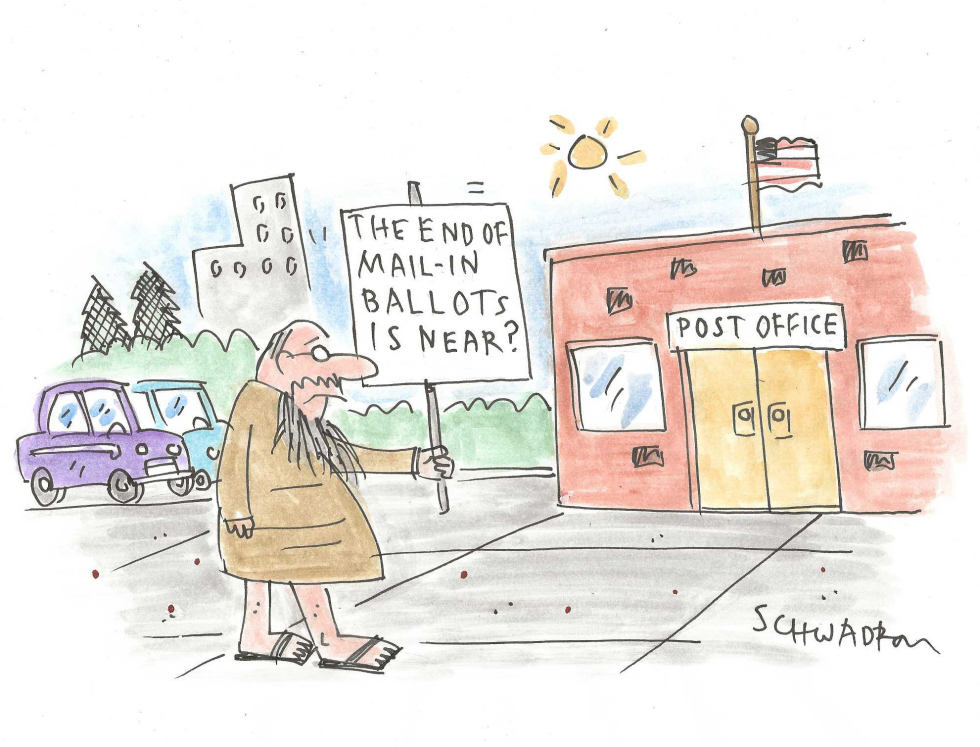
Proposals to restrict or end mail-in ballots have gained traction in several states ahead of upcoming elections, prompting concerns from voting rights advocates about reduced access for elderly, rural, and disabled voters. The post office has long served as a key conduit for absentee ballots. Critics argue the changes prioritize unproven fraud concerns over convenience and turnout. Supporters say tighter rules restore confidence in results. The cartoon frames the debate as an abrupt shift that could sideline a proven voting method.
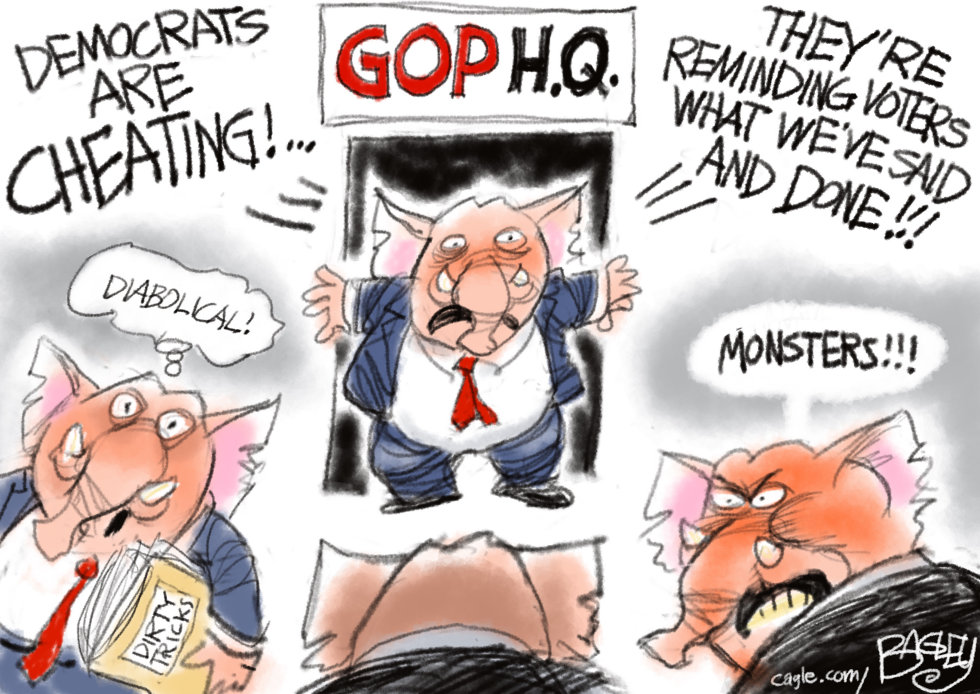
Republicans have renewed accusations that Democrats are cheating in elections, a charge that echoes long-standing GOP concerns over voter fraud. The claims come as the party faces scrutiny over its own past efforts to influence outcomes through restrictive laws and legal challenges. The cartoon argues that these accusations serve mainly to distract from the Republicans' documented history of similar or more aggressive tactics.
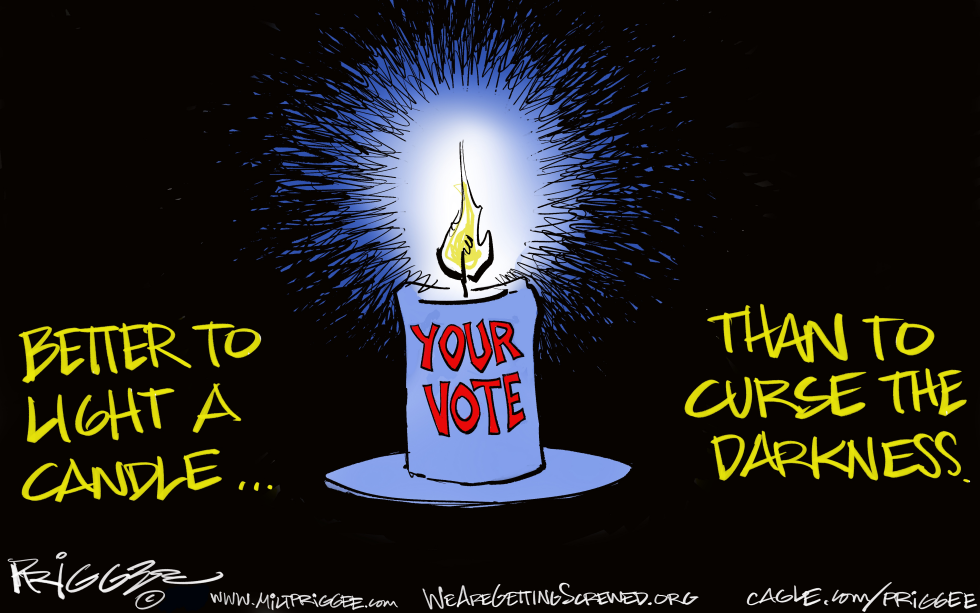
The cartoon depicts a glowing candle labeled Your Vote against a dark background, accompanied by the quote Better to light a candle than to curse the darkness. Published on September 3, 2026, it encourages citizens to participate in elections rather than complain about political conditions. The visual emphasizes voting as a constructive action that can illuminate and improve democracy. This approach aligns with longstanding calls for higher voter engagement during election cycles.
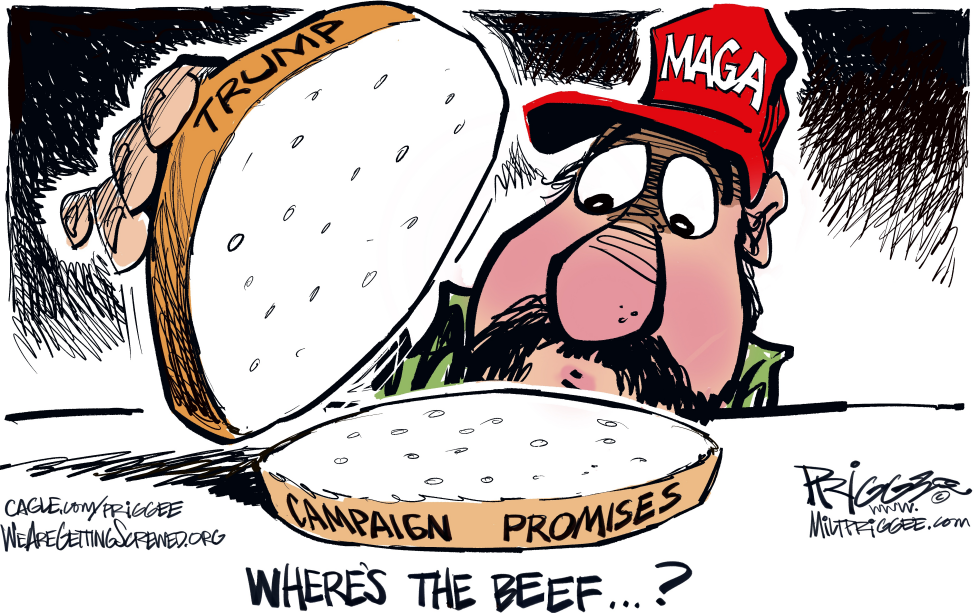
The cartoon depicts a figure resembling Donald Trump in a MAGA hat presenting a sandwich consisting only of bread labeled as campaign promises. The image references the classic Where's the beef slogan to underscore the absence of concrete policy details. Published on September 3, 2026, the work comments on ongoing debates about the substance of political pledges during election seasons. It aligns with broader discussions of voter expectations for tangible platforms rather than rhetoric alone. The visual metaphor emphasizes criticism of repeated patterns in campaign messaging without delivering specifics on key issues.
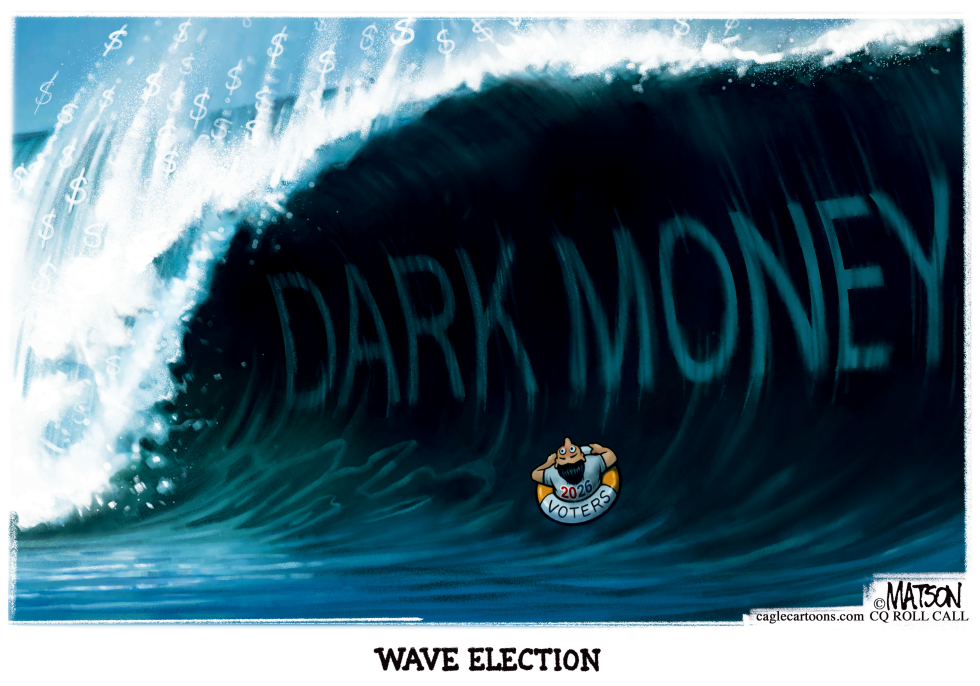
Unregulated dark money continues to pour into the 2026 election cycle, raising concerns that voters will be sidelined by massive undisclosed spending. The influx comes as candidates and outside groups prepare for midterm contests across the country. Critics argue the surge distorts democratic participation and drowns out ordinary voices. The editorial cartoon depicts this dynamic as an overwhelming wave labeled dark money bearing down on a lone voter buoy. It takes the position that such spending poses a direct threat to fair elections and calls for stronger safeguards.
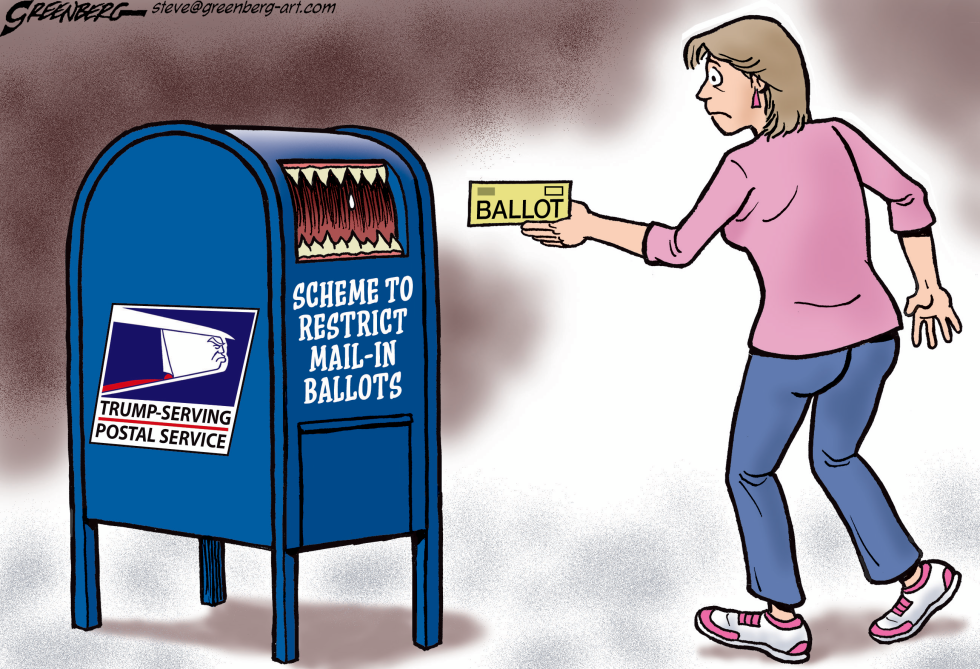
The U.S. Postal Service under Trump influence has implemented measures to restrict mail-in ballots ahead of the 2026 elections. These actions limit voter access through operational changes and heightened scrutiny of mail ballots. The moves raise concerns about equitable participation in elections. Critics argue the changes disproportionately affect certain voter groups and undermine trust in the process. The cartoon portrays the postal service as actively hostile to mail-in voting, framing the restrictions as a deliberate scheme to suppress turnout.
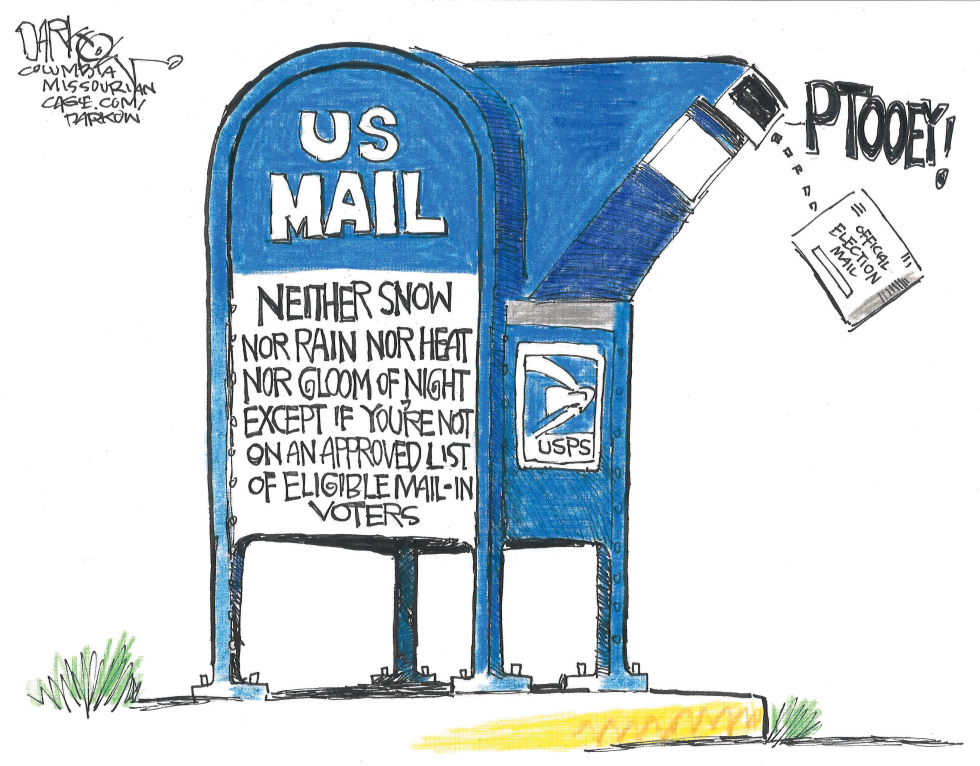
A USPS mailbox rejects mail-in ballots unless the sender appears on an approved list of eligible voters. The action highlights ongoing debates over mail voting security and access ahead of elections. Critics argue such restrictions disproportionately affect certain voter groups and undermine confidence in the postal system. Supporters claim the measures prevent fraud. The cartoon portrays the mailbox as actively enforcing these limits, suggesting institutional barriers to participation.
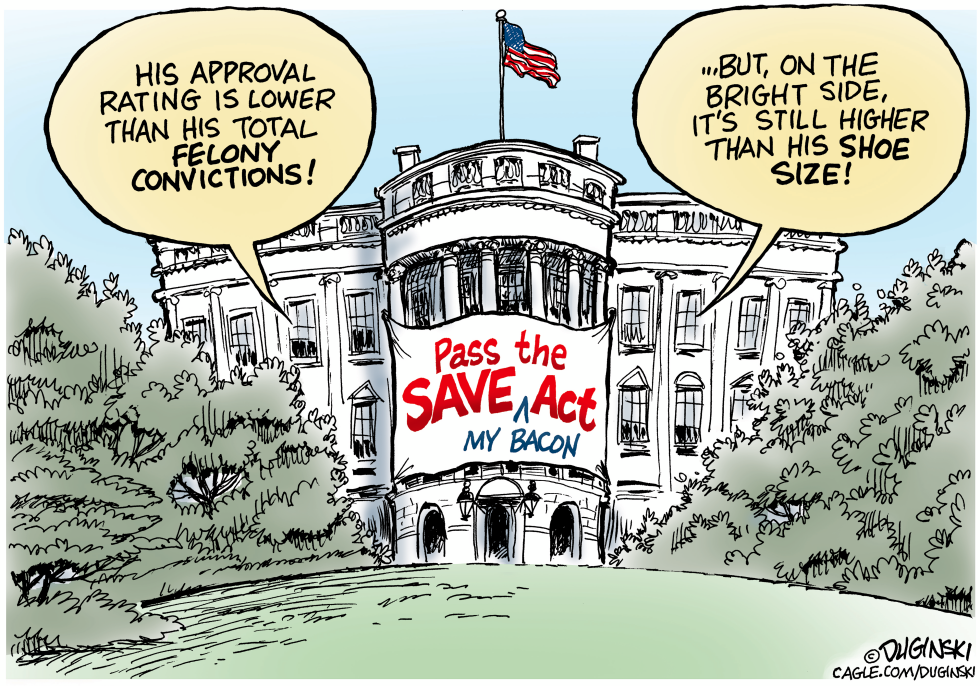
A president facing historically low approval ratings tied to prior felony convictions pushes the SAVE Act through Congress in late summer 2026. The legislation aims to require proof of citizenship for federal voting. The editorial view holds that the effort serves mainly as a lifeline for an embattled administration rather than a substantive reform.
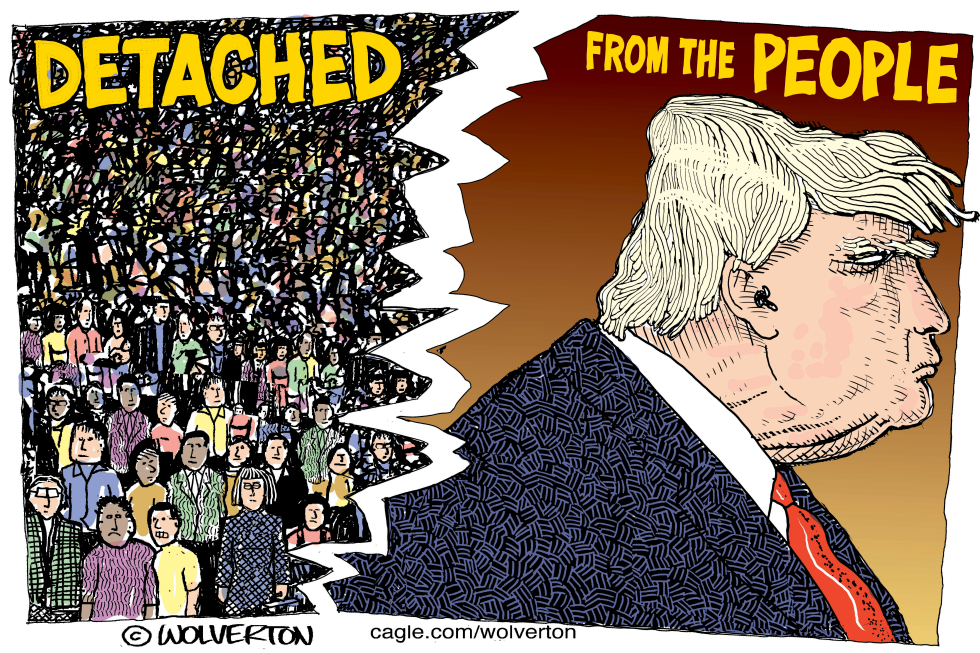
The illustration presents Donald Trump in right profile wearing a dark suit and red tie with an earpiece visible. A jagged white line divides the frame. On the left a dense multicolored crowd fills the space beneath the word DETACHED. On the right the phrase FROM THE PEOPLE appears above the figure. The work responds to ongoing discussions about political figures and public connection during the 2026 period.
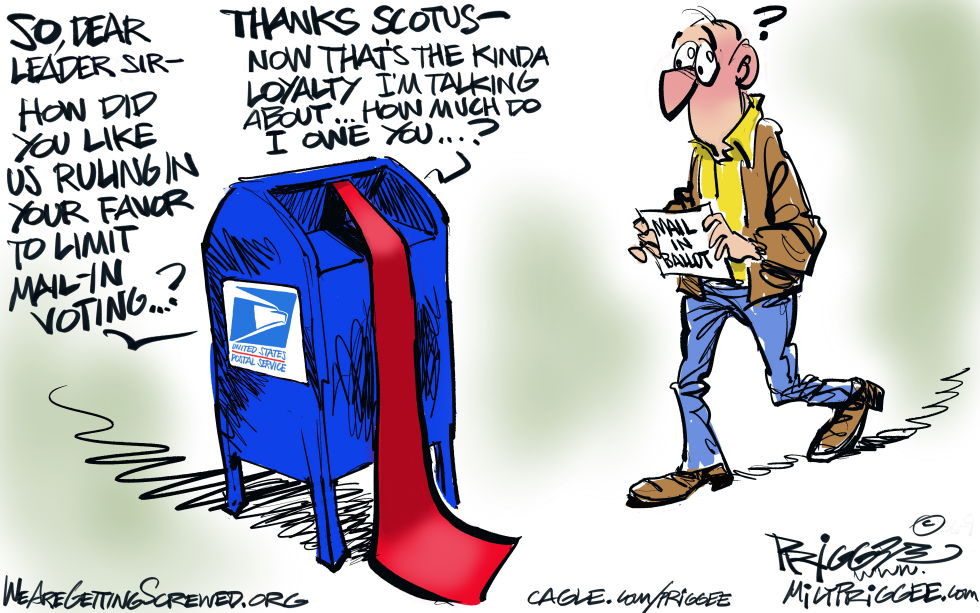
The cartoon shows a voter holding a mail-in ballot and questioning a USPS mailbox about a Supreme Court ruling that limited mail-in voting in favor of a political leader. The mailbox responds with thanks for the loyalty and an offer to pay. The image highlights concerns over judicial influence on elections and voter access as of the 2026 publication date.
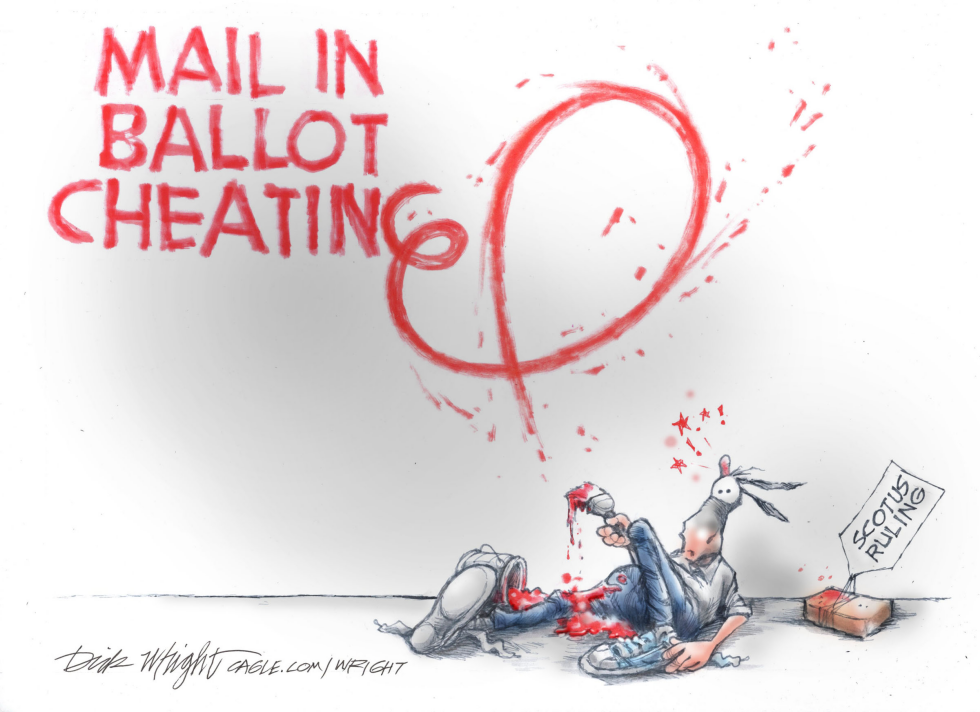
The image depicts the Democratic Party symbol as a donkey lying wounded on the ground with red liquid visible near its body. A large red prohibition symbol covers the words mail in ballot cheating at the top. A sign reading SCOTUS ruling stands nearby next to a box. The composition responds to a Supreme Court decision limiting certain mail-in ballot procedures. The visual argument centers on claims of reduced opportunities for improper voting practices. Publication occurred on August 25 2026. The work uses the party emblem to illustrate the effect of the ruling on one political side. No specific prior case details appear in the image itself.
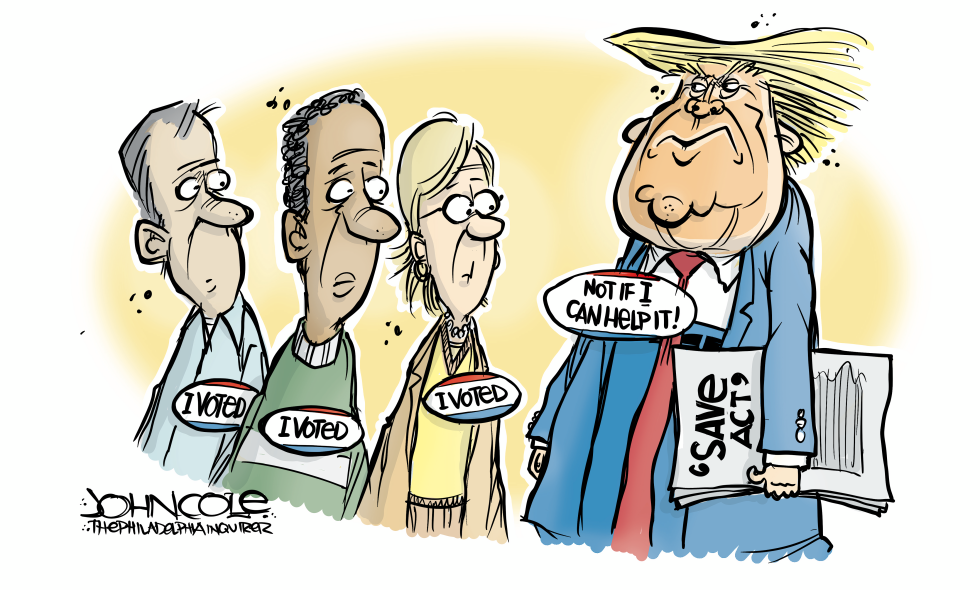
The cartoon shows Donald Trump on the right clutching documents labeled SAVE Act and declaring through a speech bubble, 'NOT IF I CAN HELP IT!' Three voters on the left, an older white man, a Black man and a white woman, each wear prominent I Voted stickers. The composition contrasts the former president's stance against the visible participation of citizens in elections. Published August 16, 2026, the image addresses Trump's resistance to the SAVE Act, a measure aimed at strengthening voter identification requirements. The visual places emphasis on the disconnect between voter engagement and political opposition to related legislation.
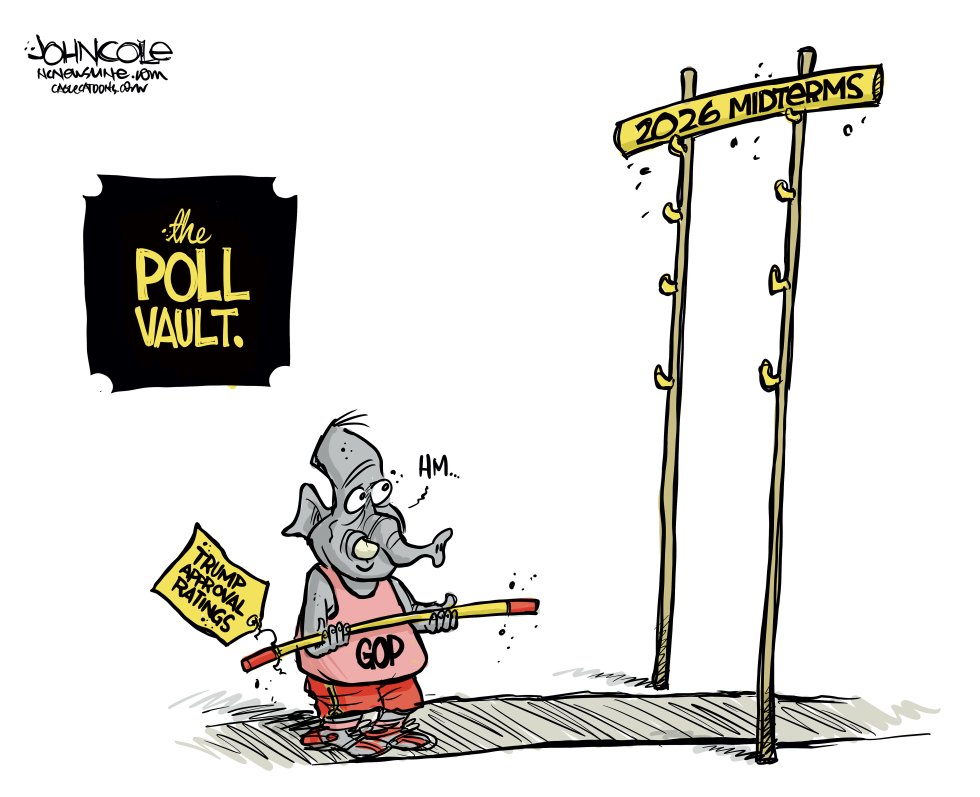
Republicans face the 2026 midterm elections with Donald Trump as a central figure whose approval ratings remain a key variable. Party strategists must decide how heavily to tie their candidates to the former president amid ongoing voter sentiment. The piece portrays the GOP as an athlete preparing to clear the midterm bar but questioning whether the available pole will suffice.