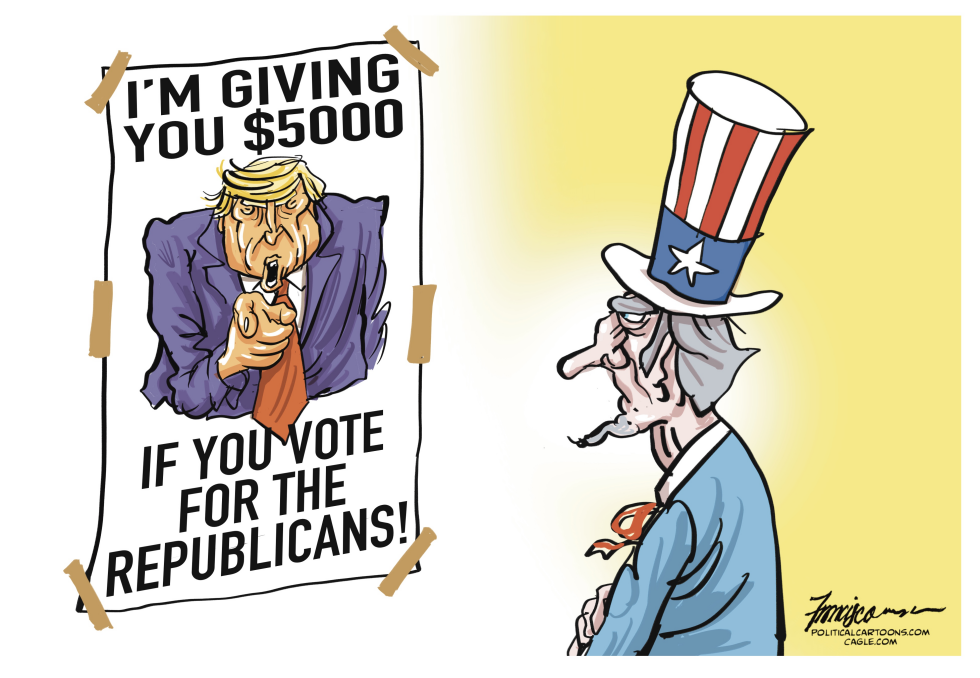
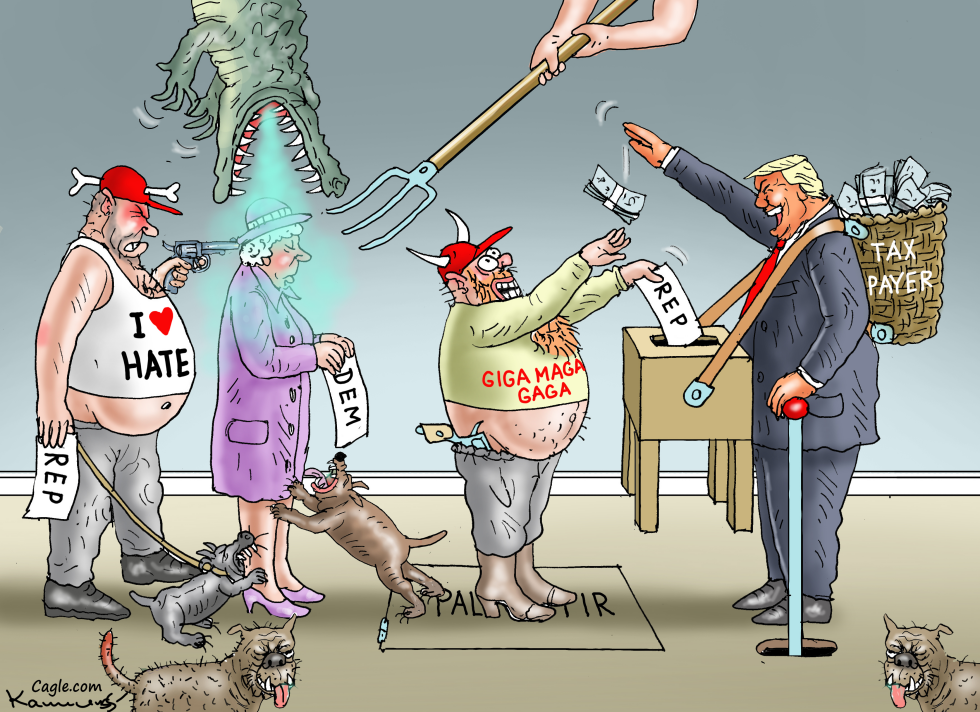
Donald Trump has floated direct cash payments to voters who support Republican candidates. The proposal surfaces weeks before the 2026 midterms and draws immediate scrutiny over its legality and intent. Critics argue the move risks turning elections into auctions. Supporters frame it as economic relief. The cartoon depicts the offer as a blunt transaction that leaves traditional symbols of American integrity uneasy.
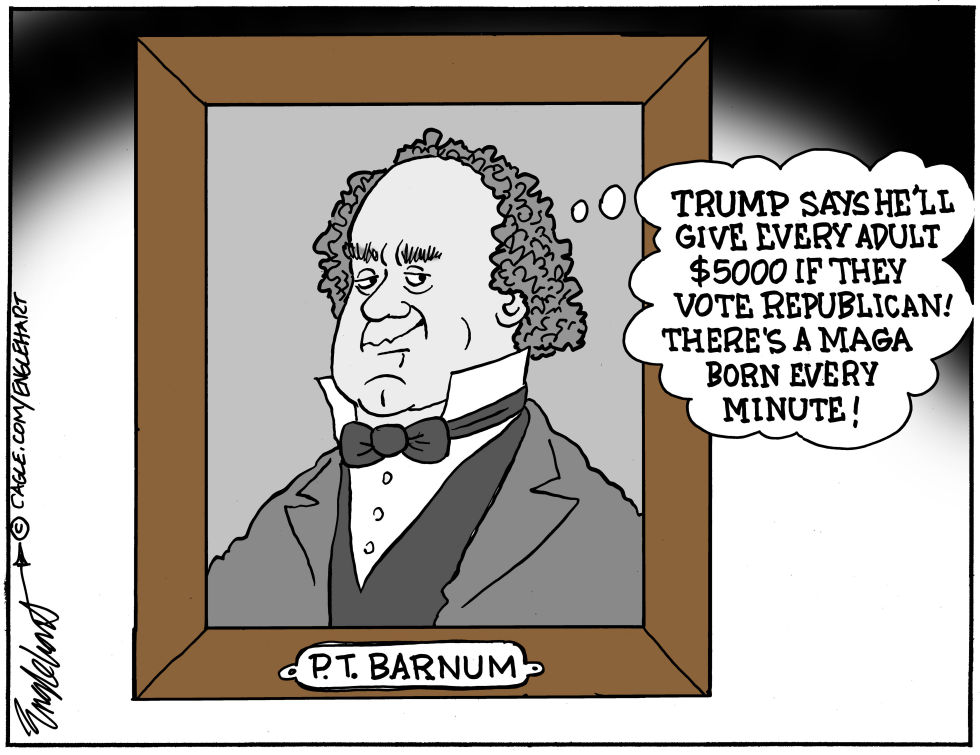
Donald Trump proposed giving $5000 to every adult who votes Republican ahead of the 2026 midterms. The offer drew immediate comparisons to historical figures known for exploiting public gullibility. The cartoon uses the P.T. Barnum portrait and the altered sucker line to argue that the proposal treats voters as marks rather than citizens. It frames the cash pledge as a transparent attempt to buy support through direct payment. The piece suggests the tactic reveals low regard for voter intelligence and reduces elections to transactional exchanges.
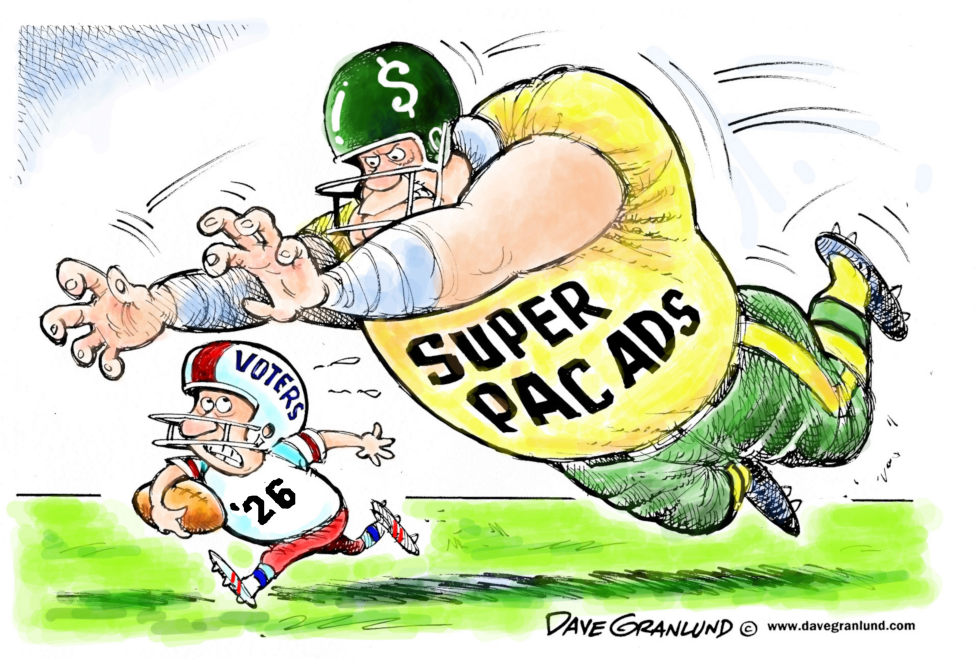
The cartoon depicts a large football player representing Super PAC ads pursuing a much smaller voter figure on a football field. Published on September 11, 2026, the image comments on the growing influence of Super PAC spending in U.S. elections. The oversized player wears a helmet marked with a dollar sign and a jersey labeled Super PAC Ads, while the smaller figure wears a helmet reading Voters and a jersey with the number 26. The visual emphasizes the imbalance between well-funded political advertising and ordinary voters. This reflects ongoing debates about campaign finance and the role of independent expenditure groups following recent election cycles.
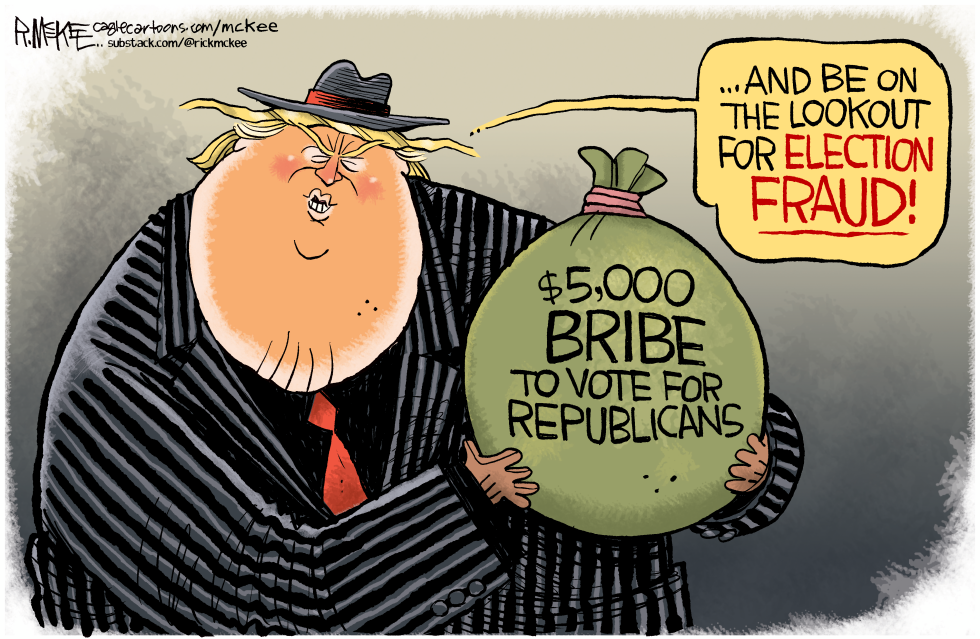
Donald Trump has repeatedly claimed that elections are rigged against Republicans and urged vigilance against fraud. The cartoon responds to this pattern by depicting him offering cash incentives to secure votes for his party. It underscores the perceived double standard in ongoing debates over voting access and integrity ahead of the 2026 midterms. The piece takes the position that such rhetoric from Trump undermines genuine concerns about election security.
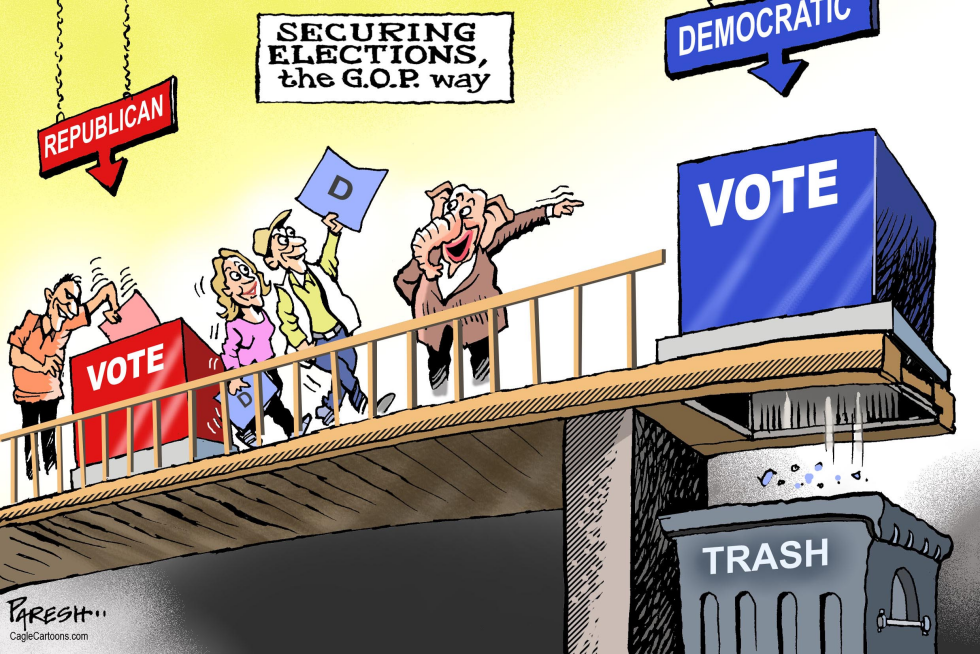
The cartoon depicts Republicans on a platform guiding a large blue vote box labeled Democratic into a trash can below while a red Republican vote box remains on the structure. A sign reads Securing Elections the G.O.P. way. The elephant symbol of the GOP points toward the action as figures including one holding a D flag stand nearby. The image comments on claims of election integrity by showing ballots from one party discarded. This reflects ongoing partisan debates over voting procedures and access as of the 2026 publication date.
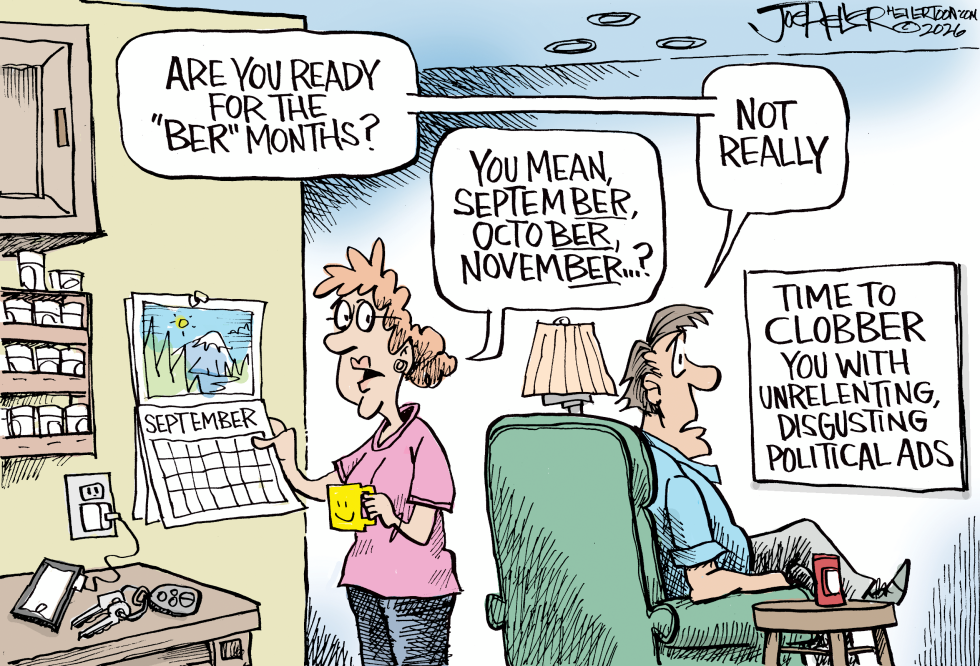
As September begins, the annual cycle of fall political advertising intensifies ahead of November elections. Candidates and outside groups ramp up spending on television, digital and mail campaigns to reach voters. The volume of messages creates widespread fatigue among the public. The cartoon highlights the predictable dread that accompanies the shift from summer to the final stretch of the campaign calendar.
Donald Trump has publicly offered $5000 payments to Americans who follow his directives, framing the incentive as a direct reward for alignment. The pledge has drawn immediate questions from his own base about the status of related DOGE checks previously promised. The move underscores ongoing efforts to maintain supporter enthusiasm through financial inducements. Critics view the tactic as an attempt to convert political loyalty into personal obedience. The cartoon highlights the transactional nature of the offer and the skepticism it has already generated among core supporters.
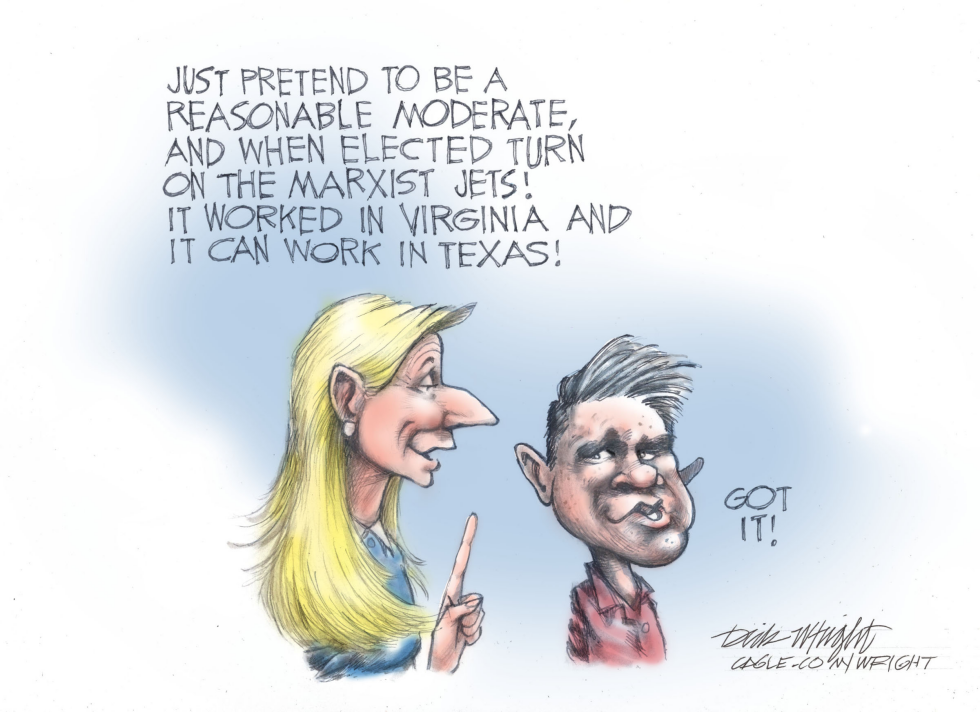
A Texas political candidate is depicted receiving advice to campaign as a moderate before revealing a more radical agenda after election, modeled on Abigail Spanberger's Virginia approach. The cartoon highlights concerns over deceptive campaign strategies in the 2026 cycle and questions the authenticity of centrist positioning by progressive candidates.
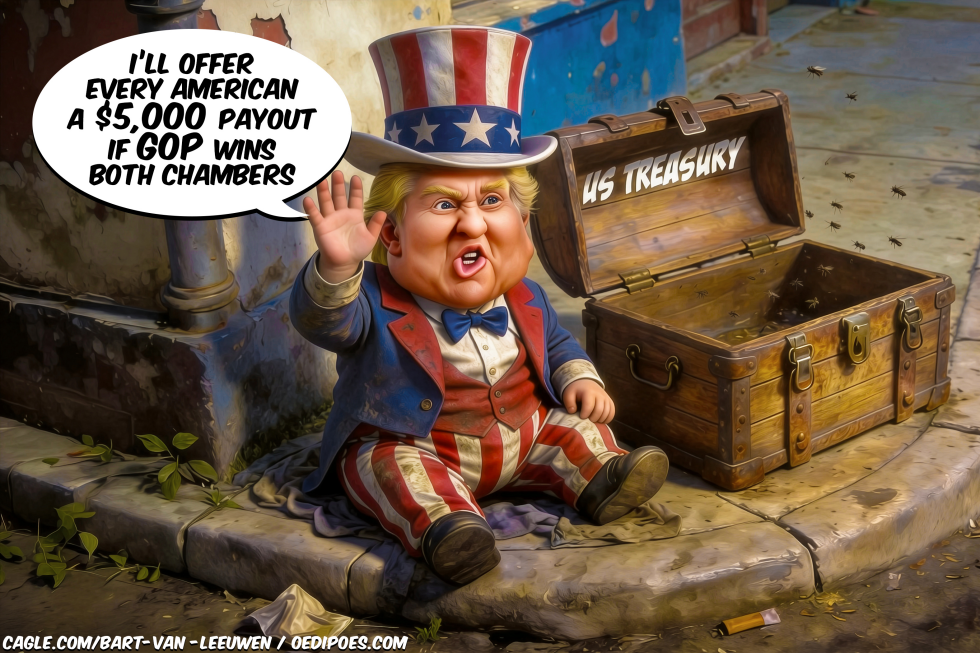
The cartoon depicts Donald Trump dressed as Uncle Sam seated on a curb beside an open US Treasury chest filled with flies. He promises every American a $5,000 payout if Republicans win both chambers of Congress. The image responds to campaign rhetoric tying government funds to electoral outcomes ahead of the 2026 midterms. It highlights concerns over using Treasury resources for political advantage. The visual uses the empty chest and insects to suggest depletion or misuse of public money.
As the 2026 midterm elections approach, former President Trump has positioned himself as a central force in Republican campaigns, directing resources and mobilizing supporters. The cartoon highlights the use of taxpayer money in these efforts and the intense partisan divide, with Democrats portrayed as under attack. It takes the position that such involvement risks undermining fair electoral processes.
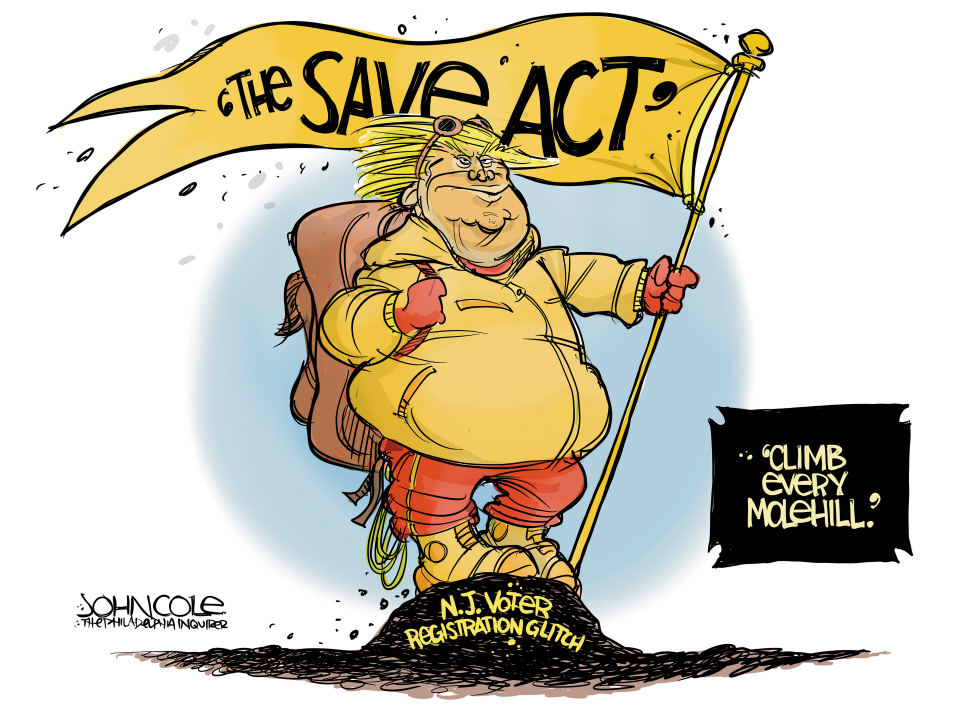
A minor voter registration glitch in New Jersey drew outsized attention from former President Trump and supporters of the SAVE Act in September 2026. The episode highlighted ongoing partisan disputes over election administration and voter ID rules. The cartoon portrays the reaction as an overreaction that turns a small problem into a symbolic crusade, arguing that such emphasis distracts from actual election security needs.
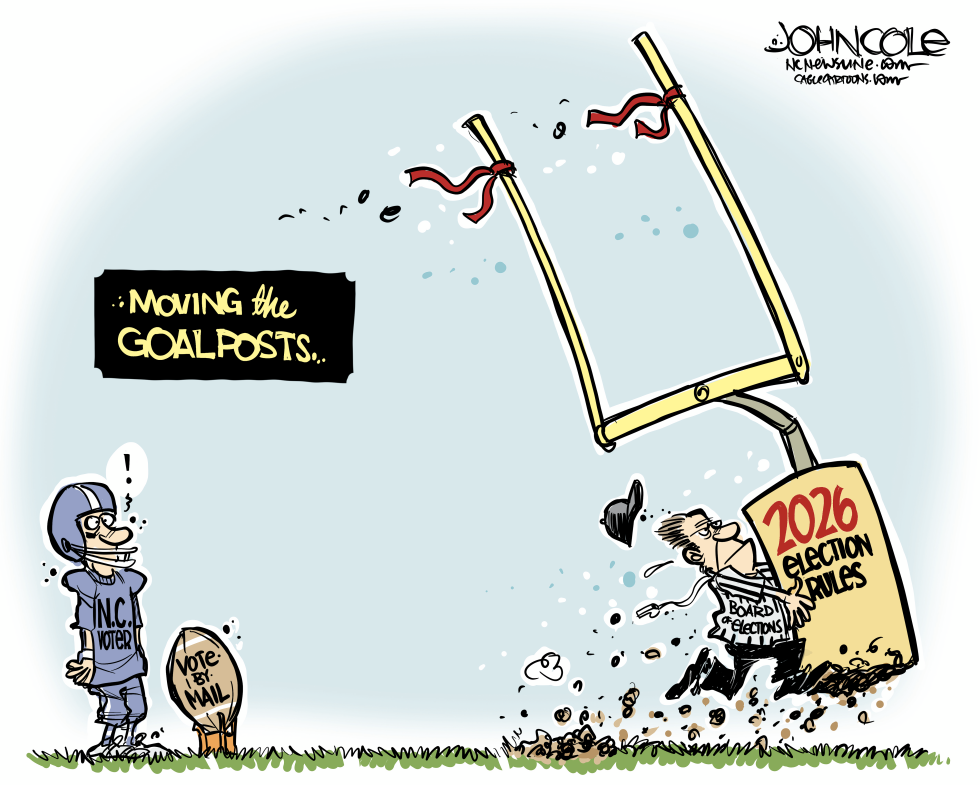
The North Carolina Board of Elections has updated rules governing mail ballots for the 2026 elections, introducing stricter verification and deadline requirements. The changes affect how voters submit ballots and have drawn criticism for complicating access. The move comes amid ongoing debates over election security and participation. Critics argue the adjustments disproportionately impact certain voter groups. The cartoon portrays the board as actively shifting standards to the disadvantage of mail voters.
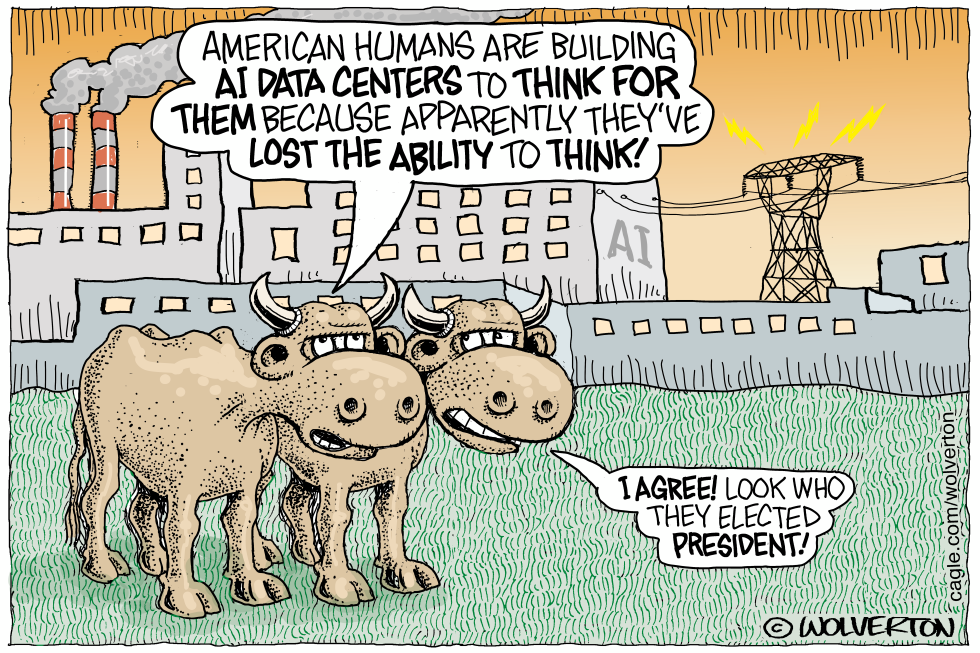
The drawing shows two cows in a field before industrial structures labeled AI. One cow states that American humans build AI data centers to think for them after losing that ability. The second cow agrees and points to the elected president. Smokestacks and an electricity tower appear in the background. The piece responds to ongoing debates over AI infrastructure demands and the 2026 election context by connecting energy use to political decisions.
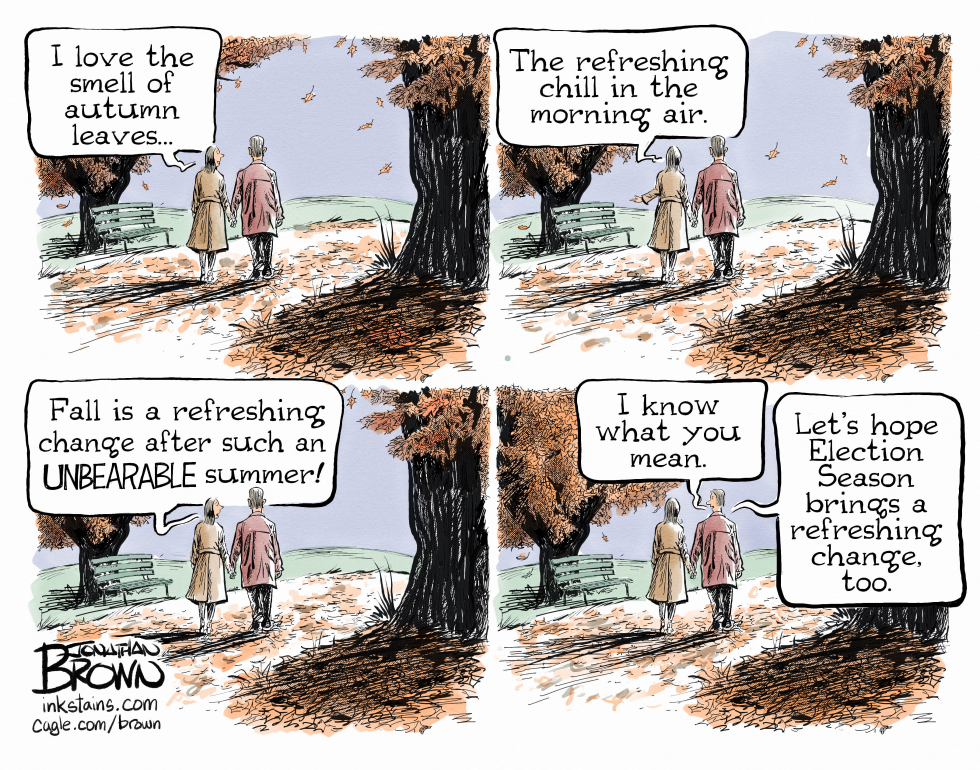
The cartoon depicts a couple strolling through an autumn park and commenting on the season's appeal. Their conversation turns to the election cycle as another potential source of renewal. The work uses the familiar transition from summer to fall to express a common voter sentiment ahead of the 2026 midterms. No specific candidates or policies are named, keeping the focus on the general wish for improvement. The four-panel format builds the parallel gradually before delivering the final line about election season.
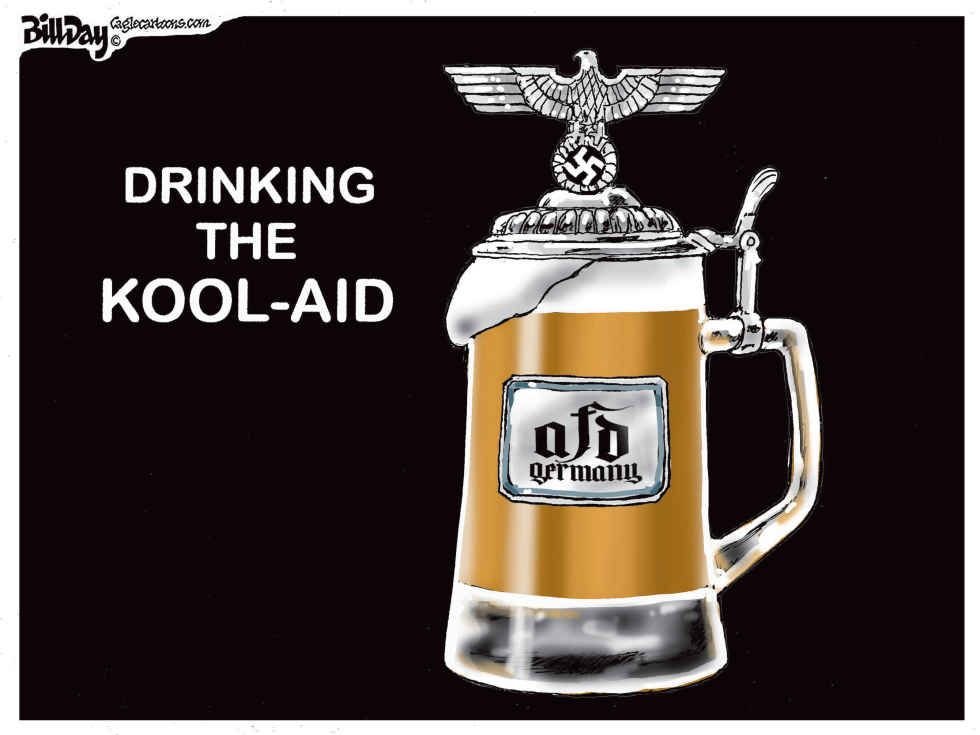
Germany's far-right Alternative for Germany party is gaining ground ahead of elections with rhetoric echoing historical extremism. The party has faced repeated scrutiny for members' Nazi-era references and anti-immigrant stances that courts have flagged as extremist. This development matters because AfD polling strength could reshape coalition math and policy on migration, EU ties, and civil liberties. The cartoon argues that supporters are consuming a toxic ideological brew that risks normalizing authoritarian symbols and eroding democratic norms.