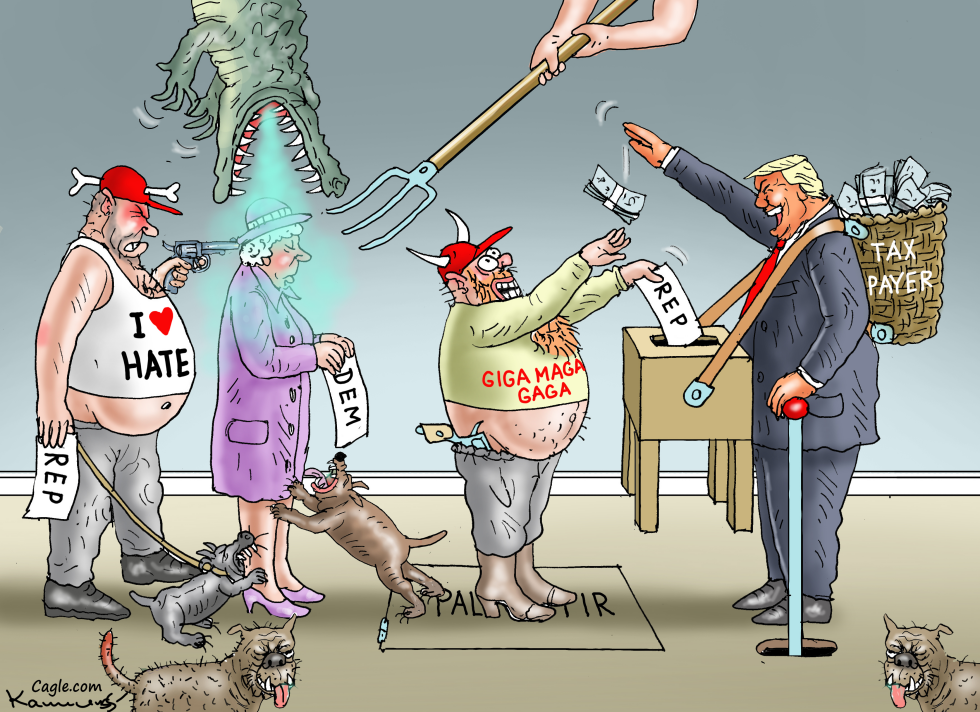
As the 2026 midterm elections approach, former President Trump has positioned himself as a central force in Republican campaigns, directing resources and mobilizing supporters. The cartoon highlights the use of taxpayer money in these efforts and the intense partisan divide, with Democrats portrayed as under attack. It takes the position that such involvement risks undermining fair electoral processes.
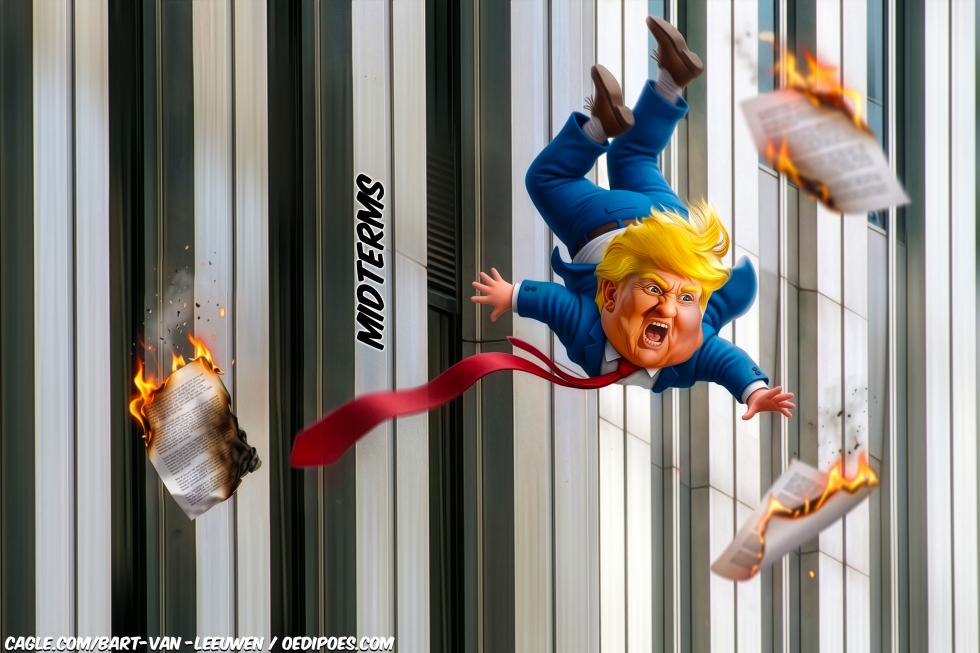
The cartoon shows a caricature of Donald Trump tumbling from a tall building while clutching at burning documents. Vertical lettering spells out midterms along the facade. The scene captures the editorial view of Trump's political position weakening ahead of the 2026 elections. Burning papers suggest damaging records or failed policies catching fire. The falling figure with an open mouth conveys alarm and loss of control. Publication occurred on September 9, 2026, during active midterm campaigning.
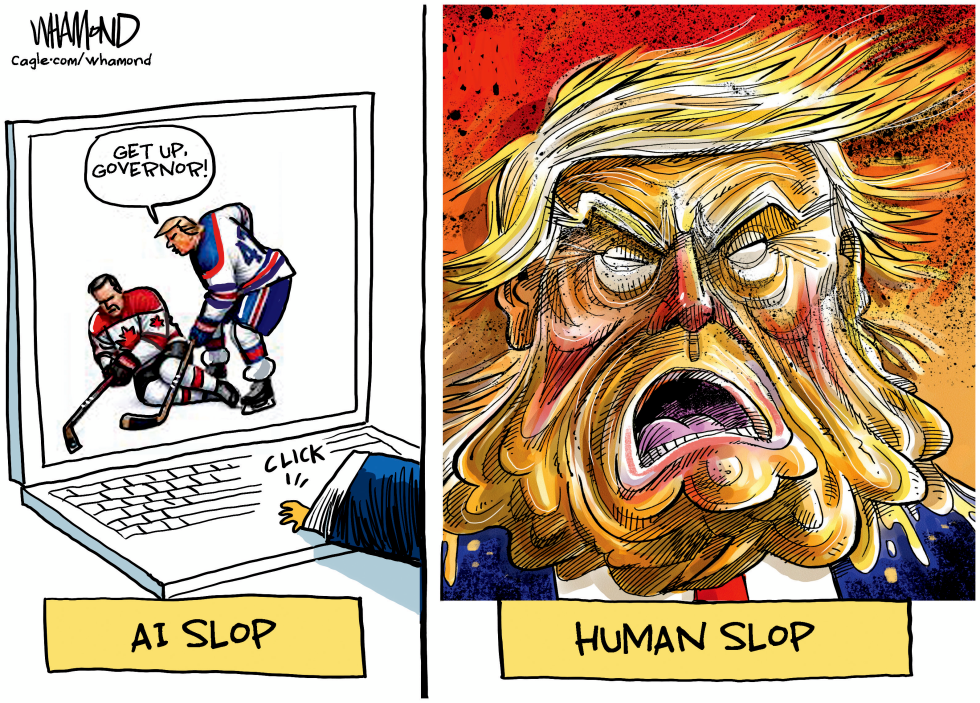
AI tools produce flawed political images while human artists create equally flawed ones. The piece highlights declining quality in both digital generation and traditional caricature of figures like Donald Trump. It argues neither approach delivers credible or effective visual commentary.
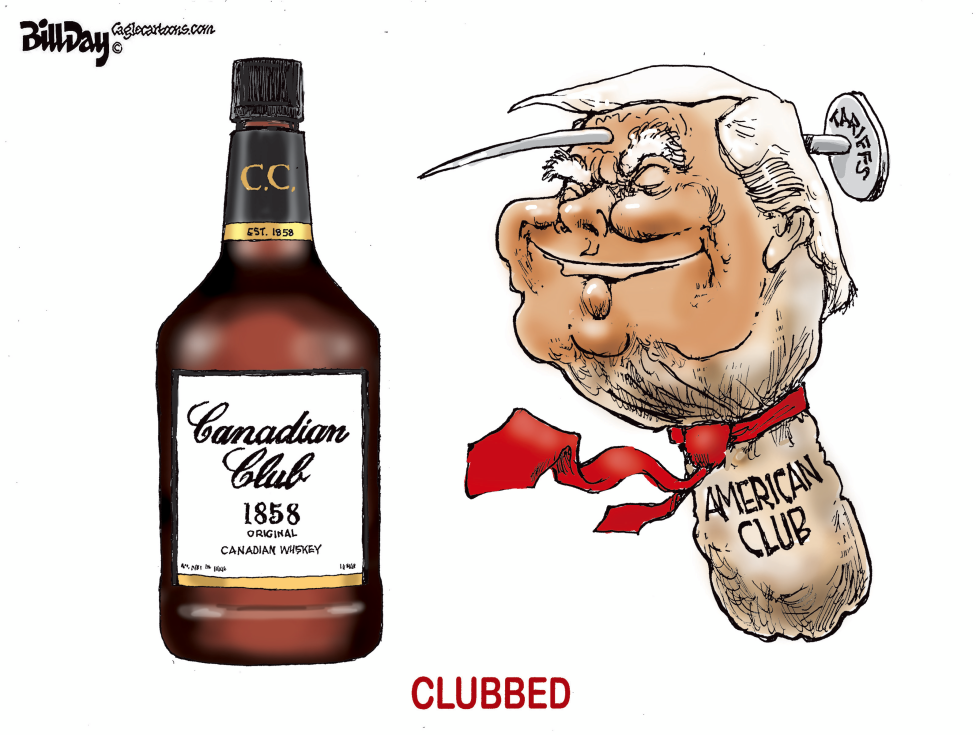
On September 9, 2026, the cartoon responds to ongoing US-Canada trade friction under the second Trump administration. Trump has pursued aggressive tariff policies against Canadian imports, prompting Ottawa to consider reciprocal measures. The piece uses the Canadian Club whiskey brand to illustrate how such policies rebound on American interests. It argues that Trump's approach harms US businesses and consumers rather than strengthening them.
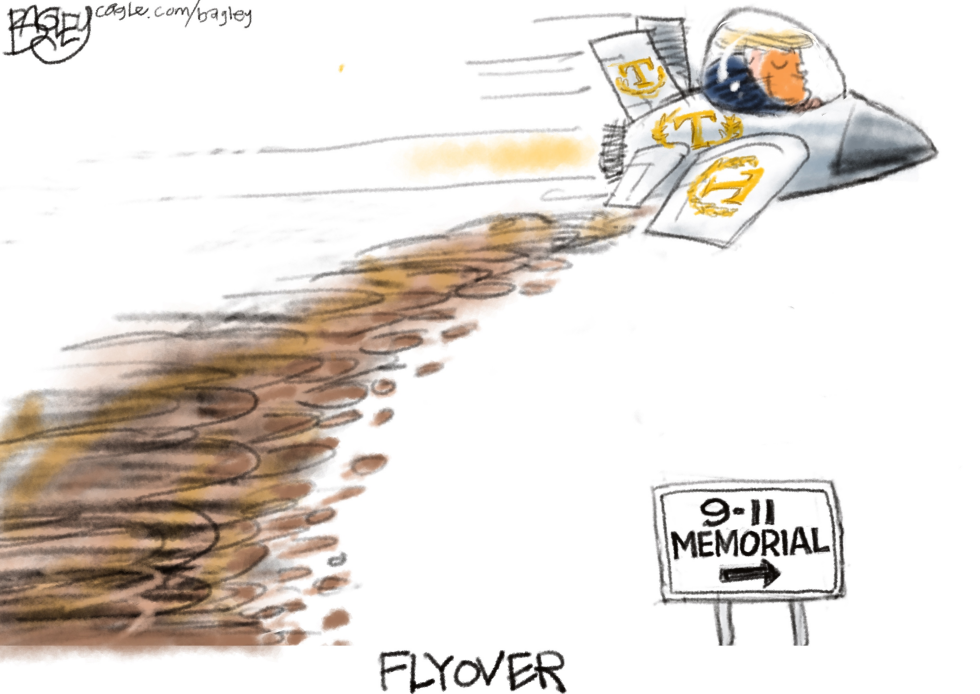
On the eve of the September 11 anniversary in 2026, former President Donald Trump conducted a jet flyover of the 9/11 Memorial. The maneuver drew immediate criticism for perceived disrespect during solemn commemorations. Observers noted the timing and execution as tone-deaf political theater. The cartoon captures this moment by depicting the flyover leaving a visible trail of damage in its wake. It argues that the action prioritizes spectacle over solemn remembrance and risks further polarizing public sentiment around national tragedy.
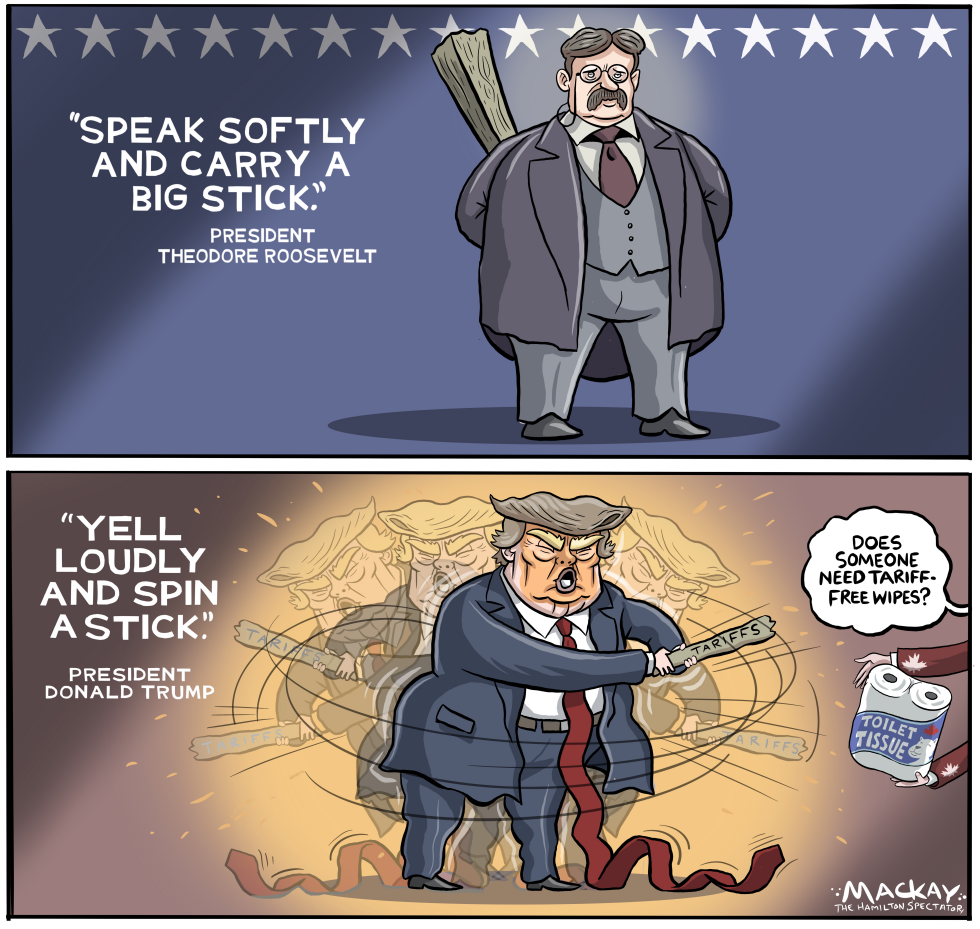
The cartoon by Graeme MacKay contrasts Theodore Roosevelt's famous speak softly and carry a big stick approach with Donald Trump's version of yelling loudly and spinning a stick covered in tariffs. In the lower panel Trump appears dizzy from the motion as a Canadian hand offers toilet tissue labeled tariff-free wipes. The image comments on recent US tariff actions and their impact on Canadian trade relations as of the September 2026 publication date.
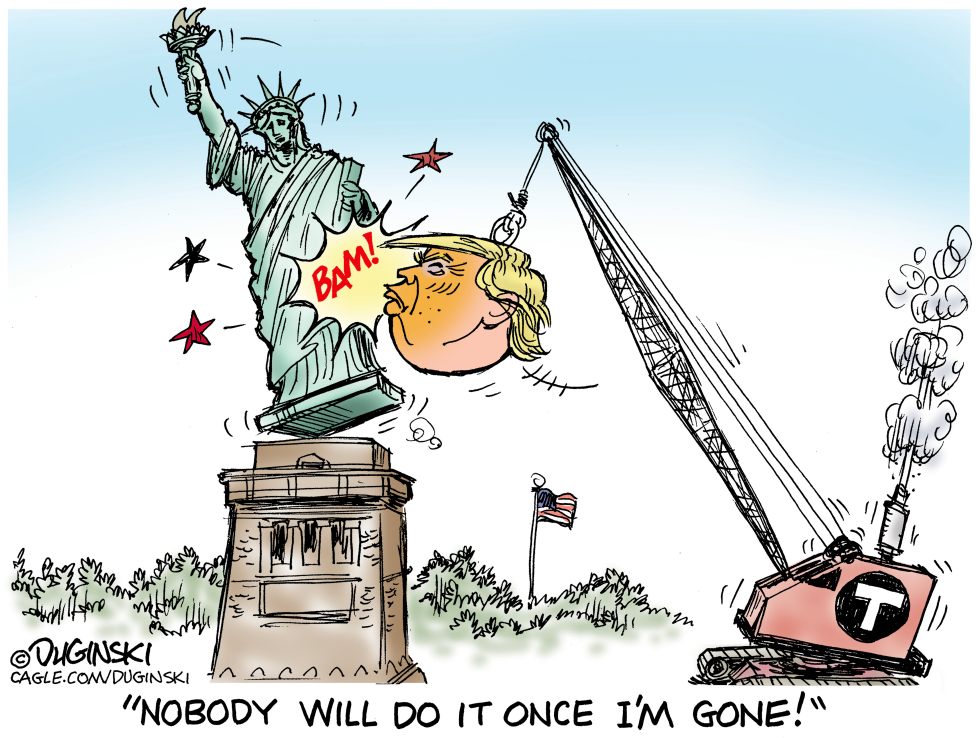
Donald Trump has repeatedly positioned his administration as the primary force reshaping or challenging long-standing U.S. institutions and norms. Critics argue this approach risks permanent erosion of democratic safeguards and public trust. The cartoon presents Trump's own words as an admission that the damage stops only when he leaves office.
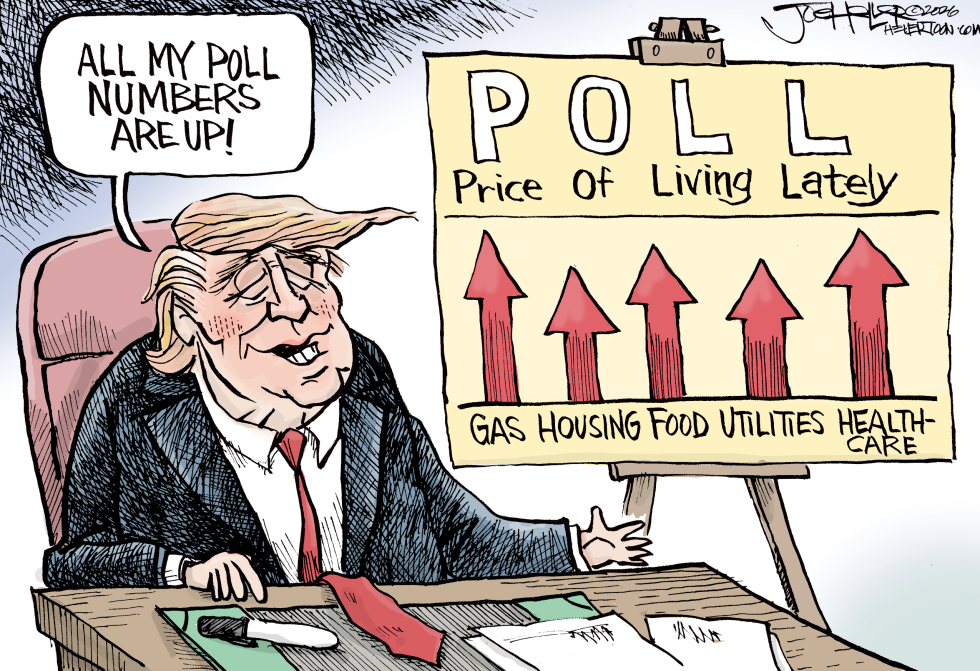
Donald Trump stated that his poll numbers were rising even as the price of living continued to climb across multiple categories. Gas, housing, food, utilities and healthcare costs all posted increases according to the visual data presented. The development matters because household expenses directly affect voter sentiment ahead of upcoming elections. Trump positioned the poll improvement as positive news despite the economic pressures shown. The piece takes the position that any reported poll gains are closely tracking the same upward pressure on everyday costs rather than reflecting broader approval.
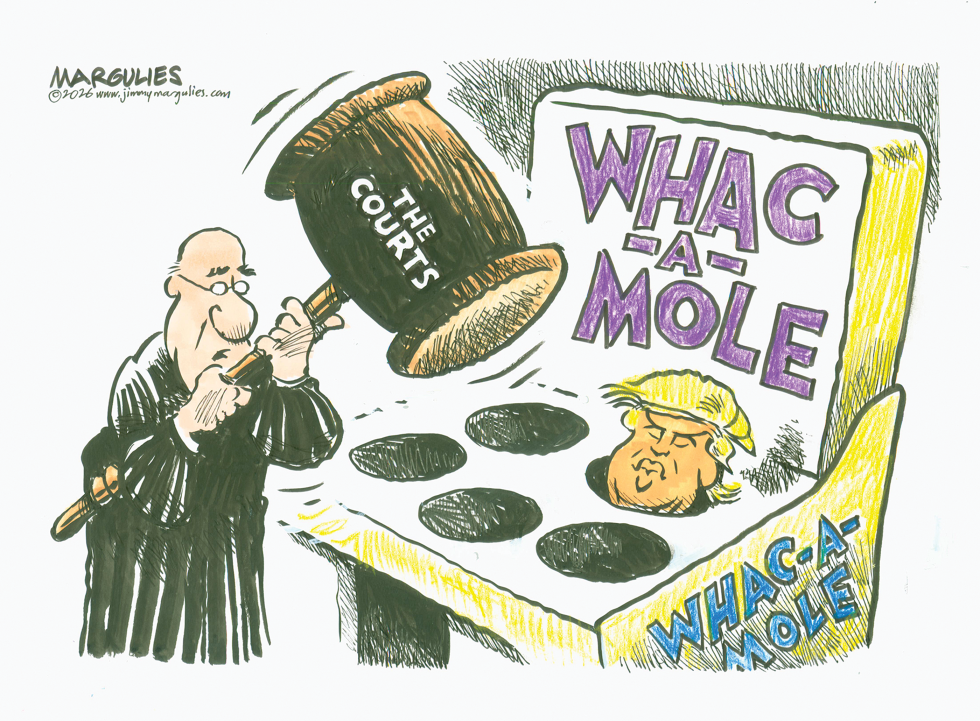
Courts have pursued multiple cases against Donald Trump in recent years, raising questions about timing and motivation ahead of elections. The editorial argues the legal actions resemble a repetitive game rather than measured justice.
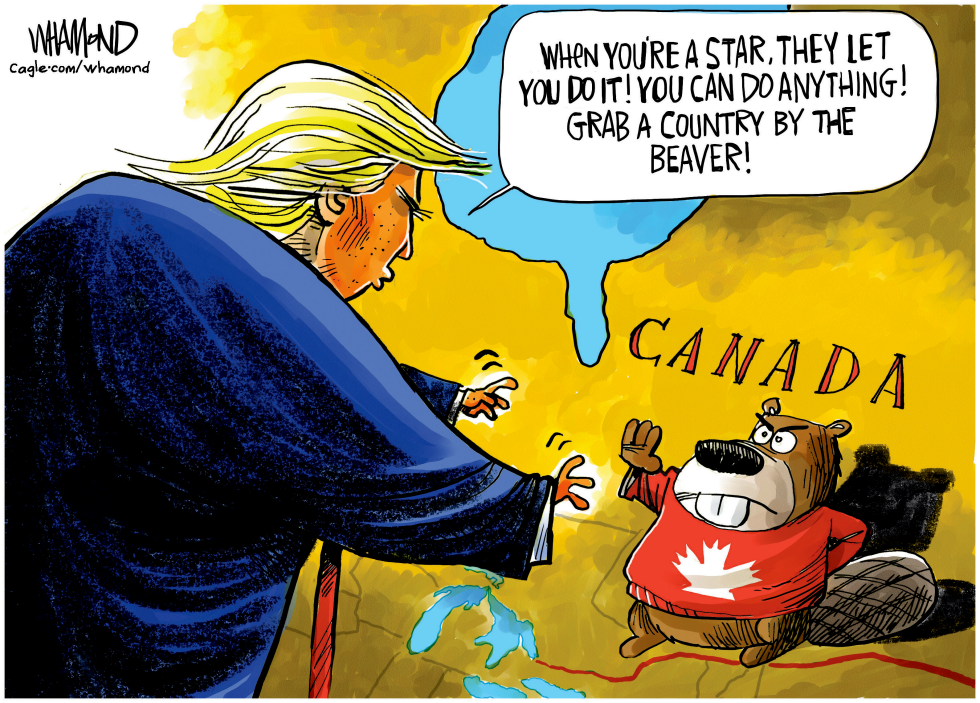
Donald Trump renewed comments suggesting the United States could annex Canada, framing the idea with a reworded version of his 2005 Access Hollywood remarks. The statement comes as bilateral relations face strain over trade and border issues. The editorial cartoon uses the beaver metaphor to underscore the crude nature of the rhetoric and its potential to damage diplomatic ties.
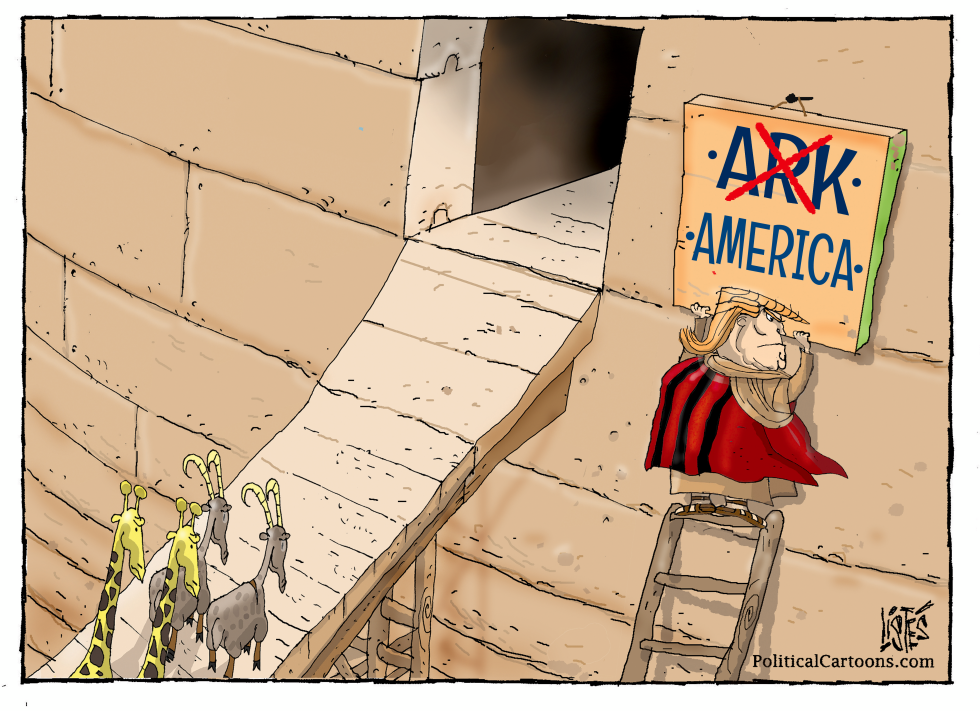
Donald Trump has long inserted his personal branding into public institutions and language. The cartoon responds to this pattern by showing him literally striking through a biblical reference to force an America-first substitution. It argues the impulse reveals unchecked ego rather than policy substance.
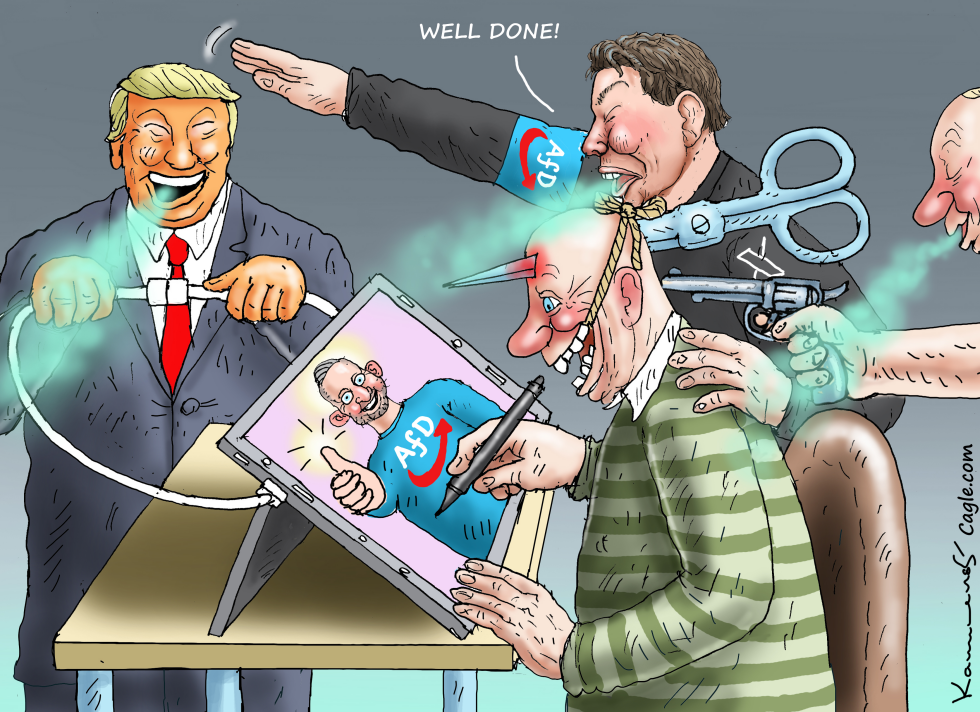
Donald Trump publicly aligned with Germany's Alternative for Germany party in the run-up to federal elections. The move drew scrutiny over foreign influence in European politics. The cartoon portrays the endorsement as reckless and dangerous, highlighting the risks of legitimizing extremist elements.
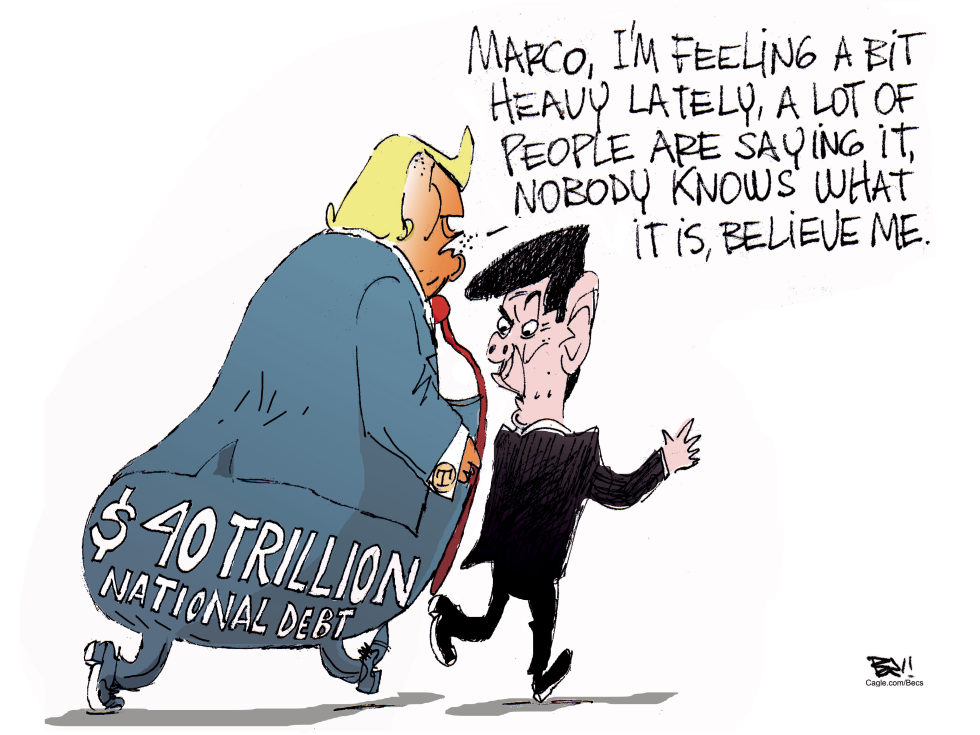
President Trump discussed the national debt with Senator Marco Rubio in early September 2026. The conversation highlighted the $40 trillion figure and public confusion over its scale. The exchange occurs as the administration manages spending priorities and deficit growth. The piece portrays the debt as a personal load that Trump seeks to downplay by blaming external views rather than policy choices.
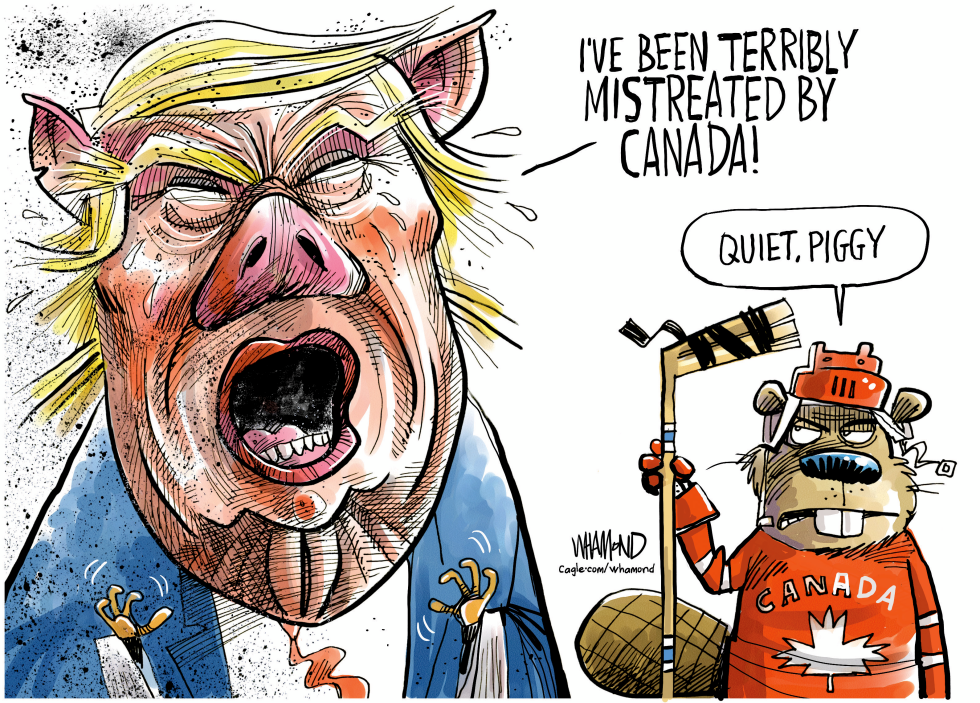
Donald Trump has publicly accused Canada of mistreating the United States in ongoing trade matters. The claim comes amid renewed friction over tariffs and cross border commerce. Canada has responded with its own pointed rebuttal. The exchange highlights persistent strains in bilateral relations. The cartoon portrays the accusation as exaggerated and the Canadian reply as direct. It suggests the US position lacks substance and invites a firm counter.
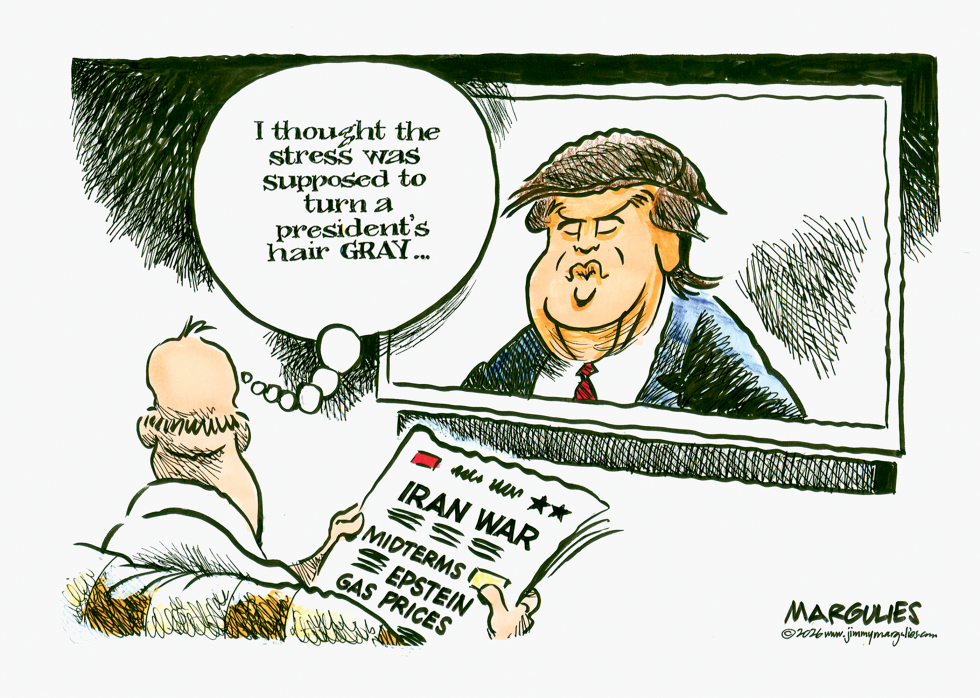
President Donald Trump confronts an Iran war, midterm election pressures, Epstein-related revelations and rising gas prices in September 2026. These overlapping challenges test the administration's capacity to manage foreign conflict and domestic economic strain simultaneously. The cartoon argues that the expected physical toll of such stress on the president has not materialized in the anticipated way.