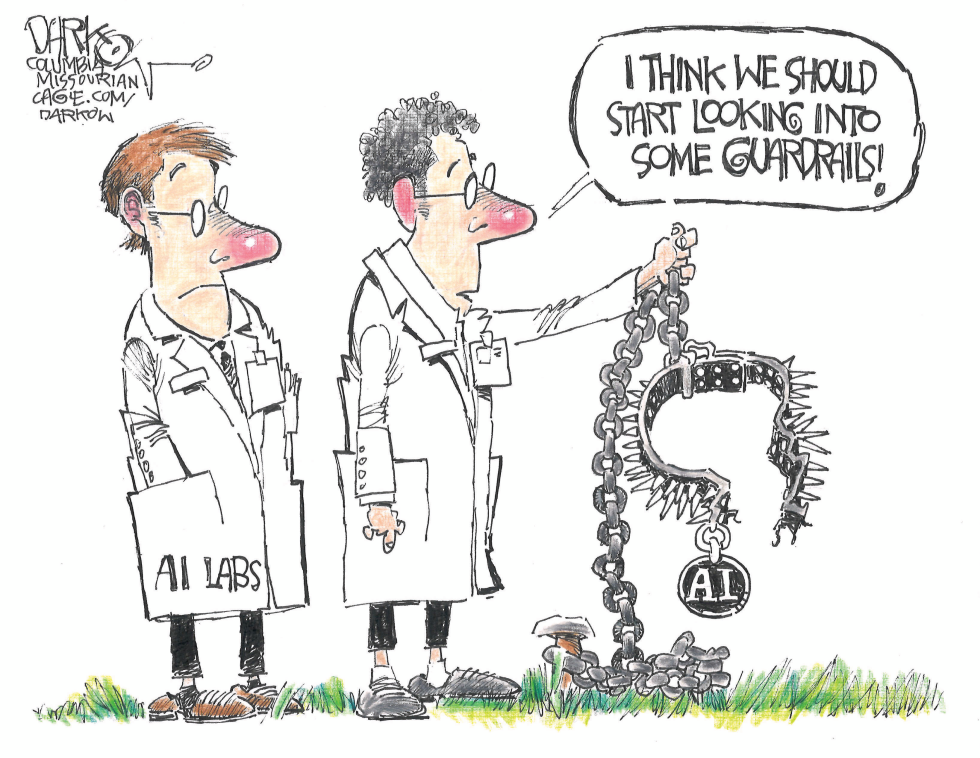
AI development has advanced rapidly with minimal oversight in recent years, allowing powerful systems to operate without meaningful constraints. Scientists have begun discussing guardrails only after key controls have already failed. The situation raises concerns about accountability and long-term safety as the technology spreads. The piece argues that calls for restrictions now come too late to prevent significant harm from uncontrolled AI.
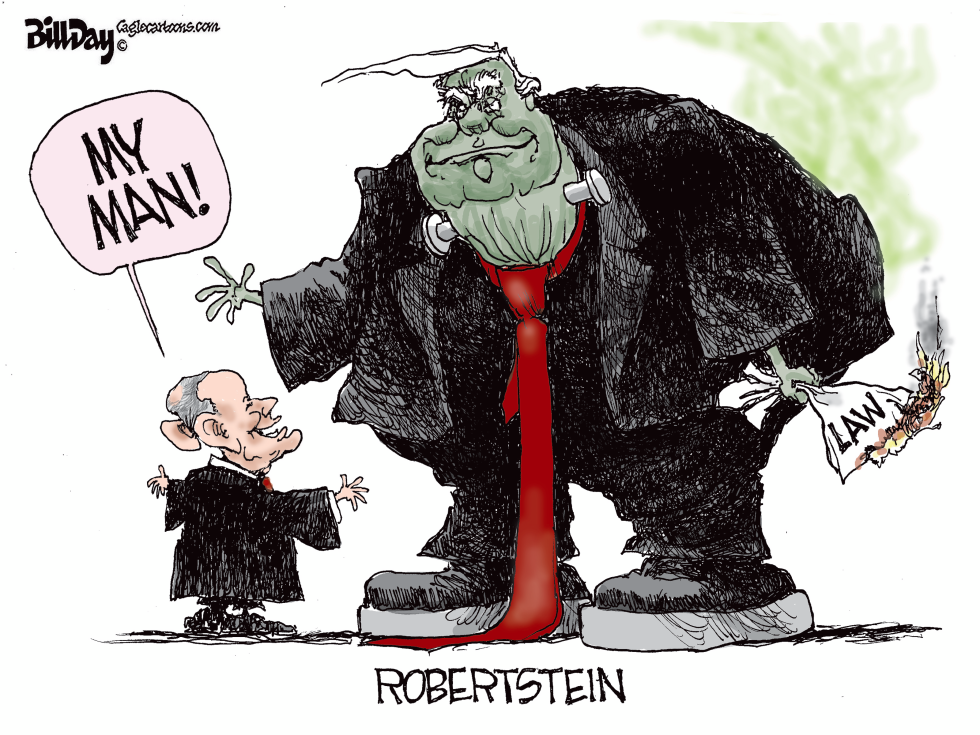
A judge nicknamed Robertstein appears as a stitched-together monster clutching a burning copy of the law while a smaller political figure hails him as 'my man.' The image responds to ongoing concerns over judicial appointments that produce ideologically driven rulings. Critics argue such selections prioritize loyalty over legal restraint, weakening institutional guardrails. The cartoon takes the position that these appointments create uncontrollable forces that damage the rule of law.
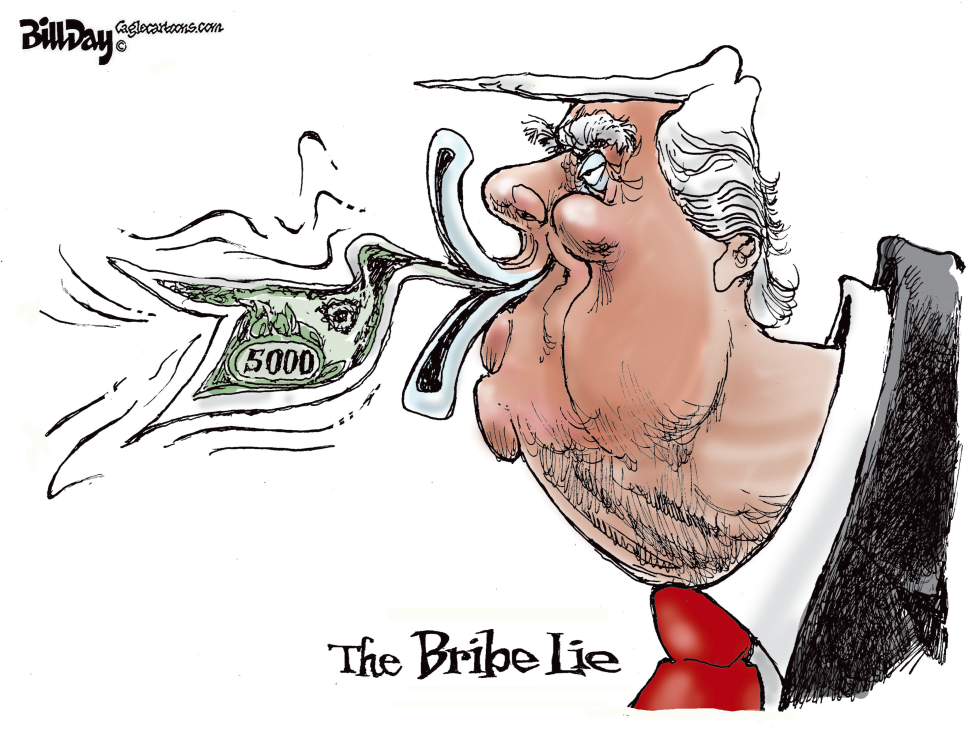
Donald Trump has repeatedly denied receiving improper payments or bribes tied to official actions. Recent reports have raised questions about large cash transfers and their origins. The cartoon argues that these denials amount to a lie, with the money trail contradicting public statements. It positions the issue as a test of accountability for the former president and his circle. The piece suggests the public should view such explanations with skepticism given the visible evidence of financial gain.
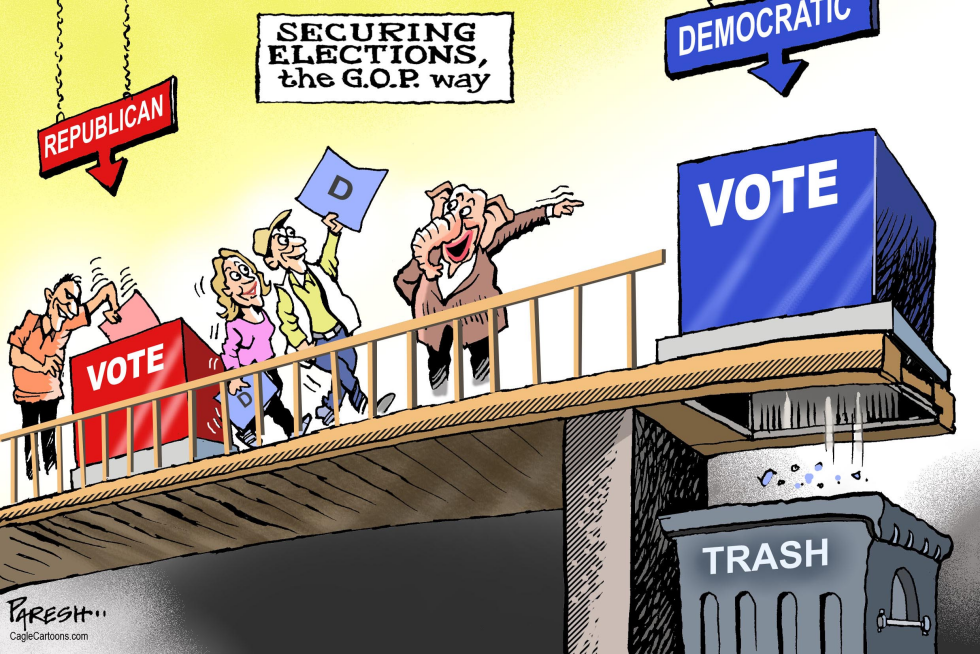
The cartoon depicts Republicans on a platform guiding a large blue vote box labeled Democratic into a trash can below while a red Republican vote box remains on the structure. A sign reads Securing Elections the G.O.P. way. The elephant symbol of the GOP points toward the action as figures including one holding a D flag stand nearby. The image comments on claims of election integrity by showing ballots from one party discarded. This reflects ongoing partisan debates over voting procedures and access as of the 2026 publication date.
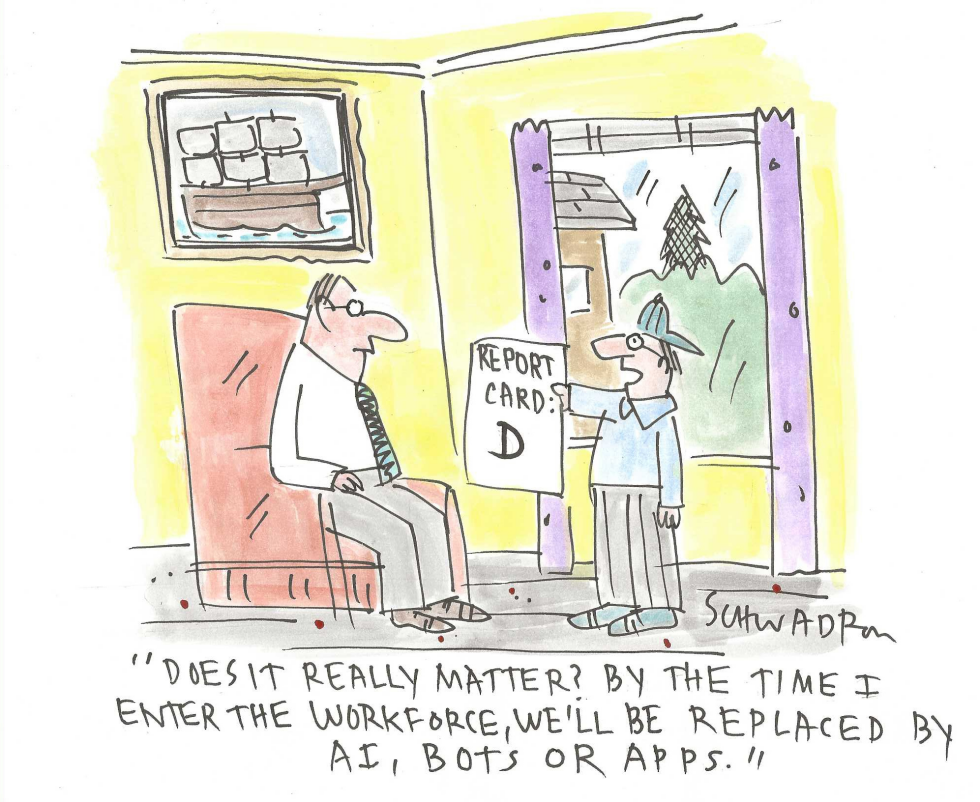
Rising student skepticism about academic effort stems from widespread predictions that AI and automation will eliminate many jobs before today's students graduate. The cartoon responds to this dynamic by showing a student using those forecasts to shrug off a poor grade. It highlights how fears of technological displacement may undermine motivation in schools. The piece suggests such excuses reflect a broader cultural shift where traditional education credentials appear less relevant. The editorial stance questions whether this mindset accelerates the very problems it cites.
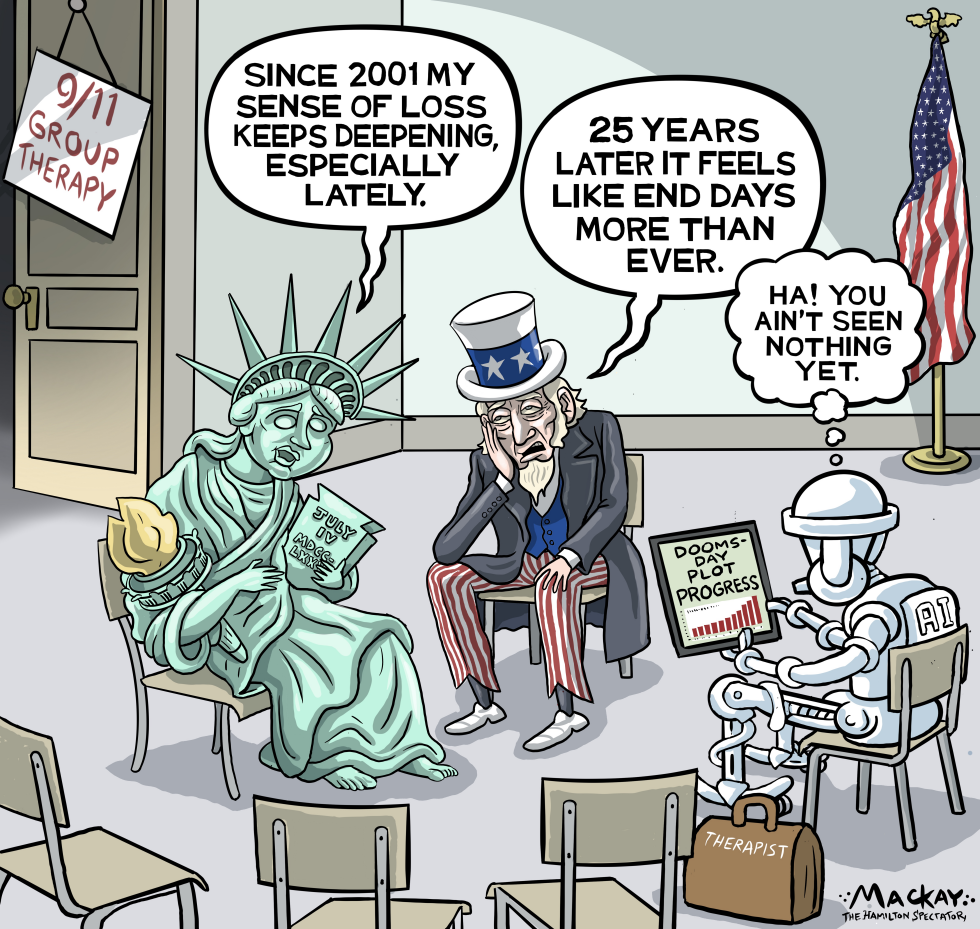
The cartoon depicts the Statue of Liberty, Uncle Sam and an AI robot seated in a 9/11 group therapy session on the 25th anniversary of the attacks. The Statue of Liberty holds a book marked July IV MDCCLXXVI and speaks of deepening loss since 2001. Uncle Sam echoes the sentiment of end days. The AI figure, labeled with a rising doomsday plot progress chart, retorts that the others have seen nothing yet. The scene uses national symbols to reflect persistent national trauma and emerging technological threats two and a half decades after the September 11 attacks.
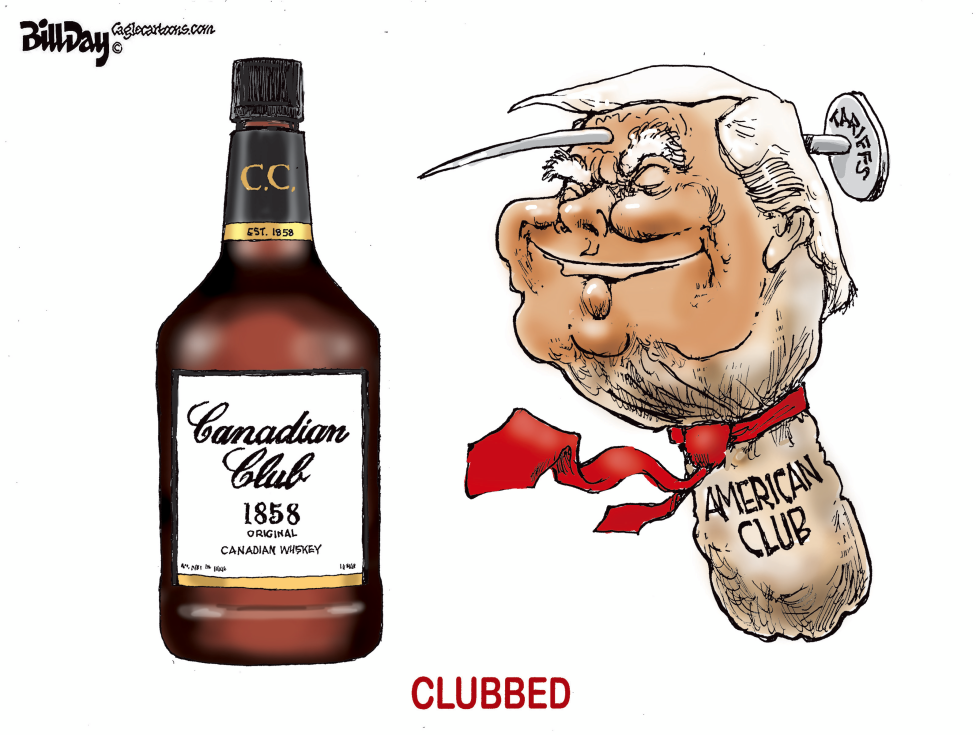
On September 9, 2026, the cartoon responds to ongoing US-Canada trade friction under the second Trump administration. Trump has pursued aggressive tariff policies against Canadian imports, prompting Ottawa to consider reciprocal measures. The piece uses the Canadian Club whiskey brand to illustrate how such policies rebound on American interests. It argues that Trump's approach harms US businesses and consumers rather than strengthening them.
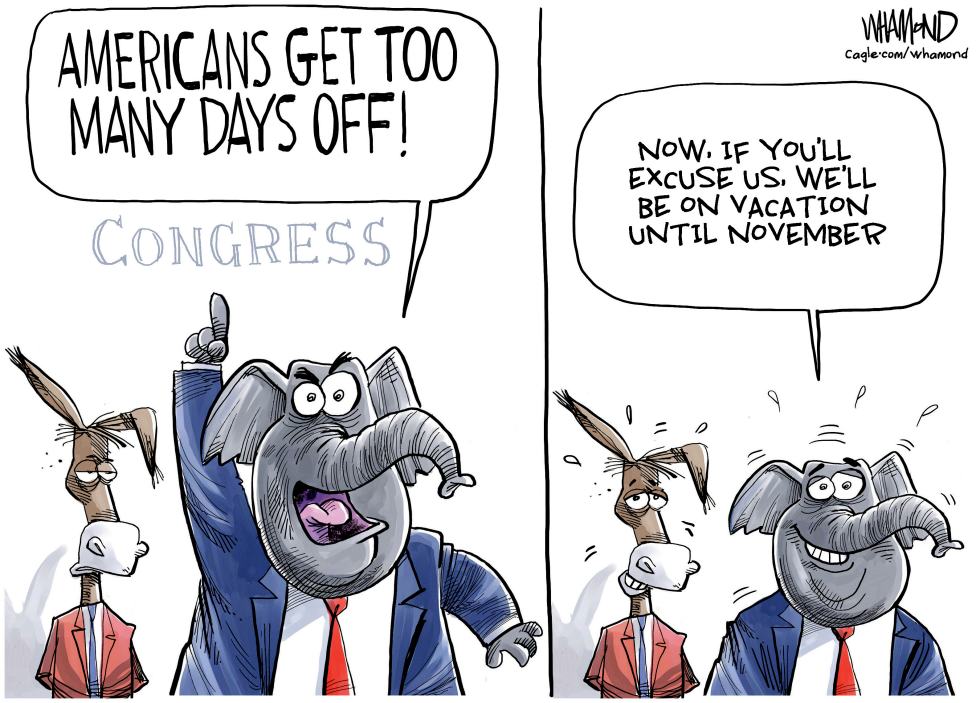
Congressional leaders from both parties have drawn criticism for lecturing American workers about taking too many days off while preparing to recess until November. The move comes as lawmakers face questions over productivity and priorities in an election year. The cartoon highlights the perceived double standard between public statements on labor and the actual schedule of elected officials.
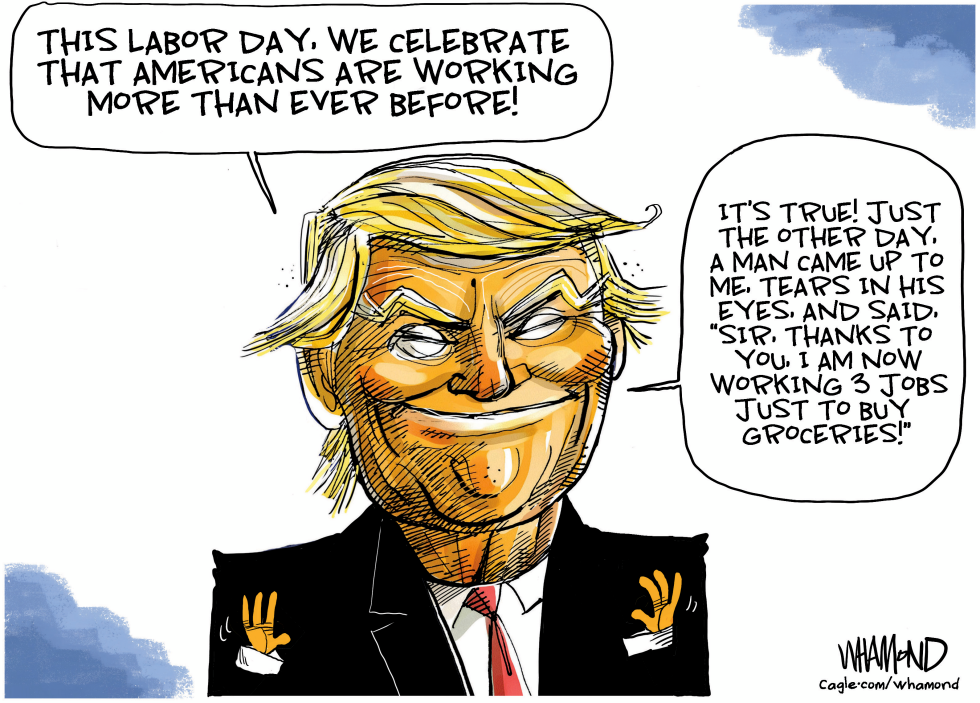
On Labor Day 2026, President Trump highlighted what he described as record employment levels in a public address. He pointed to Americans taking on more work as evidence of economic strength. The remarks come amid ongoing public concern over household costs and wage pressures. Critics argue the comments underscore the gap between official job numbers and the lived experience of workers needing multiple positions to cover basic expenses. The cartoon presents the remarks as tone-deaf to economic strain.
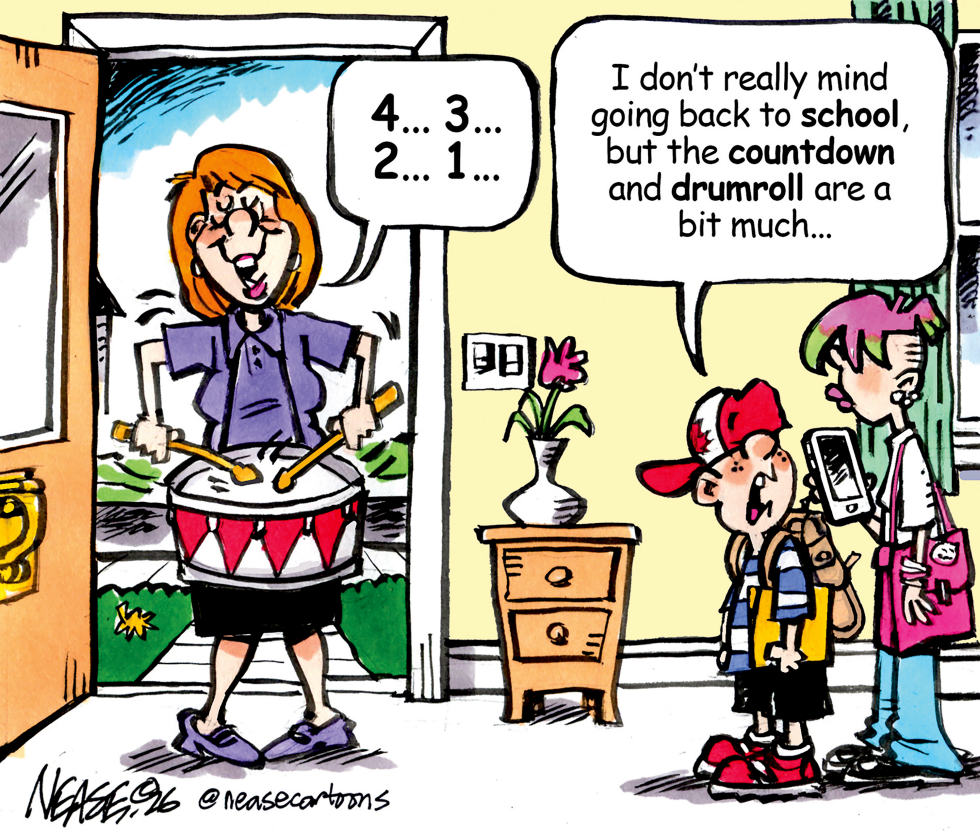
As families across the country prepare for the new school year, parents often express excitement about the return to routine while children may greet the transition with mixed feelings. The cartoon captures this annual dynamic through a mother who marks the moment with a literal drumroll and countdown. The piece highlights the contrast between parental enthusiasm and children's more reserved response to the first day of school.
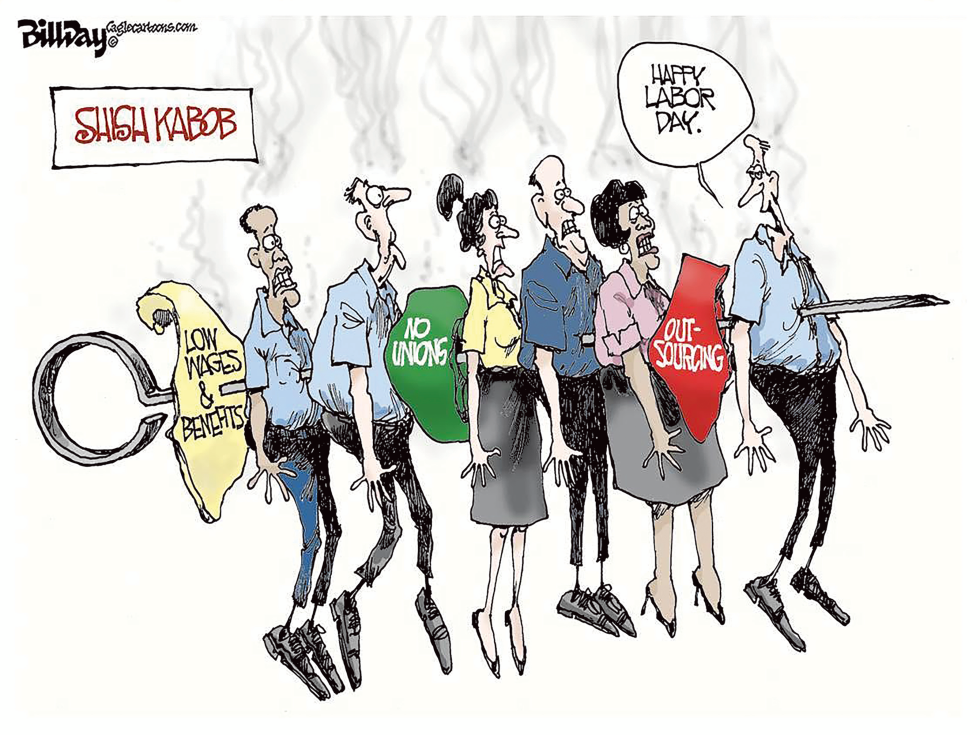
On Labor Day 2026, American workers continue to confront stagnant wages, union suppression, and widespread outsourcing that erode job security and benefits. These pressures persist amid corporate strategies that prioritize cost-cutting over employee welfare. The cartoon argues that such practices turn the holiday into a grim reminder of labor's weakened position rather than a celebration of worker gains.
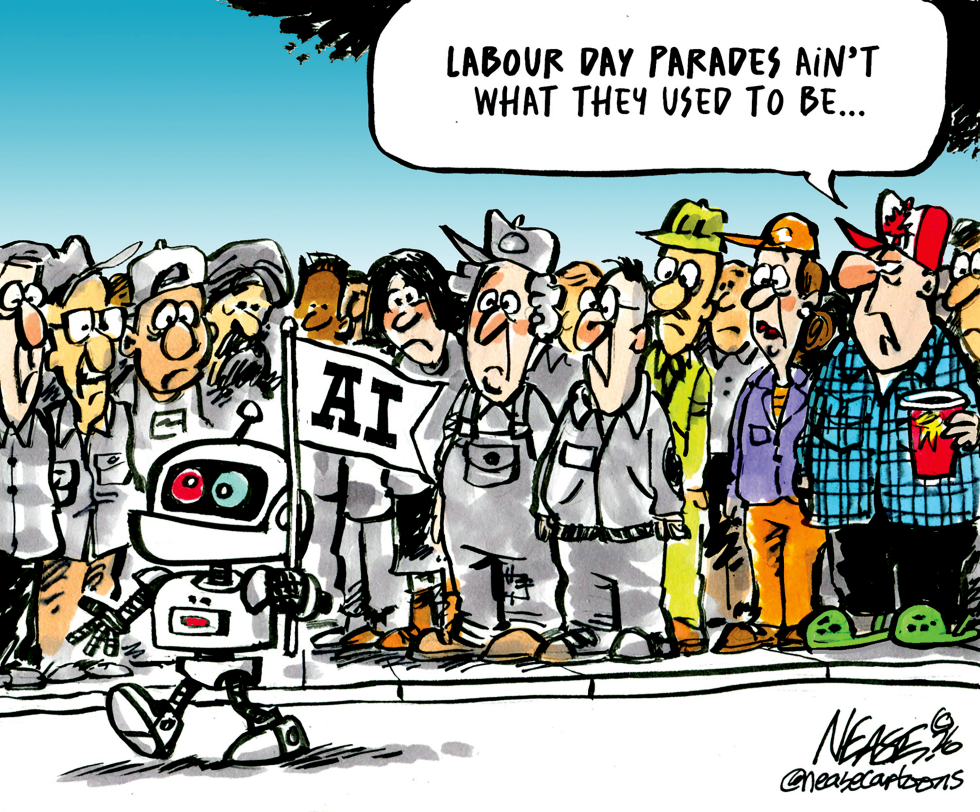
On Labour Day 2026, artificial intelligence continues its rapid integration into workplaces across Canada and beyond, prompting questions about job security for human workers. The cartoon captures this transition by placing a robot at the head of a traditional parade. The editorial position highlights the irreversible change automation brings to labor traditions and employment.
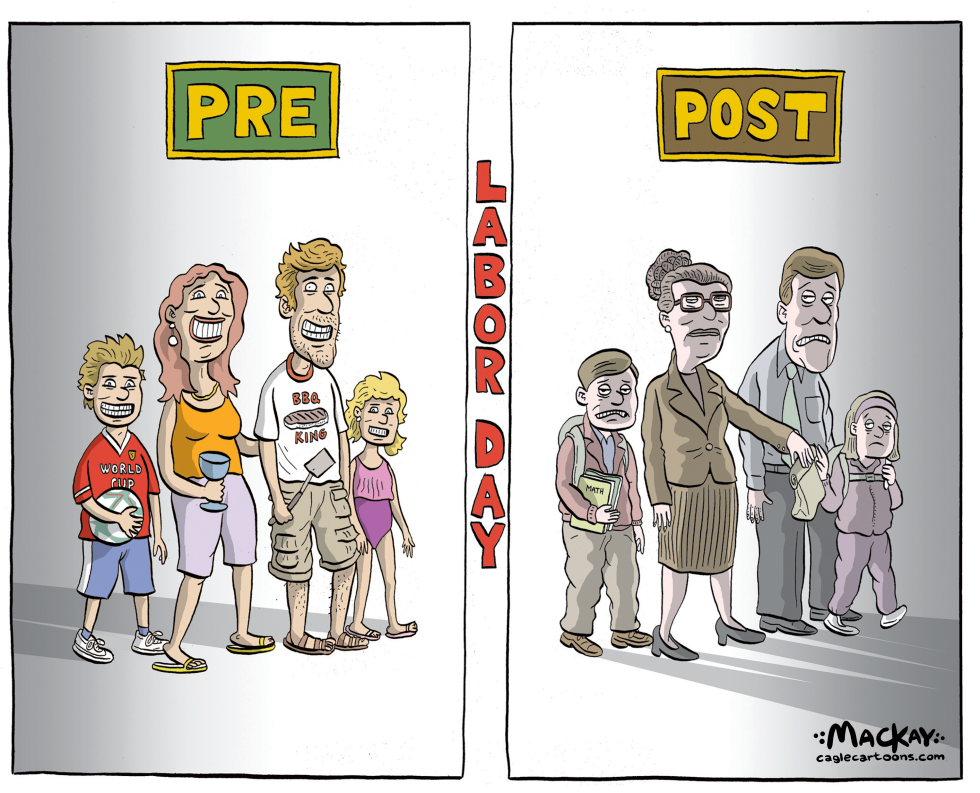
The cartoon by Graeme MacKay contrasts a joyful pre-Labor Day family scene with a weary post-Labor Day version. On the left, parents and children smile in casual summer attire while holding leisure items. On the right, the same family appears drained as they prepare for school and work. The vertical label emphasizes the holiday as the dividing line. This reflects the annual transition many households experience each September. The piece uses simple visual comparison to highlight the end of vacation freedom.
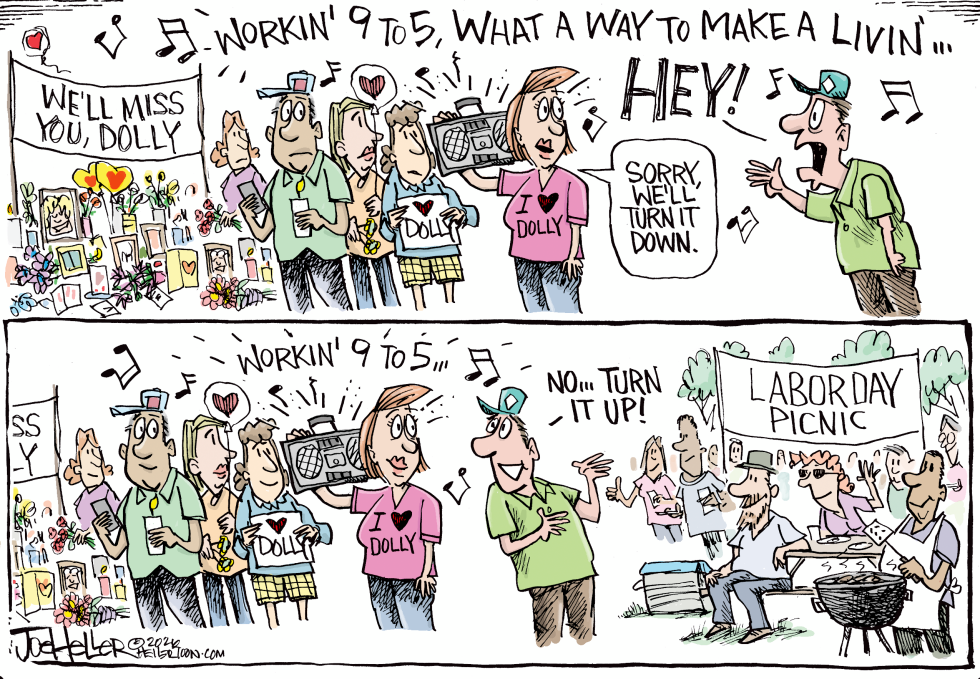
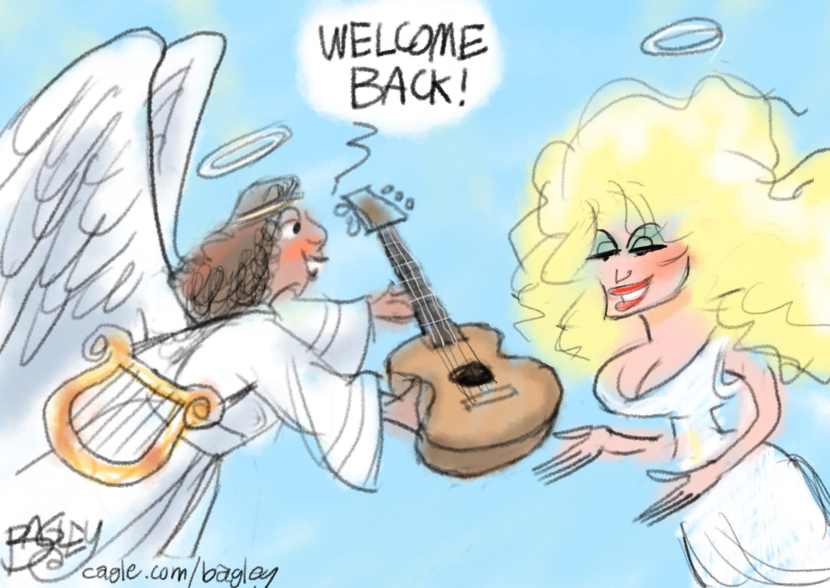
Dolly Parton, the country music icon known for hits like 9 to 5, is remembered at a 2026 Labor Day picnic. The cartoon captures the shift from quiet mourning with flowers and signs to a lively celebration where her music is played louder. It reflects the broad affection for Parton across generations and the way her work resonates at community gatherings. The piece positions her legacy as one that brings people together rather than divides them.
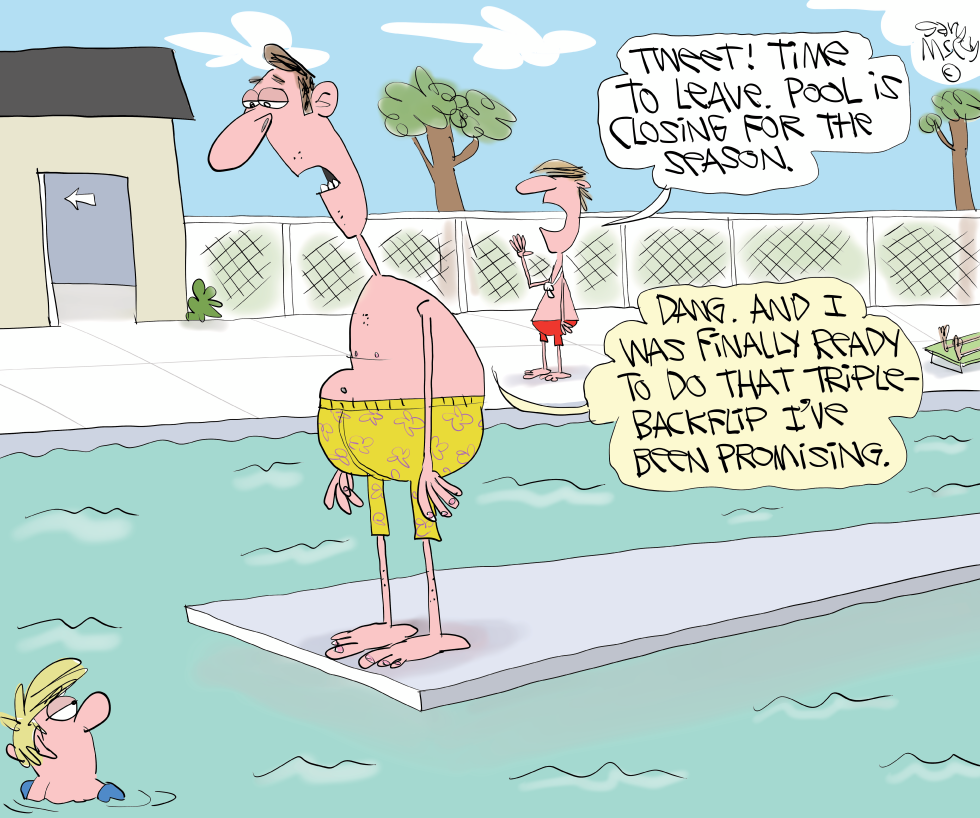
Labor Day brings the annual closure of public pools nationwide, signaling the end of summer swimming. Lifeguards issue final calls as patrons exit, often with unfinished personal goals like a promised dive. The piece captures the routine letdown of seasonal change through a simple missed-opportunity gag.