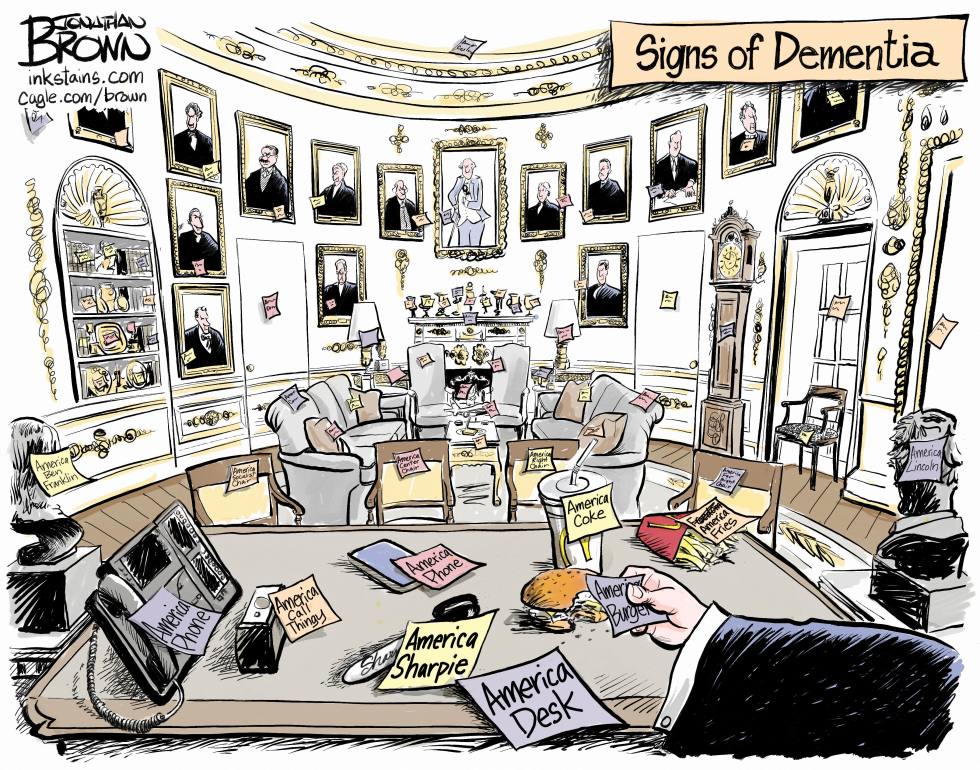
A new editorial cartoon depicts the Oval Office overrun with sticky notes labeling everyday items as America. The scene highlights signs of dementia through repeated branding on phones, desks, food and furniture. Published on September 9, 2026, the work comments on ongoing concerns about cognitive fitness in the presidency. The visual uses the familiar setting of the White House to underscore confusion and memory issues. Observers note the cartoon captures public debate over leadership capacity without naming specific individuals.
daily
Sep
8
2026
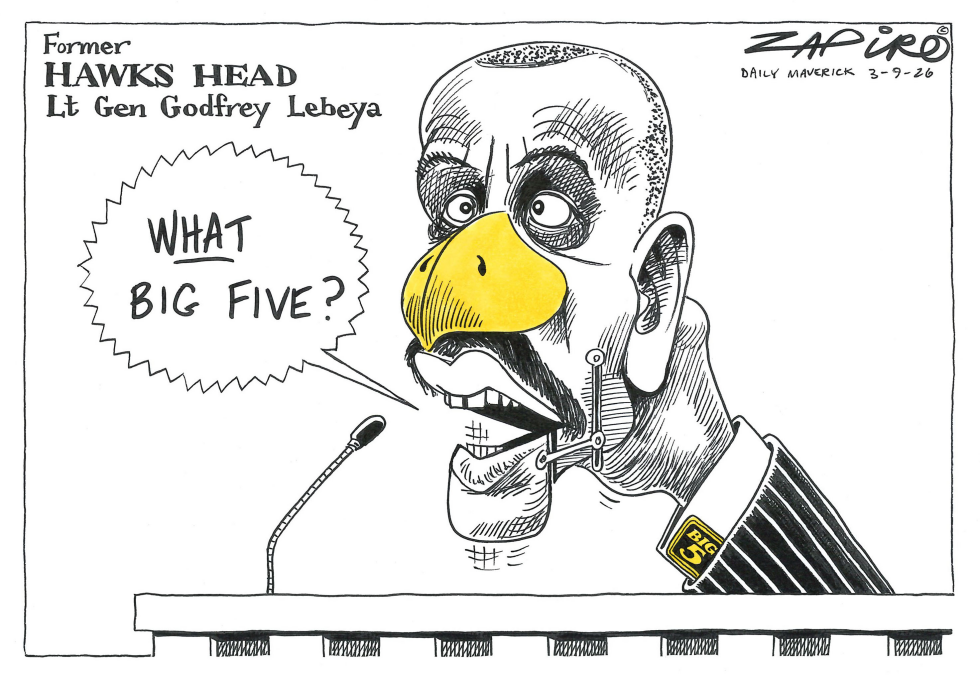
Former Hawks head Lt Gen Godfrey Lebeya publicly questioned the Big Five label applied to him and his unit. The designation refers to the focus on five priority crime areas under South African anti-corruption efforts. The exchange highlights tensions over how the Hawks prioritize cases involving senior officials and organized crime. The cartoon frames Lebeya's denial as an attempt to distance himself from the label's implications for accountability.
Post 9/11 Surveillance Extends 25-Year Shadow Across America
Post-9/11 Surveillance State Shadow Reaches 25 Years
Sep
7
2026
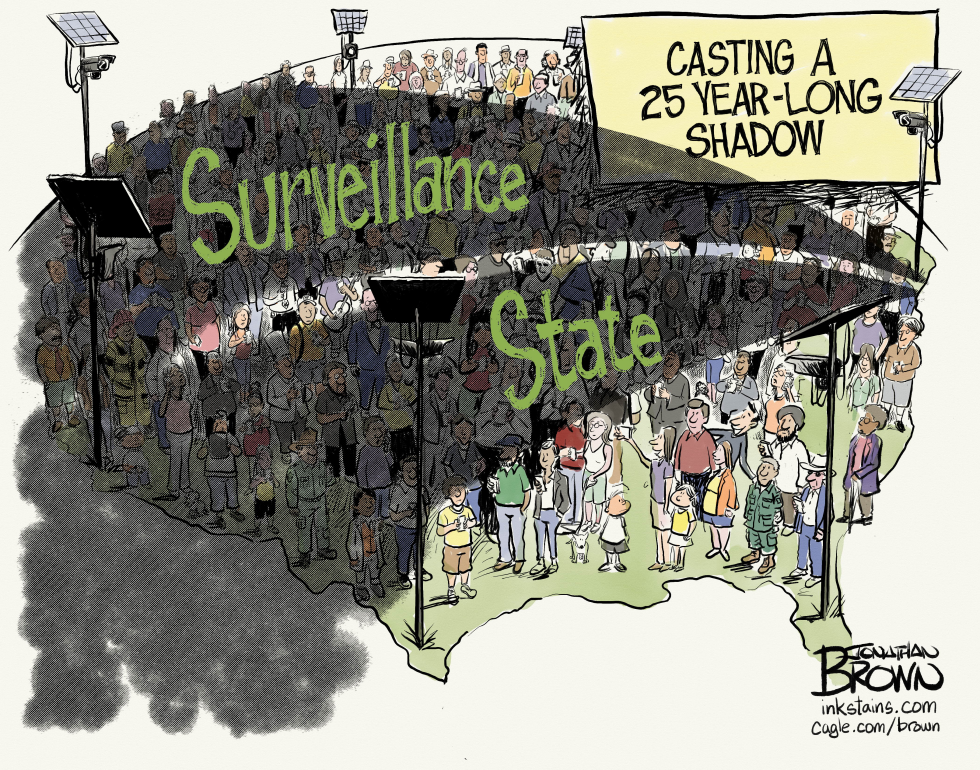
The cartoon depicts a dense crowd of Americans standing on a map of the United States, partially obscured by a large dark shadow cast by surveillance cameras mounted on poles. The words 'Surveillance State' appear prominently in green lettering across the scene, while a sign in the upper right reads 'CASTING A 25 YEAR-LONG SHADOW.' The image comments on the lasting effects of expanded government surveillance programs that began after the September 11 attacks, now spanning a quarter century. It illustrates how these measures continue to influence daily life and public spaces in 2026.
Sep
4
2026
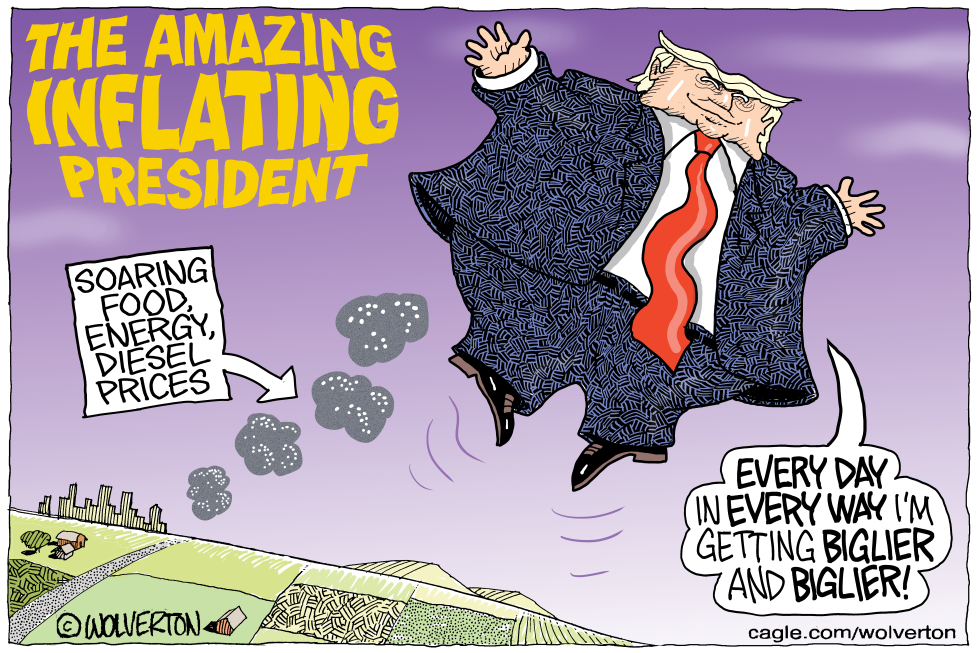
The cartoon depicts Donald Trump as an inflating balloon figure rising above a rural scene with a city skyline. A sign points to gray clouds labeled soaring food energy and diesel prices. Trump declares in a speech bubble that he is getting biglier every day. Published on September 4 2026 the work responds to ongoing concerns over inflation and household costs during the Trump presidency. The visual metaphor connects the president's public presence to the expansion of prices across key sectors.
Aug
18
2026
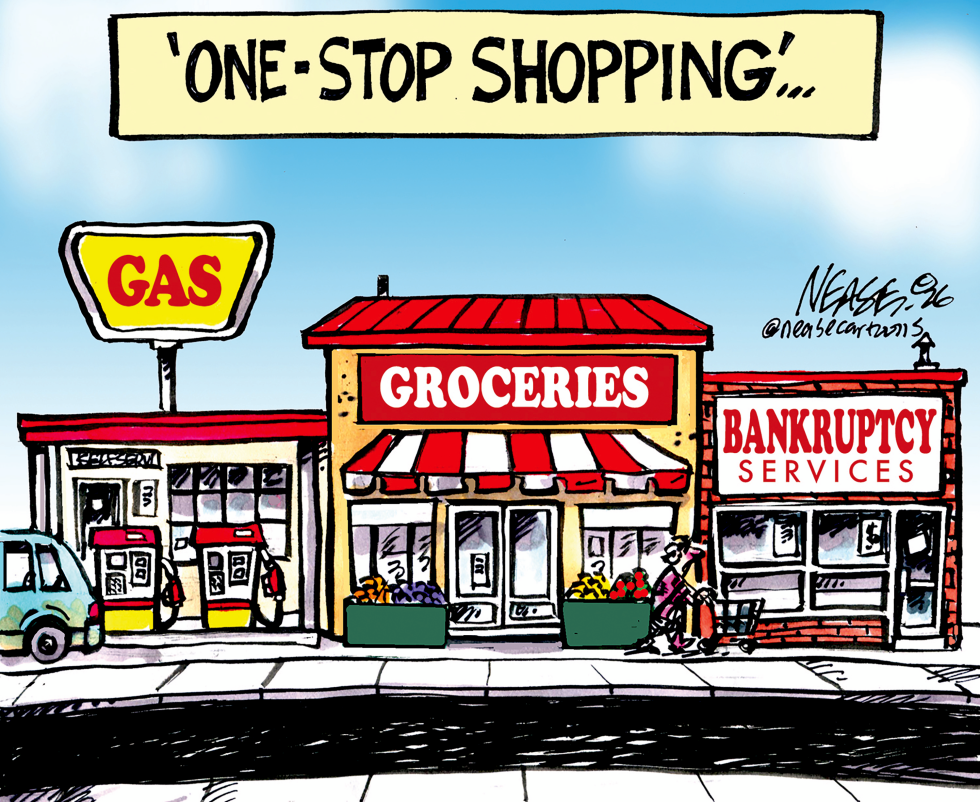
Consumers face persistent inflation that raises the cost of essentials such as fuel and food. A strip mall now groups gas, groceries and bankruptcy services together, highlighting how household budgets stretch thin. The editorial position criticizes the normalization of bankruptcy as a routine stop in everyday commerce.
Aug
10
2026
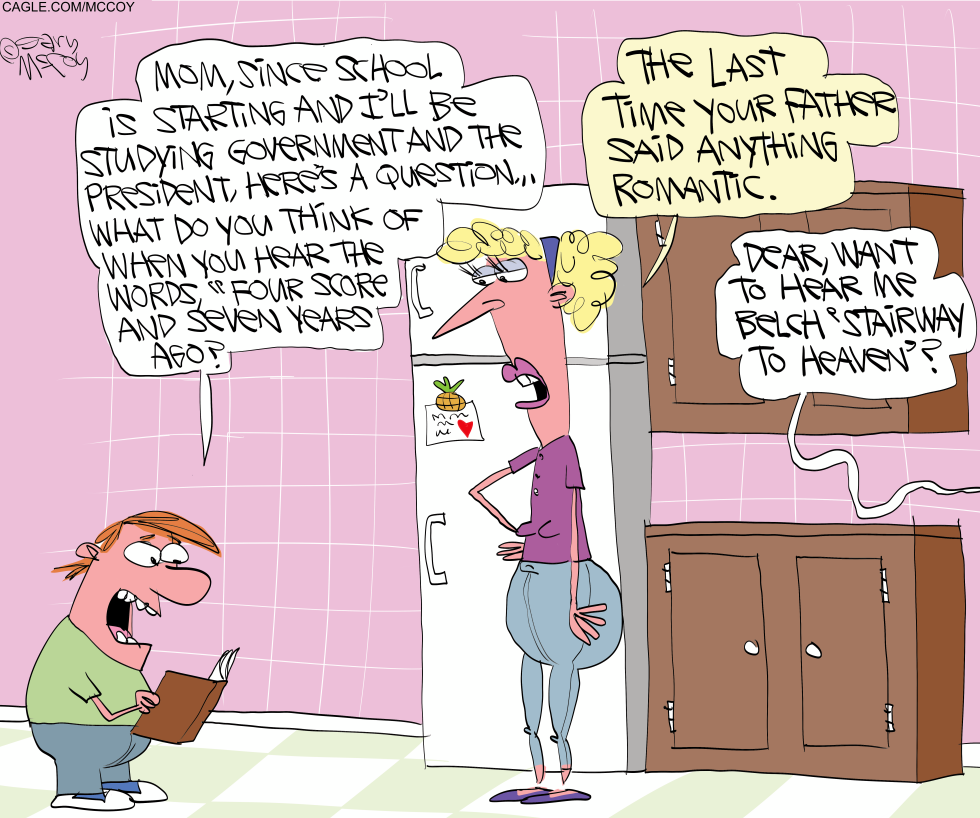
A child preparing for school asks his mother what she thinks of upon hearing Lincoln's famous opening line from the Gettysburg Address. Her reply points directly to the last time her husband said anything romantic. The father, hidden in a kitchen cabinet, responds by offering to belch the lyrics to Stairway to Heaven. The exchange highlights an ongoing household dynamic of mismatched expectations around affection and daily behavior.
Aug
7
2026
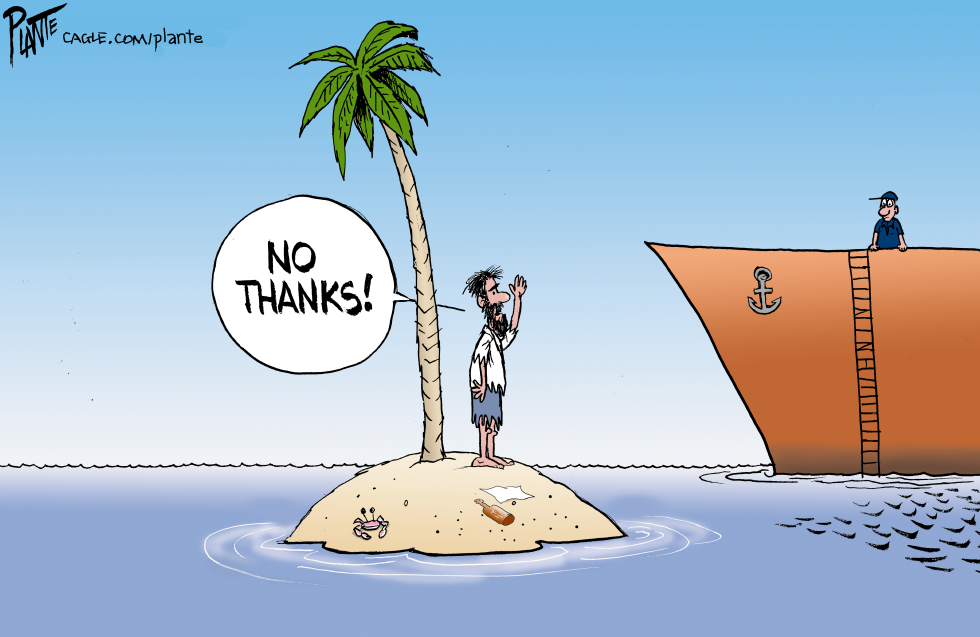
A castaway on a remote island faces an unexpected chance at rescue from a passing vessel. The situation highlights ongoing human tensions between solitude and reintegration into society. The piece takes the position that some individuals genuinely prefer isolation over returning to the outside world.
Aug
6
2026
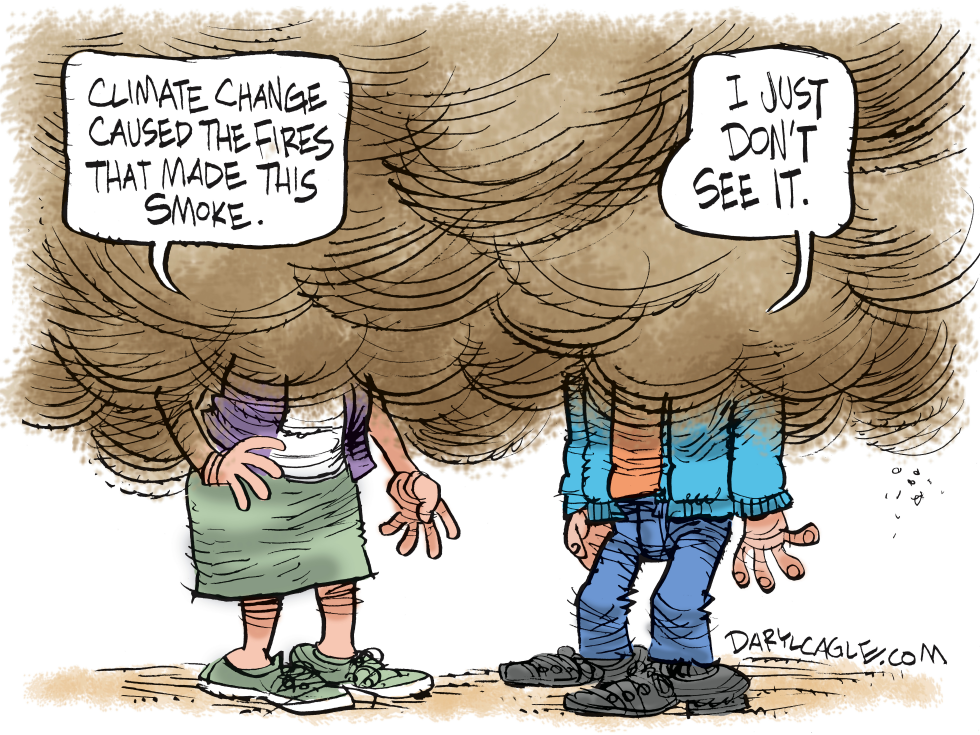
Canadian wildfires have produced widespread smoke affecting air quality across regions. The debate centers on whether climate change drives the fires or if other factors dominate. Public discourse shows persistent skepticism despite visible evidence. The piece highlights how some reject the link between rising temperatures and increased fire activity. It critiques the refusal to acknowledge observable environmental changes tied to climate patterns.
Aug
5
2026
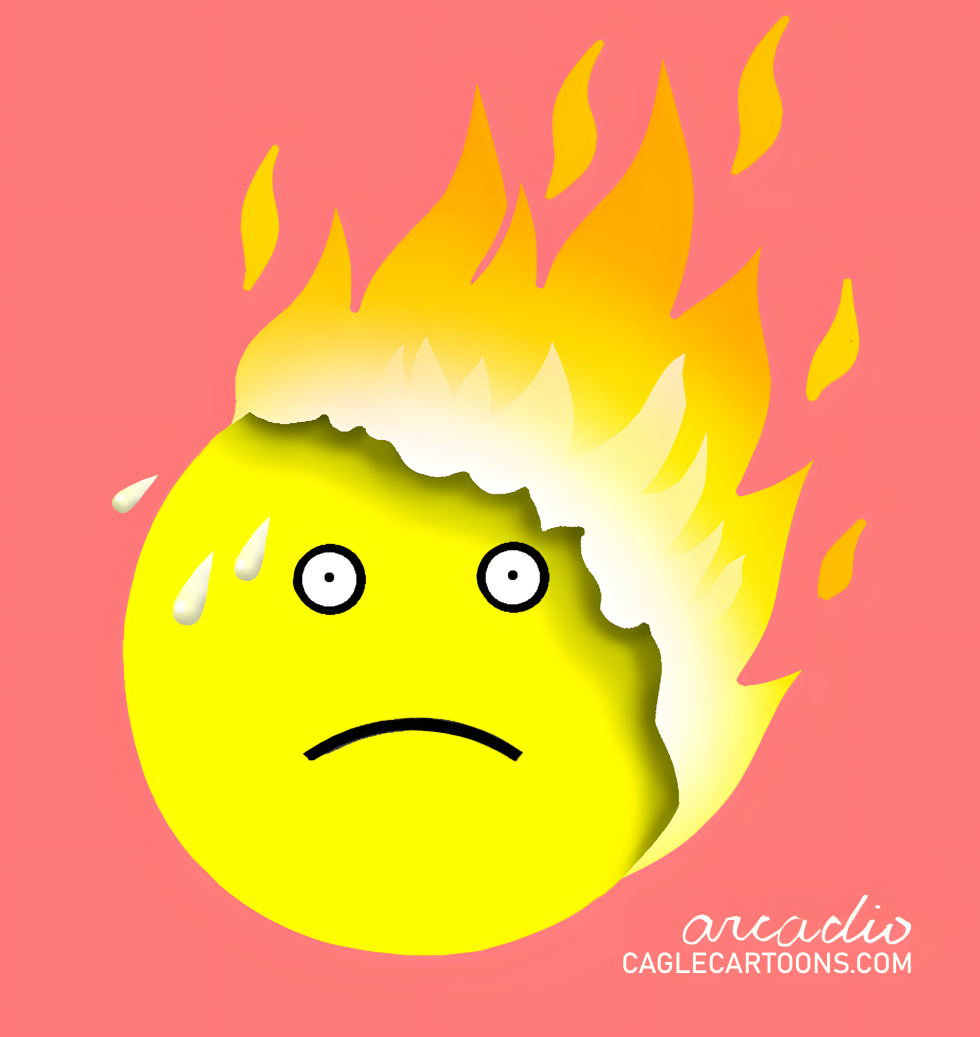
Ongoing wildfire seasons and fire-related disasters continue to disrupt communities and personal well-being across affected regions. The piece frames these events as forces that directly eliminate everyday happiness and security for those impacted. It presents fire as an eraser of positive emotion rather than a manageable natural occurrence.
Aug
4
2026
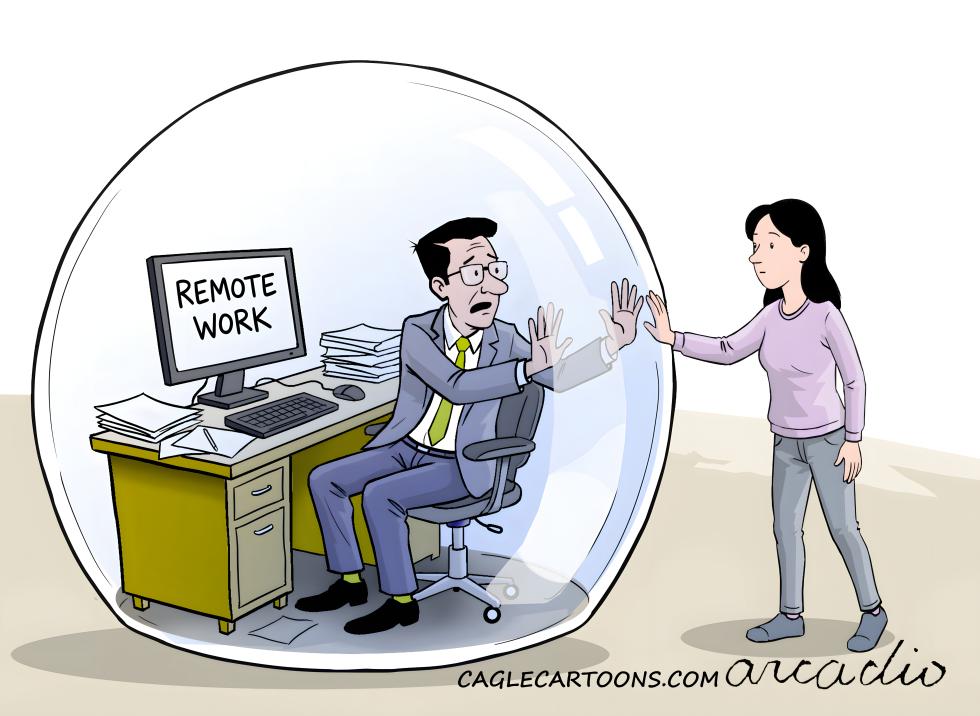
Remote work arrangements have expanded rapidly since the pandemic, allowing employees to perform duties from home but raising concerns about reduced collaboration and social connection in offices. The piece responds to ongoing debates over hybrid schedules and their impact on workplace culture. It takes the position that remote setups create artificial barriers that separate workers from direct human interaction and shared reality.
Jul
31
2026
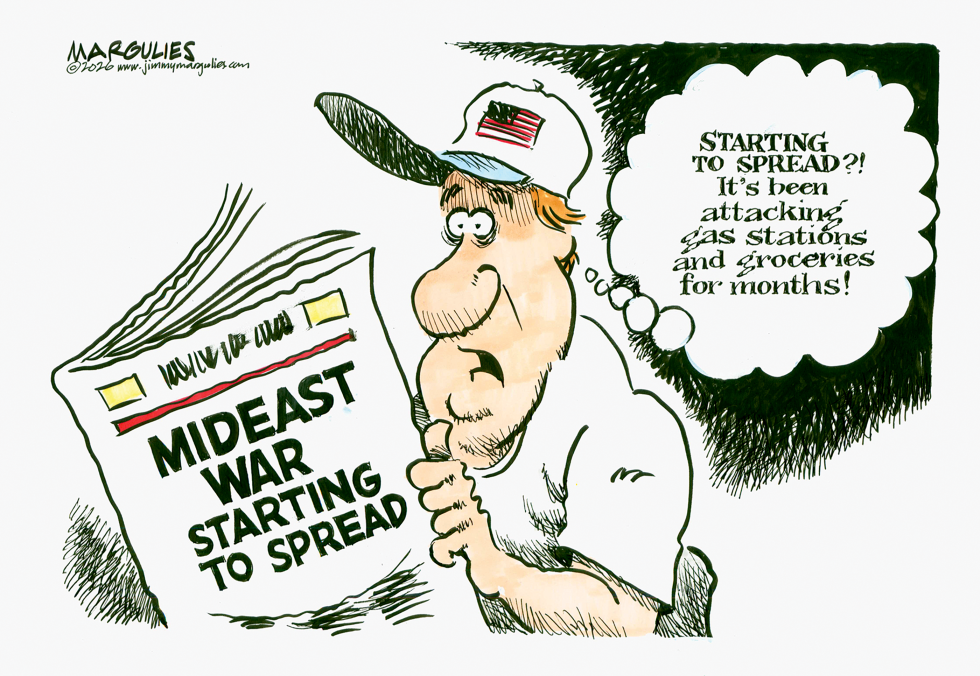
A newspaper headline declares the Mideast war starting to spread, prompting public reaction over its effects on daily costs. The piece highlights how energy and food prices have already risen due to ongoing regional conflict. It takes the position that the economic consequences for Americans have been evident long before any formal expansion of the fighting.

Jul
28
2026
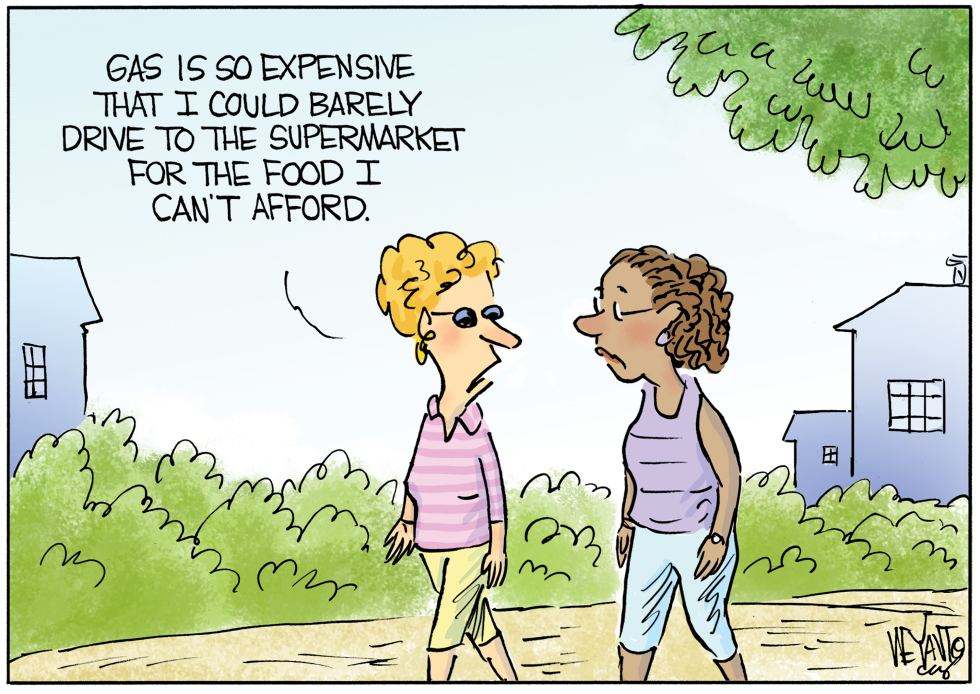
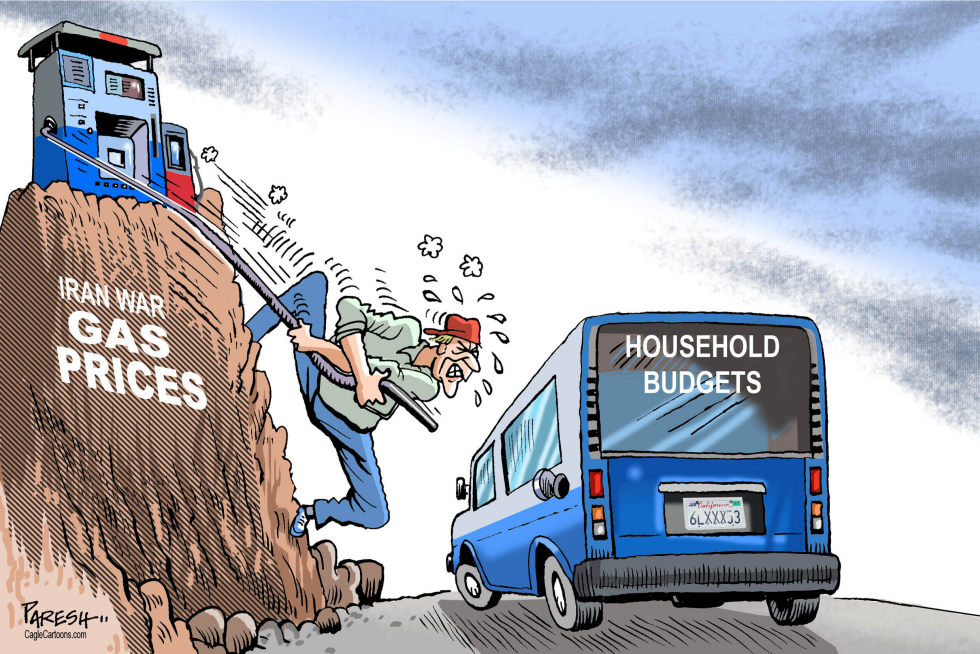
Elevated gasoline prices continue to squeeze household budgets by raising the cost of essential travel for groceries. Families report that filling the tank now competes directly with buying food, amplifying the effects of broader inflation on daily necessities. The editorial highlights how these intertwined expenses limit mobility and purchasing power for average consumers.
Jul
28
2026
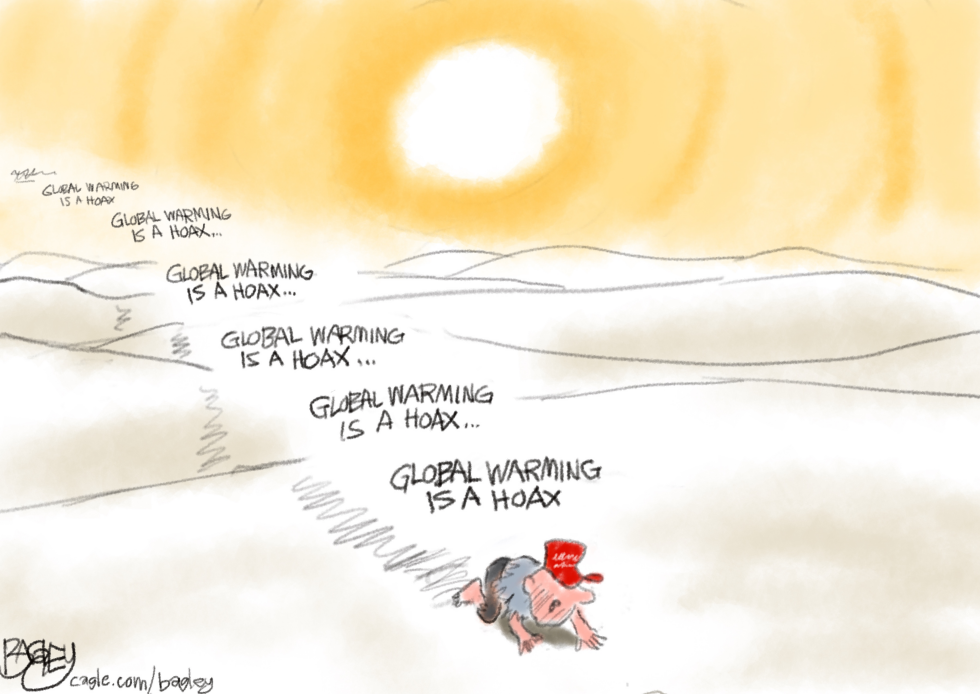
Public figures continue to label global warming a hoax despite record heat events affecting communities worldwide. The stance draws scrutiny as temperatures climb and denial rhetoric persists in political circles. The piece highlights the disconnect between such claims and observable conditions on the ground.