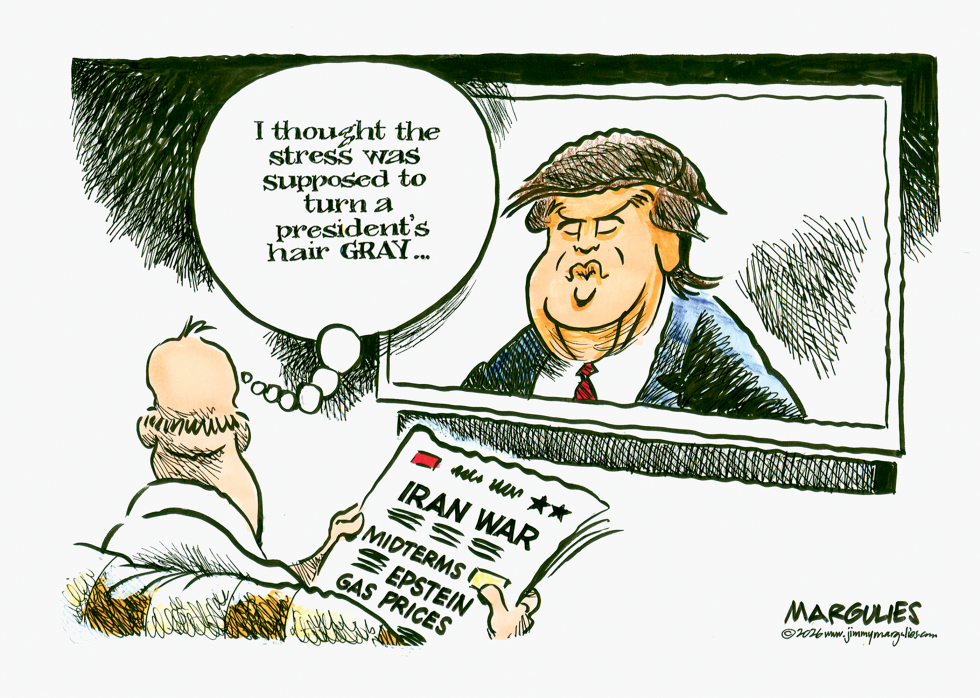
President Donald Trump confronts an Iran war, midterm election pressures, Epstein-related revelations and rising gas prices in September 2026. These overlapping challenges test the administration's capacity to manage foreign conflict and domestic economic strain simultaneously. The cartoon argues that the expected physical toll of such stress on the president has not materialized in the anticipated way.
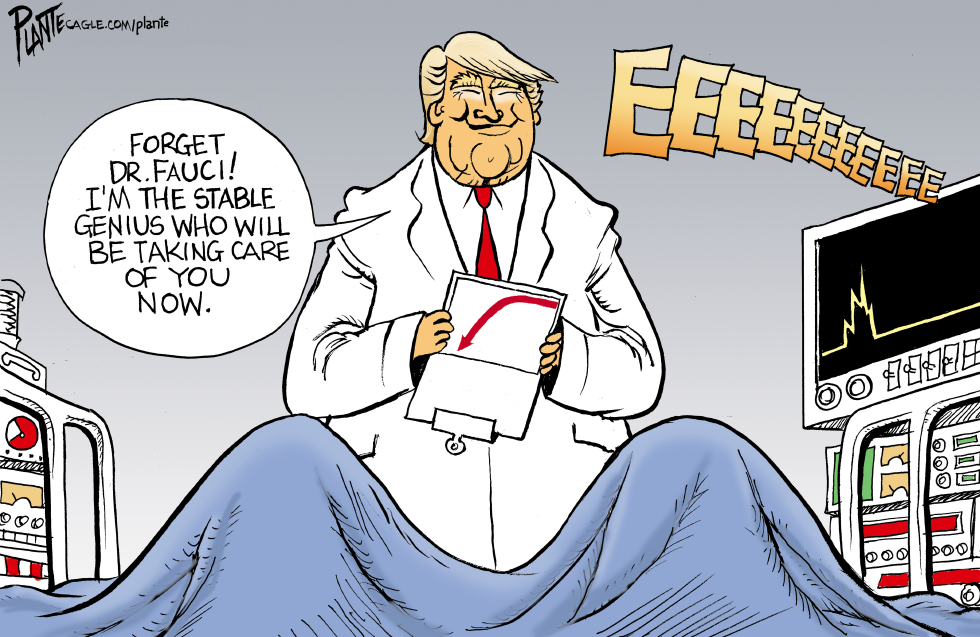
Donald Trump appears in a physician's coat asserting control over patient care and dismissing Dr. Fauci. The depiction occurs amid ongoing debates over federal health policy leadership and executive influence on medical decisions. The piece argues that such assertions risk undermining established expertise in public health administration.
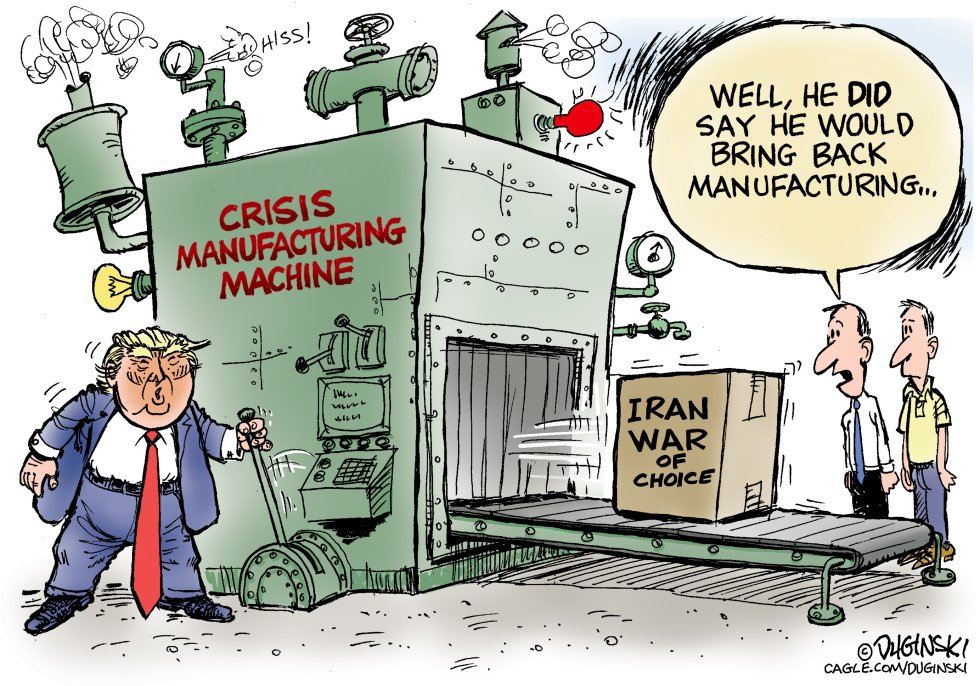
Donald Trump, holding the presidency in 2026, faces renewed scrutiny over foreign policy toward Iran. Recent statements revive campaign pledges to restore domestic manufacturing while tensions with Tehran escalate. The administration\\\'s approach draws criticism for prioritizing confrontation over diplomacy. Observers note the pattern of generating external crises rather than economic gains at home. The cartoon argues that Trump\\\'s actions fulfill a literal version of his manufacturing rhetoric by producing conflict instead of jobs.
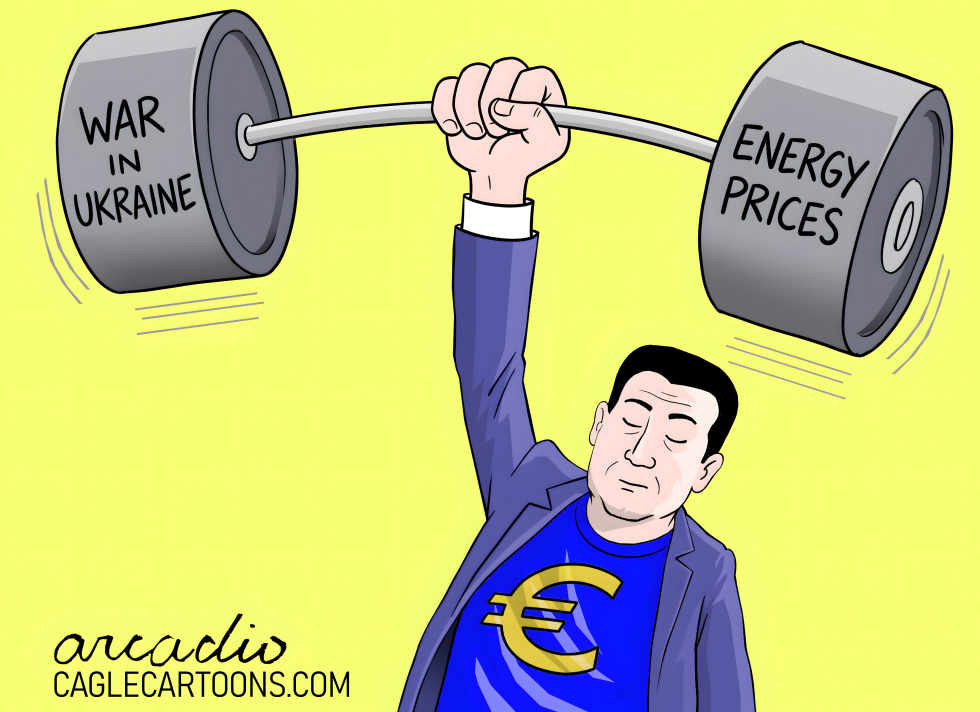
The Eurozone continues to absorb economic shocks from the Ukraine conflict and elevated energy costs. These pressures test the currency's stability and the broader European economy. The image portrays the Euro successfully shouldering both loads, underscoring its capacity to endure without collapse.
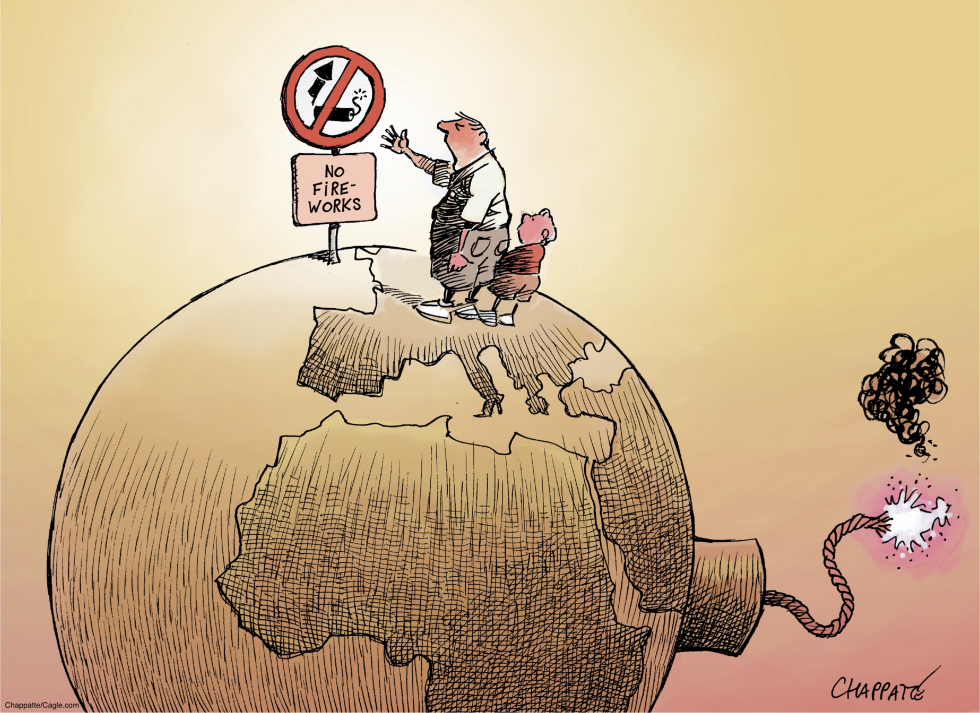
Global leaders continue to dismiss repeated scientific warnings about accelerating climate impacts even as extreme weather events intensify worldwide. The ongoing failure to curb emissions and adopt binding reductions leaves future generations exposed to rising temperatures, sea levels, and resource conflicts. The editorial argues that such willful disregard of clear danger signs amounts to reckless endangerment of the planet itself.
Dr. Anthony Fauci appeared before Congress on matters tied to prior public health leadership. Lawmakers pressed for details on past decisions. The editorial takes the position that such testimony demands full transparency regardless of prior status.
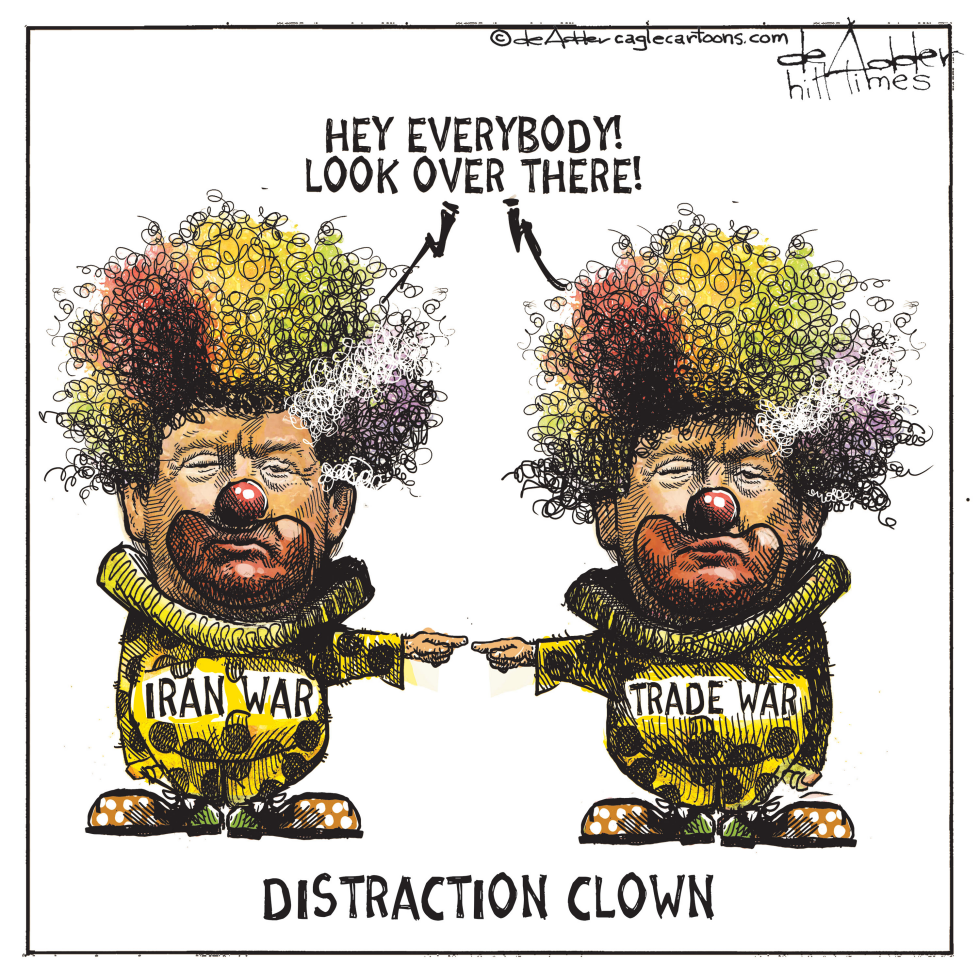
Public attention is being directed toward simultaneous Iran and trade conflicts as potential diversions from other issues. The editorial depicts the two crises as interchangeable distractions promoted by the same source. It argues that leaders are using these flashpoints to shift focus rather than address underlying problems.
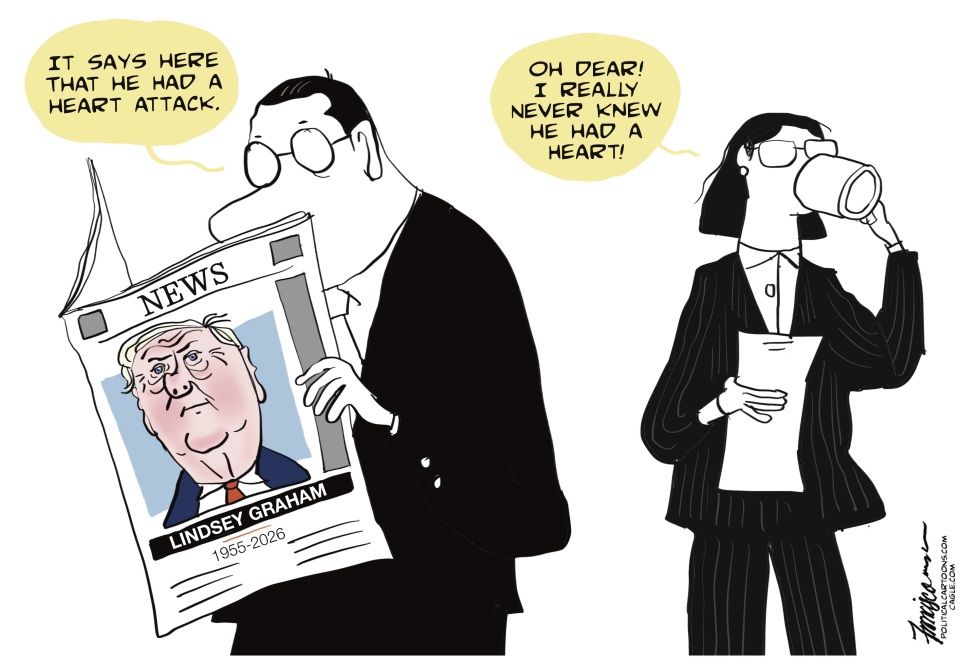
A man reads a newspaper reporting Lindsey Graham's heart attack and death in 2026. A woman standing nearby reacts with surprise that the senator had a heart at all. The exchange highlights the swift and pointed responses from political figures to the obituary.
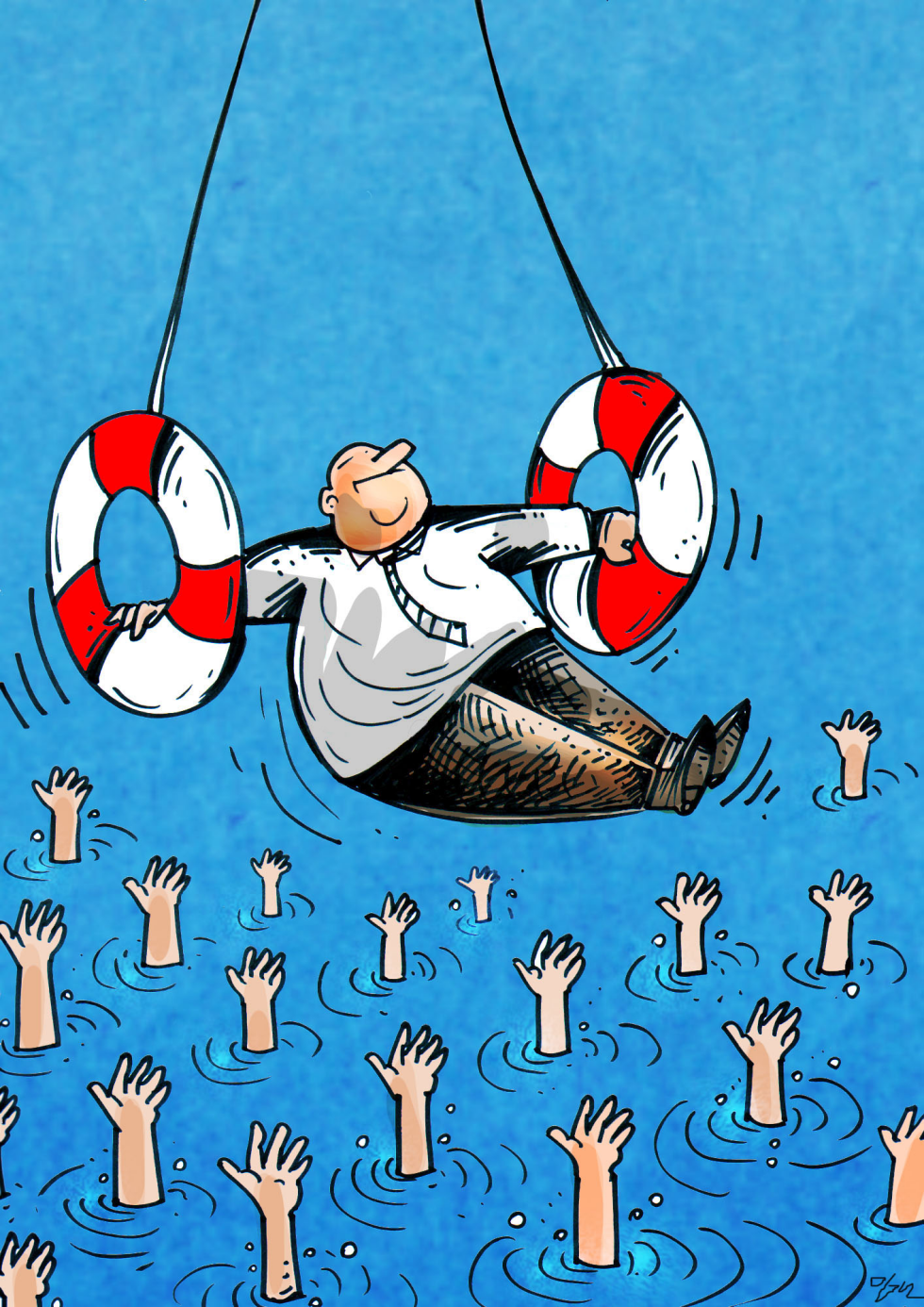
A public figure secures personal safety equipment and extraction amid widespread hardship affecting many others. The situation highlights ongoing tensions around leadership accountability and resource allocation during collective crises. The piece presents the argument that those in positions of authority often prioritize their own escape over collective support.
A figure marked U.S. yawns widely while holding a notice declaring Ebola a global emergency. The scene references recent health developments in Africa including the Democratic Republic of Congo and Uganda. Officials from CDC, USAID and State Department appear sidelined in the response. RFK Jr. and Marco Rubio hold roles in the current administration under Donald J. Trump. The image highlights ongoing public health challenges similar to prior Covid experiences.
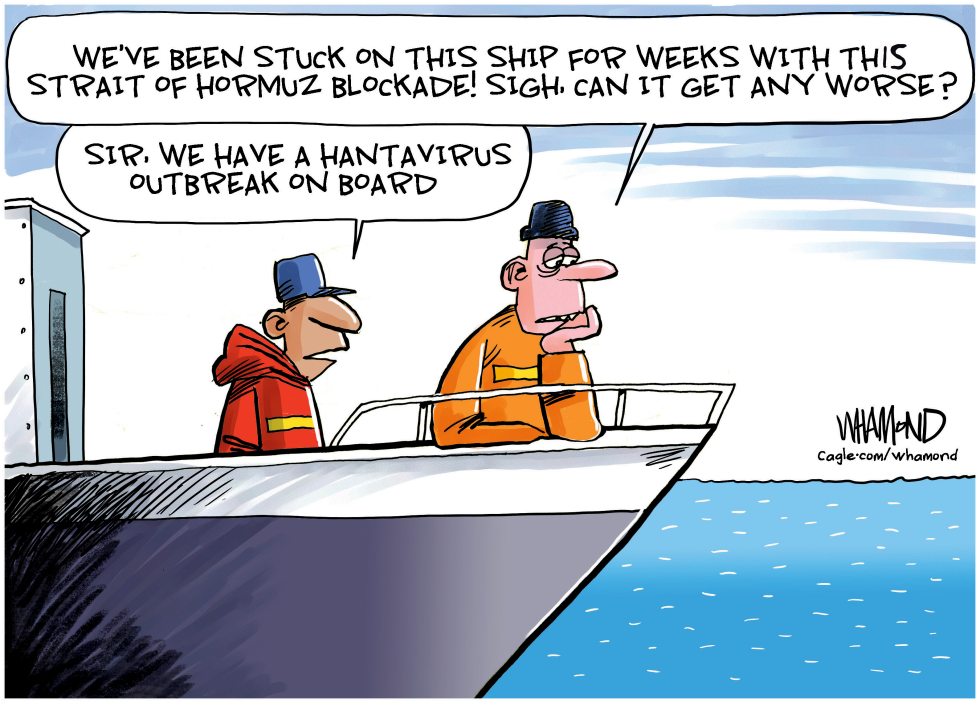
The cartoon depicts two sailors aboard a ship trapped in the Strait of Hormuz due to a naval blockade. One laments the weeks-long delay and wonders if conditions can worsen. The other reports a hantavirus outbreak on board. The image responds to ongoing tensions involving Iran and disruptions to global oil routes. As of the May 2026 publication date, the blockade has halted tanker traffic and strained energy markets. The added health crisis underscores the compounding risks for crews and supply chains. The visual ties geopolitical conflict directly to immediate human and economic consequences.
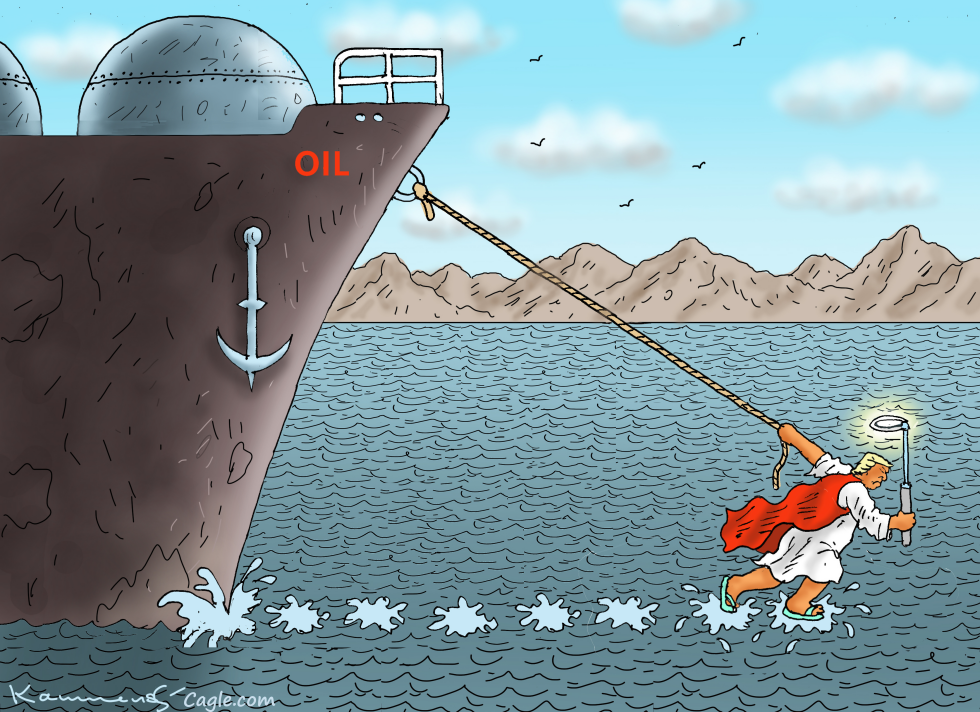
The image depicts a figure dressed in a white robe and red cape, complete with a glowing halo, running across the water while pulling a large oil tanker marked 'OIL' with a rope. He holds a golf club in one hand, splashing water with each step against a backdrop of mountains and a clear sky. This setup draws on tags like Trump, Hormuz, Iran, oil war, MAGA terror, and fascism to satirize political figures intervening in global oil crises. The cartoon's composition emphasizes the absurdity of a divine savior tackling economic and geopolitical issues, with birds flying overhead and distant peaks suggesting a Middle Eastern strait. Kamensky's style brings dry humor to the forefront, poking at notions of messianic leadership in turbulent times.
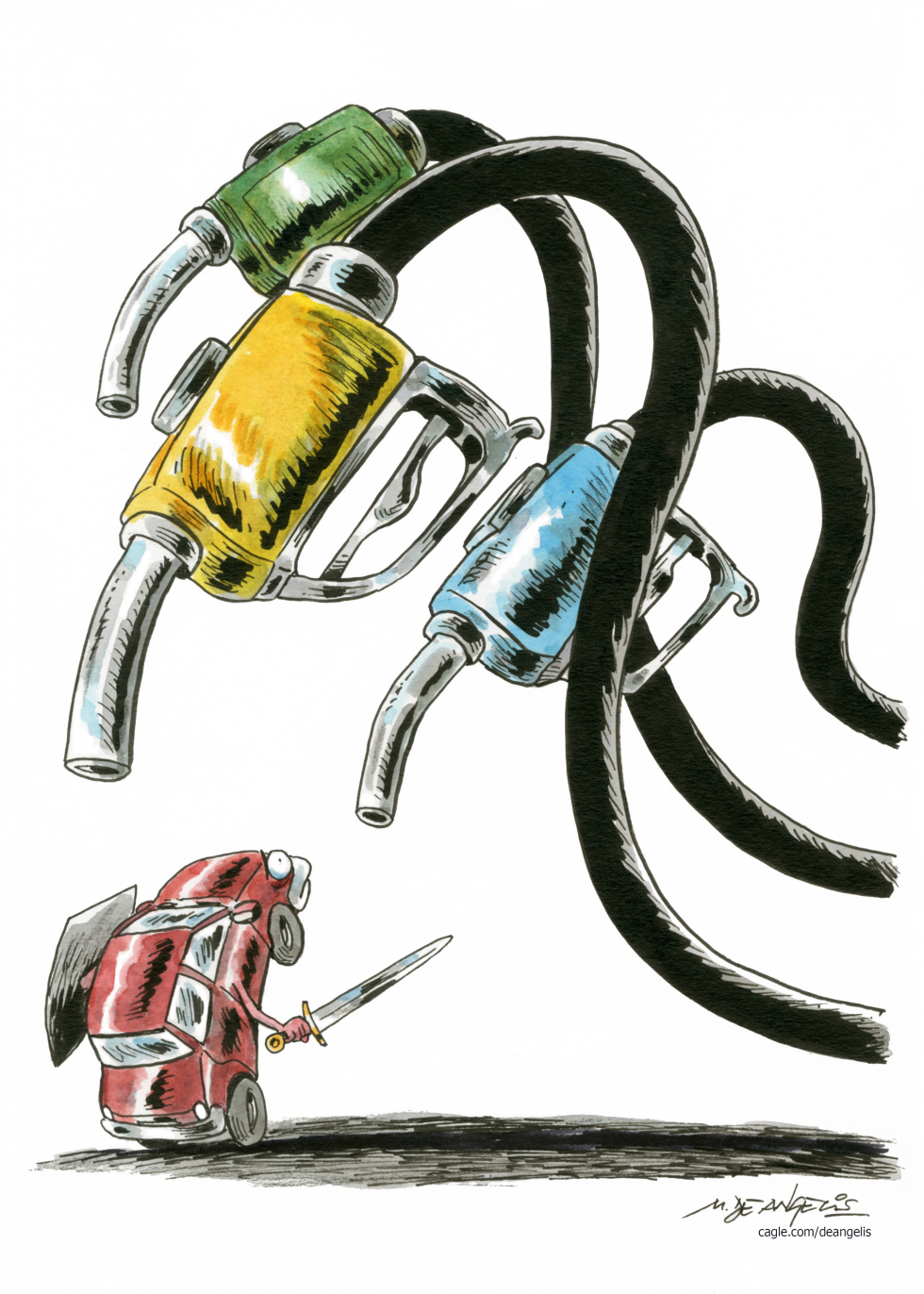
Marco De Angelis draws a clever twist on the ancient HYDRA myth, where a plucky red CAR, sword in hand, squares off against a beastly creature formed by three FUEL pump nozzles—green, yellow, and blue—attached to writhing black hoses. The scene plays on the endless battles drivers face with soaring OIL PRICES and FUEL costs, tying into broader ECONOMY woes. Tags like TRANSPORTATION, TRADE, WAR, CRISIS, IRAN, USA, and HORMUZ hint at real-world tensions in the Strait of Hormuz, where geopolitical strife disrupts global OIL supplies. It's a sharp commentary on how these issues regenerate like hydra heads, making every victory temporary in the fight against economic pressures.
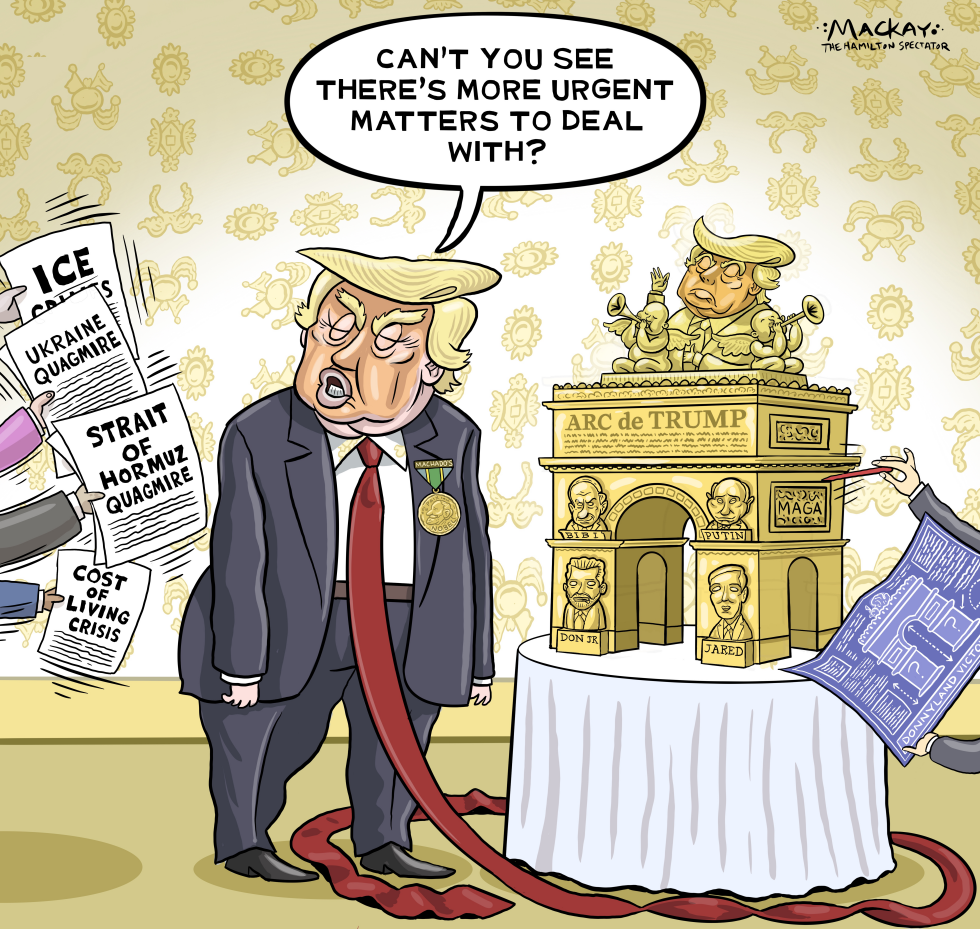
Graeme MacKay\'s cartoon depicts Donald Trump absorbed in unveiling a golden Arc de Trump, a parody of the Arc de Triomphe, topped with his own figure and cherubs, while ignoring flying papers labeled with crises like ICE crisis, Ukraine quagmire, Strait of Hormuz quagmire, and cost of living crisis. The monument includes busts of Don Jr, Ivanka, MAGA, and Jared, emphasizing Trump\'s priorities on vanity over urgent matters. A hand unveils blueprints for Donald J. Trump Arc de Victoire, highlighting the satire on legacy obsession amid global quagmires. The dry humor underscores how such self-focus distracts from real-world affordability and international issues, a common theme in editorial cartoons critiquing political figures.
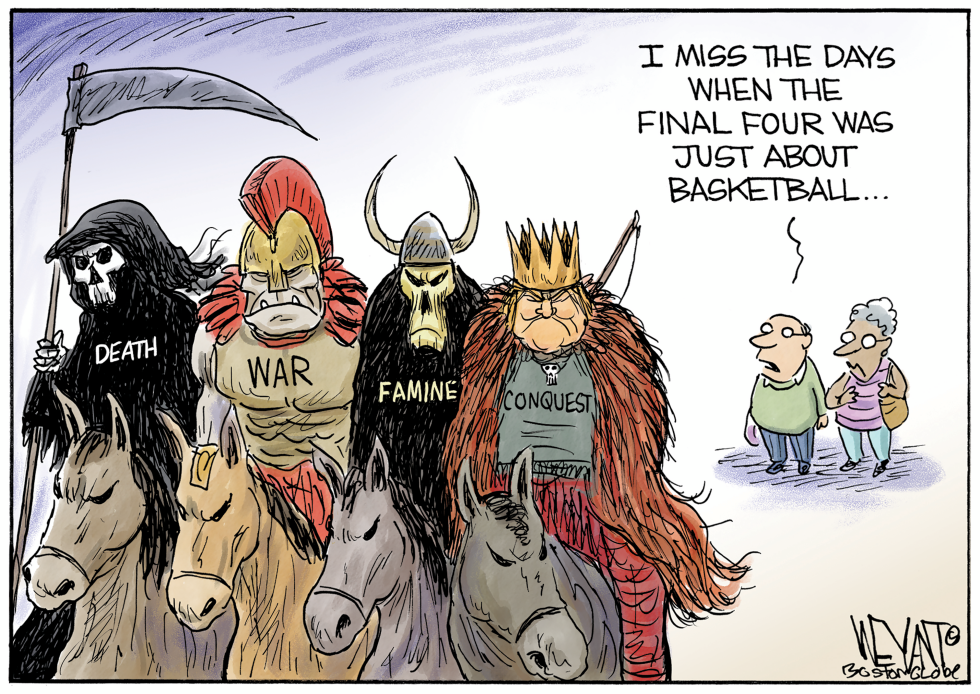
The April 2026 cartoon depicts the Four Horsemen of the Apocalypse marching forward during NCAA Final Four season. Their presence highlights how international conflicts eclipse traditional sports focus. A speech bubble expresses longing for basketball-only coverage while bystanders observe the shift.