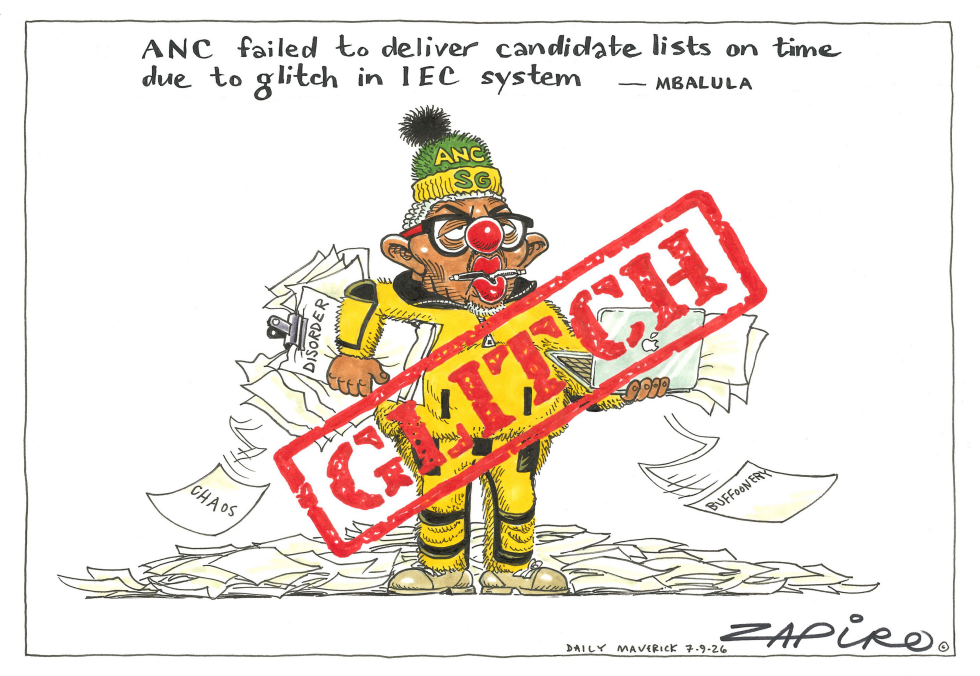
ANC secretary general Fikile Mbalula attributed the party's failure to submit candidate lists on time to a technical glitch in the Independent Electoral Commission system. The claim came as the party faced internal disarray ahead of upcoming elections. The cartoon portrays the excuse as a transparent attempt to mask organizational failure and buffoonery.
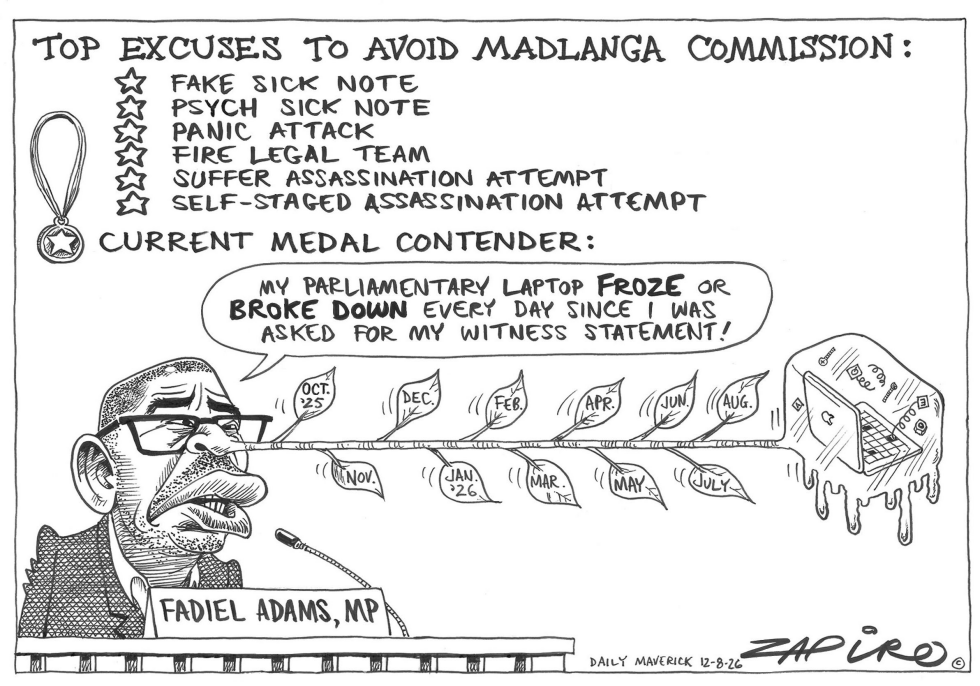
Fadiel Adams, an MP, told the Madlanga Commission his parliamentary laptop froze or broke daily since he received a witness request. The claim follows a pattern of delays in high-profile inquiries involving political figures. The piece highlights the excuse as the latest in a series of avoidance tactics, underscoring skepticism toward repeated claims that stall accountability processes.
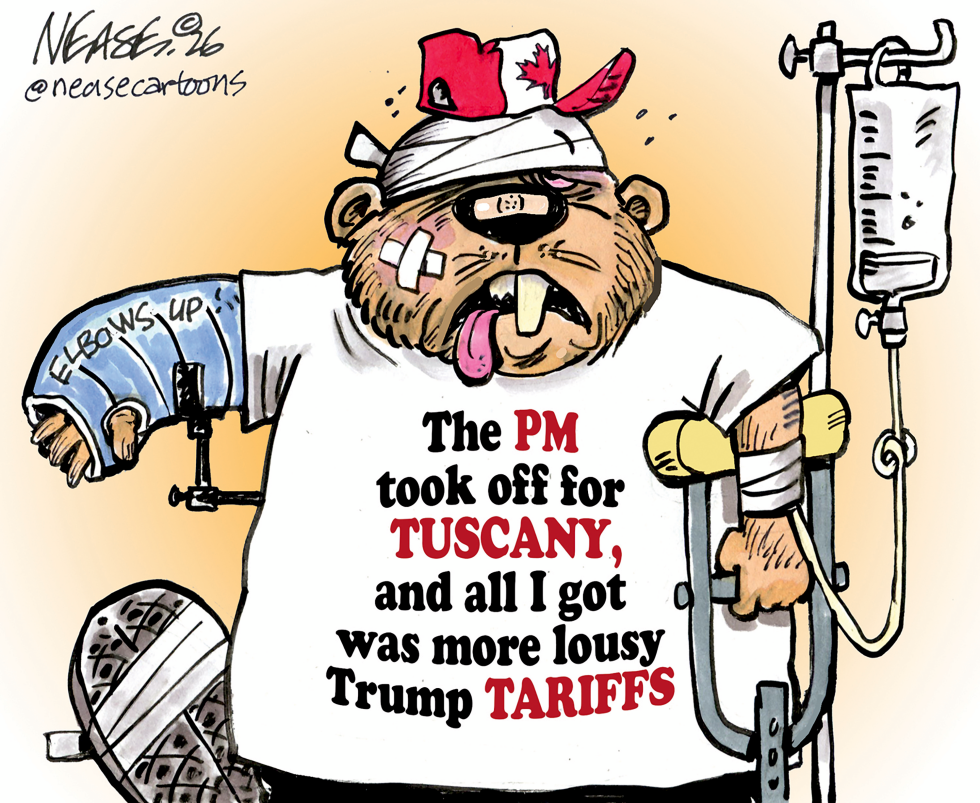
US tariffs on Canadian goods continue to strain bilateral trade relations in 2026. The Prime Minister's extended vacation in Tuscany coincides with renewed economic pressure on Canadian industries. The situation highlights tensions in North American trade policy. The piece argues that leadership absence compounds the damage from external tariffs.
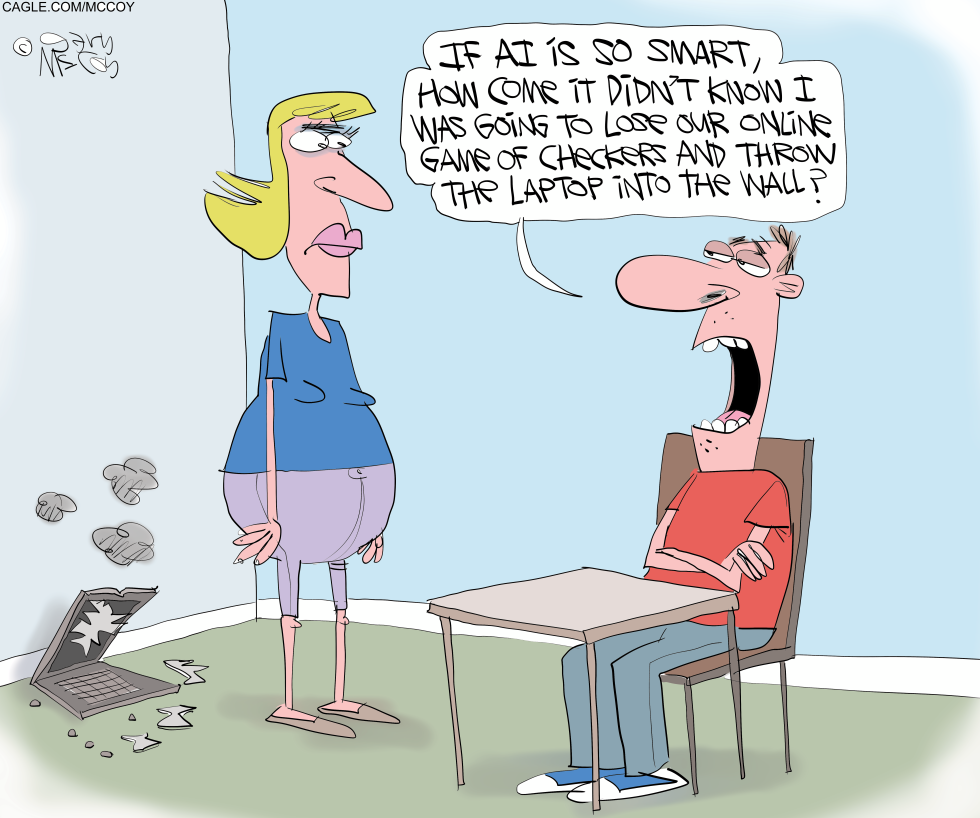
A man attributes his loss in an online checkers match and subsequent damage to a laptop on AI shortcomings. The situation reflects a common tendency to shift responsibility for personal errors onto emerging technology. The piece takes the position that such excuses reveal more about human behavior than about AI capabilities.
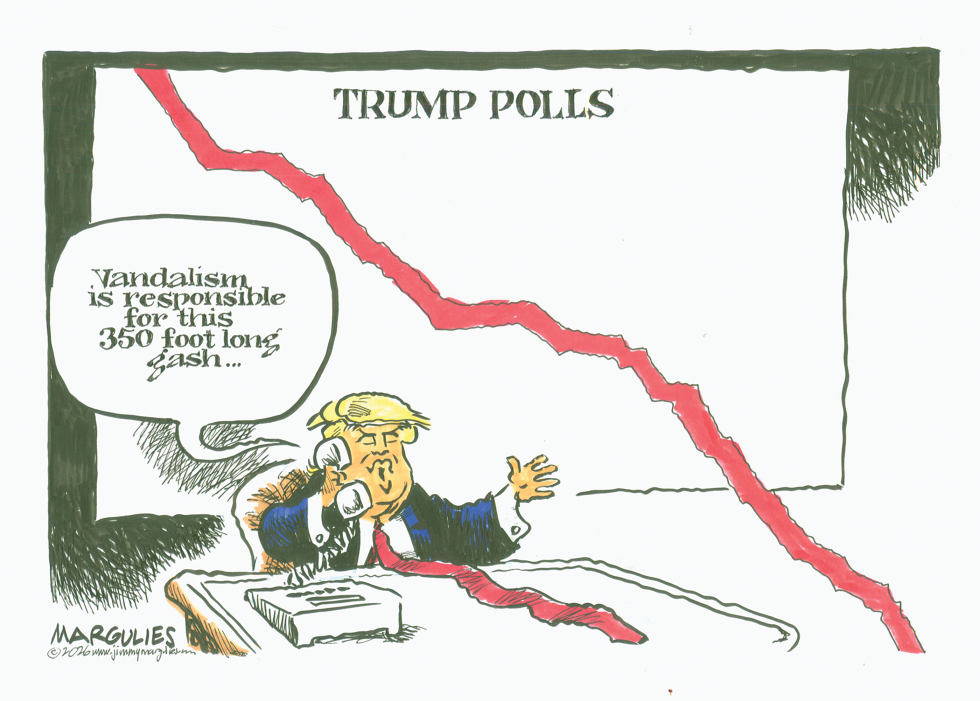
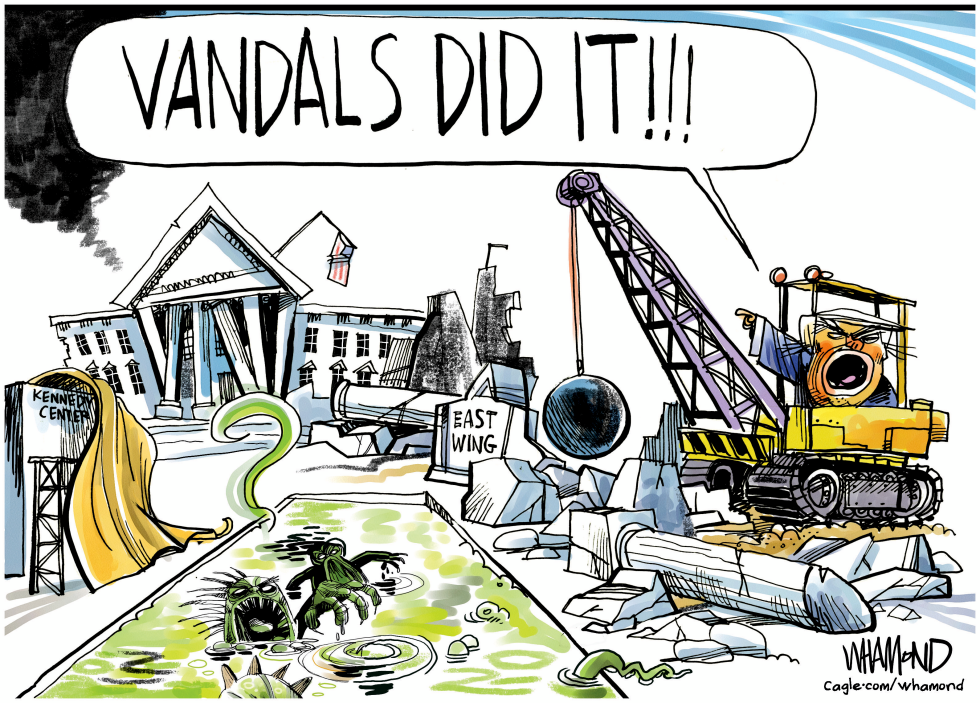
Donald Trump has attributed a steep decline in his polling numbers to alleged vandalism that created a long gash in his chart. The claim comes amid ongoing questions about his support levels ahead of future electoral tests. The piece presents the explanation as an attempt to deflect responsibility for unfavorable results rather than address underlying voter concerns.
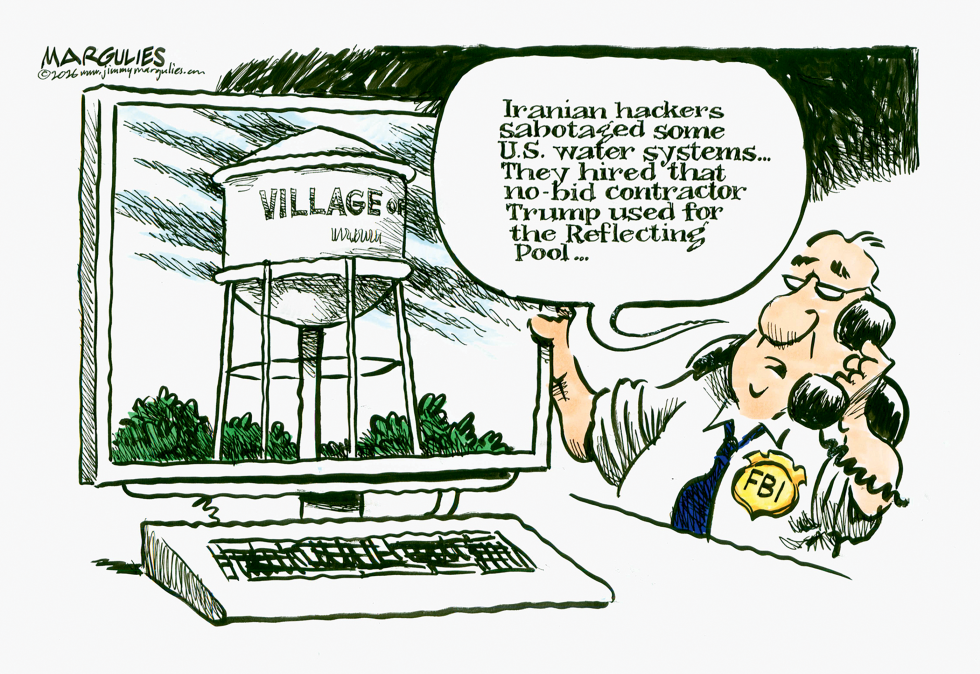
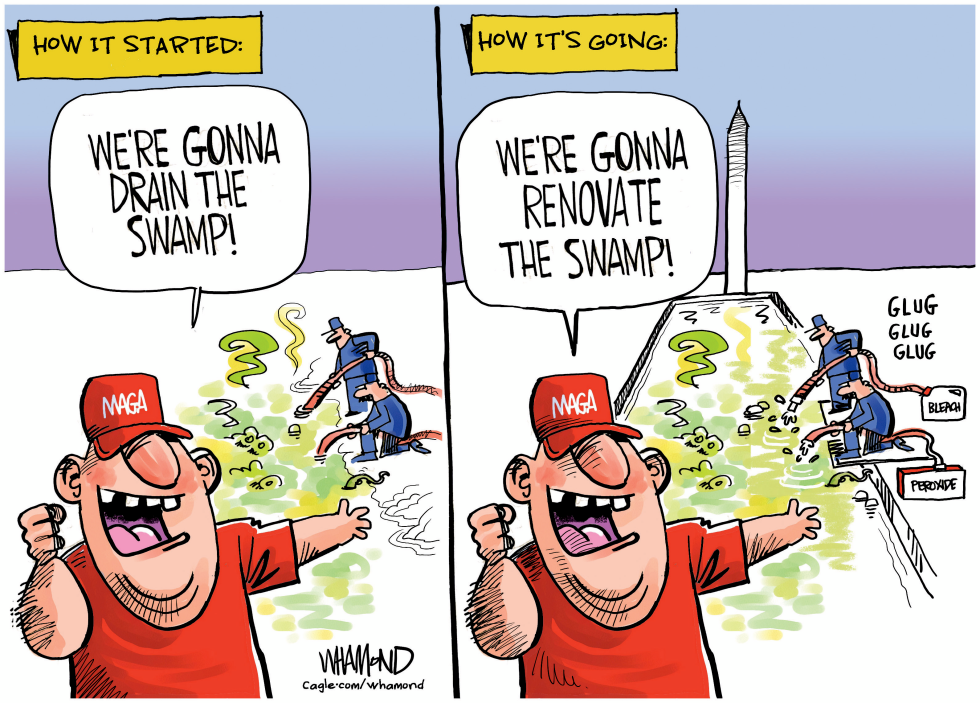
The FBI has attributed recent sabotage of U.S. water systems to Iranian hackers while highlighting their use of a no-bid contractor previously employed by Trump on the Reflecting Pool. The claim surfaces amid ongoing concerns over critical infrastructure vulnerabilities and contractor oversight. This development raises questions about procurement practices and accountability in federal responses to foreign cyber threats. The editorial position criticizes the reliance on such contractors and questions the logic of the blame assignment.
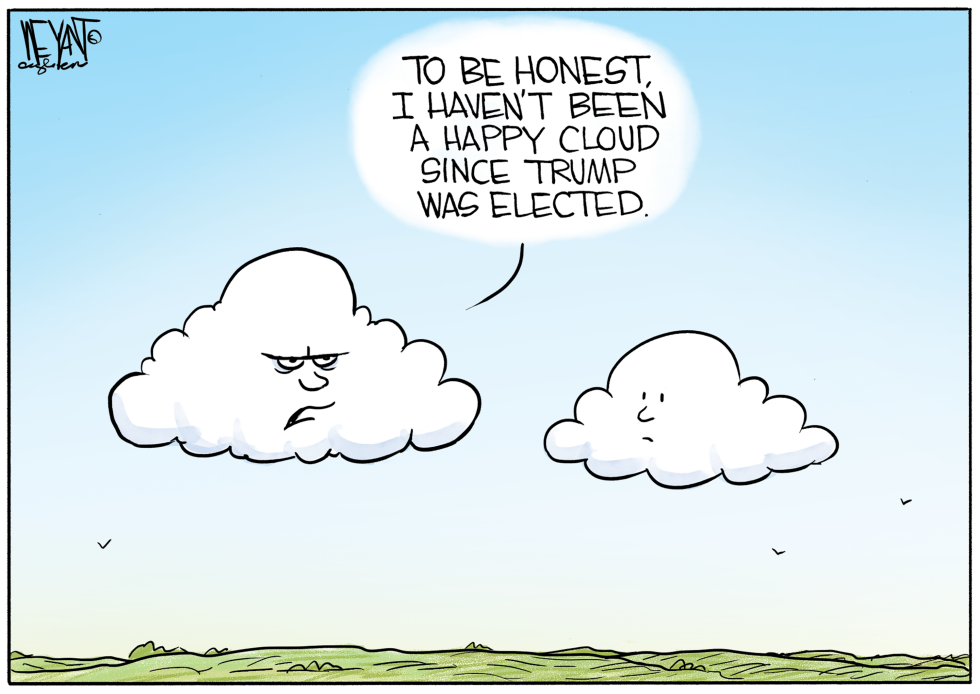
Donald Trump won the presidential election months before this July 2026 publication. The victory produced divided public reactions, with some citizens voicing ongoing dissatisfaction tied directly to the outcome. The piece uses a talking cloud to convey that sentiment. It positions the election result as the root cause of sustained personal or collective gloom. The editorial stance frames that unhappiness as a direct and lasting consequence of the vote.
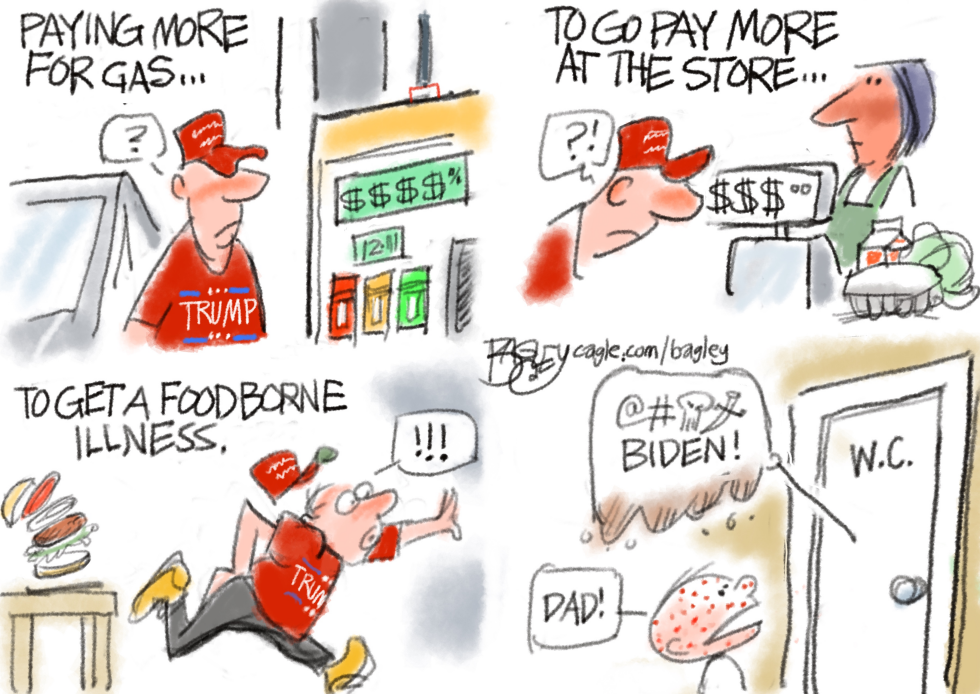
A Trump supporter encounters higher costs at the gas pump and grocery store plus a foodborne illness before directing blame toward Biden. The episode reflects persistent economic pressures on households and partisan finger-pointing that continues well after the 2024 election cycle. The cartoon highlights how some voters tie every inconvenience directly to the prior administration regardless of other factors at play.
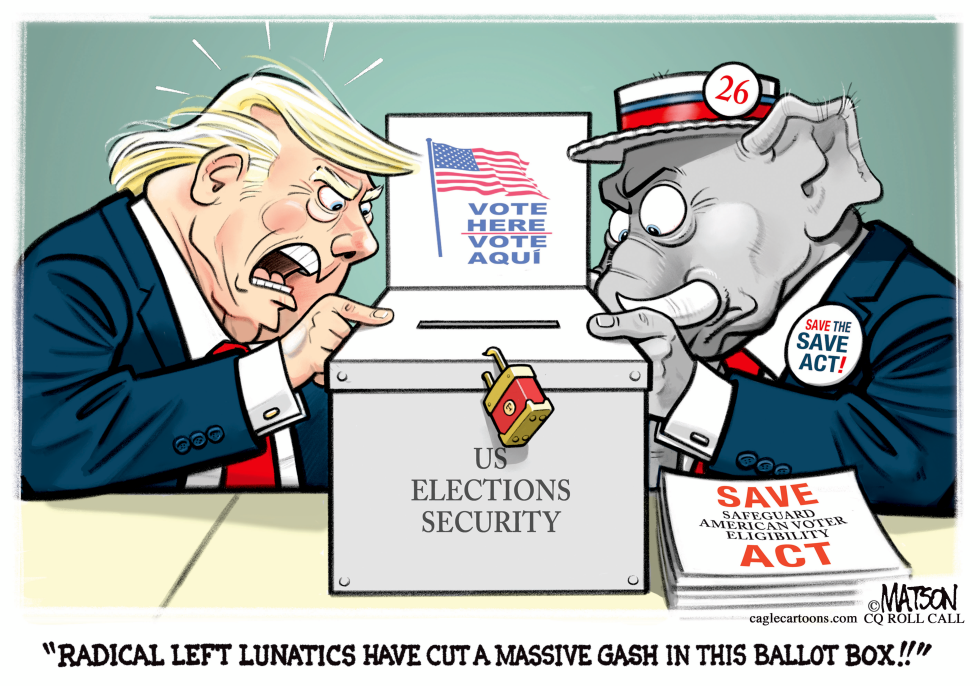
Donald Trump publicly blamed radical left activists for damaging a U.S. elections security ballot box days before key votes on the SAVE Act. The legislation aims to require proof of citizenship for federal voting. Republicans argue the measure prevents fraud while Democrats call it voter suppression. The cartoon frames the debate as partisan finger-pointing over basic safeguards.
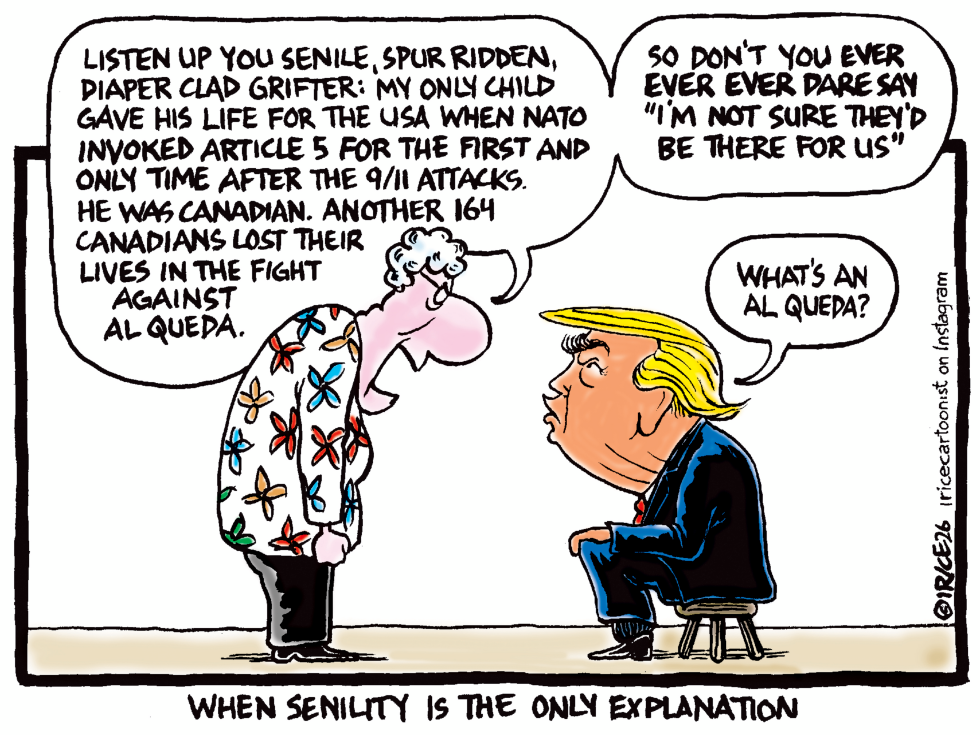
A political cartoon dated July 12, 2026, shows Donald Trump seated on a stool responding to a lecture about Al Qaeda and NATO's Article 5 invocation after 9/11. The standing figure, wearing a floral shirt, recounts the death of a Canadian child and 164 other Canadians in the fight. Trump replies by asking what an Al Qaeda is. The bottom caption reads when senility is the only explanation. The image highlights a direct confrontation over historical facts tied to the 9/11 attacks and alliance commitments.
On Father's Day a father stands on a balcony facing his two children who present him with tongs, an apron labeled The Grill Father, a meat thermometer and a wrapped box. The children announce the items will allow BBQ cooking that day. The father replies that they do not have a grill. A caption below attributes the mismatch to social media marketing influence and obliviousness.
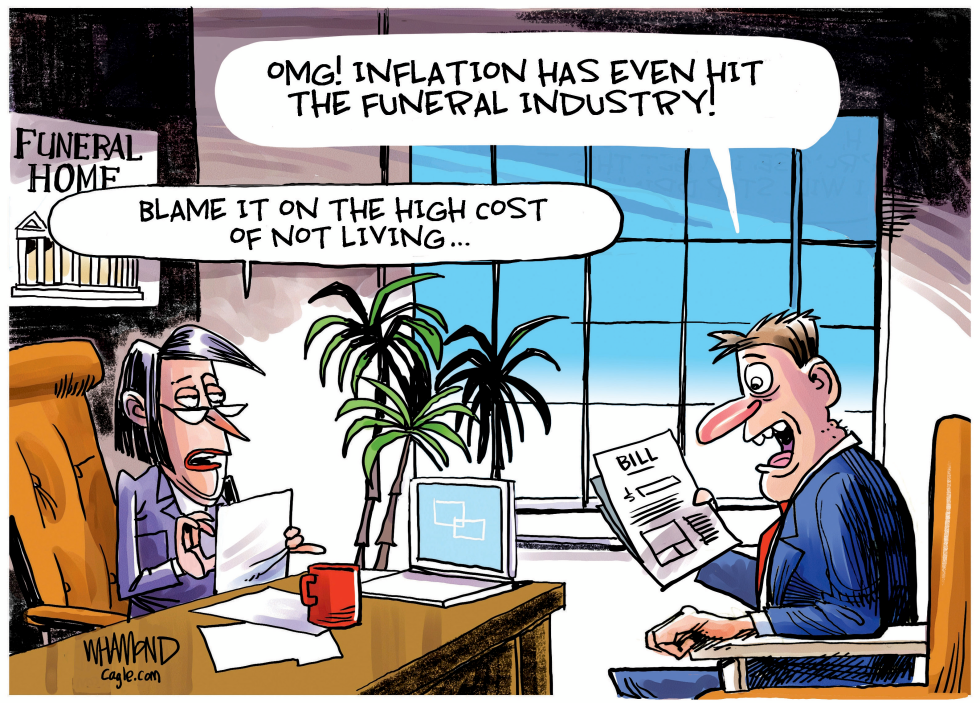
A funeral home director and client react to a high bill in an office setting. The exchange highlights how inflation has extended to the funeral sector. Speech bubbles deliver a pun on the high cost of not living. The scene reflects ongoing economic pressures on consumers including tariffs and rising prices for essentials. Publication occurs amid discussions of affordability challenges tied to recent policy decisions.