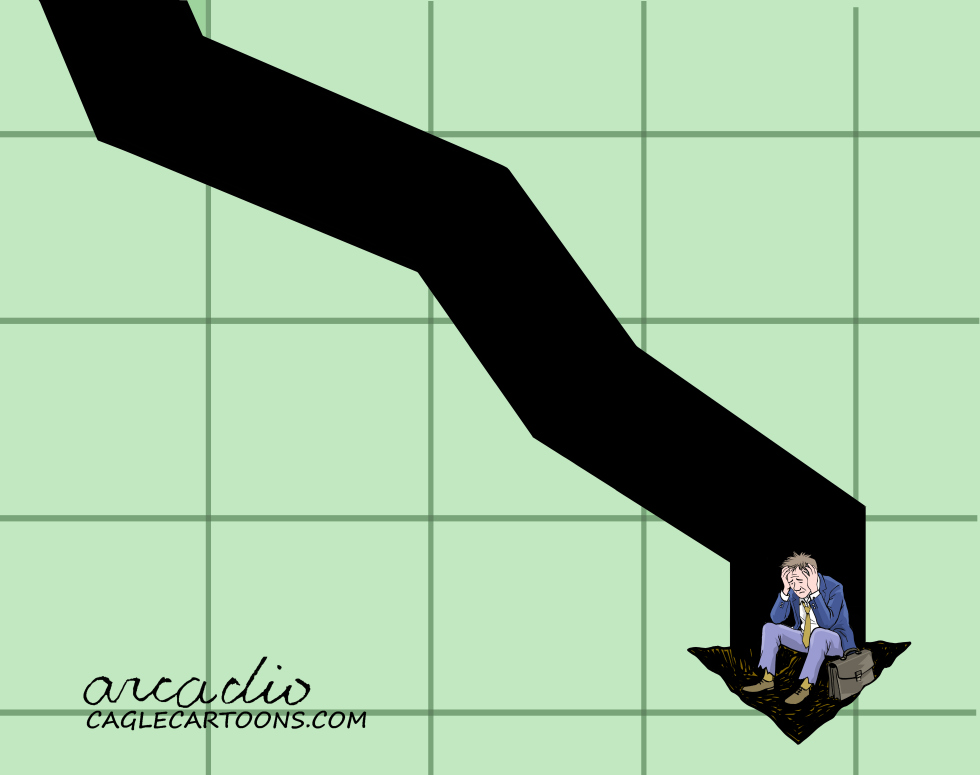
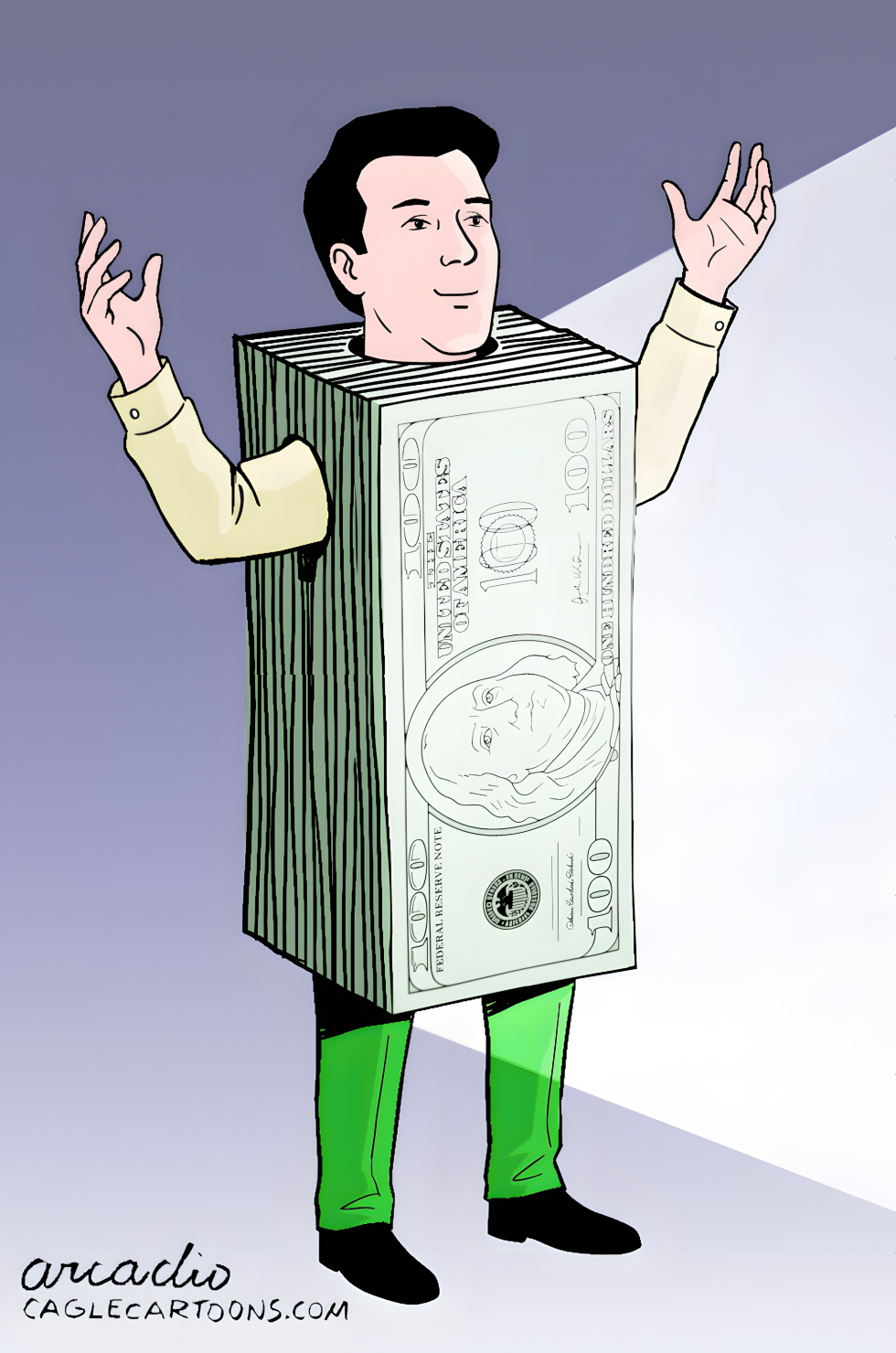
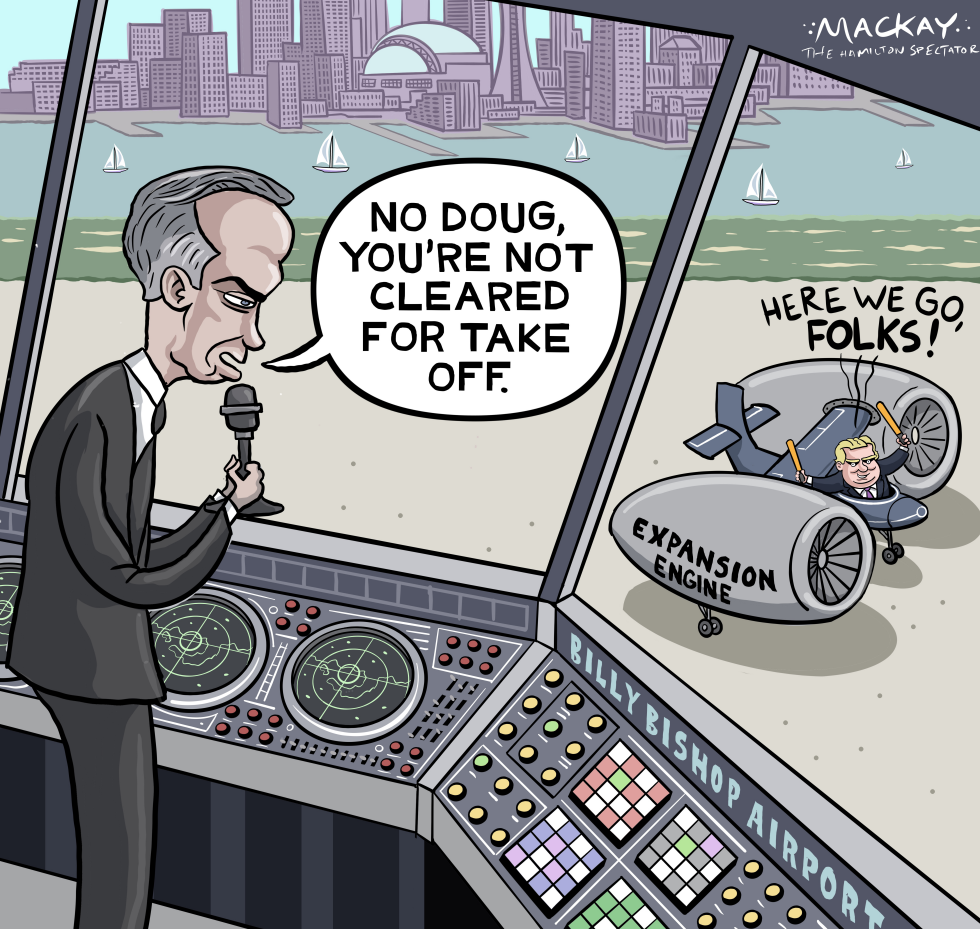
Businesses face mounting pressure from ongoing economic contraction that leaves executives isolated and without clear recovery paths. The decline affects employment, investment, and market stability across sectors. The piece highlights the personal toll on those navigating the downturn and underscores the urgency of addressing root causes before further damage spreads.
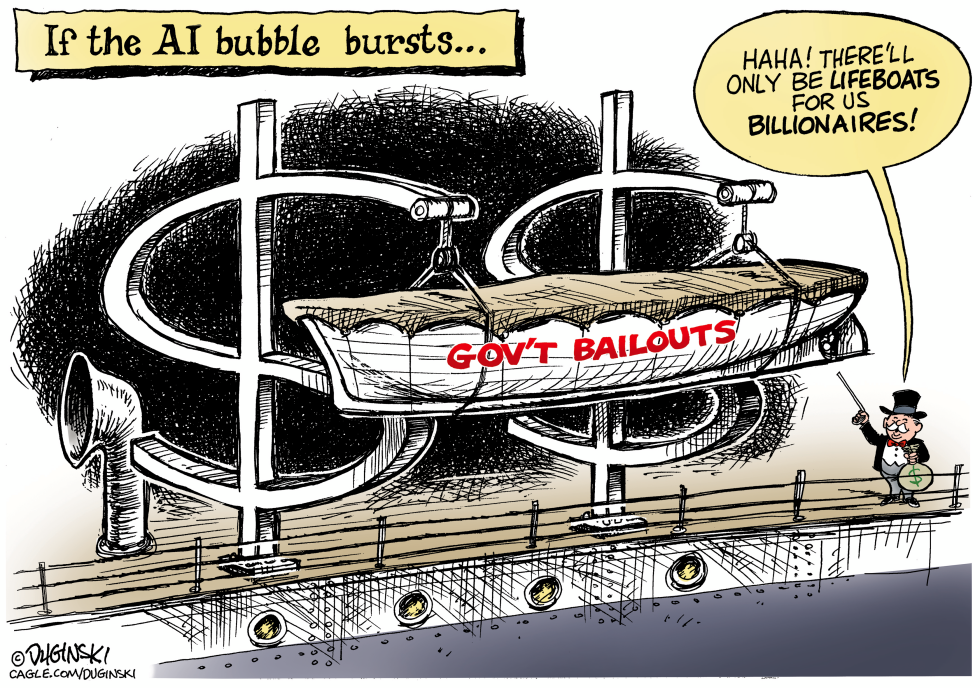
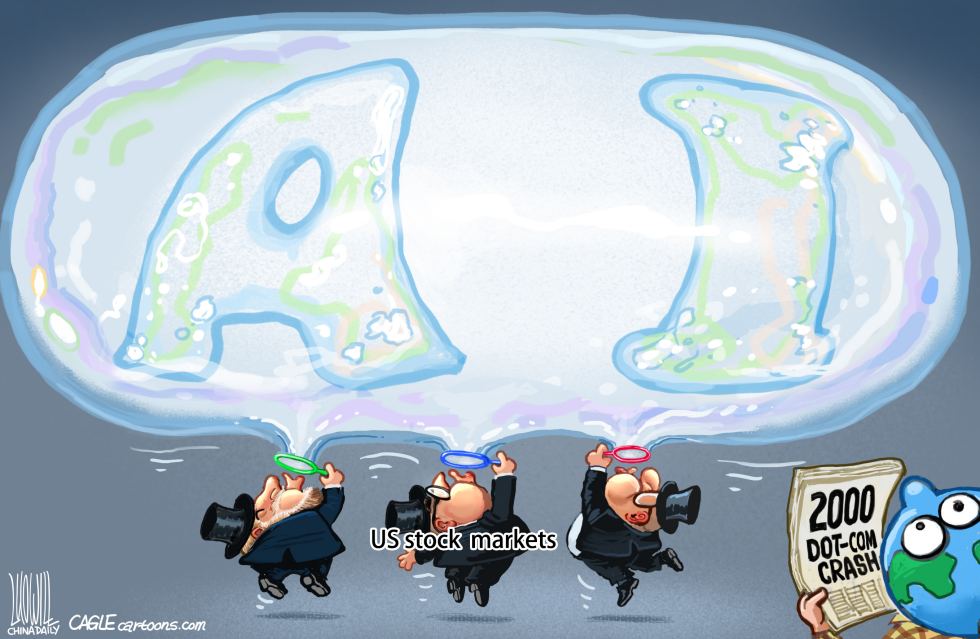
Speculation grows over potential government intervention if the artificial intelligence sector experiences a sharp downturn. Industry leaders and investors face questions about whether public funds would support failing companies. The editorial argues that any such support would primarily protect billionaires rather than address wider economic fallout from overvalued tech assets.
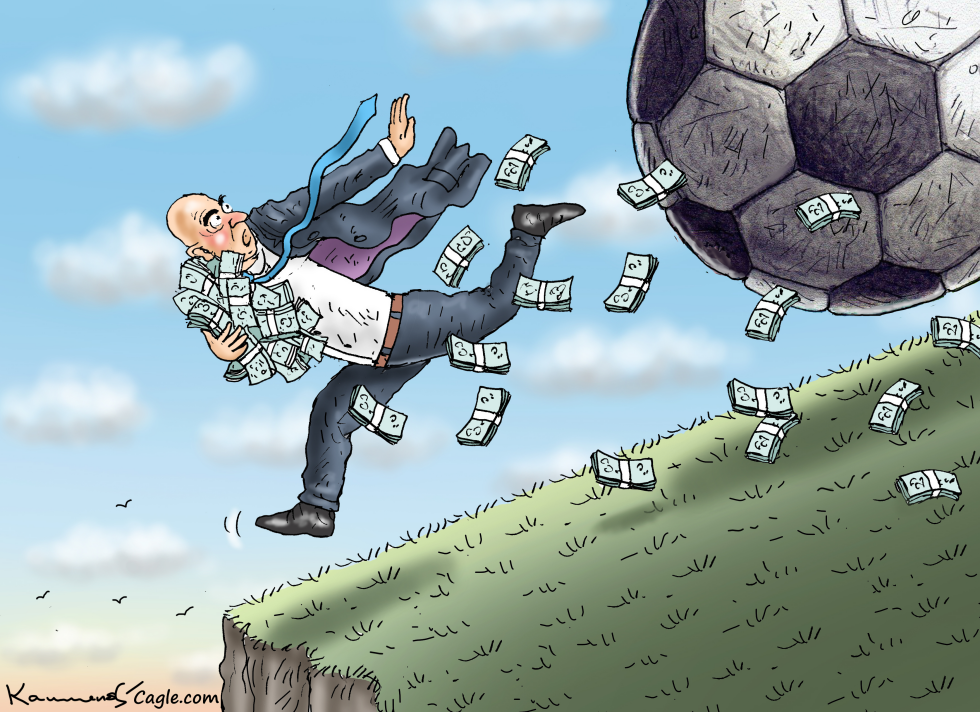
A businessman loses his footing at a cliff edge amid scattered cash. The scene captures ongoing pressures in corporate finance where sudden external forces can upend stability. The piece highlights risks tied to rapid shifts in market or competitive dynamics.
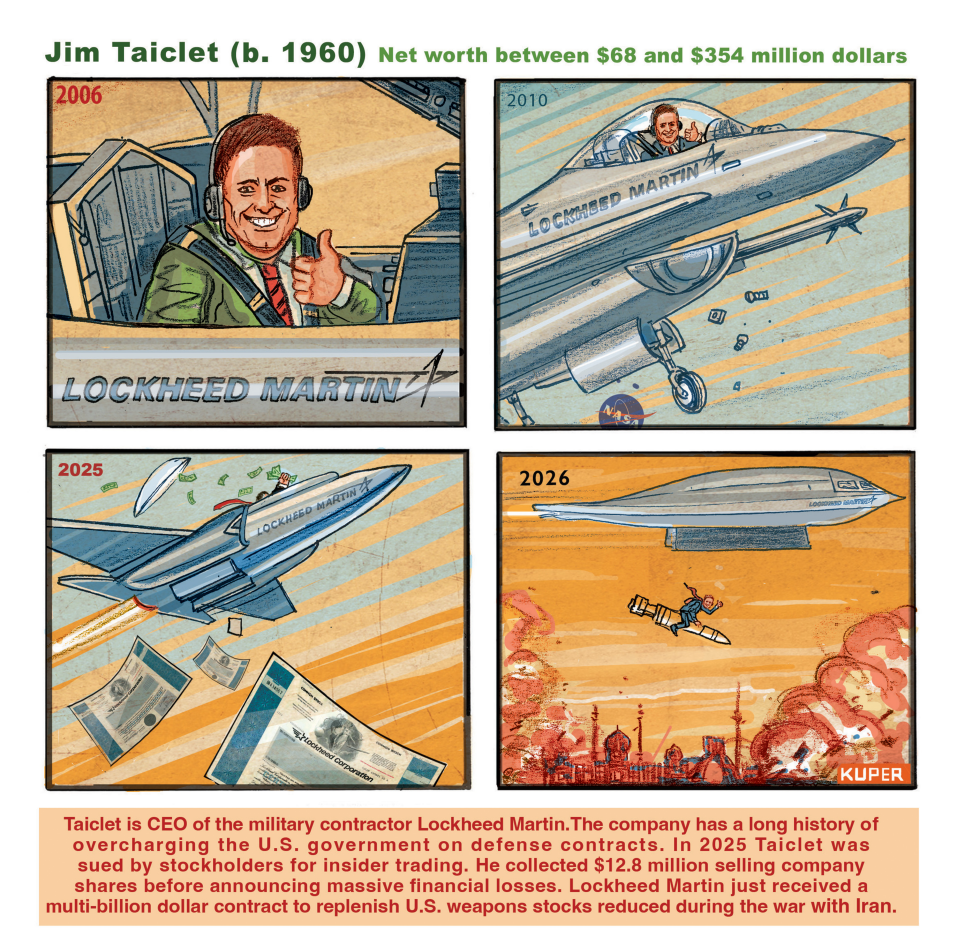
Lockheed Martin CEO Jim Taiclet was sued by stockholders in 2025 for selling $12.8 million in shares before announcing major losses. The company then won a multi-billion contract to replenish weapons depleted in the Iran conflict. The piece criticizes Taiclet and the contractor for insider trading and repeated government overcharging.
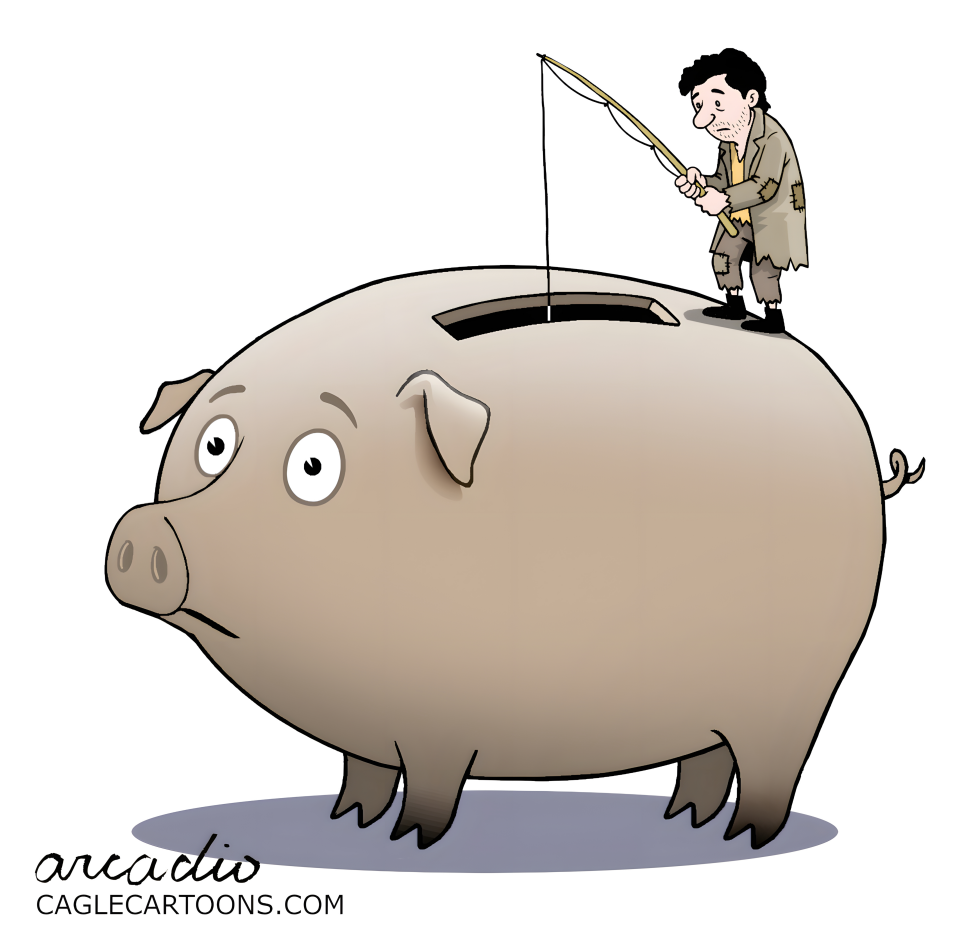
Households continue to draw down savings accounts as living costs remain elevated and wage growth lags in many sectors. The trend reflects sustained pressure on personal finances more than a year into the current economic cycle. The editorial takes the position that such depletion signals deeper structural problems rather than temporary adjustment.
Rising grocery prices have left many households unable to afford staples like bread in a single purchase. Shoppers increasingly ask retailers for payment plans to cover basic items. The cartoon highlights the strain on family budgets from persistent inflation in food costs.
The US dollar maintains its central role in international finance and trade. Its status as the primary reserve currency supports global transactions and stability. The editorial highlights this continued influence without recent policy shifts or challenges altering the dynamic.
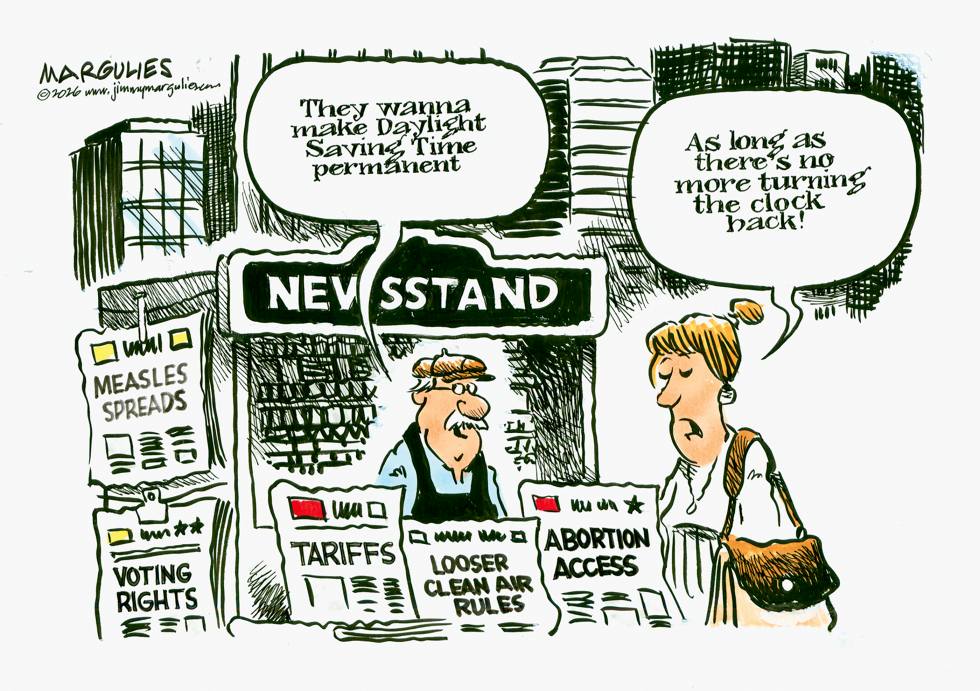
Proposals to make daylight saving time permanent coincide with debates over tariffs, abortion access, voting rights and environmental rules. The cartoon frames these as part of a broader pattern of policy shifts that some view as steps backward.
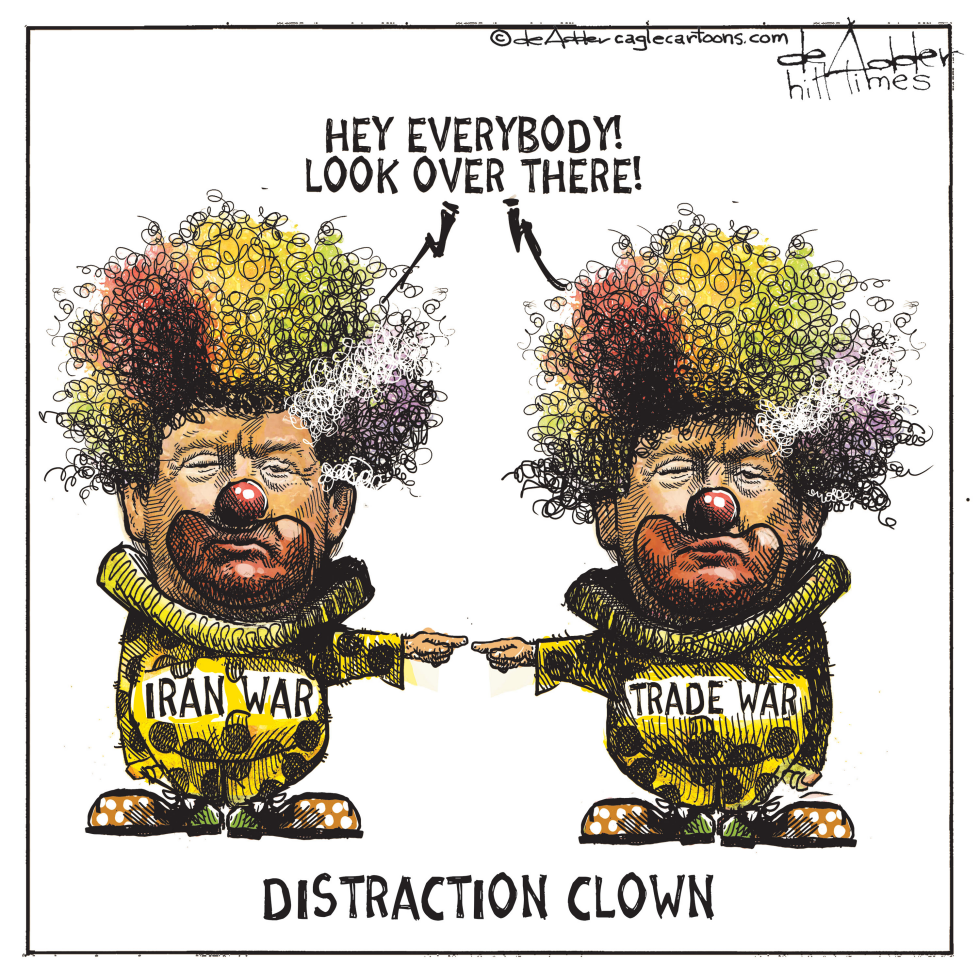
Public attention is being directed toward simultaneous Iran and trade conflicts as potential diversions from other issues. The editorial depicts the two crises as interchangeable distractions promoted by the same source. It argues that leaders are using these flashpoints to shift focus rather than address underlying problems.
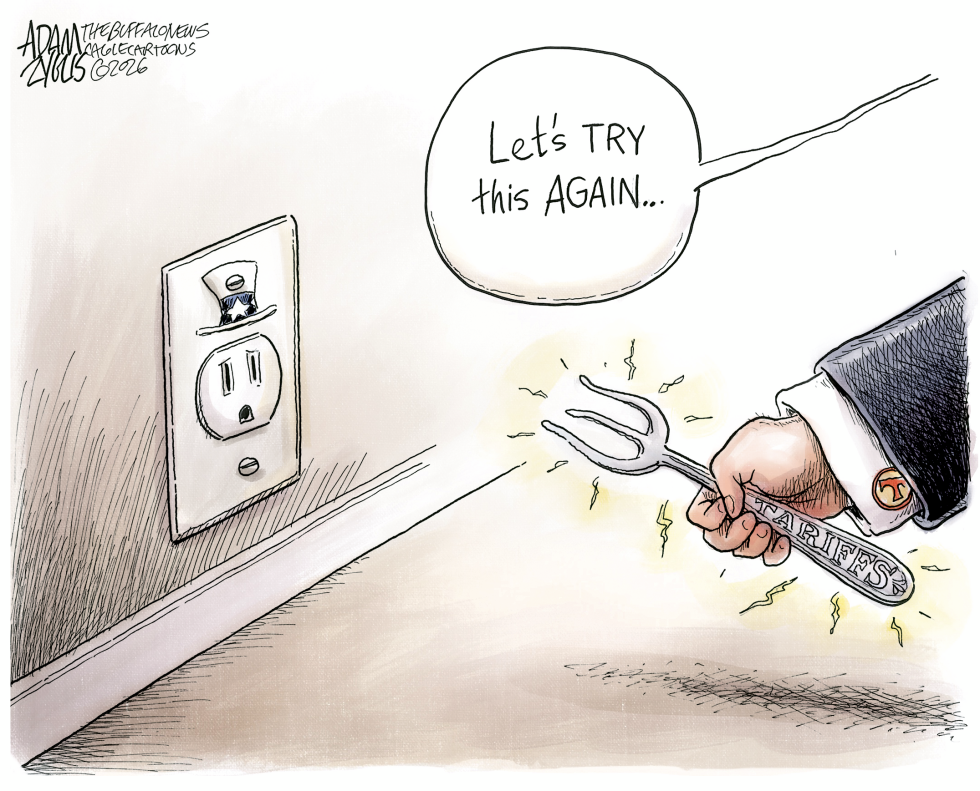
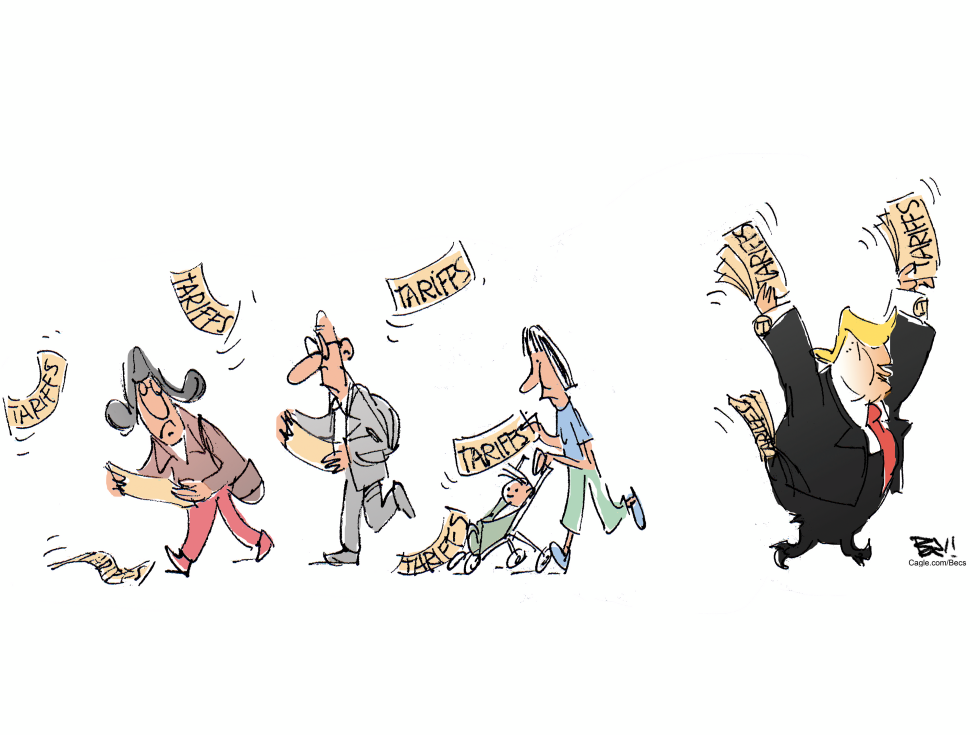
Donald Trump expanded tariffs across trading partners in mid-2026, triggering immediate market volatility and diplomatic pushback. The move raised costs for consumers and businesses reliant on imports. The piece portrays the policy as an indiscriminate barrage that disrupts daily life and global commerce.
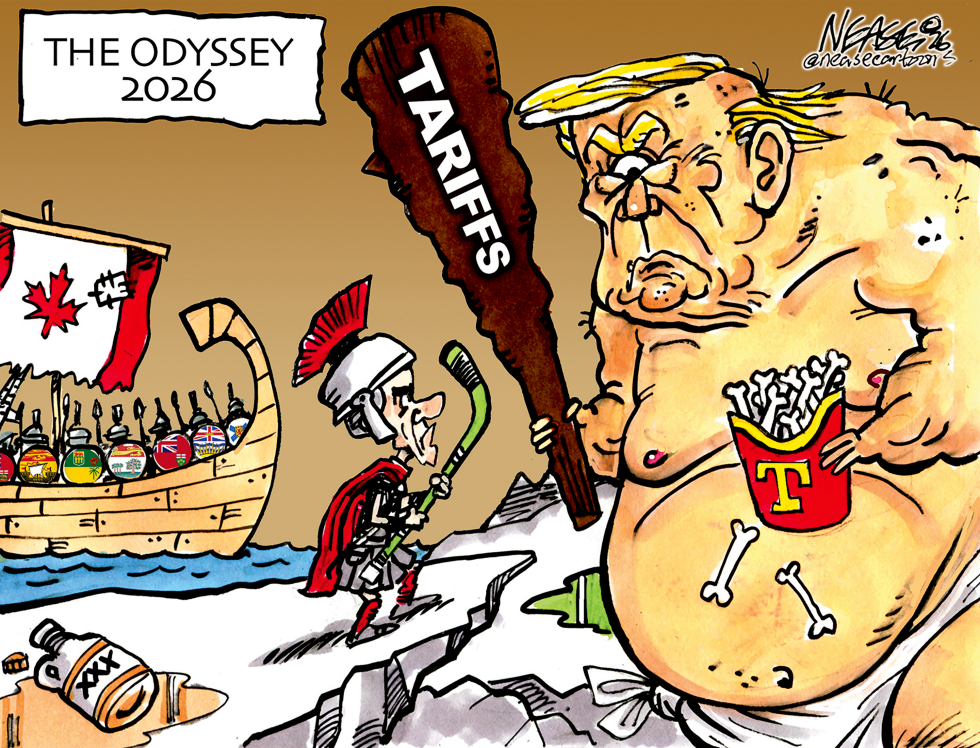
President Trump escalates tariffs on trading partners including Canada in mid-2026. The move targets imports amid ongoing disputes over trade balances and supply chains. Allies respond with coordinated pushback through diplomatic and economic channels. The cartoon casts the confrontation as a one-sided power play by the oversized tariff wielder against smaller coordinated opponents.
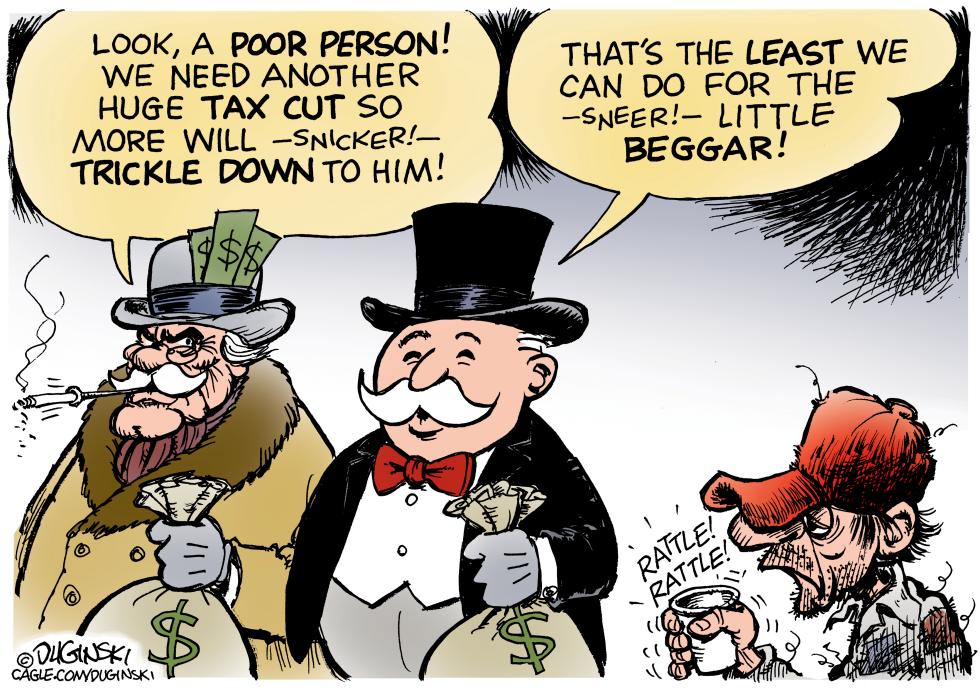
Wealthy interests continue to advocate additional tax reductions framed as broad-based relief. Critics note that such measures primarily benefit high earners while leaving lower-income households with minimal gains. The piece highlights the disconnect between policy promises and visible outcomes for those at the bottom.