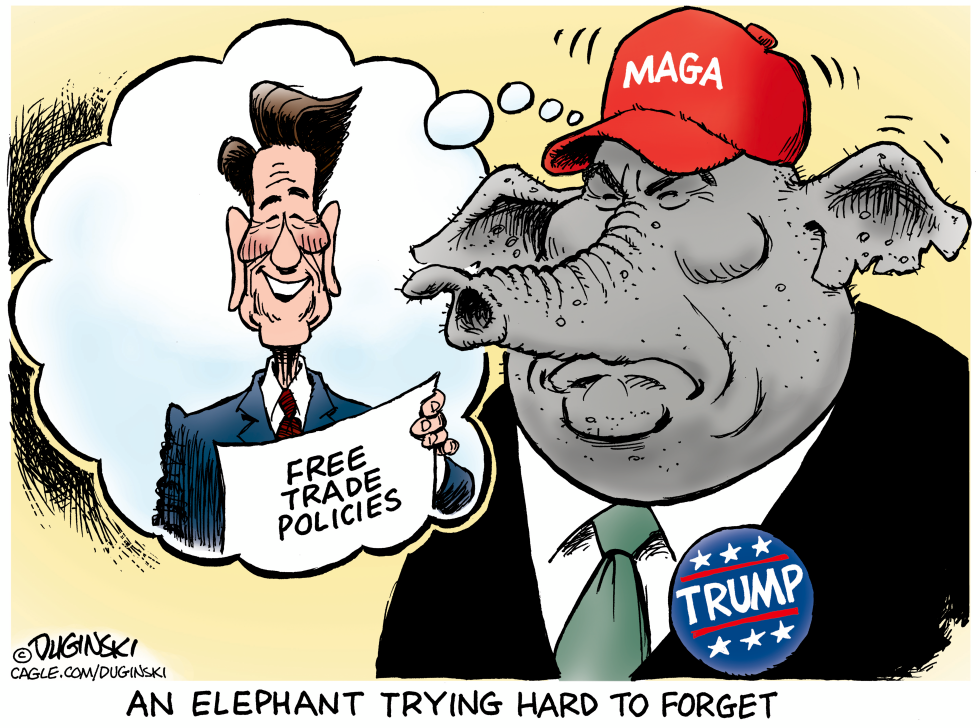
Republicans under Donald Trump have moved away from Ronald Reagan's free trade advocacy toward protectionist policies. The shift reflects internal party tensions over economic strategy and global engagement. The cartoon criticizes the GOP for abandoning a core Reagan principle in favor of current leadership priorities.
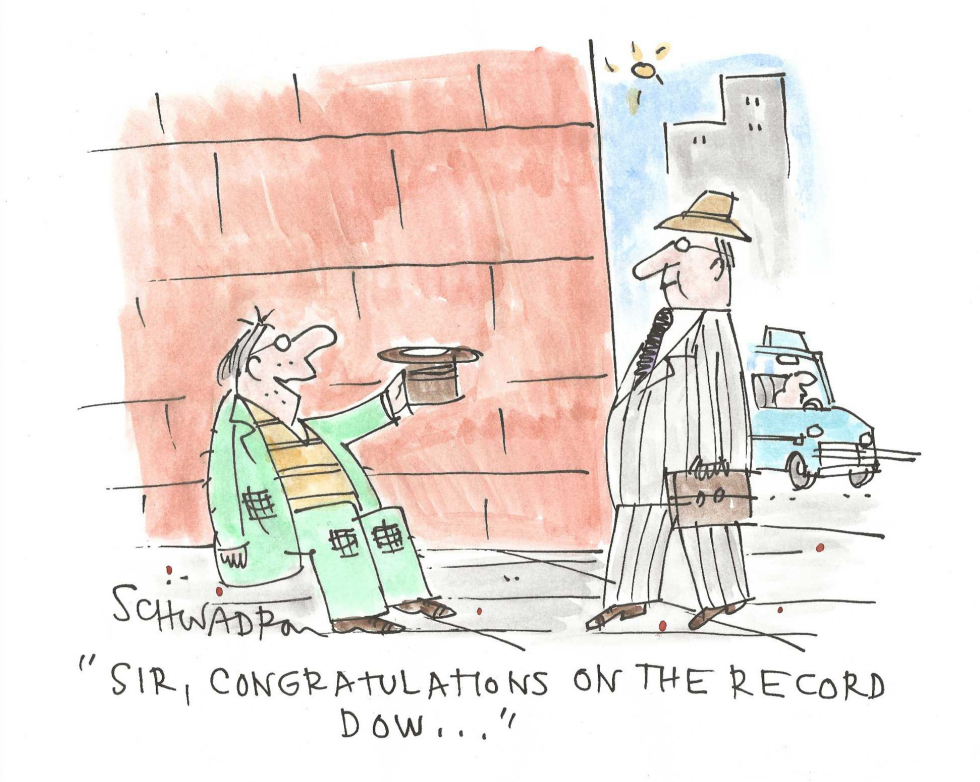
The Dow Jones Industrial Average reached a new record high in late August 2026, reflecting strong corporate earnings and investor confidence. Business leaders celebrated the milestone while many Americans continued to face stagnant wages and rising living costs. The cartoon depicts a beggar offering congratulations to a passing executive, underscoring the disconnect between Wall Street performance and everyday economic reality. This visual argument critiques how market success often benefits a narrow segment of society while leaving others behind.
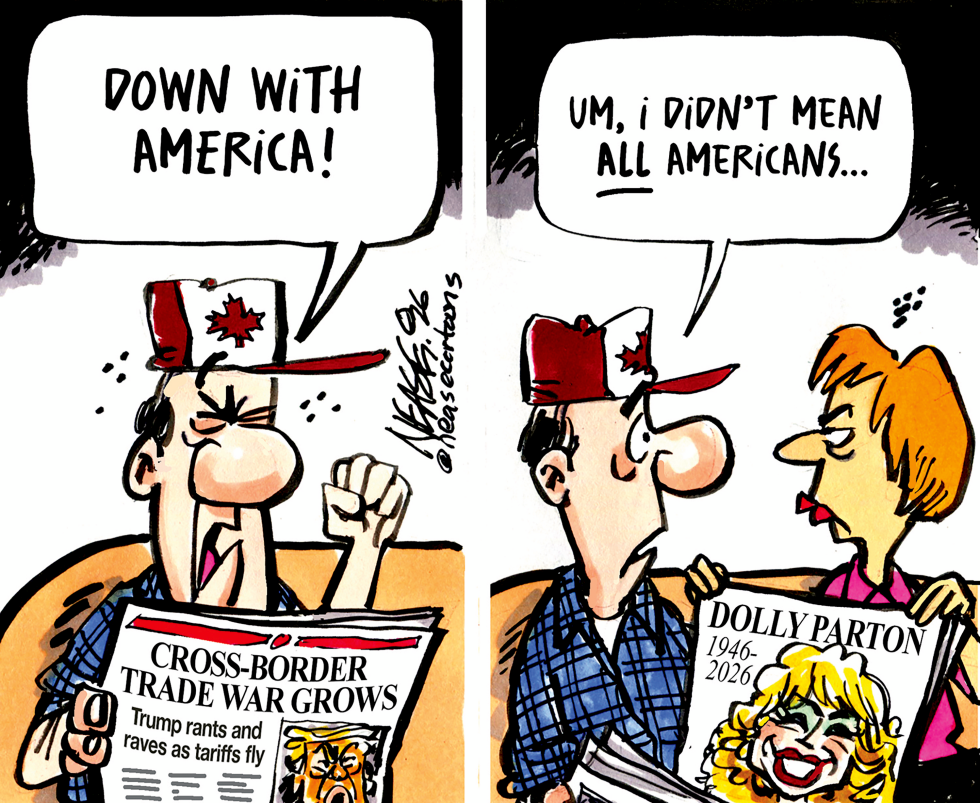
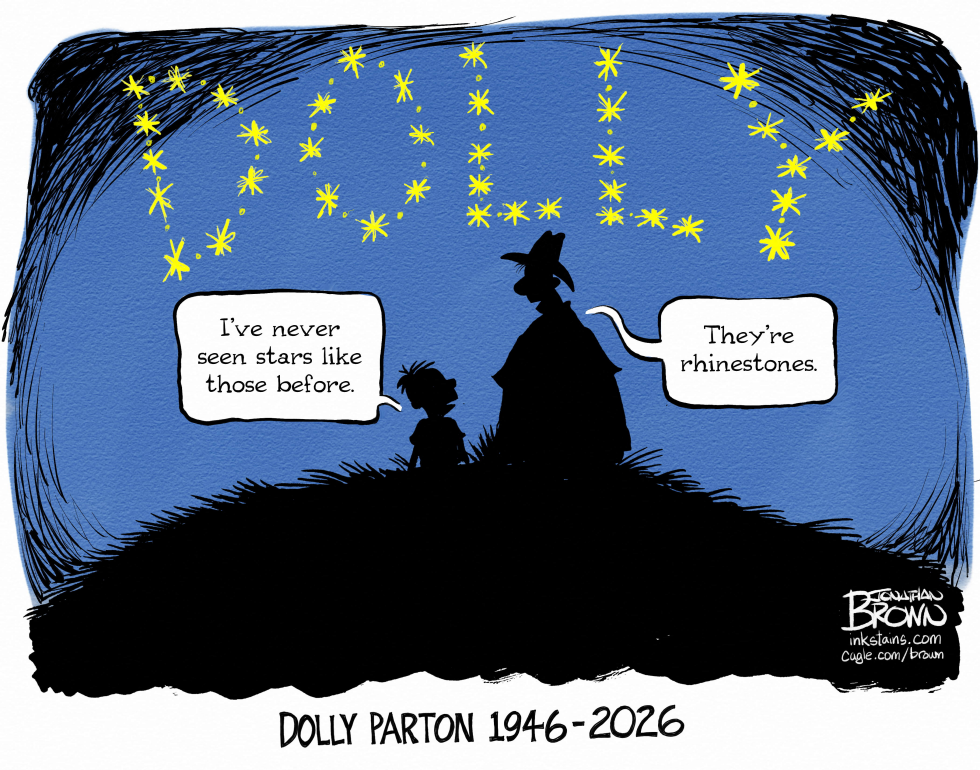
US-Canada trade tensions intensified in August 2026 as tariffs mounted amid heated rhetoric from President Trump. The dispute drew sharp reactions north of the border. The cartoon takes the position that even vocal critics of America make exceptions for beloved figures like Dolly Parton.
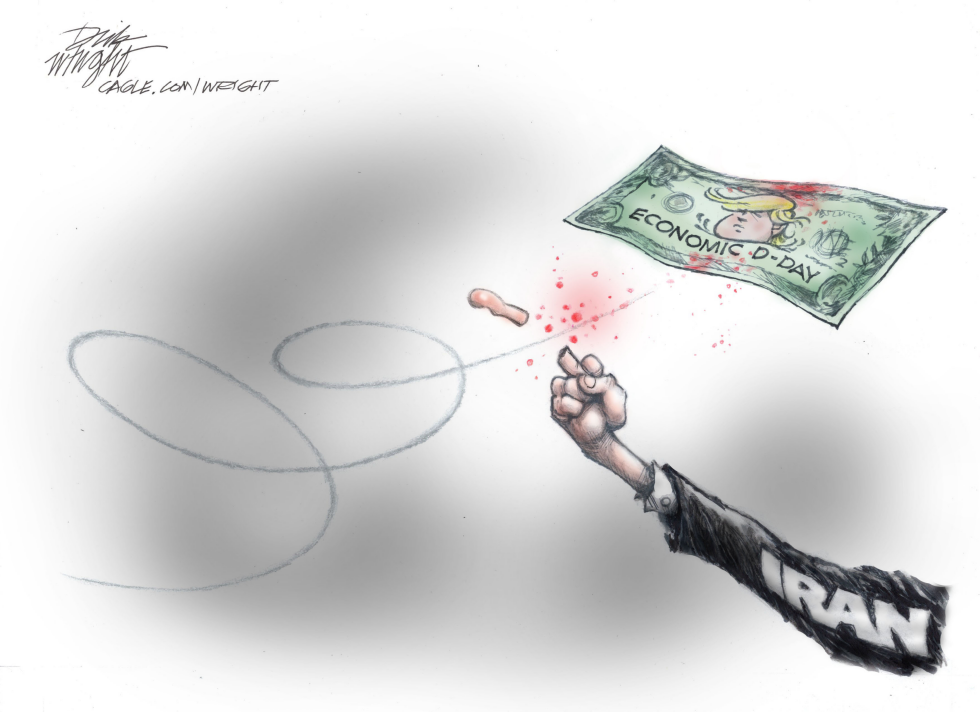
Iran has positioned itself to ignite economic pressure on the United States through direct actions targeting financial stability. The move comes amid ongoing tensions with the Trump administration over sanctions and regional influence. This development raises stakes for global markets already sensitive to Middle East volatility. The piece frames Iran as deliberately lighting a fuse aimed at an economic tipping point centered on Trump.
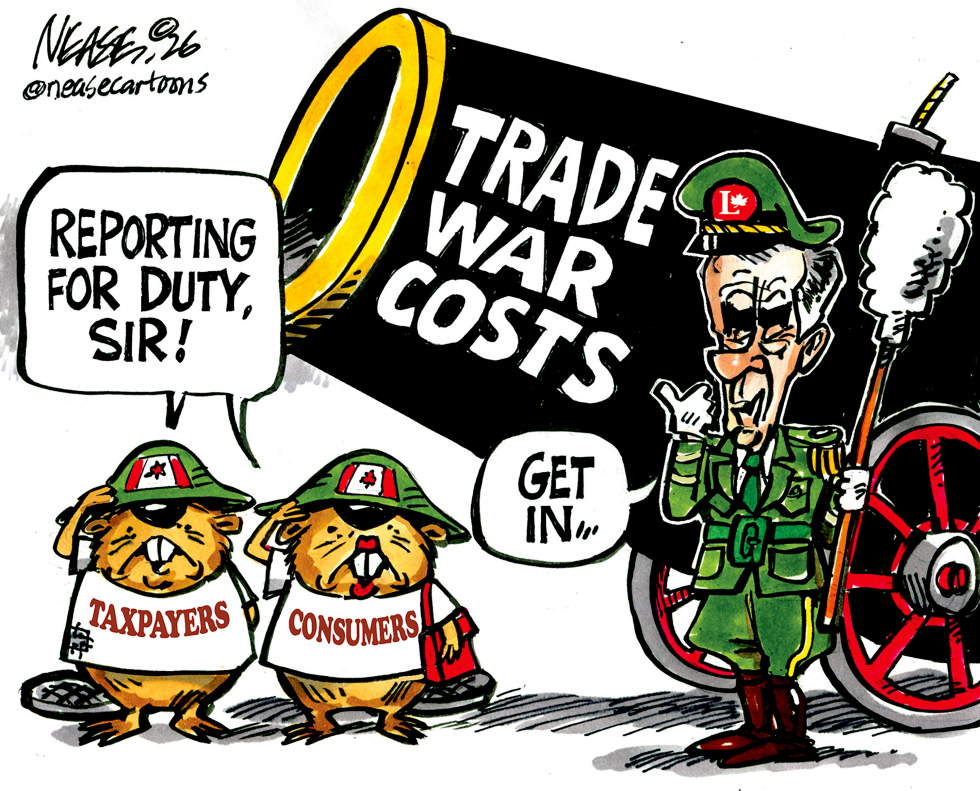
Canadian taxpayers and consumers face rising costs from an ongoing trade dispute. The situation places direct financial pressure on households through higher prices and economic measures. The editorial takes the position that ordinary citizens bear the burden while leadership directs the effort.
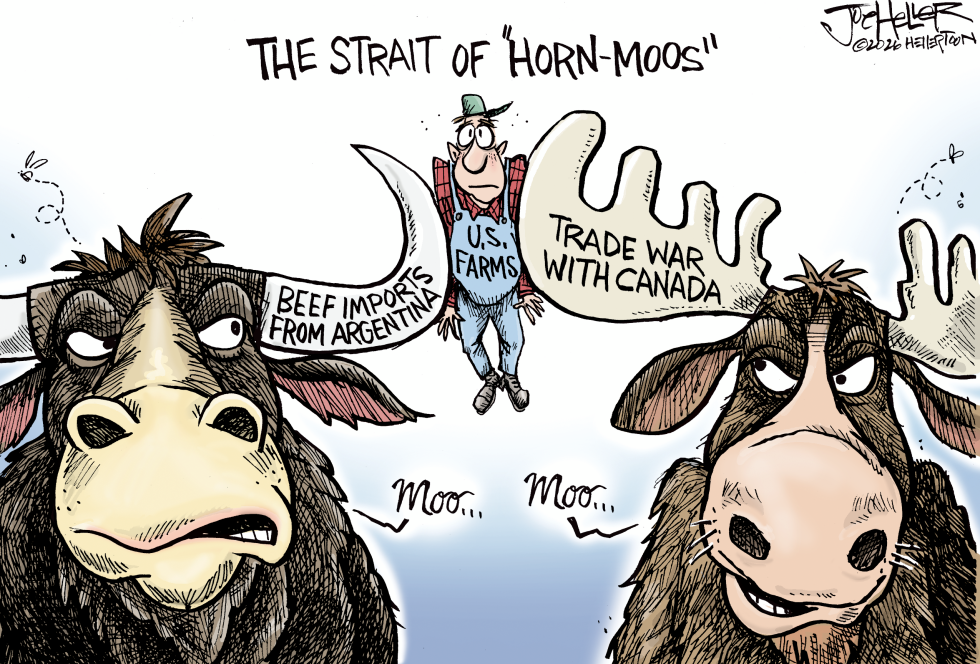
US agricultural interests face simultaneous pressure from increased beef imports from Argentina and an escalating trade dispute with Canada. The situation highlights how competing international trade policies directly affect domestic producers. The piece portrays American farms as caught in the middle of these conflicting pressures.
Data centers are expanding rapidly and placing heavy demands on local water and power supplies. Municipalities must decide whether to raise taxes to cover the costs. The piece argues that residents bear the burden while data centers consume resources without contributing enough back.
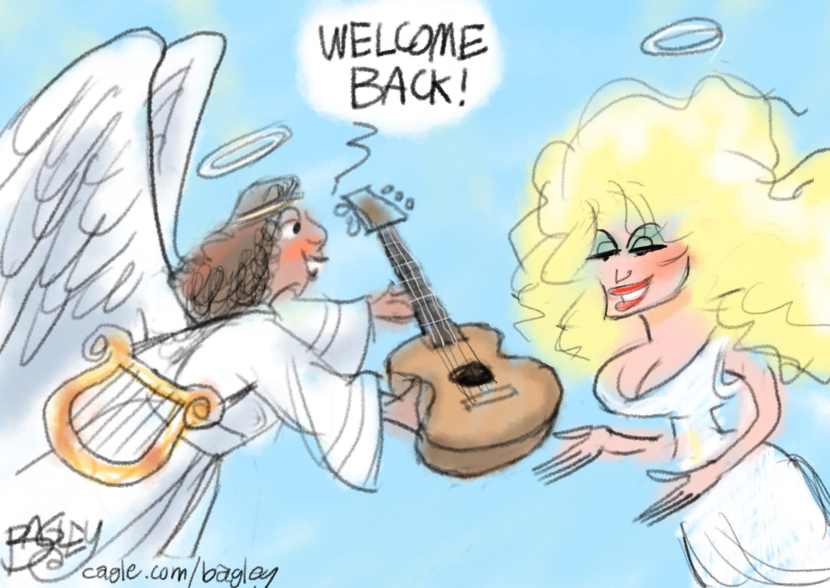
Dolly Parton passed away in 2026 at age 80. Fans and the public mourned the loss of the country music legend known for her rhinestone outfits and charitable work. The tribute highlights her enduring sparkle and cultural impact through a celestial memorial image. The piece positions her legacy as one of warmth, generosity, and unmistakable glamour that continues to shine.
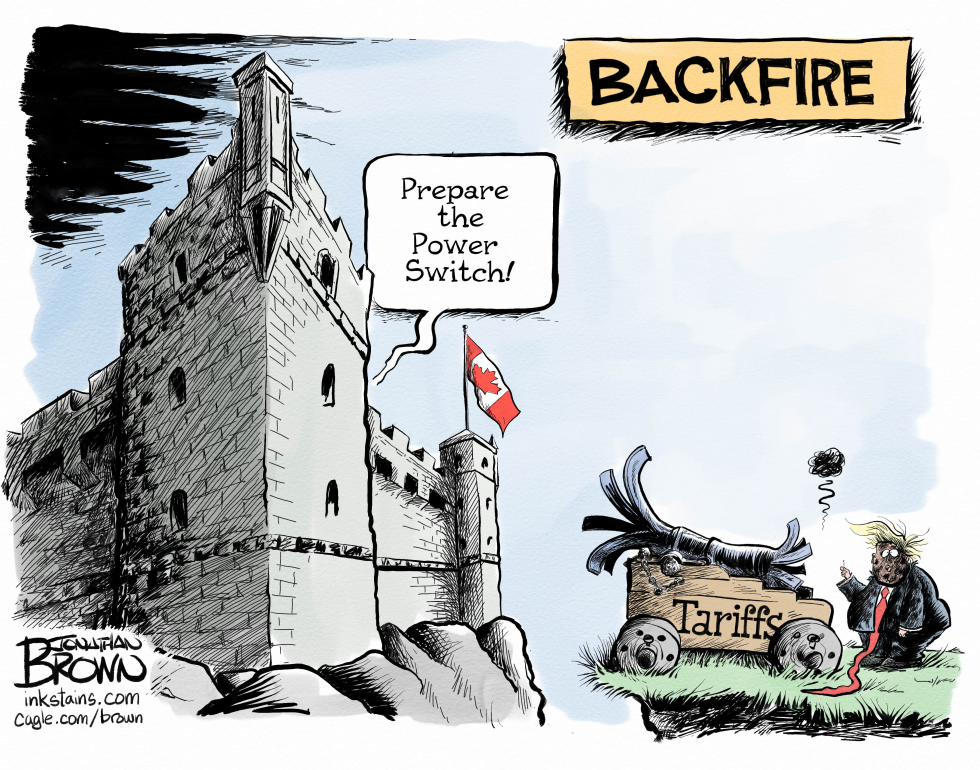
The cartoon shows a Canadian castle flying its flag while a cannon labeled Tariffs explodes backward toward a figure resembling Donald Trump. The scene responds to ongoing trade tensions where U.S. tariffs on Canadian goods prompted retaliatory measures. The visual emphasizes the policy rebounding on its originator rather than achieving intended pressure.
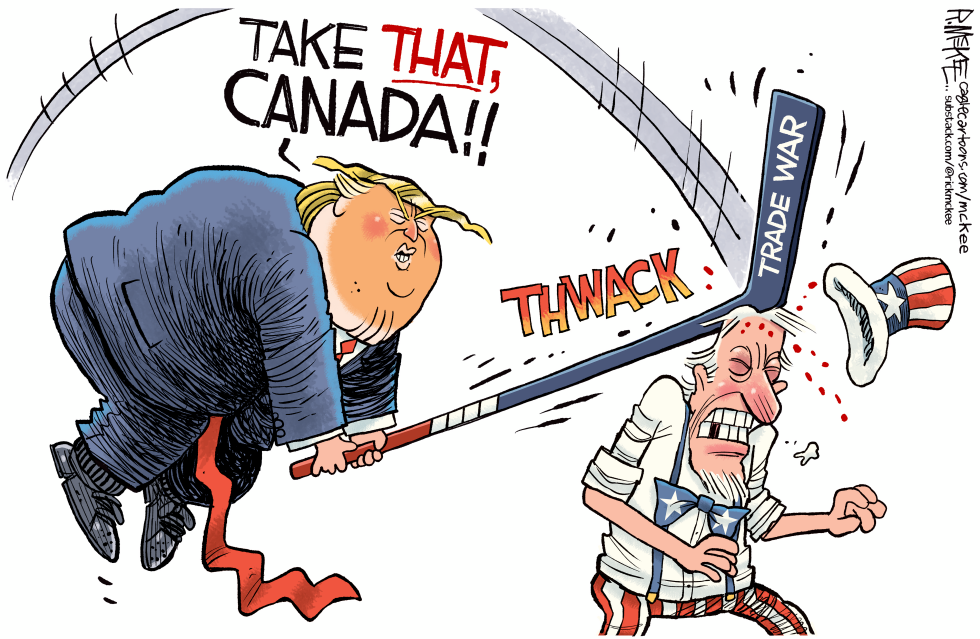
President Trump escalated trade tensions with Canada through new tariffs and barriers in August 2026. The moves targeted key sectors including lumber, dairy and autos. Domestic industries braced for retaliation while consumers faced higher prices. The action drew criticism for harming American interests alongside the intended foreign pressure. The cartoon portrays the policy as self-inflicted damage on the United States itself.
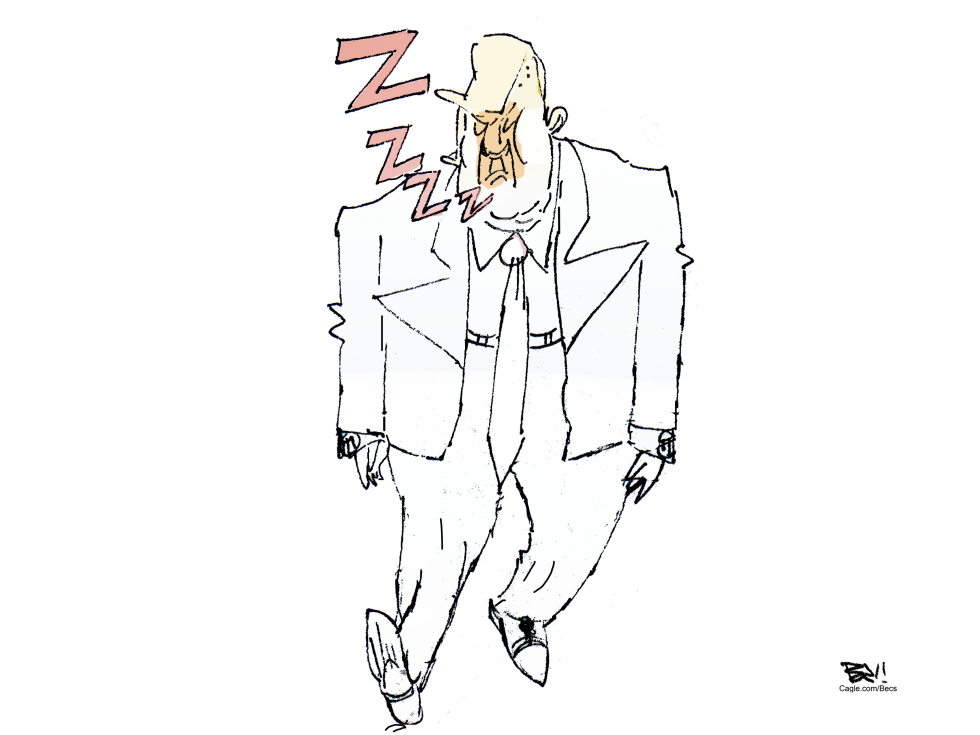
No specific news event ties to this generic image of a sleeping suited man. The depiction captures an ongoing dynamic of officials appearing disengaged from duties amid routine public appearances.
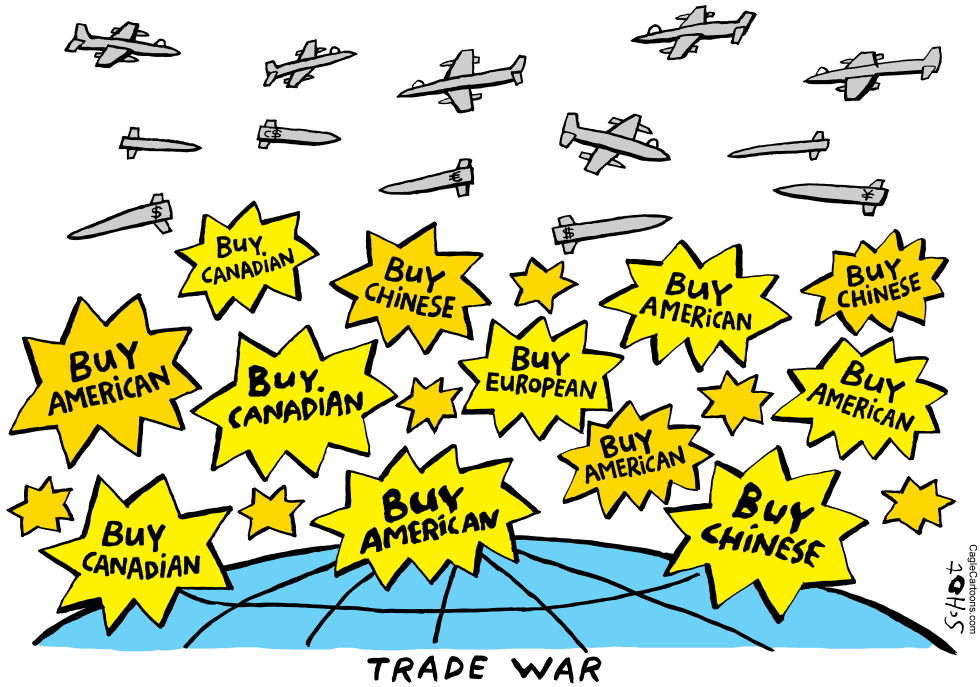
Competing buy national campaigns from multiple countries have intensified trade disputes, raising concerns over economic retaliation and supply chain disruptions. The piece argues these appeals are directly contributing to broader conflict.
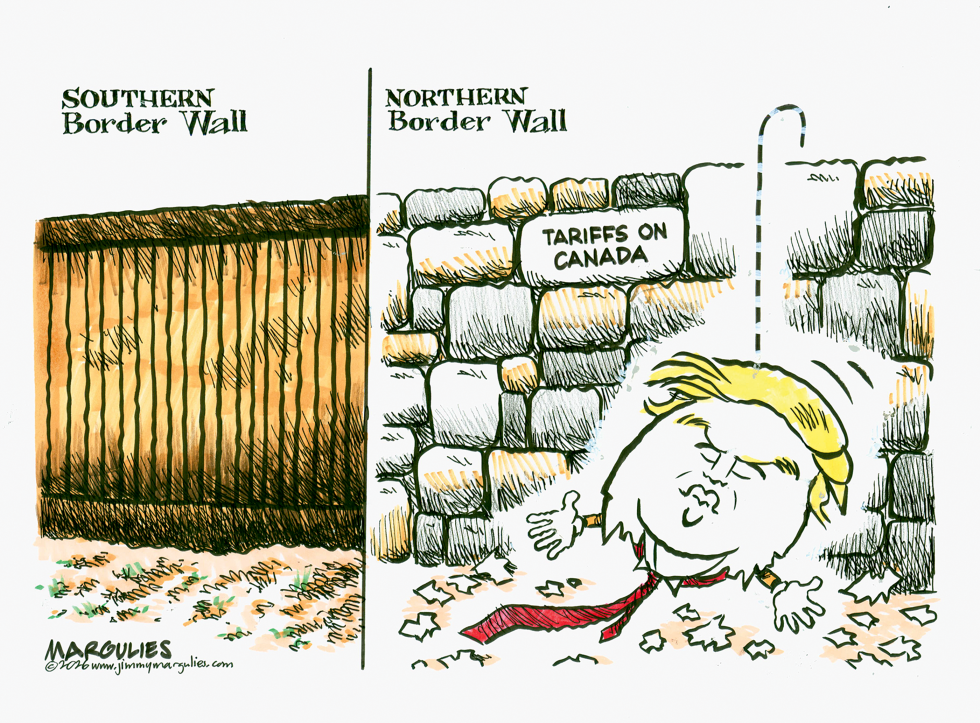
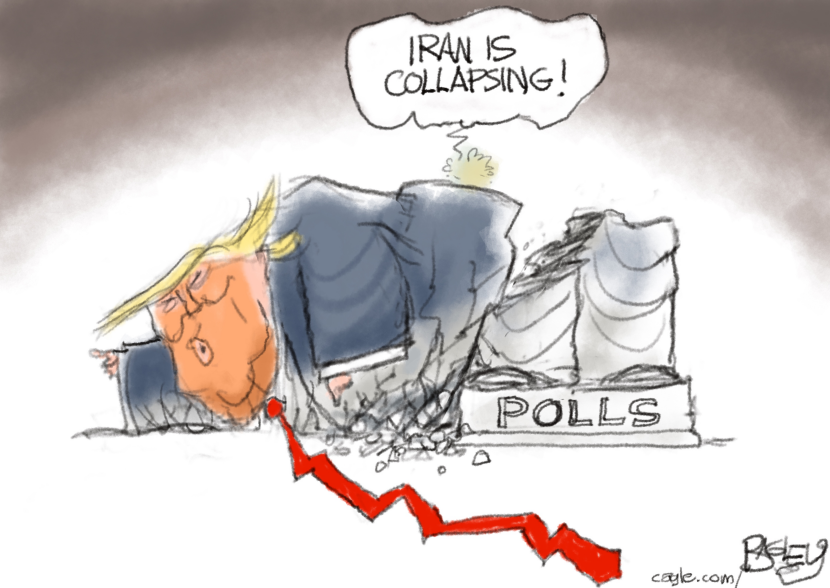
Tariffs targeting Canada have produced immediate political fallout for the administration. The move has drawn attention to trade tensions along the northern border and raised questions about the effectiveness of the policy. The piece portrays the tariffs as directly undermining the president's position.
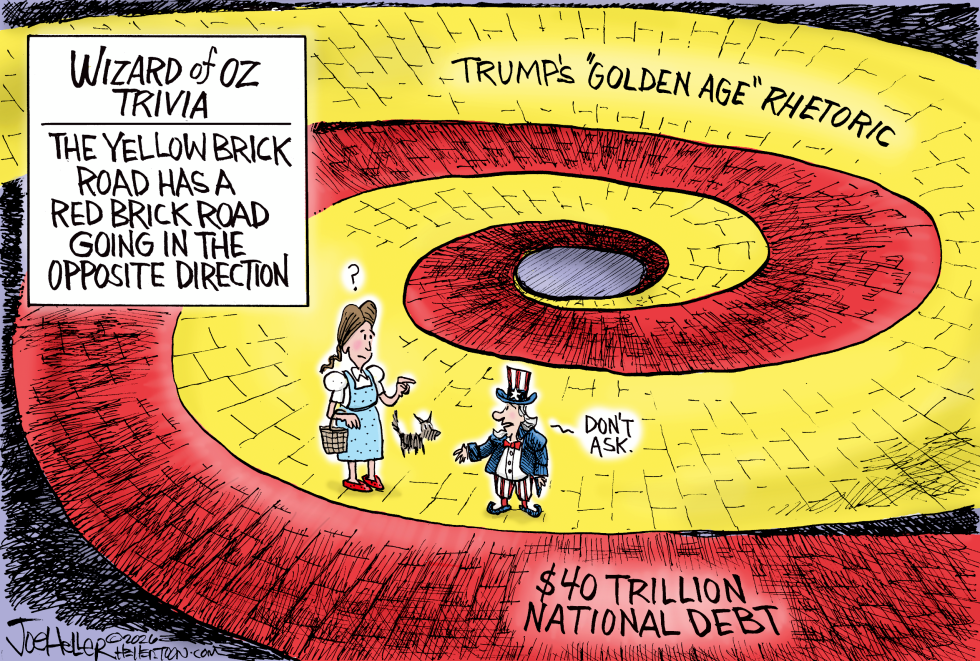
National debt has reached forty trillion dollars amid ongoing debate over fiscal policy. The administration promotes a golden age vision while critics highlight unsustainable borrowing. The piece argues that optimistic rhetoric masks a path leading directly into deeper financial trouble.
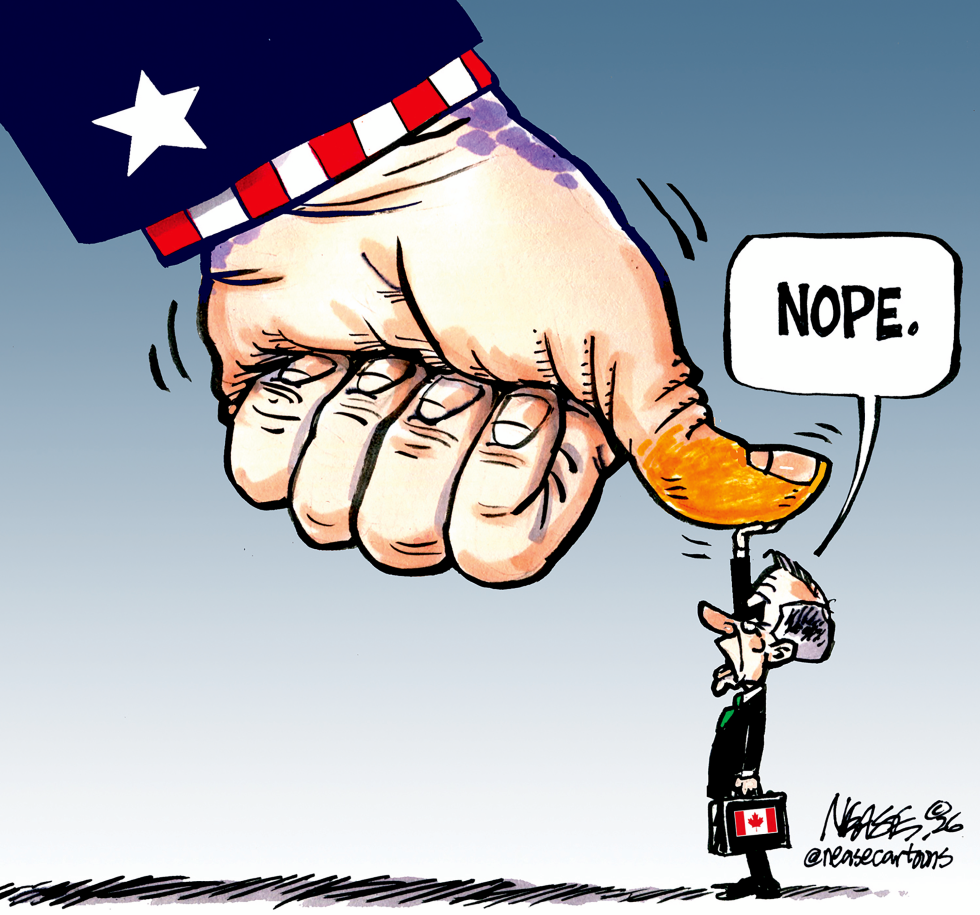
Canada has rejected a US trade offer during bilateral negotiations. The decision highlights ongoing tensions over economic terms between the two neighbors. It matters because trade relations affect supply chains and tariffs across North America. The piece portrays the Canadian stance as a direct refusal to the American proposal.