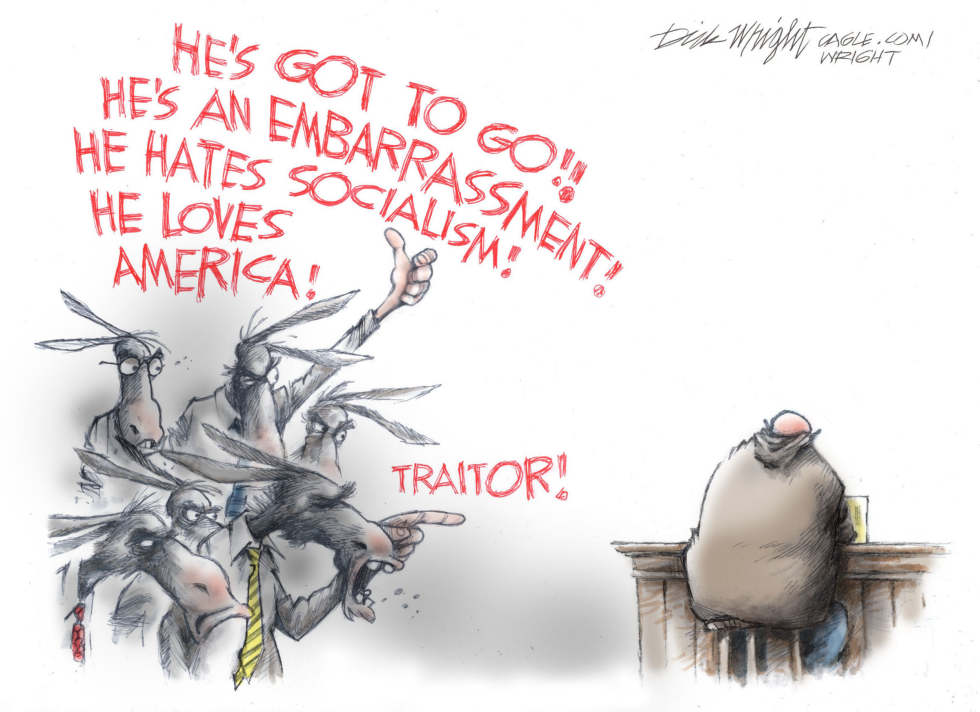
Senator John Fetterman drew sharp criticism from fellow Democrats in September 2026 for publicly rejecting socialism and emphasizing his love of America. The episode highlights deepening tensions within the party over ideological purity tests. The cartoon portrays the attacks as self-destructive party infighting.
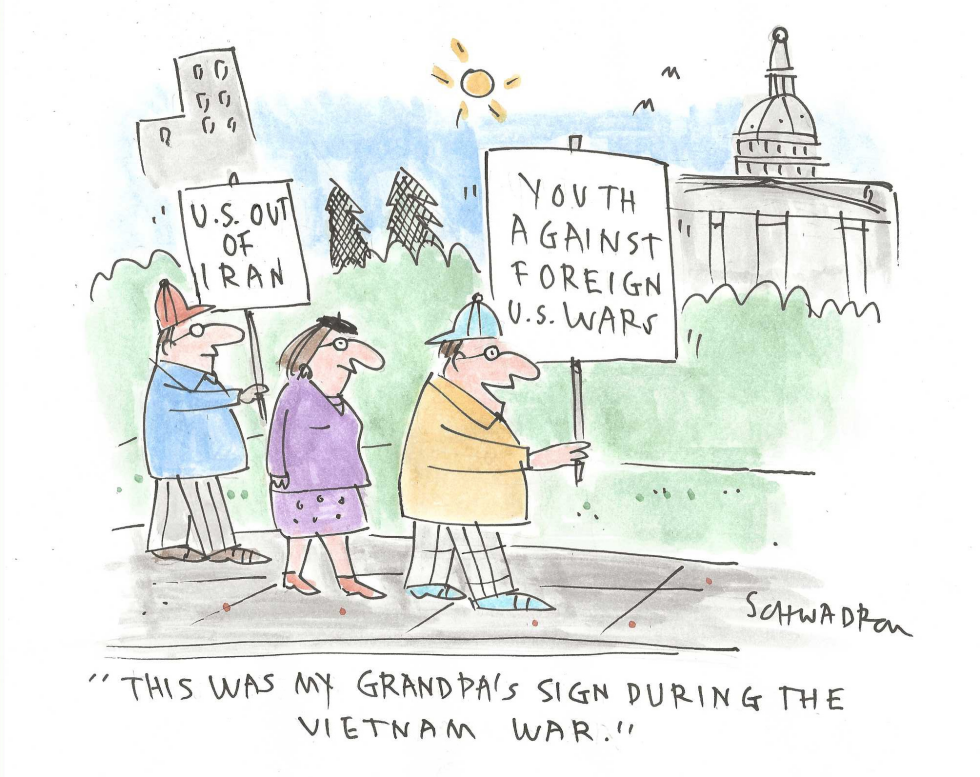
Anti-war demonstrators gather near the Capitol with signs calling for an end to US involvement in Iran and broader foreign conflicts. One protester notes that his sign originated during the Vietnam War, underscoring continuity across generations. The piece highlights persistent public opposition to military engagements abroad and questions the repetition of past policy mistakes.
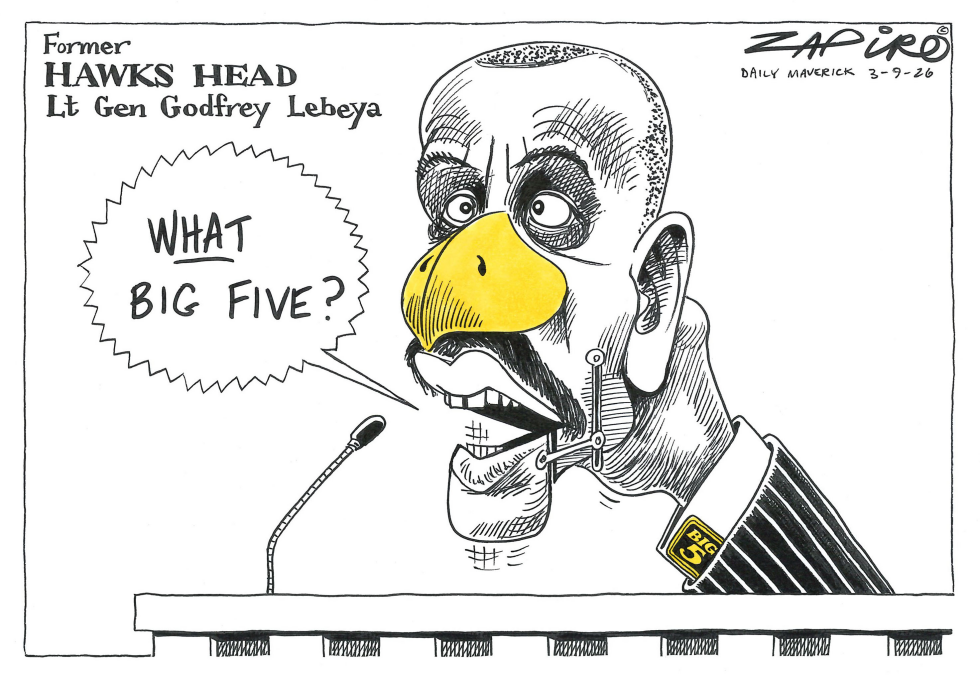
Former Hawks head Lt Gen Godfrey Lebeya publicly questioned the Big Five label applied to him and his unit. The designation refers to the focus on five priority crime areas under South African anti-corruption efforts. The exchange highlights tensions over how the Hawks prioritize cases involving senior officials and organized crime. The cartoon frames Lebeya's denial as an attempt to distance himself from the label's implications for accountability.
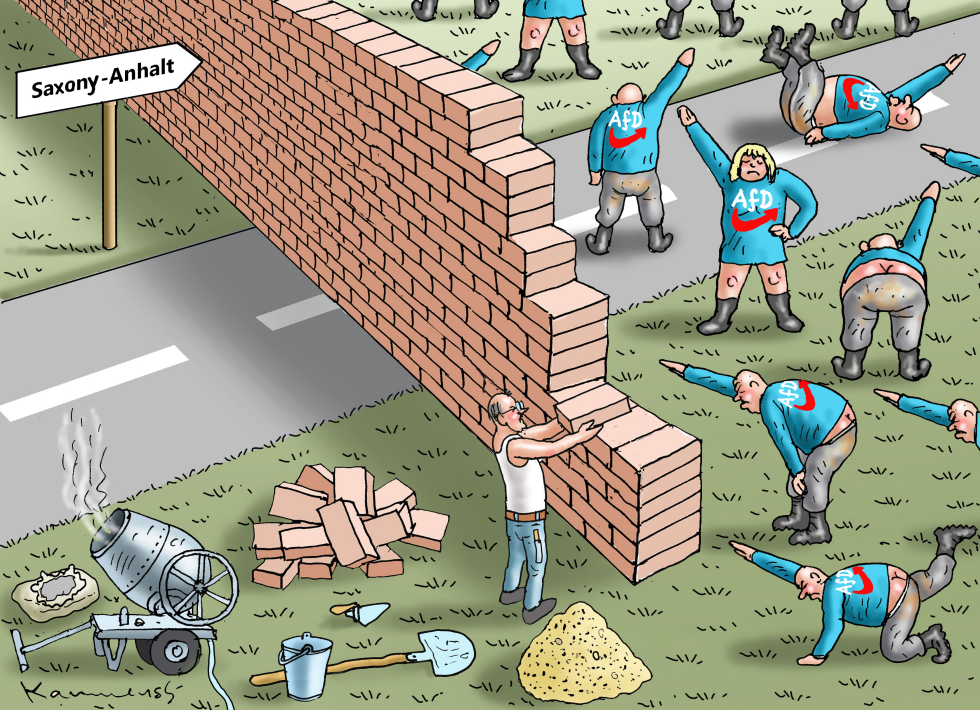
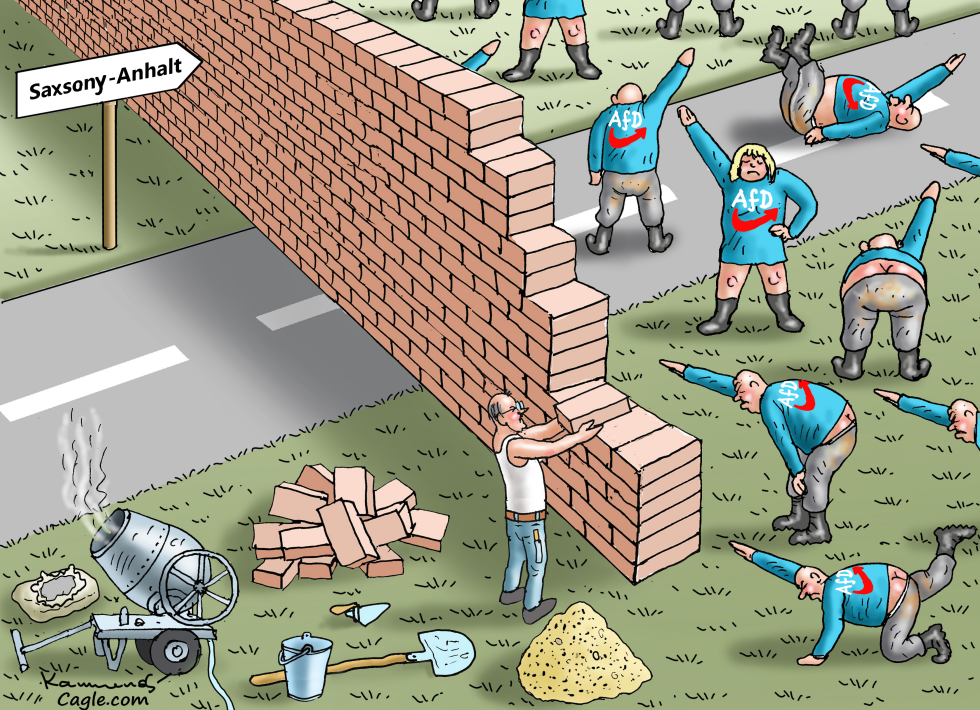
Friedrich Merz has positioned himself as a bulwark against Alternative for Germany advances ahead of state elections in Saxony-Anhalt. The cartoon depicts Merz personally laying bricks for a wall labeled for the eastern state while AfD figures in branded shirts struggle to cross it. The image underscores the CDU leader's strategy of containment rather than engagement with the far-right party. It reflects ongoing debates within German center-right circles about how to address AfD electoral strength without legitimizing its platform. The editorial stance presents the wall-building as a necessary, if blunt, defensive measure.
German opposition leader Friedrich Merz has positioned himself as a bulwark against the Alternative for Germany party ahead of state elections in Saxony-Anhalt. The move comes as AfD polls strongly in eastern regions, prompting mainstream parties to draw sharper lines. Merz's approach emphasizes containment over engagement. The cartoon frames this as literal wall-building, underscoring the defensive posture parties adopt when facing AfD momentum. It highlights the ongoing struggle within German politics to isolate the far-right without ceding ground on immigration and national identity issues that fuel AfD support.
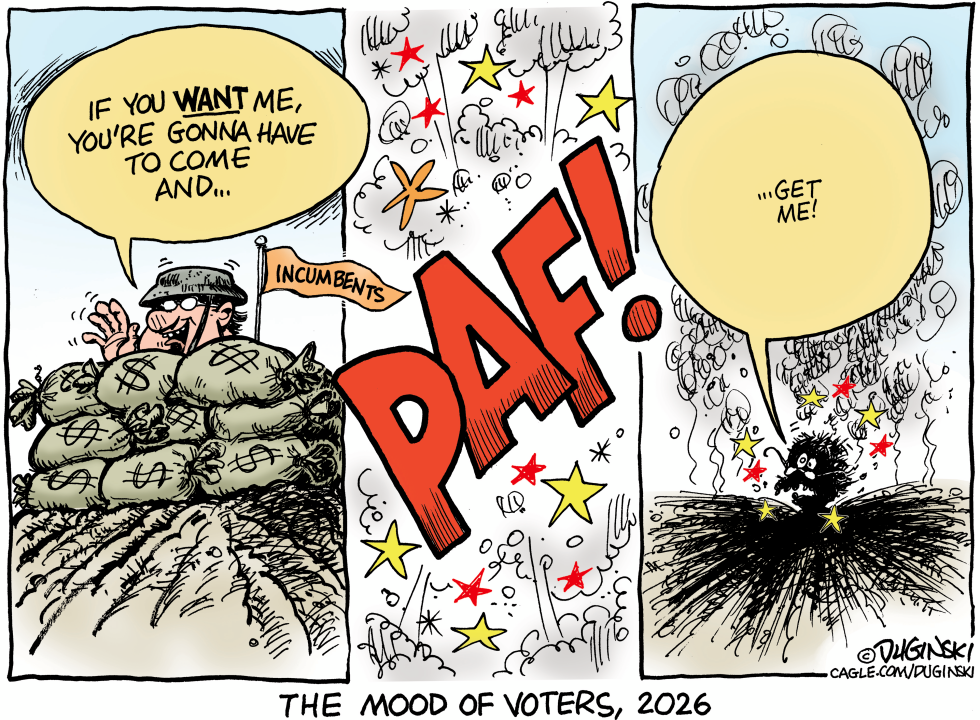
Voters are showing clear signs of turning against sitting officeholders as the 2026 election cycle advances. Incumbents face mounting pressure from constituents frustrated with long-term entrenchment and perceived insulation from accountability. This shift reflects broader discontent with the status quo in Congress and state legislatures. The cartoon argues that the protective barriers incumbents have built around themselves are proving ineffective against rising voter anger.
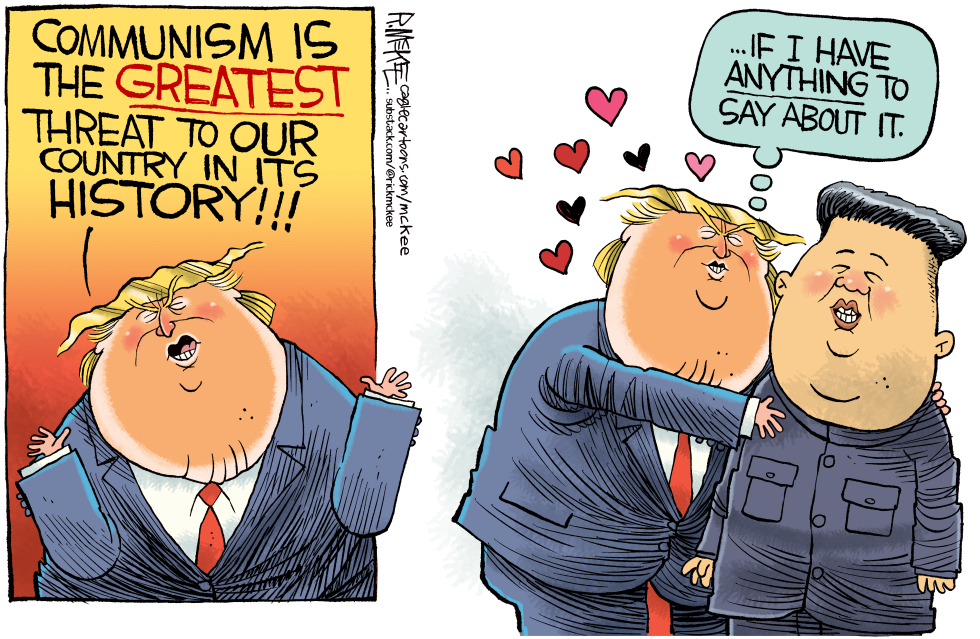
Donald Trump publicly labeled communism the greatest threat to the country before embracing North Korean leader Kim Jong Un. The image captures the shift in tone through contrasting scenes of protest and affection. The editorial position criticizes the inconsistency in the approach to the regime.
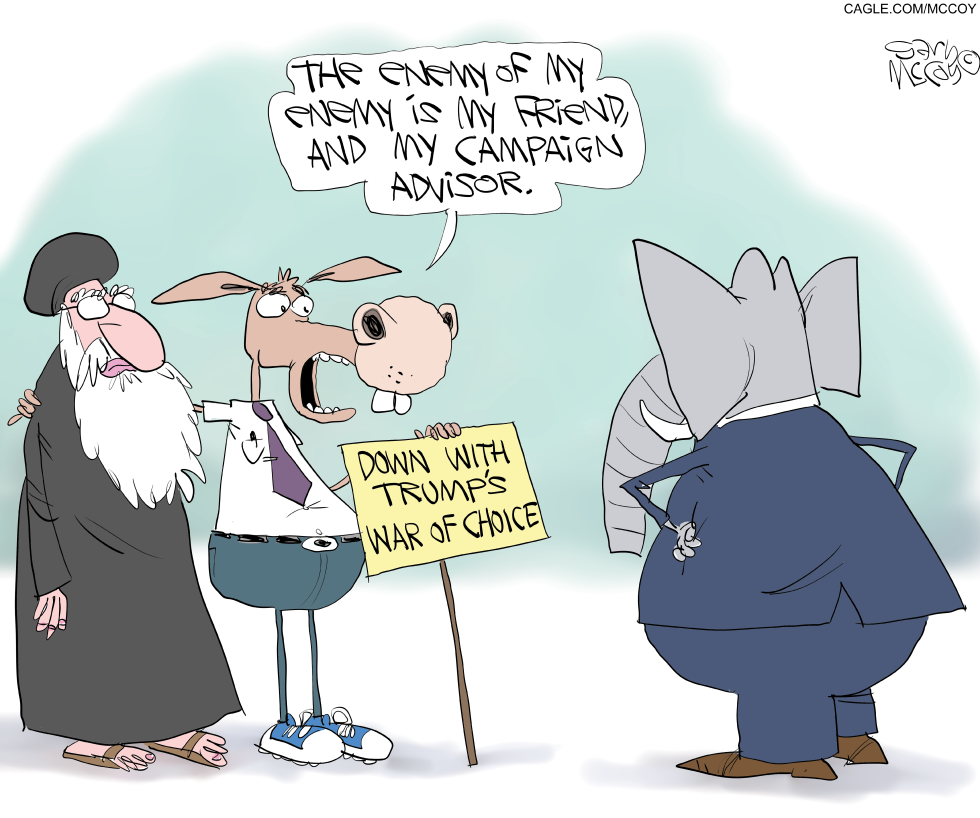
Democrats have signaled opposition to potential Trump administration actions toward Iran, framing them as unnecessary conflict. The alliance draws on shared criticism of U.S. policy in the Middle East. This dynamic highlights partisan divides over foreign engagement and raises questions about domestic political strategy. The piece portrays the partnership as opportunistic and shortsighted.
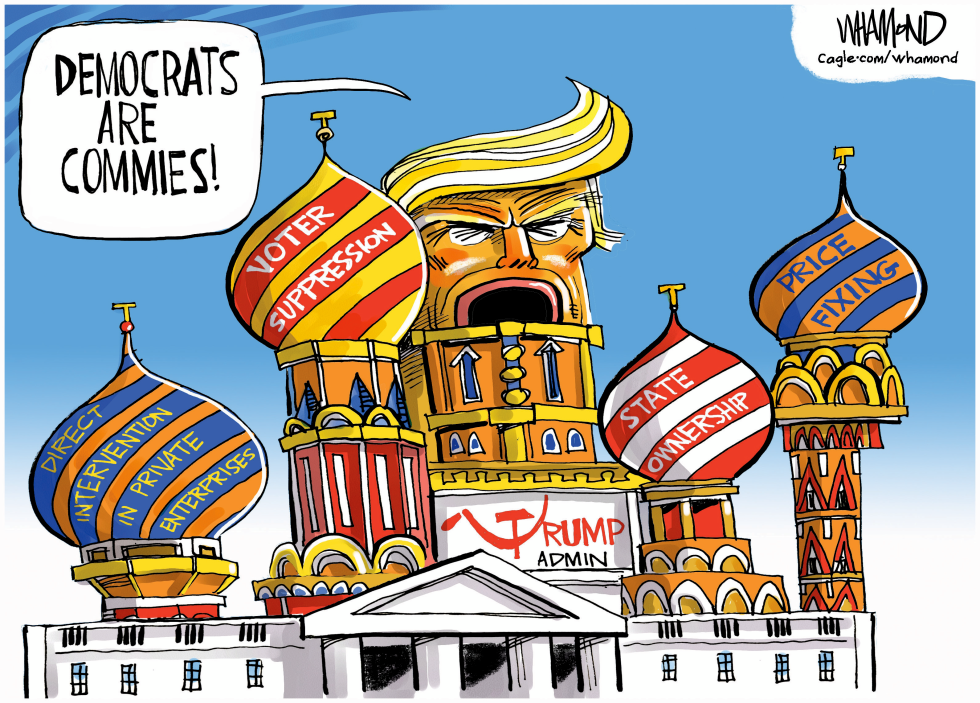
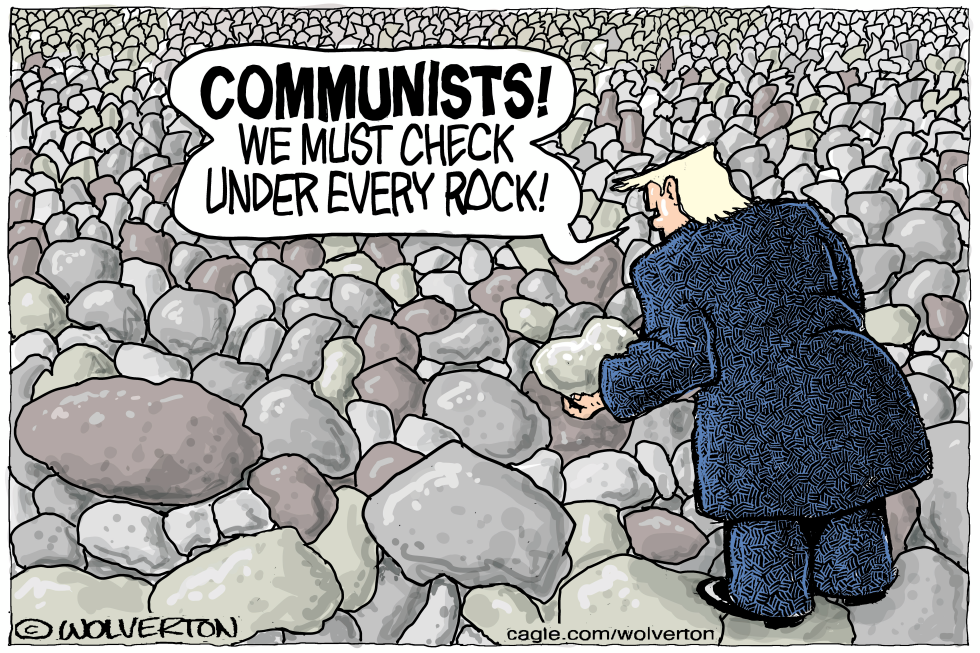
Donald Trump has renewed attacks labeling Democrats as communists amid ongoing debates over election rules and economic interventions. The accusation revives Cold War-era rhetoric in current political discourse. The piece portrays the Trump administration itself as adopting the very state-control measures it condemns.
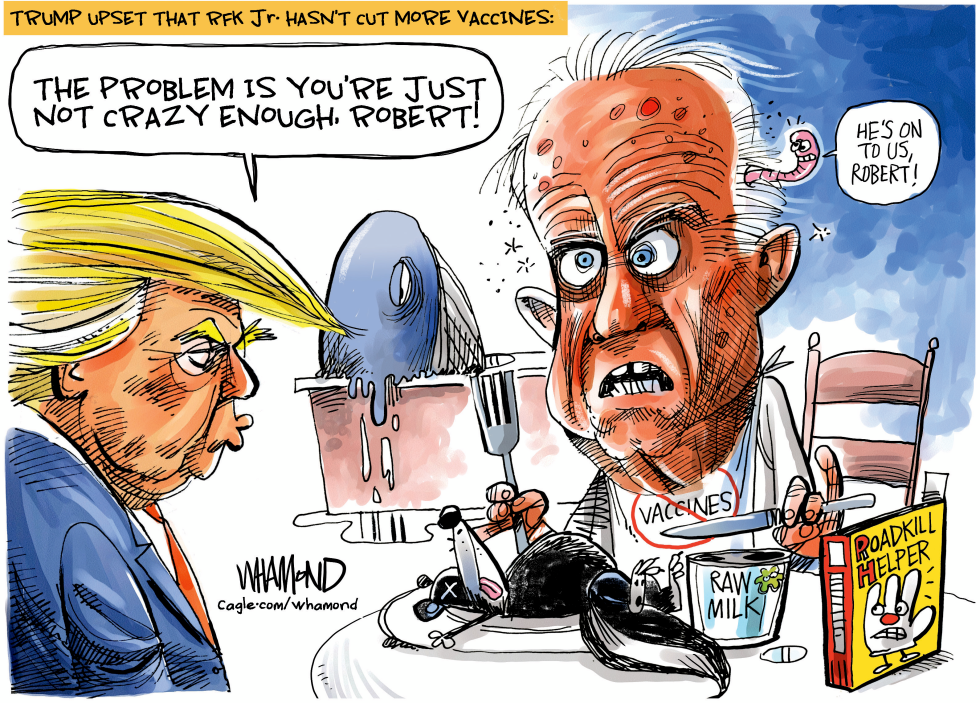
President Trump has expressed frustration with Health Secretary Robert F. Kennedy Jr. over the pace of vaccine policy reductions. The exchange highlights ongoing tensions within the administration regarding public health measures. The piece portrays Trump urging more aggressive action while RFK Jr. appears aligned with unconventional health practices.
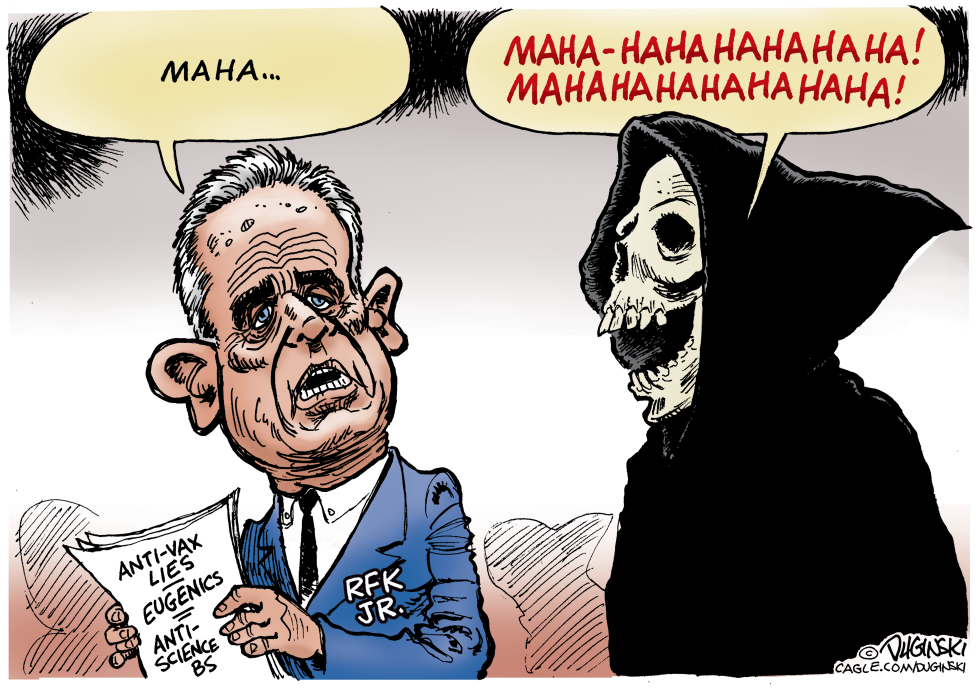
Robert F. Kennedy Jr. continues promoting Make America Healthy Again initiatives tied to his anti-vaccine positions in mid-2026. The approach draws criticism for linking public health measures to eugenics concerns and undermining scientific consensus. The editorial takes the position that such rhetoric risks real harm by eroding trust in established medical guidance.
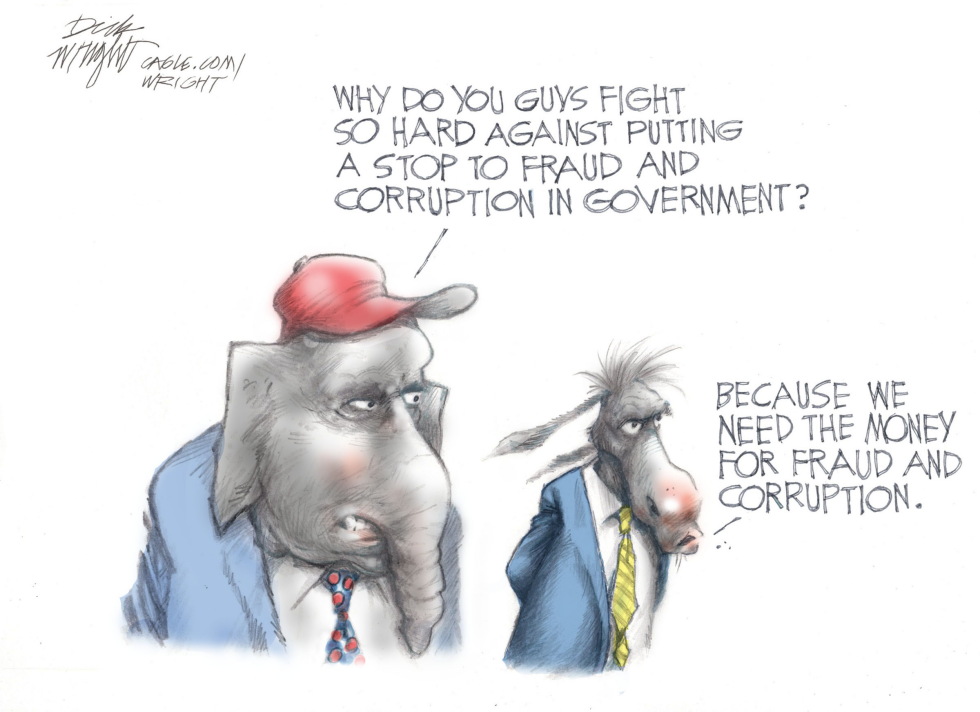
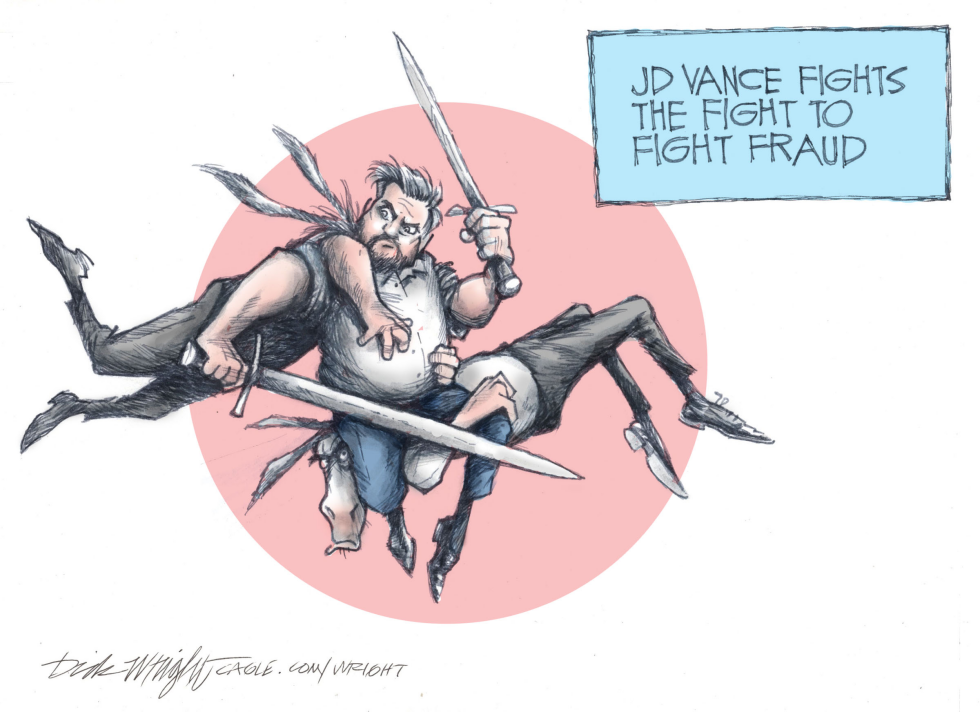
Republicans have pushed measures to curb waste and graft in federal programs amid ongoing budget debates. Democrats have resisted several oversight proposals. The divide highlights partisan differences on accountability. The cartoon portrays the Democratic position as self-serving dependence on corrupt practices rather than genuine policy disagreement.
The July 10 2026 cartoon by Dick Wright shows JD Vance in mid-leap with two swords drawn against a prone figure topped by a donkey head. A blue text box reads JD VANCE FIGHTS THE FIGHT TO FIGHT FRAUD. The scene uses a red circle backdrop and captures the vice presidential figure in exaggerated combat stance amid torn clothing and motion lines.
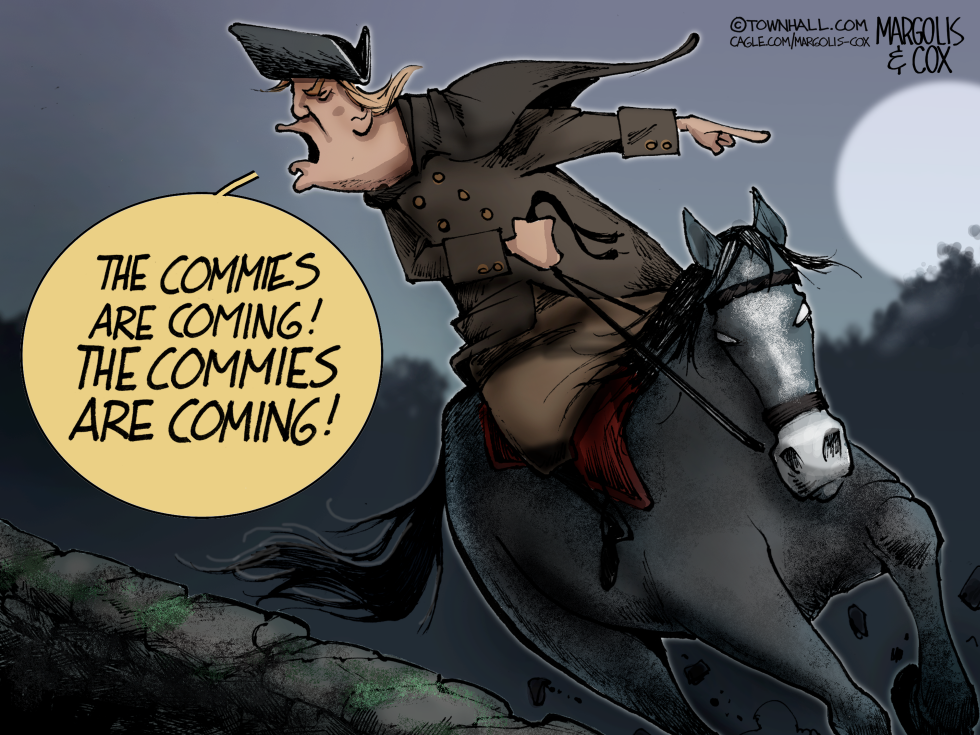
A rider on a dark horse gallops across rocky ground at night under a full moon. The figure, with blonde hair and dark coat, leans forward and points ahead while shouting a repeated warning about communists arriving. The scene draws on a historical ride motif updated to current concerns about communist influence. Publication occurred on July 5, 2026, amid ongoing political debates over foreign policy threats.