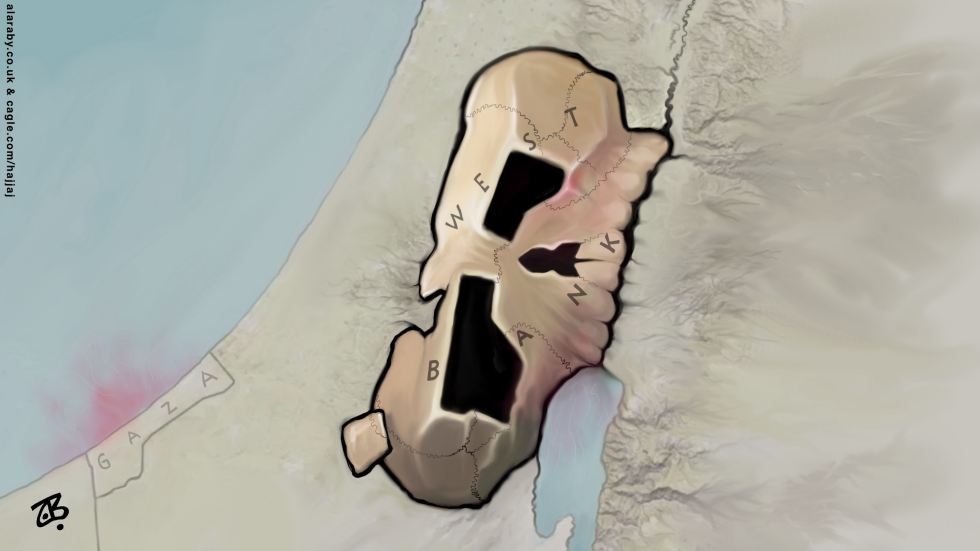
A map of the West Bank is depicted in the shape of a skull with black voids for eyes and mouth. The image responds to persistent Israeli-Palestinian tensions over the territory. The editorial position frames the West Bank as a site of death and destruction under current control.
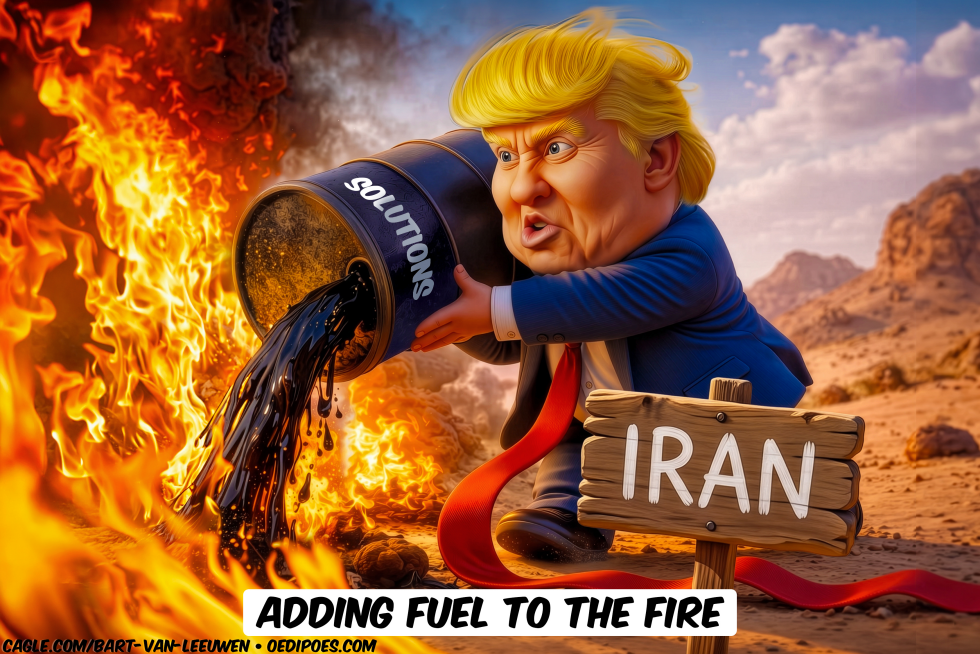
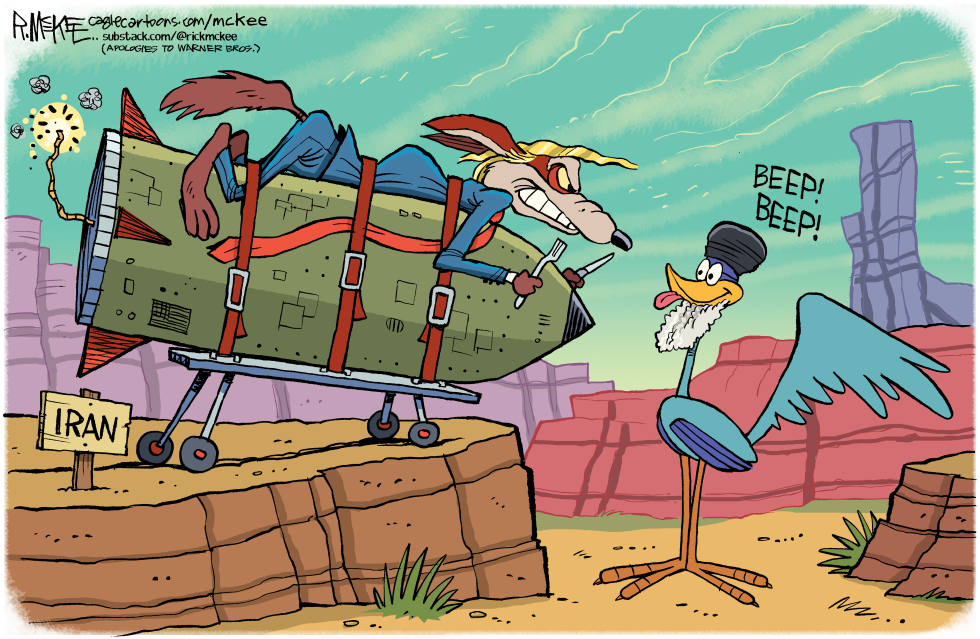
Donald Trump has renewed pressure on Iran through statements and policy signals in recent weeks. The moves come amid ongoing nuclear concerns and regional instability. The piece argues that such aggressive posturing risks backfiring in ways similar to past miscalculations.
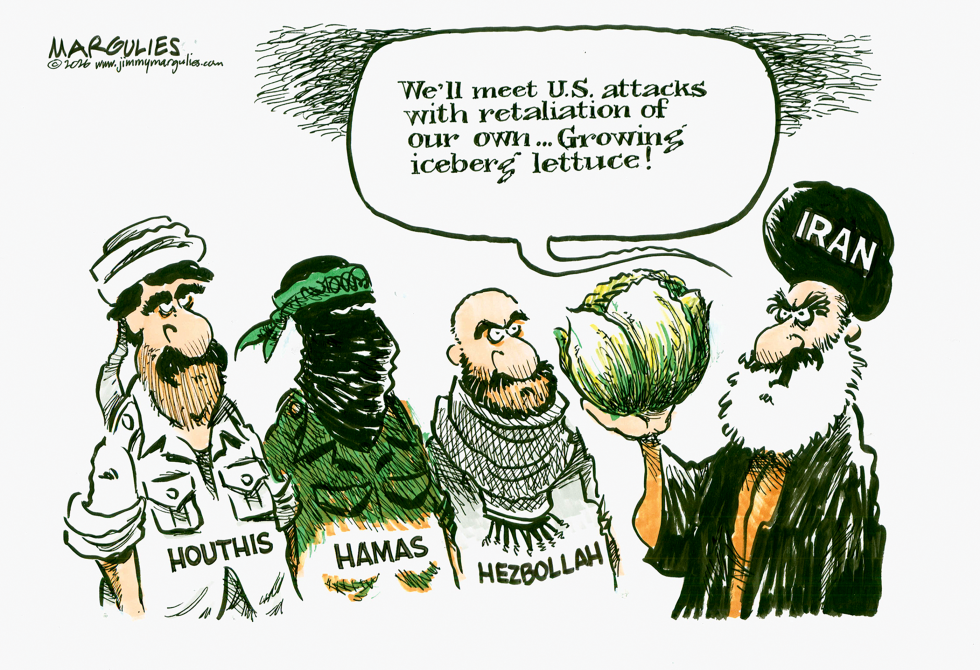
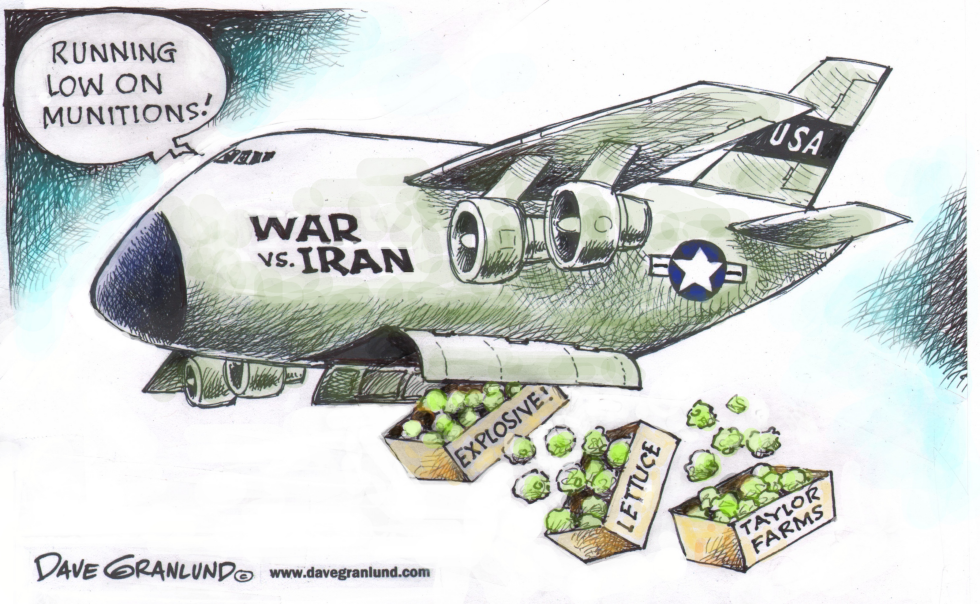
Iran-backed groups including the Houthis, Hamas and Hezbollah face continued U.S. military pressure in the Middle East. Their leadership responds by announcing plans to grow iceberg lettuce as retaliation. The development underscores the limited conventional options available to these proxies while highlighting broader tensions between Iran and the United States. The piece presents the announcement as an admission of weakness rather than a credible threat.
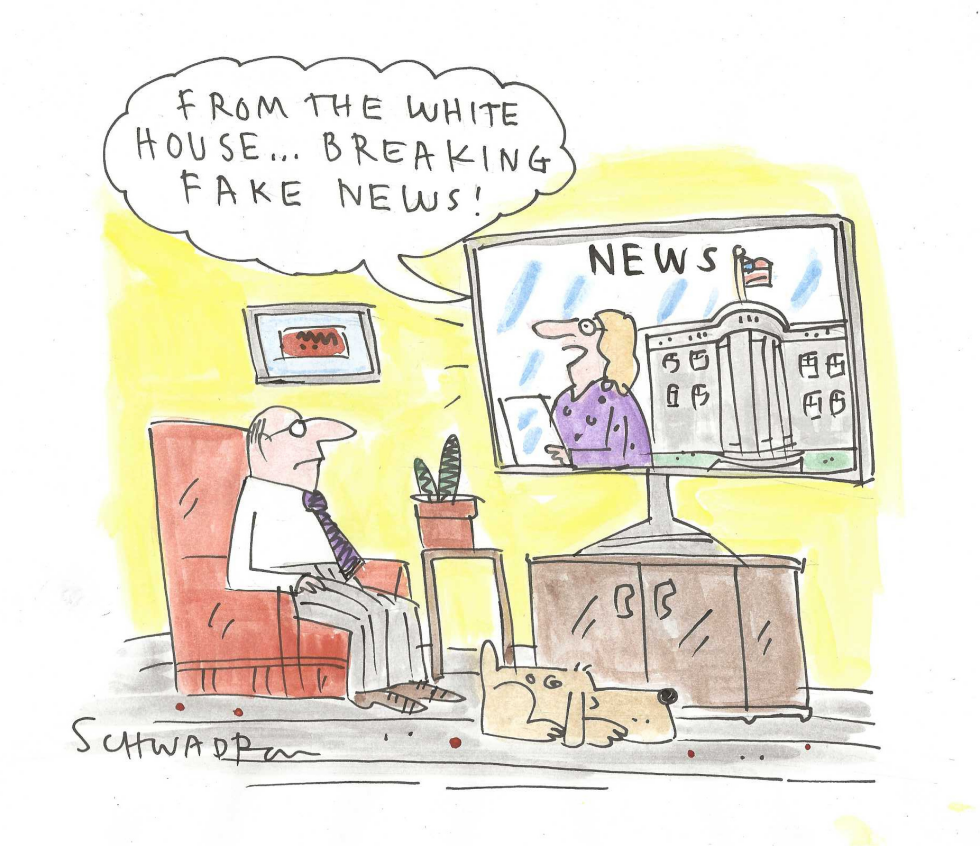
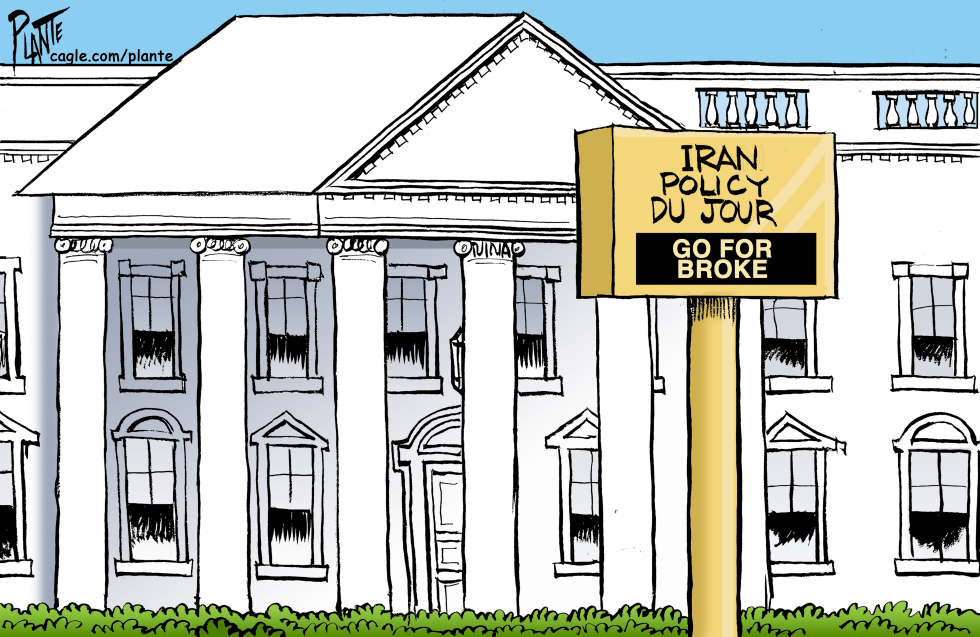
The White House has signaled a more aggressive posture toward Iran through public messaging that emphasizes risk-taking. The move comes amid persistent tensions over nuclear issues and regional influence. The editorial takes the position that such an approach lacks consistency and invites unnecessary escalation.
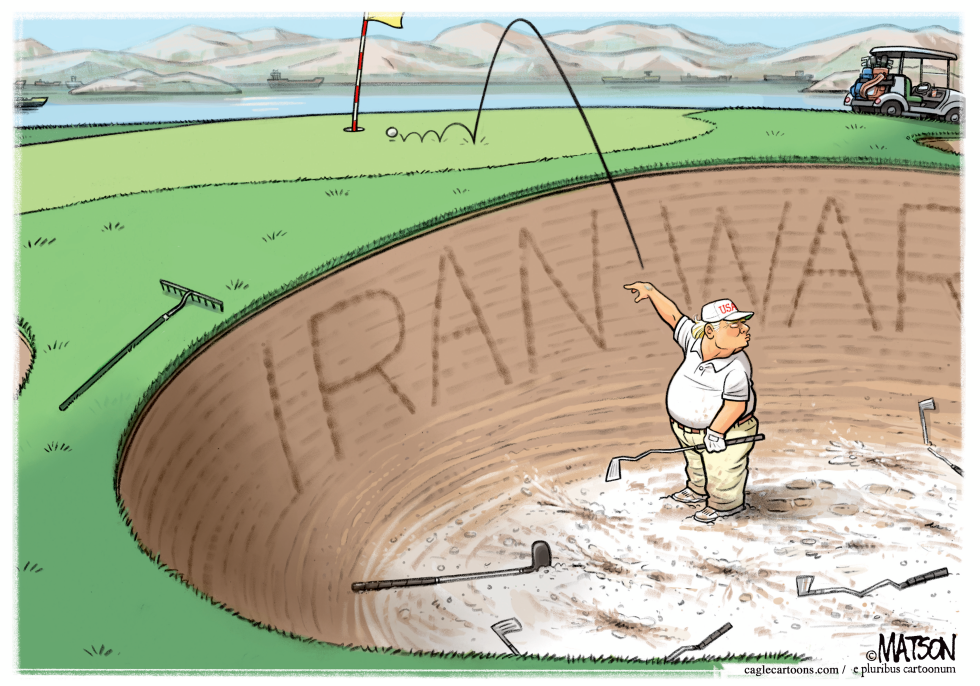
Tensions in the Strait of Hormuz have escalated with increased naval traffic and warnings of potential conflict involving Iran. President Trump, depicted golfing in a sand trap labeled Iran War, faces questions about his administration's handling of the crisis. The situation matters because any disruption to oil shipping lanes could spike global energy prices and draw the United States deeper into regional hostilities. The piece portrays the president as treating a serious foreign policy challenge like a casual round of golf, suggesting misplaced priorities during a period of heightened risk.
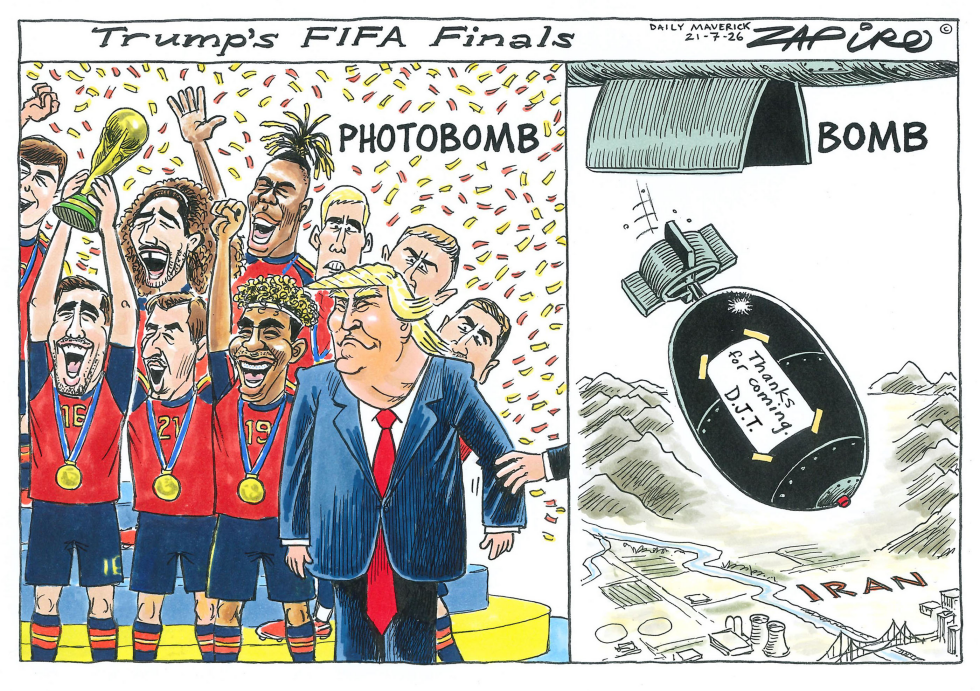
Donald Trump appears in a split-panel scene juxtaposing a soccer victory celebration against a missile strike on Iran. The image responds to ongoing tensions between the United States and Iran during the summer of 2026, where military posturing and personal political theater intersect. The editorial position frames the juxtaposition as evidence of reckless self-promotion overriding substantive foreign policy decisions.
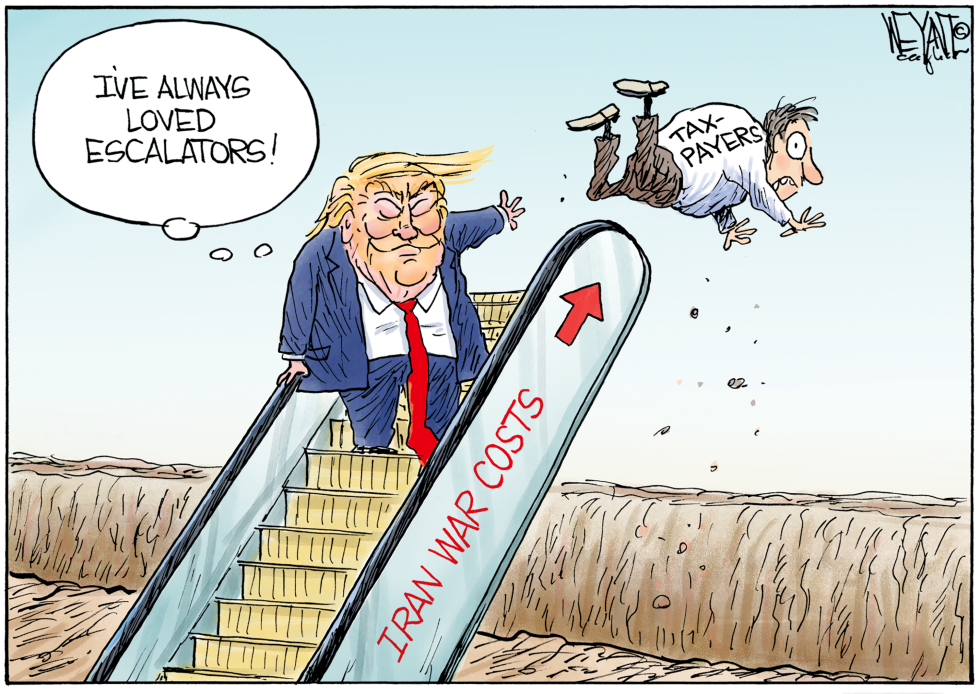
President Trump has indicated steps toward heightened U.S. military involvement with Iran, prompting fresh debate over the financial toll on American taxpayers. The move comes amid ongoing regional instability in the Middle East and questions about defense budget priorities. The piece argues that such policies place undue strain on domestic resources without sufficient justification.
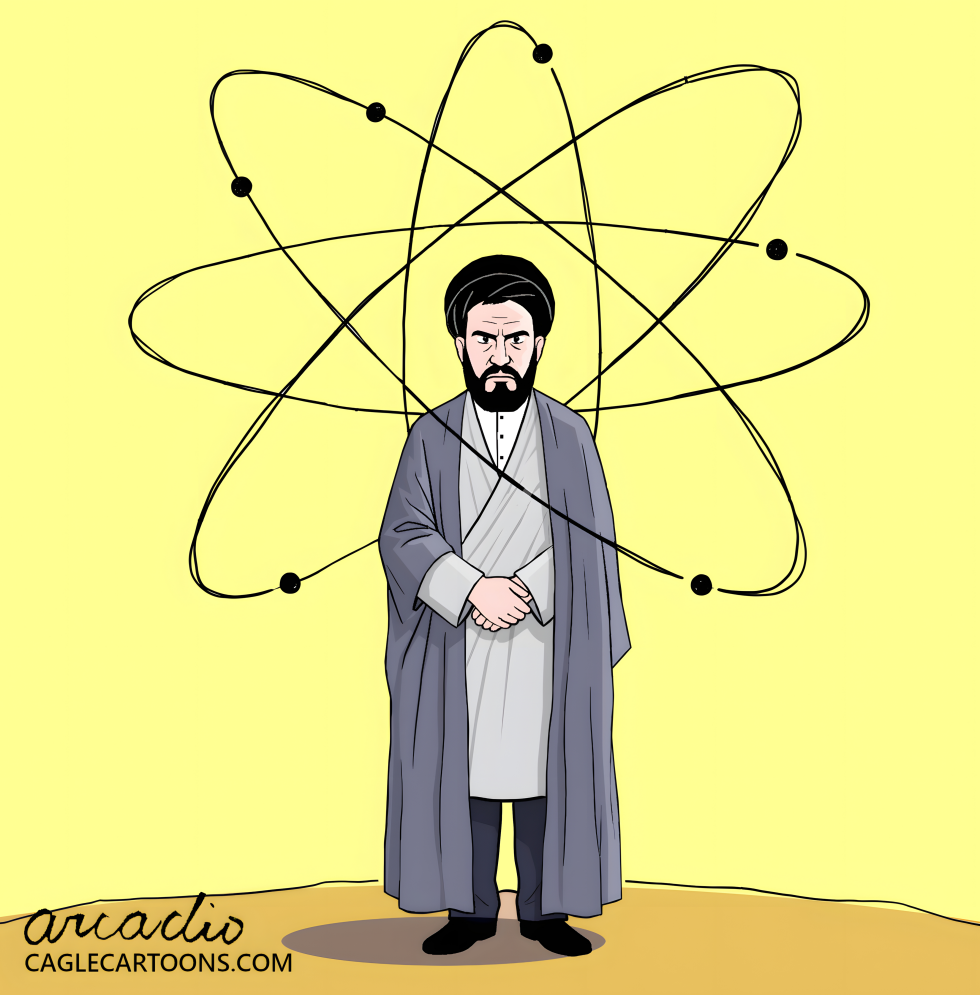
The cartoon shows Iran's supreme leader positioned in front of a large atom symbol. It responds to persistent international concerns over Tehran's nuclear activities as of mid-2026. The visual places the figure directly under the orbiting electrons, underscoring the central role of the nuclear issue in global discussions about the country.
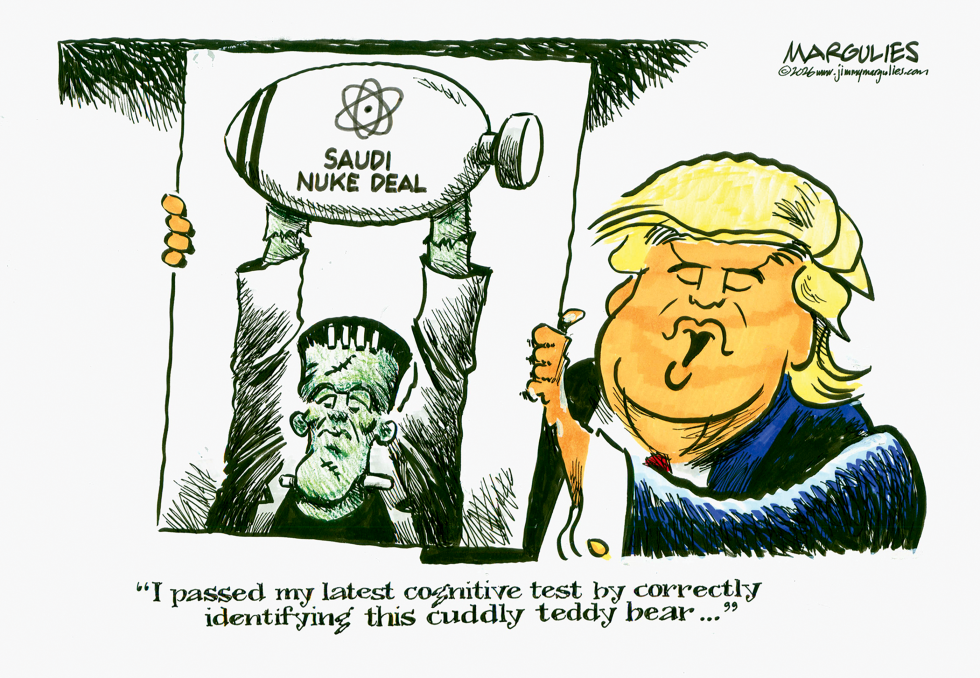
Donald Trump referenced a cognitive test while describing a Saudi nuclear deal in personal terms. The episode occurs against ongoing debates over arms control and Middle East policy. The piece portrays the deal as a dangerous misjudgment.
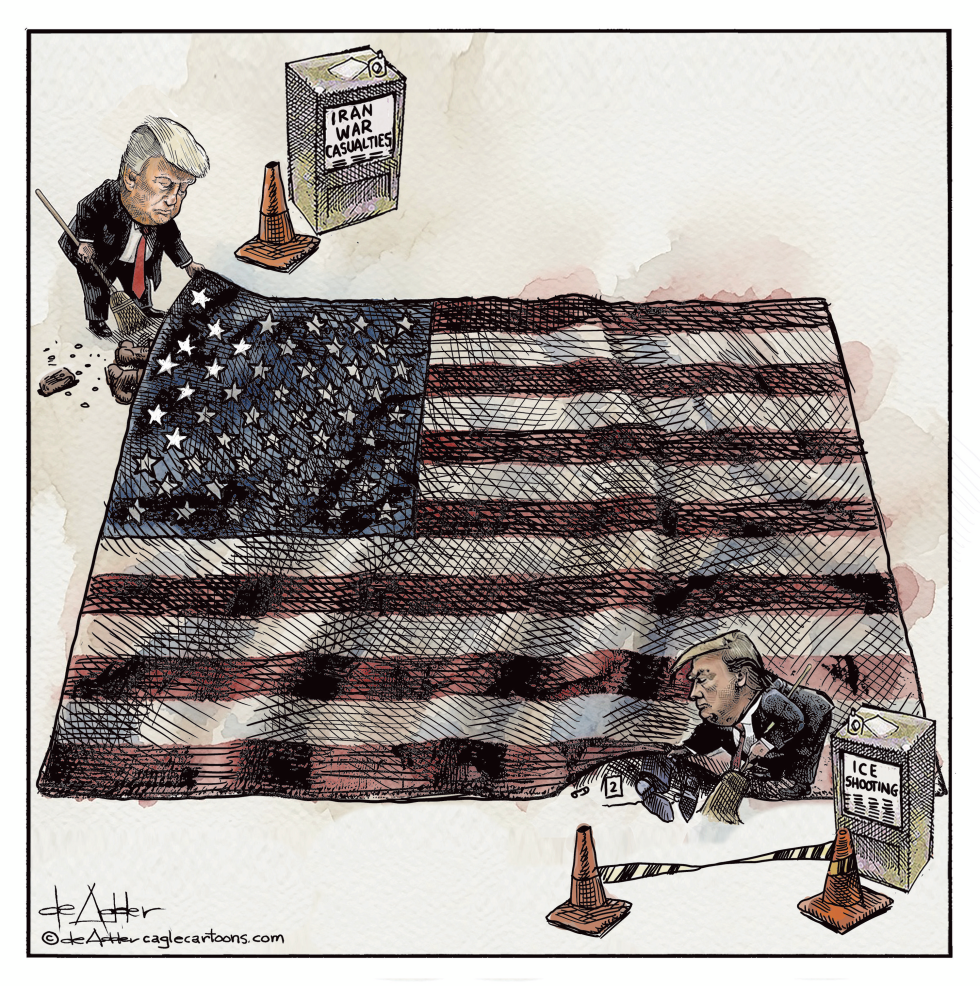
Donald Trump faces scrutiny over reported casualties from potential Iran conflict and an ICE-related shooting incident in mid-2026. The administration's handling of these events draws criticism for downplaying accountability. The piece argues that attempts to minimize these issues undermine public trust in governance.
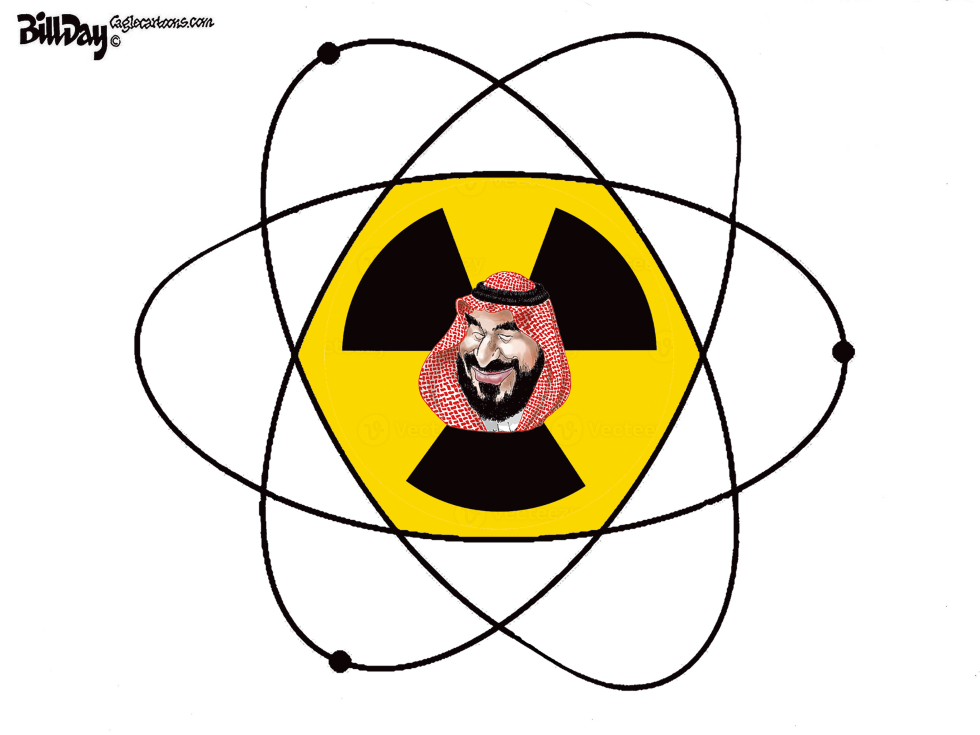
Concerns over nuclear development by Middle Eastern states have intensified amid ongoing diplomatic tensions and enrichment activities. The editorial argues that such programs pose direct threats to global stability and demand stronger international oversight.