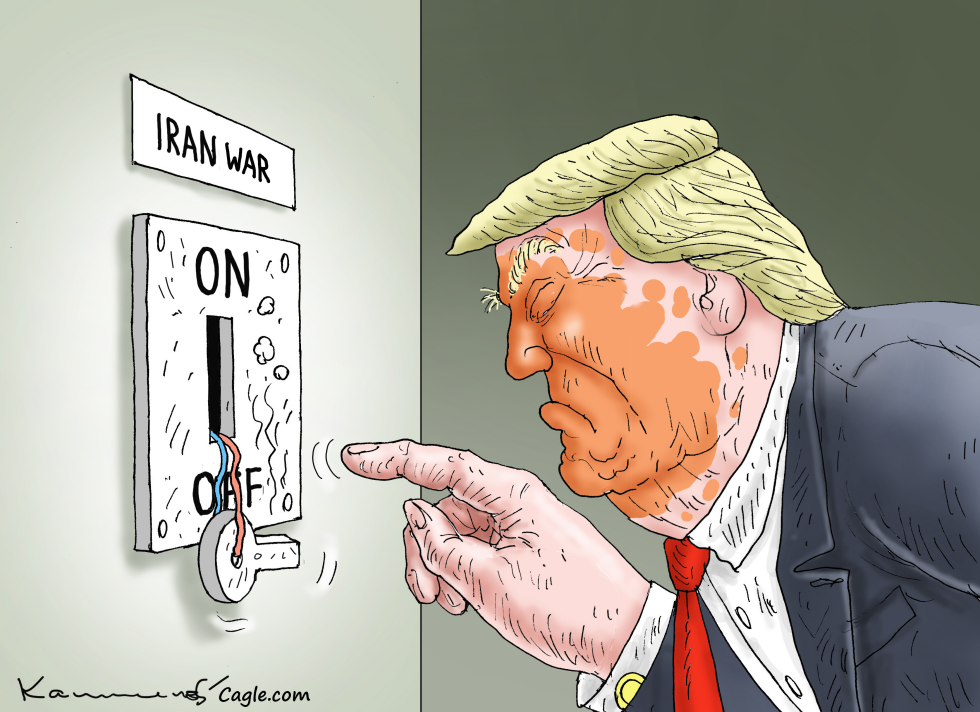
Donald Trump has signaled readiness to initiate military action against Iran as tensions in the Middle East persist. The decision carries significant implications for regional stability and U.S. foreign policy commitments. The piece portrays this choice as a reckless and avoidable step toward unnecessary conflict.
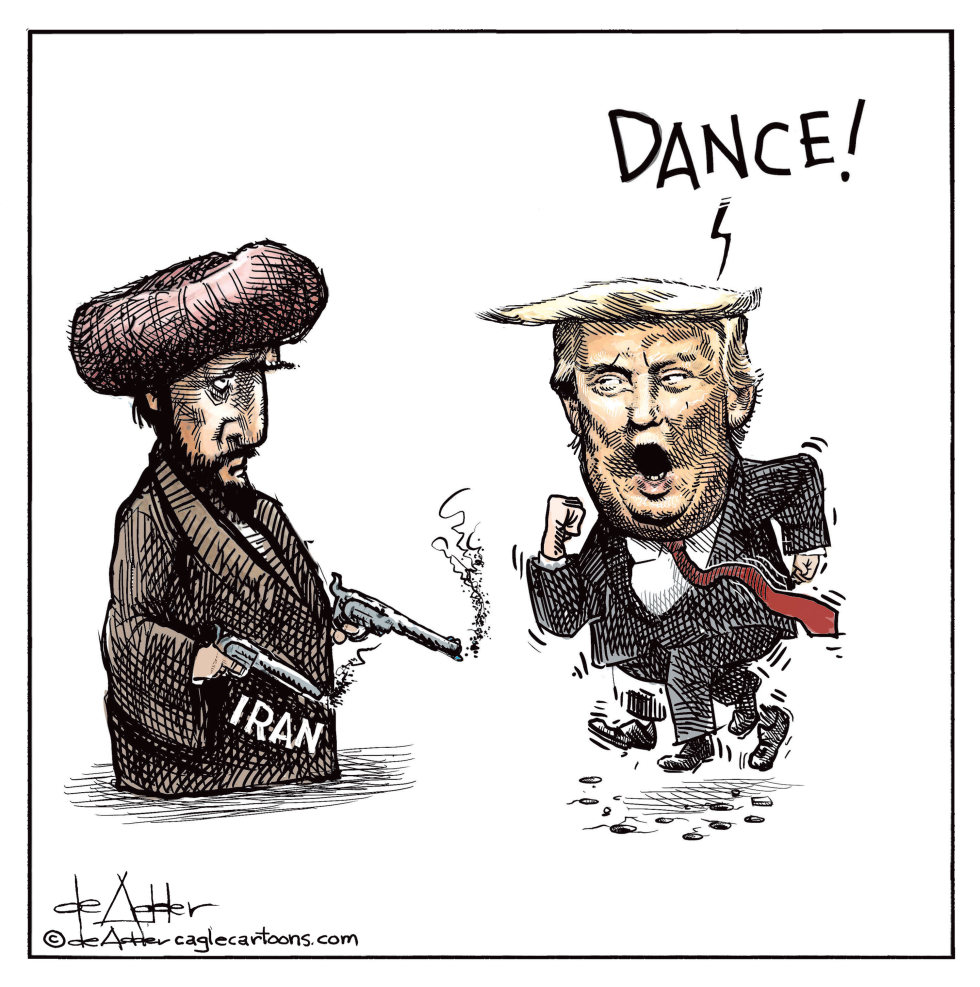
The image presents a man marked Iran holding two pistols with one discharging smoke toward the feet of a dancing Donald Trump. Trump appears with mouth open and one fist raised under the word Dance. The scene draws from longstanding tensions between the United States and Iran as of late July 2026. No specific new event within thirty days anchors the work so the visual addresses the persistent dynamic of pressure and response between the two sides. The composition places the Iran figure on the left in traditional headwear and the Trump figure on the right in motion.
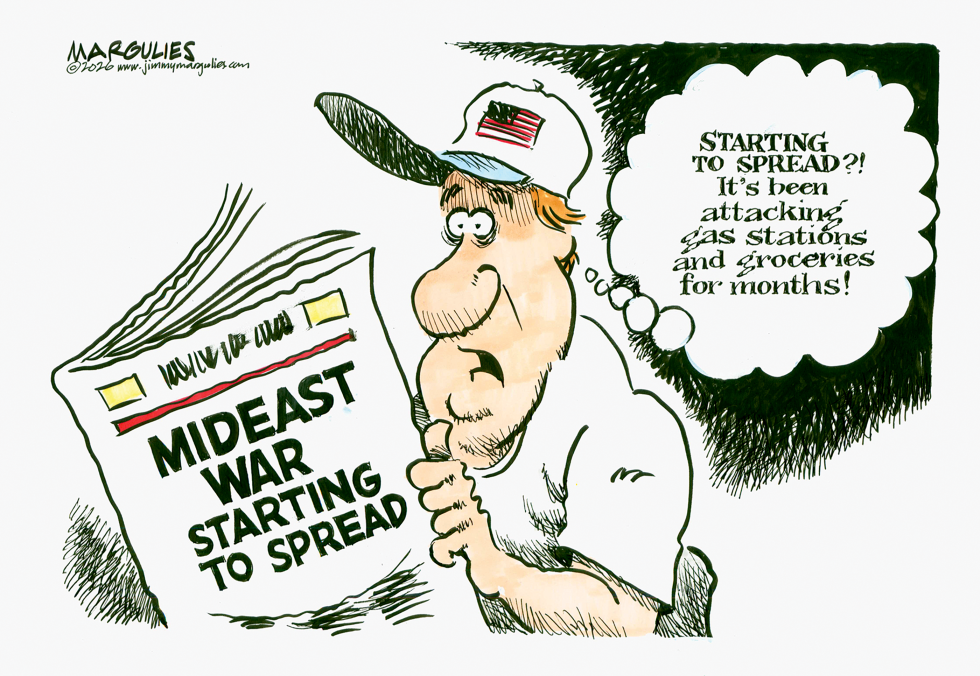
A newspaper headline declares the Mideast war starting to spread, prompting public reaction over its effects on daily costs. The piece highlights how energy and food prices have already risen due to ongoing regional conflict. It takes the position that the economic consequences for Americans have been evident long before any formal expansion of the fighting.
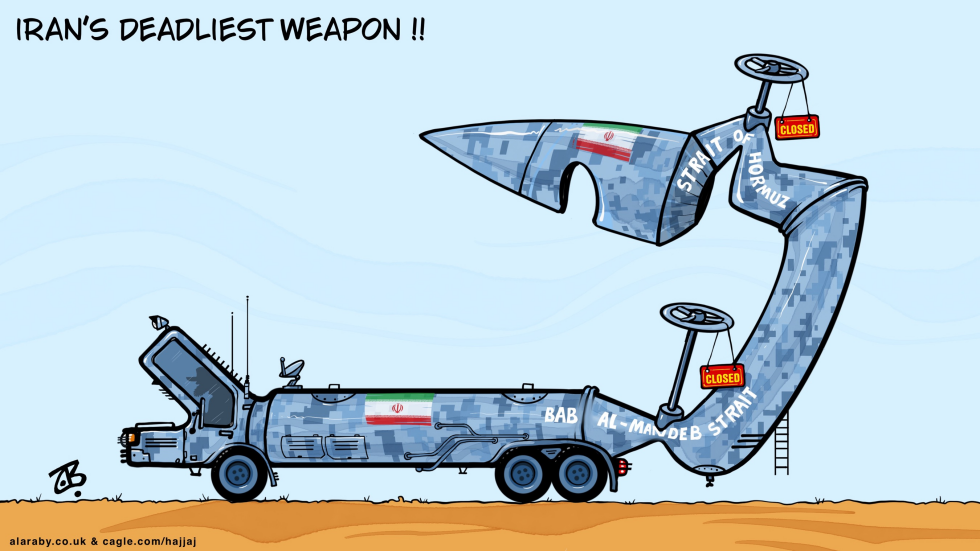
A new cartoon by Emad Hajjaj illustrates Iran's control over the Strait of Hormuz and Bab al-Mandeb Strait as its most potent weapon. The image renders a large camouflaged missile launcher bearing Iranian flags and marked with the two straits, each valve labeled closed. The work responds to ongoing concerns about potential disruptions to global oil shipments through these critical waterways in the Middle East. It emphasizes how Tehran could leverage geographic position to pressure adversaries without direct military engagement. The visual underscores the strategic importance of these passages amid heightened regional tensions.
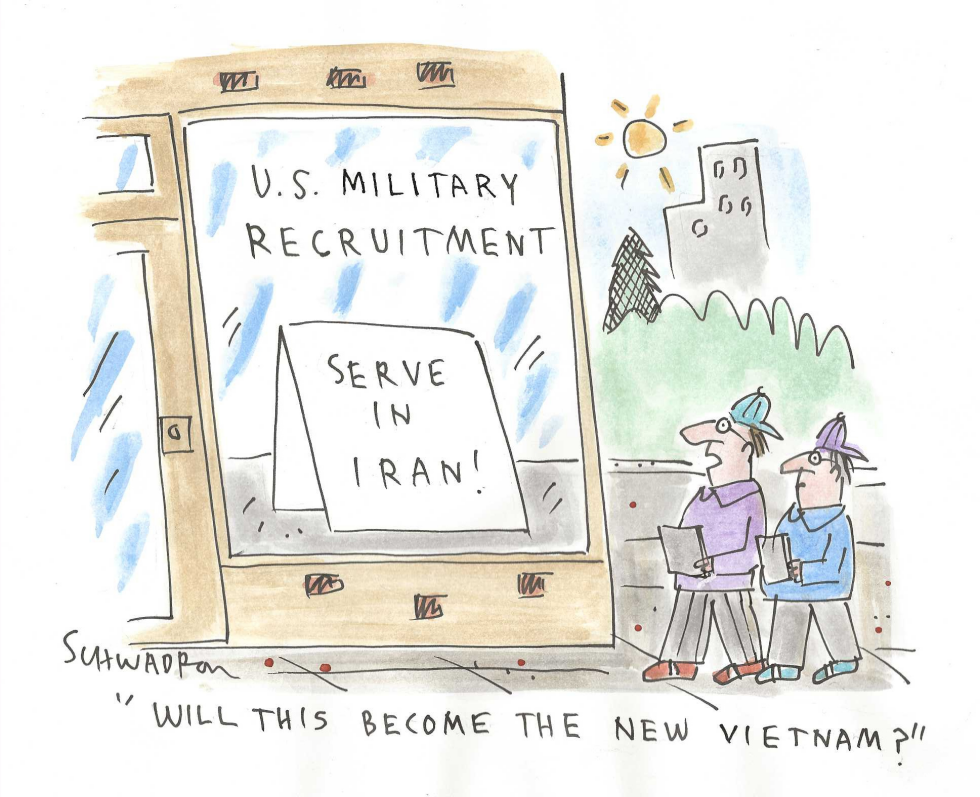
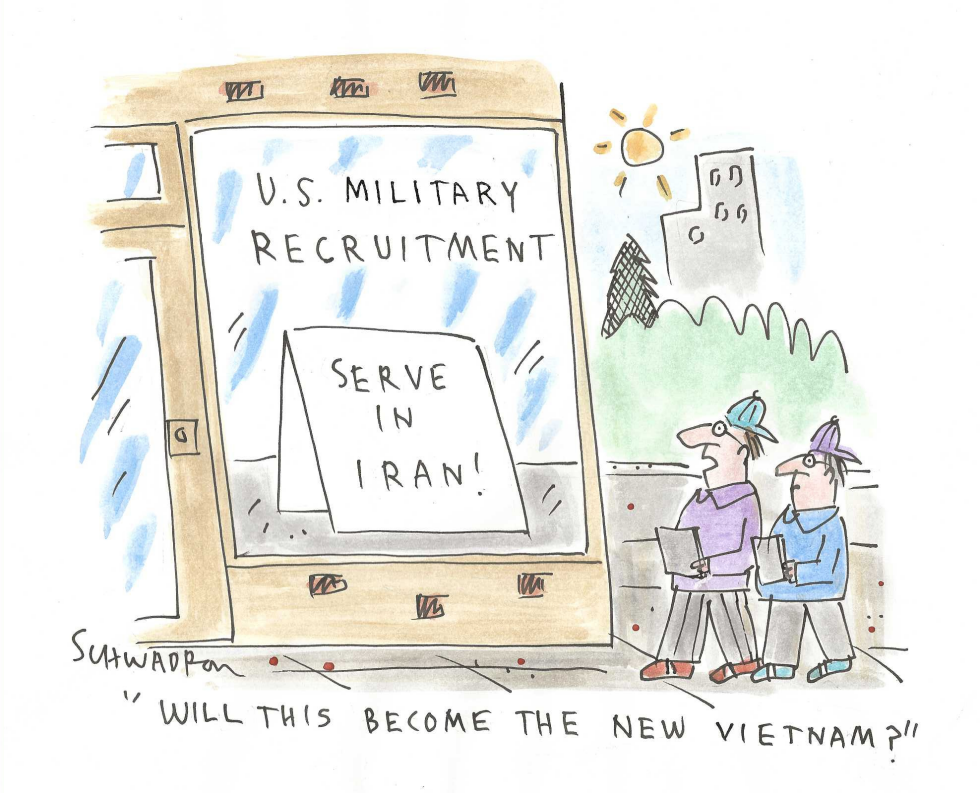
U.S. military recruitment efforts have begun highlighting opportunities to serve in Iran, prompting public questions about potential escalation. The move comes amid ongoing regional tensions and draws direct comparisons to the Vietnam War era. Observers worry the campaign signals a shift toward deeper U.S. military commitments overseas. The editorial takes the position that such recruitment tactics risk repeating past mistakes by underestimating public resistance to prolonged conflicts.
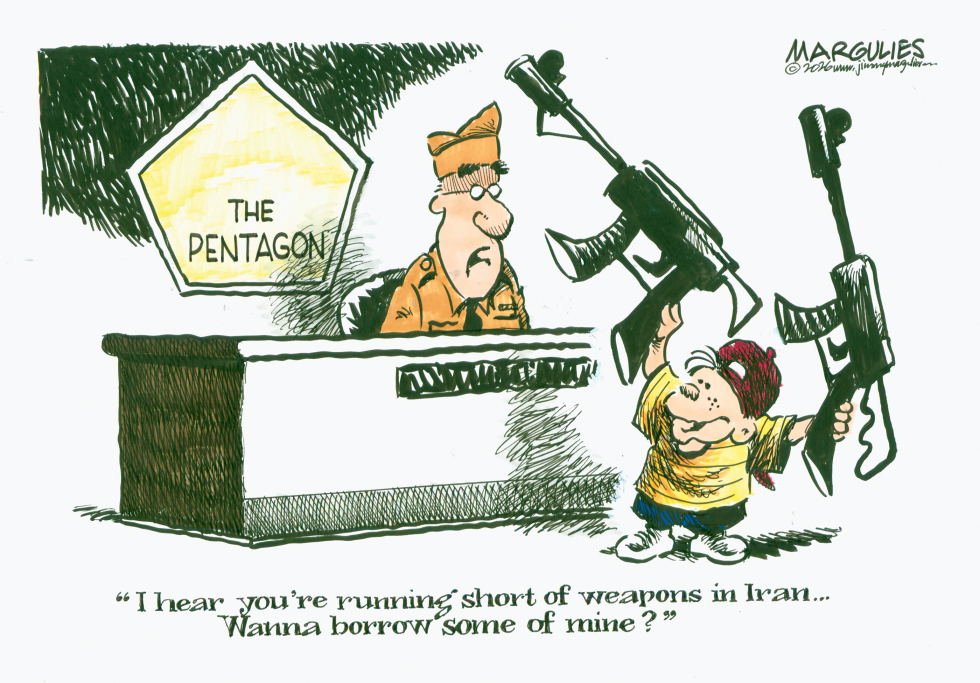
A Pentagon officer receives an unsolicited offer of rifles from a child citing shortages in Iran. The exchange underscores ongoing U.S. concerns over arms flows and regional stability in the Middle East. No specific recent policy shift or confirmed shortage has been verified in the days leading to publication. The piece frames the Pentagon as open to unconventional sources for military support. It critiques reliance on external or irregular suppliers in foreign policy decisions.
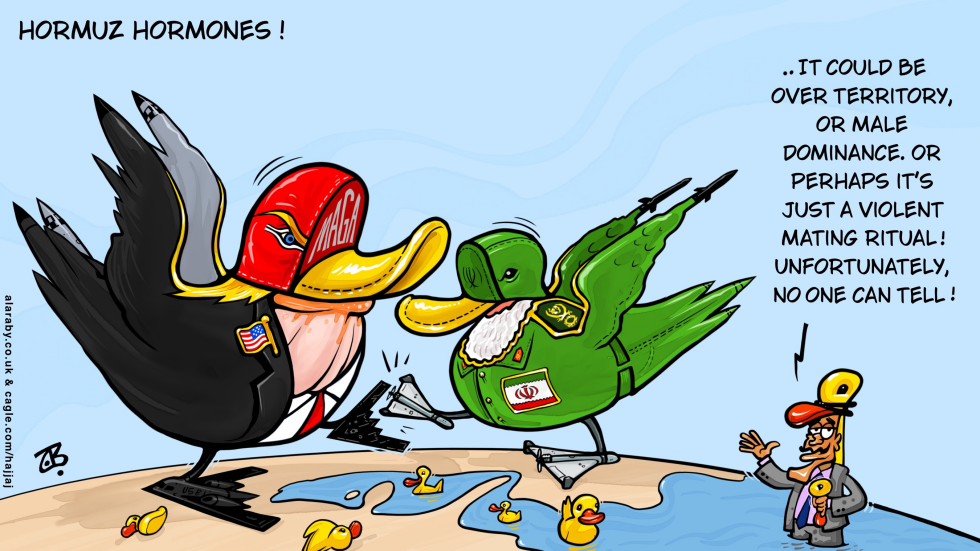
The cartoon shows a black bird wearing a MAGA hat facing off against a green bird bearing Iran's flag, both armed and aggressive over a body of water labeled with Hormuz references. Small ducks swim below while a commentator speculates on motives ranging from territory to mating rituals. The image responds to ongoing US-Iran frictions in the Strait of Hormuz by framing the standoff through animal behavior analogies.
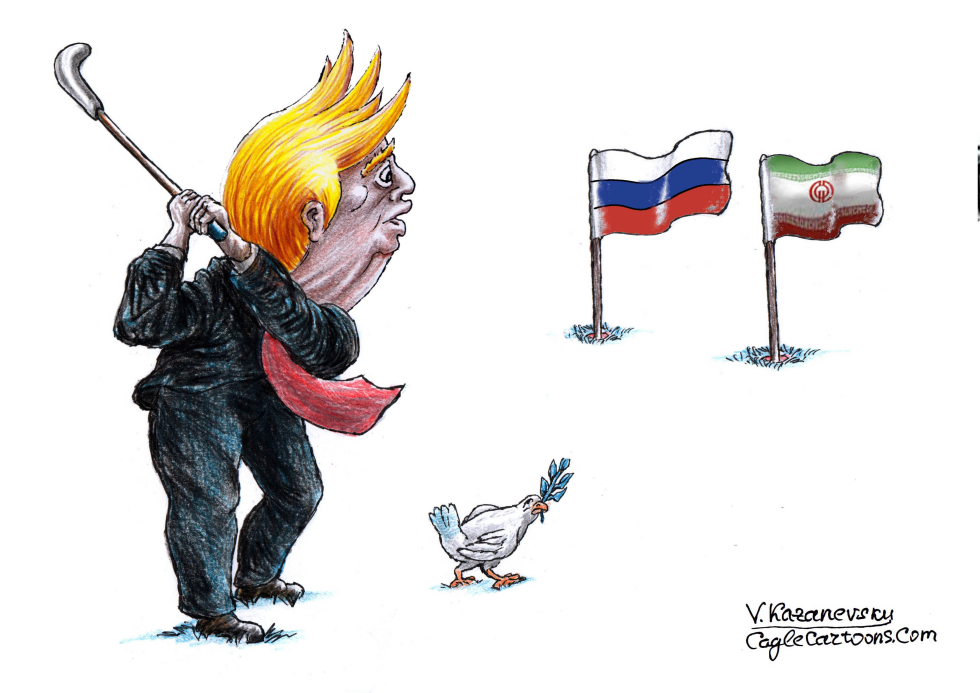
Donald Trump has pursued direct engagement with Russia and Iran on multiple fronts including nuclear talks and regional conflicts. The moves have drawn scrutiny over whether they advance or undermine stability. The editorial takes the position that such efforts amount to an assault on peace rather than a constructive step.
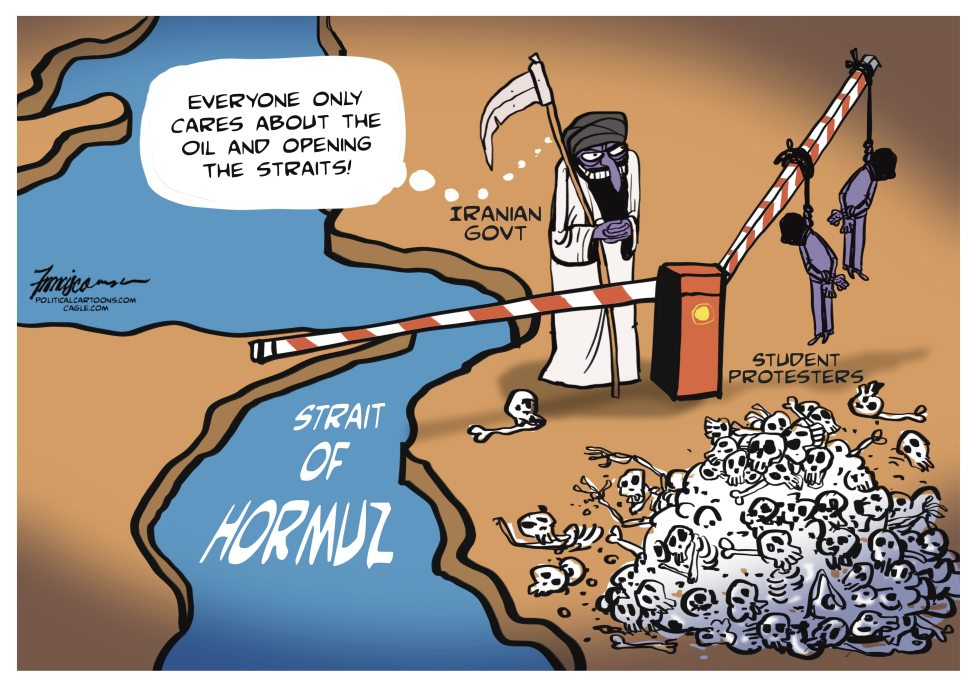
The Iranian government continues to suppress domestic student protests while maintaining control over the Strait of Hormuz, a critical global oil transit point. International attention remains fixed on energy flows rather than internal repression. The editorial position criticizes the regime for valuing oil revenue and strait access above the lives of its citizens.
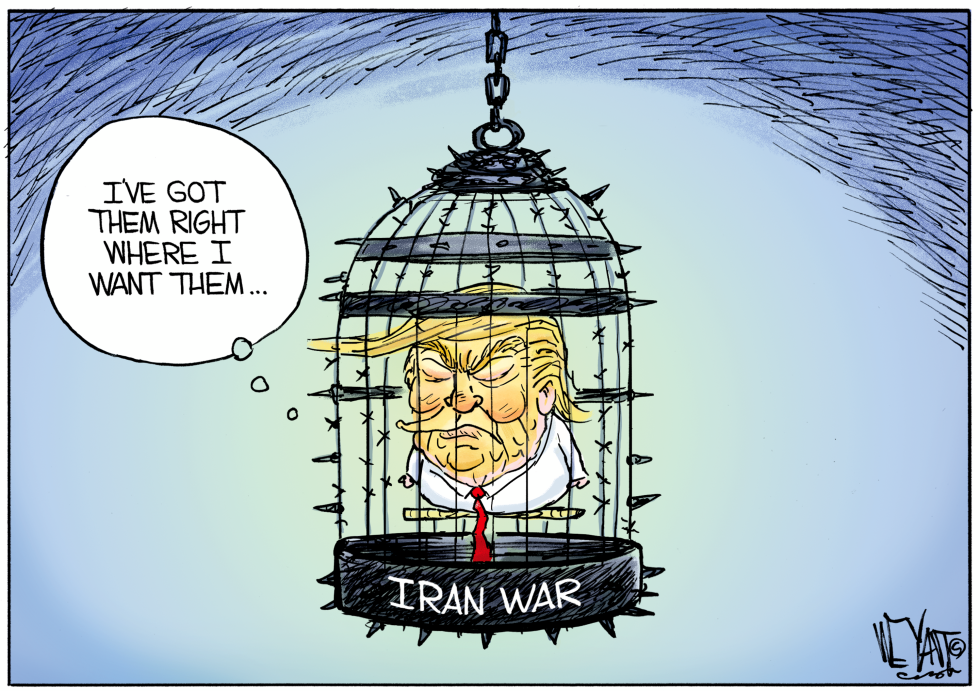
Tensions with Iran escalated in mid-2026 as U.S. policy under President Trump faced renewed scrutiny over military posturing and diplomatic isolation. The administration maintained that pressure tactics had adversaries exactly where officials wanted them. Critics argued the approach risked broader regional conflict without clear exit strategy. The cartoon presents the president as confined by the very confrontation he promotes, underscoring a disconnect between rhetoric and outcome.
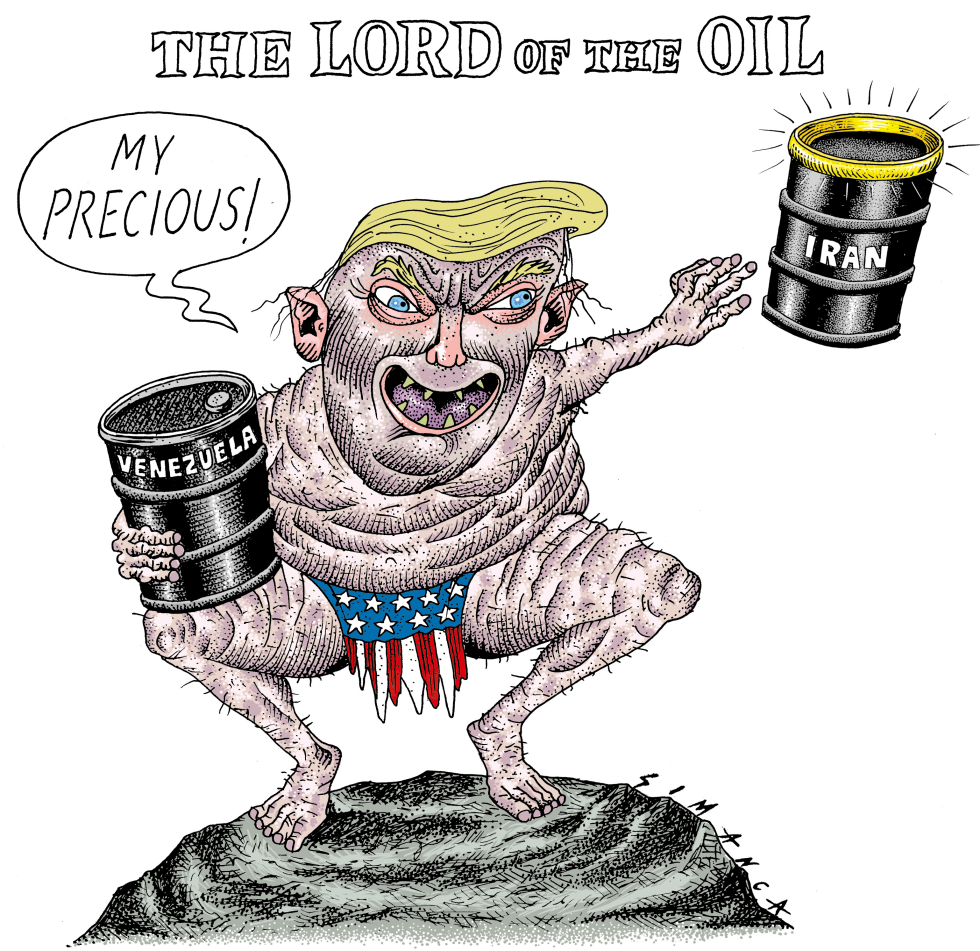
Donald Trump has intensified pressure on Iranian oil exports through renewed sanctions while maintaining claims on Venezuelan resources. The moves aim to reshape global energy markets and counter rivals in the Middle East and Latin America. The editorial portrays this focus as an obsessive drive for control over foreign oil supplies.
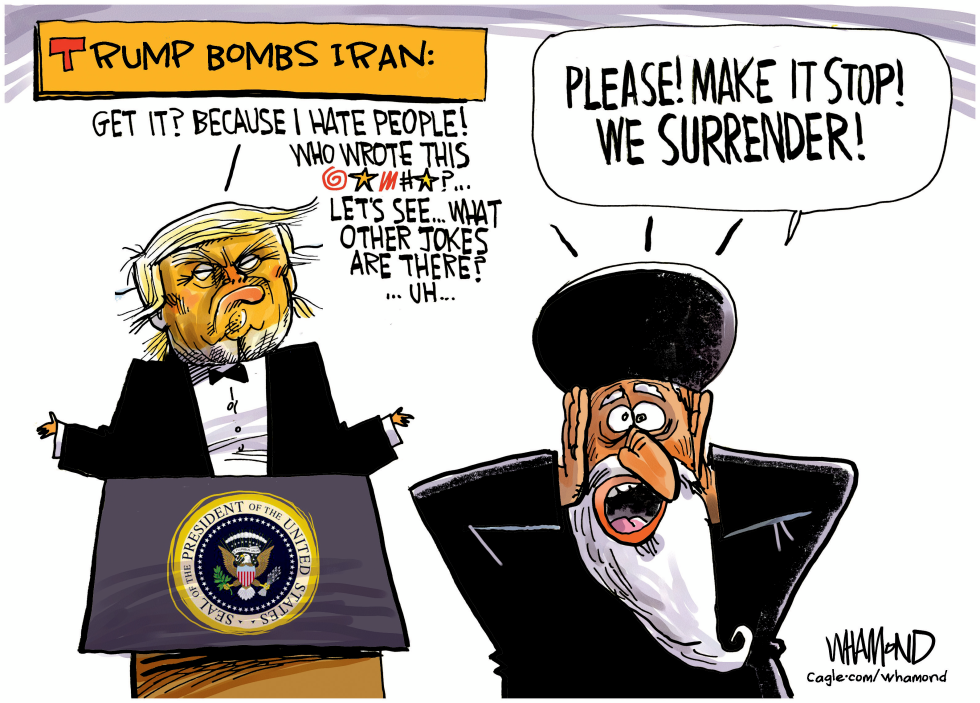
President Trump ordered strikes on Iran in late July 2026, prompting an immediate public plea for surrender from Iranian leadership. The action escalates tensions in the Middle East and raises questions about U.S. military objectives. The editorial takes the position that the strikes reflect personal animus rather than strategic necessity and mocks the president's framing of the operation.
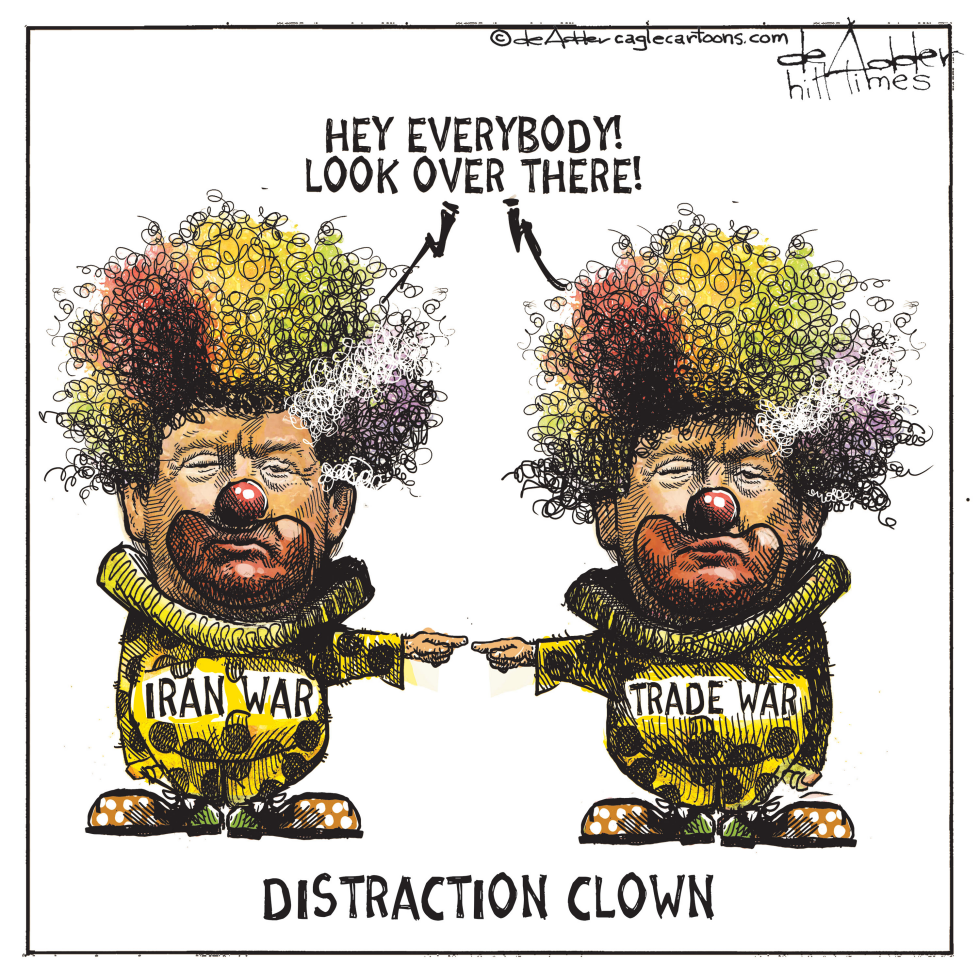
Public attention is being directed toward simultaneous Iran and trade conflicts as potential diversions from other issues. The editorial depicts the two crises as interchangeable distractions promoted by the same source. It argues that leaders are using these flashpoints to shift focus rather than address underlying problems.
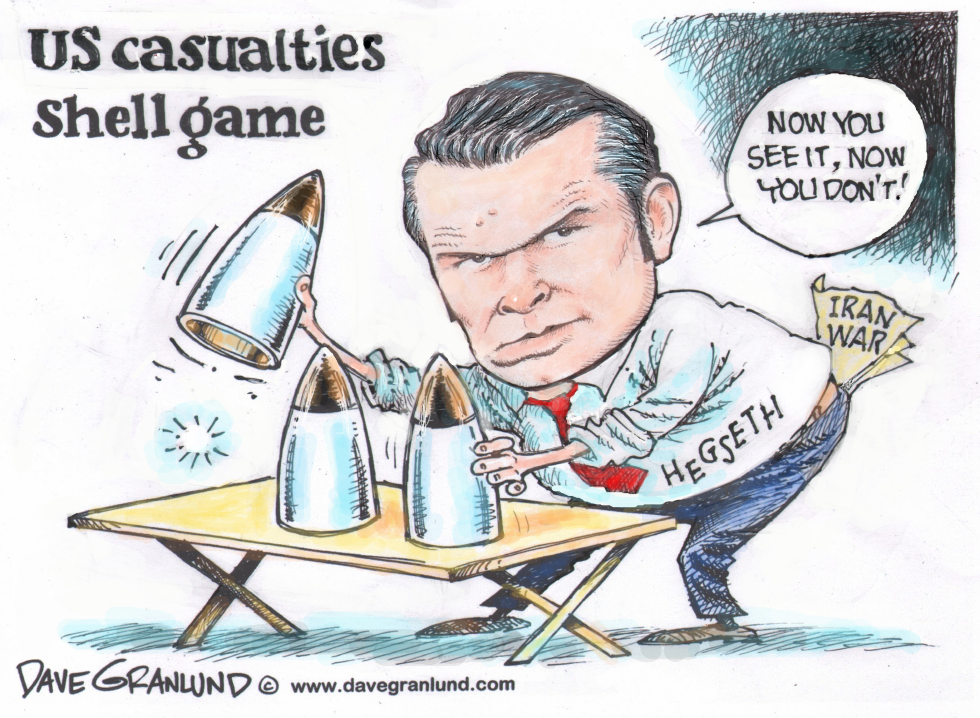
The cartoon shows Defense Secretary Pete Hegseth performing a shell game with three large missile casings on a folding table. One casing is lifted to reveal nothing underneath while a speech bubble declares the classic misdirection line. A paper labeled Iran War protrudes from his pocket. The title references US casualties. Published amid reports of American losses in Middle East strikes, the image suggests official efforts to downplay or conceal the human cost of the conflict through selective presentation of information.