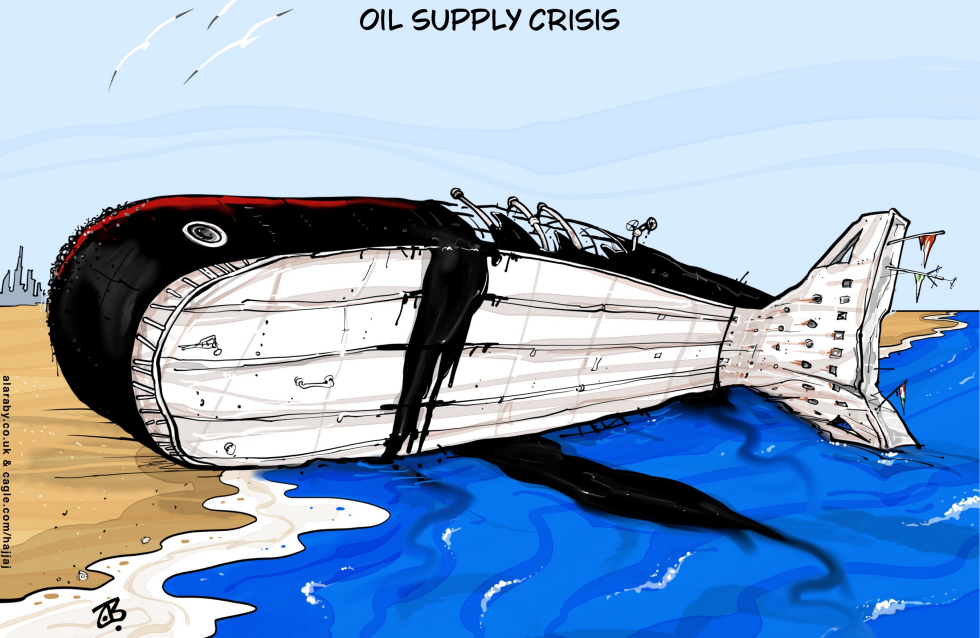
A major oil tanker has run aground, disrupting supply routes and releasing crude into coastal waters. The incident underscores vulnerabilities in global energy transport networks that rely on aging or poorly maintained vessels. Such events can spike fuel prices and trigger immediate cleanup costs for affected regions. The cartoon frames the grounding as a direct cause of the broader supply crisis rather than an isolated accident. It points to systemic weaknesses in oversight and infrastructure that allow one failure to cascade into wider shortages and ecological harm.
Sundar Pichai, CEO of Google and Alphabet, announced plans to invest $200 billion in new AI data centers to support rapid expansion of artificial intelligence systems. The move comes as polls show most Americans oppose such facilities due to noise, pollution, and heavy water consumption. Pichai has described AI as more transformative than electricity or fire and has acknowledged a high risk of existential threats from the technology, while expressing confidence that humanity can avoid catastrophe. The editorial cartoon frames this corporate push as aggressive and tone-deaf to local opposition and environmental limits.
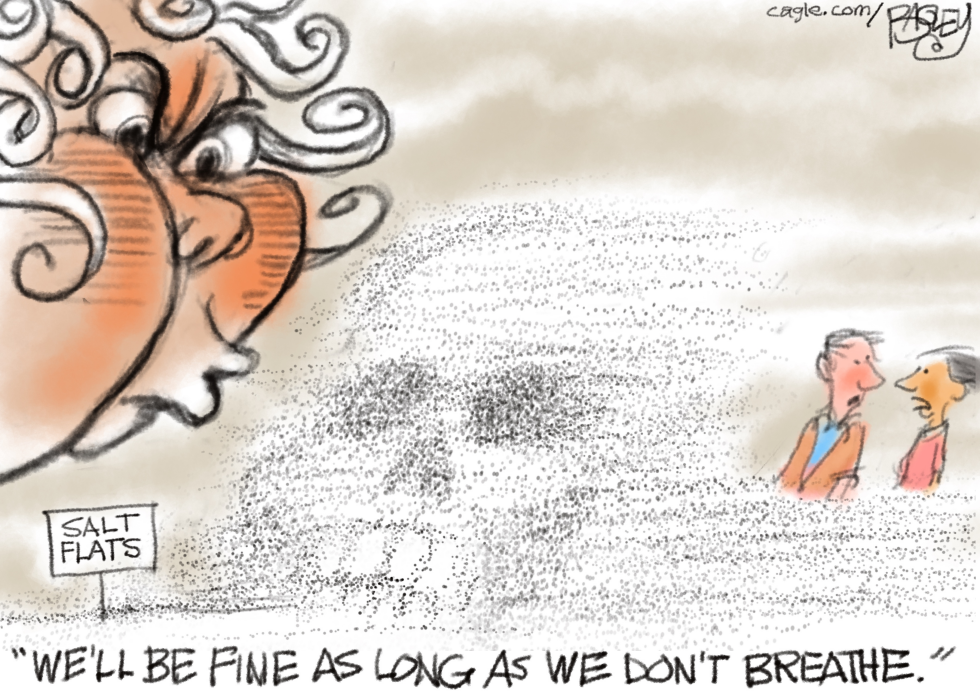
Air quality at the Salt Flats has deteriorated due to persistent dust storms, creating hazardous conditions for nearby residents and visitors. The situation underscores ongoing environmental degradation in the region and the urgent need for mitigation efforts to protect public health.
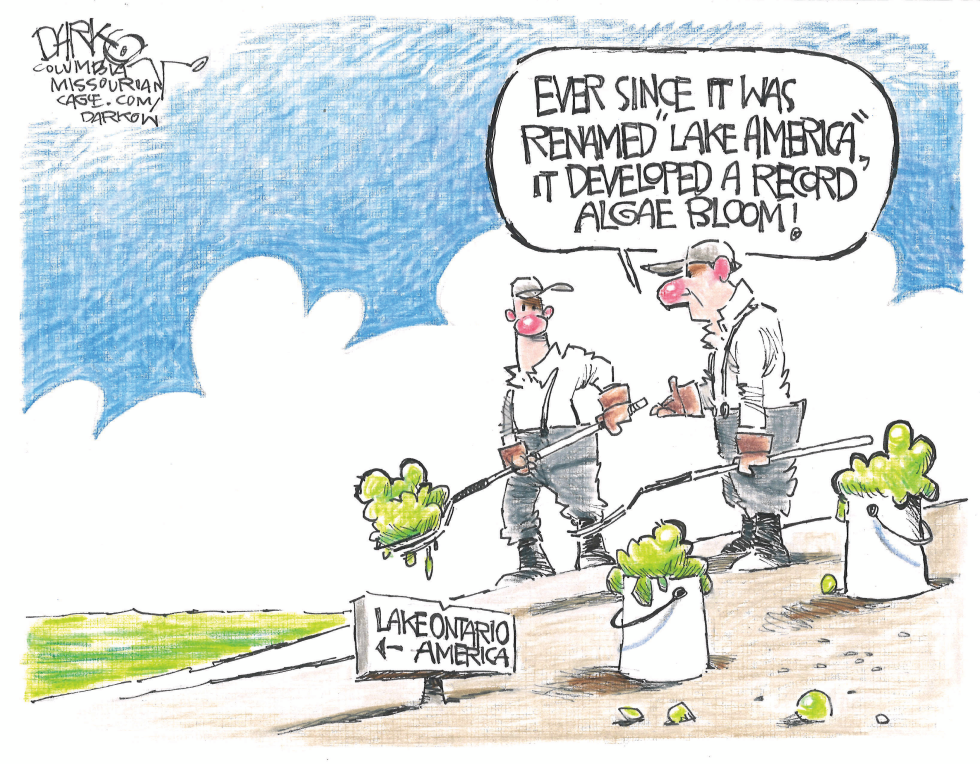
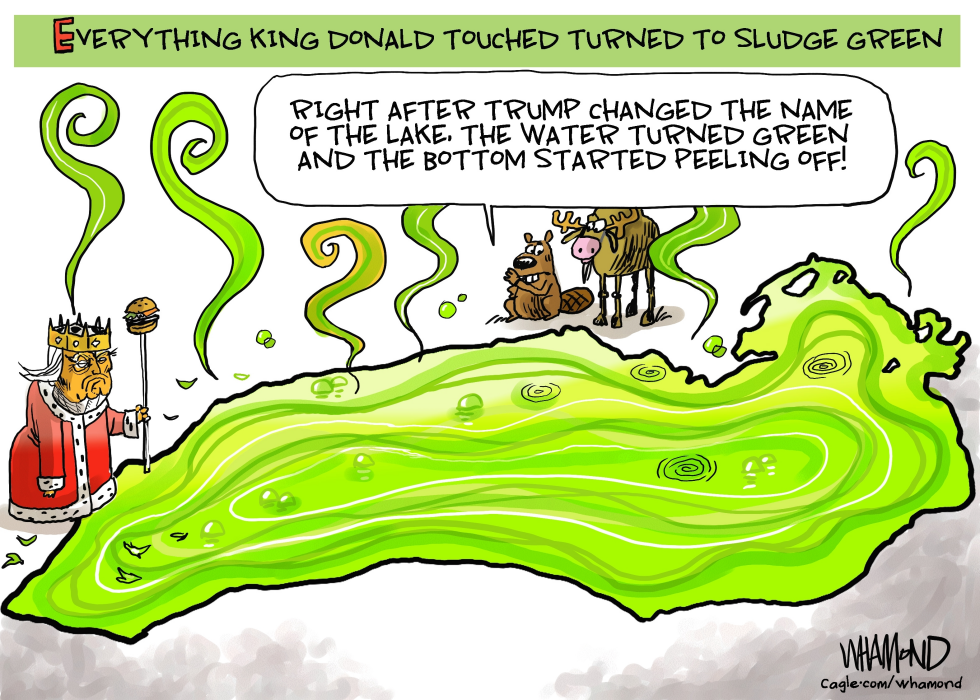
Workers clean a massive algae bloom from a lake recently renamed Lake America, formerly Lake Ontario. The outbreak follows the rebranding and draws attention to environmental conditions. The piece argues that superficial political gestures fail to address underlying ecological problems and may even coincide with worsening conditions.
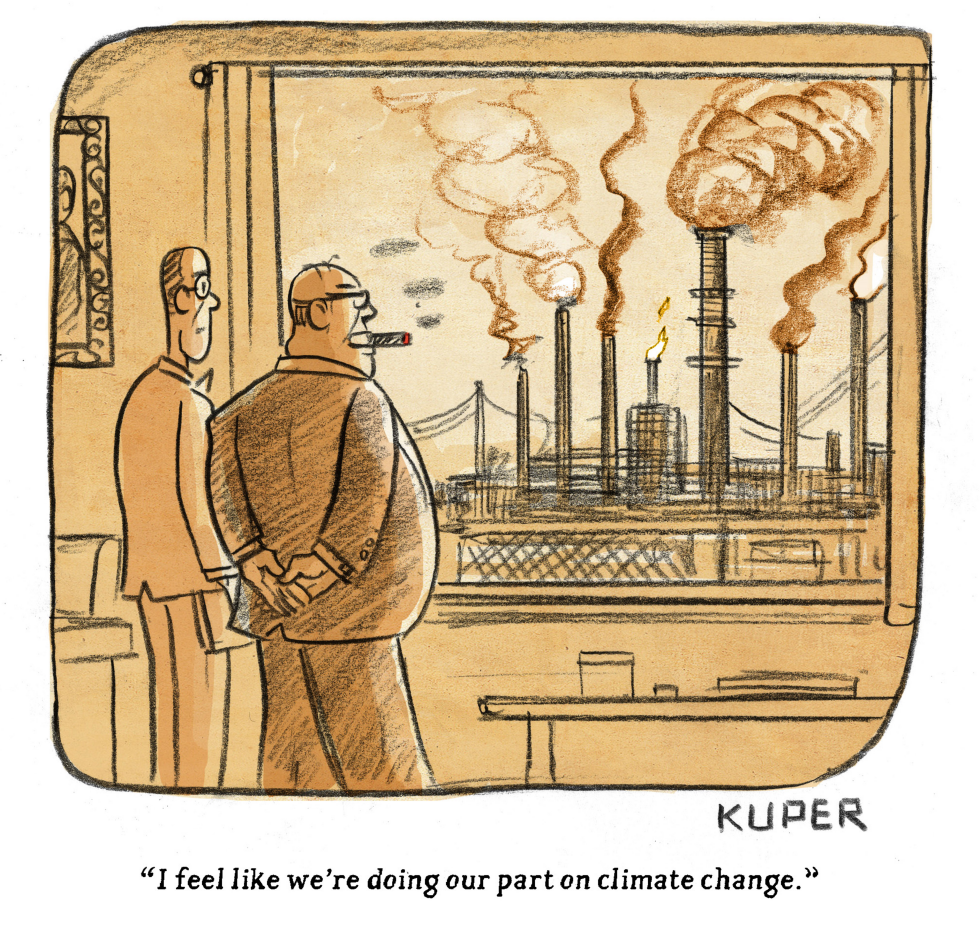
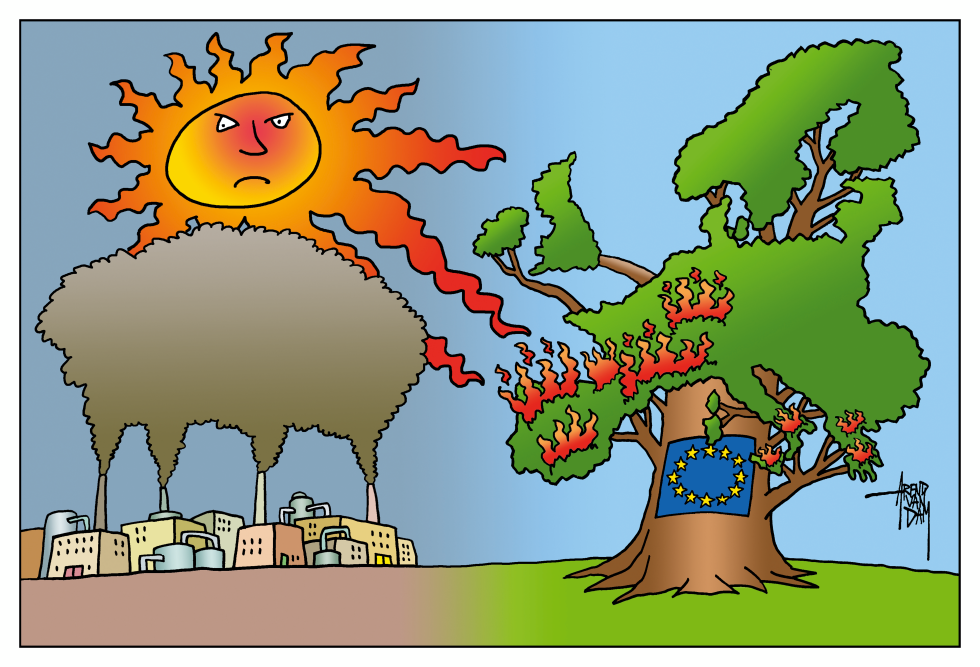
Corporate executives continue to oversee industrial operations that release substantial emissions into the atmosphere. This ongoing pattern occurs as global temperatures rise and regulatory pressures mount on heavy industry. The situation highlights tensions between profit-driven activities and environmental accountability. The piece portrays the executives as detached from the consequences of their facilities. It critiques the tendency among business leaders to minimize their sector's role in climate issues despite clear evidence of ongoing pollution.
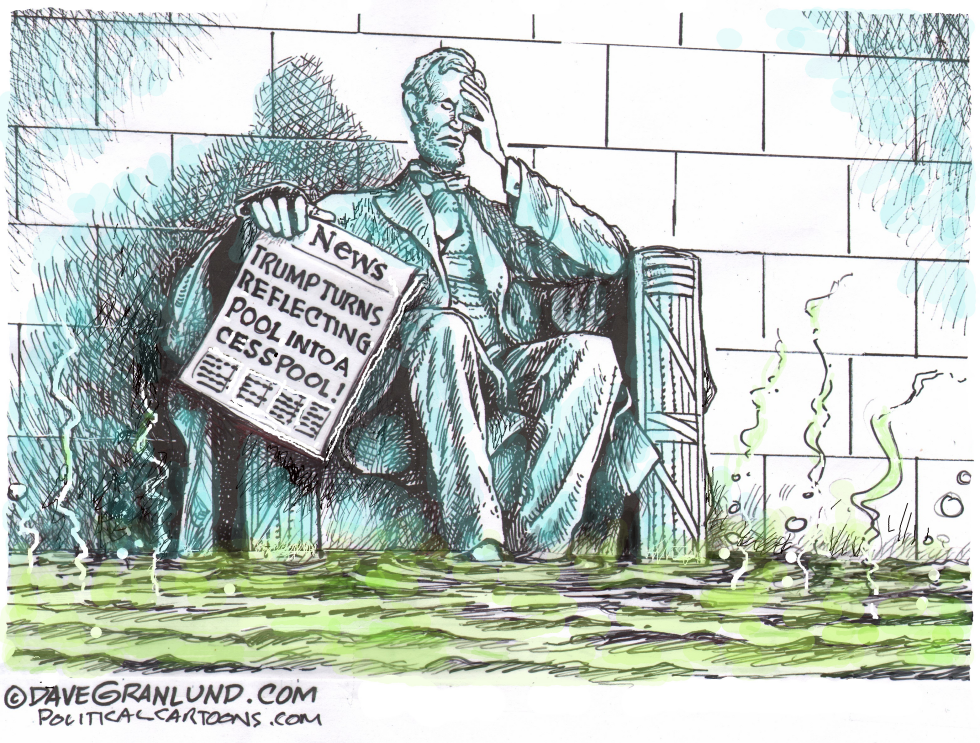
Donald Trump, depicted as a king, changes the name of a lake, after which the water turns green with sludge and the bottom begins peeling. Wildlife observers connect the timing directly to the renaming. The development raises concerns about environmental damage tied to executive actions. The piece portrays the outcome as an inevitable result of Trump's influence, turning natural areas into polluted sludge.
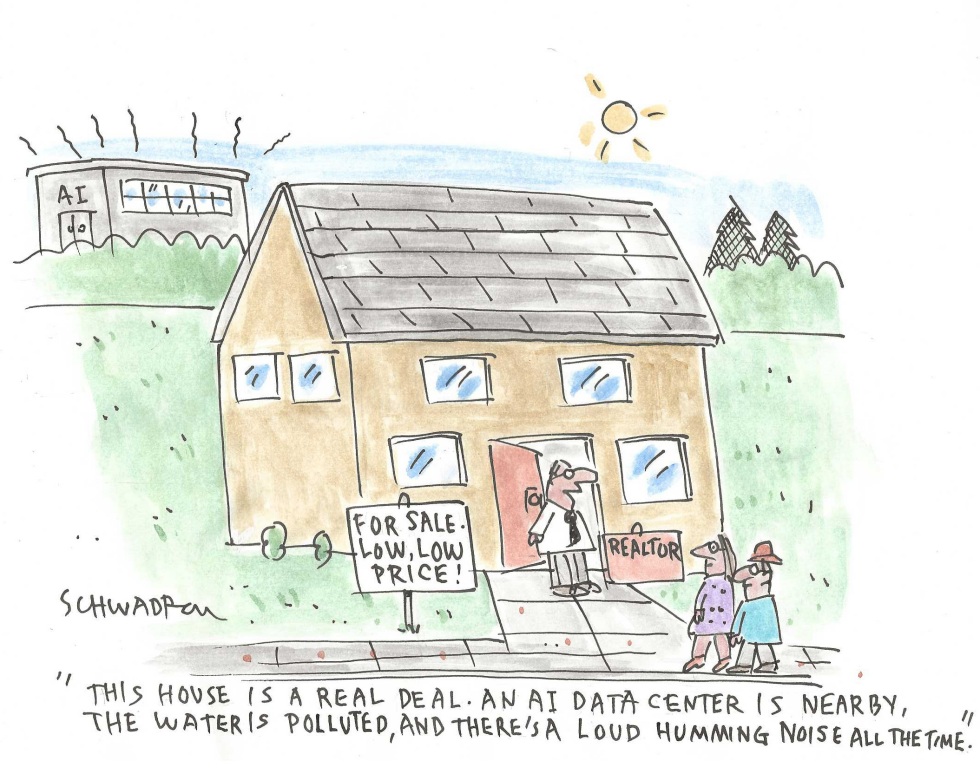
AI data centers are expanding rapidly across suburban areas, bringing jobs and infrastructure but also raising local concerns over noise, water use, and environmental effects. Home values near these facilities have begun to soften as buyers factor in constant humming and potential pollution. The cartoon highlights how real estate agents market such properties at steep discounts while openly disclosing the drawbacks to prospective buyers.
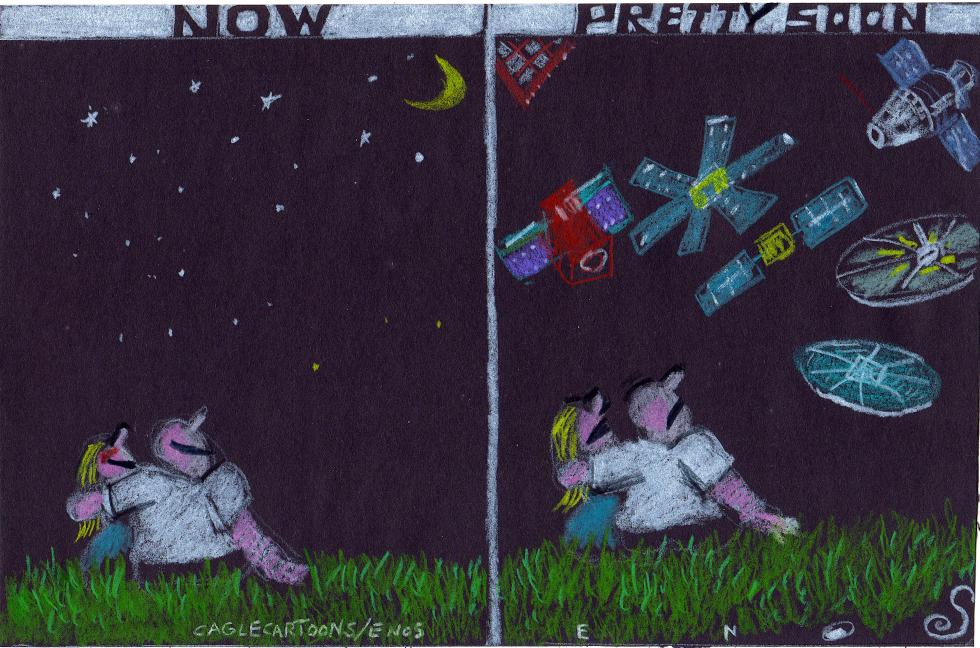
The night sky remains a quiet backdrop for stargazers in the present. Within a short time, however, proliferating satellites and debris will dominate the view overhead. The piece highlights how rapid expansion of orbital technology alters even simple moments of connection with the natural world.
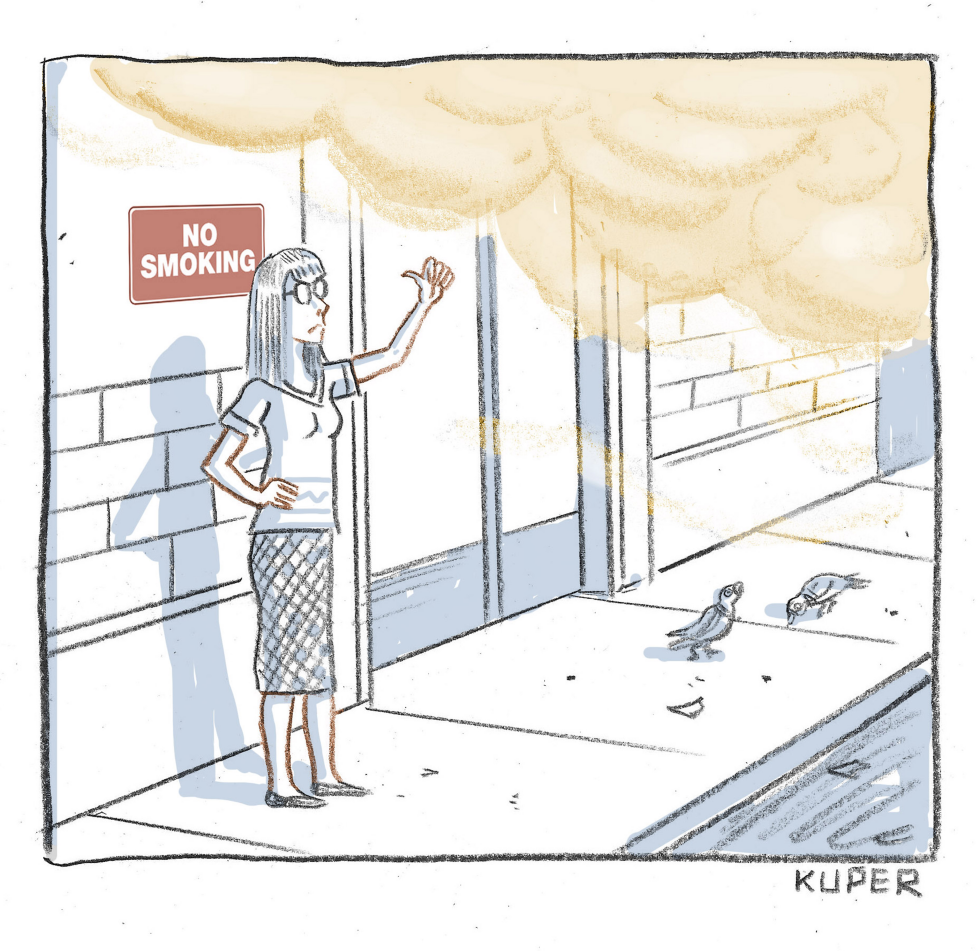
Ongoing urban air pollution continues to harm wildlife and public health in cities worldwide. Industrial and vehicle emissions create toxic clouds that kill birds and threaten residents despite localized bans like no smoking signs. The piece critiques the gap between narrow regulations and the broader failure to address systemic pollution sources.
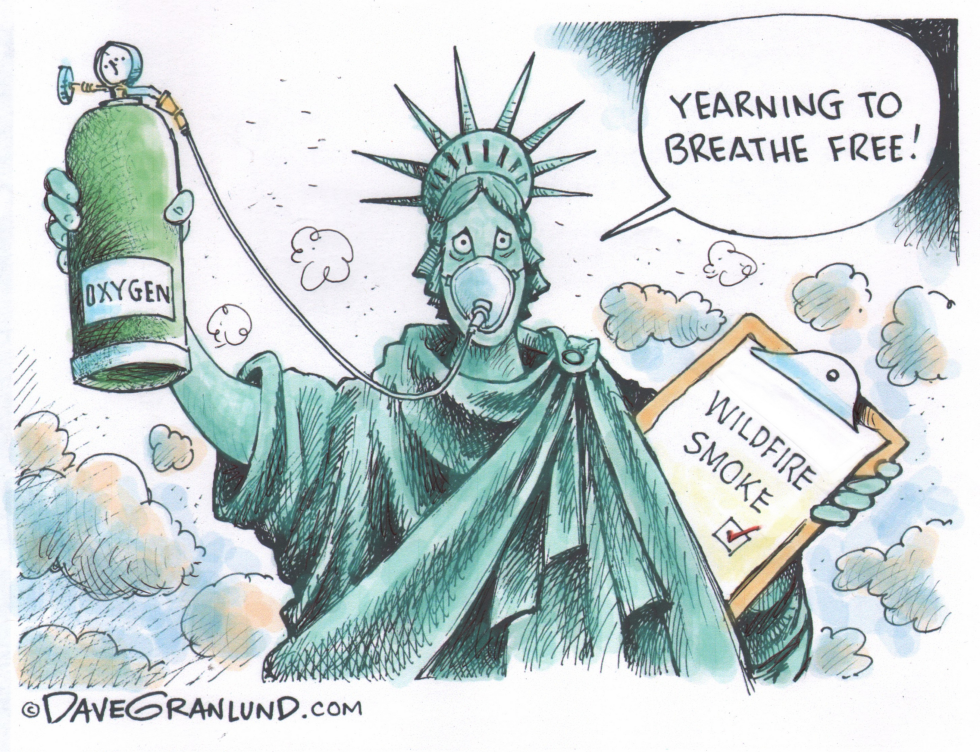
The cartoon shows the Statue of Liberty wearing a gas mask and holding an oxygen tank labeled OXYGEN while clutching a clipboard marked WILDFIRE SMOKE. A speech bubble reads YEARNING TO BREATHE FREE. The image responds to ongoing wildfire activity and resulting air quality issues tied to climate patterns. The visual places the national symbol in protective gear to illustrate how smoke from distant fires reaches major population centers. Publication occurs during a period of elevated wildfire risk in western regions with smoke drifting eastward.
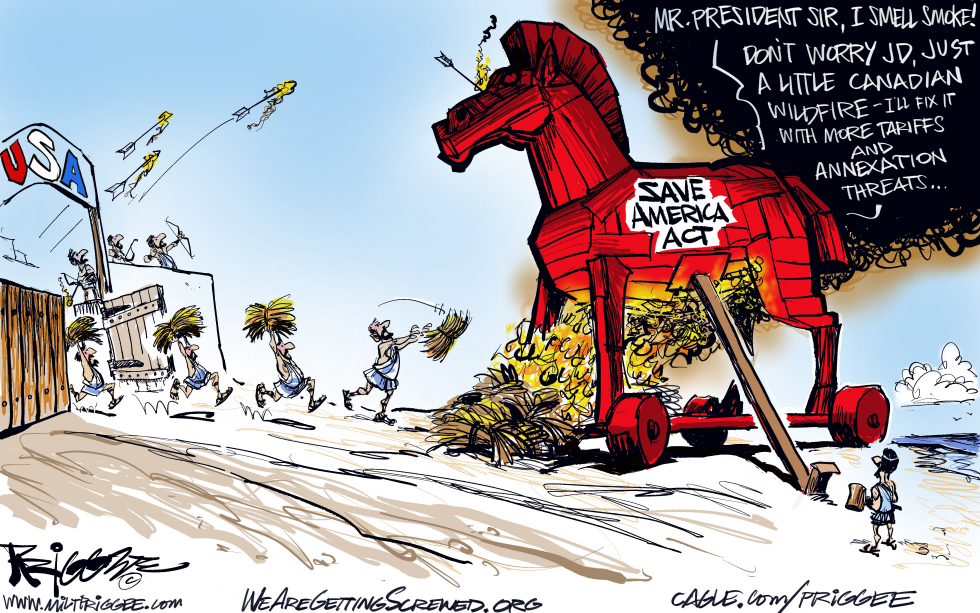
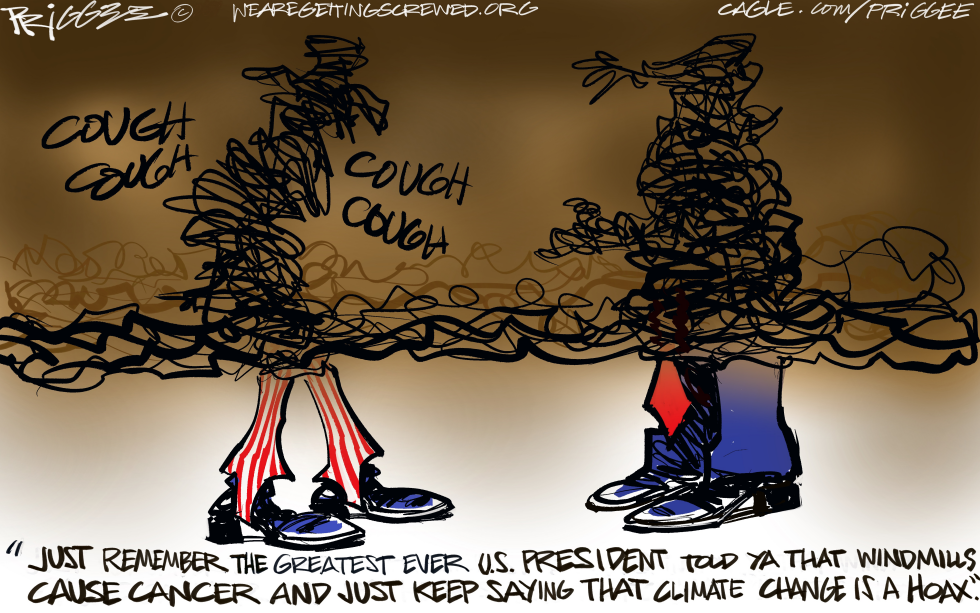
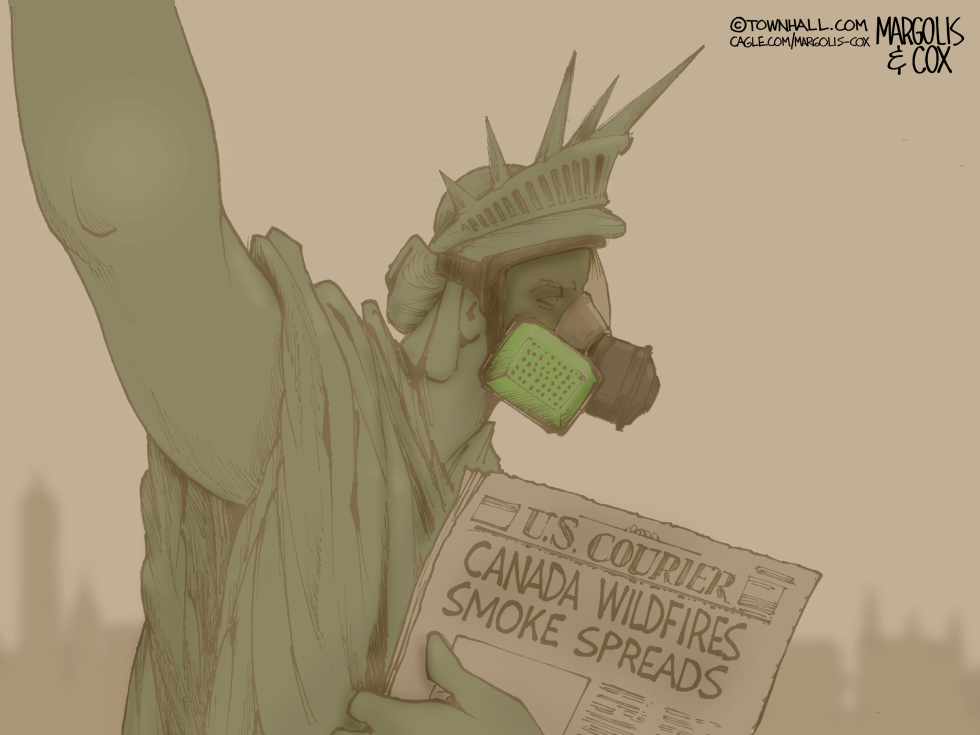
Canadian wildfires in mid-July 2026 sent dense smoke plumes southward, degrading air quality across the northern United States and prompting health alerts in multiple states. The recurring seasonal event underscores how climate-driven fire seasons now affect populations far from the burn zones. The cartoon depicts the Statue of Liberty wearing a gas mask while clutching a newspaper headlined on the spreading smoke, signaling that even national symbols of openness now require protection from environmental fallout.