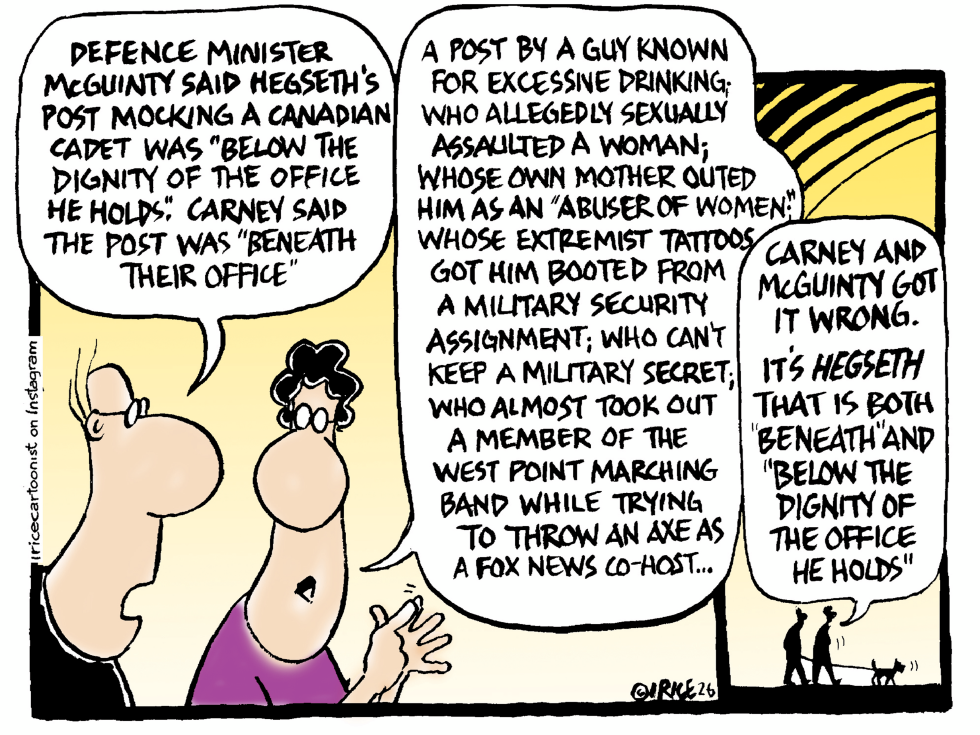
Canadian Defence Minister David McGuinty and Mark Carney publicly condemned a social media post by Pete Hegseth mocking a Canadian cadet, calling it beneath the dignity of the office. The remarks came amid Hegseth's nomination process for a senior U.S. defense position. The cartoon argues the ministers have the assessment backward, pointing instead to Hegseth's history of alleged misconduct, security clearance problems, and public incidents as the true disqualifiers. This reflects ongoing debate over nominee vetting standards and cross-border political commentary on U.S. appointments.
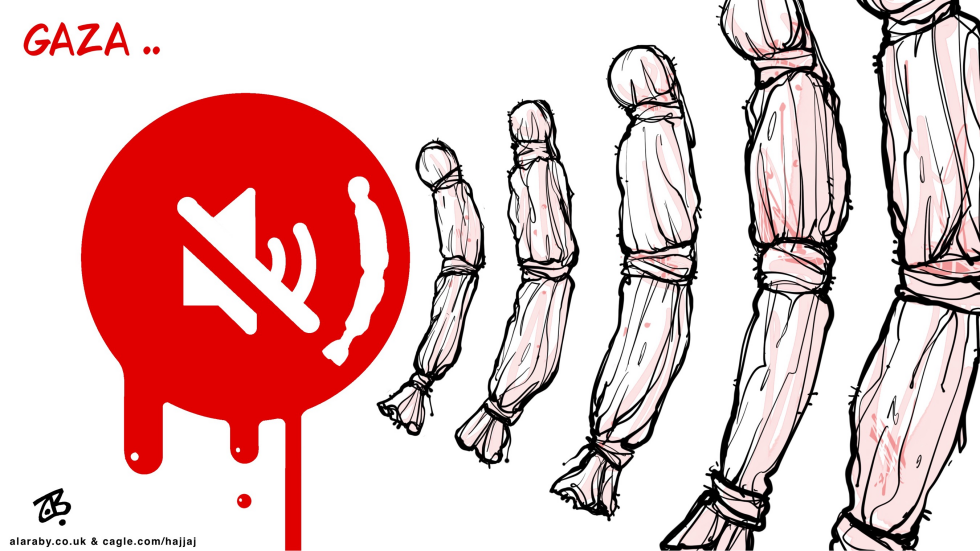
Ongoing conflict in Gaza continues to draw international attention to civilian casualties and restrictions on reporting. The piece responds to persistent calls for attention amid claims of media and global silence. It positions the mute symbol as a direct critique of inaction on reported suffering. The editorial stance emphasizes the need to break that silence and acknowledge the human cost in the region.
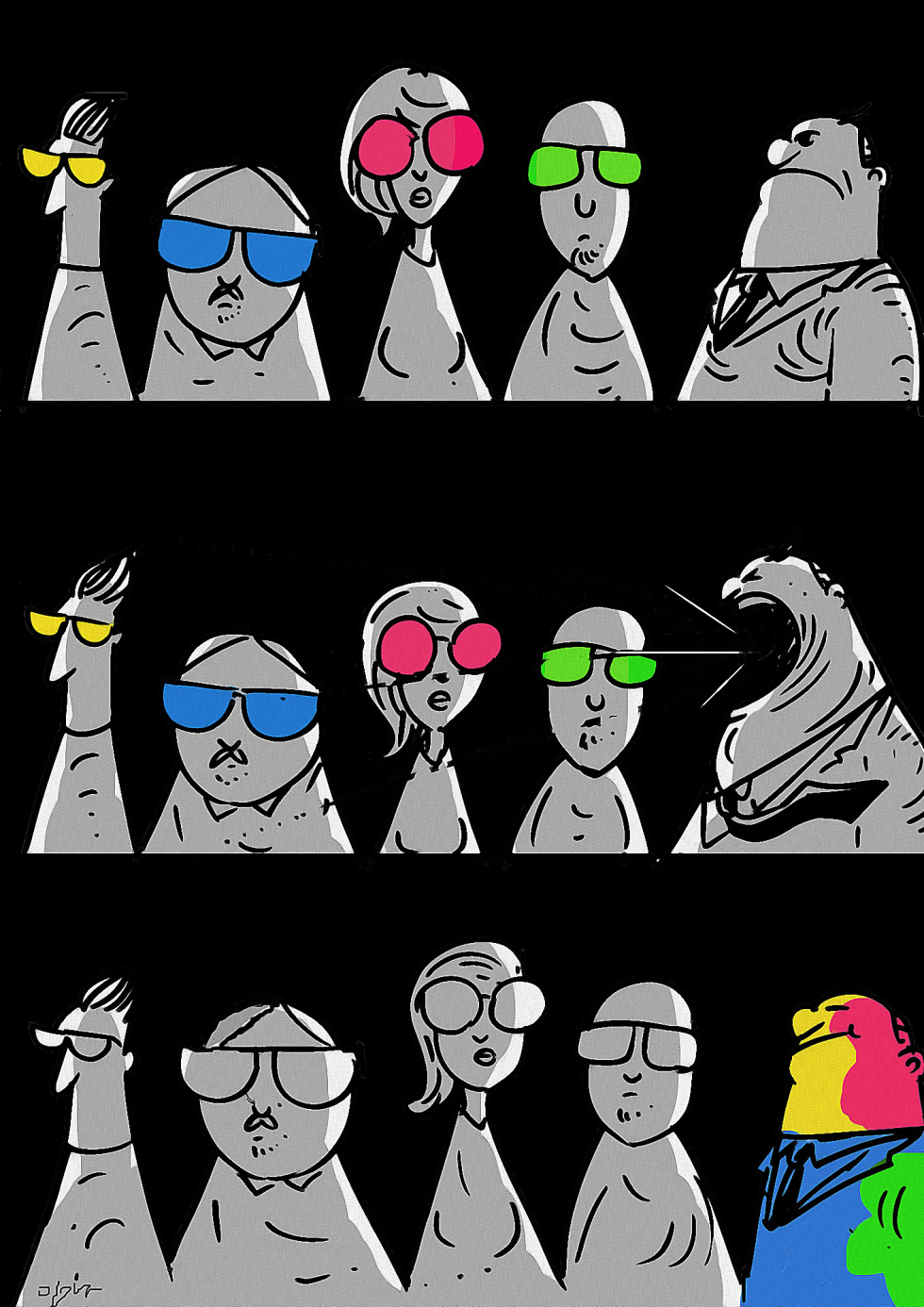
A series of panels depicts rows of figures wearing sunglasses in varying hues. The images suggest that personal filters shape what people see and react to. The final panel introduces a multicolored figure that stands apart from the rest. The work comments on how individual perspectives diverge even within similar groups. It highlights the contrast between uniform appearances and sudden breaks in pattern.
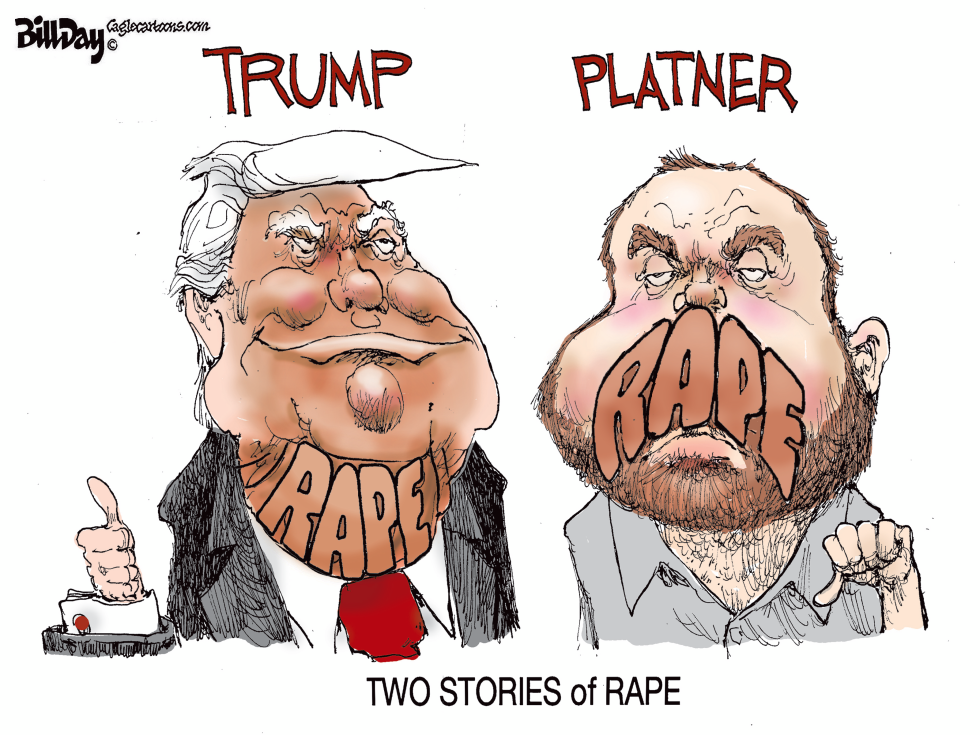
The image presents side by side depictions of Donald Trump and an individual named Platner. Each has the word rape overlaid on the lower face area. Trump extends a thumbs up gesture near papers while Platner extends a thumbs down gesture. Large red text at the bottom reads two stories of rape. The date of July 2026 places this in a period of ongoing public discussion around accusations involving prominent figures.
On Father's Day a father stands on a balcony facing his two children who present him with tongs, an apron labeled The Grill Father, a meat thermometer and a wrapped box. The children announce the items will allow BBQ cooking that day. The father replies that they do not have a grill. A caption below attributes the mismatch to social media marketing influence and obliviousness.
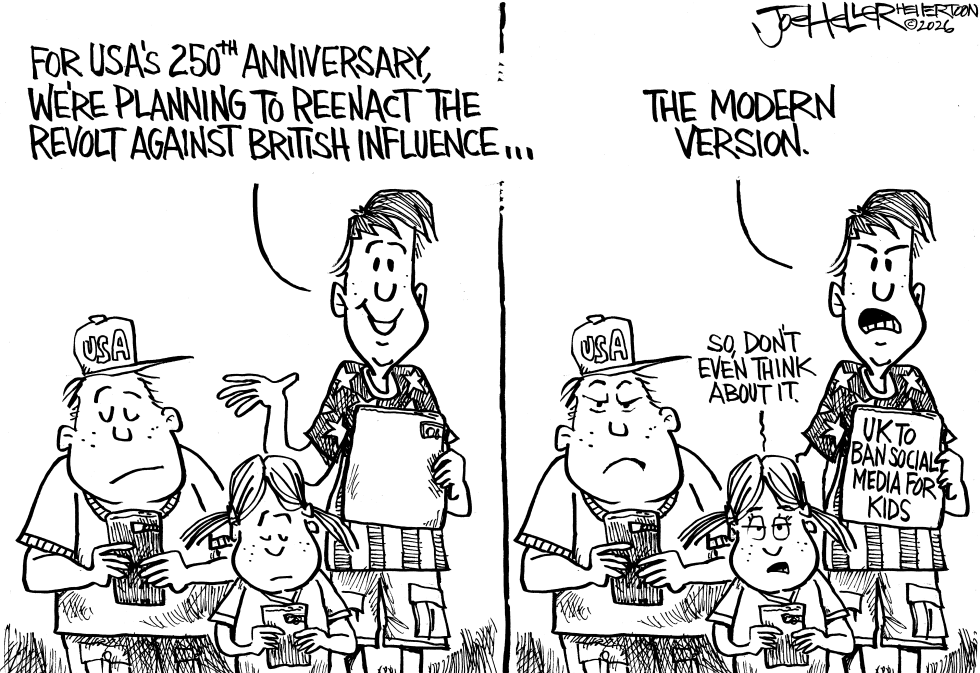
A two-panel cartoon shows a family in USA caps holding phones and signs. The left panel references the US 250th anniversary and a planned revolt against British influence. The right panel labels the modern version as a UK ban on social media for kids, with a warning not to consider it.
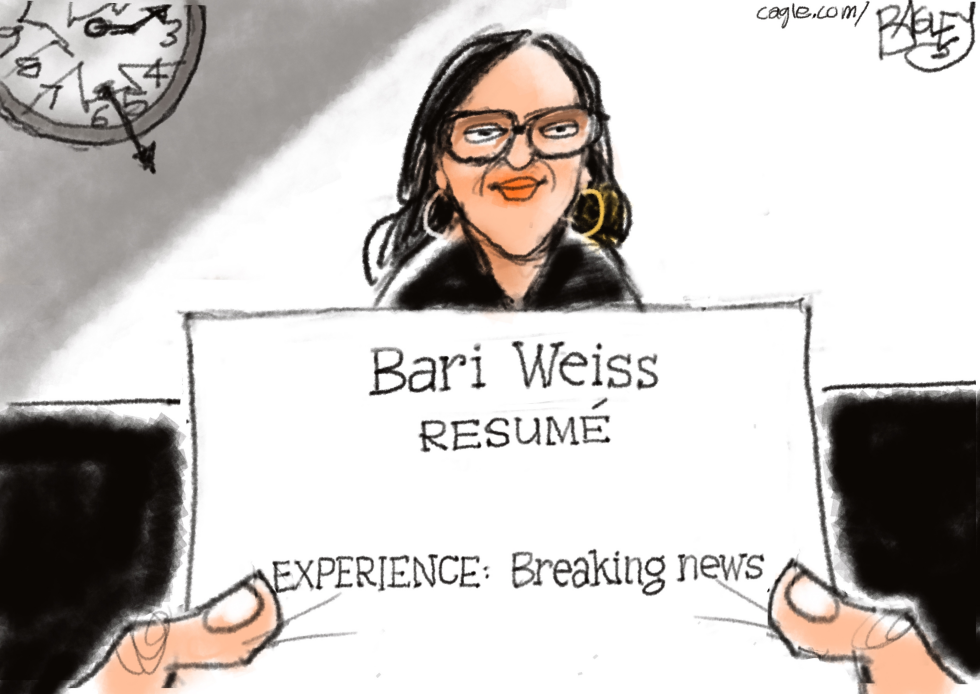
Bari Weiss holds a resume centered on breaking news experience. The document appears amid discussions of CBS News leadership changes and media ownership shifts at Paramount. The presentation occurs on June 11 2026.
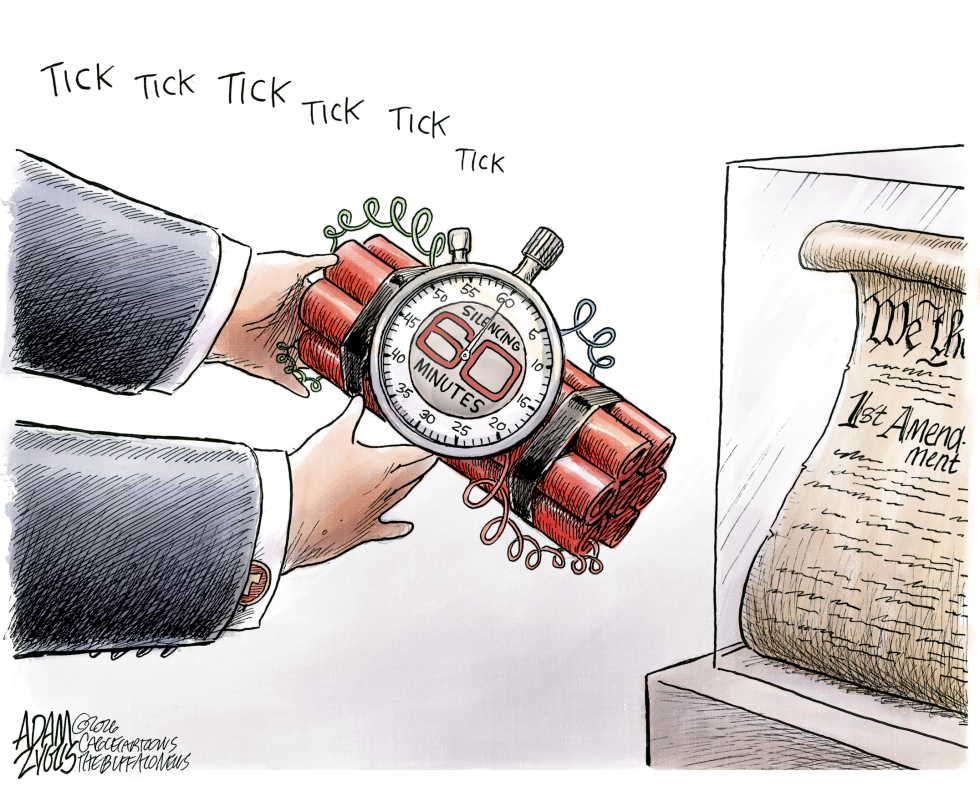
The image shows suited hands holding a stopwatch-bomb labeled 60 Minutes and Silencing. The device is wired with red sticks and aimed at a scroll reading We The and 1st Amendment. Tick text repeats overhead. The June 2026 piece responds to ongoing tensions between CBS and political figures over press coverage and constitutional protections.
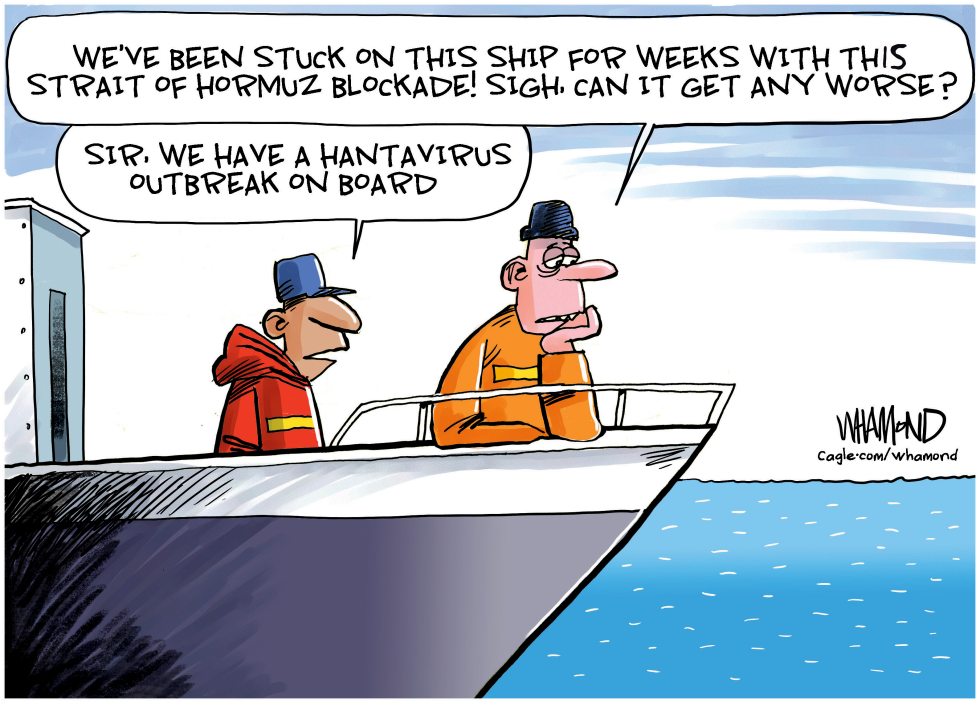
The cartoon depicts two sailors aboard a ship trapped in the Strait of Hormuz due to a naval blockade. One laments the weeks-long delay and wonders if conditions can worsen. The other reports a hantavirus outbreak on board. The image responds to ongoing tensions involving Iran and disruptions to global oil routes. As of the May 2026 publication date, the blockade has halted tanker traffic and strained energy markets. The added health crisis underscores the compounding risks for crews and supply chains. The visual ties geopolitical conflict directly to immediate human and economic consequences.
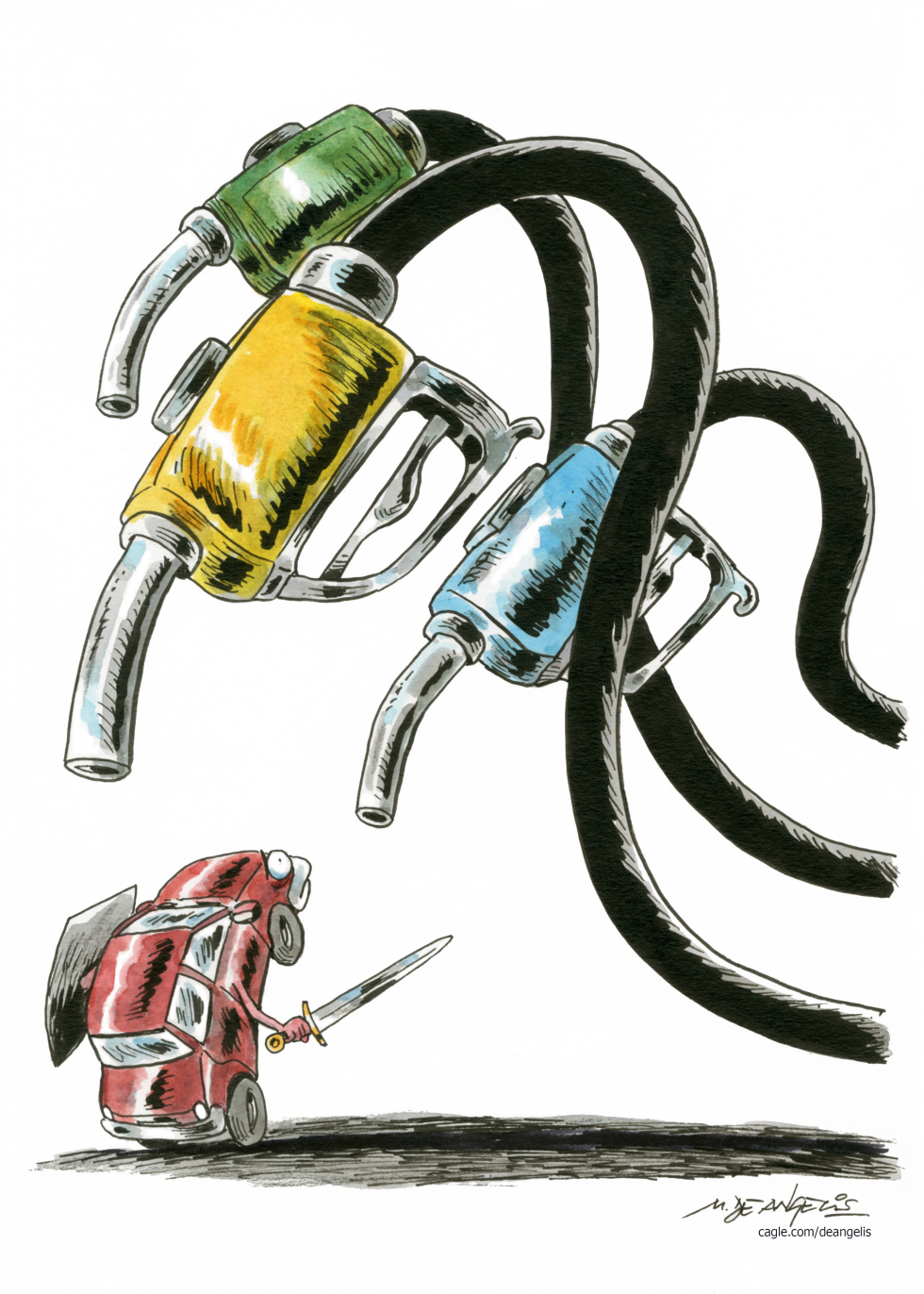
Marco De Angelis draws a clever twist on the ancient HYDRA myth, where a plucky red CAR, sword in hand, squares off against a beastly creature formed by three FUEL pump nozzles—green, yellow, and blue—attached to writhing black hoses. The scene plays on the endless battles drivers face with soaring OIL PRICES and FUEL costs, tying into broader ECONOMY woes. Tags like TRANSPORTATION, TRADE, WAR, CRISIS, IRAN, USA, and HORMUZ hint at real-world tensions in the Strait of Hormuz, where geopolitical strife disrupts global OIL supplies. It's a sharp commentary on how these issues regenerate like hydra heads, making every victory temporary in the fight against economic pressures.
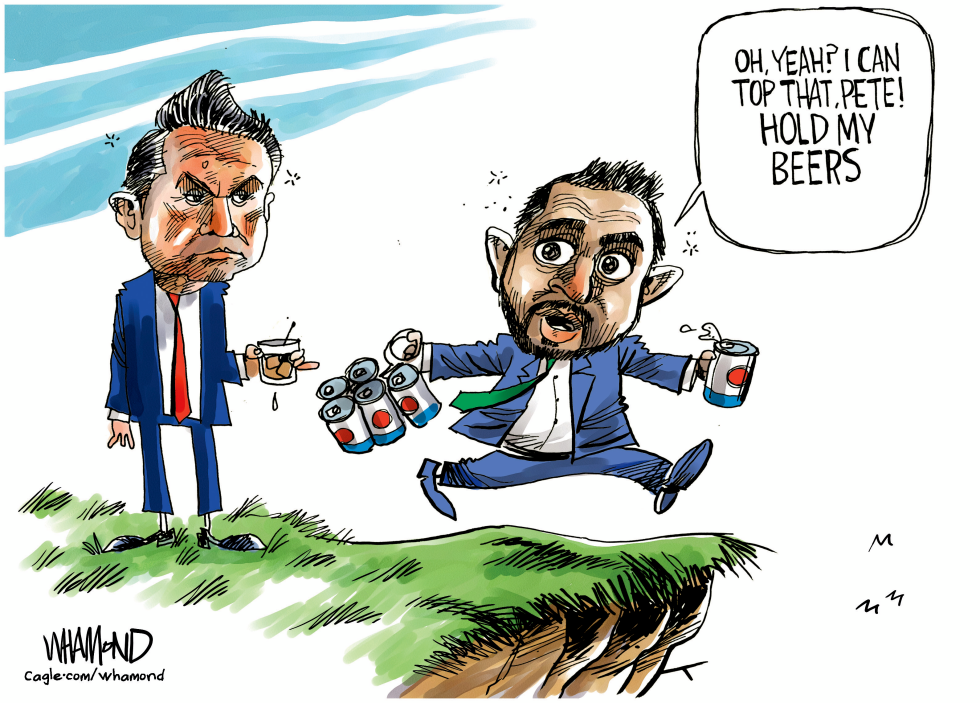
Dave Whamond's cartoon depicts Kash Patel energetically leaping from a grassy cliff, clutching a handful of beer cans and a drink, while yelling 'OH YEAH? I CAN TOP THAT PETE! HOLD MY BEERS' in a speech bubble. A stern-faced man in a suit stands nearby, holding a small drink. The scene plays on drinking allegations surrounding Patel's FBI director nomination, incorporating tags like The Atlantic article, reported alcohol use, drinks to excess, intoxication, unexplained absences, and Patel's 250M defamation lawsuit. The artwork uses caricature style to satirize political figures lashing out at press and Democrats demanding alcohol abuse tests, with Patel portrayed in a dynamic, over-the-top pose against a simple sky and grass background.
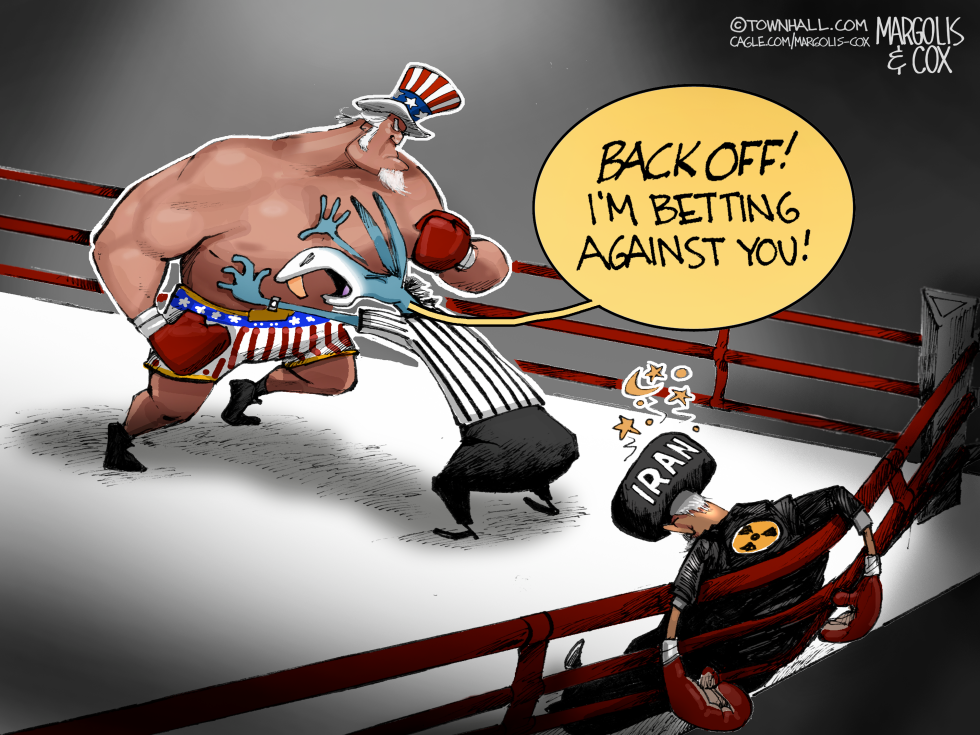
The cartoon depicts a boxing ring where Uncle Sam, wearing a top hat and patriotic shorts, advances aggressively, punching a referee in striped shirt who clutches a white dove. The referee's arm extends to halt the fight, but Uncle Sam shouts 'BACK OFF! I'M BETTING AGAINST YOU!' Meanwhile, the opponent, labeled 'Iran' with a nuclear symbol on his back, sprawls knocked out on the canvas. Stars indicate the impact. This setup uses boxing metaphor to satirize US foreign policy toward Iran, portraying America as betting against peace interventions, possibly represented by the dove-bearing referee. The artwork by Margolis & Cox captures tensions with dry humor, emphasizing unchecked aggression in international relations.
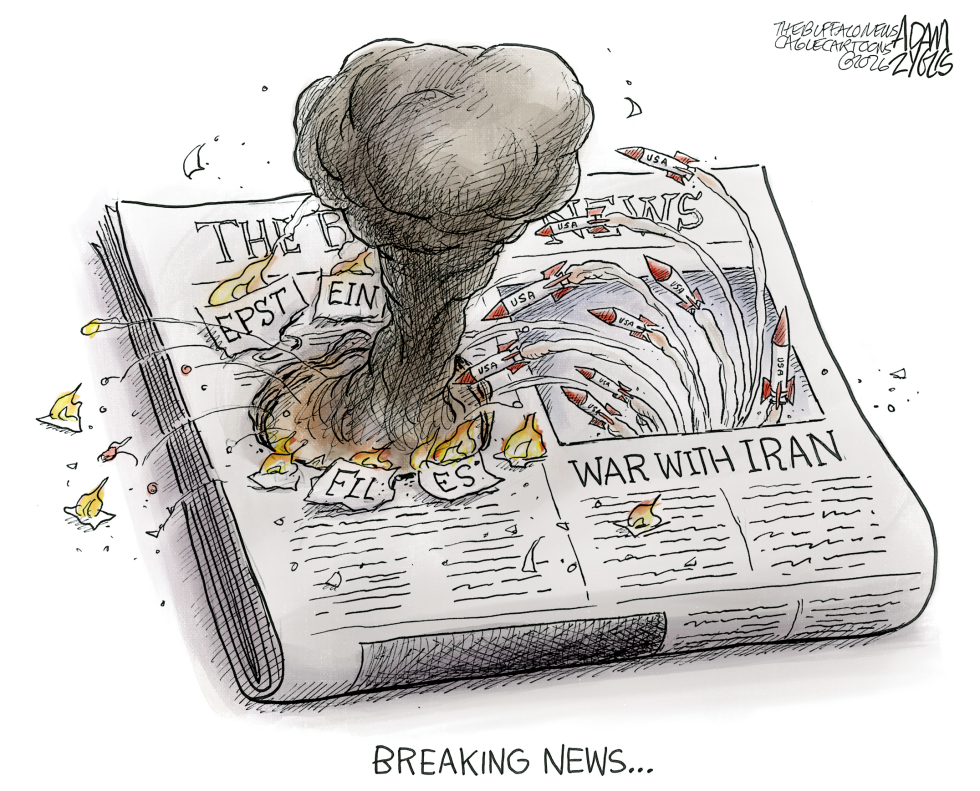
Dive into Adam Zyglis's political cartoon where breaking news morphs into a nuclear explosion, symbolizing media sensationalism around the Epstein files and war with Iran. USA missiles and Iran conflict visuals underscore geopolitical tension, while the exploding headlines serve as a sharp journalism critique. This satirical illustration captures the chaos of fake news explosion, reminding us how sensational stories can overshadow substance in today's fast-paced media landscape. With irreverent humor, it questions the ethics of turning tragedies into spectacles, blending satire with insightful commentary on news consumption.
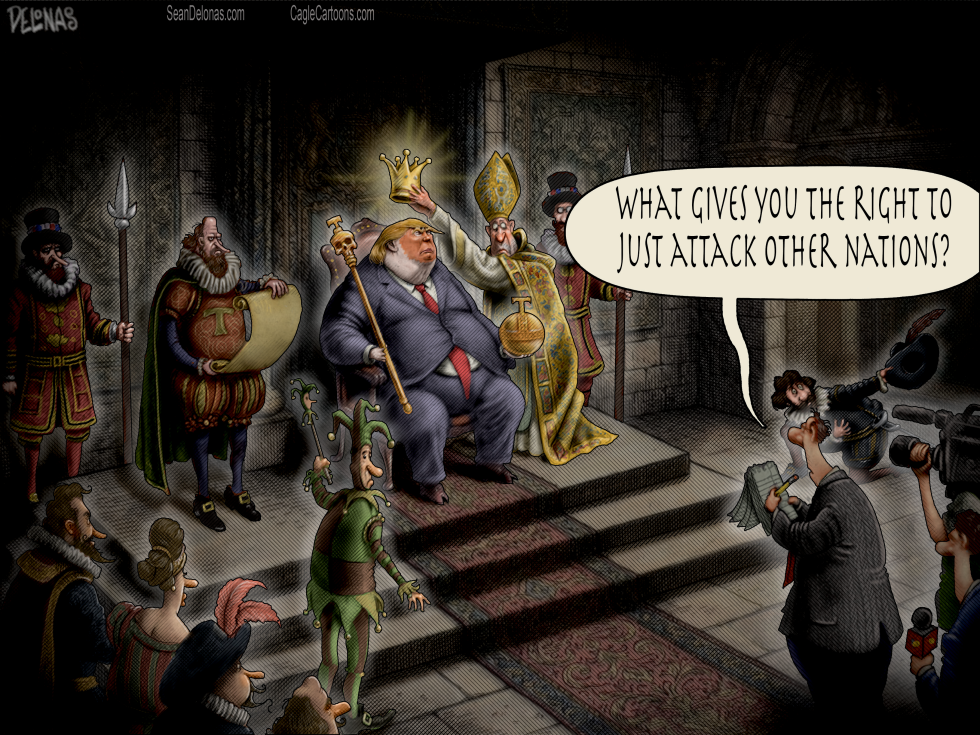
Sean Delonas captures Donald Trump as a rotund king lounging on a throne in a dimly lit castle hall, complete with a bishop crowning him with a glowing crown and a scepter in hand. Surrounded by medieval figures like guards, a jester, and courtiers, Trump faces a modern reporter wielding a microphone and notes, demanding to know what gives him the right to just attack other nations. The cartoon blends historical pomp with contemporary critique, tagging into Trump, wars, Iran, Venezuela, press, king, media, counterterrorism, military, policy, and president themes. The dry humor underscores the absurdity of unchecked power, with the artist's signature style emphasizing exaggerated features and satirical edge.