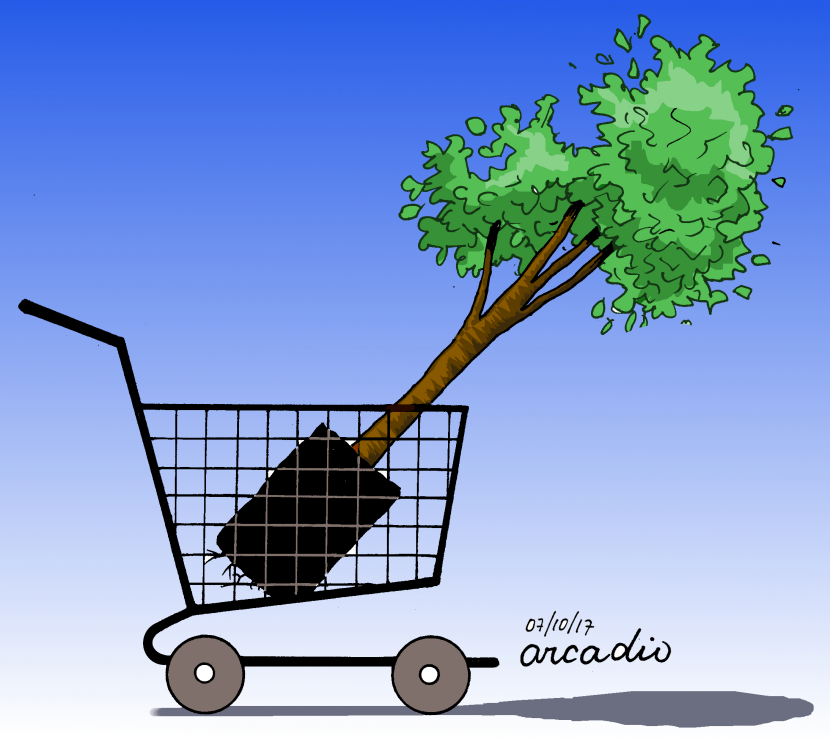
Arcadio Esquivel's 2017 political cartoon titled 'Adopt a Tree' features a simple shopping cart against a blue sky, containing a tree with lush green foliage and a trunk emerging from black soil at the base. The artwork employs environmental satire to blend consumerism and nature, presenting the tree as if it's a product for adoption. With dry humor, the illustration comments on how everyday shopping habits intersect with ecological concerns, using the absurd image of a tree in a trolley to provoke thought. The signature and date add authenticity to this editorial cartoon on environment, making it sharable for discussions on deforestation commentary and green initiatives. Overall, it's a straightforward yet witty take on surreal tree shopping.
Arcadio Esquivel draws a shopping cart rolling along with a full-grown tree stuffed inside, its green foliage spilling out against a plain blue sky. The trunk pokes through the wire basket, rooted in a chunk of black soil that looks comically out of place. This setup captures environmental satire without needing words, showing nature crammed into consumerism's favorite tool. The dry humor comes from the absurdity – trees aren't groceries, but here one gets wheeled away like a bargain buy. Political cartoons like this thrive on such simple visuals, making points about how society treats the planet as just another commodity.
Years in the syndication business show that cartoons with universal appeal, like this one on consumerism and nature, often hit home hardest. Esquivel's style keeps it clean, no clutter, just the cart, the tree, and that signature scrawl at the bottom. Funny tree adoption humor emerges from the title, suggesting people 'adopt' trees the way they might pets or causes, but the shopping cart twists it into a critique of commercialism. Editorial cartoon on environment pieces work best when they don't preach, and this one lets the image do the talking, poking at deforestation commentary without heavy-handed symbols. Readers get it quick, chuckle, and maybe think twice about their habits.
Syndicating cartoons means spotting ones that stick, and this Arcadio Esquivel piece from 2017 has legs for relevance even now. The blue background keeps focus on the surreal tree shopping scene, emphasizing how out-of-whack priorities can be. Political cartoon tree in shopping cart tags fit perfectly for SEO, drawing in folks searching for green laughs. In an era of climate chats, this illustration reminds that humor cuts through noise better than rants. Esquivel nails the balance, delivering a witty jab at how consumerism engulfs everything, even the trees we claim to save. Cartoons like this endure because they mirror reality with a smirk, encouraging shares and debates without overcomplicating the message. The composition's simplicity boosts its sharability, proving once again that less is more in satire.
Years in the syndication business show that cartoons with universal appeal, like this one on consumerism and nature, often hit home hardest. Esquivel's style keeps it clean, no clutter, just the cart, the tree, and that signature scrawl at the bottom. Funny tree adoption humor emerges from the title, suggesting people 'adopt' trees the way they might pets or causes, but the shopping cart twists it into a critique of commercialism. Editorial cartoon on environment pieces work best when they don't preach, and this one lets the image do the talking, poking at deforestation commentary without heavy-handed symbols. Readers get it quick, chuckle, and maybe think twice about their habits.
Syndicating cartoons means spotting ones that stick, and this Arcadio Esquivel piece from 2017 has legs for relevance even now. The blue background keeps focus on the surreal tree shopping scene, emphasizing how out-of-whack priorities can be. Political cartoon tree in shopping cart tags fit perfectly for SEO, drawing in folks searching for green laughs. In an era of climate chats, this illustration reminds that humor cuts through noise better than rants. Esquivel nails the balance, delivering a witty jab at how consumerism engulfs everything, even the trees we claim to save. Cartoons like this endure because they mirror reality with a smirk, encouraging shares and debates without overcomplicating the message. The composition's simplicity boosts its sharability, proving once again that less is more in satire.
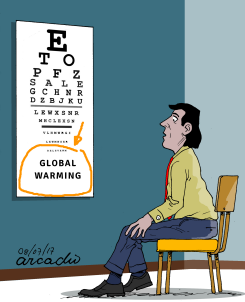
GLOBAL WARMING
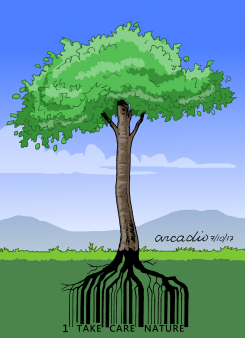
TAKE CARE NATURE
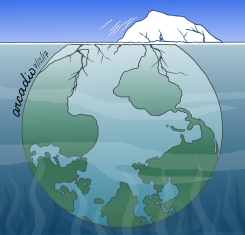
A TORN PLANET/PLANETA DESGARRADO
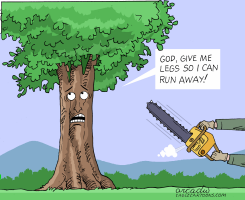
DEFENSELESS TREES AGAINST DEFORESTATION
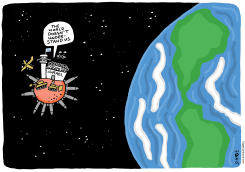
ISRAEL ISOLATED PLANET IN SPACE
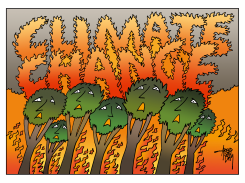
ANTHROPOMORPHIC TREES AMID BURNING FOREST
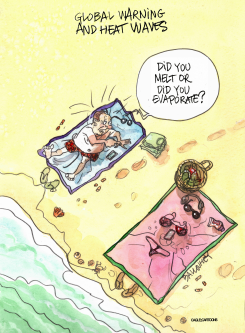
GLOBAL WARMING MELTS BEACHGOERS IN HEAT WAVE
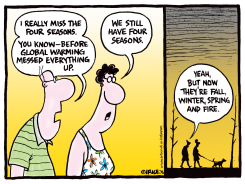
GLOBAL WARMING TURNS SEASONS TO FIRE
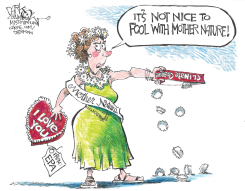
NO VALENTINES FOR MOTHER NATURE
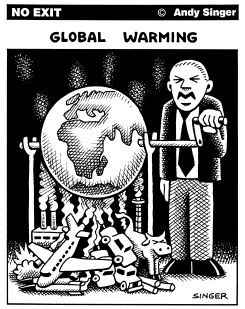
GLOBAL WARMING
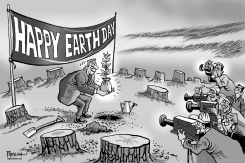
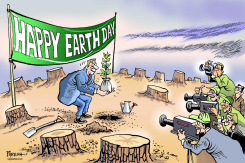
HAPPY EARTH DAY
HAPPY EARTH DAY


