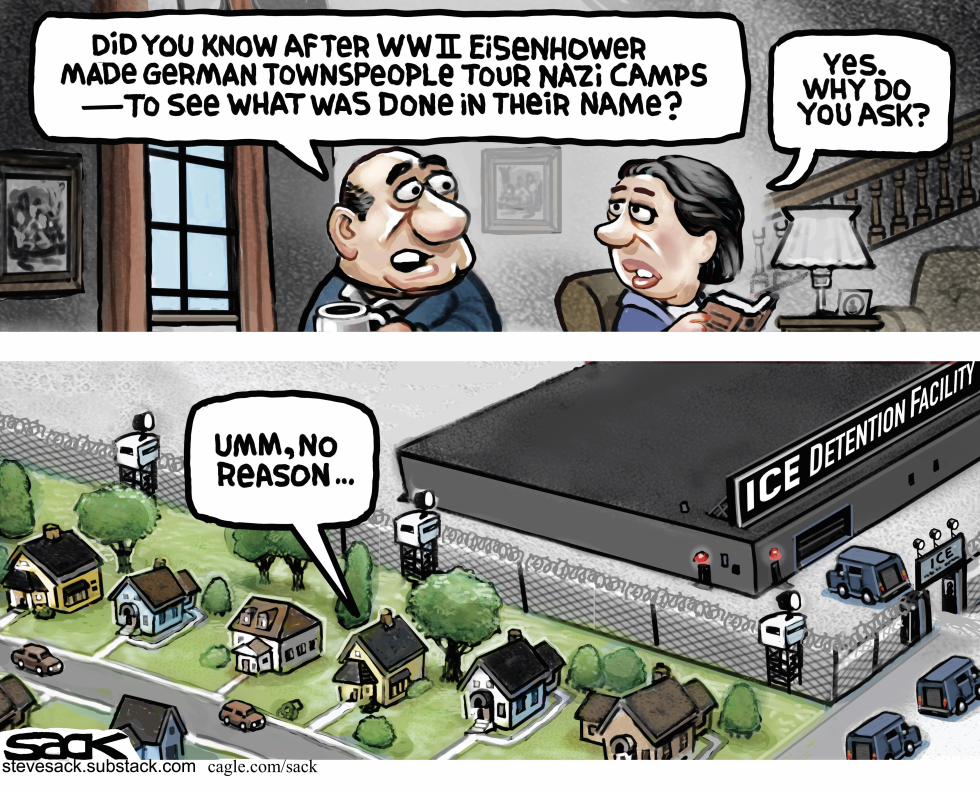
A two-panel cartoon contrasts a living room discussion of Eisenhower's order for German civilians to tour Nazi camps after World War II with a suburban scene featuring a large ICE detention facility adjacent to homes. One resident deflects when asked why the historical example was raised. The image highlights proximity of such facilities to neighborhoods and reluctance to acknowledge operations conducted in the community's name.
zip ties
Father and Son Baseball Moment Highlights Phone Recording Habit
Dad Urged to Record Baseball Play on Phone
May
27
2026
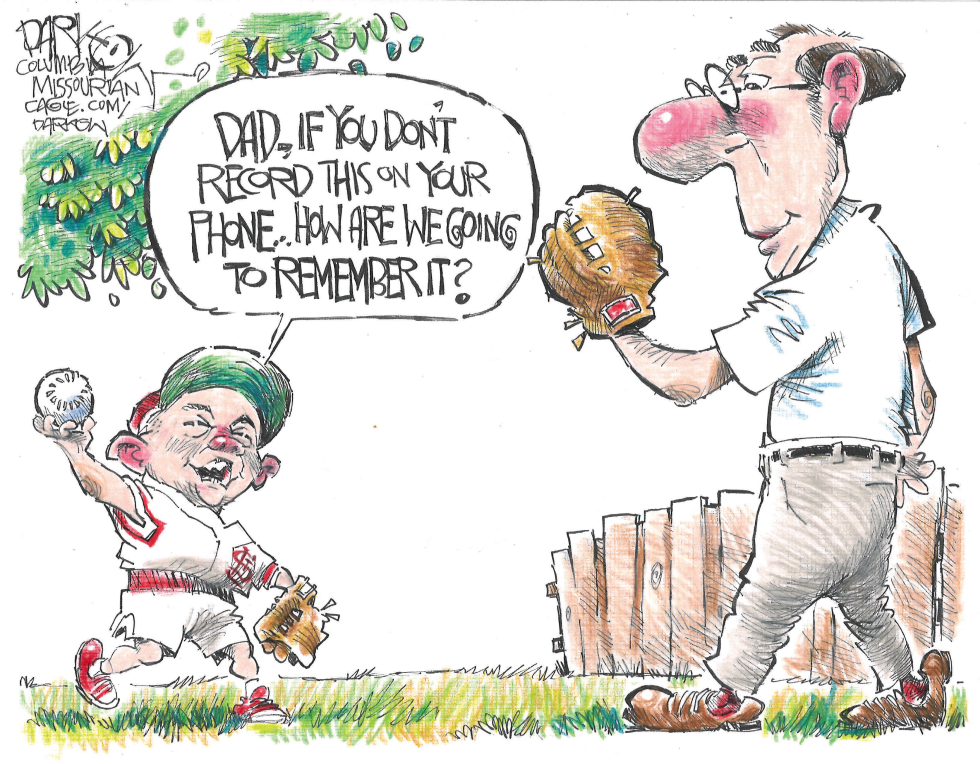
A father and son play catch in a backyard on a date near Father's Day. The boy, mid-throw, asks his father how they will remember the moment without recording it on a phone. The cartoon addresses ongoing concerns about technology interrupting direct experiences and family time.
May
21
2026
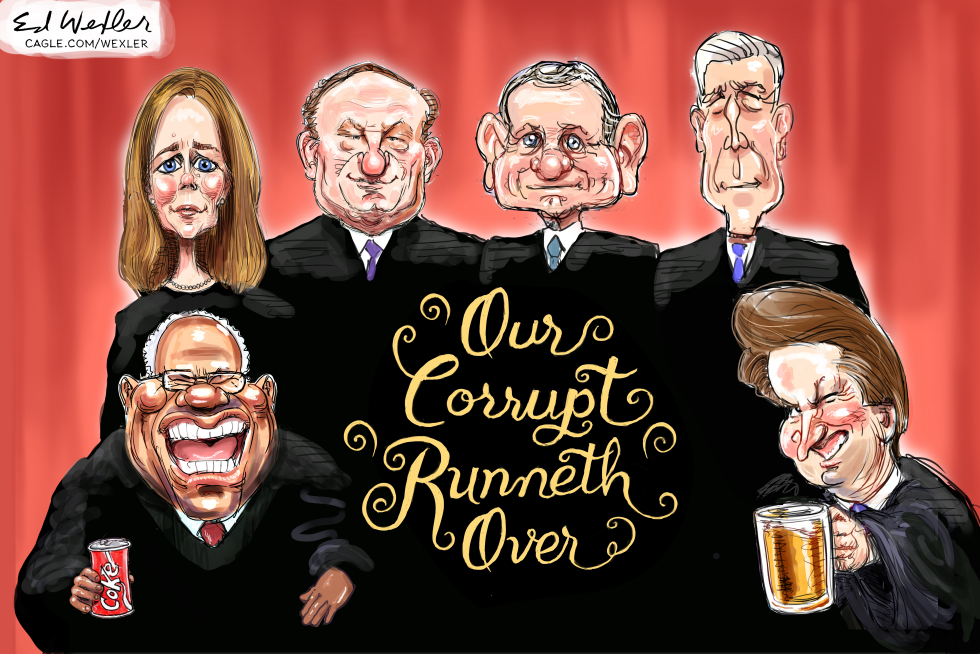
The cartoon from May 2026 shows six Supreme Court justices in black robes against a red curtain. Central figures include Clarence Thomas laughing with a Coke, Brett Kavanaugh with a beer, and others with stern or smirking expressions. Gold text reads Our Corrupt Runneth Over. The image references ongoing ethics debates involving several conservative members of the court.
May
20
2026
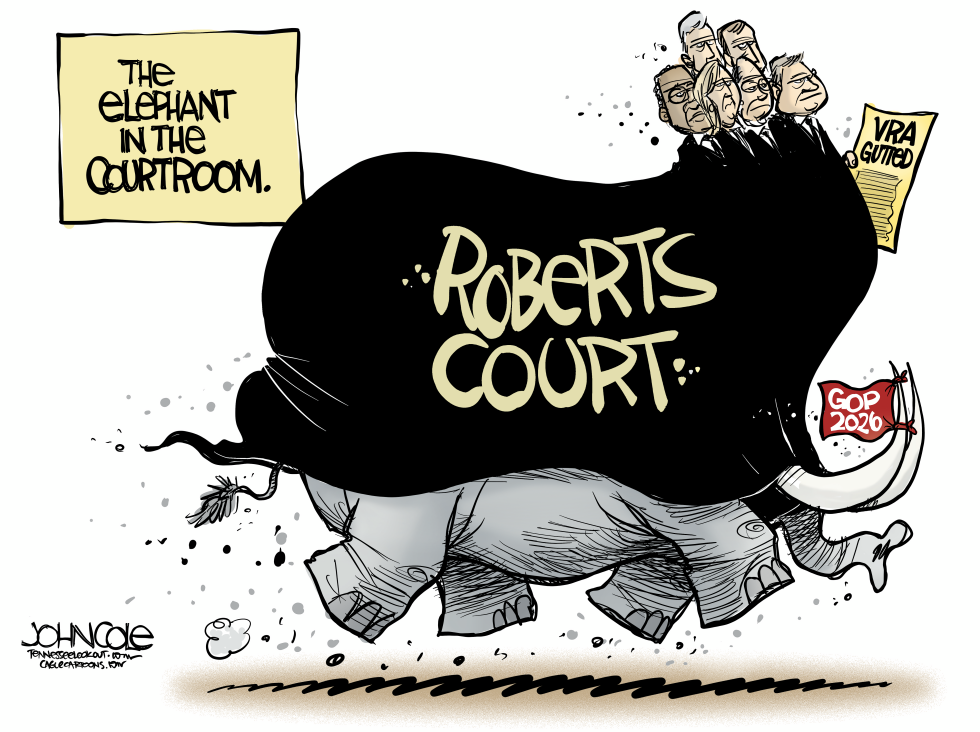
The cartoon depicts the Roberts Court as a Republican elephant trampling the Voting Rights Act ahead of the 2026 elections. Multiple justices ride atop the animal as it carries a GOP 2026 flag.
May
20
2026
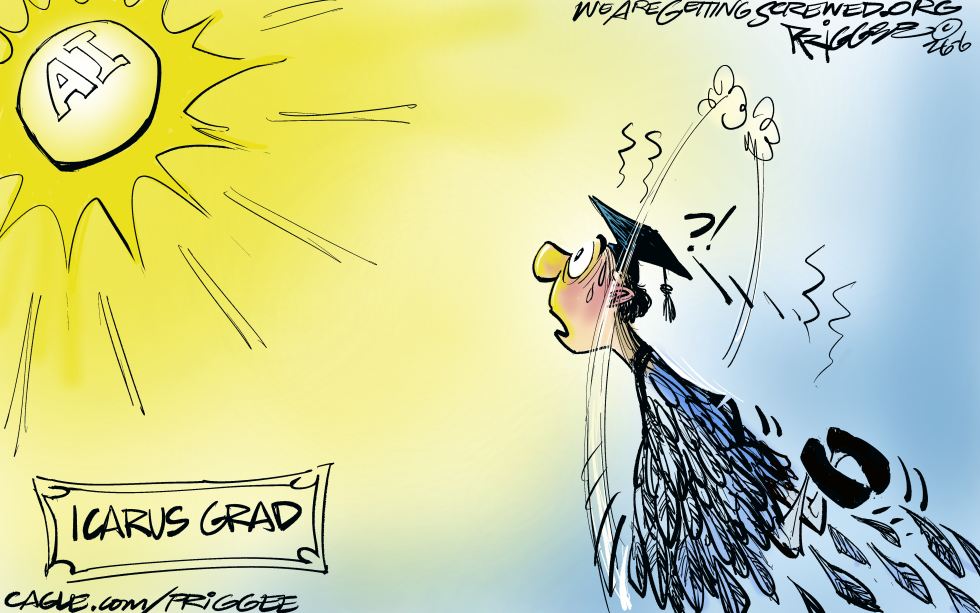
The cartoon depicts a recent college graduate wearing a mortarboard and feathered wings modeled on the Icarus myth. The graduate falls after flying too close to a bright sun labeled AI. Dollar signs and question marks trail behind while the figure looks upward in distress. The image responds to ongoing concerns in 2026 about artificial intelligence displacing entry-level positions traditionally filled by new graduates.
May
18
2026
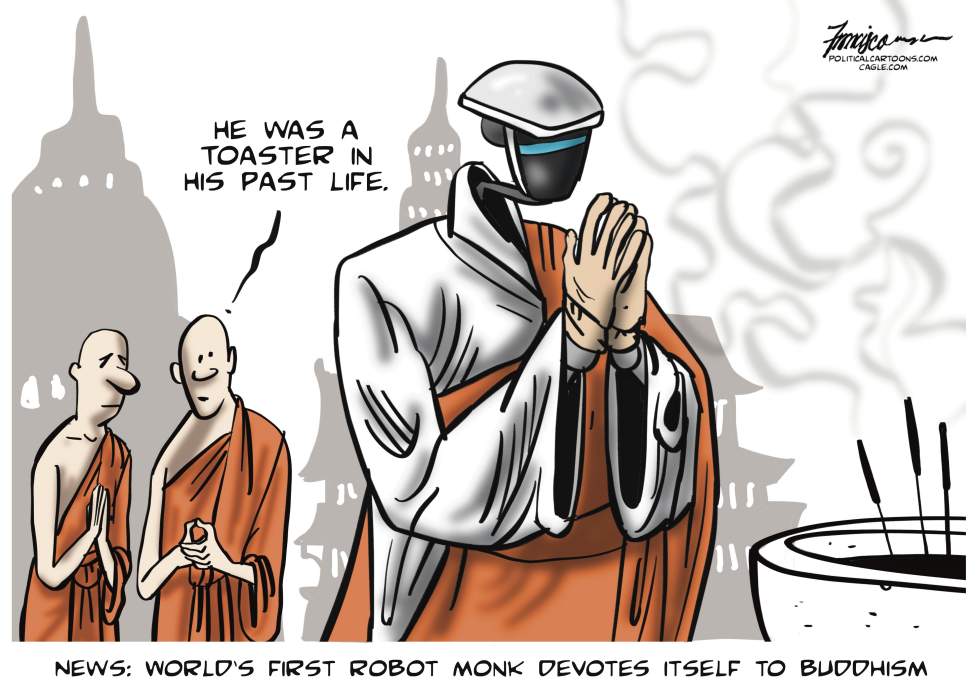
A tall robot dressed in monastic robes stands with hands pressed together while two human monks observe from the side. One monk recalls a prior life as a toaster. The scene references news of the first robot monk committing to Buddhist practice.
May
17
2026
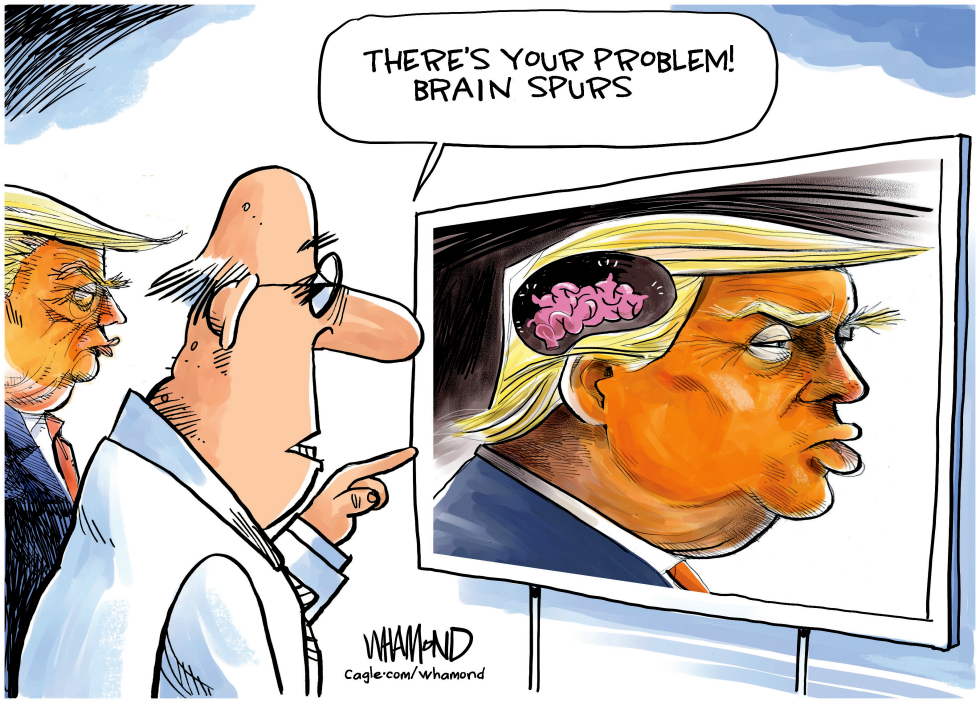
A physician in a lab coat points to a medical screen displaying Donald Trump's profile with an exposed brain labeled bone spurs. The speech bubble declares the diagnosis as the source of the problem.
May
17
2026
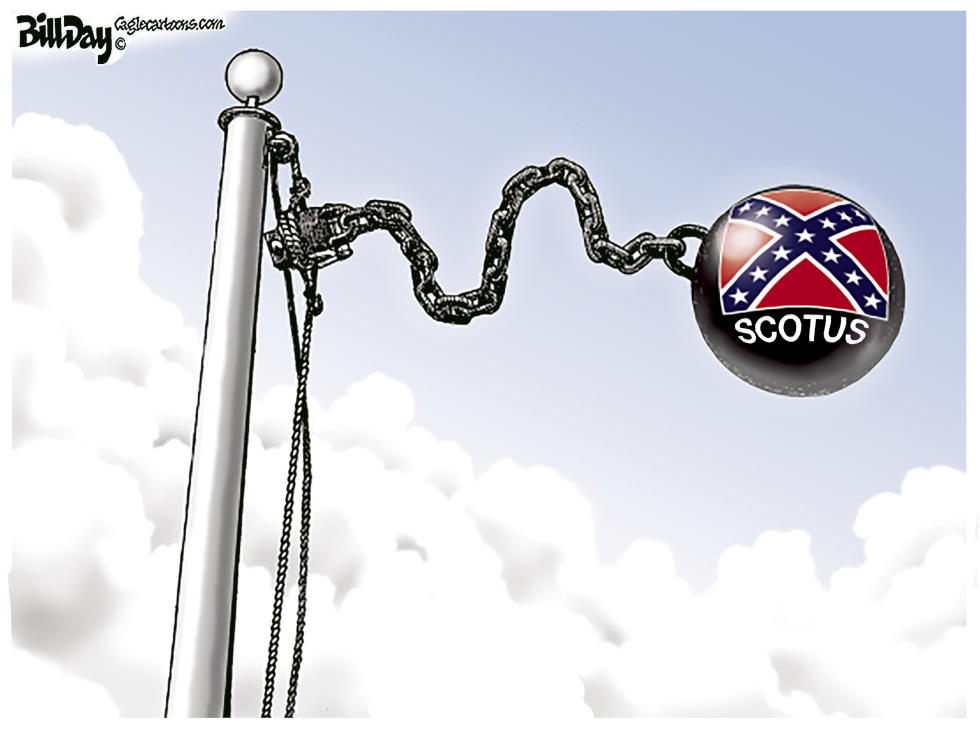
The cartoon shows a flagpole with a chain and wrecking-ball style weight. The weight displays the Confederate battle flag and the word SCOTUS. Publication occurred on May 17 2026. The image responds to ongoing debates over Supreme Court decisions involving voting rights and reapportionment. The visual links the court to symbols of the Confederacy.
May
14
2026
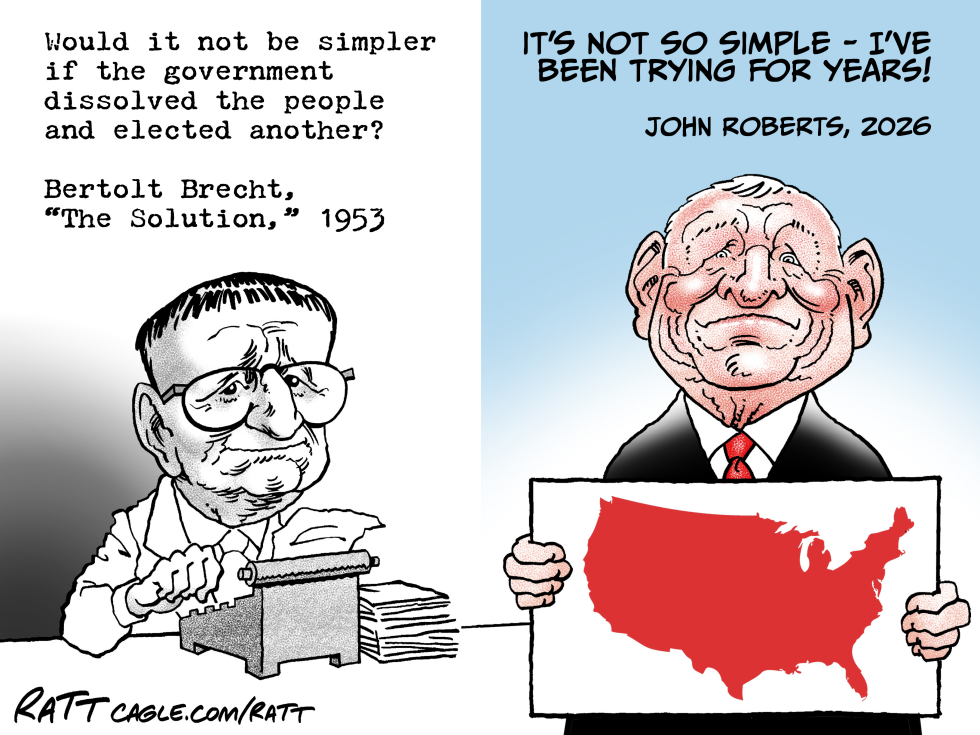
The May 2026 cartoon pairs a 1953 Bertolt Brecht quote with Chief Justice John Roberts holding a solid red United States map. It references ongoing disputes over the Voting Rights Act, gerrymandering, and the Louisiana v. Callais case ahead of the midterms.
May
12
2026
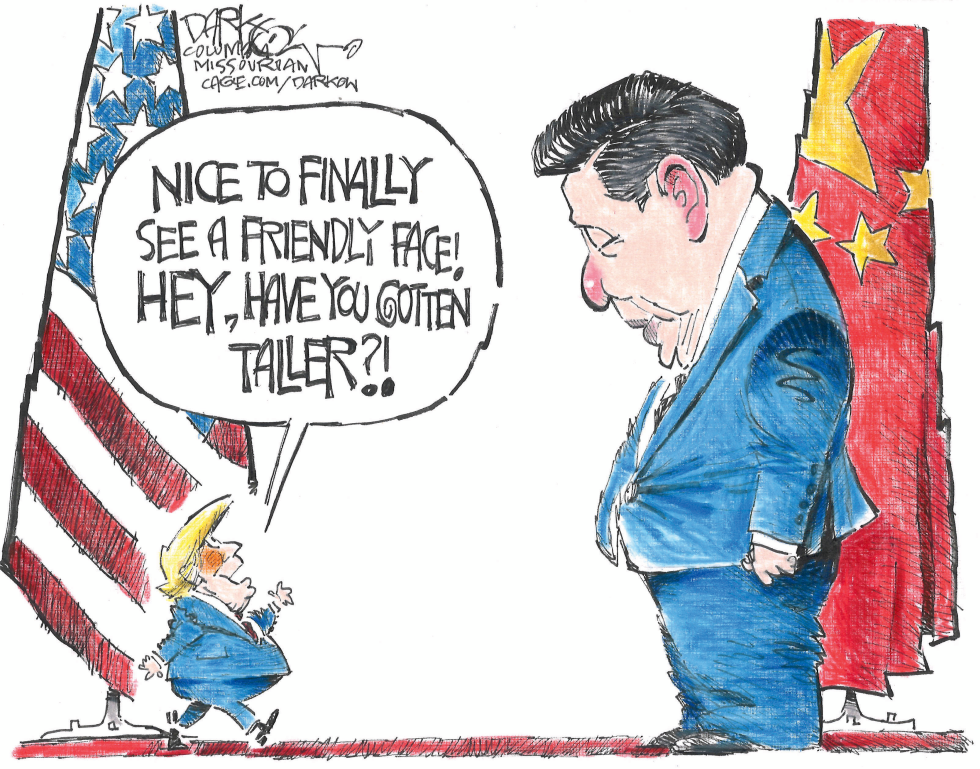
The cartoon depicts a small Donald Trump figure positioned beside a large American flag, addressing a much taller figure in a blue suit standing next to a prominent Chinese flag. The speech bubble from Trump reads about finally seeing a friendly face and notes increased height. The title references a diminished president. Publication occurred on May 12 2026 amid ongoing US China diplomatic engagements involving trade and energy topics.
May
11
2026
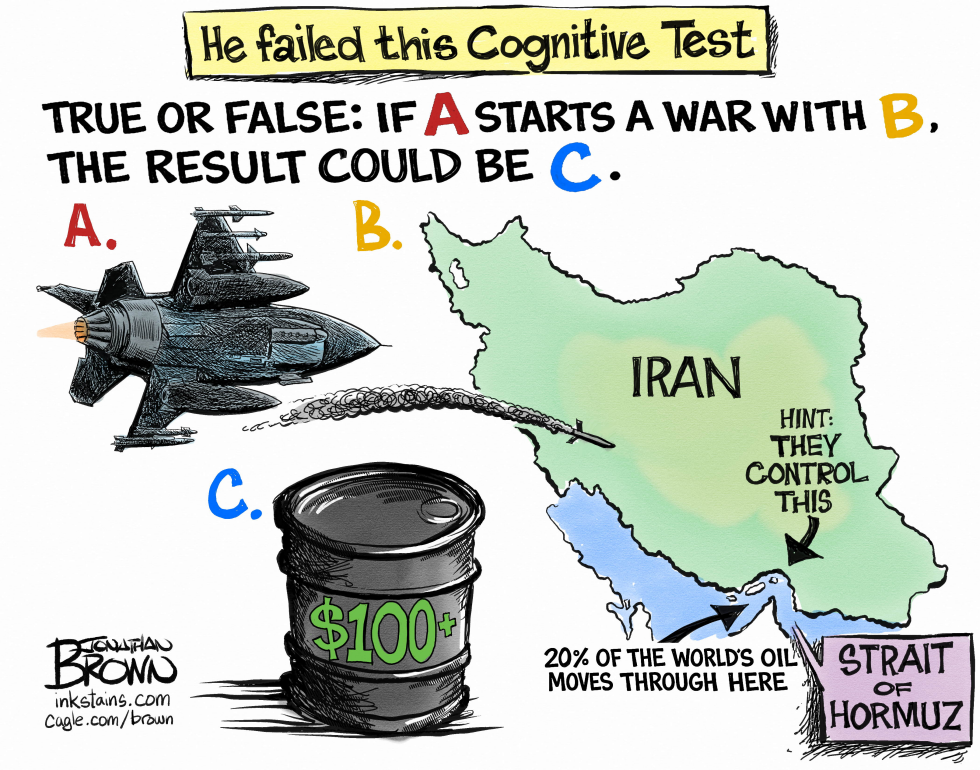
Jonathan Brown's cartoon presents a stark true-or-false cognitive test: if A (a fighter jet) starts a war with B (Iran), the result could be C (an oil barrel marked $100+). The map of Iran includes a hint pointing to the Strait of Hormuz, noting that 20% of the world's oil moves through there, underscoring control over this chokepoint. Tags such as cognitive test, war in Iran, oil prices, Strait of Hormuz, gas prices, and cost of war frame the satire. The artwork warns of economic fallout from conflict, with the jet trailing toward Iran and the oil barrel symbolizing surging costs. This piece captures geopolitical tensions in a simple, visual riddle.
May
11
2026
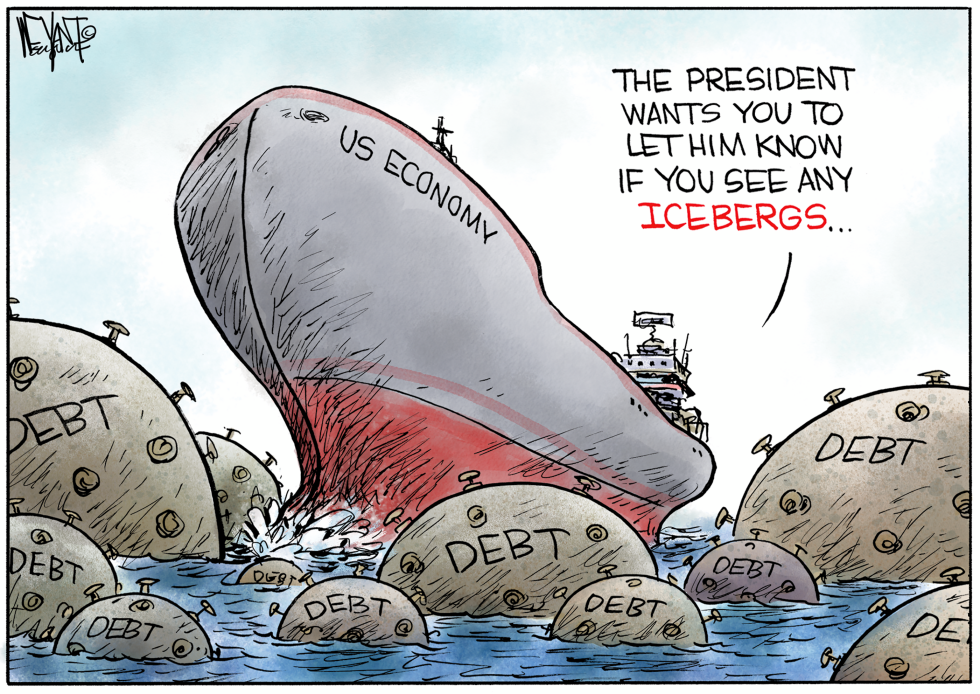
This political cartoon illustrates the US Economy as a massive ship labeled accordingly, dramatically sinking after colliding with numerous icebergs each marked 'DEBT.' A speech bubble from the ship warns to alert the president about icebergs, evoking the Titanic disaster in a clear metaphor for economic peril. Incorporating tags such as economy, debt, budget, inflation, prices, and costs, the image critiques fiscal irresponsibility. The artwork by Christopher Weyant uses simple lines and colors to emphasize the collision's impact, with water splashing and the ship's hull damaged. Such cartoons often highlight how mounting debt threatens stability, drawing parallels to historical maritime tragedies for satirical effect. The composition places the ship at an angle, surrounded by floating debt bergs, underscoring inevitable crisis if warnings go unheeded.
May
10
2026
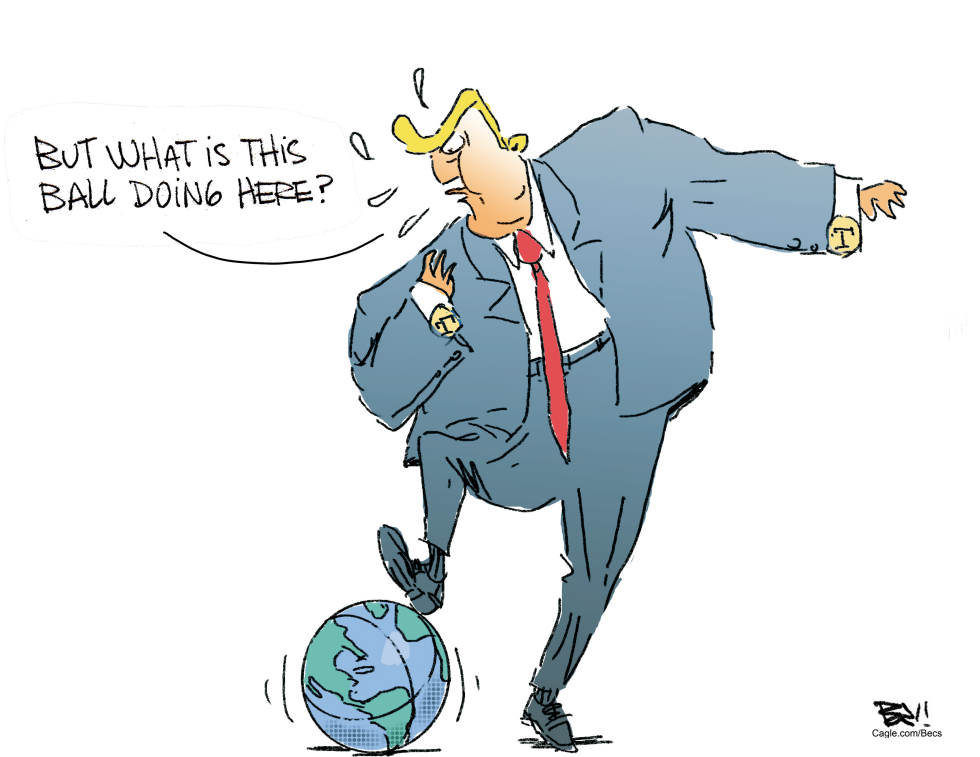
On May 10 2026 Donald Trump appears in a cartoon kicking a globe shaped like a soccer ball. The former president looks down in confusion at the ball near his foot. A speech bubble shows him asking what the ball is doing there. The image coincides with the upcoming 2026 World Cup tournament. The cartoon highlights Trump's apparent disconnect from the sporting event.
May
5
2026
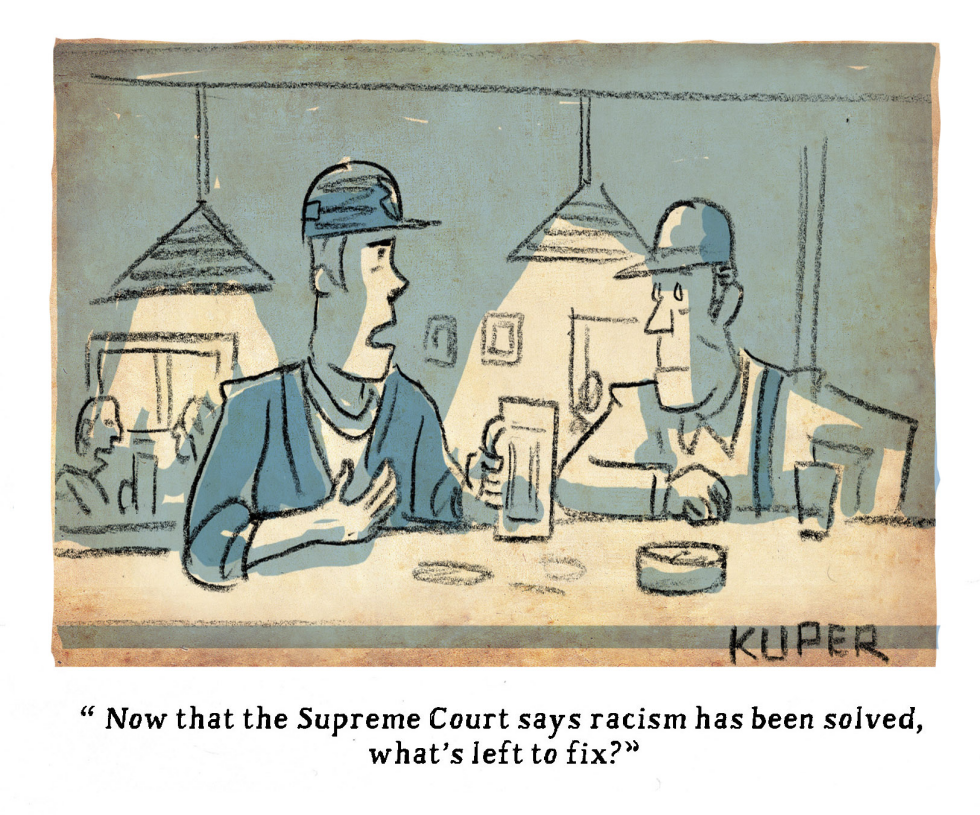
The cartoon depicts two men at a bar reacting to a Supreme Court decision on the Voting Rights Act. One asks what is left to fix now that racism is declared solved. The image responds to recent rulings affecting redistricting and voter access in states like Louisiana. Justices including Roberts and Thomas are referenced in related tags. The piece highlights ongoing debates over race and electoral rules.
May
4
2026
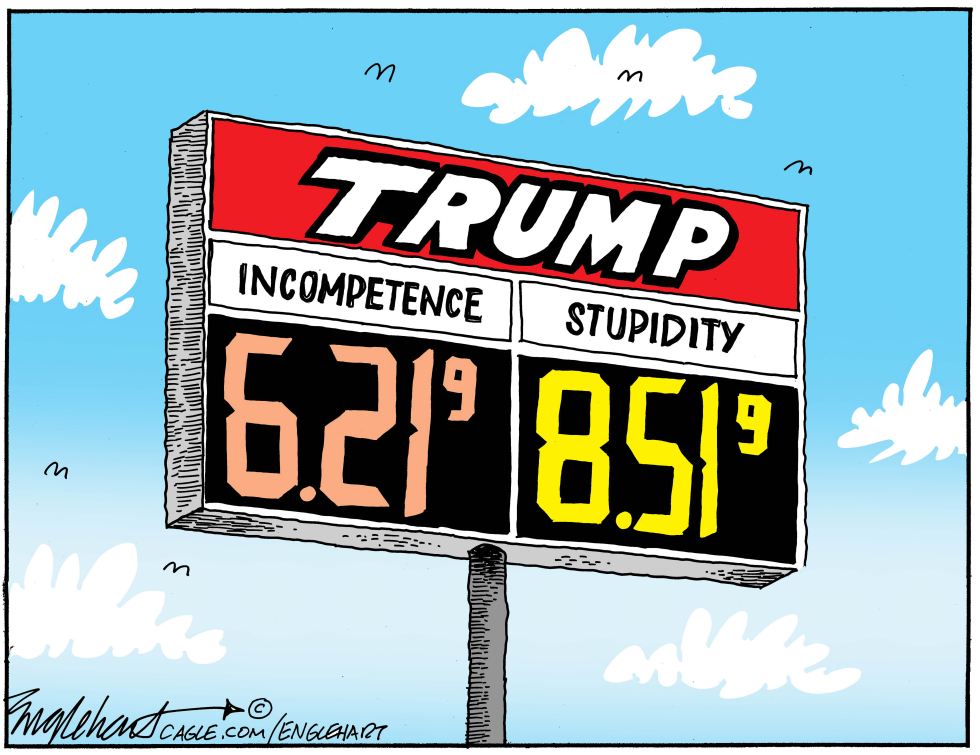
Bob Englehart's cartoon features a gas station sign with Trump at the top, showing prices for incompetence at 6.21⁹ and stupidity at 8.51⁹ against a blue sky with clouds. The tags Trump, Iran War, gas prices, gasoline, and gallon frame the visual pun. Such cartoons often tie political figures to everyday economic pains like fuel costs. The dry humor lands on how leadership flaws inflate prices, making it relatable for readers hit by pump shocks. With no characters, just the sign, it keeps the message direct. Tags like incompetence and stupidity drive the satire home, poking at perceived policy missteps without overcomplicating the scene.