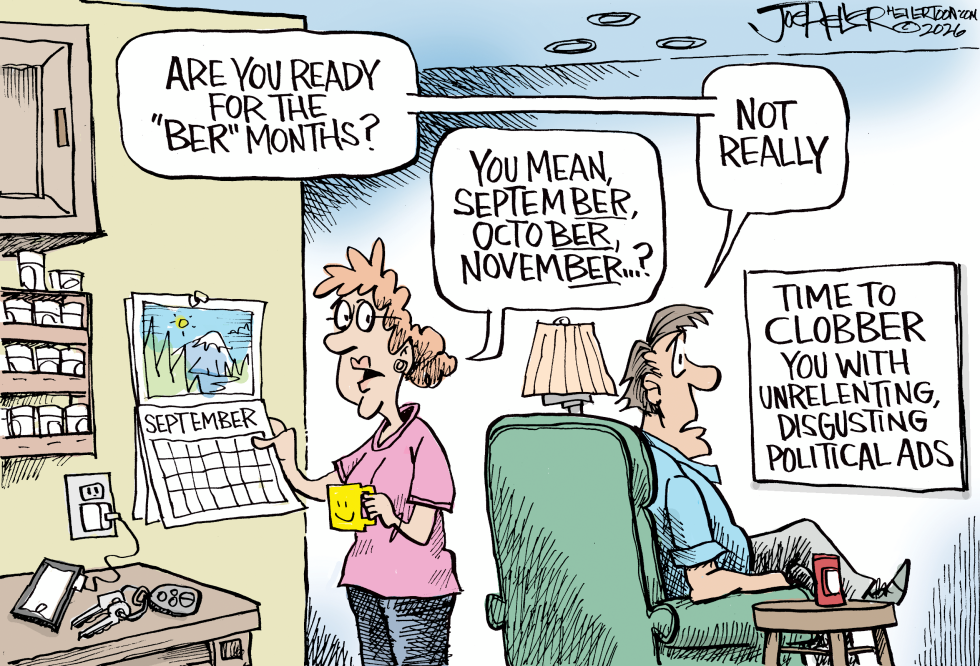
As September begins, the annual cycle of fall political advertising intensifies ahead of November elections. Candidates and outside groups ramp up spending on television, digital and mail campaigns to reach voters. The volume of messages creates widespread fatigue among the public. The cartoon highlights the predictable dread that accompanies the shift from summer to the final stretch of the campaign calendar.
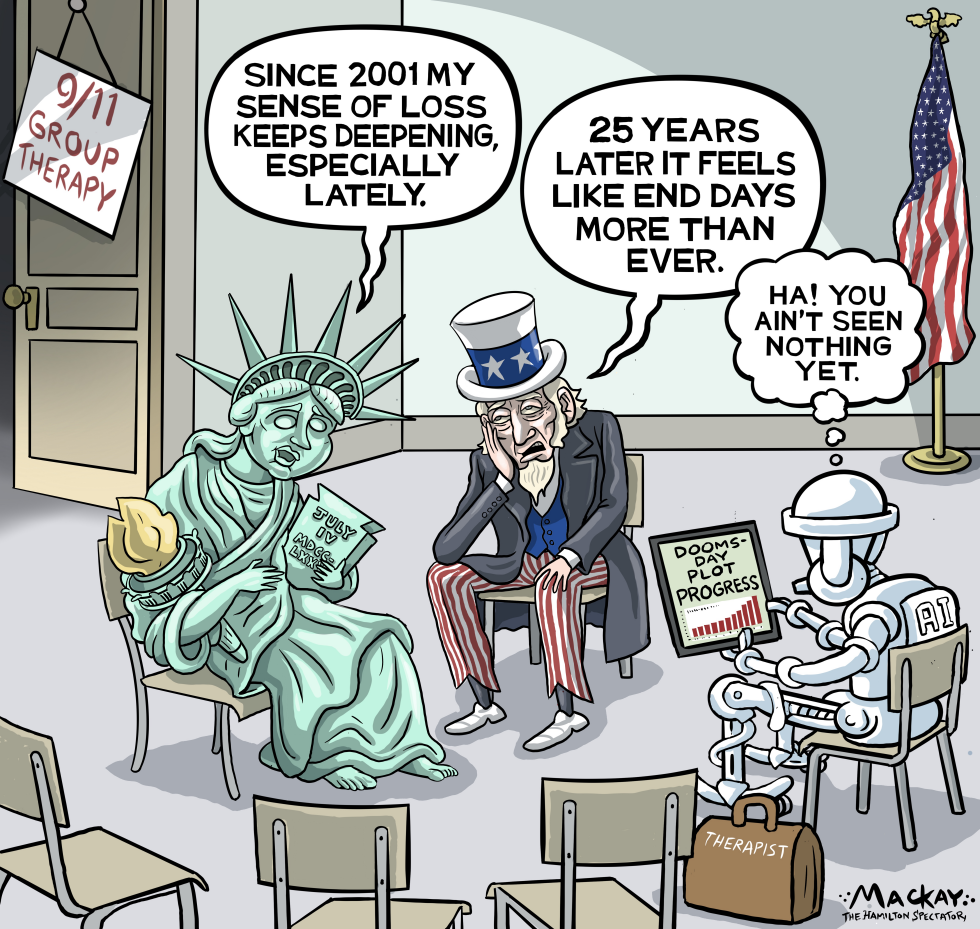
The cartoon depicts the Statue of Liberty, Uncle Sam and an AI robot seated in a 9/11 group therapy session on the 25th anniversary of the attacks. The Statue of Liberty holds a book marked July IV MDCCLXXVI and speaks of deepening loss since 2001. Uncle Sam echoes the sentiment of end days. The AI figure, labeled with a rising doomsday plot progress chart, retorts that the others have seen nothing yet. The scene uses national symbols to reflect persistent national trauma and emerging technological threats two and a half decades after the September 11 attacks.
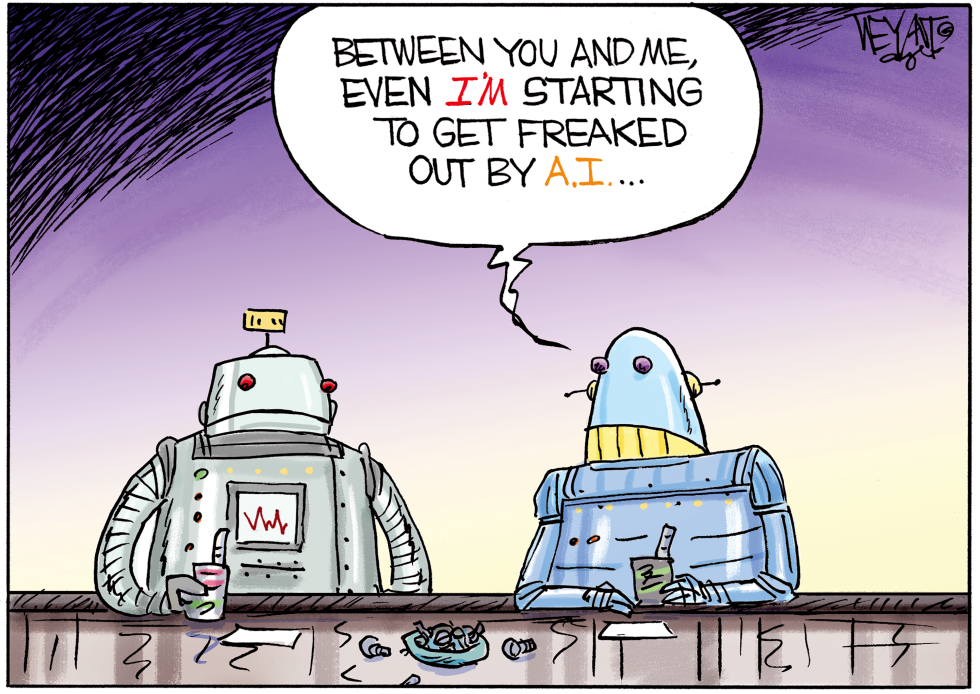
Developers continue pushing boundaries in artificial intelligence systems, raising questions about control, ethics, and long-term consequences for society. Public and expert discussions focus on whether safeguards can keep pace with innovation. The piece portrays robots themselves expressing alarm, underscoring the irony that even automated entities see risks in unchecked AI growth and the potential for machines to outpace their original programming.
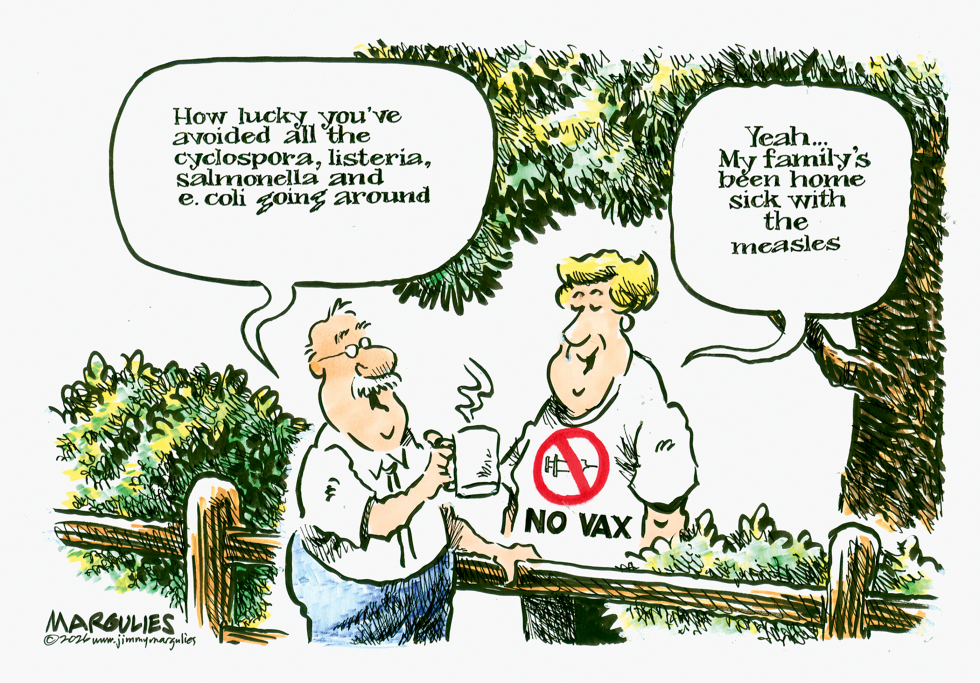
Vaccine-hesitant individuals continue to cite food safety concerns while measles cases rise in unvaccinated communities. The dynamic underscores ongoing public health tensions around immunization decisions and preventable disease spread.
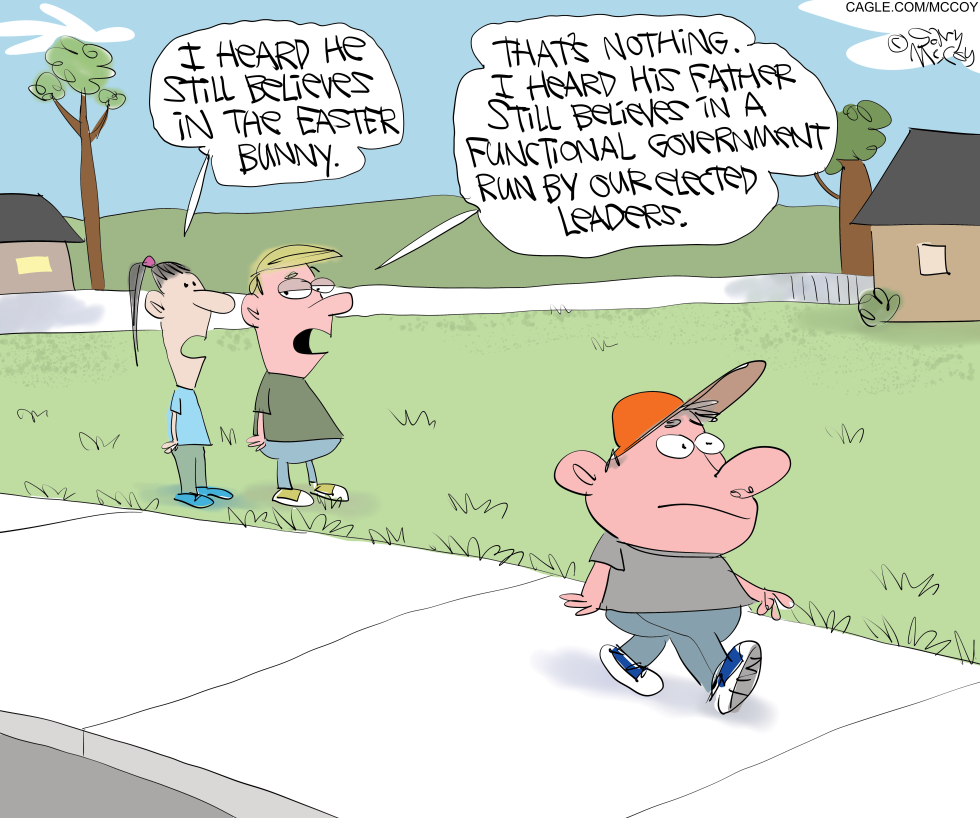
Public distrust in government institutions remains high as citizens question whether elected leaders can deliver effective results. Recent polls show widespread doubt about Congress and the executive branch functioning as intended. The cartoon captures this sentiment by likening such belief to childhood myths. It takes the position that expecting competent governance from current leaders is naive and unrealistic.
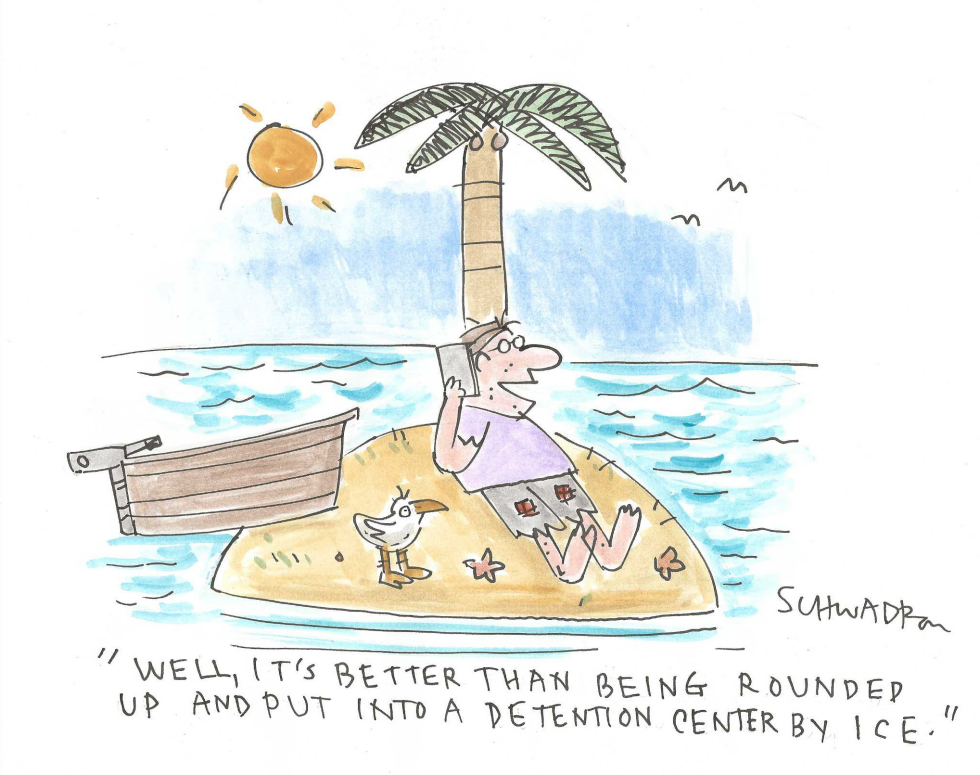
Immigration enforcement through ICE detention centers continues as a central policy tool amid ongoing border security debates. The approach draws criticism for its impact on individuals facing removal proceedings. The piece presents the view that extreme isolation can appear preferable to such facilities.
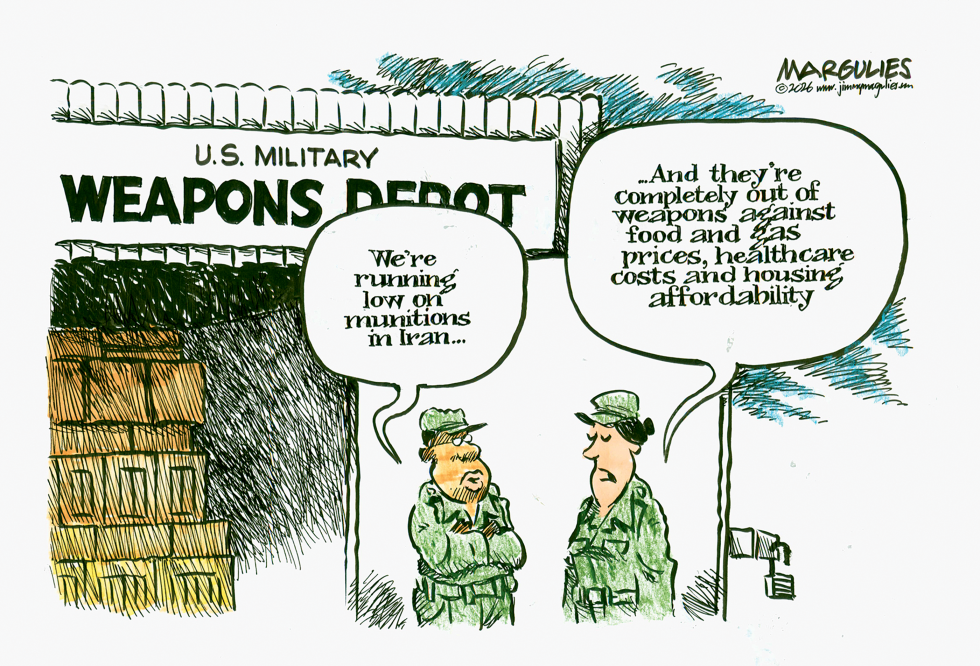
The cartoon depicts two U.S. soldiers outside a weapons depot labeled U.S. Military Weapons Depot. One soldier states the facility is running low on munitions in Iran. The second replies that domestic fronts are out of weapons against food and gas prices, healthcare costs and housing affordability. The image responds to ongoing debates over U.S. military aid commitments abroad and competing budget pressures at home as of the August 2026 publication date. It uses the depot setting and dialogue to contrast foreign military demands with economic challenges facing American households.
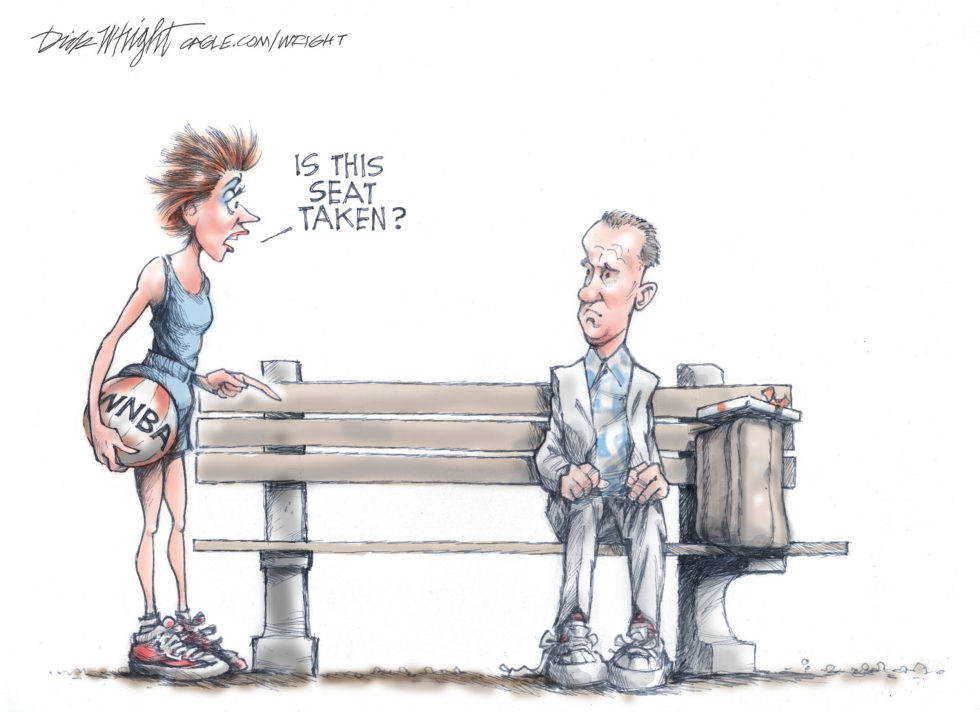
A WNBA player approaches a man seated on a park bench and asks if the seat is taken. The exchange highlights ongoing debates over gender dynamics and public interactions in sports contexts. The piece presents the moment as an illustration of shifting social boundaries.
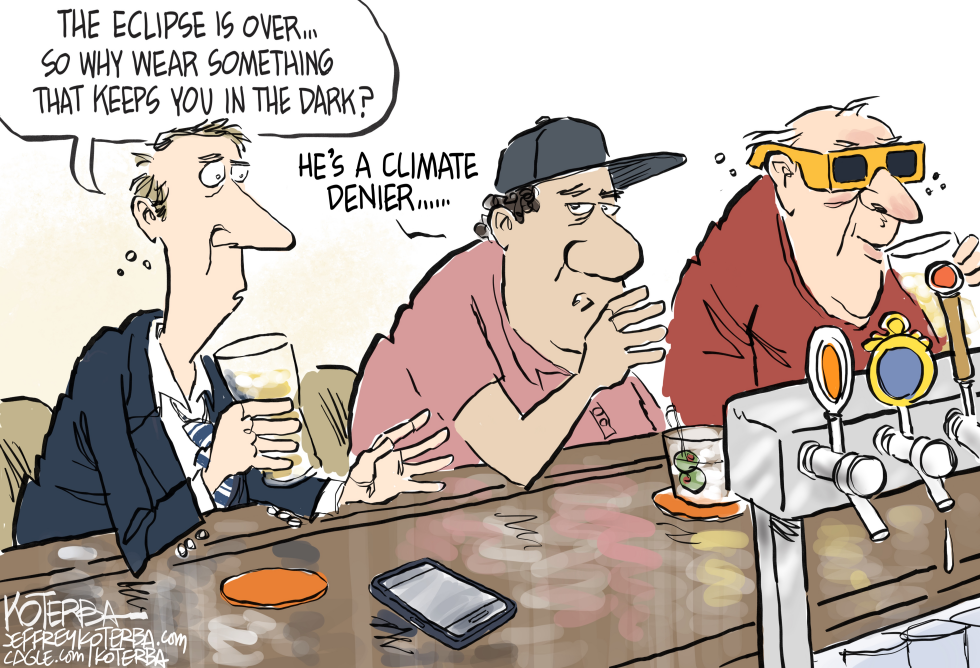
A man continues wearing eclipse glasses well after a solar eclipse passes, prompting his companions at a bar to label him a climate denier. The scene underscores how some individuals persist in rejecting established climate science despite clear evidence. The editorial position criticizes this refusal to acknowledge reality as a form of willful ignorance that hinders progress on environmental issues.
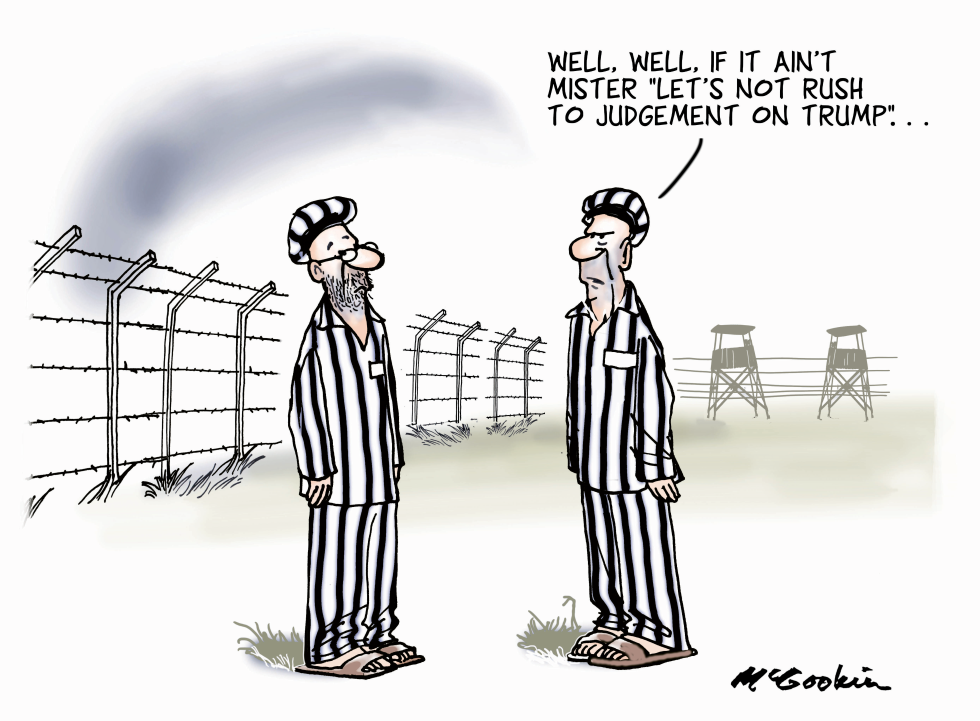
Prisoners in a secure facility highlight reluctance to rush judgment on Donald Trump. The exchange underscores ongoing debate over timing and fairness in evaluating the former president's actions. The piece argues that hesitation to judge reflects inconsistent standards applied to political figures.
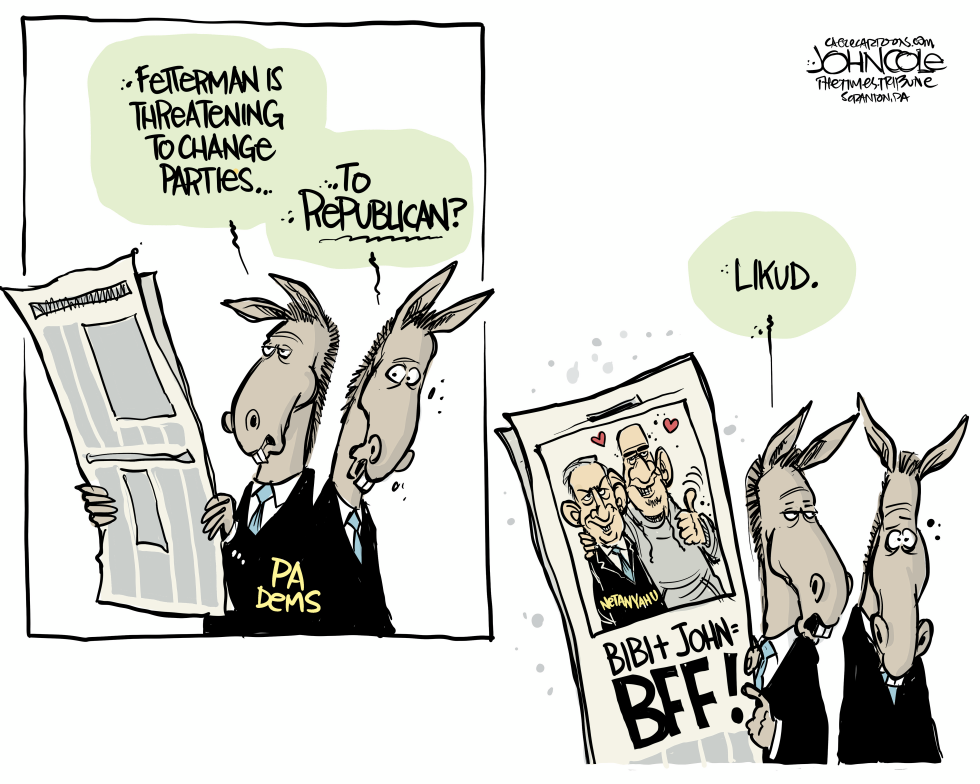
Senator John Fetterman has signaled a possible party switch that has Pennsylvania Democrats scrambling. Speculation centered on a Republican move until the senator's close ties to Israeli Prime Minister Benjamin Netanyahu and the Likud party surfaced instead. The development highlights ongoing tensions within the Democratic coalition over foreign policy alignments and personal political trajectories.
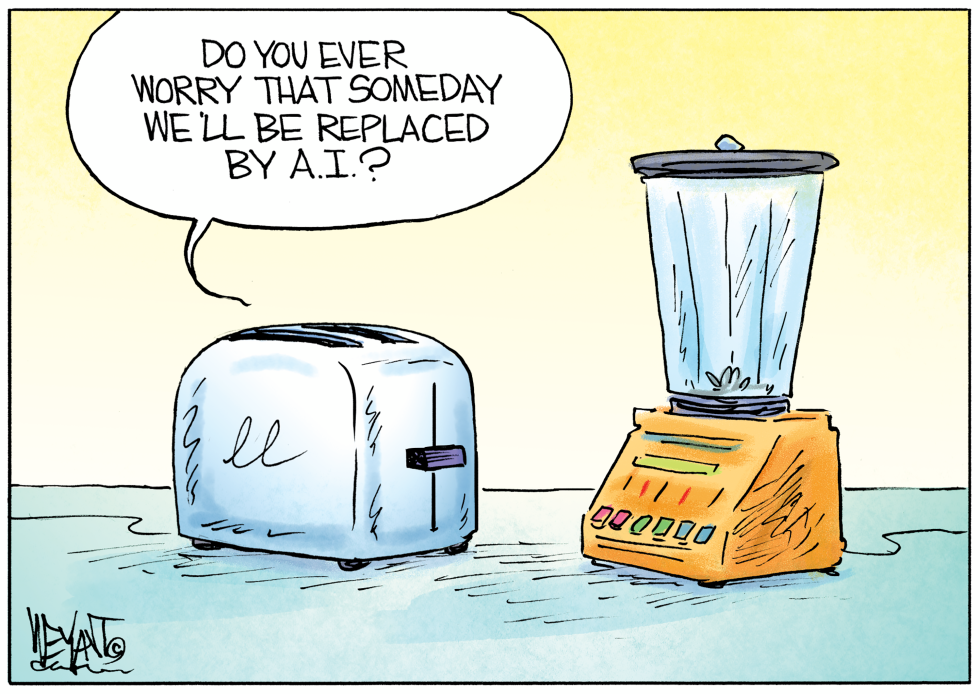
Artificial intelligence continues to advance across industries, prompting widespread discussion about job displacement for workers in various sectors. The concern centers on how rapidly evolving tools could automate tasks once handled by humans. This piece frames the debate through everyday objects to underscore persistent public anxiety about technological change and its long-term effects on employment.
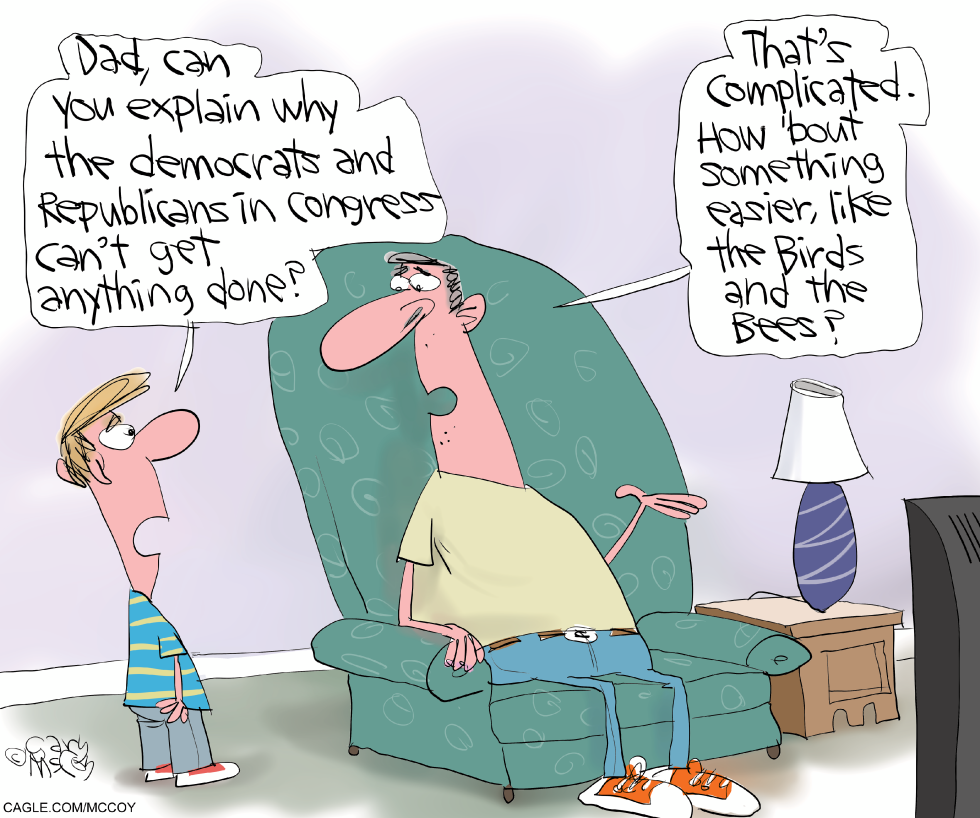
Congress remains stalled on major legislation amid ongoing partisan divisions between Democrats and Republicans. Lawmakers struggle to advance bills on key issues despite public frustration with inaction. The deadlock highlights deep divisions that prevent compromise on budgets, infrastructure, and other priorities. The cartoon portrays a father deflecting his son's inquiry about this dysfunction by redirecting to an easier subject, underscoring how even basic explanations of congressional gridlock prove too difficult to tackle directly.
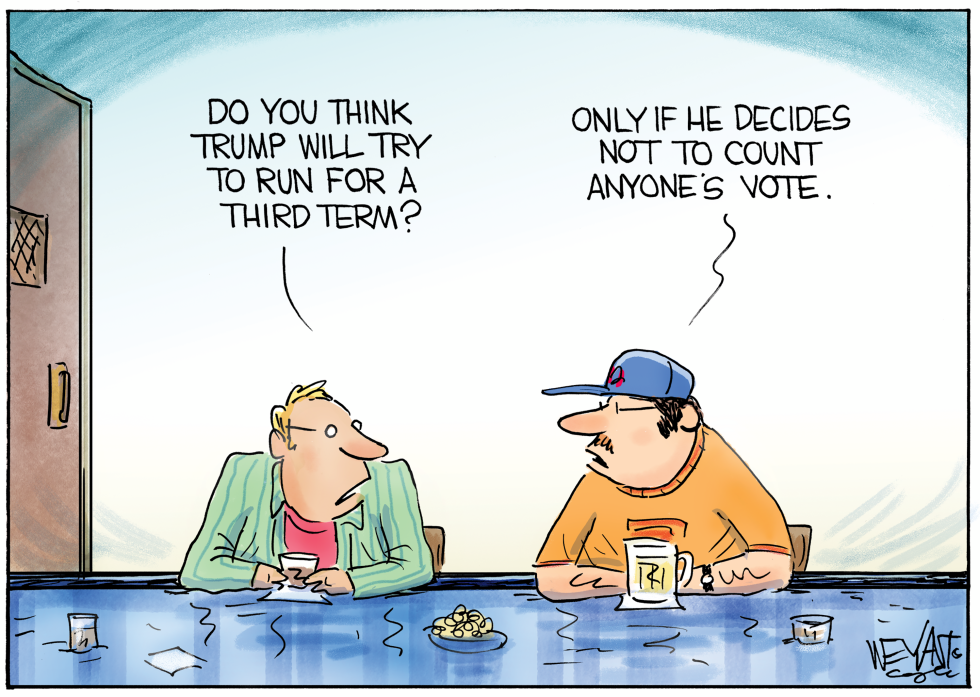
Discussions about a potential third term for Donald Trump continue in 2026 amid ongoing questions about electoral processes and term limits. The cartoon captures public skepticism regarding whether votes would be respected in any such effort. It takes the position that any attempt would hinge on disregarding voter input rather than following constitutional norms.
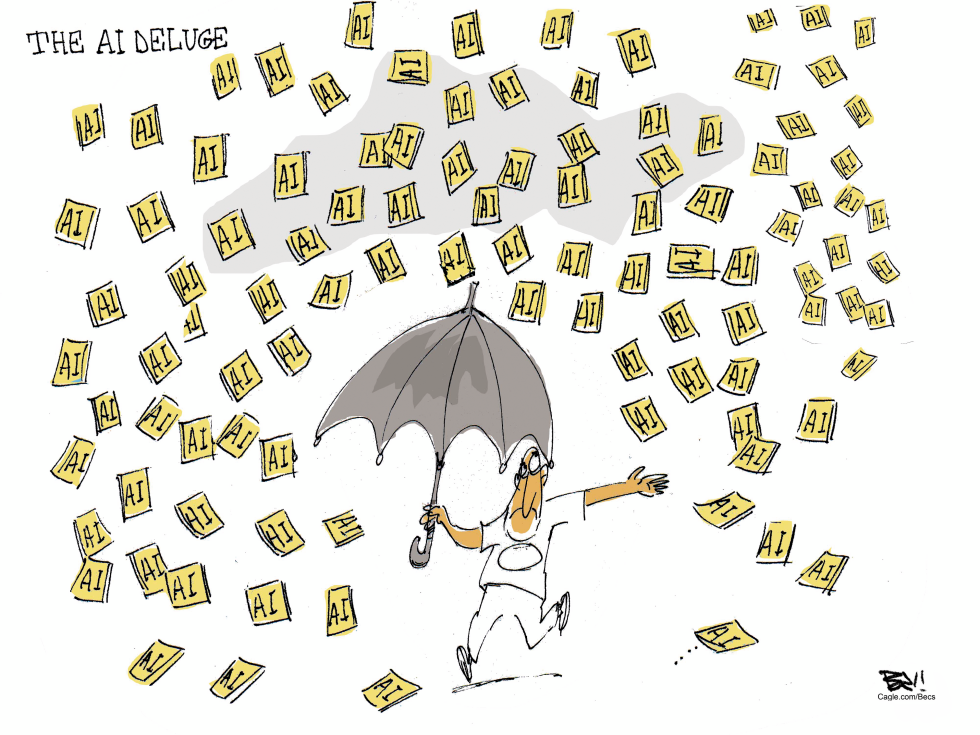
Artificial intelligence has saturated public conversation and workplace planning at an unusual pace. The piece responds to the sheer volume of announcements, tools and claims arriving at once. It suggests shelter rather than comprehension has become the realistic response.