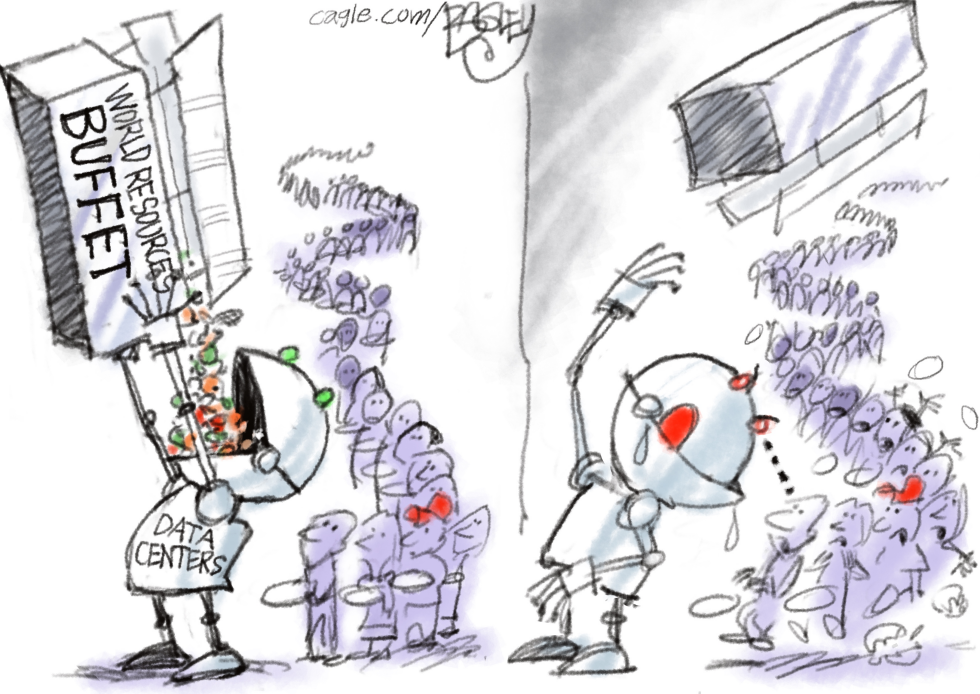
The cartoon depicts two robotic figures managing data centers. One empties a buffet of world resources into a labeled bin while crowds wait with bowls. The second figure waves from a window as groups with red hearts react below. The scene addresses expanding data center operations in Utah and their demands on water, electricity and other supplies amid ongoing climate concerns.
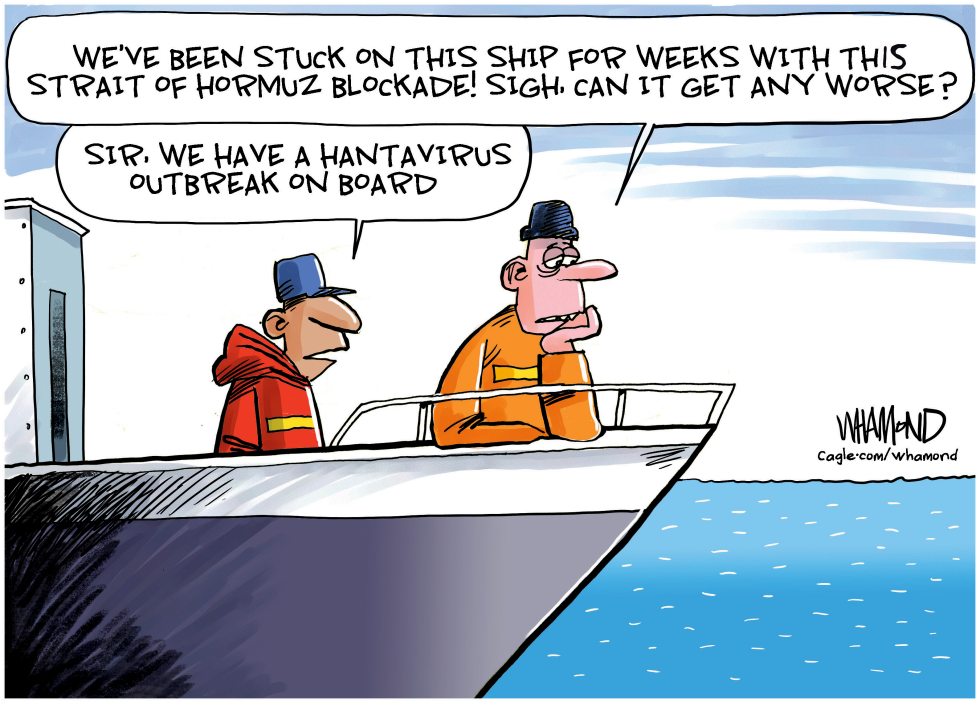
The cartoon depicts two sailors aboard a ship trapped in the Strait of Hormuz due to a naval blockade. One laments the weeks-long delay and wonders if conditions can worsen. The other reports a hantavirus outbreak on board. The image responds to ongoing tensions involving Iran and disruptions to global oil routes. As of the May 2026 publication date, the blockade has halted tanker traffic and strained energy markets. The added health crisis underscores the compounding risks for crews and supply chains. The visual ties geopolitical conflict directly to immediate human and economic consequences.
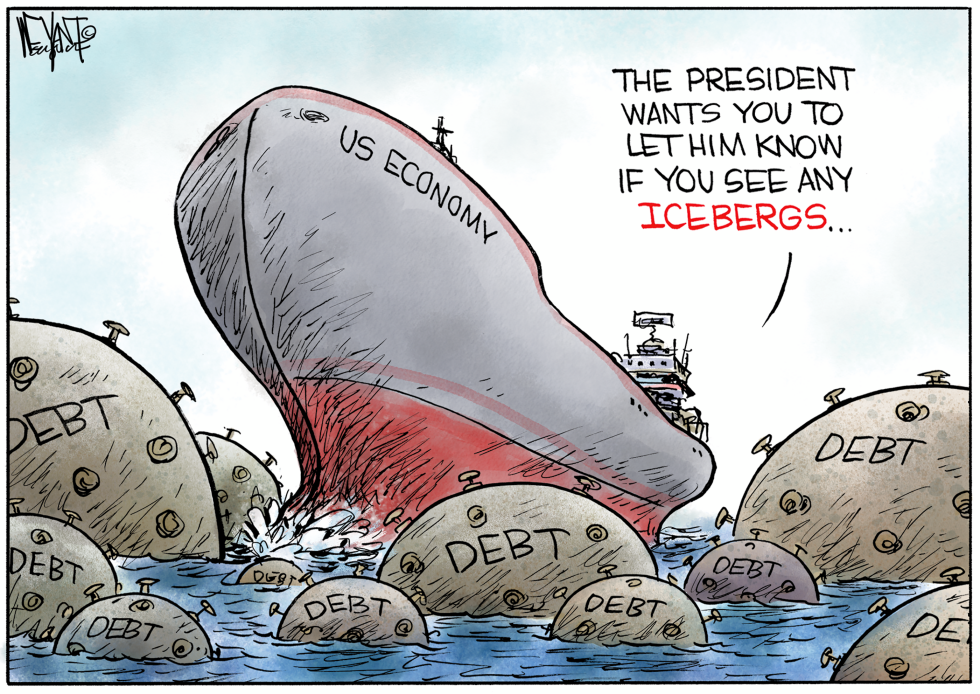
This political cartoon illustrates the US Economy as a massive ship labeled accordingly, dramatically sinking after colliding with numerous icebergs each marked 'DEBT.' A speech bubble from the ship warns to alert the president about icebergs, evoking the Titanic disaster in a clear metaphor for economic peril. Incorporating tags such as economy, debt, budget, inflation, prices, and costs, the image critiques fiscal irresponsibility. The artwork by Christopher Weyant uses simple lines and colors to emphasize the collision's impact, with water splashing and the ship's hull damaged. Such cartoons often highlight how mounting debt threatens stability, drawing parallels to historical maritime tragedies for satirical effect. The composition places the ship at an angle, surrounded by floating debt bergs, underscoring inevitable crisis if warnings go unheeded.
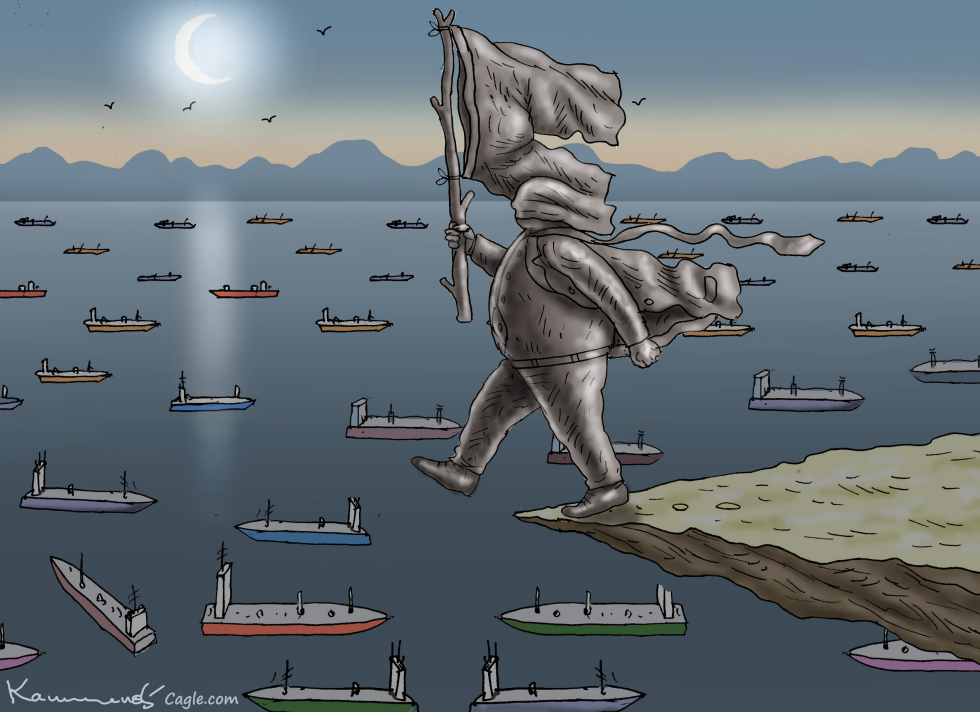
The cartoon shows a large, gray, statue-like figure with a hooded cloak, gripping a flag on a pole, as it steps forward off a cliff's edge. Below stretches a dark sea filled with many small ships of various colors, scattered across the water. In the background, mountains rise against a sky with a crescent moon and flying birds. The image, tagged with Banksy, Trumo, Hormuz, fascism, patriotism, and Maga terror, captures a moment of precarious advance. Artist Marian Kamensky signs it at the bottom left, linking to Cagle.com. This setup highlights a bold, unyielding march into potential downfall amid a busy maritime scene.
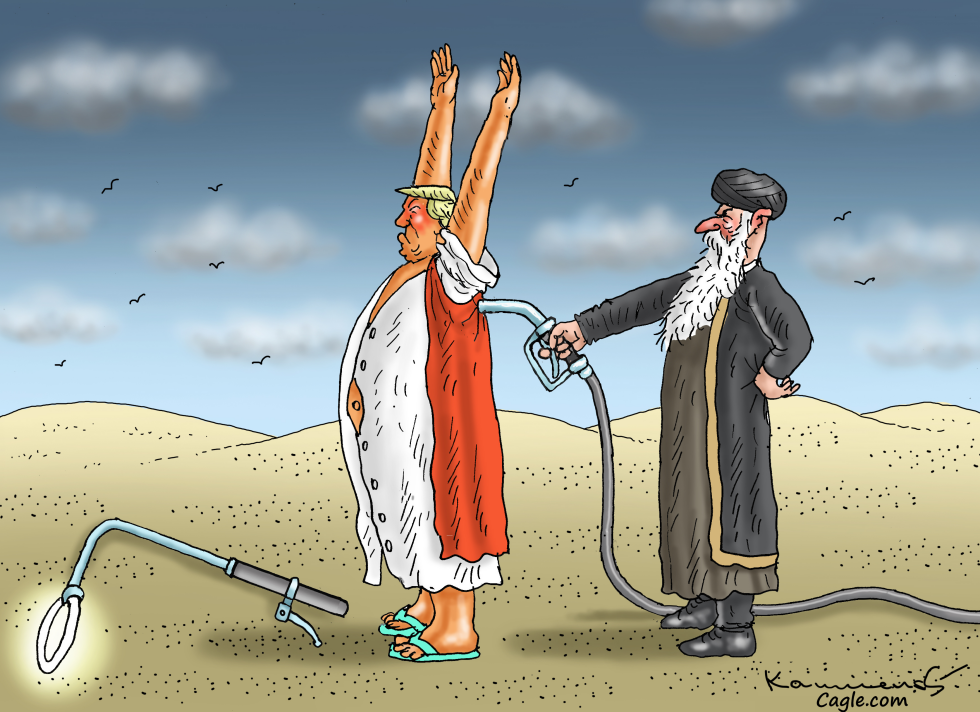
Marian Kamensky's cartoon captures a surreal scene in the desert where a figure resembling Trump, dressed in white and red robes with arms raised skyward, has a gas pump nozzle inserted into his side by a bearded man in dark robes and turban. The image plays on themes of Trump, Iran, Hormuz, fascism, MAGA terror, and oil war, blending religious imagery with modern geopolitical tensions. Birds fly in a cloudy sky over sandy dunes, emphasizing isolation and absurdity. The signature and Cagle.com mark confirm its syndication roots. This piece skewers the intersections of politics, religion, and resource dependency without words, relying on visual punch for impact. Such cartoons thrive in editorial pages for their sharp commentary on current events.
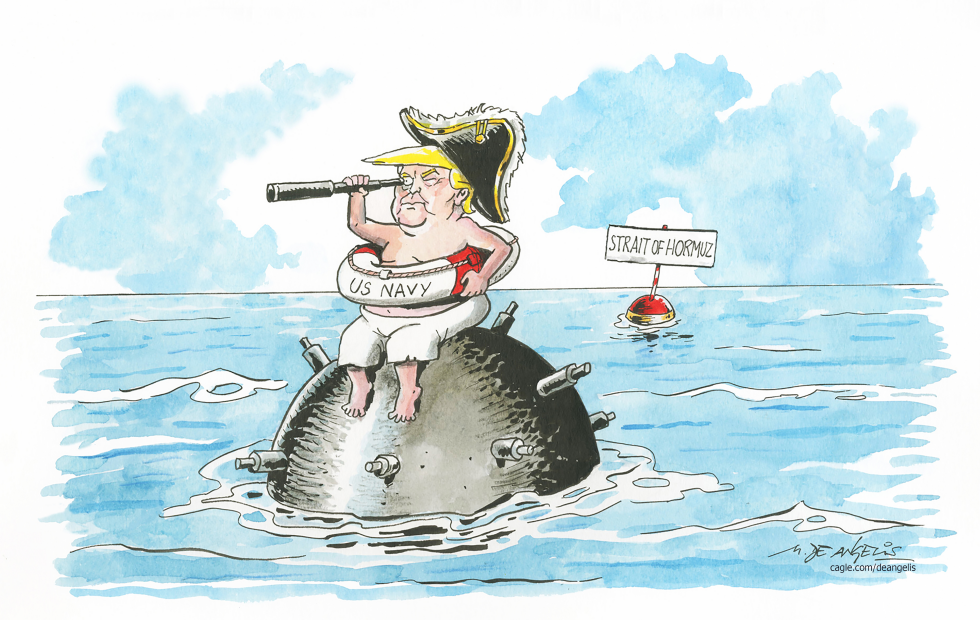
Marco De Angelis draws a caricature resembling Donald Trump, shirtless with a US NAVY life preserver, white shorts, and pirate hat, sitting on a large mine bobbing in blue waters. He holds a telescope to his eye, gazing out, while a small buoy nearby bears a Strait of Hormuz sign. The scene tags USA, IRAN, HORMUZ, NAVY, MINES, OIL, NEGOTIATIONS, FLEET, ALONE, ADMIRAL, MIDDLE EAST, WAR, capturing a sense of solitary watch in troubled seas. The dry humor underscores the absurdity of one man embodying an entire fleet, floating precariously on explosive hardware. Cartoons like this thrive on exaggeration, turning geopolitical standoffs into visual punchlines that newspapers love for their sharability.
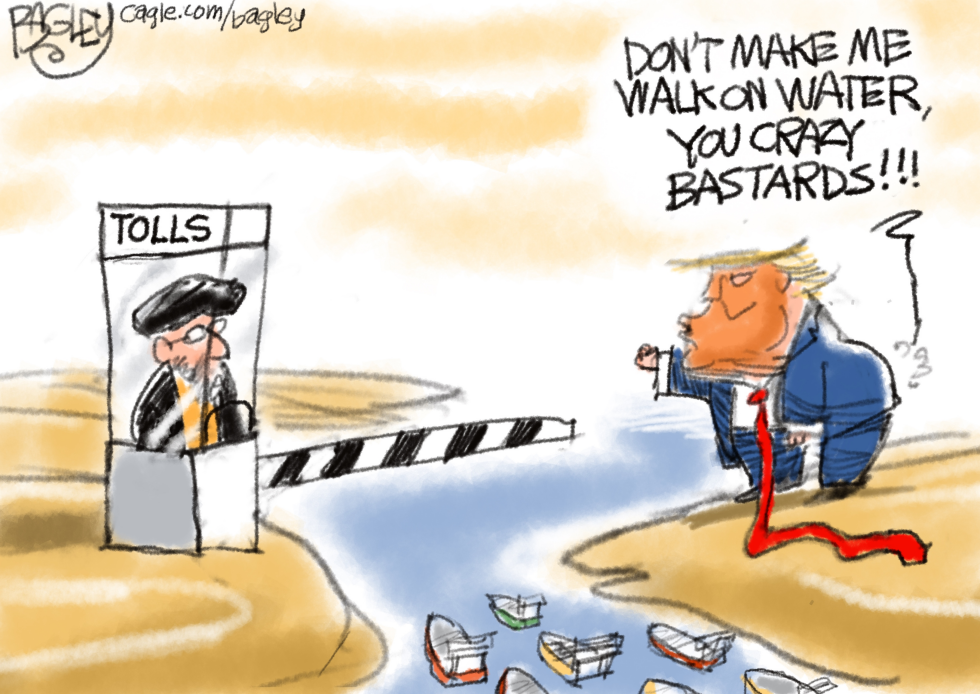
Donald Trump stands at the edge of a body of water confronting a toll booth operated by a figure resembling Ayatollah Khamenei. Small tankers sit in the water below while Trump issues a warning about walking on water. The scene references shipping routes through the Strait of Hormuz and surrounding nations.
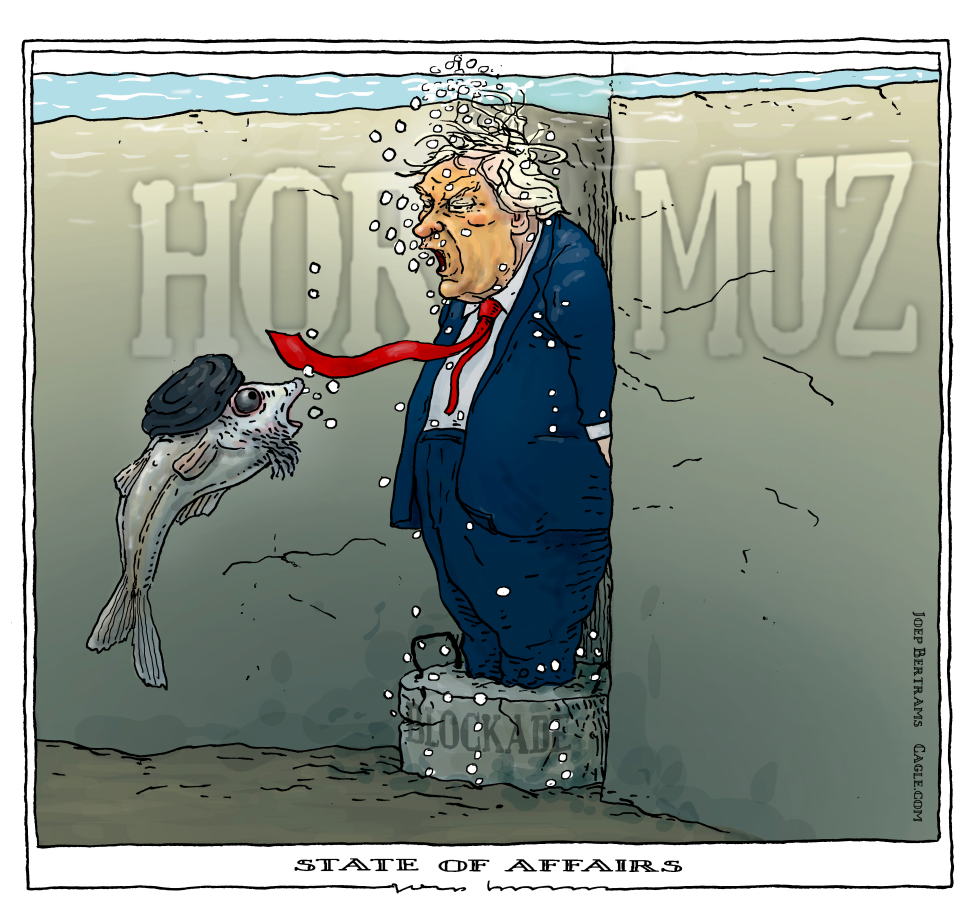
Joep Bertrams captures the Strait of Hormuz tensions with a caricature of Donald Trump sinking in concrete shoes marked blockade, bubbles rising from his open mouth as a fish in a black hat nibbles his red tie. The underwater setting features a cracked wall labeled Hormuz, emphasizing the sunk metaphor for diplomatic failures. Tags like Iran, concrete shoes, and fish highlight the satirical take on US-Iran relations, with the caption State of Affairs underscoring the dire situation. This cartoon from 2026 blends humor and commentary on potential blockades, showing Trump in a blue suit against a murky seabed.
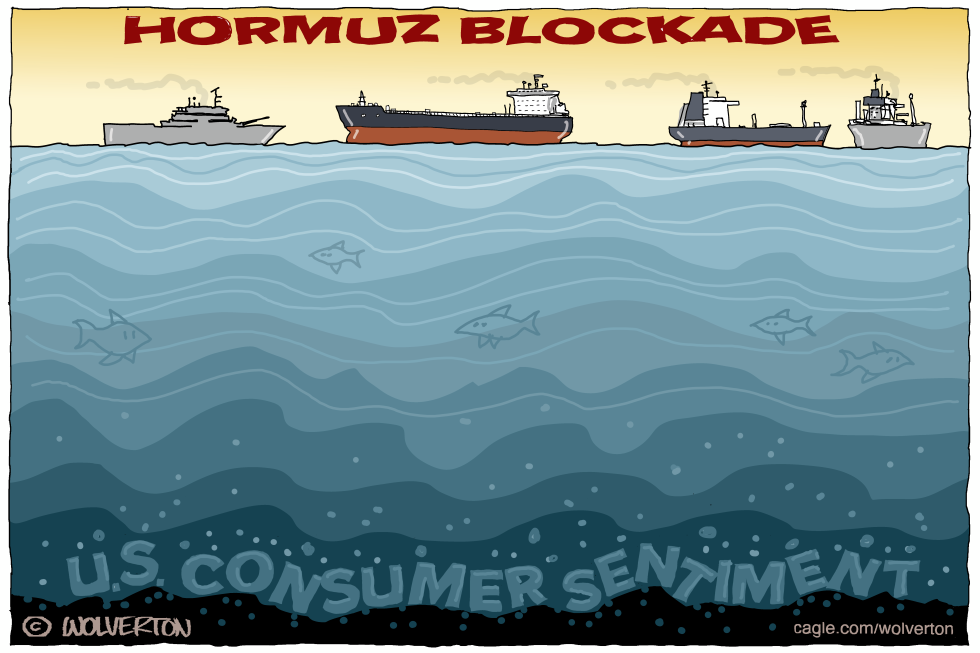
Monte Wolverton's cartoon captures the Hormuz Strait blockade with warships and tankers lined up on the water's surface, a clear nod to geopolitical strife in key oil passages. Below, the phrase U.S. consumer sentiment is etched into the ocean floor, surrounded by fish, driving home the idea of economic morale hitting rock bottom. This piece uses simple lines and color to highlight how international blockades can sink domestic confidence, tying into broader themes of global trade disruptions. The dry humor shines through in the visual pun, making it a standout in political satire circles. Tags like Hormuz Strait blockade political cartoon, US consumer sentiment sinking economy illustration, oil tanker ships naval blockade satire, Strait of Hormuz geopolitical tension comic, economic impact of Middle East conflict drawing, and consumer confidence underwater metaphor cartoon amplify its SEO reach.
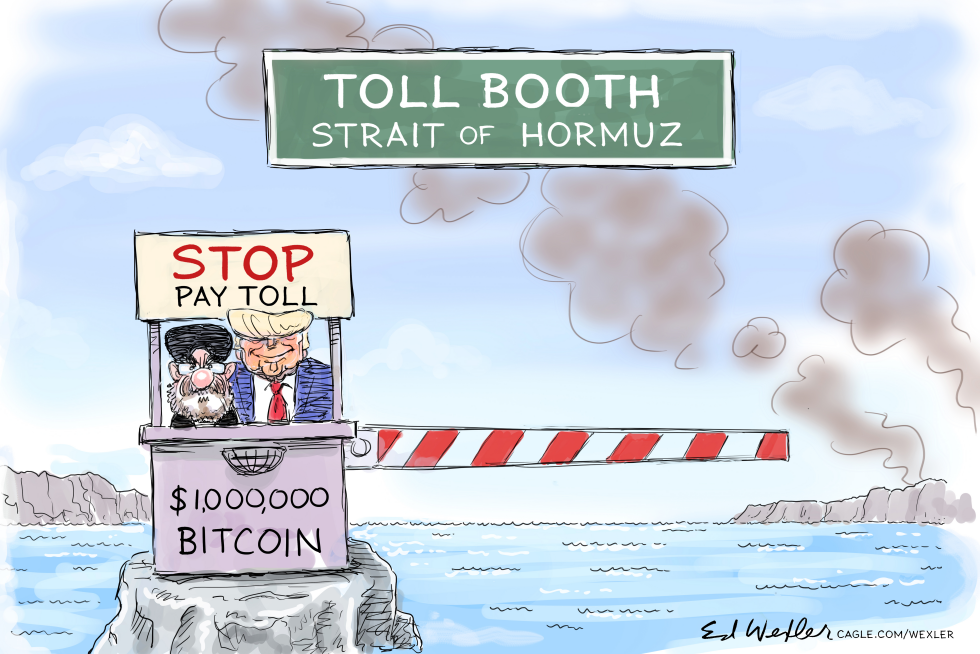
Ed Wexler\\\'s cartoon captures a toll booth in the Strait of Hormuz, where figures resembling Trump and the Ayatollah enforce a $1,000,000 Bitcoin toll. Smoke rises from what look like mines in the water, blending tags like Iran, Strait of Hormuz, tolls, Bitcoin, Trump, Ayatollah, and crypto into a sharp commentary. The barrier arm blocks passage, emphasizing control over this vital shipping lane. It\\\'s a straightforward jab at geopolitical tensions, with the toll sign demanding payment to proceed. No hidden layers here, just clear visuals tying economic pressures to digital currency in a contested area. The dry humor shines through in the absurdity of a Bitcoin booth amid potential explosions.
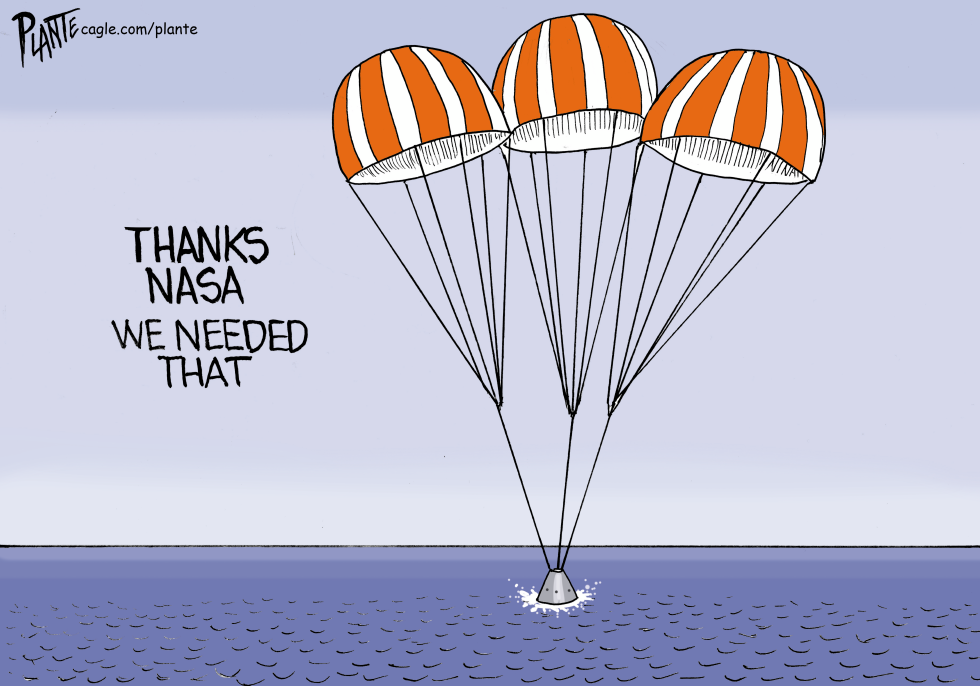
Bruce Plante\'s cartoon captures a space capsule\'s splashdown, complete with three orange and white striped parachutes guiding it to a blue ocean teeming with black fish-like forms. The prominent text \'Thanks NASA We Needed That\' adds a layer of sarcasm, typical in editorial illustrations commenting on high-profile events like the Artemis II mission. The simple composition, with a light blue sky and wavy ocean surface, emphasizes the moment of impact, shown by a small splash at the capsule\'s base. This piece fits into the tradition of political cartoons that highlight public sentiments toward government projects, using minimal elements for maximum impact. The artist\'s signature and website appear in the top left, grounding it in syndicated cartoon style.
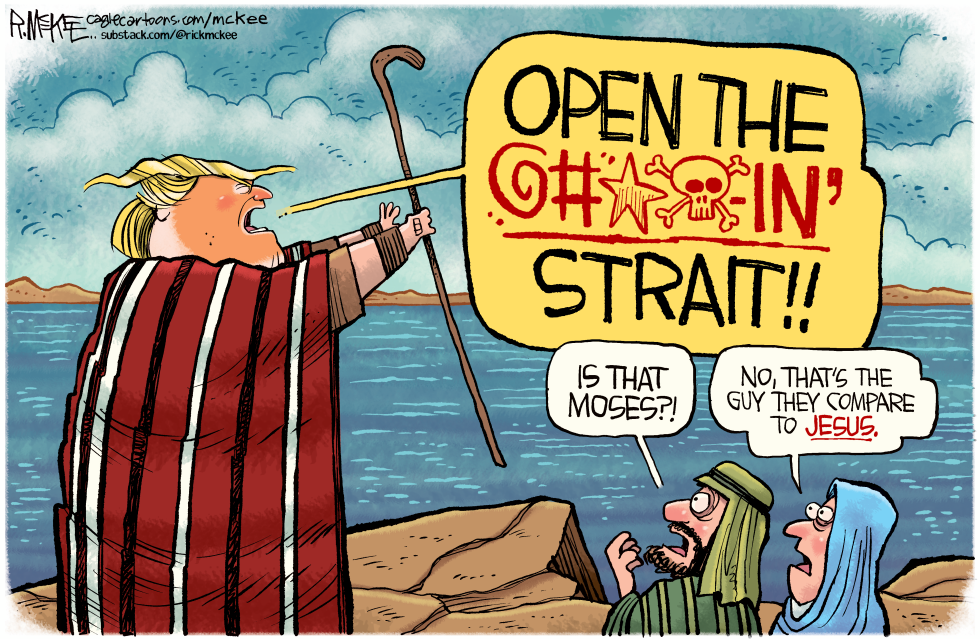
Rick McKee's cartoon depicts a blond-haired man resembling Donald Trump, dressed in red robes, holding a staff and yelling 'OPEN THE C@#*in' STRAIT!!' at a body of water, evoking the Moses parting the Red Sea scene. In the foreground, two ancient-dressed figures converse: one asks if it's Moges, the other clarifies it's the guy compared to Jesus. The image ties into tags like Trump, Easter, Iran, Israel, war, Strait of Hormuz, blending biblical imagery with modern political satire on Trump's self-comparisons and international tensions. The censored profanity adds a layer of obscenity to the parody, set against a desert landscape with clouds.
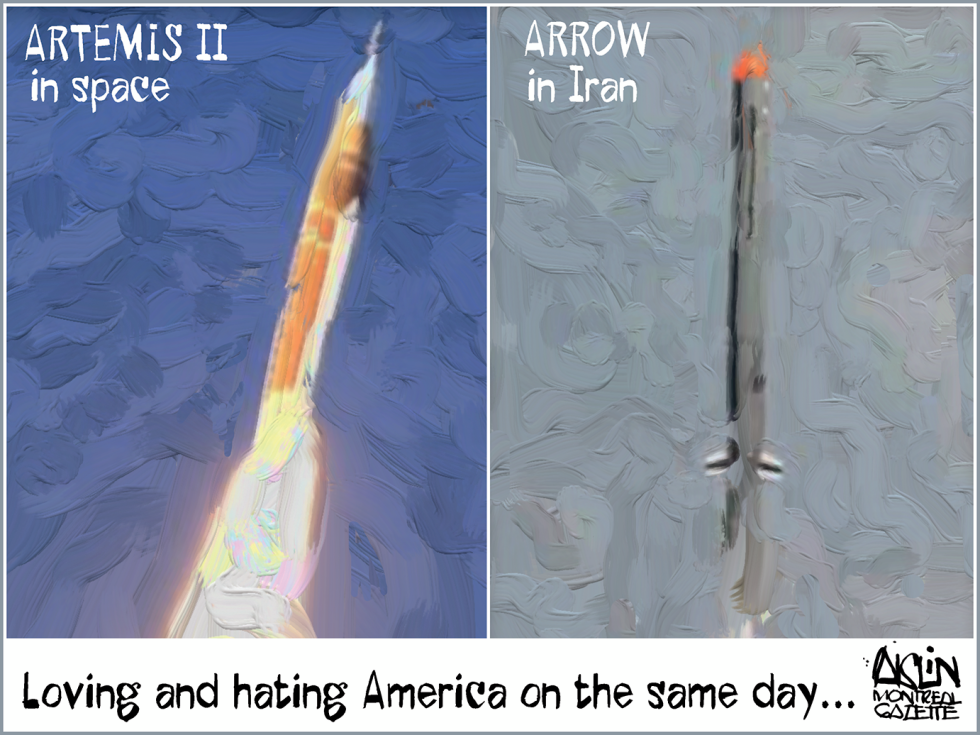
In this irreverent political cartoon, a vibrant Artemis II space launch rockets upward in a blue expanse on the left, symbolizing American innovation and triumph in US space exploration. Contrasting sharply on the right, a stark Arrow in Iran points downward with an orange glow against a gray sky, evoking geopolitical tension and Iranian weaponry. The caption 'Loving and hating America on the same day....' ties it together, offering a humorous take on the bipolar view of America in world news. With its simple yet effective composition, the artwork captures the absurdity of global perceptions, blending satire on international conflict with admiration for NASA's feats. This piece underscores the dichotomy in how the world engages with American power, from awe at space missions to ire over foreign policy frictions.
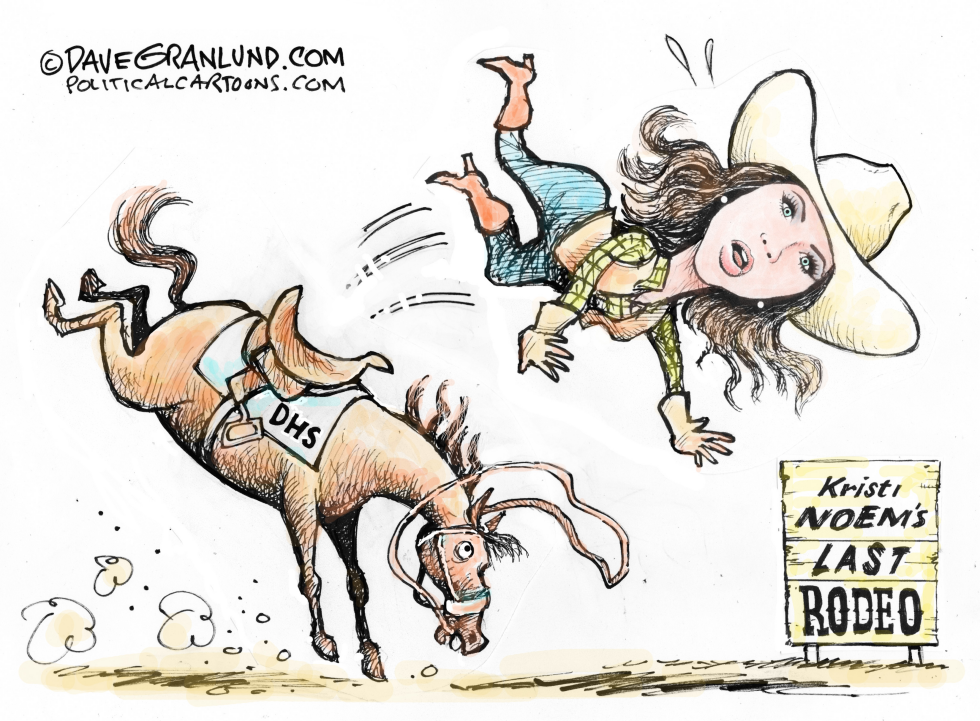
Dave Granlund's political cartoon hilariously portrays South Dakota Governor Kristi Noem in a rodeo metaphor, being violently thrown from a bucking horse labeled 'DHS' under a sign reading 'Kristi Noem's Last Rodeo.' This satire illustration captures her career downfall amid the infamous dog killing scandal, where she admitted to shooting her unruly pup Cricket, sparking widespread outrage. The humorous cartoon underscores how her VP ambitions for the Republican politics ticket were derailed, turning her book promotion into a PR nightmare. With elements of cowboy politics and political humor, it highlights the irreverent side of GOP satire, suggesting this could be Noem's final political stunt.
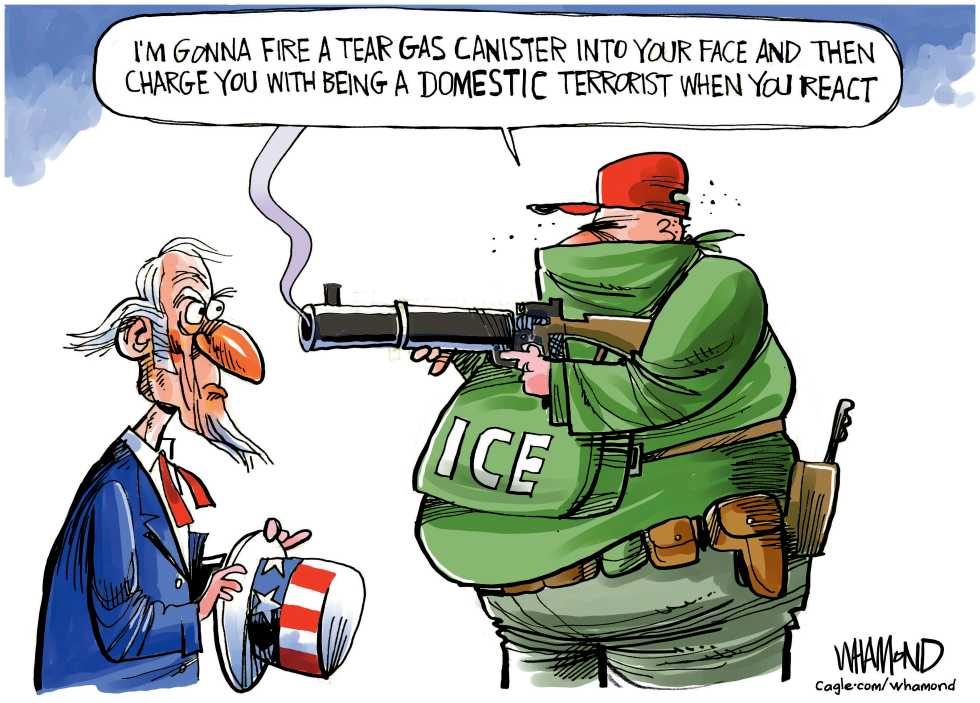
In this sharp political cartoon by Whamond, a bloated ICE agent, donning a red cap and green uniform, points a tear gas launcher directly at Uncle Sam's face, uttering a chilling threat to fire and then charge the iconic American symbol with being a domestic terrorist upon reaction. The imagery critiques government overreach, immigration enforcement tactics, and the weaponization of labels like domestic terrorism to stifle protest suppression and civil liberties. Uncle Sam, holding his stars-and-stripes top hat, represents the nation's foundational values under assault, while the ICE figure embodies authoritarian tactics in border patrol. This editorial cartoon underscores the tension between law enforcement critique and human rights, making it a timely piece on political humor amid ongoing debates on freedom of speech.