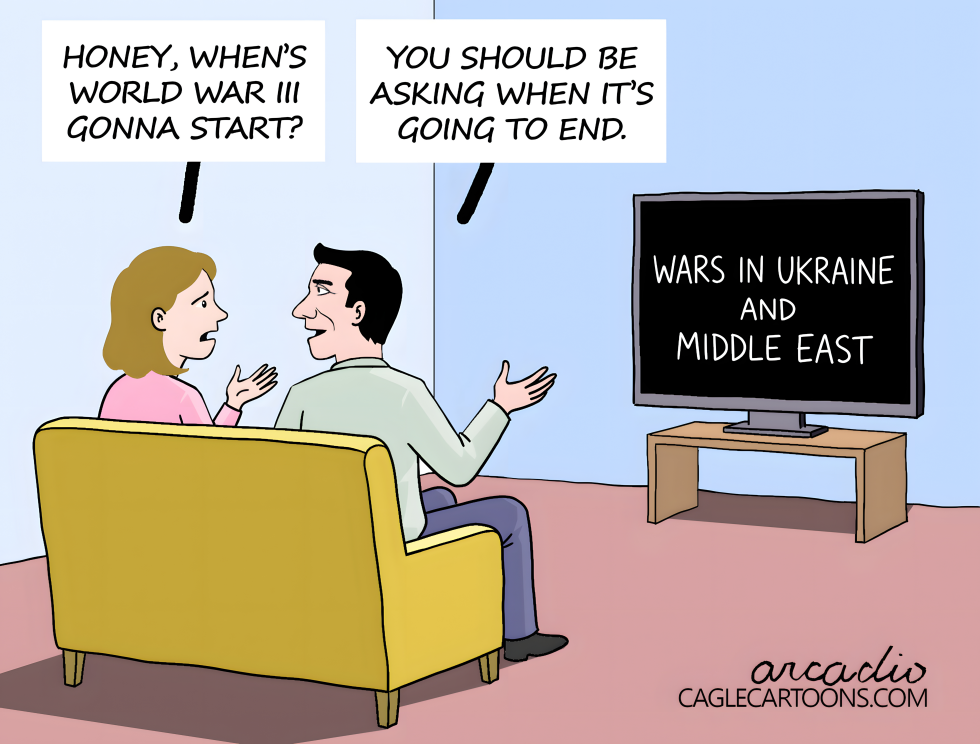
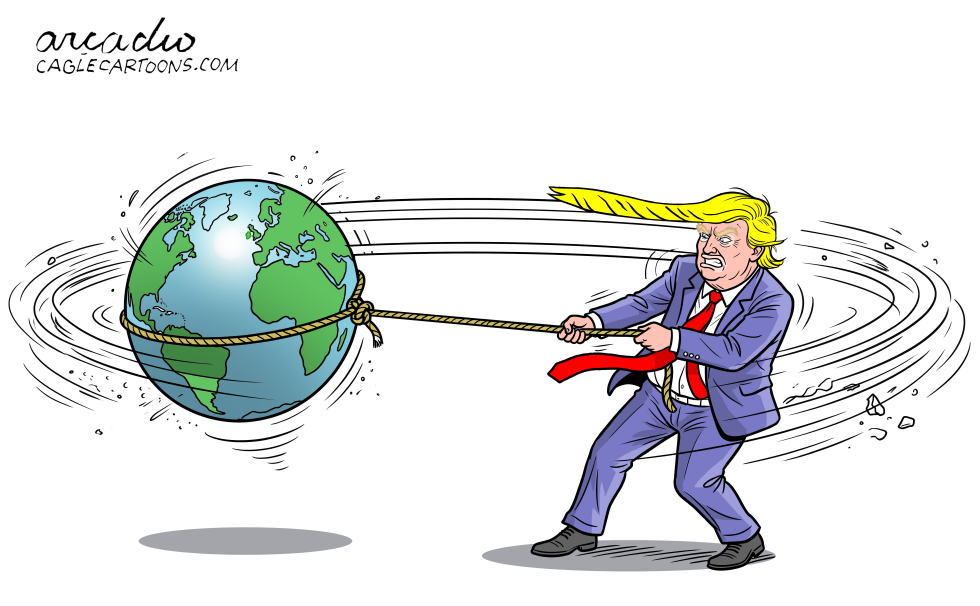
Persistent fighting in Ukraine and the Middle East continues to dominate global attention in September 2026, with no clear end in sight for either theater. The conflicts involve Russia against Ukraine and multiple fronts in the Middle East, raising concerns about wider involvement. Viewers and analysts alike question whether these regional wars risk drawing in additional powers and spiraling into a larger confrontation. The cartoon captures everyday public anxiety over the duration and potential expansion of these wars rather than their origins.
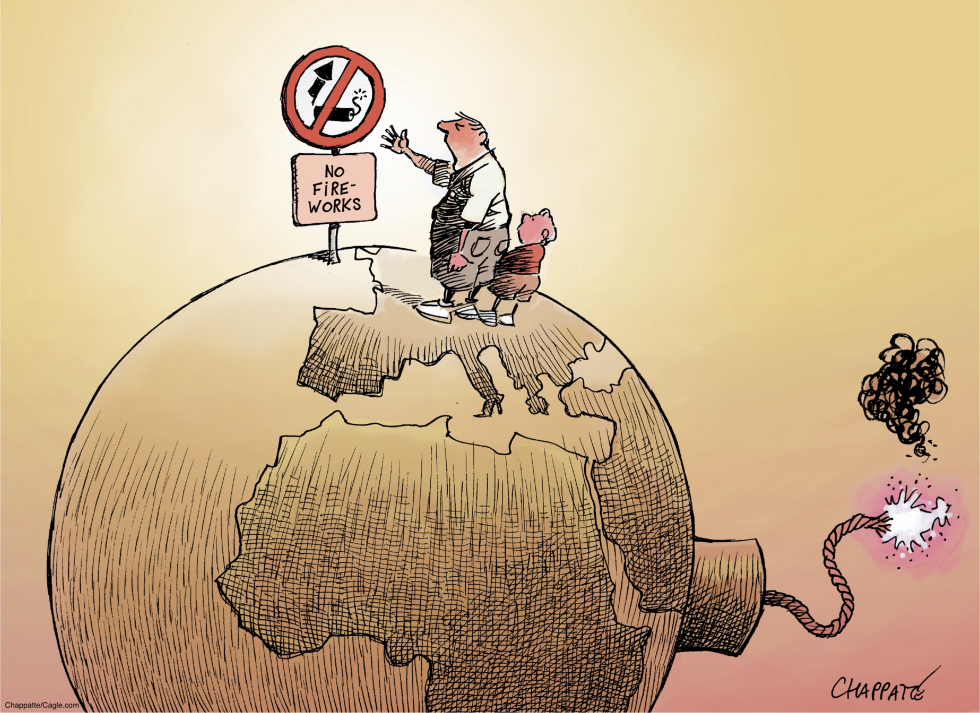
Global leaders continue to dismiss repeated scientific warnings about accelerating climate impacts even as extreme weather events intensify worldwide. The ongoing failure to curb emissions and adopt binding reductions leaves future generations exposed to rising temperatures, sea levels, and resource conflicts. The editorial argues that such willful disregard of clear danger signs amounts to reckless endangerment of the planet itself.
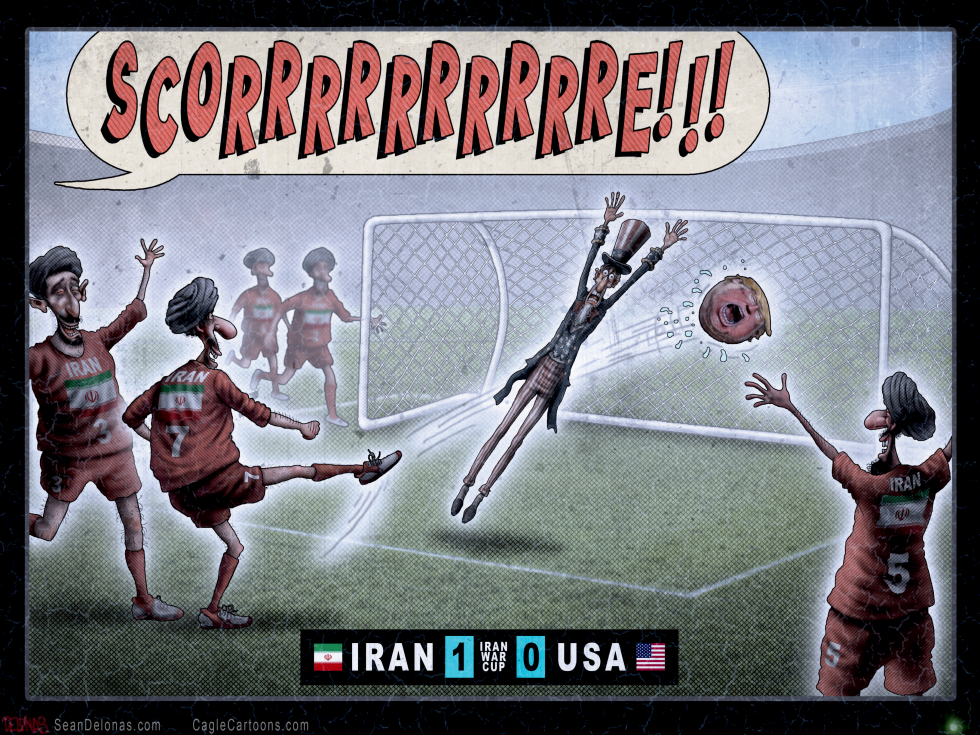
A soccer match on a green field features Iranian players in red jerseys celebrating as a tall figure in a top hat leaps toward the goal with its head detached and flying. The scoreboard reads Iran 1 USA 0 under the Iran War Cup title, with the date set in June 2026 amid ongoing Middle East tensions.
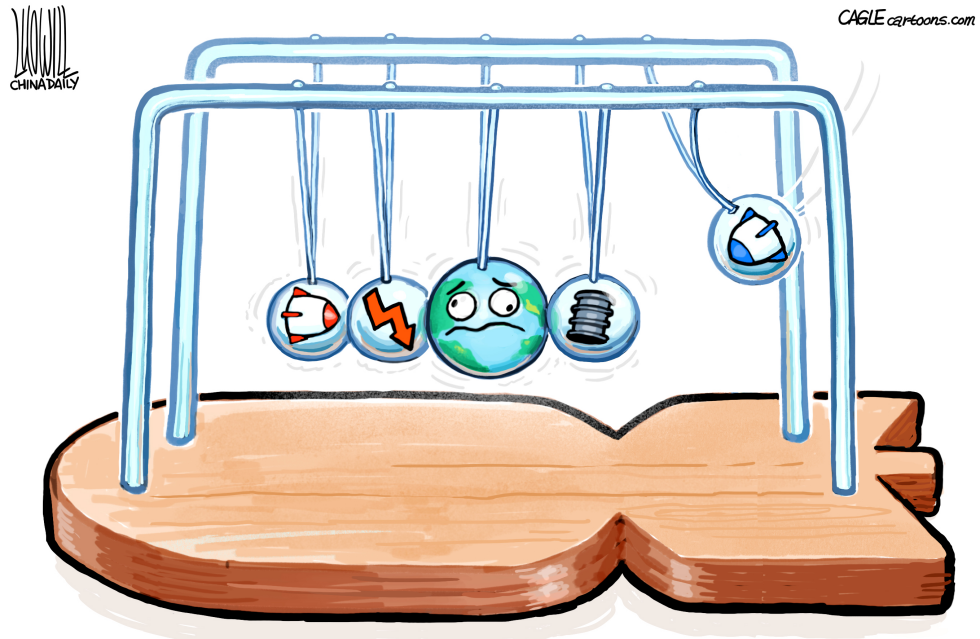
A Newton's cradle setup features spheres marked with a missile, lightning bolt, sad-faced Earth, stacked bombs, and a helmeted orb. The device rests on a wooden base resembling a map fragment. The image highlights ongoing global tensions tied to military actions and energy resources as of mid-2026.
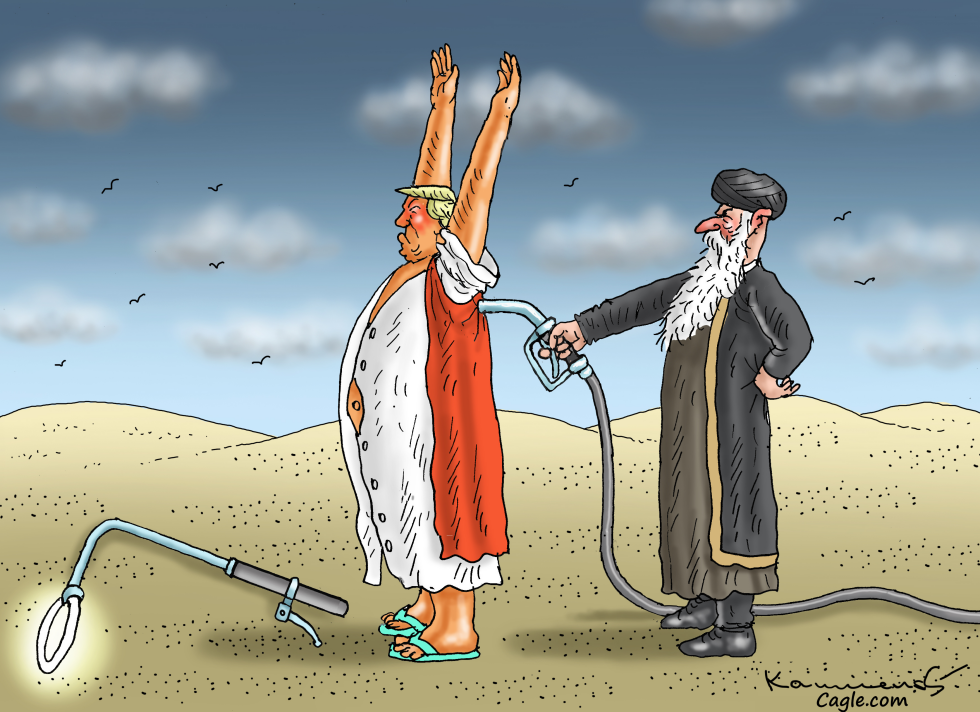
Marian Kamensky's cartoon captures a surreal scene in the desert where a figure resembling Trump, dressed in white and red robes with arms raised skyward, has a gas pump nozzle inserted into his side by a bearded man in dark robes and turban. The image plays on themes of Trump, Iran, Hormuz, fascism, MAGA terror, and oil war, blending religious imagery with modern geopolitical tensions. Birds fly in a cloudy sky over sandy dunes, emphasizing isolation and absurdity. The signature and Cagle.com mark confirm its syndication roots. This piece skewers the intersections of politics, religion, and resource dependency without words, relying on visual punch for impact. Such cartoons thrive in editorial pages for their sharp commentary on current events.
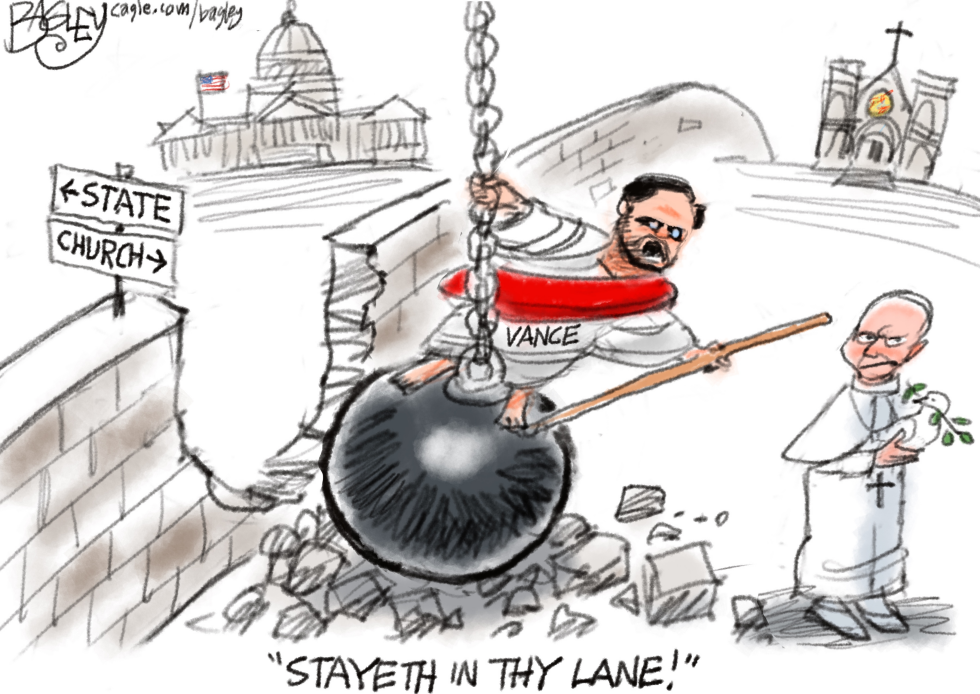
Pat Bagley's cartoon shows JD Vance dressed as Jesus, labeled 'VANCE,' swinging a massive wrecking ball to shatter a brick wall marked with signs pointing to 'STATE' and 'CHURCH.' He shouts 'STAYETH IN THY LANE!' at a figure resembling the Pope, who holds an olive branch and dove, symbols of peace. In the background, the U.S. Capitol flies an American flag, while a church with a cross represents the Vatican. Tags like war, peace, JD Vance, religion, Trump, and scripture underscore the satire on blurring lines between church and state, with Vance enforcing boundaries ironically through destruction. The image critiques political figures invoking religion amid Capitol politics.
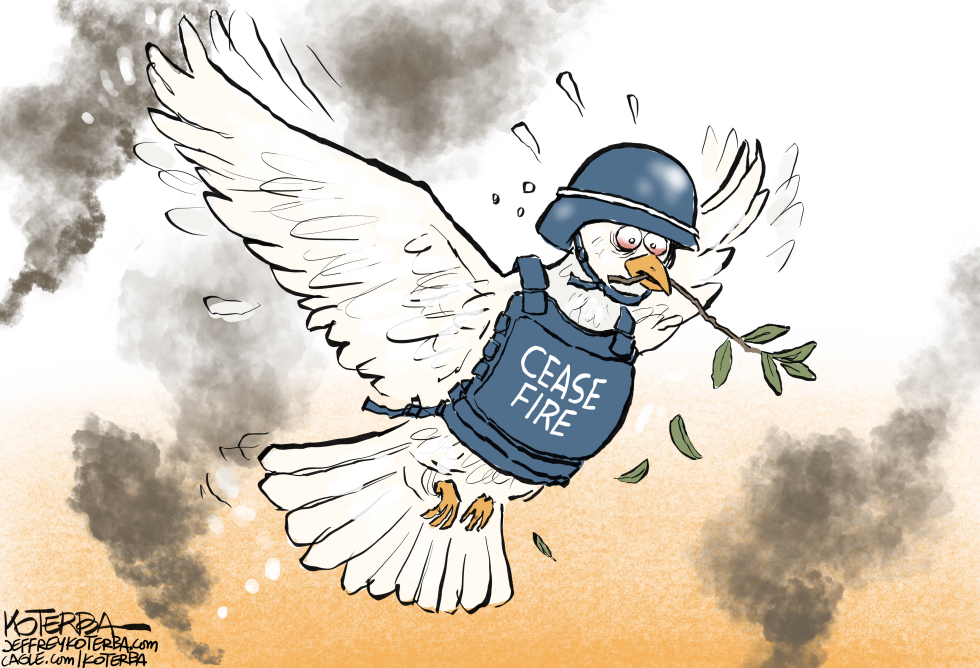
Jeff Koterba's cartoon shows a white dove, traditional symbol of peace, outfitted in a blue military helmet and a bulletproof vest marked 'CEASE FIRE.' The bird clutches an olive branch in its beak, eyes wide in surprise, as it navigates through billowing dark smoke clouds. This setup highlights the fragility of cease fire attempts in war zones, with the armored dove representing protected yet vulnerable peace initiatives. The orange-tinted background suggests a fiery landscape, emphasizing conflict's harsh reality. Tags like political cartoon, peace dove, cease fire vest, olive branch, war smoke, and satirical illustration capture the image's essence for SEO.
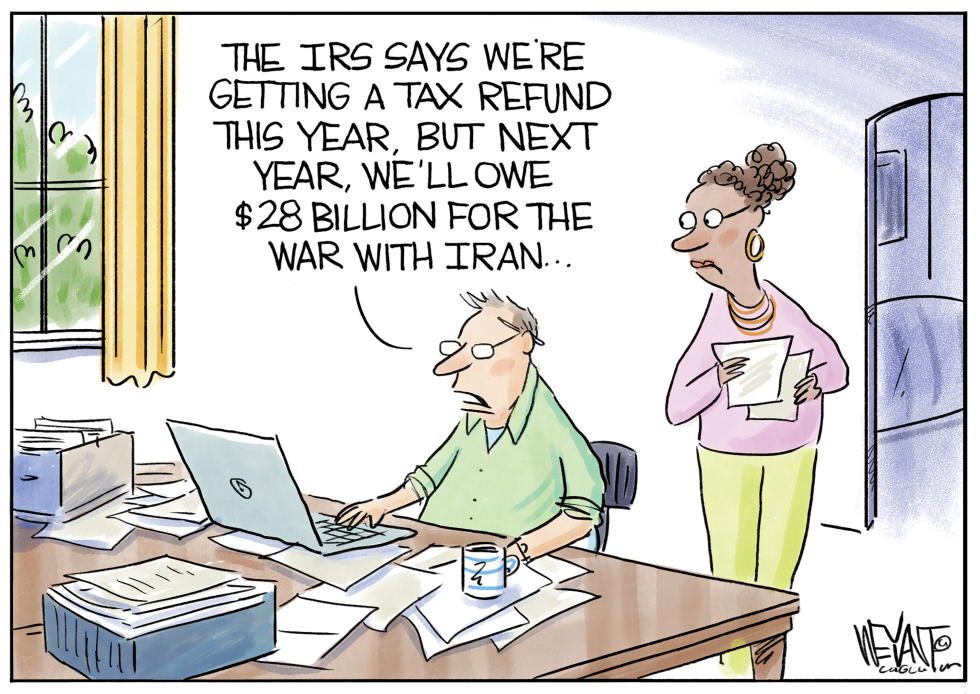
Dive into this biting political cartoon tax refund piece where a woman, holding papers, informs a laptop-working man about their IRS windfall this year, only to drop the bomb of owing $28 billion next for the war with Iran. The satirical cartoon Iran war vibe captures the absurdity of US taxes funding wars, with cluttered desks and exasperated expressions underscoring the humorous take on federal spending. It's a classic taxpayer burden Iran conflict jab, poking fun at government spending satire while illustrating the disconnect between personal finances and massive military expenses. Through cartoon about military expenses, it cleverly critiques fiscal policy in an office setting, making the war with Iran taxpayer joke both relatable and irreverently insightful for viewers pondering editorial cartoon fiscal policy.
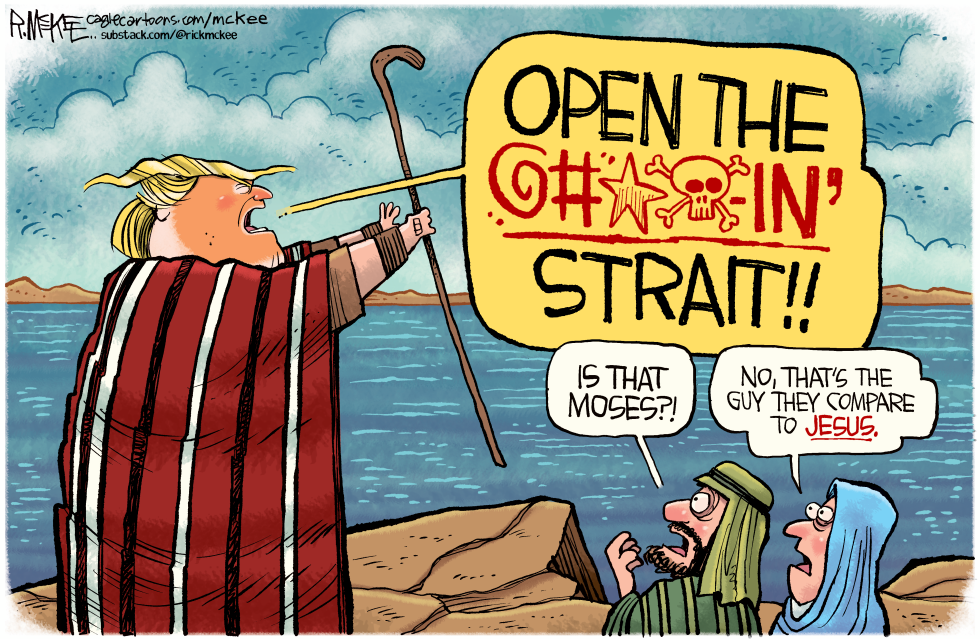
Rick McKee's cartoon depicts a blond-haired man resembling Donald Trump, dressed in red robes, holding a staff and yelling 'OPEN THE C@#*in' STRAIT!!' at a body of water, evoking the Moses parting the Red Sea scene. In the foreground, two ancient-dressed figures converse: one asks if it's Moges, the other clarifies it's the guy compared to Jesus. The image ties into tags like Trump, Easter, Iran, Israel, war, Strait of Hormuz, blending biblical imagery with modern political satire on Trump's self-comparisons and international tensions. The censored profanity adds a layer of obscenity to the parody, set against a desert landscape with clouds.
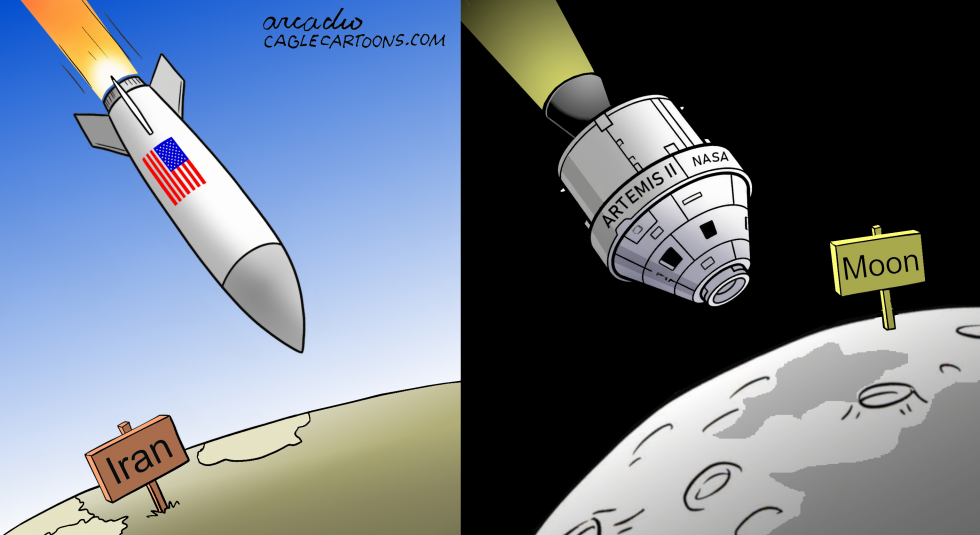
Arcadio Esquivel's cartoon splits the scene: on one side, a missile with an American flag streaks toward a planetary surface marked 'Iran,' flames trailing from its base against a blue sky. On the other, the Artemis II NASA capsule floats in space, nearing a gray lunar landscape labeled 'Moon' under a starry black backdrop. Tags including war, moon, exploration, Artemis II, NASA, Middle East, and Iran capture the visual pun. The dry humor points to misplaced priorities, where grand goals like space missions veer into military misadventures. Cagle Cartoons syndicates such pointed commentary, blending current events with sharp satire.
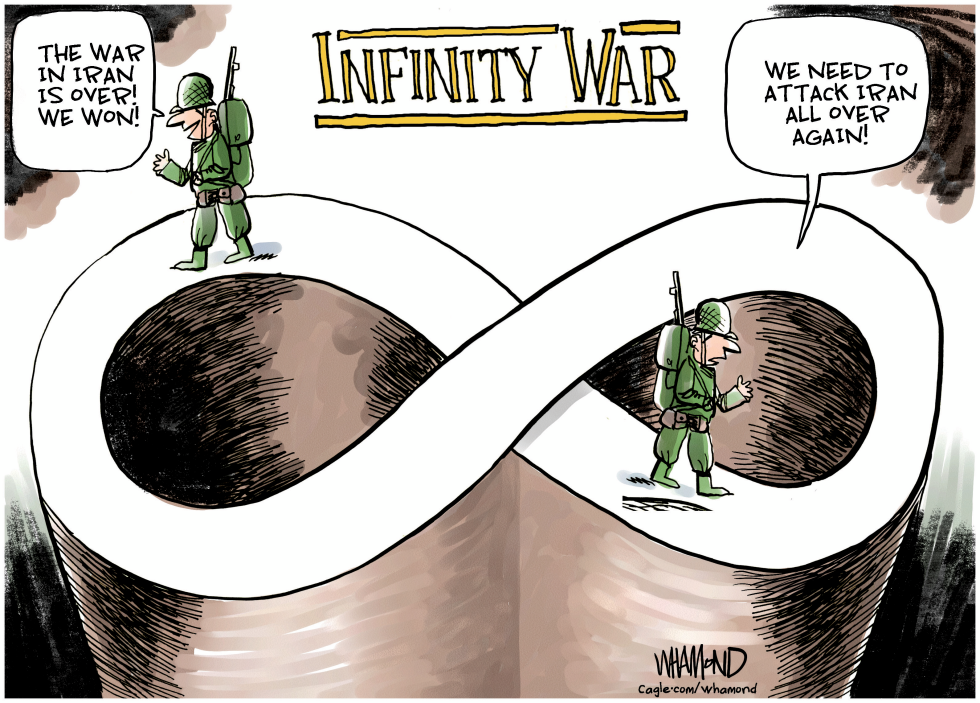
Dave Whamond's cartoon features two soldiers positioned on a large infinity symbol, one announcing victory in the Iran war while the other insists on attacking again, highlighting the perpetual nature of conflict. The title 'Infinity War' parodies endless warfare, with the loop representing cycles of victory and renewed aggression. Tags like iran war cartoon, infinity symbol war, endless conflict satire, military parody, perpetual war illustration, and satirical soldiers emphasize the dry humor in depicting how wars in regions like Iran seem to restart indefinitely, a common theme in political cartoons that resonates with ongoing global tensions.
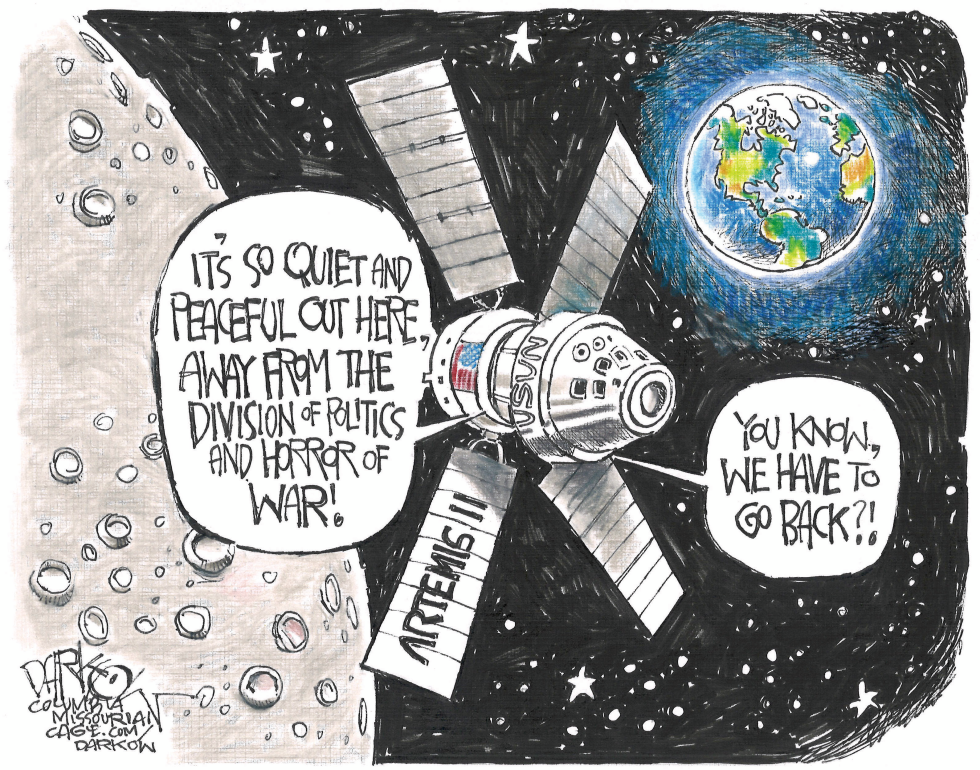
This Daryl Cagle political cartoon analysis features the Artemis II spacecraft floating in serene space, with Earth glowing in the background and the moon nearby. The left speech bubble extols the quiet peace away from division of politics and horror of war, while the right one resignedly notes the need to go back. It's a satirical cartoon on politics and war division, poking fun at how space exploration escaping earthly conflicts offers temporary respite. The NASA Artemis program humor illustration underscores the irony of advanced space missions contrasting with unresolved human divisions on Earth. Through this humorous take on returning to political division, the cartoon cleverly comments on the allure of peaceful space vs chaotic Earth without delving into specifics.
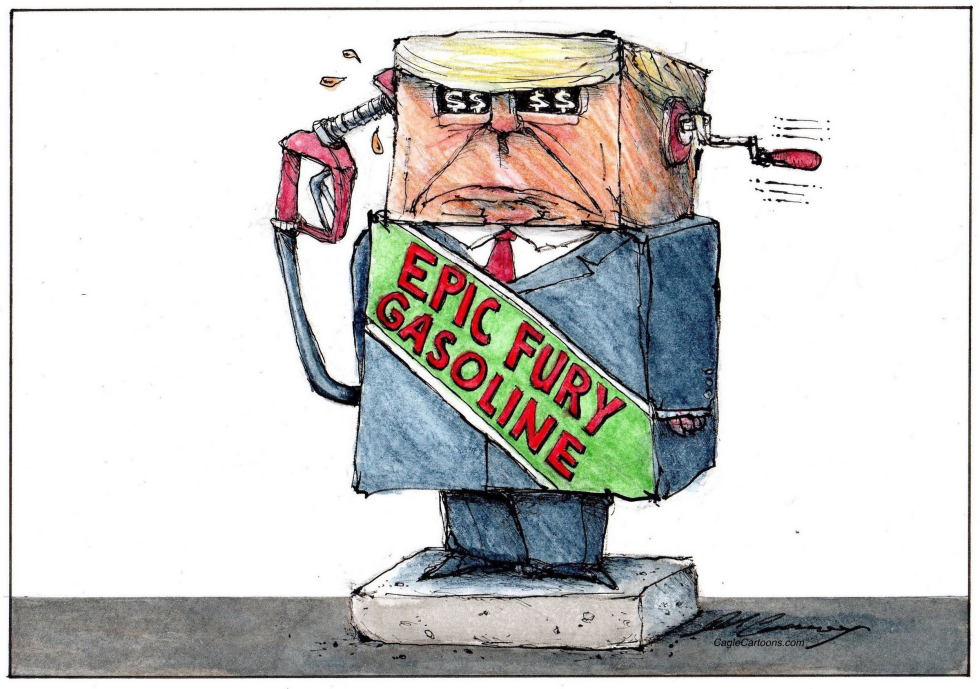
Dale Cummings draws Trump as a boxy gas pump, head topped with a dripping nozzle and $5.55 price tag, frowning in a suit with a green sash screaming Epic Gasoline Fury. Standing on a pedestal, the figure captures the essence of high gas prices tied to War in Iran and Operation Epic Fury. The cartoon skewers oil prices and Strait of Hormuz affordability, blending humor with commentary on economic fallout. It's a straightforward jab at political decisions driving up costs at the pump, rendered in watercolor style for punchy effect. Tags like War in Iran, Operation Epic Fury, oil prices, gas prices, Strait of Hormuz affordability, and affordability underscore the timely critique.
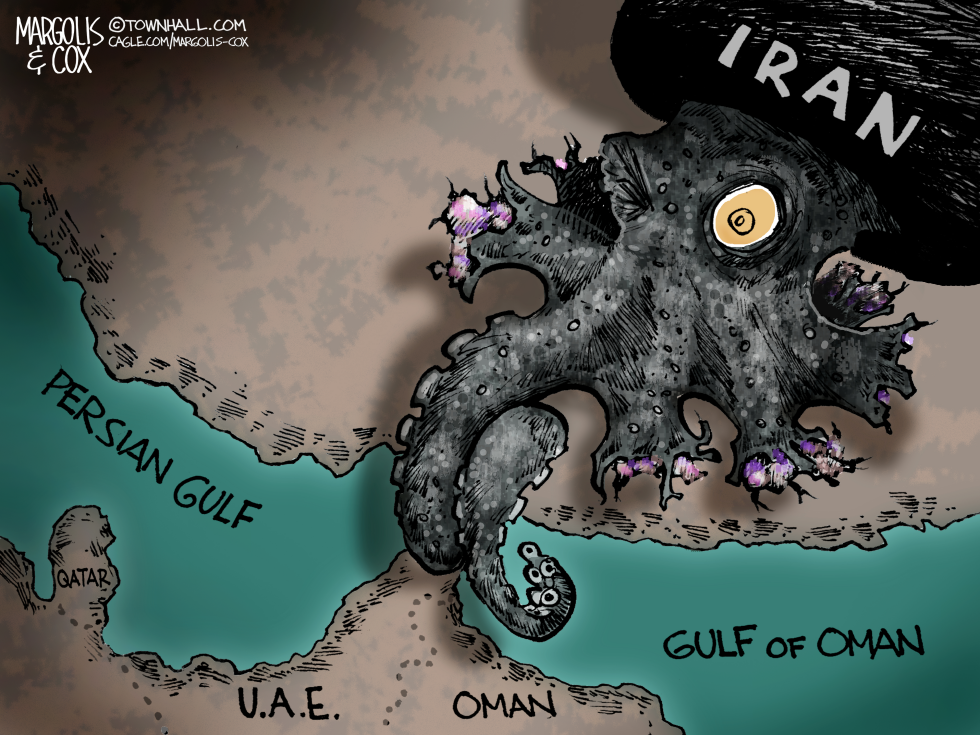
Cartoons like this one from Margolis and Cox cut straight to the absurdity of international posturing. Here, an oversized octopus labeled 'Iran' looms over a simplified map of the Persian Gulf and Gulf of Oman, its tentacles coiling tightly around the Strait of Hormuz. The creature's single eye glares out, while purple-tipped suckers grip the landmasses labeled Qatar, UAE, and Oman. It's a classic visual metaphor for control, poking at Iran's threats to block this crucial oil route. waterway. Such images remind editors how satire distills complex geopolitics into something shareable, even if the humor lands dry as desert sand. With tags like Iran Strait of Hormuz blockade, Persian Gulf tension, octopus metaphor, Middle East satire, oil route choke, and strategic dominance, the piece fits neatly into discussions of global energy security.