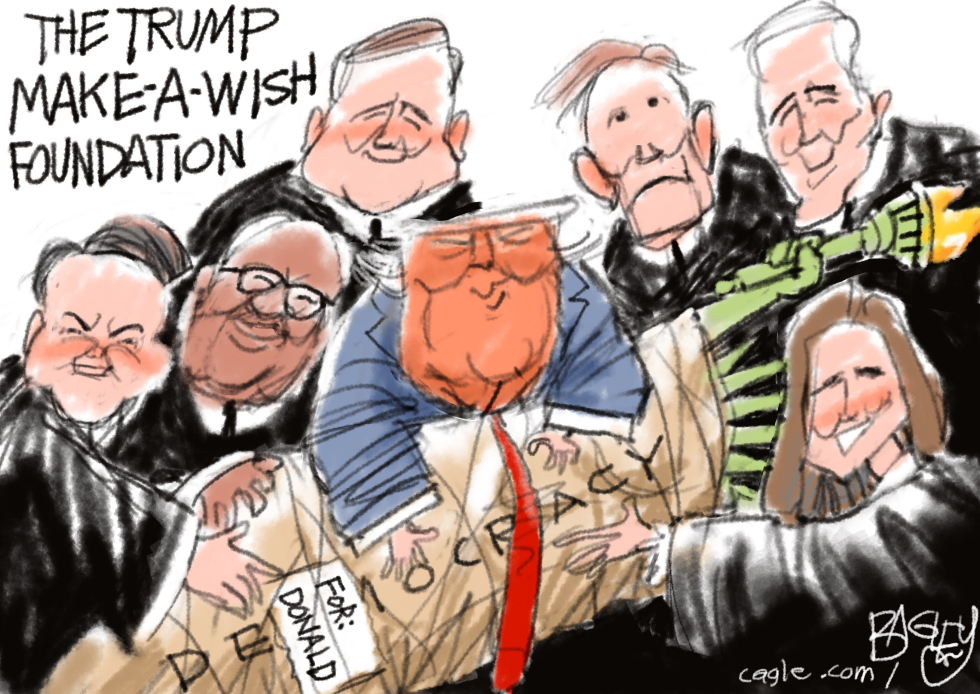
Donald Trump appears at the center of a Make-A-Wish style scene in which democracy itself is presented as a personal gift. The image responds to ongoing concerns in 2026 about executive overreach and institutional erosion under the Trump administration. Critics argue that norms protecting fair elections and checks on power face direct pressure. The cartoon frames these developments as self-serving rather than public-spirited. It takes the position that such actions treat democratic structures as items to be claimed rather than preserved.
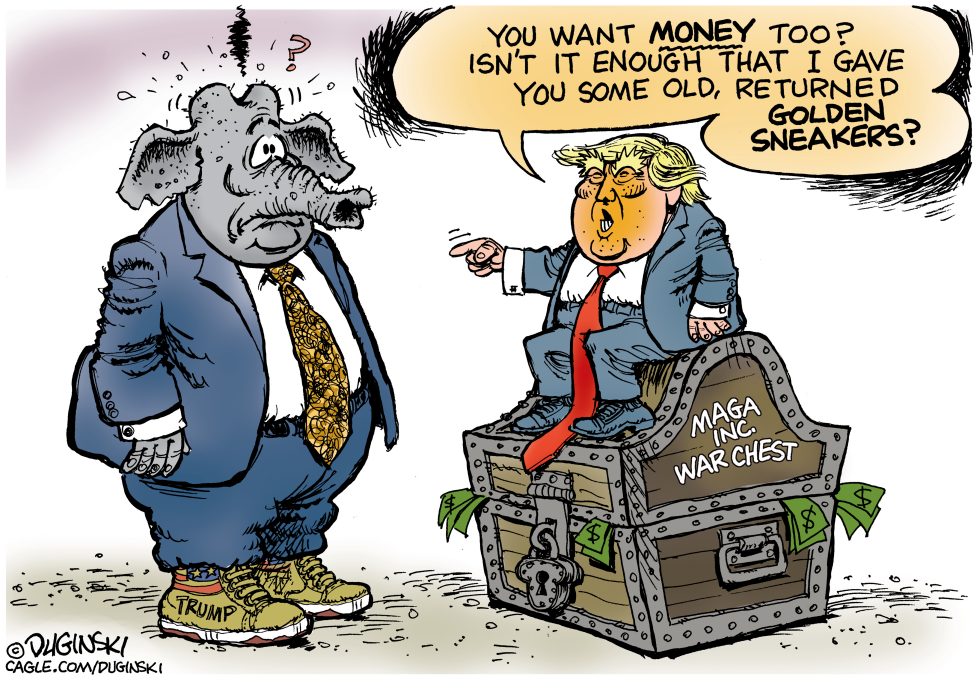
Donald Trump maintains tight control over his substantial campaign funds in the lead-up to the 2026 elections. Fellow Republicans have expressed frustration that he is unwilling to distribute resources from his war chest to support their races. The dynamic highlights ongoing tensions within the party over access to donor money. Trump has instead pointed to past gestures such as distributing returned merchandise. The cartoon criticizes this reluctance as self-serving and detrimental to broader Republican efforts.
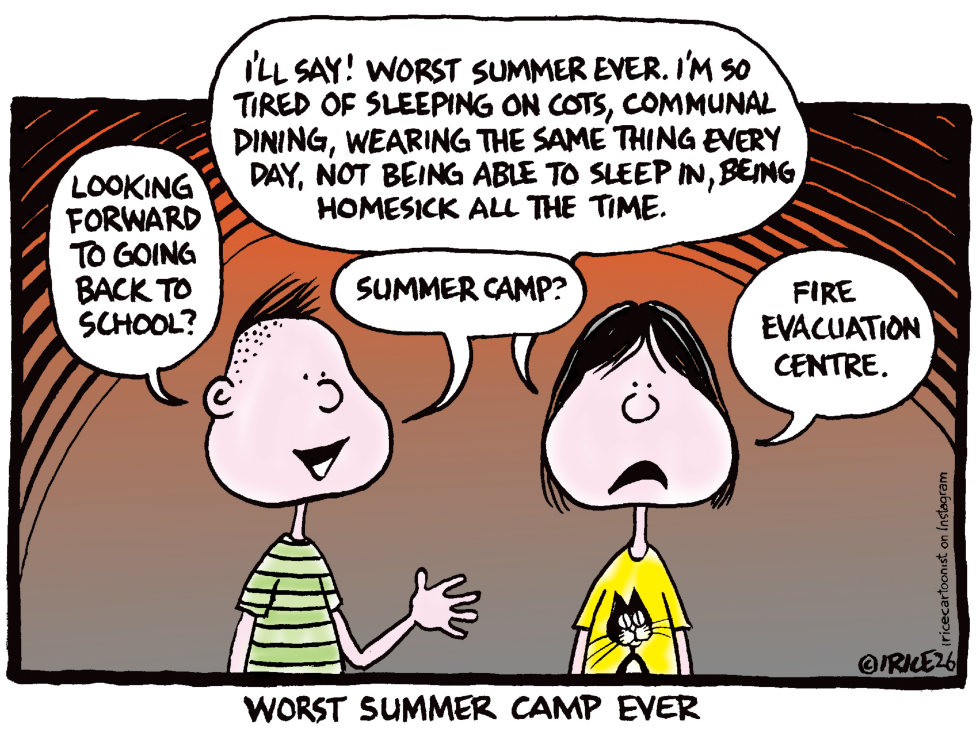
Wildfire evacuations have displaced families across affected regions this summer, forcing many into temporary centres with basic accommodations. The piece uses children's dialogue to underscore how evacuation routines mirror disliked camp conditions, highlighting ongoing disruption from seasonal fires.
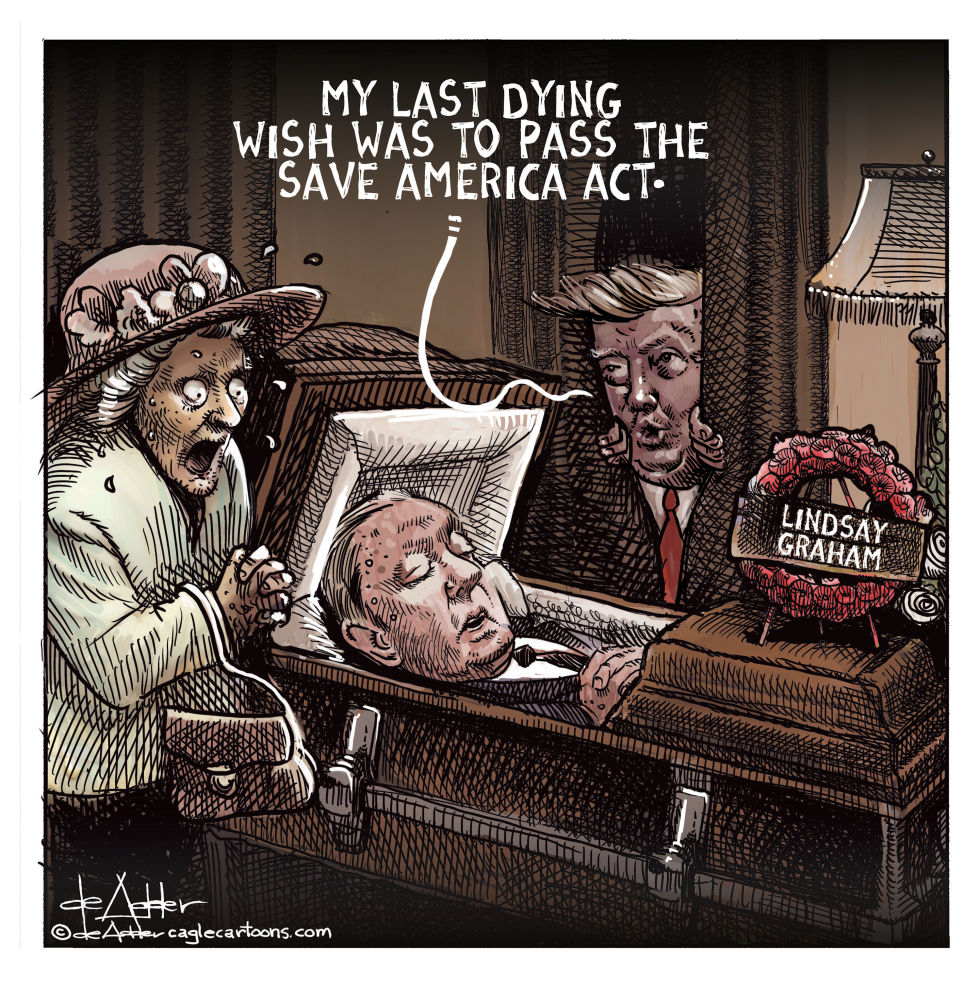
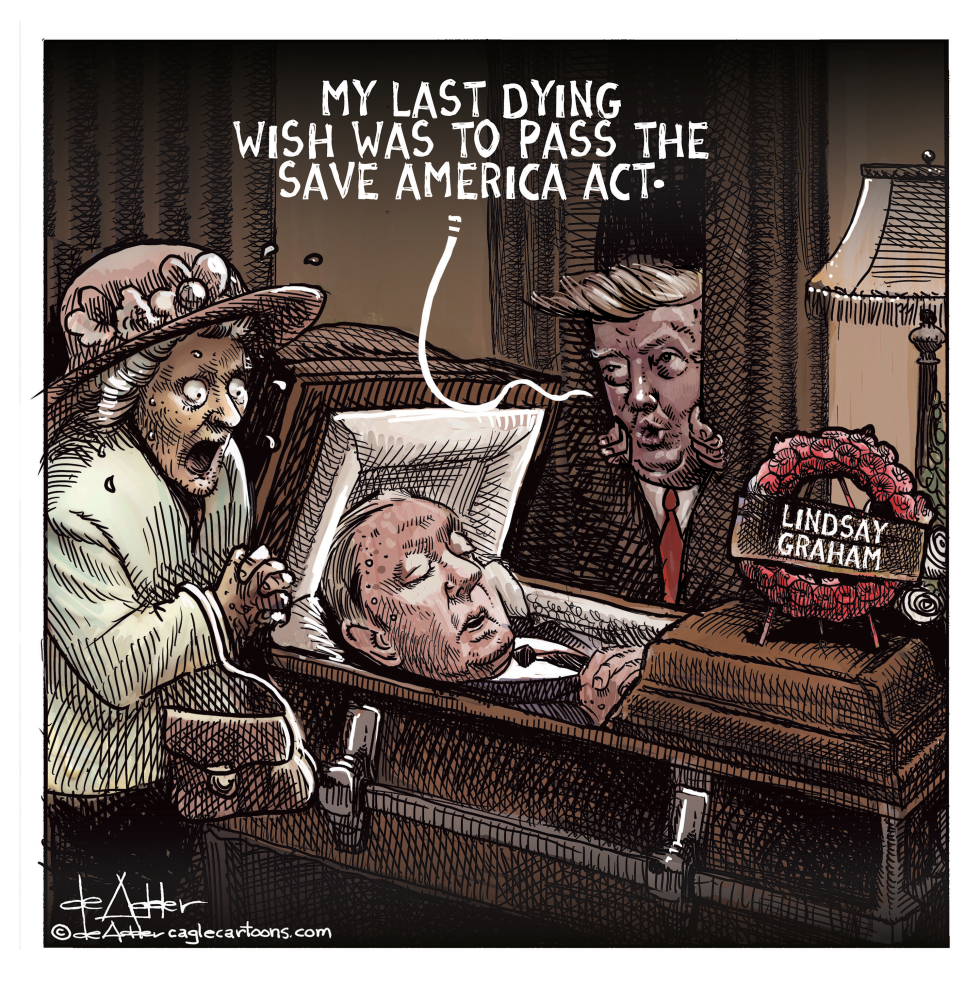
The cartoon depicts Lindsey Graham in an open casket declaring his dying wish to pass the Save America Act. Donald Trump appears behind the coffin while an elderly woman reacts in surprise. The scene responds to ongoing legislative debates involving the two figures in mid-2026.
Donald Trump sits inside a barred dunk tank structure above a grassy area. A donkey figure in a suit stands nearby holding a baseball and facing a yellow target board with a red center.
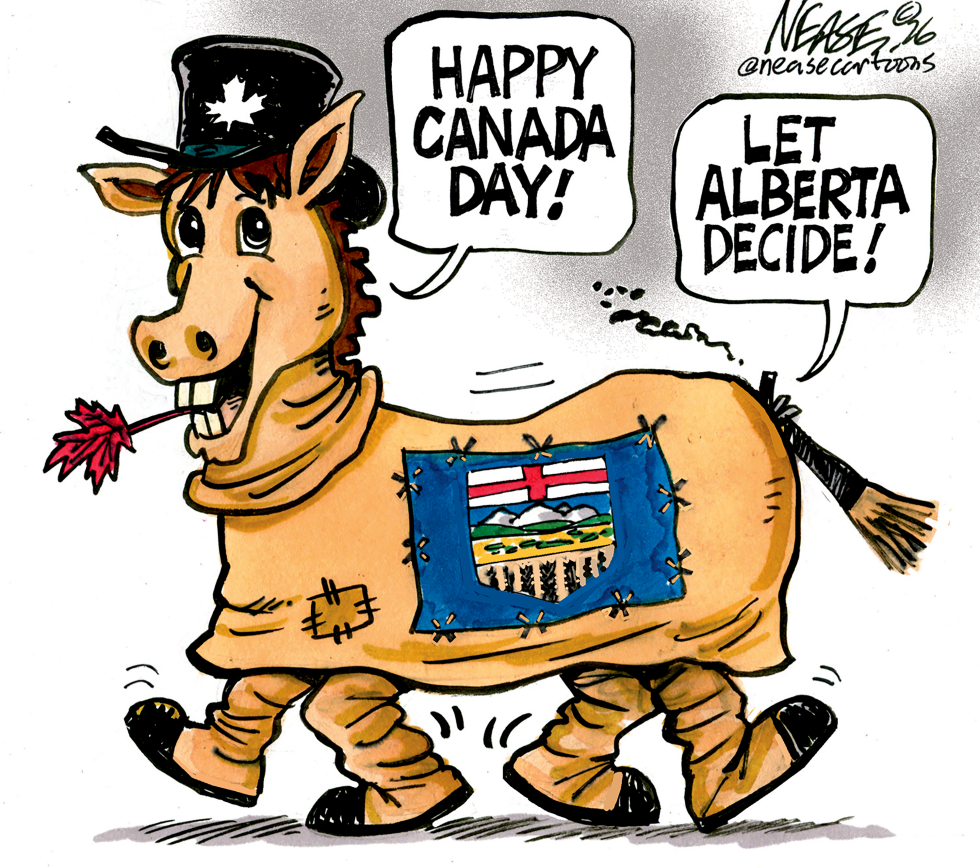
A horse figure wearing an Alberta flag blanket and a top hat marked with a maple leaf walks forward on June 29 2026. One speech bubble reads HAPPY CANADA DAY while the second reads LET ALBERTA DECIDE. The figure holds a red maple leaf in its mouth. The image marks Canada Day with a visual reference to Alberta identity and a statement on provincial decision making.
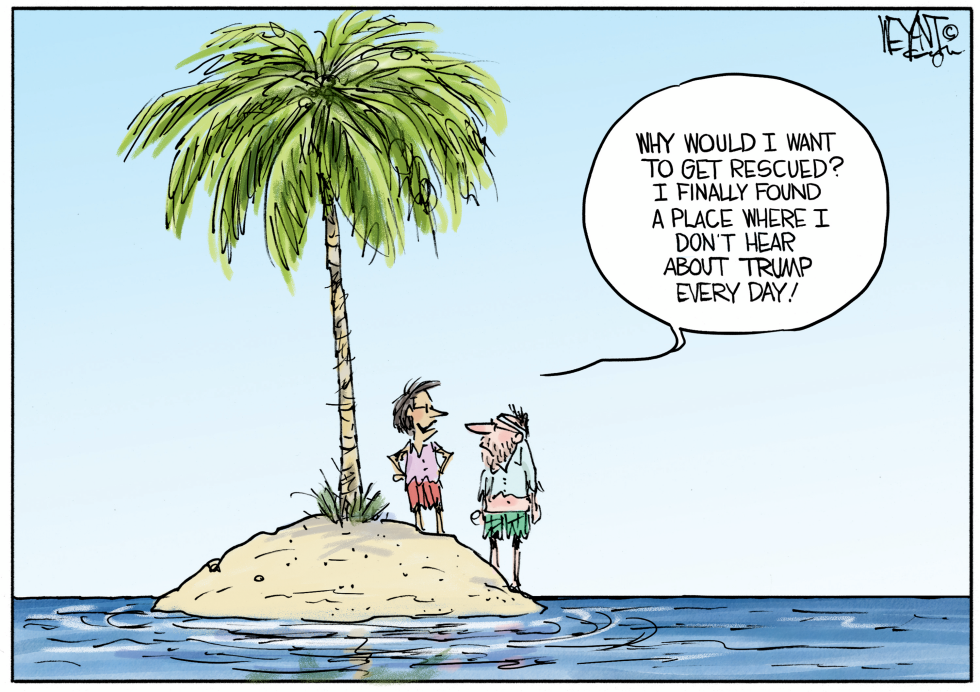
On June 29, 2026, a cartoon depicts two castaways on a tiny desert island with a single palm tree. One man in a speech bubble declares he has no interest in rescue because the location spares him daily mentions of Trump. The image captures widespread public exhaustion with political coverage centered on the former president during a period of intense media focus.
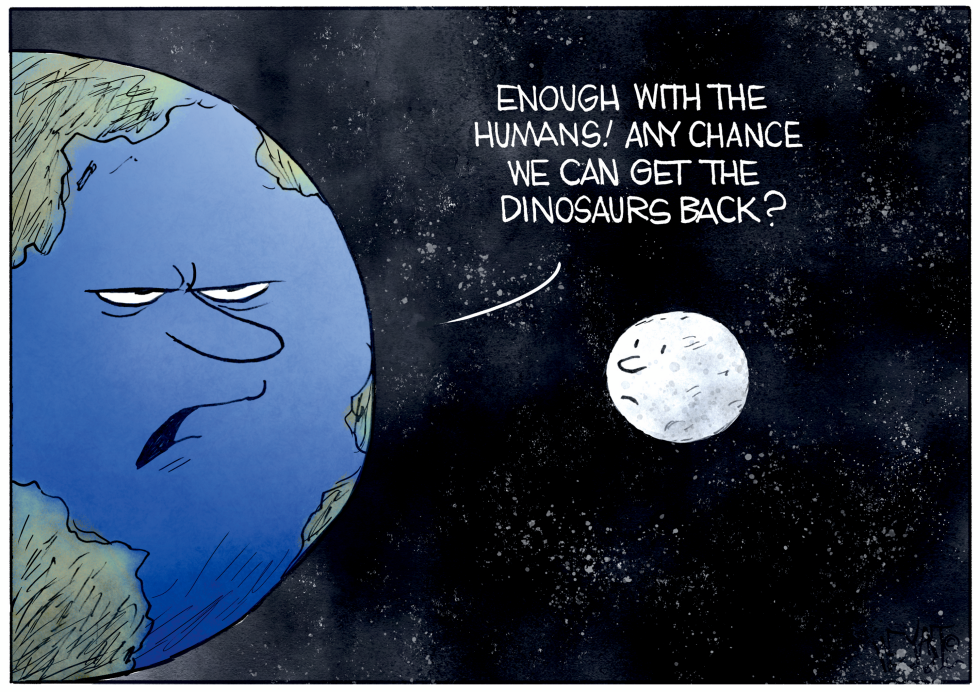
The image shows Earth with an angry expression speaking to the Moon about replacing humans with dinosaurs. The scene responds to ongoing environmental concerns around human impact on the planet as of late June 2026.
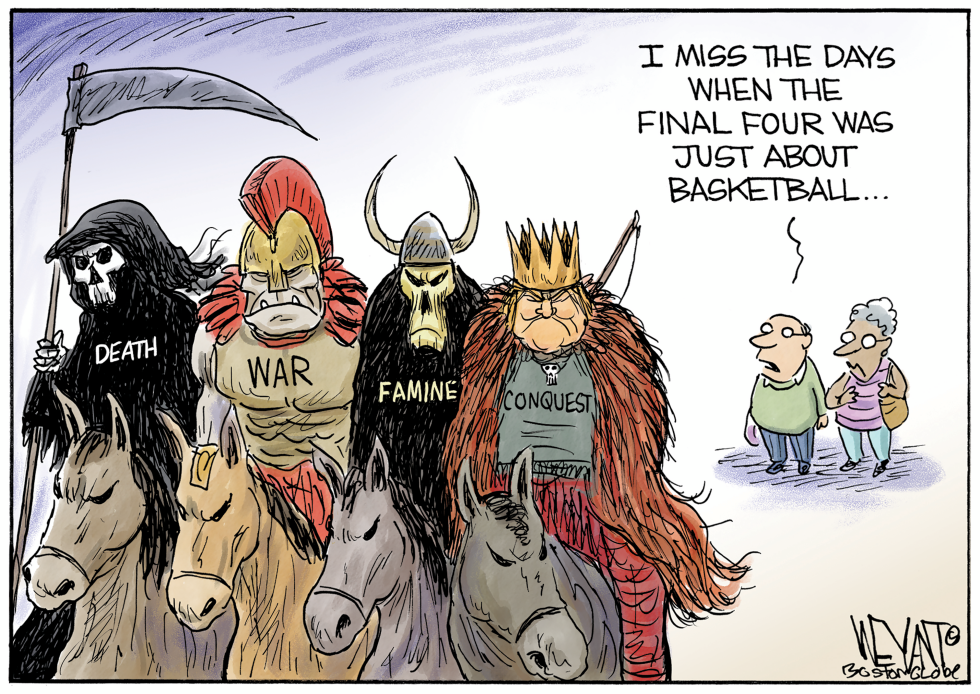
The April 2026 cartoon depicts the Four Horsemen of the Apocalypse marching forward during NCAA Final Four season. Their presence highlights how international conflicts eclipse traditional sports focus. A speech bubble expresses longing for basketball-only coverage while bystanders observe the shift.
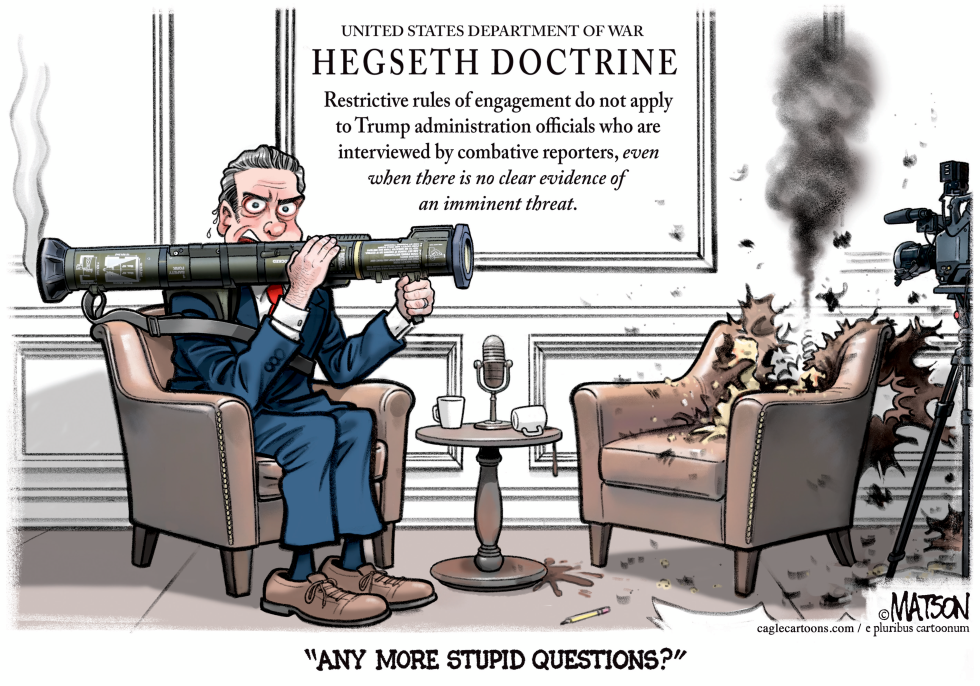
R.J. Matson's cartoon depicts a stern-faced official in a formal setting, wielding a massive rocket launcher that has just obliterated the interviewer's chair, smoke billowing from the debris. The header proclaims the 'Hegseth Doctrine' under the 'United States Department of War,' stating that restrictive rules of engagement don't apply to Trump administration officials facing combative reporters, even without clear evidence of an imminent threat. The official snarls, 'Any more stupid questions?' as a camera topples amid the chaos. This setup skewers the notion of overreactive defenses in political interviews, blending dry humor with sharp commentary on media relations. Tags like Hegseth Doctrine, Trump administration satire, press interview violence, combative reporters parody, imminent threat joke, and political cartoon Matson capture the essence of this visually punchy critique.