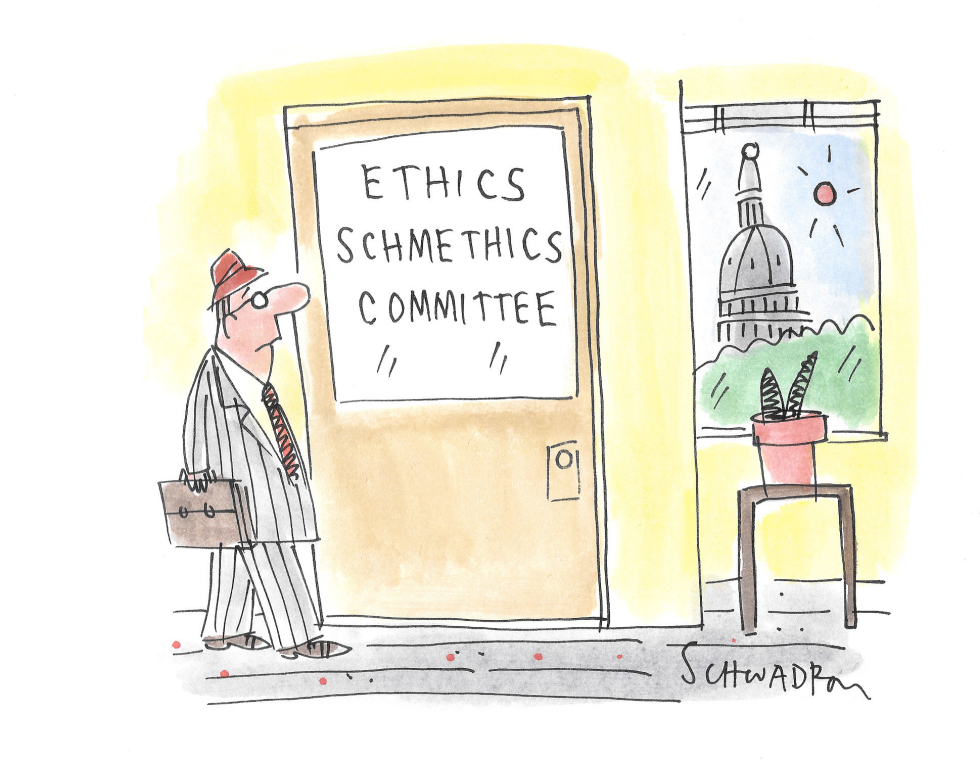
Congress continues to sideline meaningful ethics oversight, with lawmakers showing little interest in strengthening or even respecting the chamber's ethics committee. The panel exists on paper but carries little practical weight in daily operations. This dynamic matters because weak internal standards erode public trust in legislative institutions and invite outside influence. The cartoon captures the prevailing attitude that ethics rules are an afterthought rather than a core responsibility.
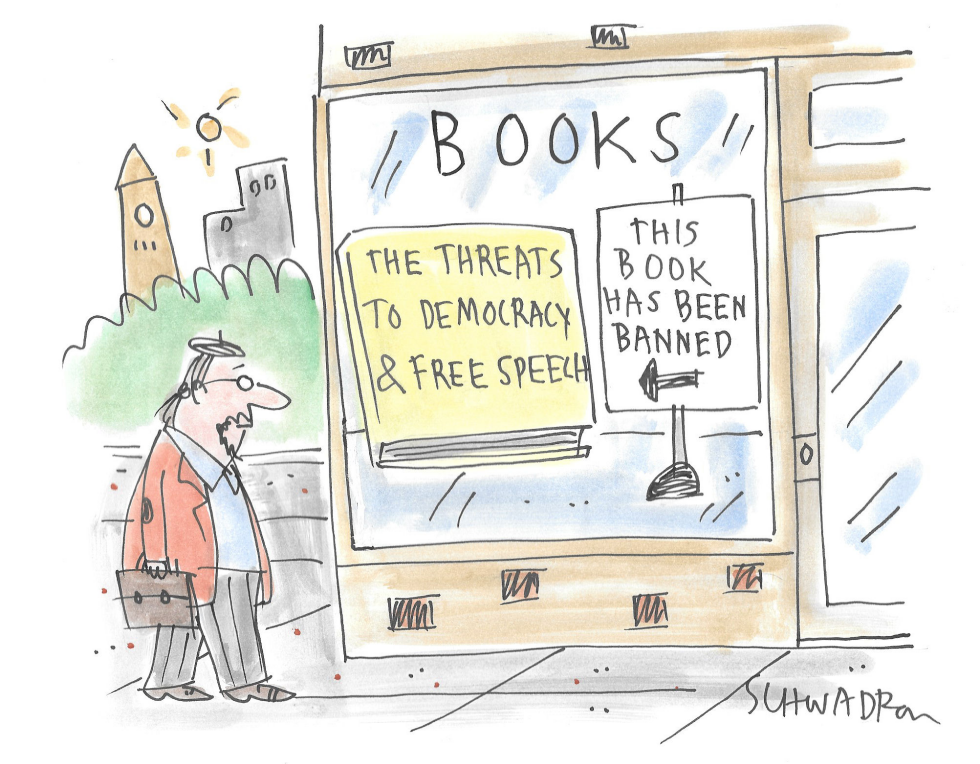
A bookstore window features a prominently displayed book titled The Threats to Democracy and Free Speech alongside a sign announcing its ban. The scene underscores ongoing debates over book removals from public access. The editorial position criticizes such bans as direct assaults on open discourse and democratic principles.
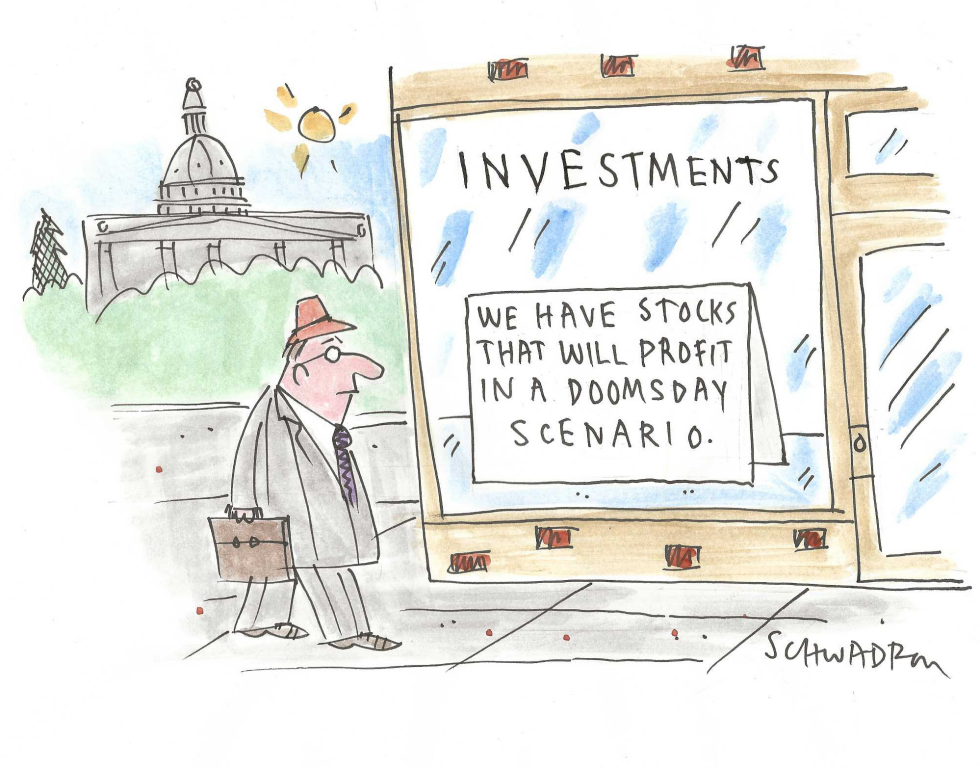
Investment firms continue to market specialized stock offerings designed to gain value during periods of widespread economic or geopolitical turmoil. Such products attract attention from clients seeking protection against market downturns or global instability. The cartoon highlights the persistent appeal of these instruments even as broader uncertainty lingers around policy and international developments.
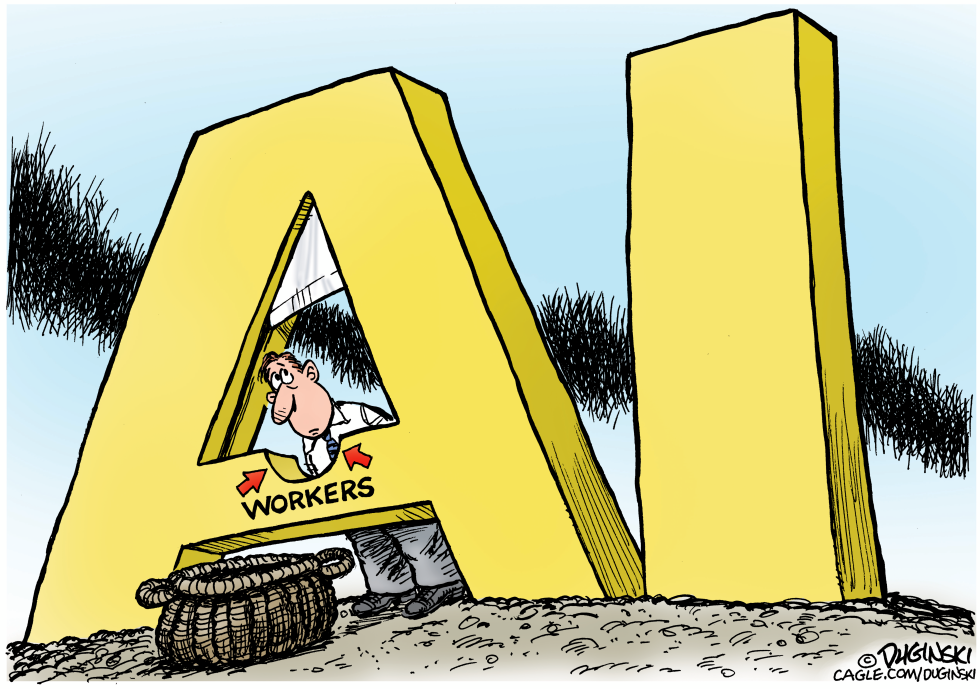
Workers fill positions inside a large letter A structure amid ongoing labor market shifts. The piece highlights the confined roles employees hold within major organizational frameworks.
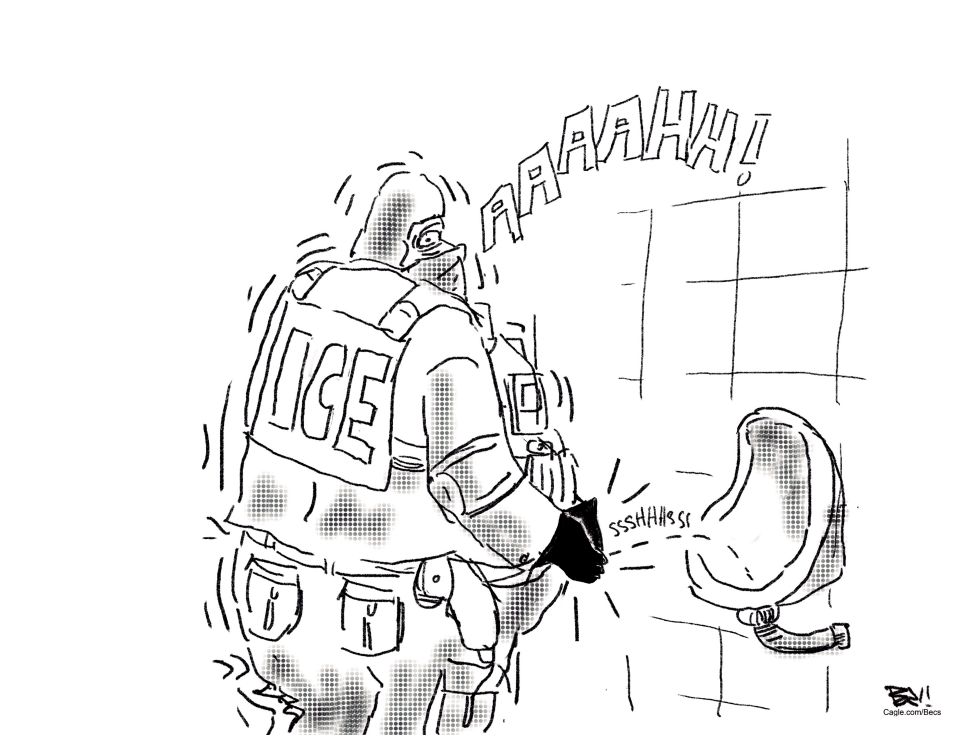
An ICE officer on duty experiences a sudden startle in a restroom, leading to an instinctive spray response toward a urinal. The incident highlights the high-alert state common among enforcement personnel. The piece portrays the officer's reaction as exaggerated and reflexive amid ongoing immigration operations.
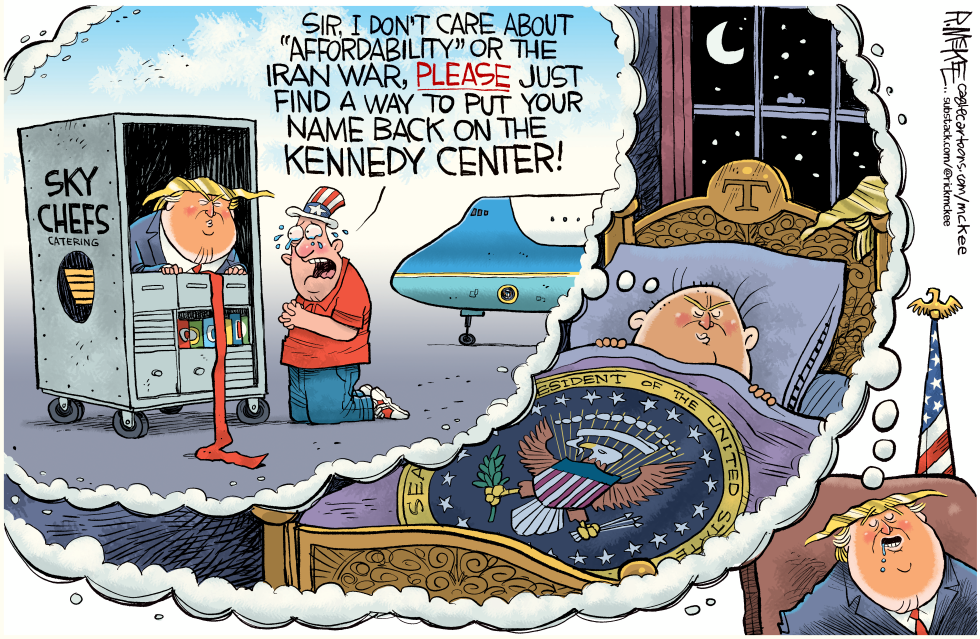
Donald Trump has repeatedly expressed interest in attaching his name to prominent public institutions. The Kennedy Center, a major arts venue in Washington, has drawn his attention as a potential target for rebranding. Critics argue such moves distract from pressing national issues including foreign conflicts and domestic spending. The cartoon depicts this fixation as a nighttime preoccupation that sidelines other responsibilities.
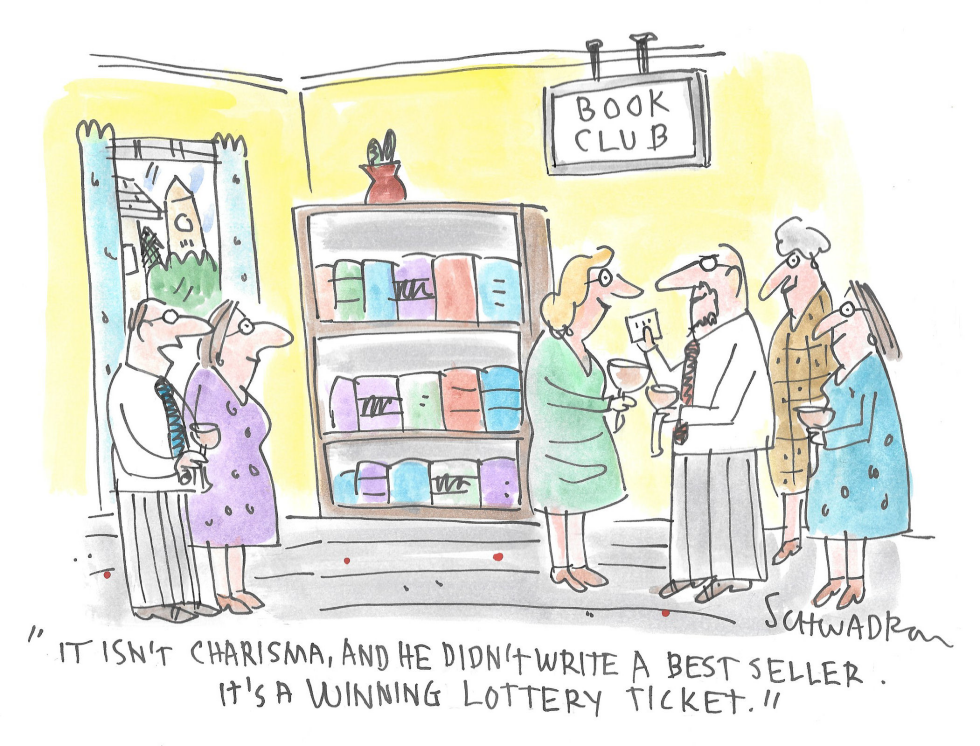
A book club gathering turns on a revelation about its leader's success. Members learn that a winning lottery ticket, not literary achievement or personal charisma, explains the group's draw. The situation highlights how unexpected windfalls can shape social circles and perceived status in casual settings. The piece presents the discovery as a straightforward explanation that undercuts assumptions about talent or appeal driving group interest.
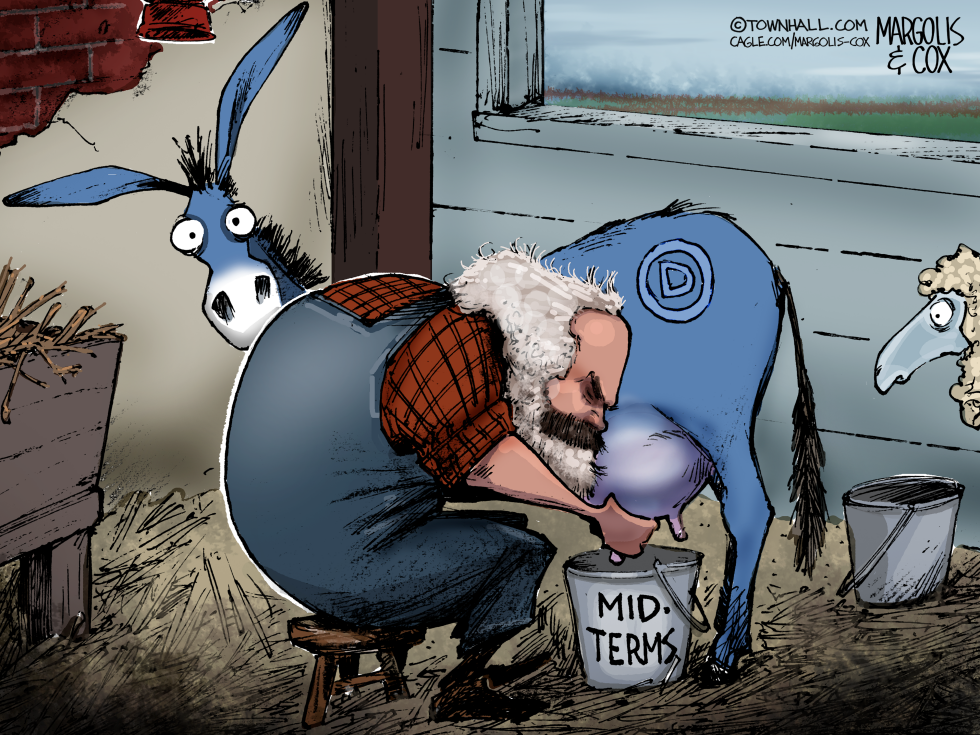
Democrats face ongoing questions about ideological influences from socialist thinkers as they prepare midterm strategies. The piece portrays Karl Marx directly engaging the party symbol to extract electoral gains. It argues that such roots undermine the party's mainstream appeal and long-term viability.
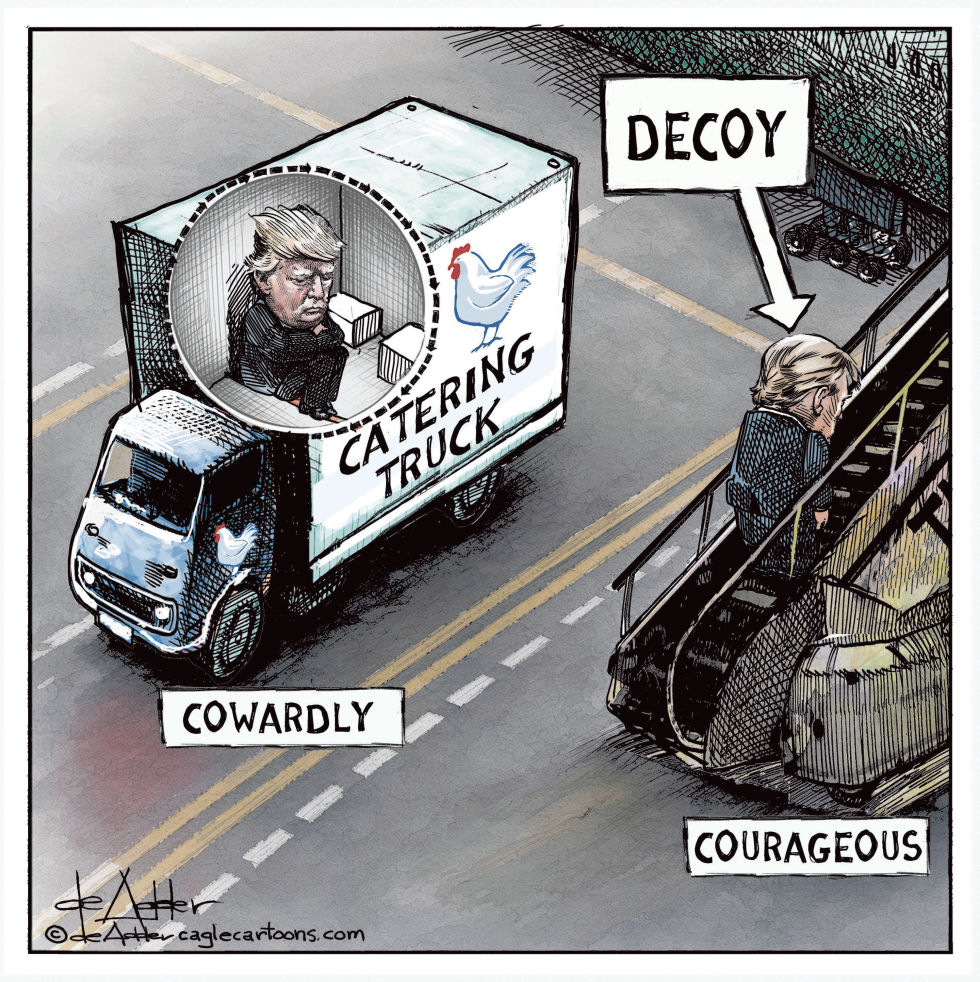
A political cartoon published August 11, 2026, depicts a catering truck marked as a decoy and cowardly, containing an image of Donald Trump. Hillary Clinton appears separately ascending stairs labeled courageous. The piece responds to ongoing partisan debates over leadership strength and personal resolve in electoral politics. It advances the argument that one figure projects weakness through avoidance while the other demonstrates bravery through direct action.
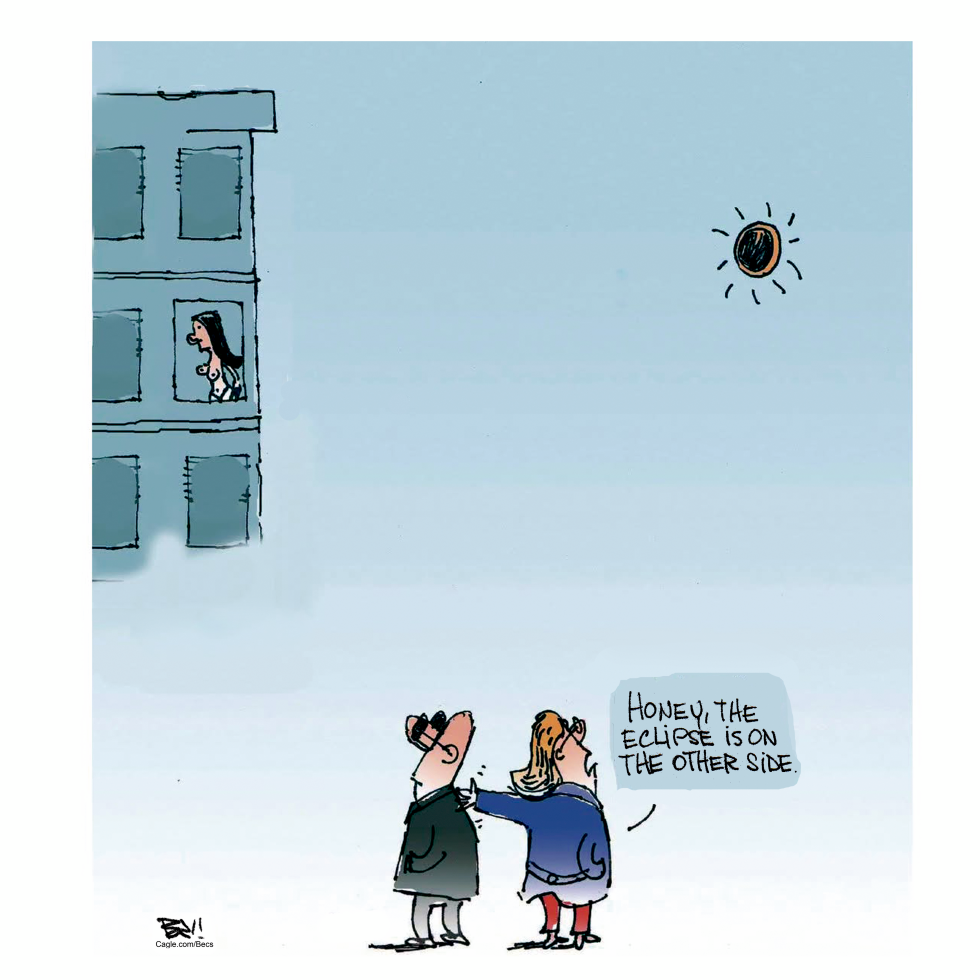
A domestic scene plays out around a simple pun on eclipses and visible marks. The exchange highlights everyday relationship dynamics where one party redirects attention from an apparent injury. The piece presents the interaction without broader political framing.
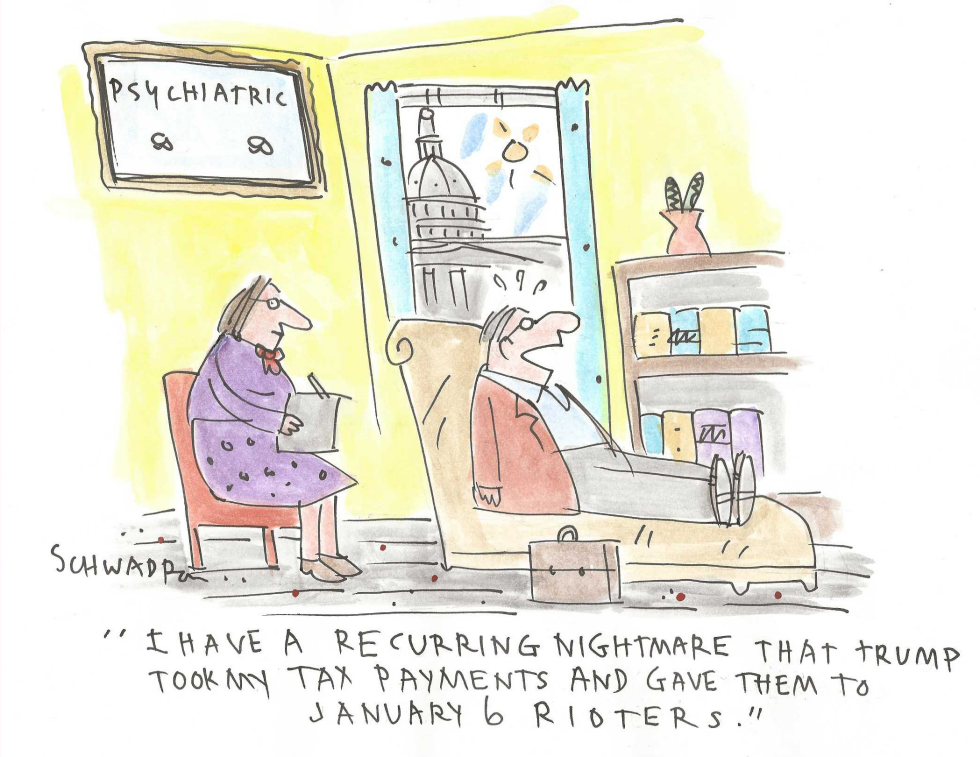
A patient describes a recurring nightmare in which former President Trump diverts tax payments to January 6 rioters. The session reflects persistent public concerns over accountability for the Capitol events and use of public funds. The piece portrays these fears as a continuing source of political unease.
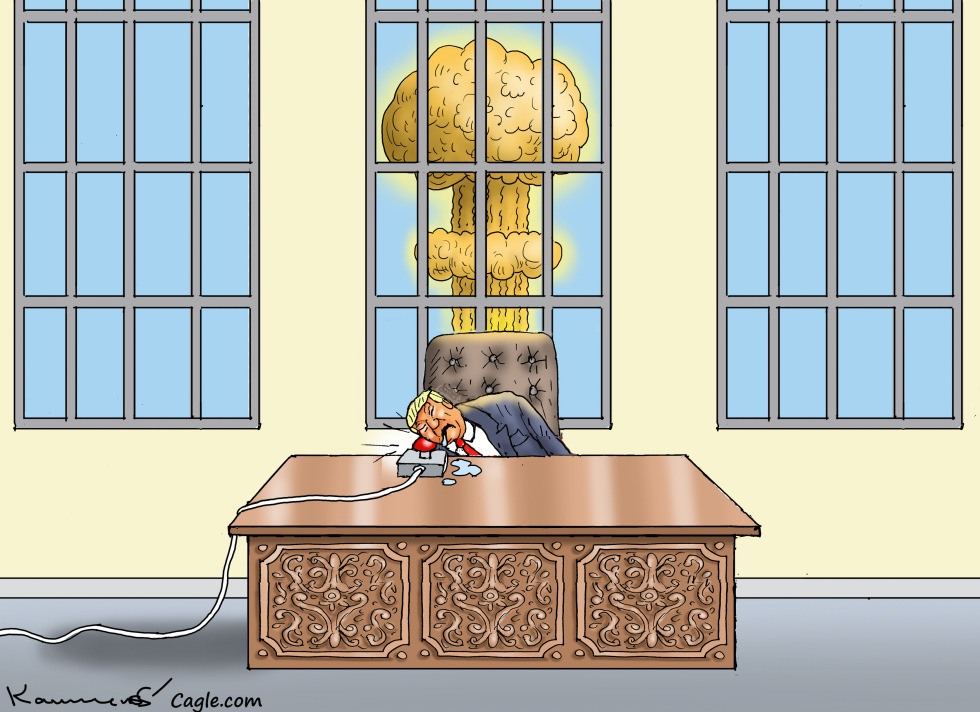
Donald Trump is shown slumped over the nuclear button in the Oval Office as a mushroom cloud rises outside the window. The image captures a moment of apparent inaction or collapse at the desk. The editorial position highlights risks associated with presidential control over nuclear launch authority during a period of heightened global tensions.
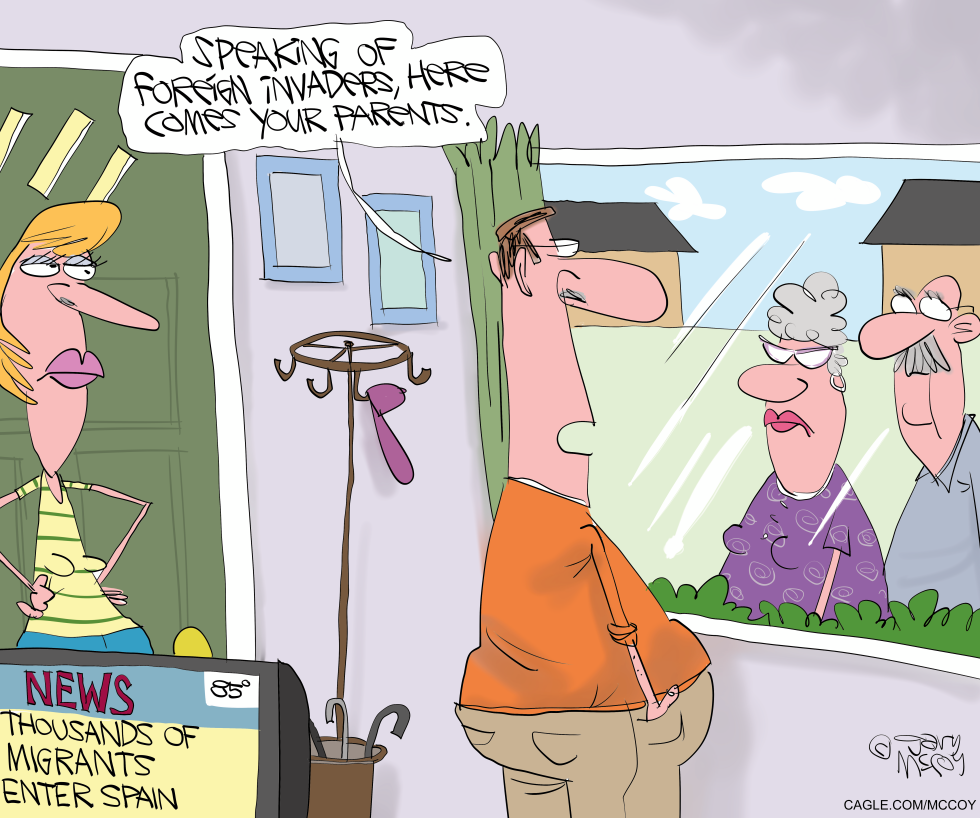
News reports show thousands of migrants entering Spain. The cartoon responds by having a man greet his in-laws with the same 'foreign invaders' label used in immigration debates. It highlights how inflammatory rhetoric can apply beyond policy to everyday family situations.
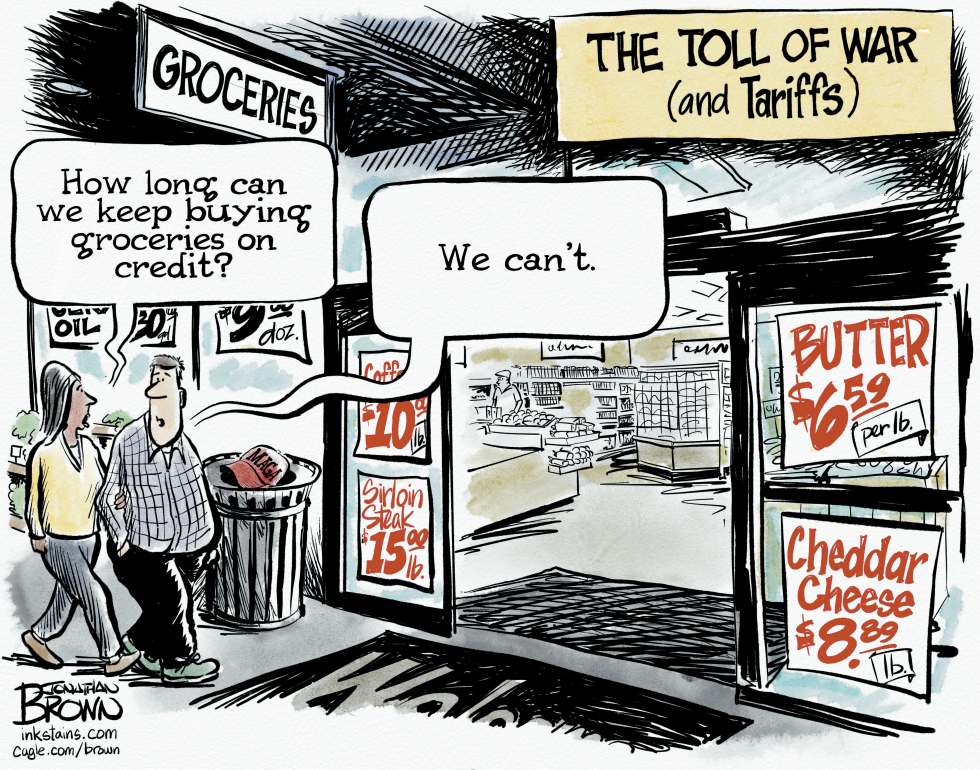
A political cartoon depicts a couple leaving a grocery store after learning they cannot continue buying food on credit. Signs inside show sharply higher prices for butter at $6.59 per pound, cheddar cheese at $8.89 per pound and sirloin steak at $15 per pound. A banner overhead reads The Toll of War (and Tariffs). The scene illustrates how ongoing conflict and trade barriers have driven up everyday food costs leaving households to rely on credit that is no longer sustainable.
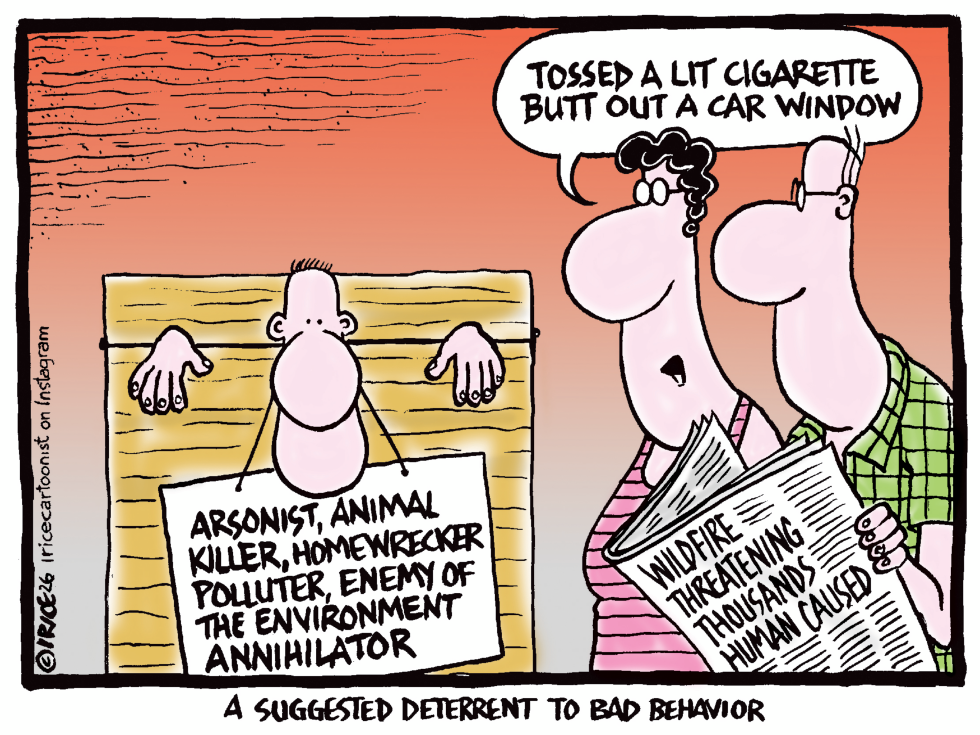
Cigarette litter from vehicles continues to ignite wildfires that destroy homes and habitats across dry regions. The practice endangers thousands and burdens emergency responders during peak fire seasons. The cartoon advances stocks as an old-fashioned public punishment to shame and deter the specific act of tossing lit butts out car windows.