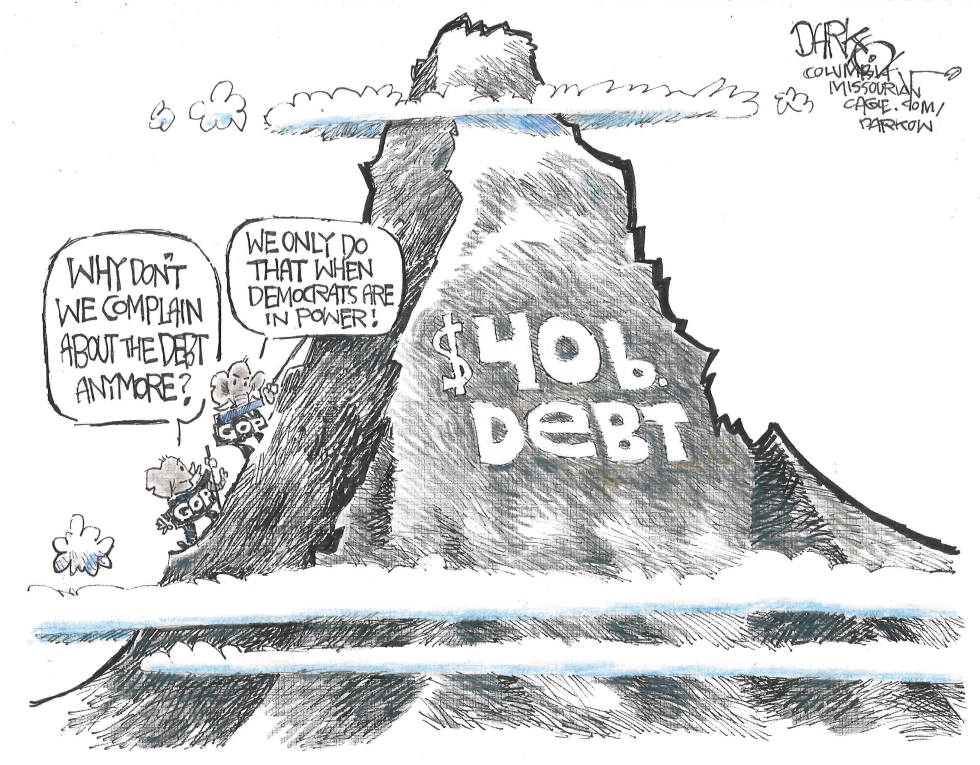
Republicans in power have stopped raising alarms over the national debt, a reversal from their stance during Democratic administrations. The shift highlights how fiscal concerns often serve partisan purposes rather than consistent policy priorities. The piece critiques this selective approach to government spending and borrowing.
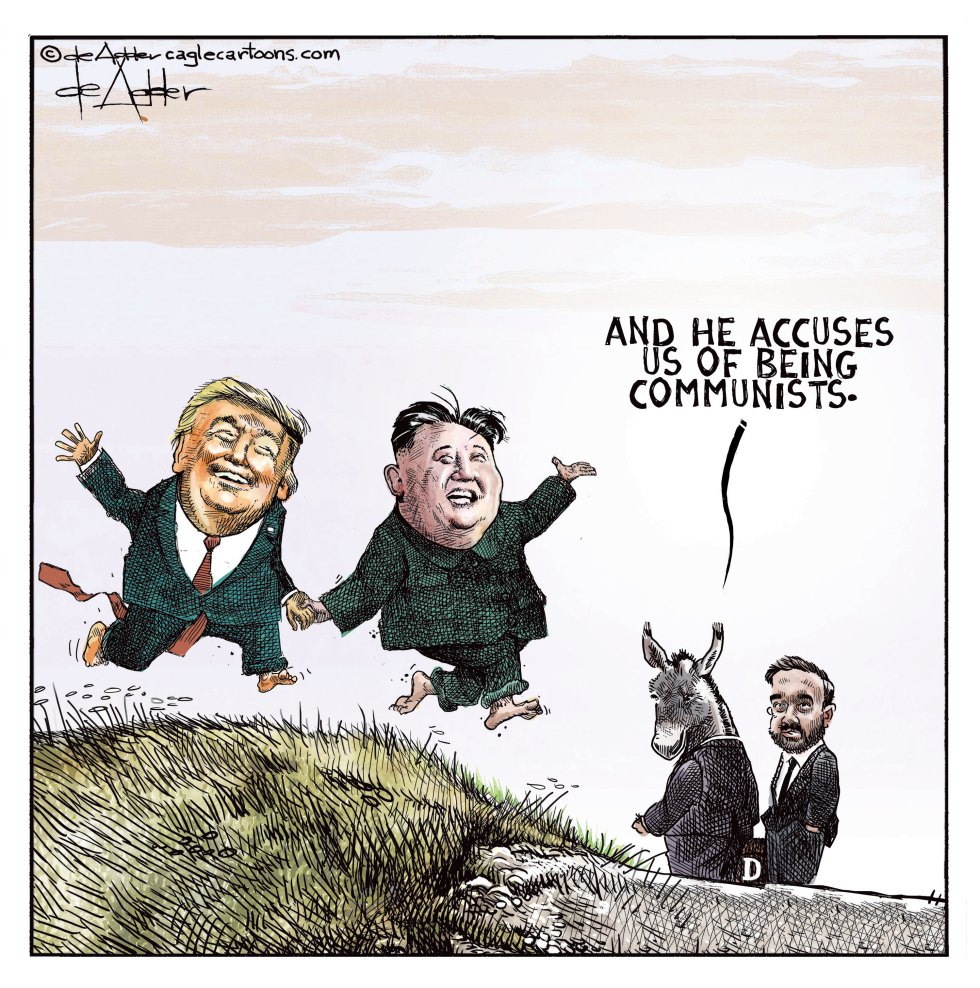
Donald Trump and Kim Jong Un appear together in a political scene accusing Democrats of communist leanings. The depiction highlights their joint action amid ongoing partisan rhetoric. The editorial position frames the accusation as inconsistent given the shared leap.
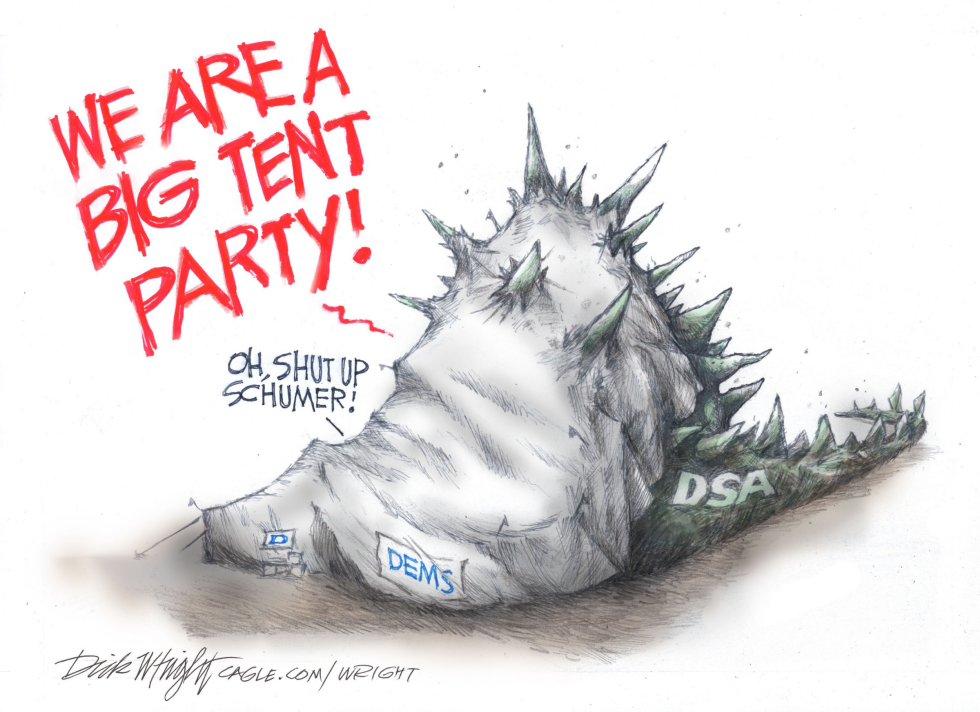
Democratic leaders continue to promote the party as a big tent open to all factions. The DSA's growing role creates visible friction with establishment figures like Senate Minority Leader Chuck Schumer. This dynamic highlights ongoing tensions over the party's direction and messaging ahead of future elections. The piece argues that the big tent claim rings hollow when the socialist wing dominates and dismisses traditional voices.
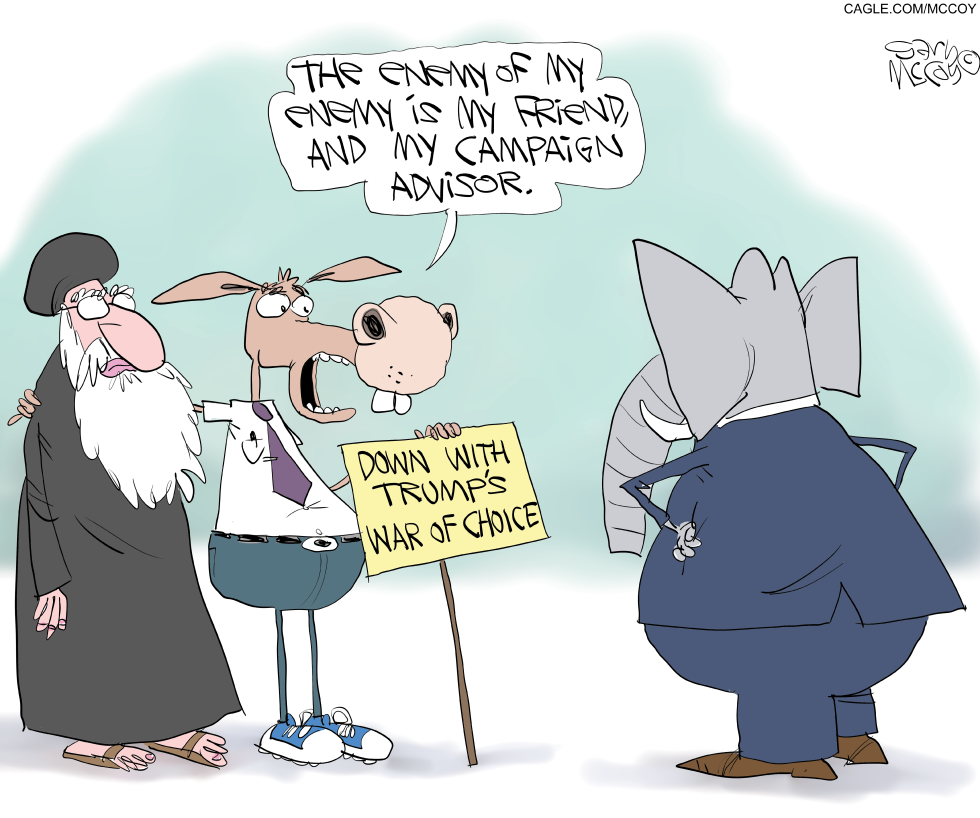
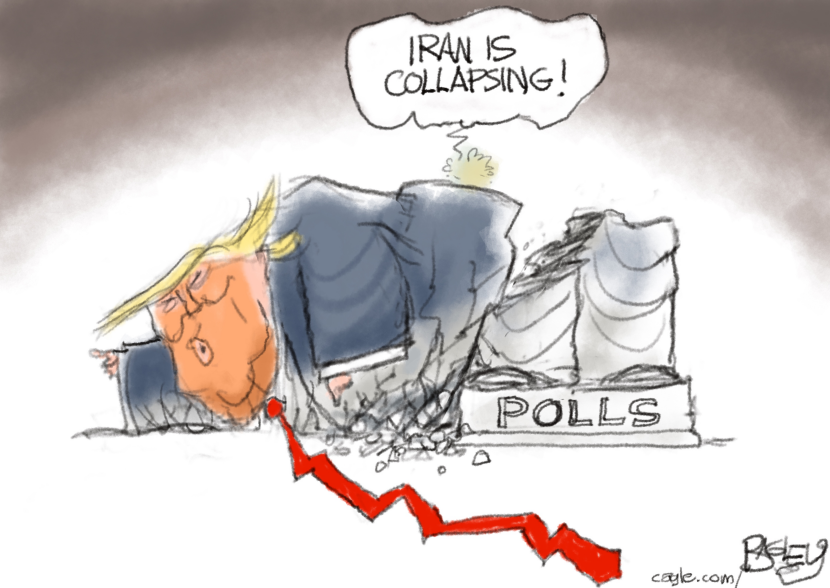
Democrats have signaled opposition to potential Trump administration actions toward Iran, framing them as unnecessary conflict. The alliance draws on shared criticism of U.S. policy in the Middle East. This dynamic highlights partisan divides over foreign engagement and raises questions about domestic political strategy. The piece portrays the partnership as opportunistic and shortsighted.
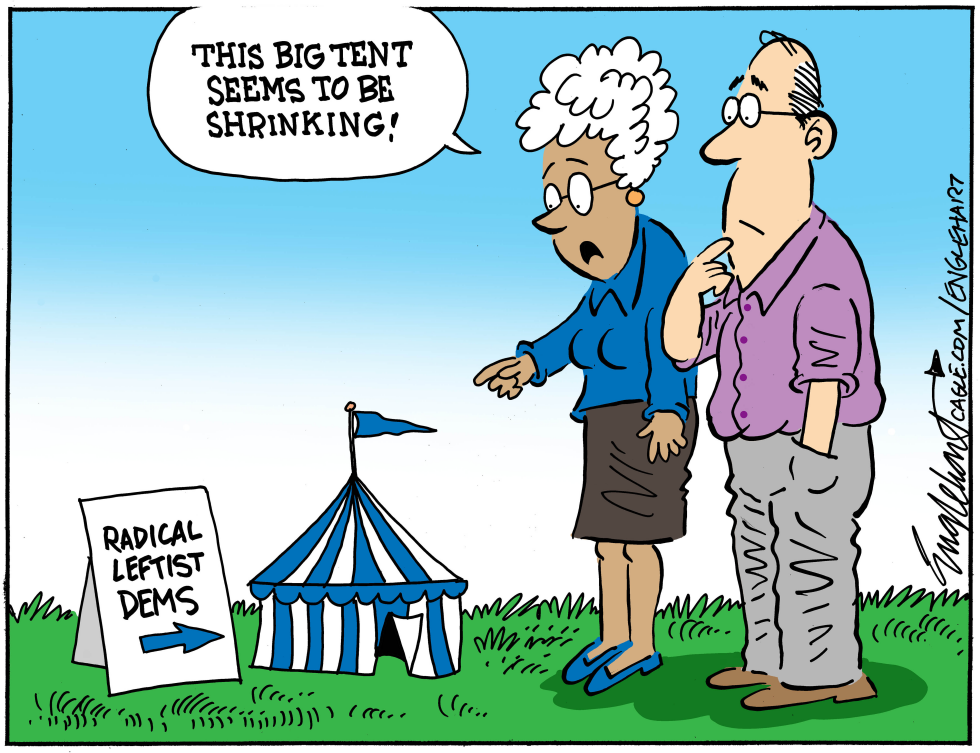
Democratic Party figures have grown concerned that the traditional big tent coalition is contracting as radical leftists consolidate control over the party's direction and messaging. The shift sidelines moderates and narrows the range of acceptable views within the organization. This dynamic raises questions about the party's ability to maintain broad electoral appeal in upcoming cycles. The editorial takes the position that the exclusionary turn is self-defeating and accelerates the party's isolation from mainstream voters.
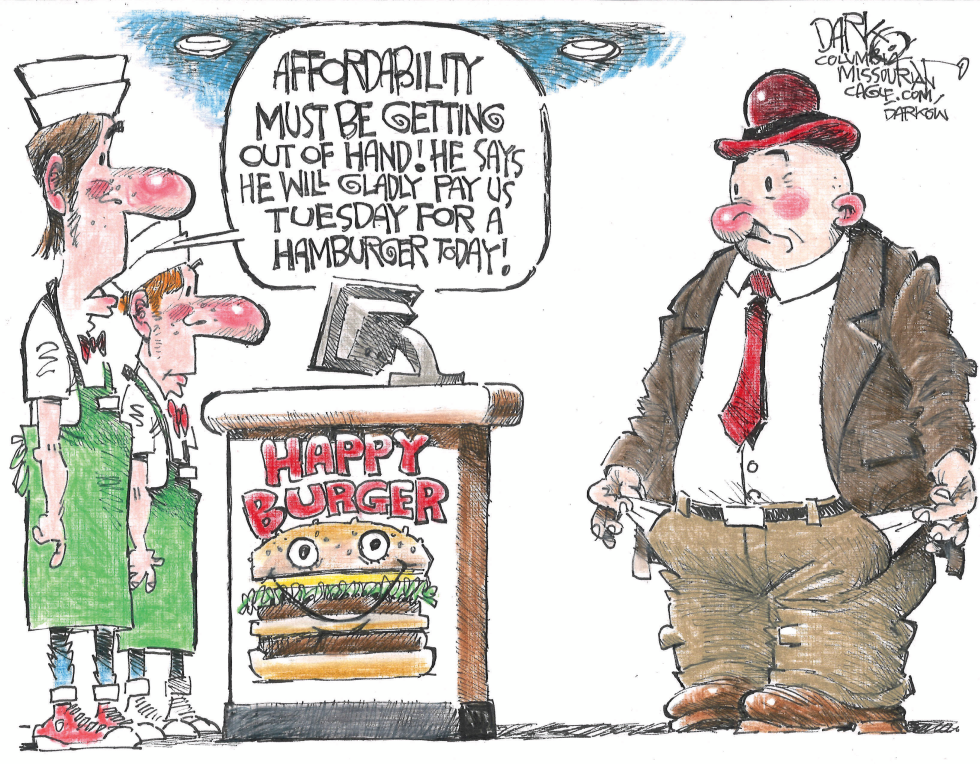
Rising living costs continue to strain household budgets across the country as consumers delay payments and stretch resources. The situation reflects persistent pressure on everyday purchases like meals. The piece takes the position that such affordability challenges have become so widespread they invite classic cultural comparisons to underscore the frustration.
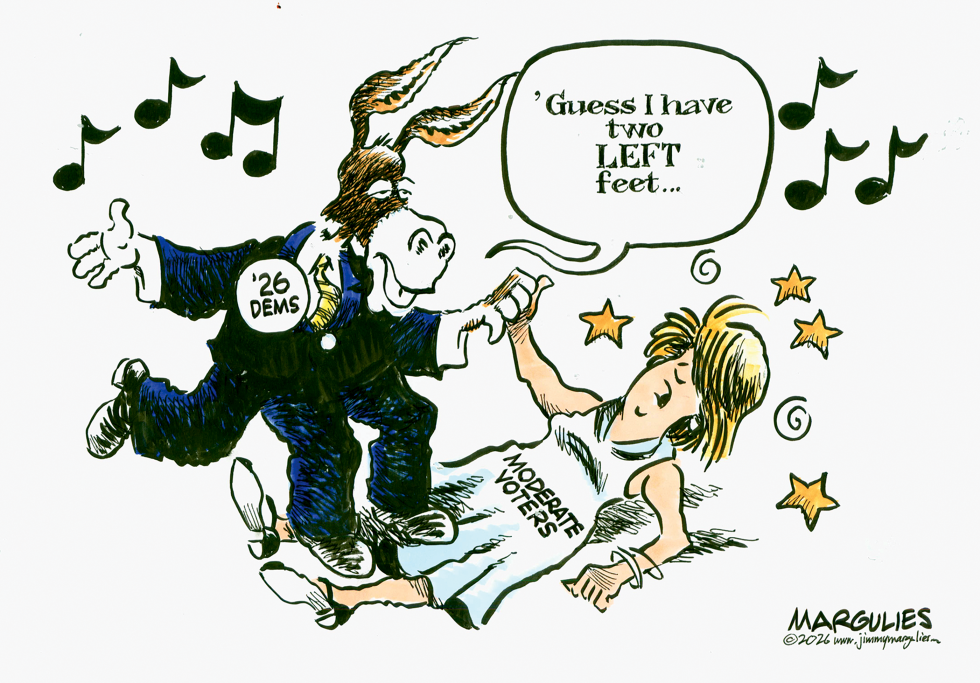
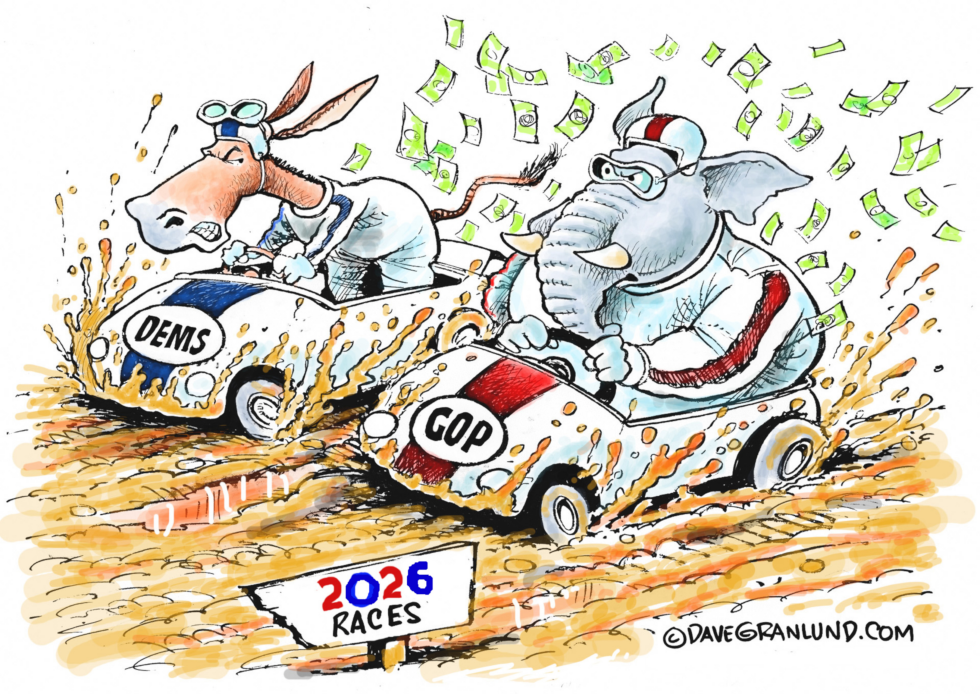
Democrats heading into the 2026 midterms face internal pressure to energize their base with progressive policies, yet this risks further distancing moderate voters essential for broader electoral success. The party has advanced left-leaning positions on issues like spending and social policy in recent cycles. Critics argue this approach prioritizes ideological purity over coalition building. The piece portrays the Democratic donkey as stepping on moderates while acknowledging its own missteps, highlighting the tension between base mobilization and centrist appeal.
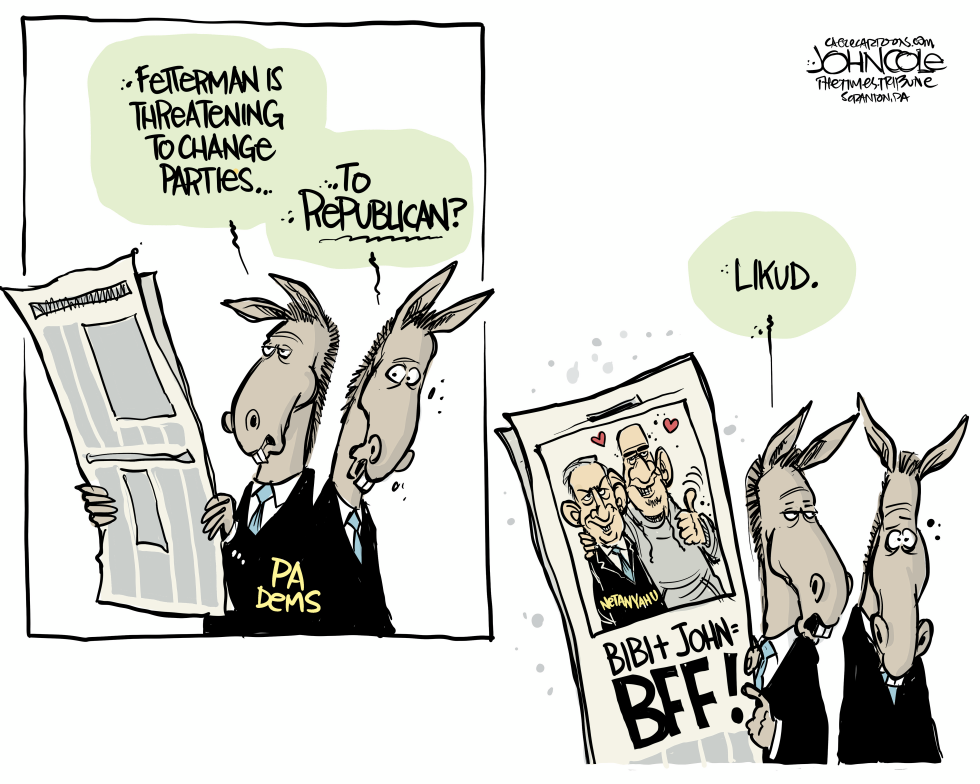
Senator John Fetterman has signaled a possible party switch that has Pennsylvania Democrats scrambling. Speculation centered on a Republican move until the senator's close ties to Israeli Prime Minister Benjamin Netanyahu and the Likud party surfaced instead. The development highlights ongoing tensions within the Democratic coalition over foreign policy alignments and personal political trajectories.
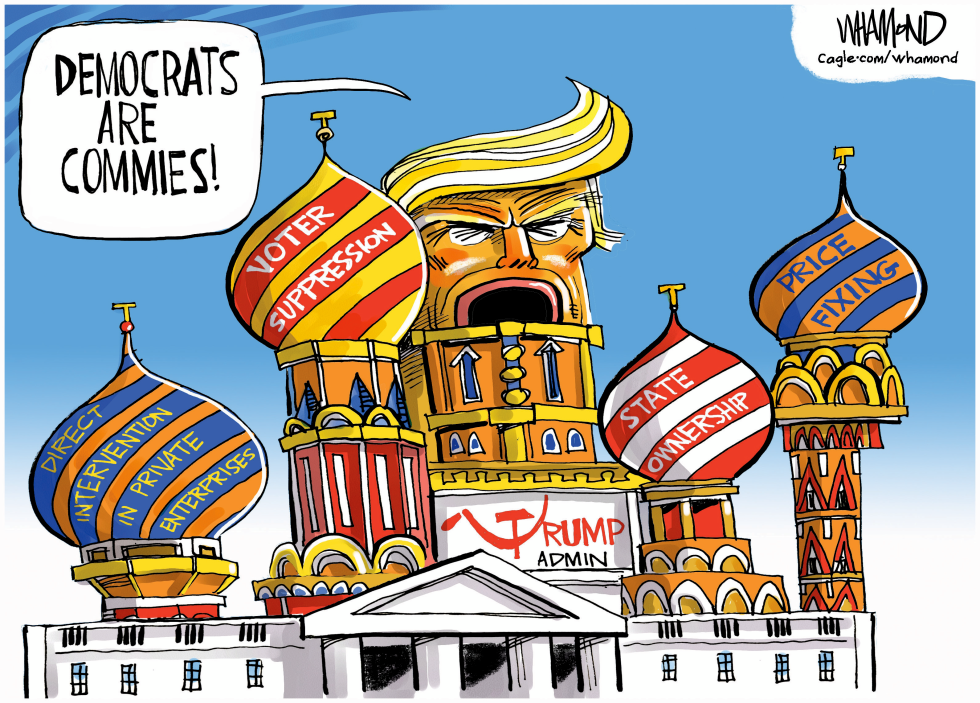
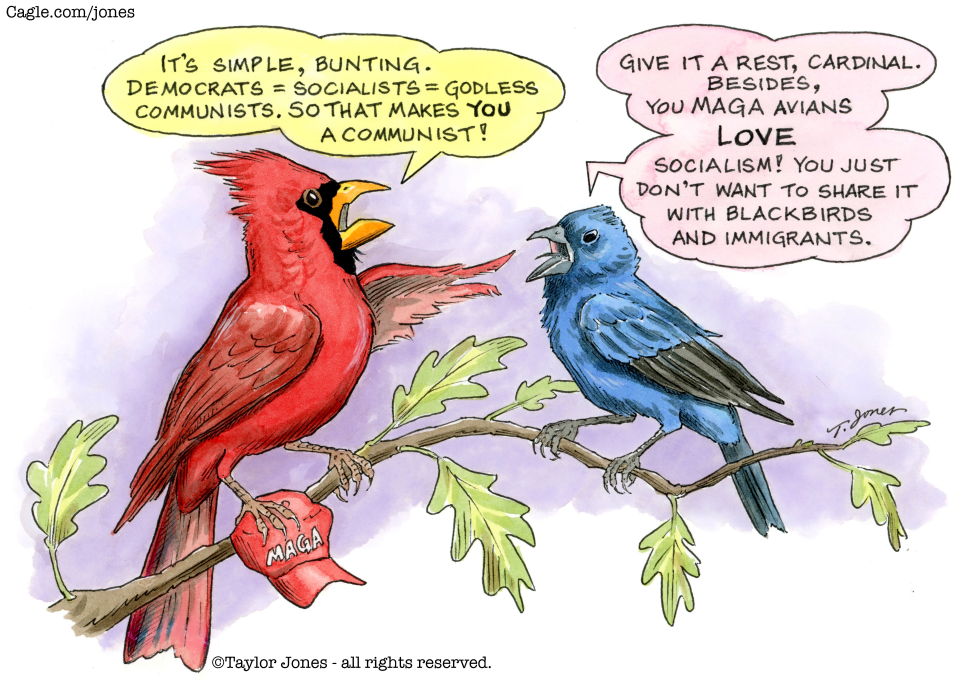
Donald Trump has renewed attacks labeling Democrats as communists amid ongoing debates over election rules and economic interventions. The accusation revives Cold War-era rhetoric in current political discourse. The piece portrays the Trump administration itself as adopting the very state-control measures it condemns.
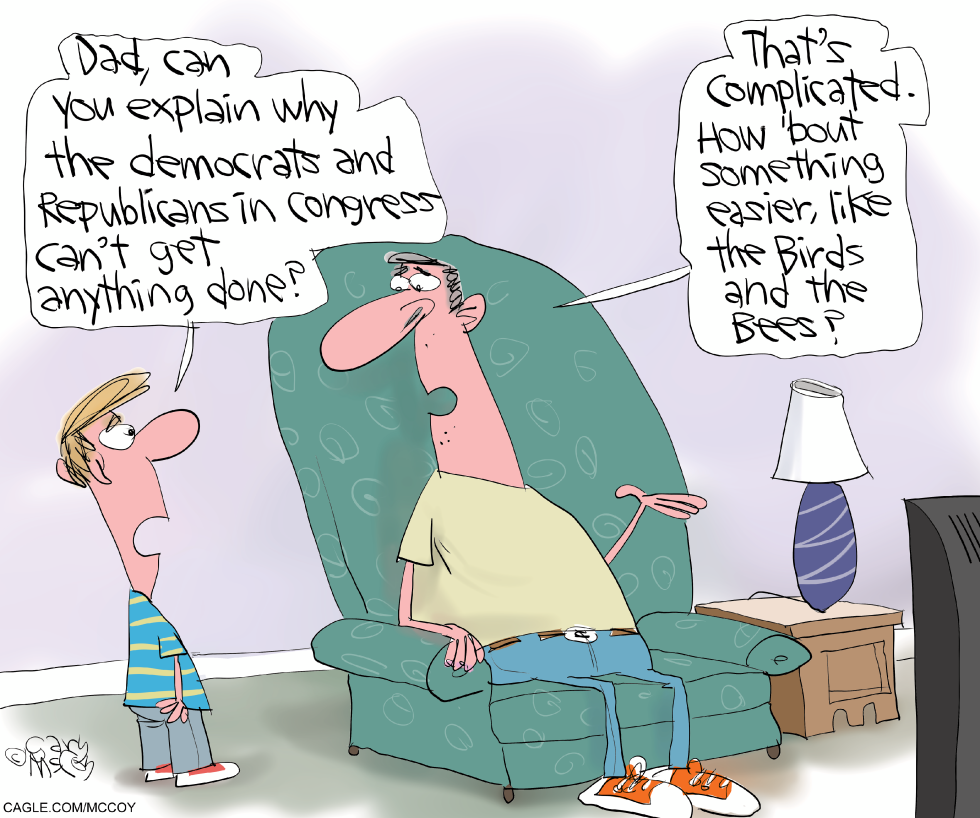
Congress remains stalled on major legislation amid ongoing partisan divisions between Democrats and Republicans. Lawmakers struggle to advance bills on key issues despite public frustration with inaction. The deadlock highlights deep divisions that prevent compromise on budgets, infrastructure, and other priorities. The cartoon portrays a father deflecting his son's inquiry about this dysfunction by redirecting to an easier subject, underscoring how even basic explanations of congressional gridlock prove too difficult to tackle directly.
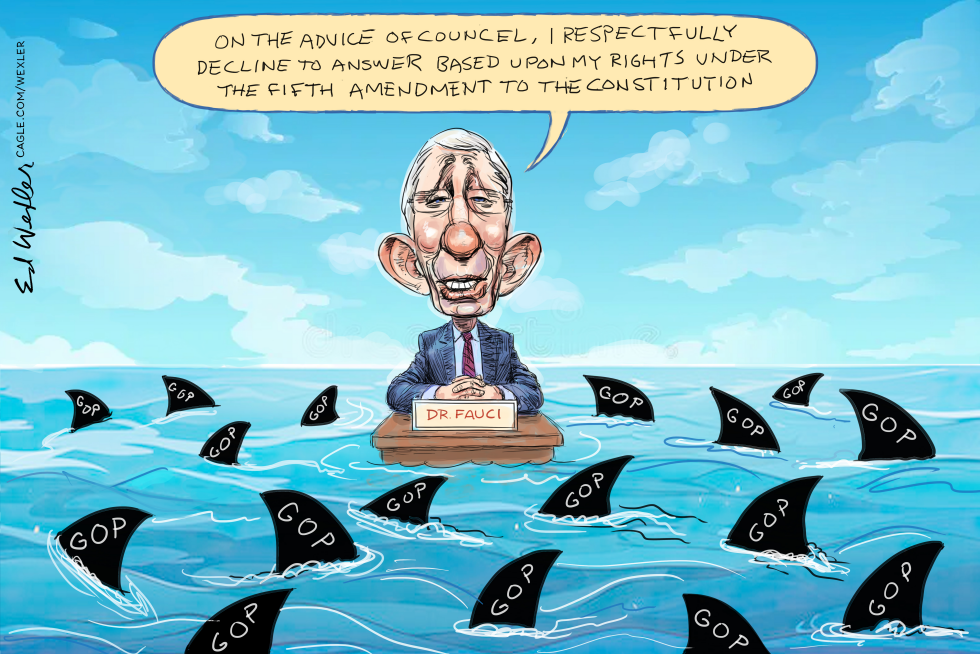
Dr. Anthony Fauci declined to answer questions at a House hearing, invoking his Fifth Amendment protections. The piece responds to Republican-led scrutiny of his role in pandemic-era public health decisions. It depicts the proceeding as a hostile setting rather than a neutral fact-finding exercise.
A grocery store cashier tells a customer he lacks enough bread to buy her bread and asks if she has an installment plan. The scene shows a woman with two children at the checkout counter surrounded by tomatoes. The cartoon addresses ongoing inflation and affordability challenges in food prices as of late July 2026. It uses wordplay on bread to illustrate how rising costs strain household budgets. The visual emphasizes everyday shopping struggles without specifying particular policies or events.
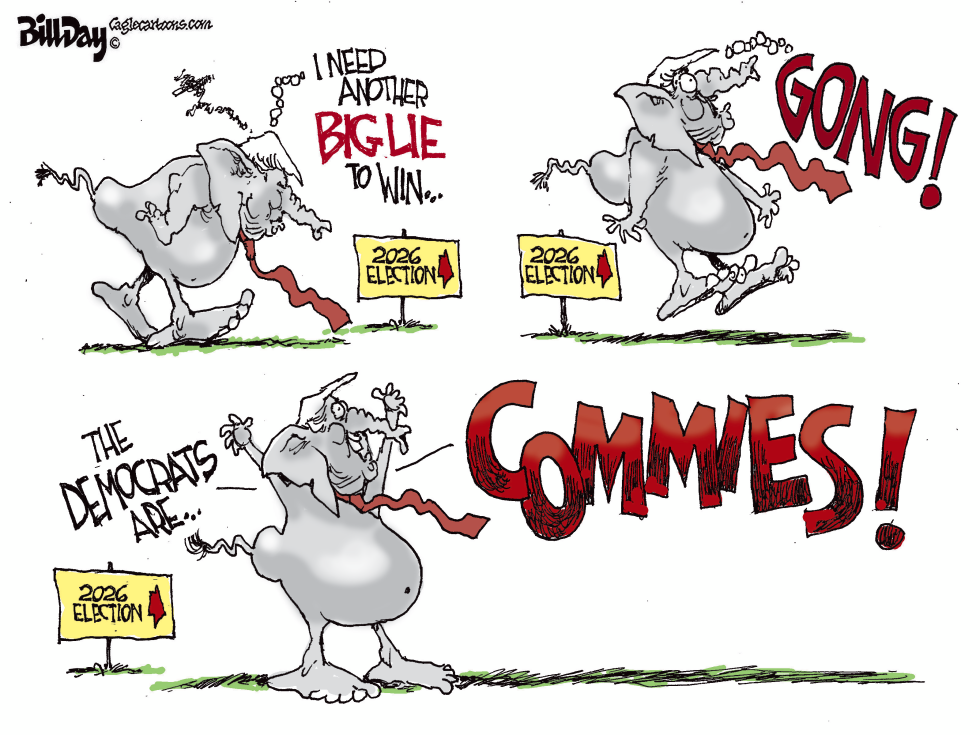
Republicans continue to rely on the big lie narrative to motivate voters ahead of the 2026 elections. The approach draws internal pushback and highlights deepening partisan rhetoric. The piece criticizes the tactic as tired and counterproductive.
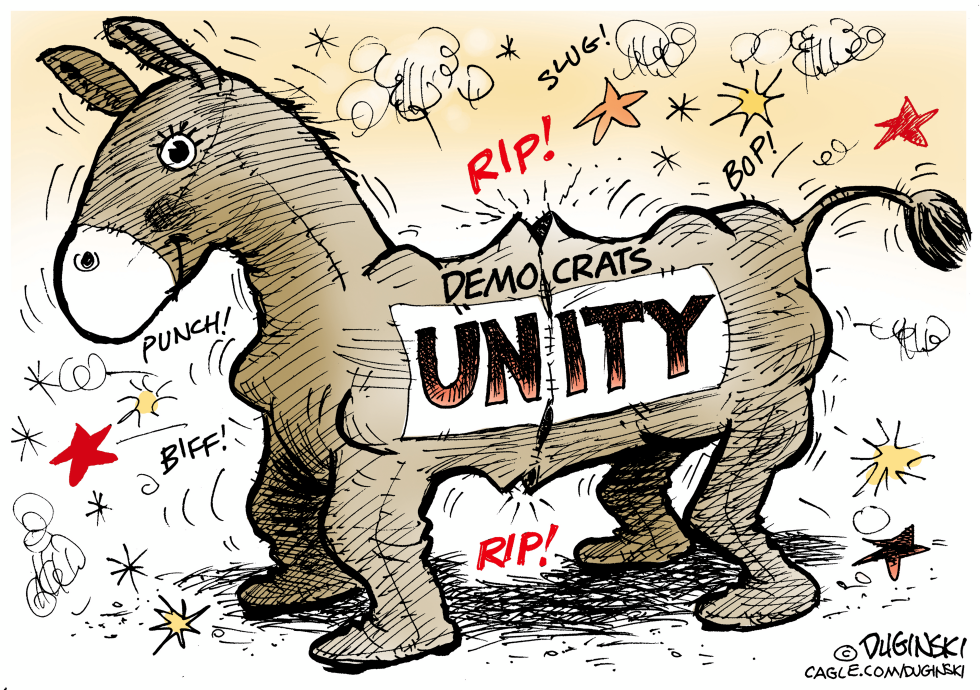
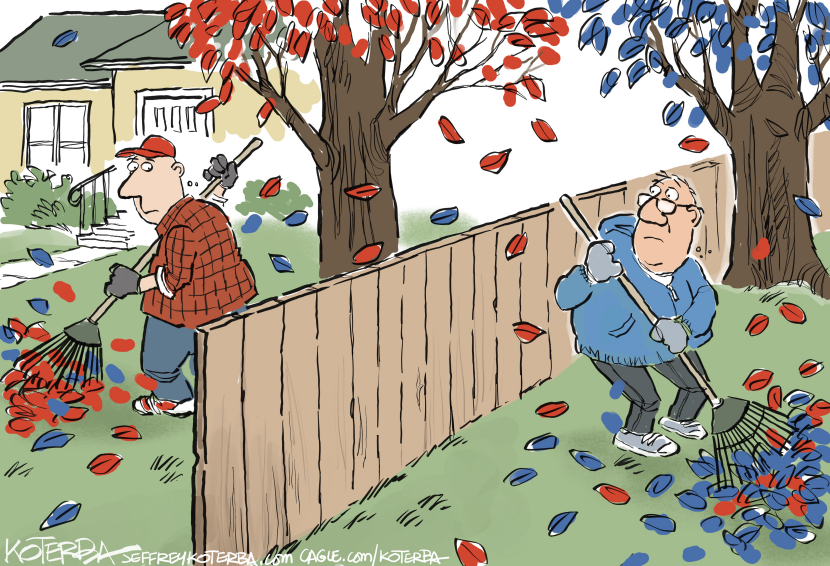
Democrats continue to display public divisions over strategy and messaging in the run-up to midterm and presidential contests. Party leaders struggle to project cohesion on issues ranging from economic policy to social priorities. The resulting perception of disarray weakens their ability to counter Republican narratives and mobilize voters. The cartoon highlights how these internal conflicts undermine the party's core message of unity.