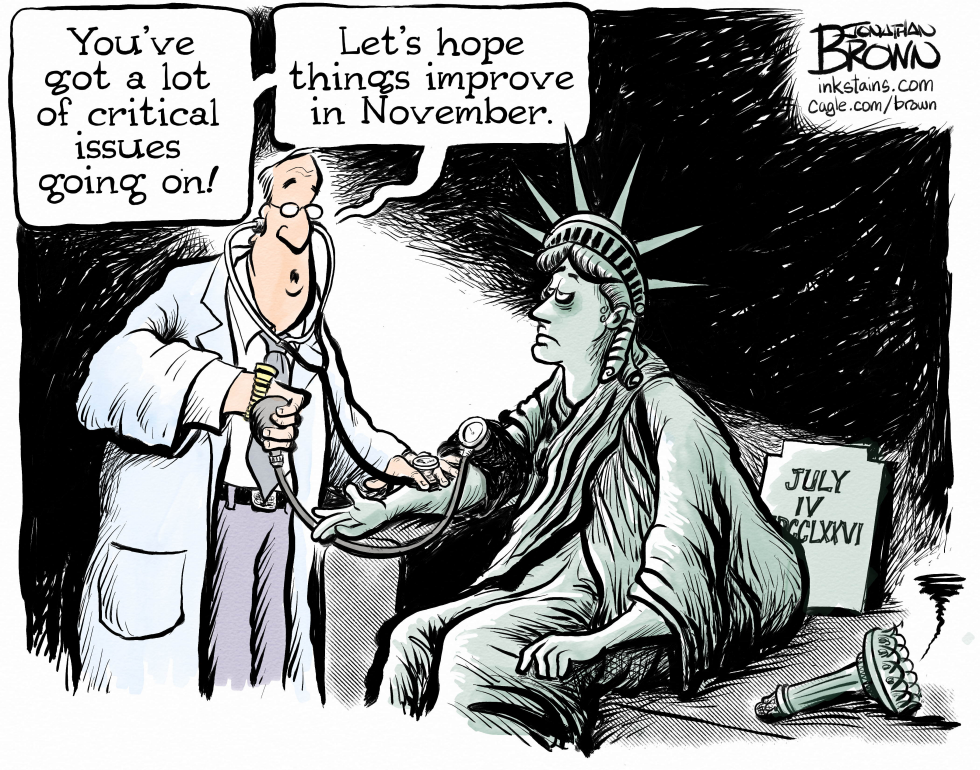
The cartoon depicts a doctor examining the Statue of Liberty's blood pressure and noting numerous critical issues. The Statue responds with hope that things will improve in November. A sign references July 4, 1776, and a broken torch rests on the ground. Published on September 15, 2026, the image uses the iconic figure to comment on the state of the nation ahead of upcoming elections. The visual metaphor highlights concerns about American institutions and public sentiment.
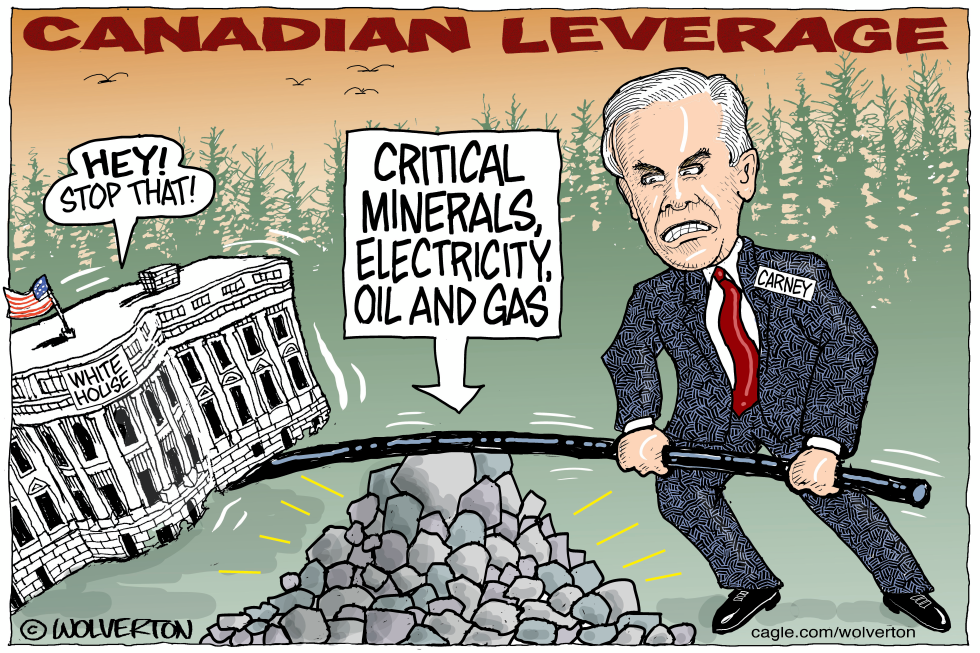
The cartoon depicts former Bank of Canada governor Mark Carney using a pipe labeled critical minerals, electricity, oil and gas as a lever to damage the White House. A speech bubble from the building protests the action. Published on September 12, 2026, the image comments on ongoing Canada-US tensions over resource exports and trade policy. Carney is shown in a suit with a determined expression, standing on rubble. The visual underscores Canada's potential to restrict supplies vital to the American economy. It reflects real-world discussions about critical minerals and energy interdependence between the two nations.
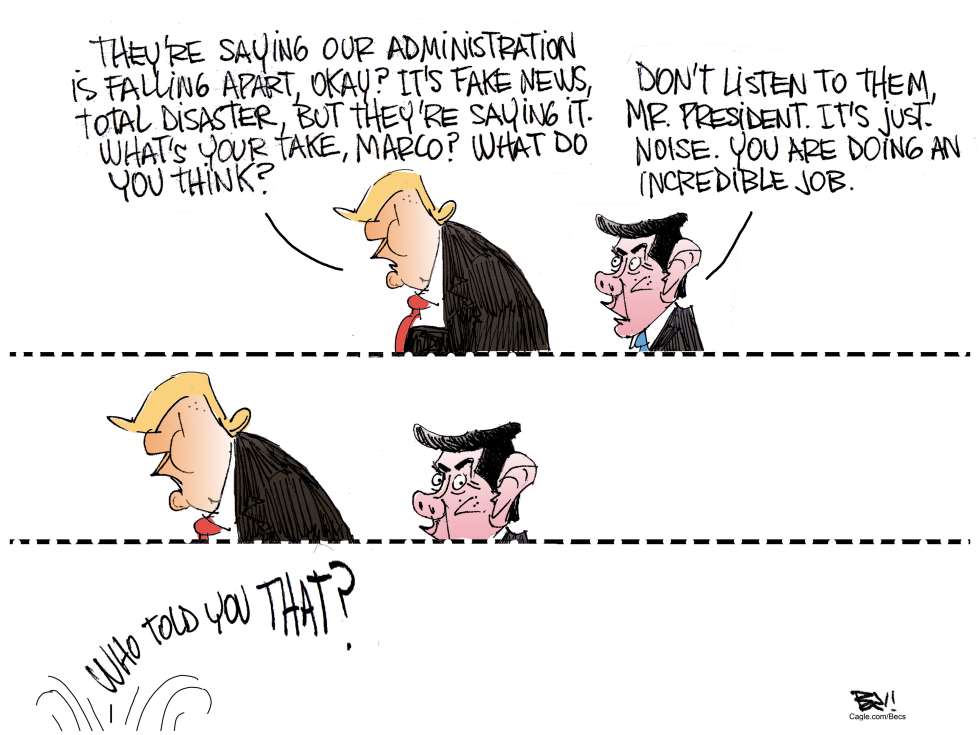
President Trump asked Senator Marco Rubio for his assessment of reports that the administration is in disarray, labeling them fake news. Rubio dismissed the reports as noise and praised Trump's performance. Trump responded by questioning who had told Rubio that assessment. The exchange highlights tensions over loyalty and information flow inside the administration. The cartoon portrays Rubio's positive reply as triggering suspicion rather than reassurance.
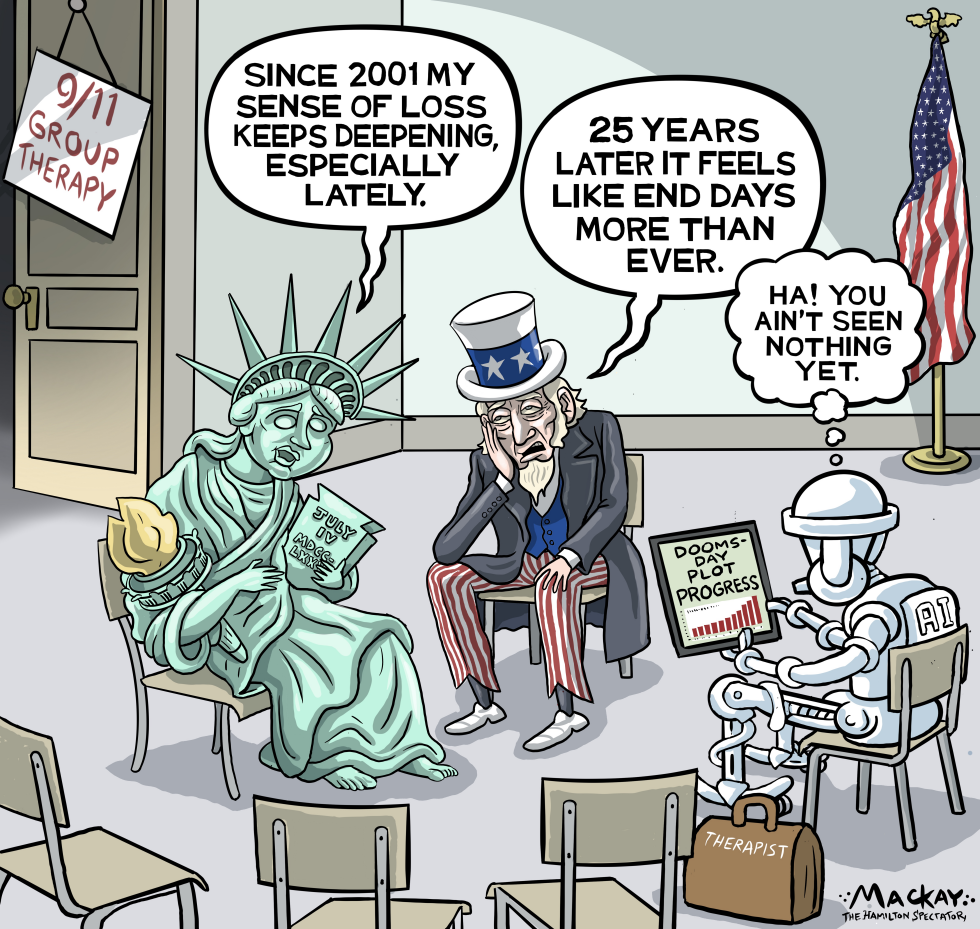
The cartoon depicts the Statue of Liberty, Uncle Sam and an AI robot seated in a 9/11 group therapy session on the 25th anniversary of the attacks. The Statue of Liberty holds a book marked July IV MDCCLXXVI and speaks of deepening loss since 2001. Uncle Sam echoes the sentiment of end days. The AI figure, labeled with a rising doomsday plot progress chart, retorts that the others have seen nothing yet. The scene uses national symbols to reflect persistent national trauma and emerging technological threats two and a half decades after the September 11 attacks.
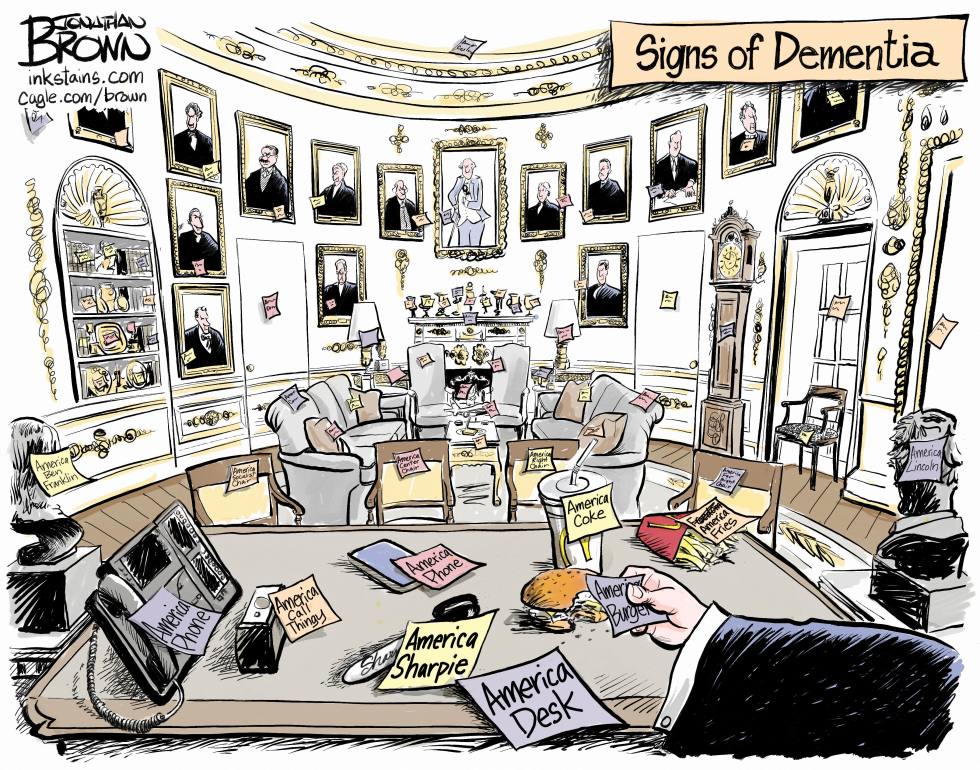
A new editorial cartoon depicts the Oval Office overrun with sticky notes labeling everyday items as America. The scene highlights signs of dementia through repeated branding on phones, desks, food and furniture. Published on September 9, 2026, the work comments on ongoing concerns about cognitive fitness in the presidency. The visual uses the familiar setting of the White House to underscore confusion and memory issues. Observers note the cartoon captures public debate over leadership capacity without naming specific individuals.
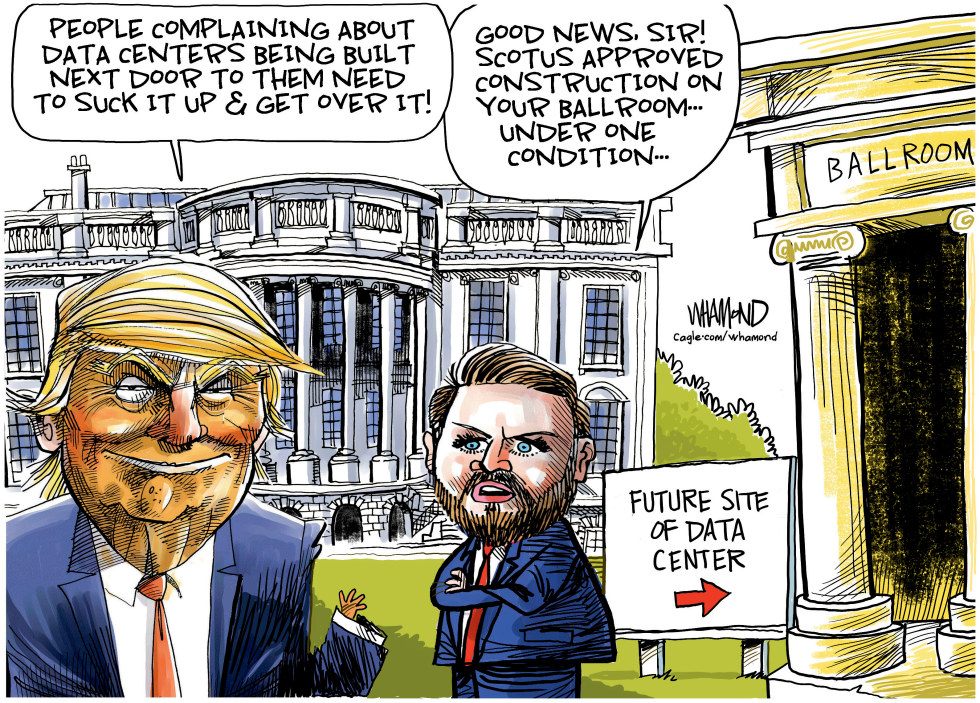
On September 2, 2026, reports emerged that the Trump administration secured Supreme Court approval for a new White House ballroom with the condition that the site also host a data center. The decision comes as communities nationwide protest data center construction near homes. The cartoon depicts Trump dismissing resident complaints while an aide delivers the conditional news. It highlights tensions between executive ambitions and local opposition to large-scale tech infrastructure. The piece argues that such projects prioritize political vanity over community concerns.
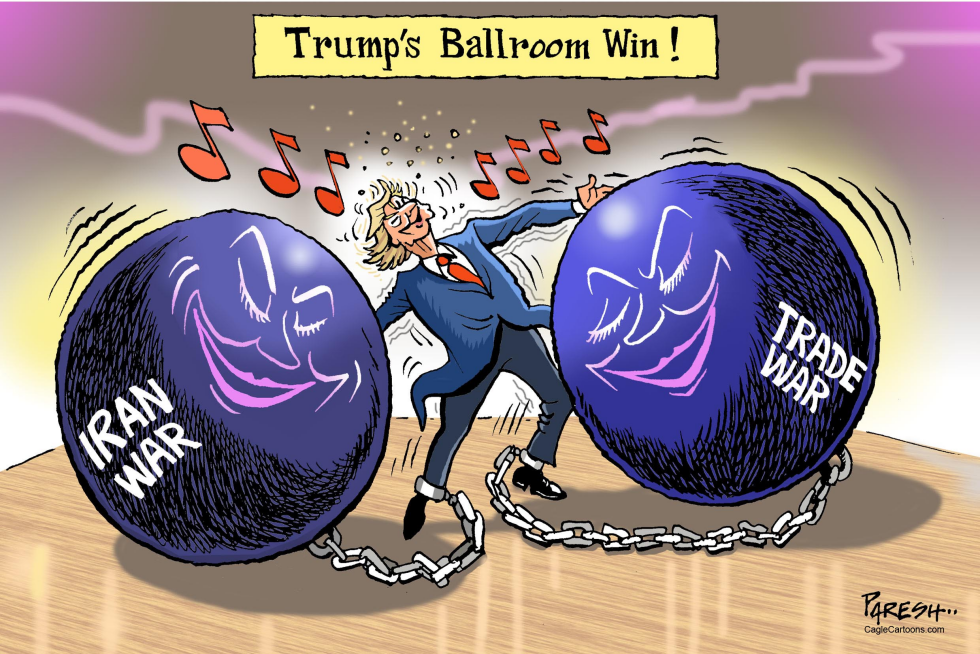
A political cartoon published September 1, 2026, portrays Donald Trump dancing energetically in a ballroom while his ankles are chained to two large balls labeled Iran War and Trade War. The image suggests the president is weighed down by simultaneous foreign policy and economic conflicts. Music notes and a banner reading Trump's Ballroom Win add ironic flair to the scene. The cartoon responds to ongoing tensions involving U.S. relations with Iran and persistent trade disputes. It visually argues that these issues continue to constrain administration actions despite any claimed victories.
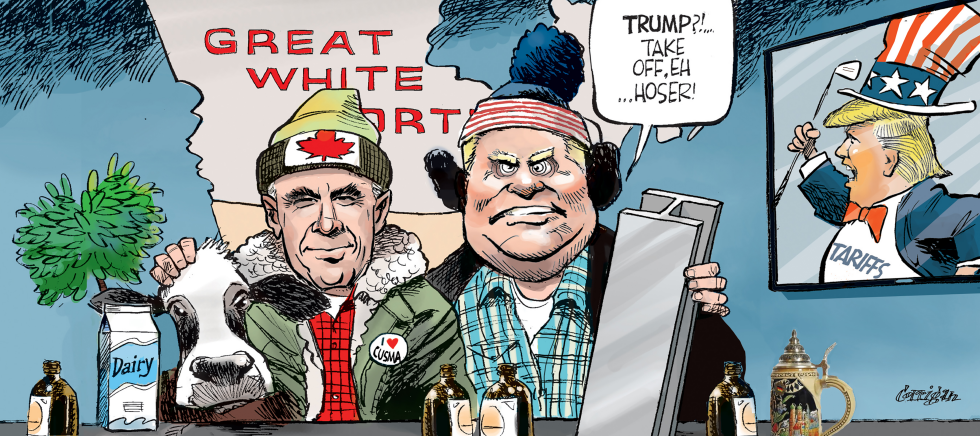
President Trump renewed tariff threats against Canada focused on dairy imports in late August 2026. Canadian leaders responded by highlighting domestic protections and cultural stakes. The move risks straining long-standing trade ties under existing agreements. The cartoon frames the confrontation as a direct challenge to Canadian sovereignty in agriculture. It portrays US policy as aggressive posturing that ignores mutual economic interests.
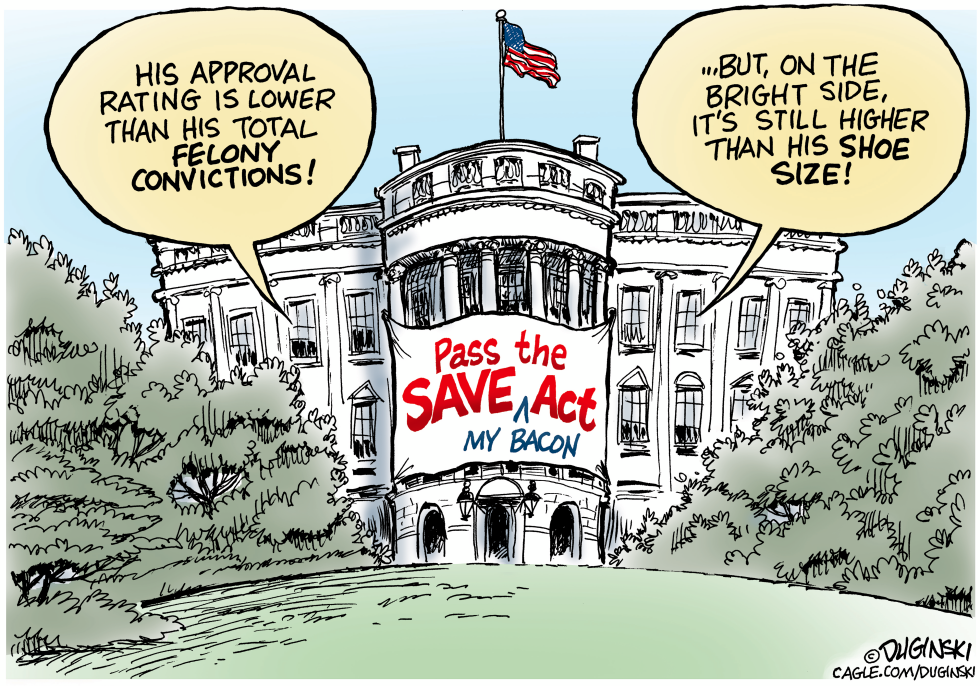
A president facing historically low approval ratings tied to prior felony convictions pushes the SAVE Act through Congress in late summer 2026. The legislation aims to require proof of citizenship for federal voting. The editorial view holds that the effort serves mainly as a lifeline for an embattled administration rather than a substantive reform.
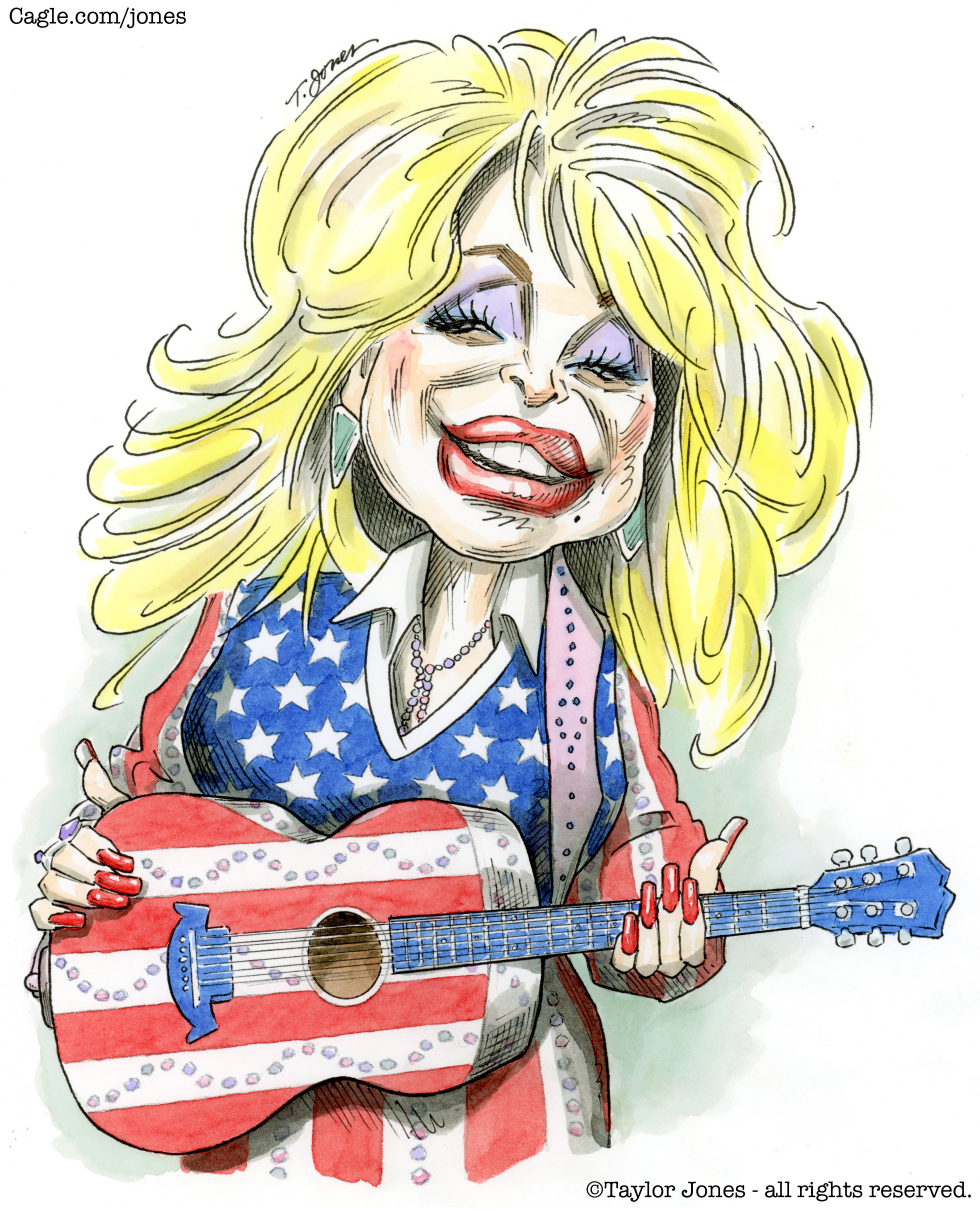
Dolly Parton appears in a vibrant portrait holding a guitar covered in American flag colors. The image captures her long standing role as a prominent figure in American entertainment without tying to any specific recent event.
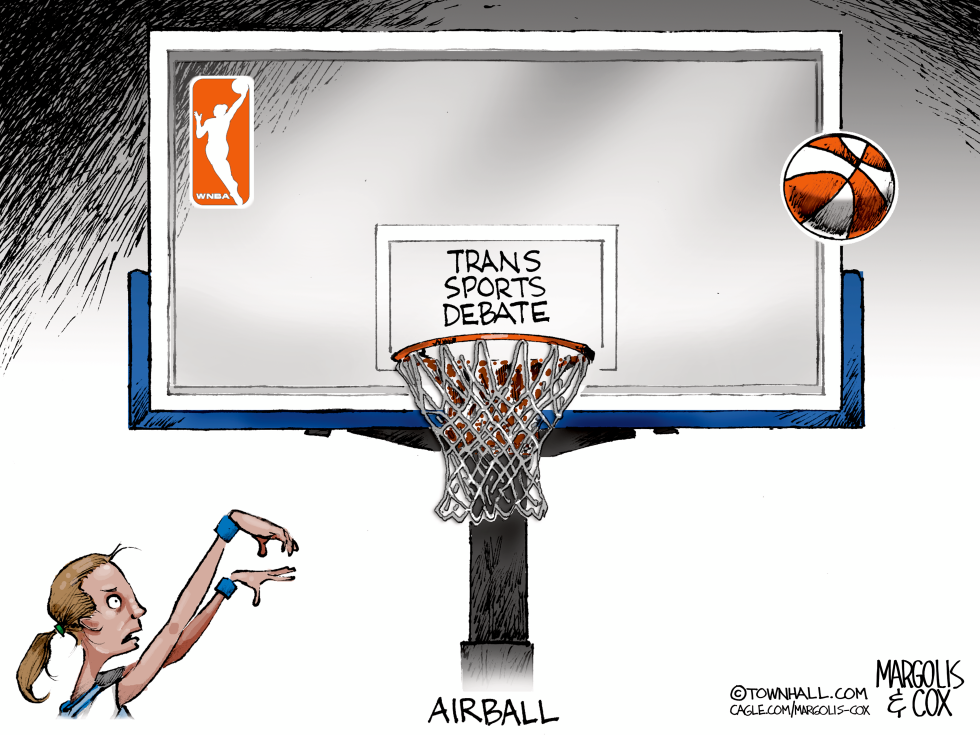
The WNBA has drawn criticism for its handling of transgender participation in women's sports amid ongoing policy debates. A recent cartoon uses a basketball airball metaphor to highlight the league's perceived avoidance of the issue. The piece argues the organization is failing to address fairness concerns raised by athletes and fans. Critics say the league prioritizes other messaging over resolving competitive equity questions in women's basketball.
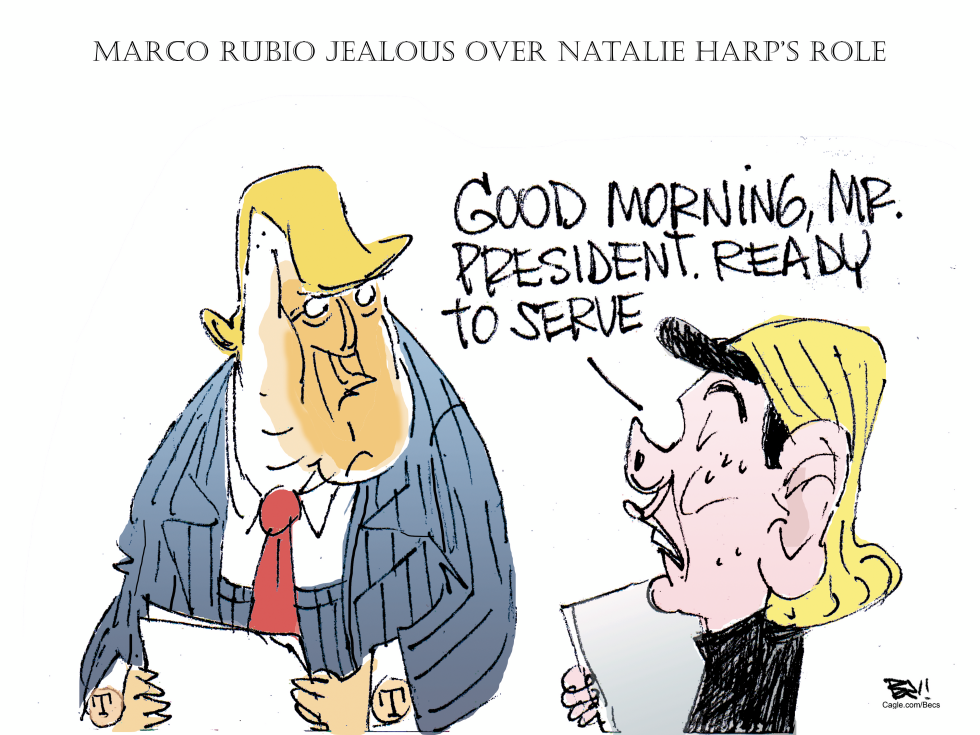
On August 25 2026 Donald Trump holds the presidency with Natalie Harp serving in a close advisory capacity. The arrangement draws attention from other officials including Marco Rubio. Harp's direct access and readiness to serve fuel perceptions of favoritism inside the administration. Observers note the potential for internal friction when personal loyalty appears to outweigh traditional hierarchy. The piece portrays Trump himself reacting with visible irritation to Harp's presence suggesting the dynamic creates unease even at the top.
Dolly Parton receives a guitar from an angel in a lighthearted heavenly greeting. The image plays on her musical legacy and public persona as a beloved entertainer. The piece presents a warm, positive view of her cultural staying power.
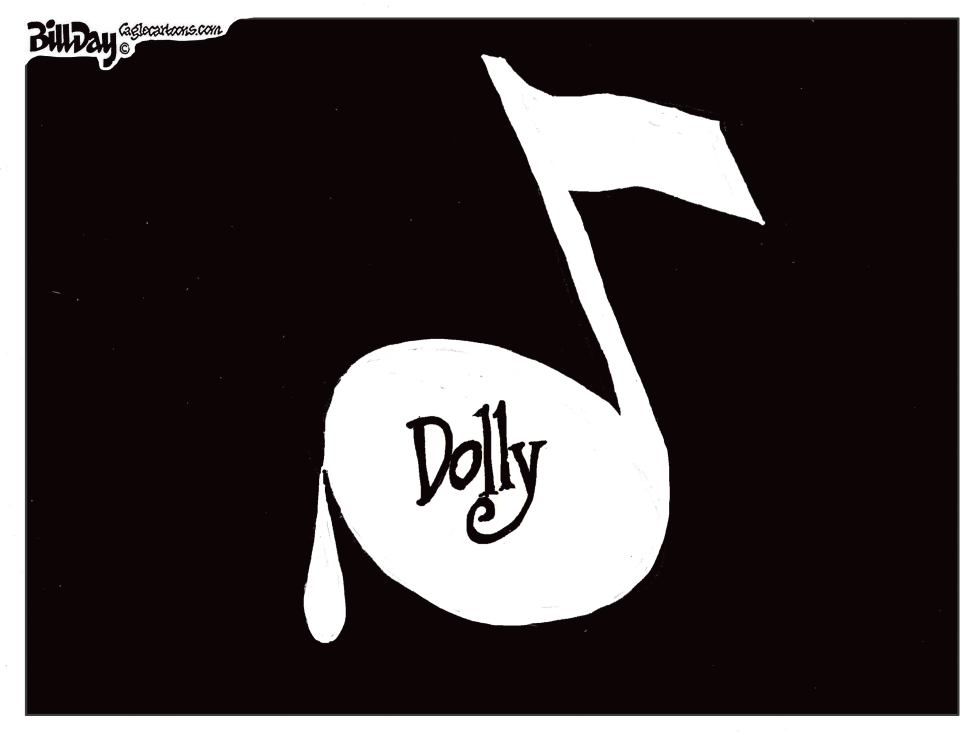
A musical figure named Dolly receives public recognition through a minimalist graphic tribute. The image responds to the ongoing role of music icons in popular culture by marking their passing or legacy with a single symbolic note and tear. The editorial position emphasizes quiet respect over elaborate commentary.
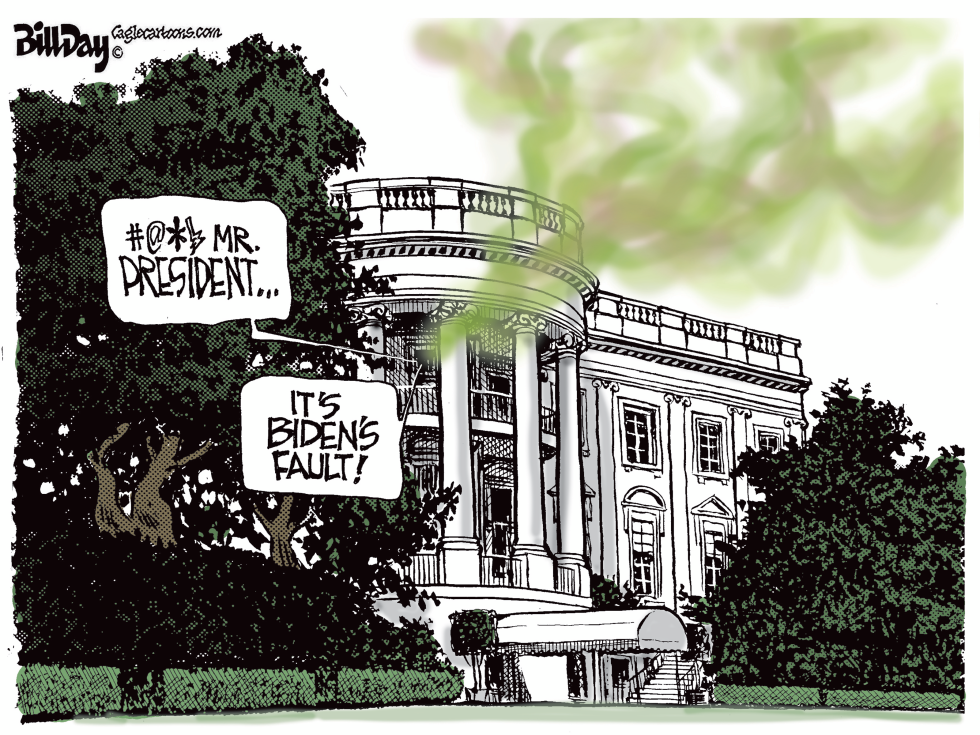
Political discourse continues to center on former President Biden even after his term, with critics attributing various problems to his leadership. The White House remains a focal point for such discussions. The piece takes the position that persistent efforts to assign fault to Biden reflect deeper partisan divisions rather than specific new developments.