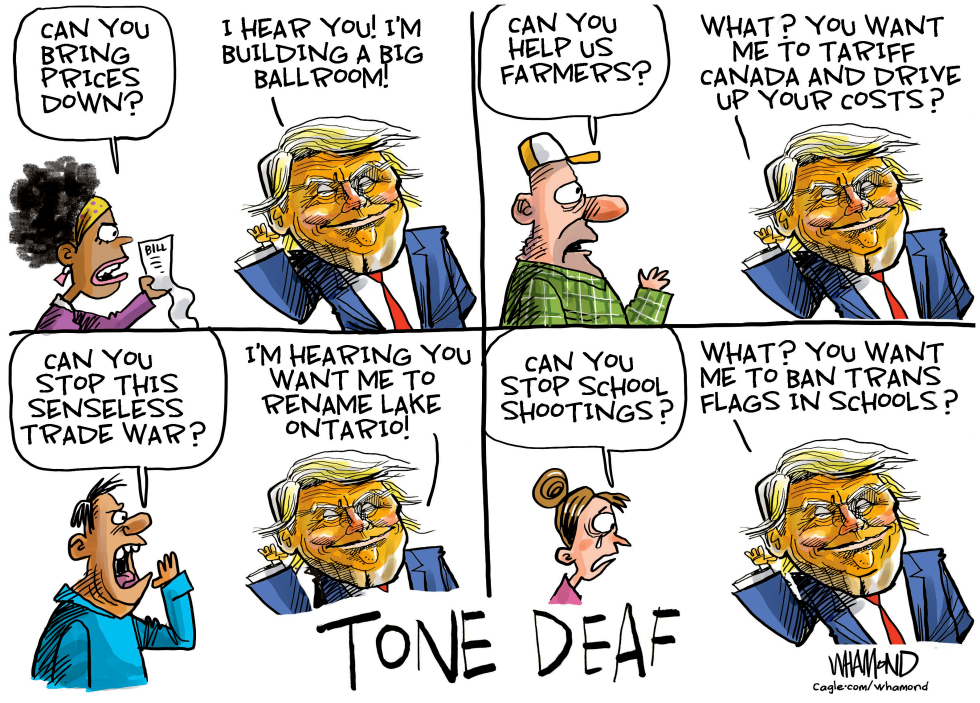
The cartoon by Dave Whamond published September 15, 2026, shows Donald Trump responding to citizen concerns about prices, tariffs on Canada, trade wars, school shootings and transgender flags by pivoting to a ballroom project and renaming Lake Ontario. The four-panel layout underscores a pattern of tone-deaf replies that ignore the original requests.
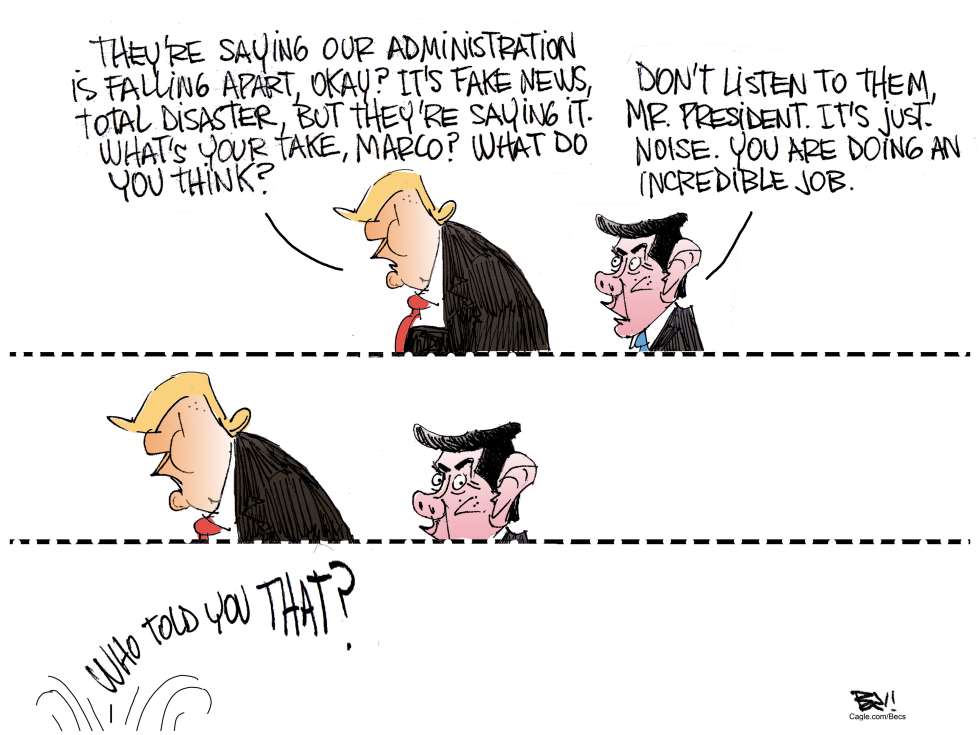
President Trump asked Senator Marco Rubio for his assessment of reports that the administration is in disarray, labeling them fake news. Rubio dismissed the reports as noise and praised Trump's performance. Trump responded by questioning who had told Rubio that assessment. The exchange highlights tensions over loyalty and information flow inside the administration. The cartoon portrays Rubio's positive reply as triggering suspicion rather than reassurance.
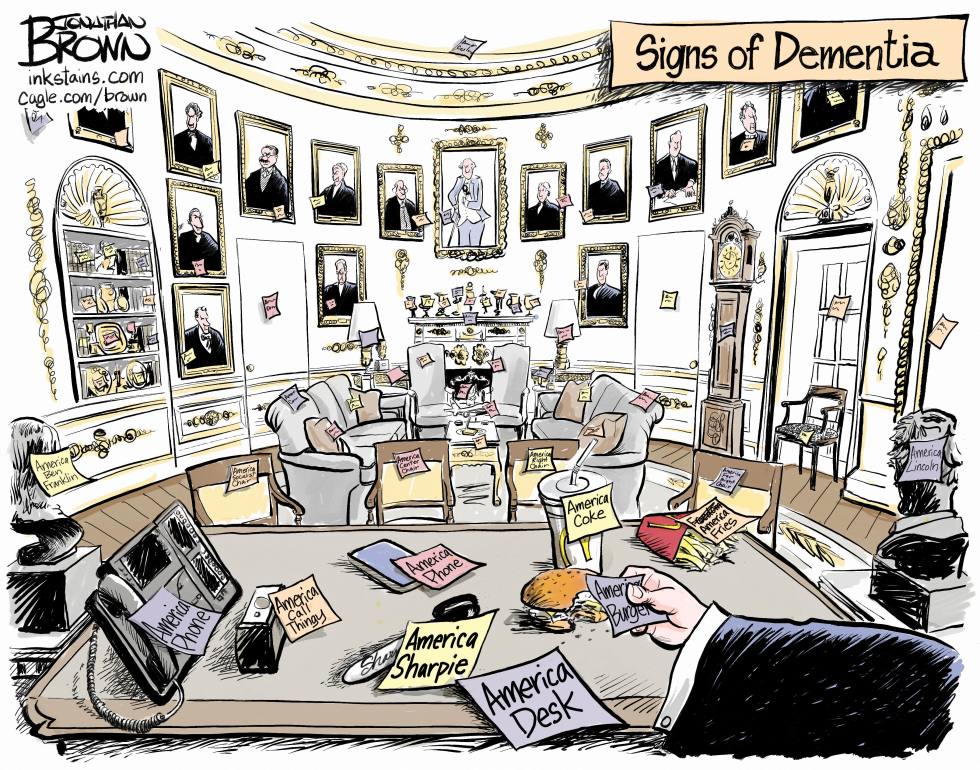
A new editorial cartoon depicts the Oval Office overrun with sticky notes labeling everyday items as America. The scene highlights signs of dementia through repeated branding on phones, desks, food and furniture. Published on September 9, 2026, the work comments on ongoing concerns about cognitive fitness in the presidency. The visual uses the familiar setting of the White House to underscore confusion and memory issues. Observers note the cartoon captures public debate over leadership capacity without naming specific individuals.
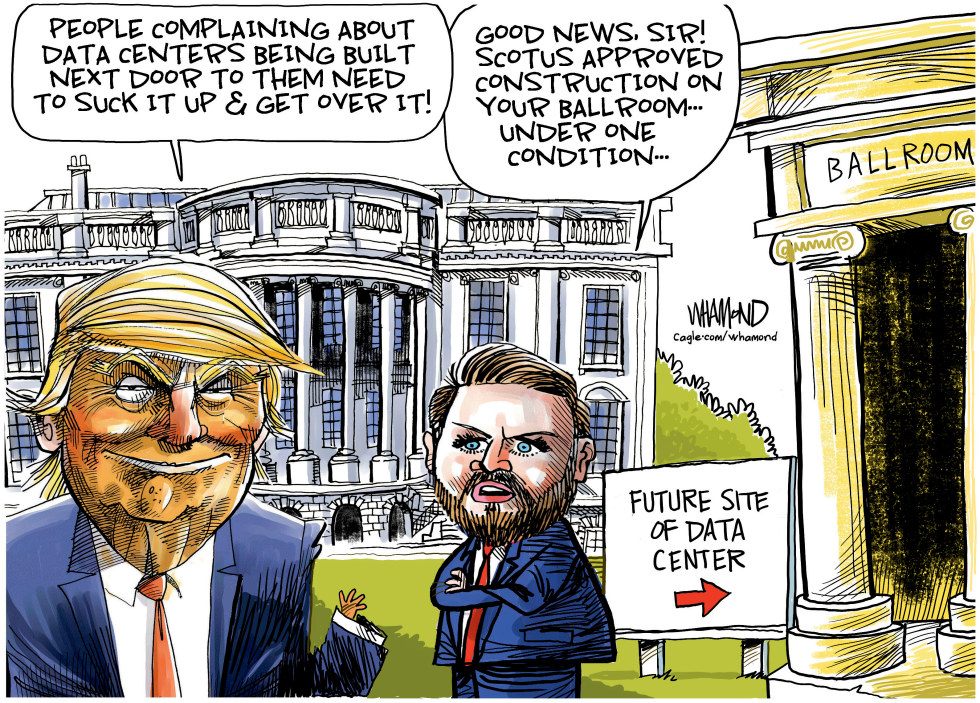
On September 2, 2026, reports emerged that the Trump administration secured Supreme Court approval for a new White House ballroom with the condition that the site also host a data center. The decision comes as communities nationwide protest data center construction near homes. The cartoon depicts Trump dismissing resident complaints while an aide delivers the conditional news. It highlights tensions between executive ambitions and local opposition to large-scale tech infrastructure. The piece argues that such projects prioritize political vanity over community concerns.
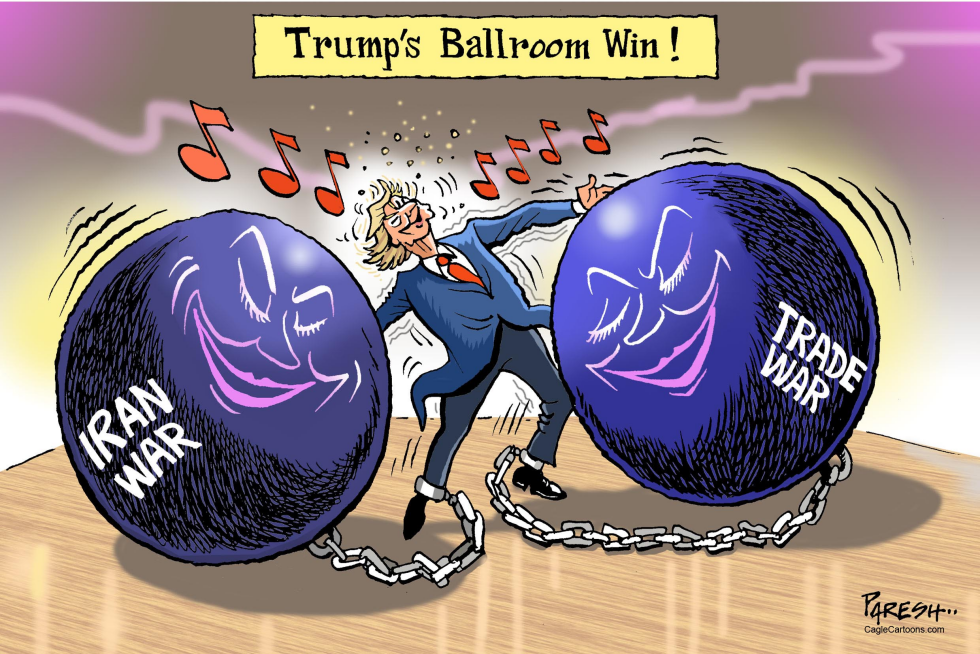
A political cartoon published September 1, 2026, portrays Donald Trump dancing energetically in a ballroom while his ankles are chained to two large balls labeled Iran War and Trade War. The image suggests the president is weighed down by simultaneous foreign policy and economic conflicts. Music notes and a banner reading Trump's Ballroom Win add ironic flair to the scene. The cartoon responds to ongoing tensions involving U.S. relations with Iran and persistent trade disputes. It visually argues that these issues continue to constrain administration actions despite any claimed victories.
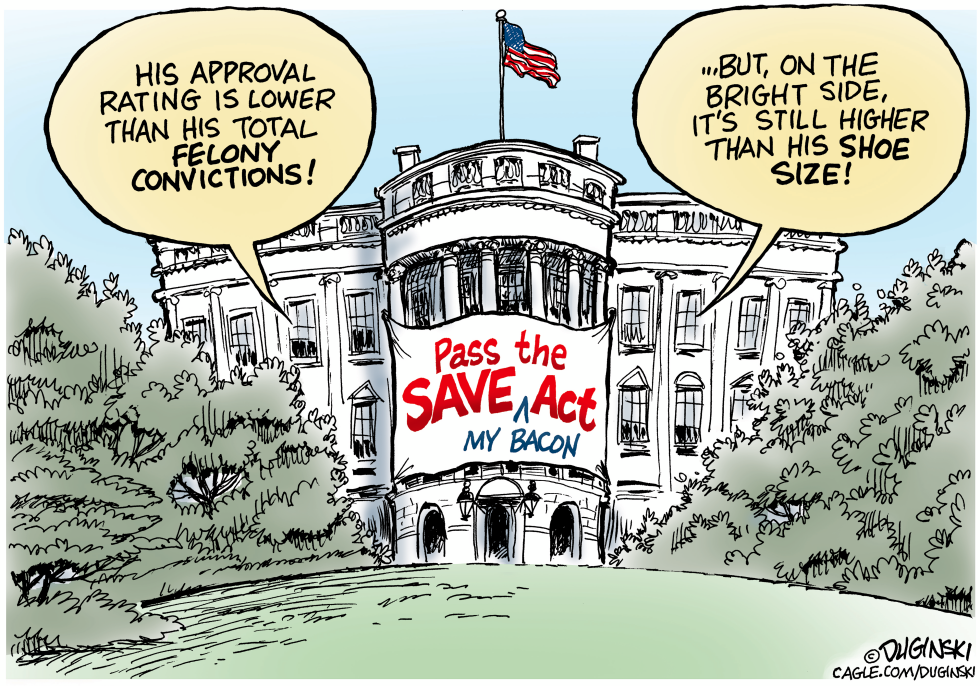
A president facing historically low approval ratings tied to prior felony convictions pushes the SAVE Act through Congress in late summer 2026. The legislation aims to require proof of citizenship for federal voting. The editorial view holds that the effort serves mainly as a lifeline for an embattled administration rather than a substantive reform.
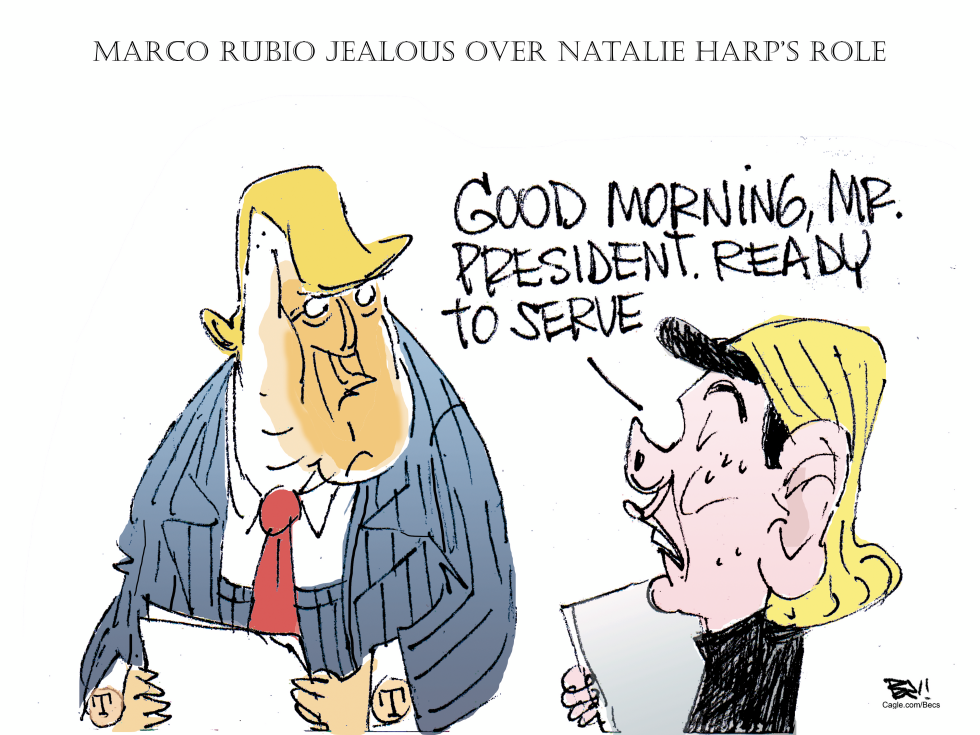
On August 25 2026 Donald Trump holds the presidency with Natalie Harp serving in a close advisory capacity. The arrangement draws attention from other officials including Marco Rubio. Harp's direct access and readiness to serve fuel perceptions of favoritism inside the administration. Observers note the potential for internal friction when personal loyalty appears to outweigh traditional hierarchy. The piece portrays Trump himself reacting with visible irritation to Harp's presence suggesting the dynamic creates unease even at the top.
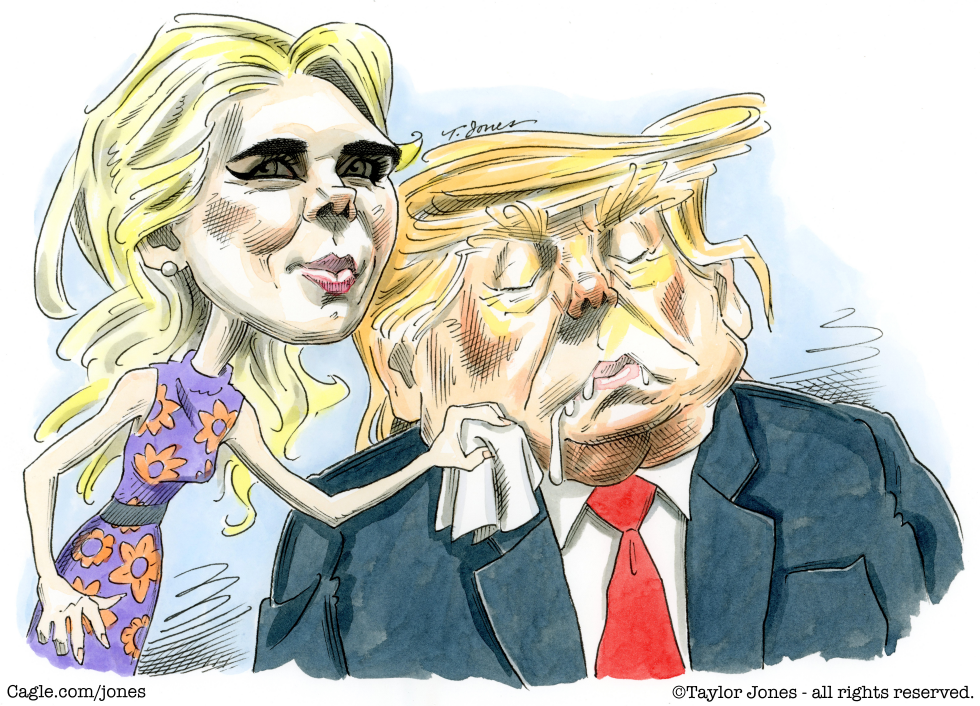
Donald Trump appears in a vulnerable state during a public or staff interaction in 2026. Natalie Harp, a known associate, tends to him by wiping drool from his face. The moment highlights ongoing scrutiny of the former president's health and stamina. Observers note the personal nature of the assistance amid continued political activity. The piece presents the scene as evidence of reliance on close aides.
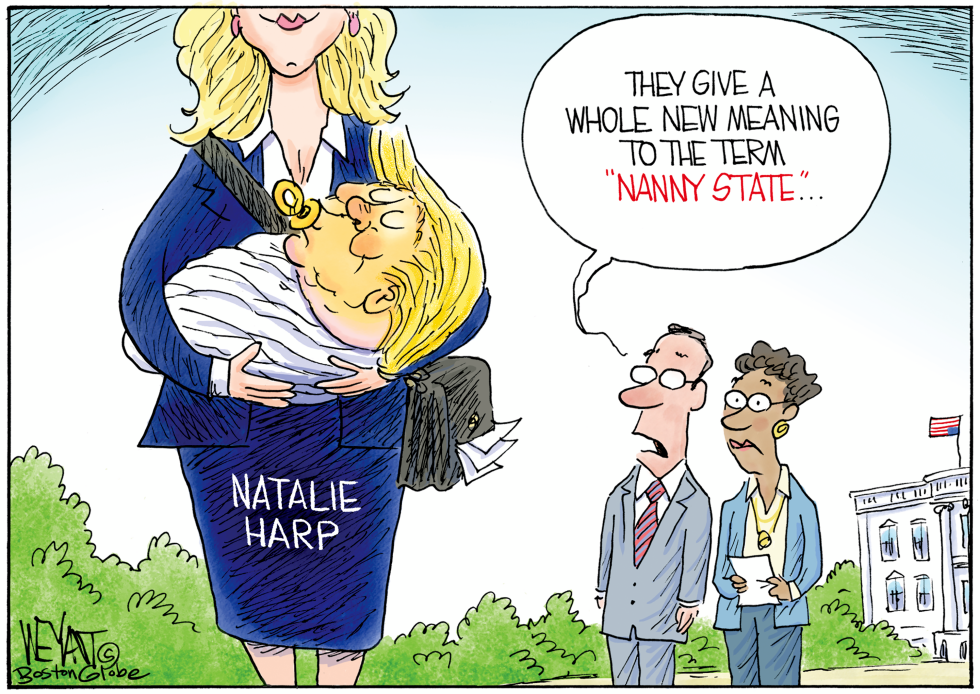
Natalie Harp, a Trump aide, appears in a Boston Globe cartoon holding an infant version of the former president. The image plays on the term nanny state as Harp carries Trump in a carrier. The piece comments on the close personal dynamic between the two figures amid ongoing political developments in 2026.
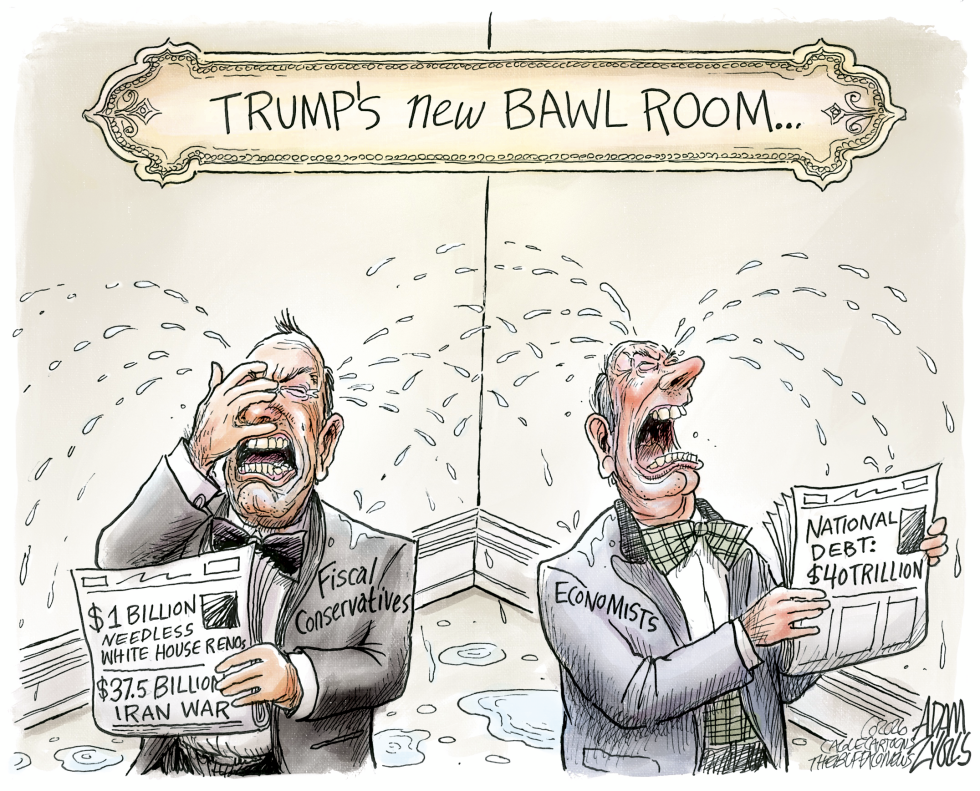
The cartoon depicts fiscal conservatives and economists weeping in a room labeled Trump's new bawl room. One holds documents citing a needless one billion dollar White House renovation and thirty seven point five billion dollar Iran war. The other displays a national debt of forty trillion dollars. The image highlights concerns over federal spending priorities.
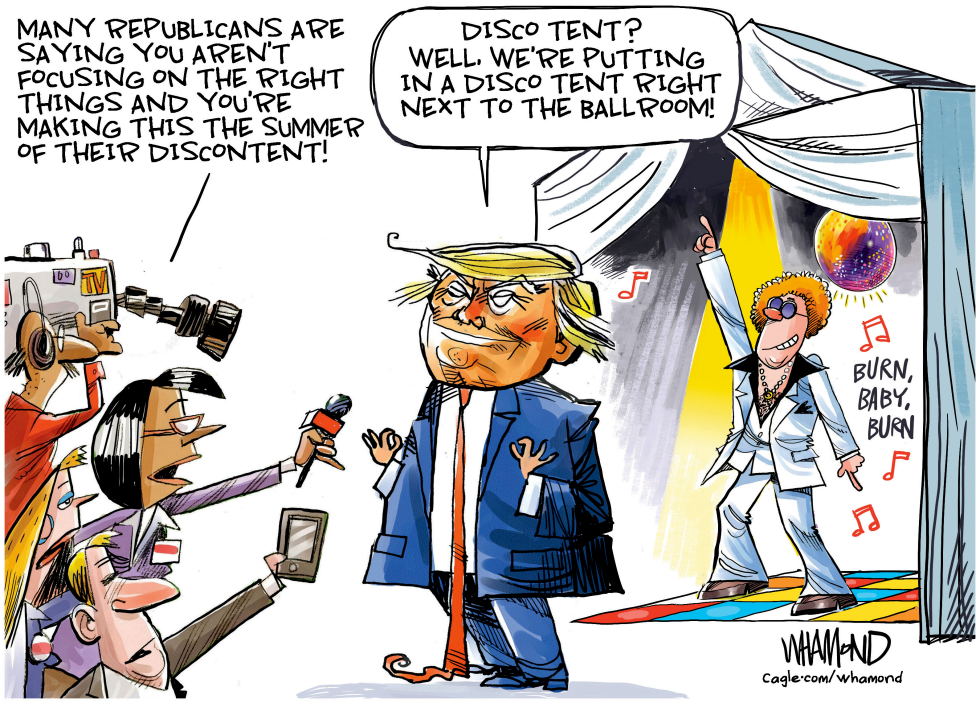
Republicans have publicly criticized Donald Trump for diverting focus from core issues during the summer of 2026, highlighting internal party friction over perceived misplaced priorities. The criticism centers on White House renovation choices that include adding a disco tent adjacent to the ballroom. Trump faces direct questions from the press about these decisions. The editorial position frames the episode as evidence of deepening discontent within the Republican ranks over the president's agenda.
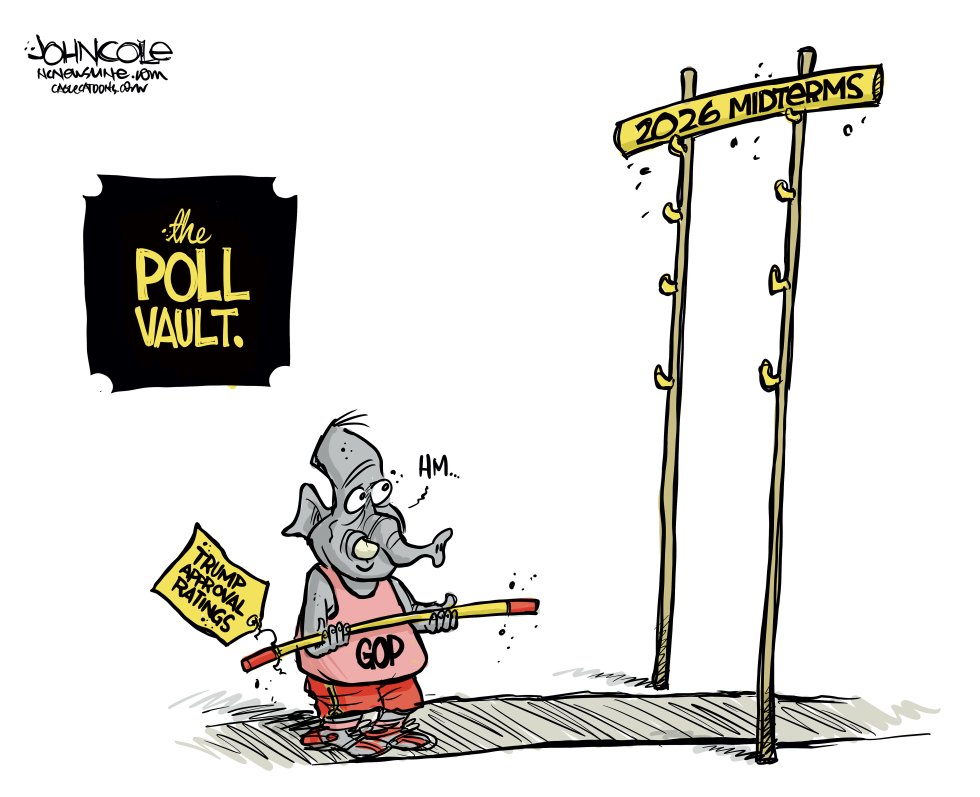
Republicans face the 2026 midterm elections with Donald Trump as a central figure whose approval ratings remain a key variable. Party strategists must decide how heavily to tie their candidates to the former president amid ongoing voter sentiment. The piece portrays the GOP as an athlete preparing to clear the midterm bar but questioning whether the available pole will suffice.
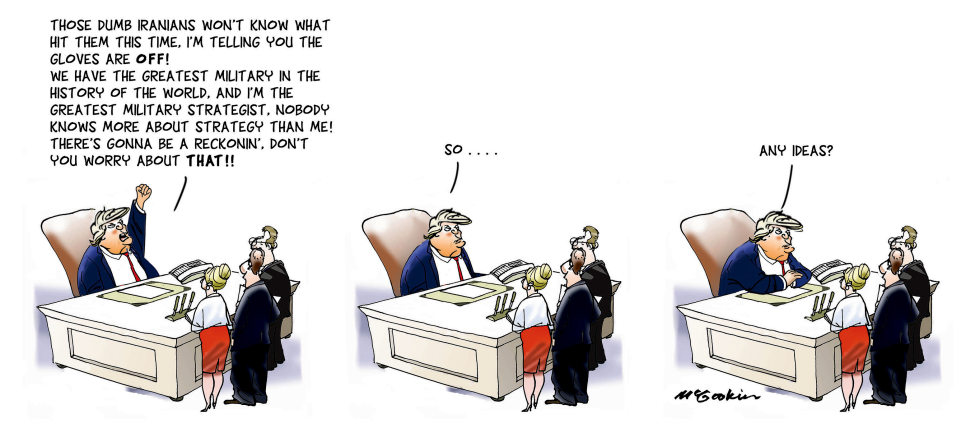
President Trump has directed his national security team to develop new military options regarding Iran. The move comes amid ongoing regional tensions and follows public statements emphasizing U.S. military superiority. The editorial takes the position that such demands reflect an impulsive approach to foreign policy that risks unnecessary escalation without clear strategic direction.
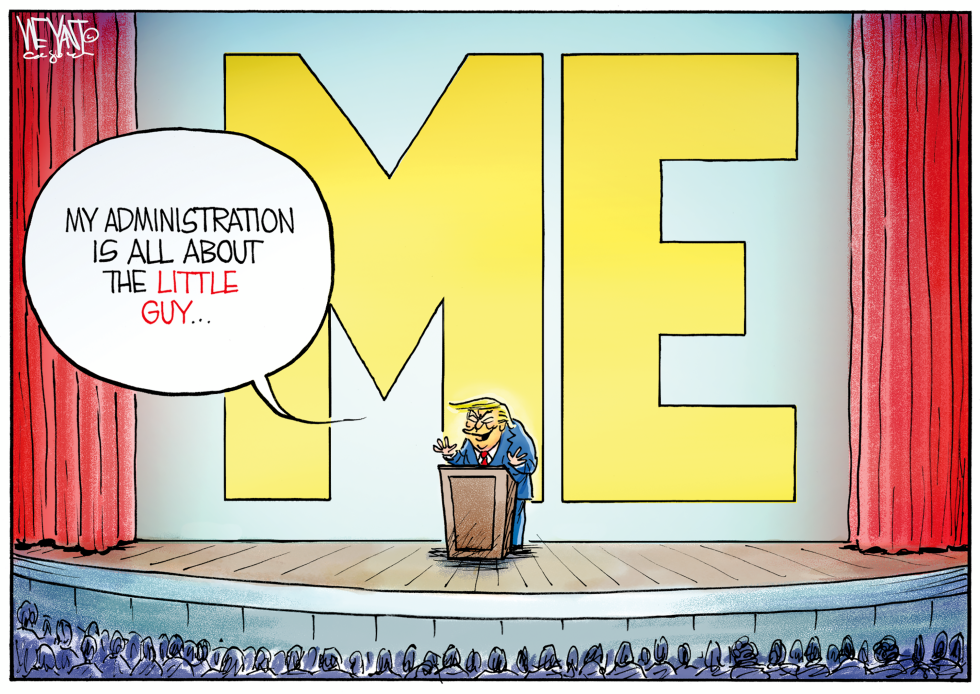
Donald Trump has repeatedly positioned his administration as champion of ordinary Americans during public addresses. The claim comes amid ongoing debates over policy priorities and personal branding in the White House. The piece portrays the rhetoric as centered on the speaker rather than the public.
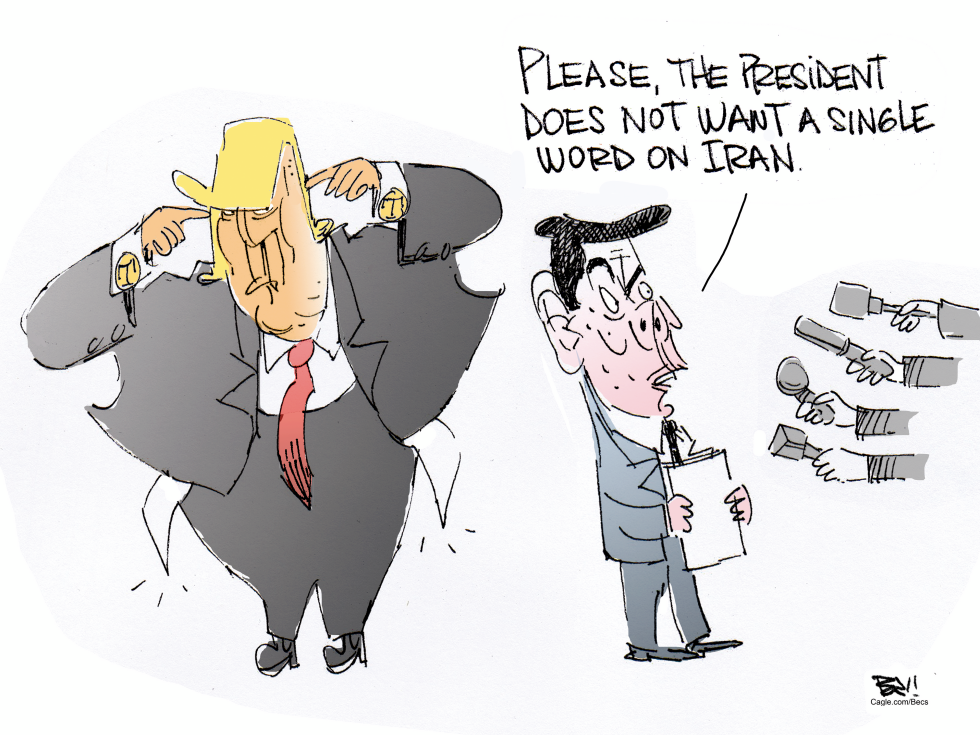
President Trump directed staff to avoid any public discussion of Iran policy. The move drew immediate pushback from reporters seeking clarification on administration plans. The editorial takes the position that the order reflects an effort to avoid accountability on a key foreign policy issue.