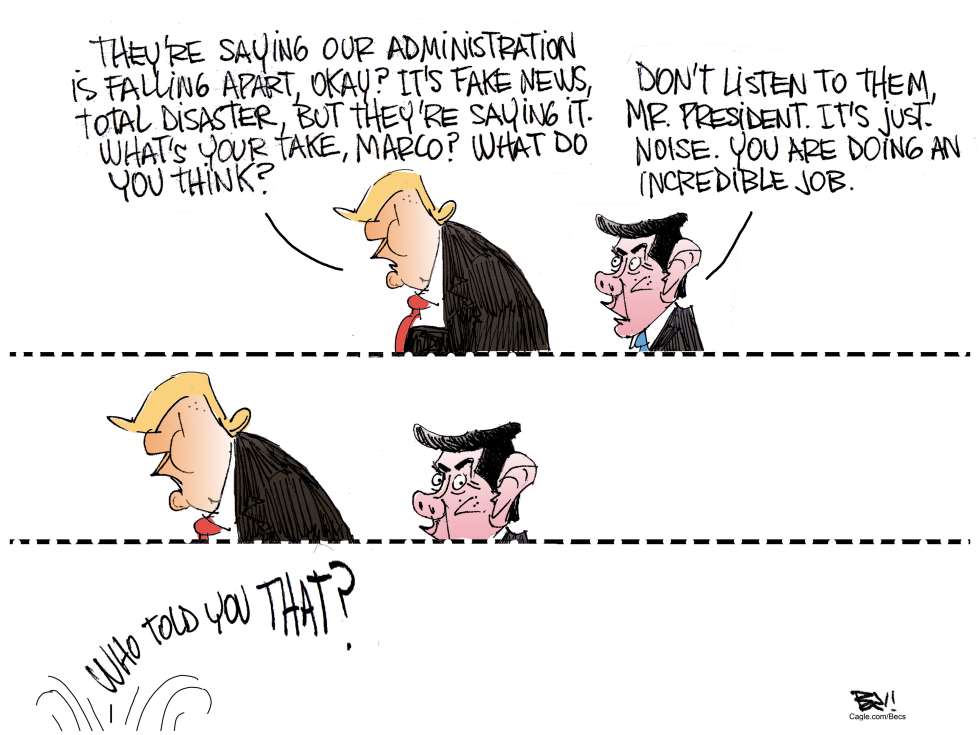
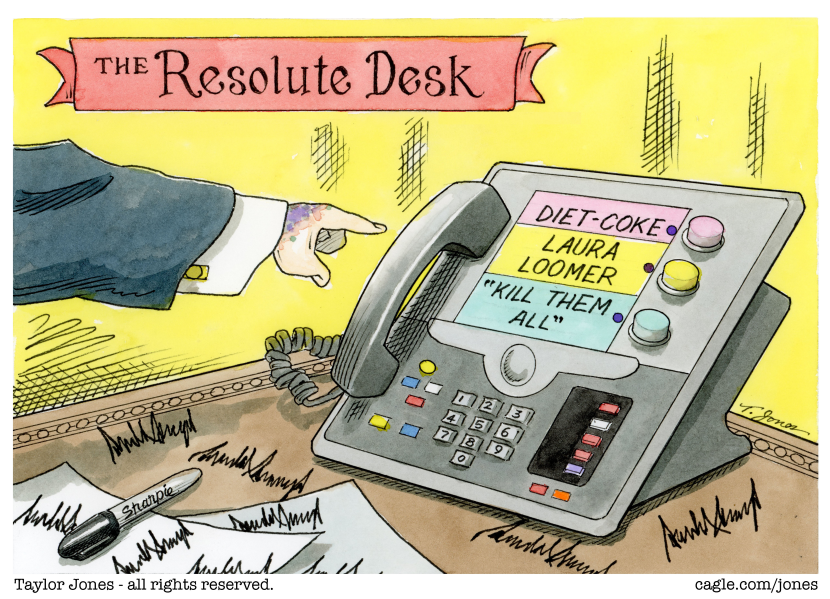
President Trump asked Senator Marco Rubio for his assessment of reports that the administration is in disarray, labeling them fake news. Rubio dismissed the reports as noise and praised Trump's performance. Trump responded by questioning who had told Rubio that assessment. The exchange highlights tensions over loyalty and information flow inside the administration. The cartoon portrays Rubio's positive reply as triggering suspicion rather than reassurance.
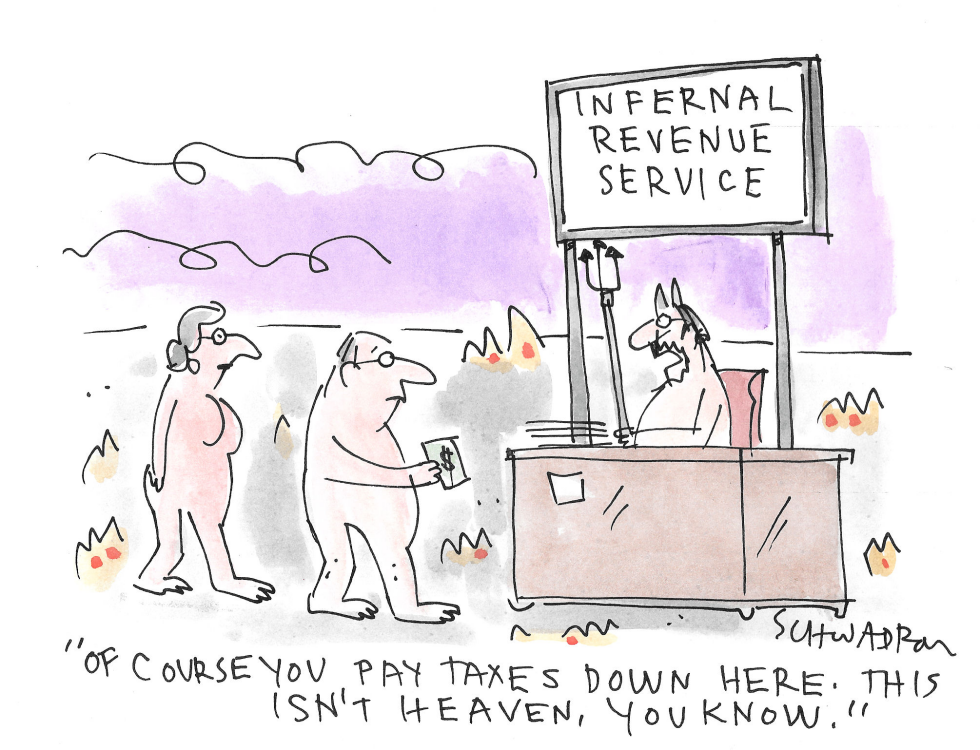
The long-standing adage that only death and taxes are certain receives fresh treatment in a cartoon depicting an IRS outpost operating in hell. No specific policy change or ruling prompted the piece, which instead plays on the enduring public frustration with tax collection as an inescapable force. The editorial stance pokes at bureaucratic persistence, suggesting the tax man follows citizens beyond the grave with the same relentless efficiency seen in life.
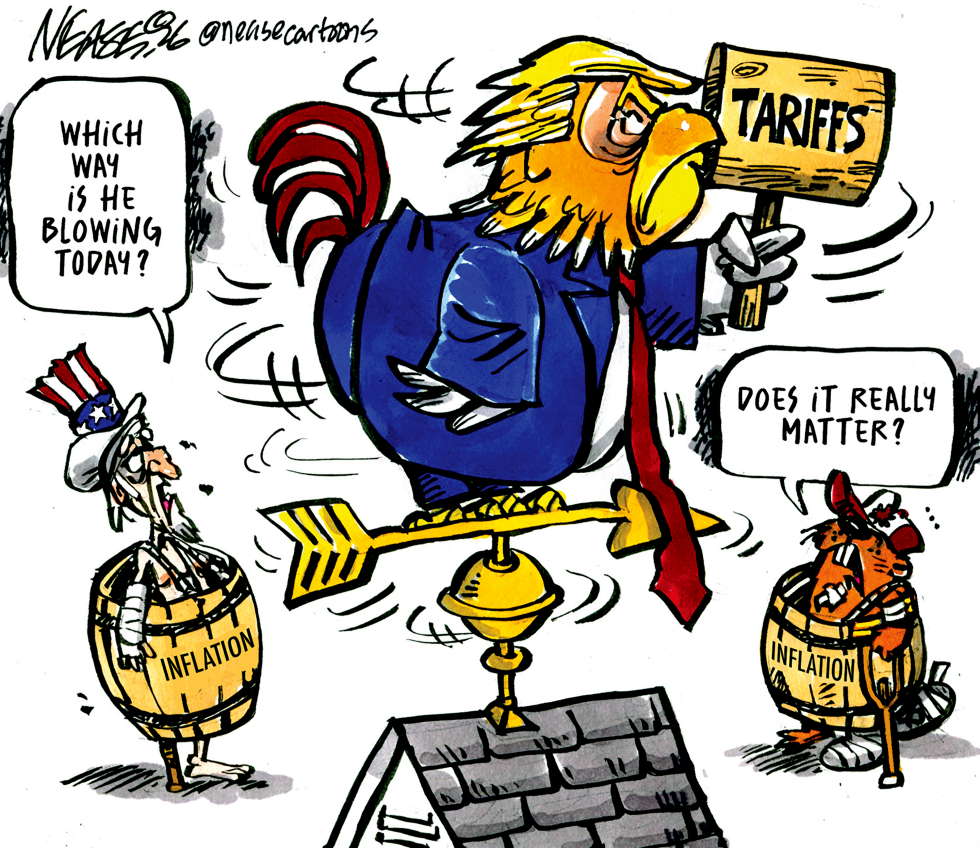
Donald Trump has proposed broad new tariffs on imports as part of his economic agenda. The measures have raised concerns about higher consumer prices and renewed inflation pressures. Markets and businesses are watching for clarity on timing and scope. The cartoon illustrates the confusion over which way tariff policy will ultimately point and whether the direction even matters to those already feeling inflation's effects.
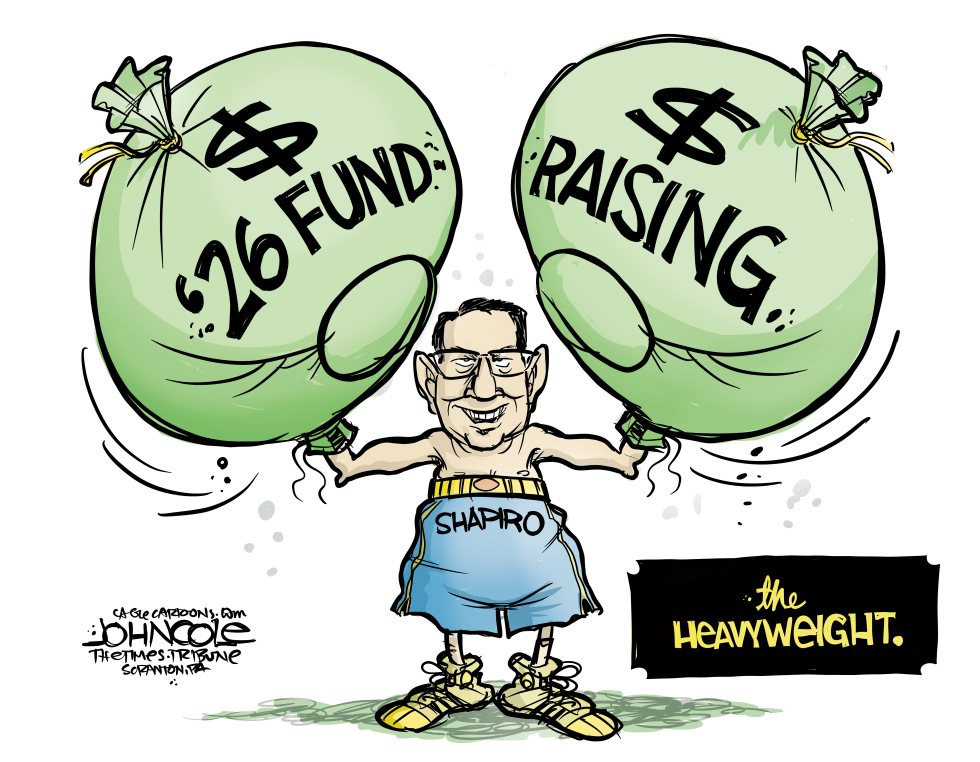
Ben Shapiro has built a substantial fundraising operation centered on a $26 fund and ongoing raising activities. The effort underscores the role of individual donors in sustaining prominent conservative media voices. The piece presents Shapiro as a dominant force in this arena.
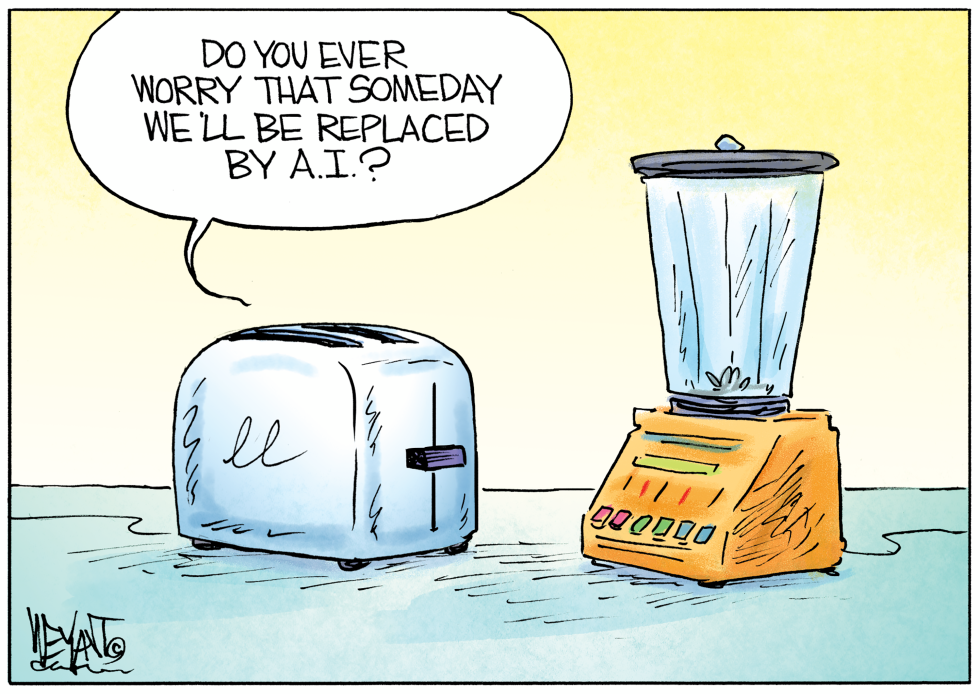
Anxiety about artificial intelligence replacing human work has spread across industries. The piece responds to widespread uncertainty over which roles automation will absorb next. It treats the worry as universal enough to reach even household appliances.
Donald Trump announced he had called off a major military strike on Iran in favor of a pending nuclear deal. The move drew immediate skepticism from Iranian officials who questioned both the threat and the agreement. The cartoon highlights the disconnect between the announcement and Tehran\'s response.
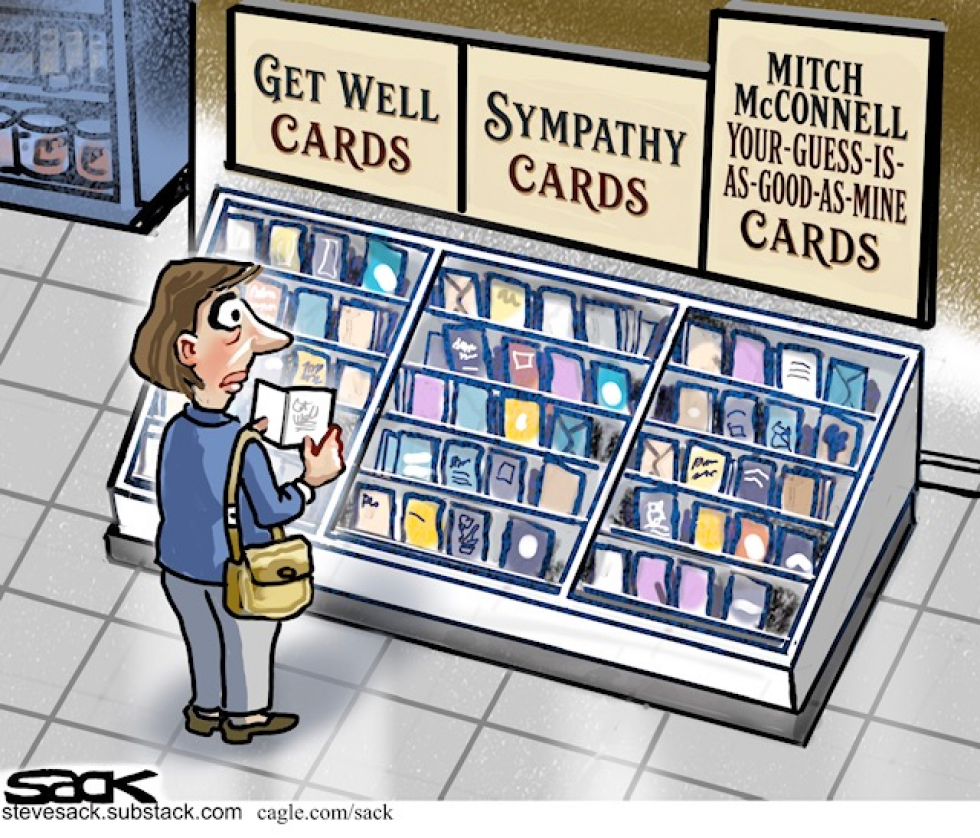
Questions about Mitch McConnell's health and future in Senate leadership have persisted into mid-2026. The Kentucky Republican has faced repeated absences and public episodes that fuel speculation about his capacity to continue. Colleagues in both parties watch closely because his position influences committee assignments and floor strategy. The uncertainty affects legislative timelines on appropriations and judicial matters. The piece argues that the situation leaves observers with little reliable information and treats the ambiguity itself as the central story.
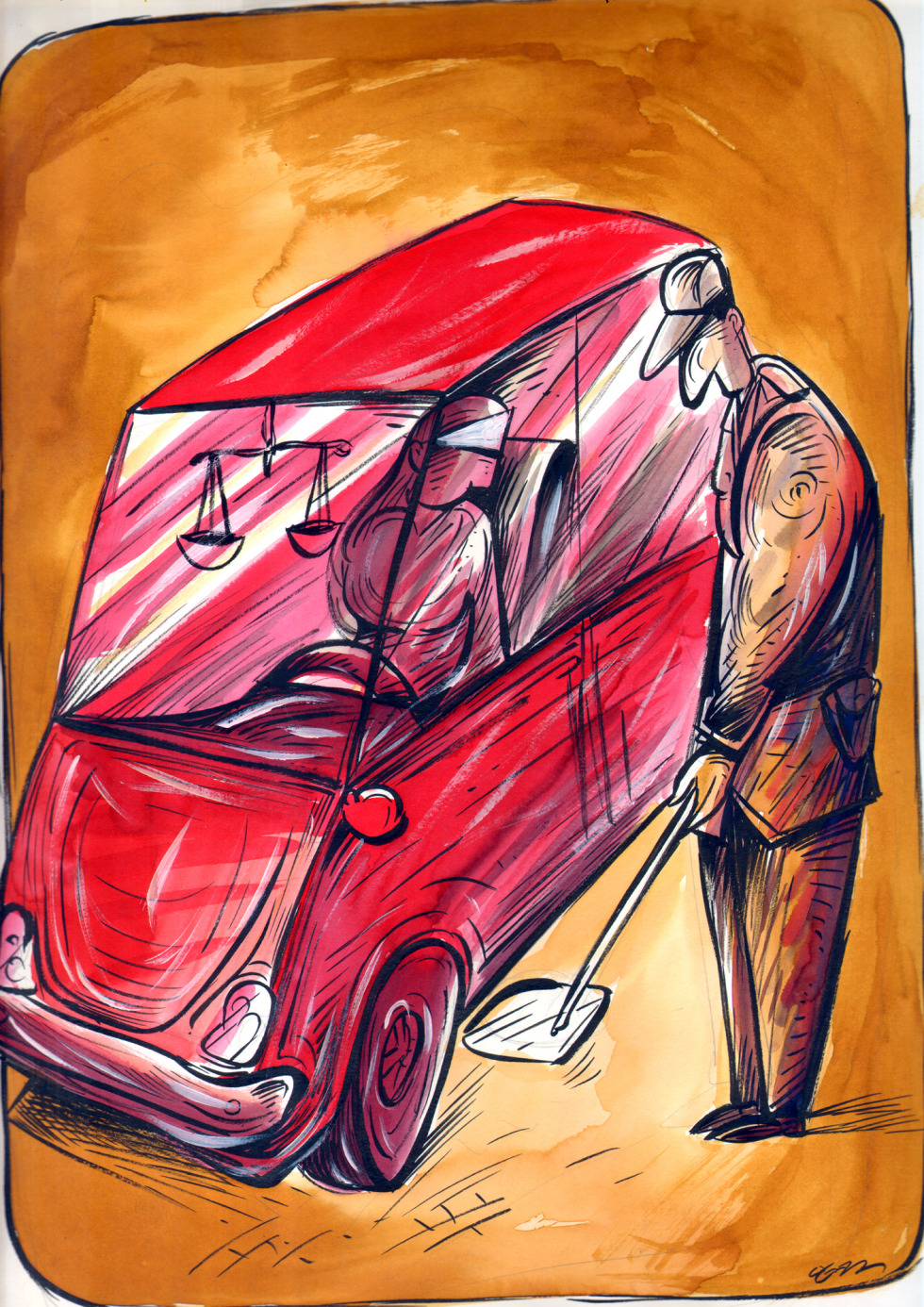
A symbolic image depicts Lady Justice seated inside a red vehicle holding the scales of justice while a uniformed official stands outside gripping a shovel. The scene suggests tension between institutional authority and judicial independence. The editorial position frames the interaction as external pressure on the justice system.
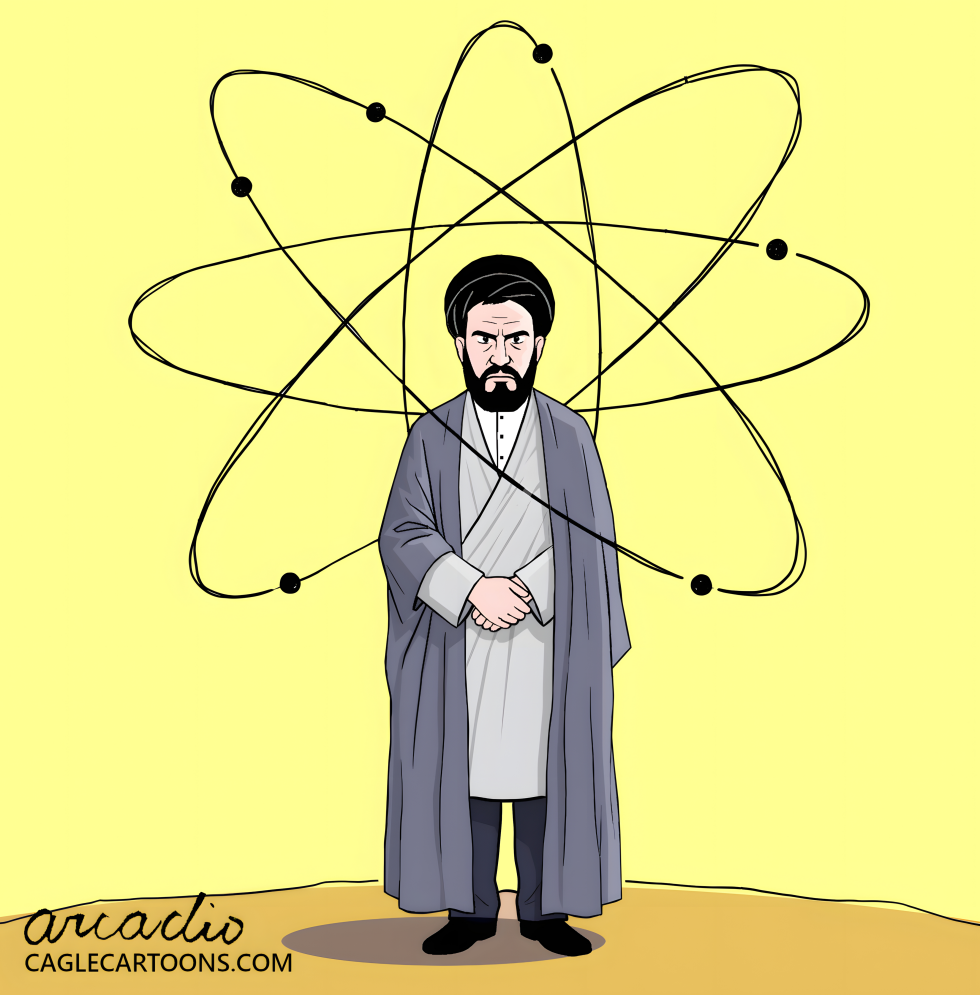
The cartoon shows Iran's supreme leader positioned in front of a large atom symbol. It responds to persistent international concerns over Tehran's nuclear activities as of mid-2026. The visual places the figure directly under the orbiting electrons, underscoring the central role of the nuclear issue in global discussions about the country.
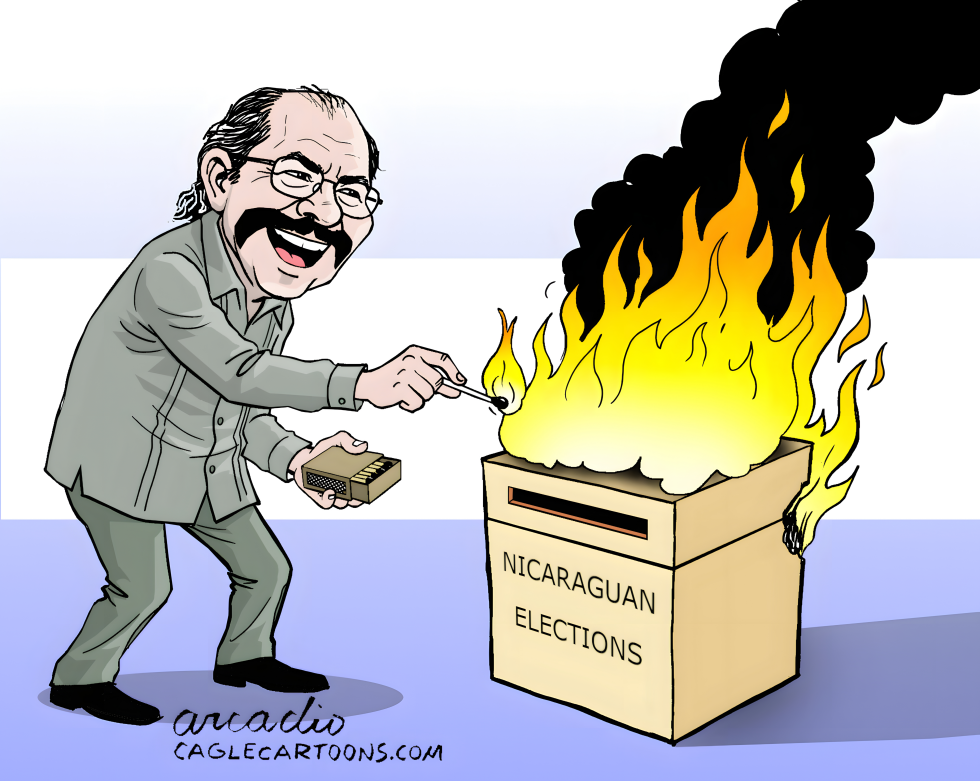
Nicaraguan President Daniel Ortega has publicly stated there will be no more elections, a move that solidifies his long-term grip on power. The declaration comes amid ongoing concerns over democratic backsliding in the Central American nation. This development matters because it removes any remaining avenues for political opposition and citizen participation in governance. The accompanying editorial takes the position that Ortega's action represents a deliberate destruction of democratic institutions rather than a legitimate policy choice.
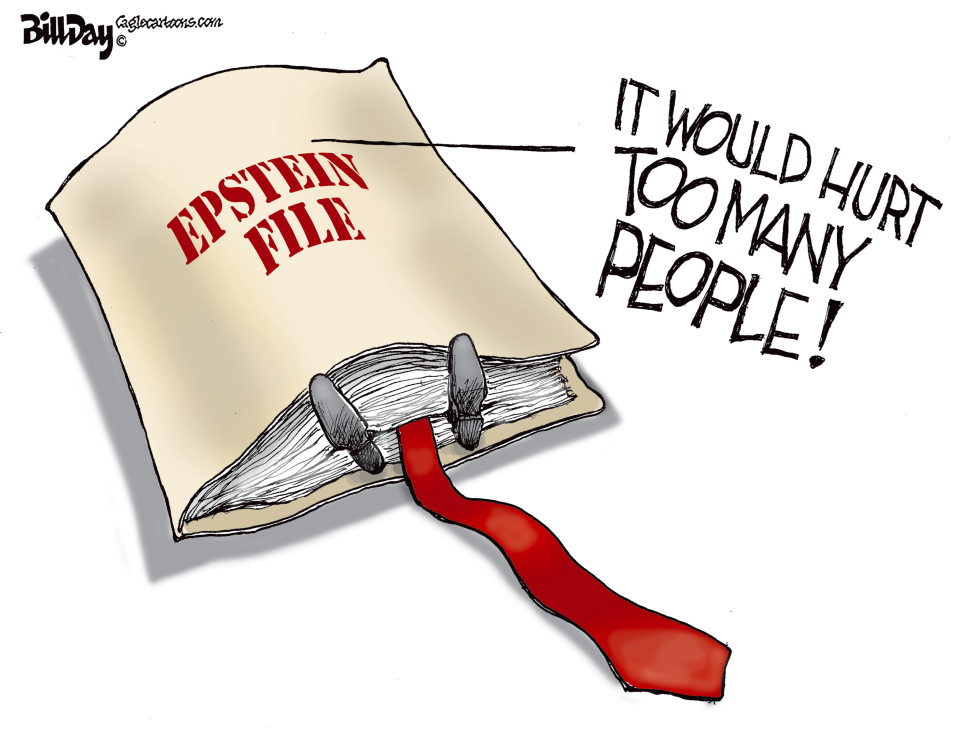
A sealed Epstein file folder with a red tie emerging from it illustrates arguments against full release of the documents, citing potential damage to numerous influential individuals connected to the case.
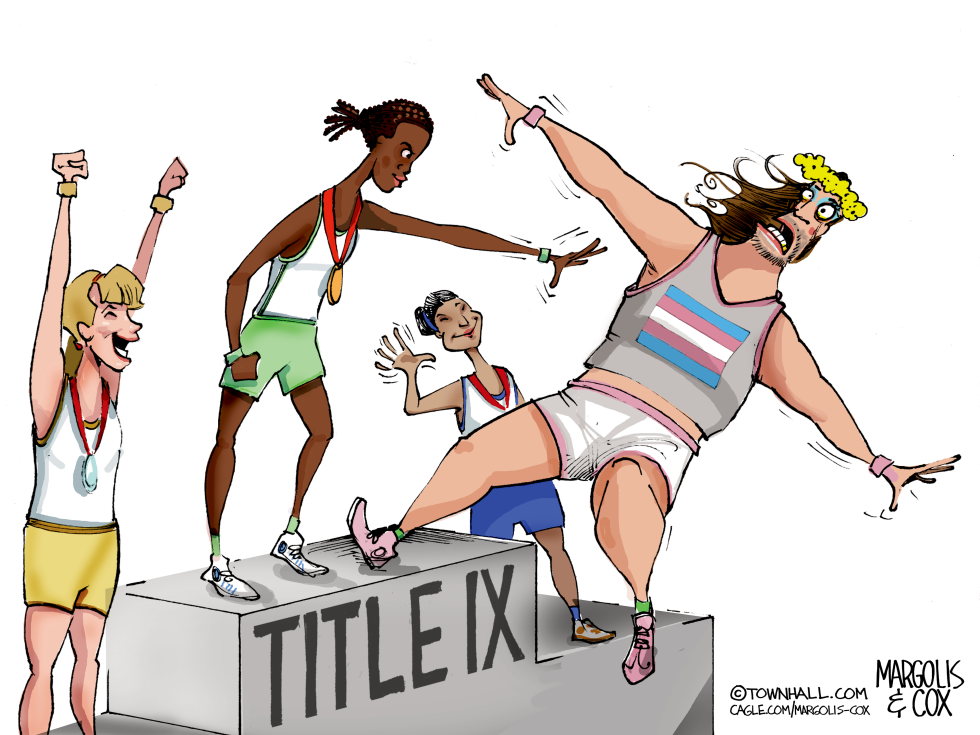
A cartoon published July 1, 2026, shows three athletes on a Title IX podium. A blonde competitor raises her arms in celebration on the left. A Black athlete with a gold medal stands in the center, gesturing outward. On the right, a bearded athlete wearing a trans flag tank top and flower crown falls backward off the stand, limbs flailing. A smaller figure appears behind the central athlete. The image addresses ongoing debates over transgender participation in women's sports under Title IX rules active in mid-2026.
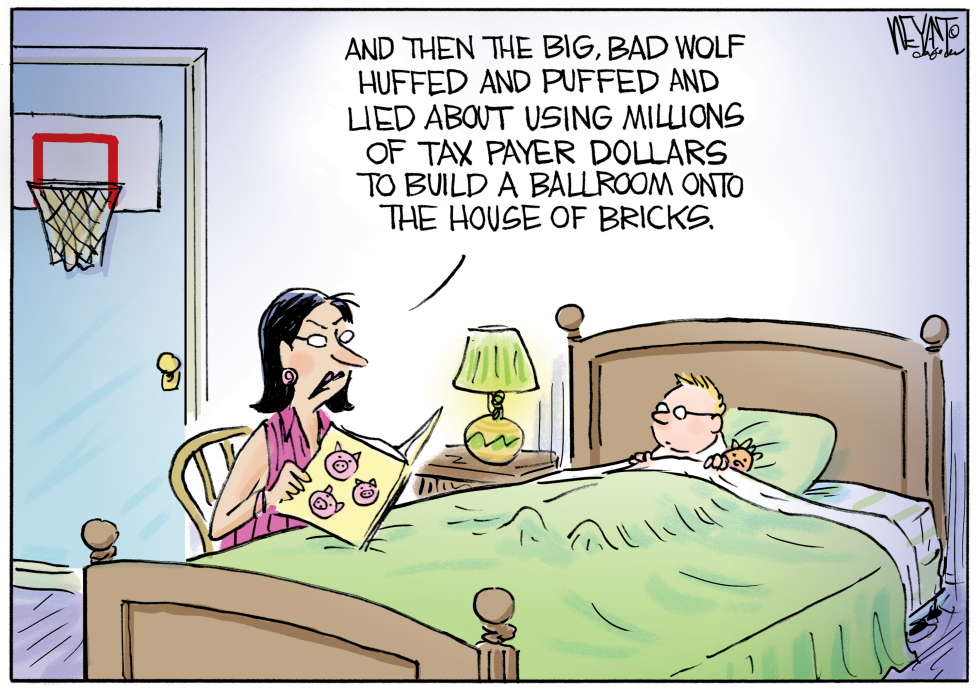
A mother reads a bedtime story to her child, altering the three little pigs tale to accuse the big bad wolf of lying about spending millions of taxpayer dollars to add a ballroom to the house of bricks. The scene unfolds in a child's bedroom with a basketball hoop visible through the door and a green lamp on the nightstand. This image responds to recent controversies over public fund misuse for private or extravagant projects by political figures.
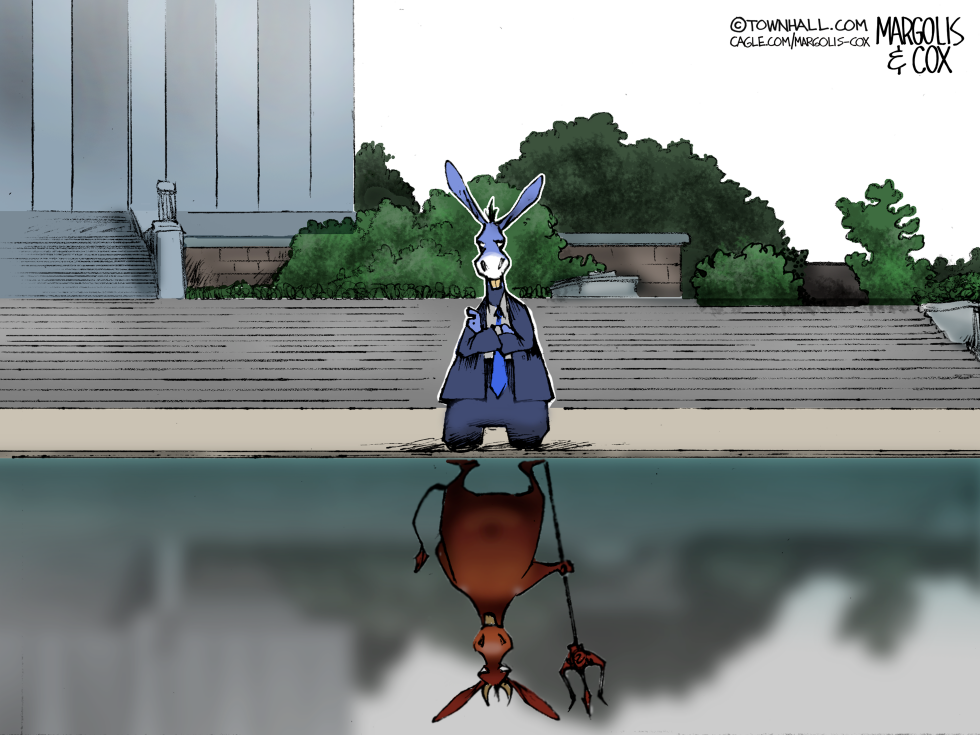
A donkey wearing a blue suit and tie stands with arms crossed on stone steps before a government-style building. Its reflection in the foreground water transforms into a red devil complete with horns, tail and pitchfork. The image from Margolis & Cox dated June 26 2026 uses the classic Democratic Party symbol to present an internal self-view. No specific legislation or election from the prior month is referenced in the visual. The composition places the figure centrally against trees and columns with the credit line in the upper right.
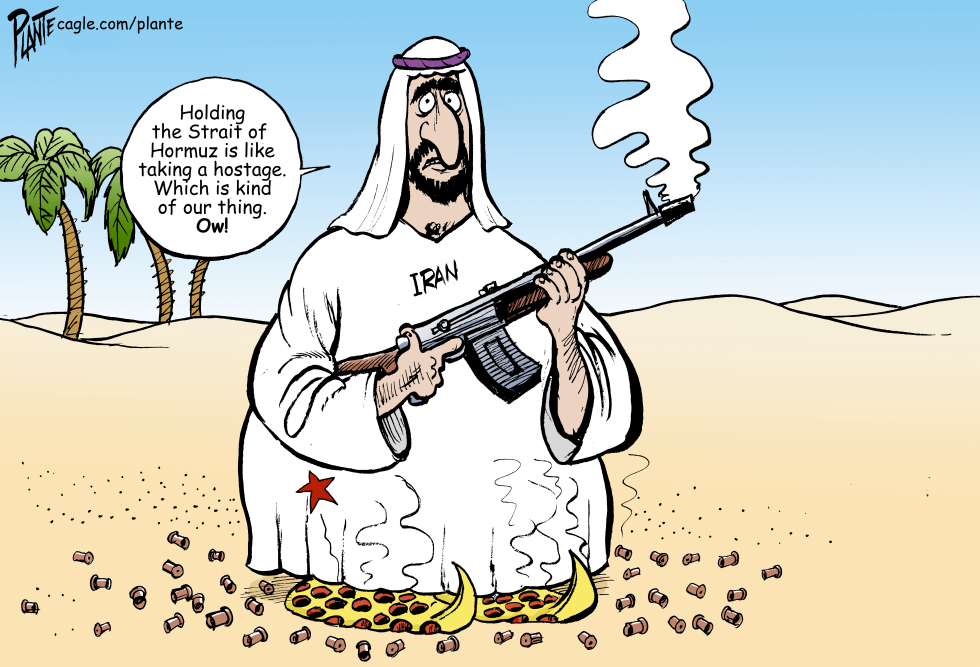
The cartoon shows a figure labeled Iran in desert robes holding a rifle and standing on a pizza slice marked with a crescent moon. A speech bubble has the figure saying holding the Strait of Hormuz is like taking a hostage which is kind of our thing. The scene is set against palm trees and sand dunes. It responds to ongoing concerns about Iran and shipping routes in the Persian Gulf as of late May 2026.