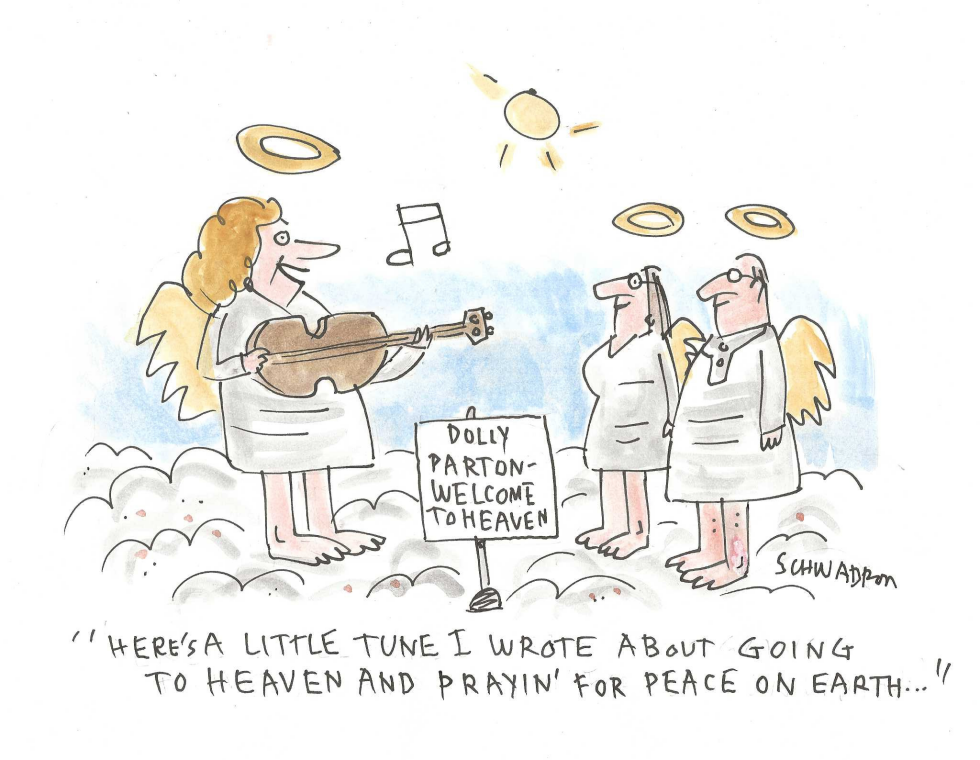
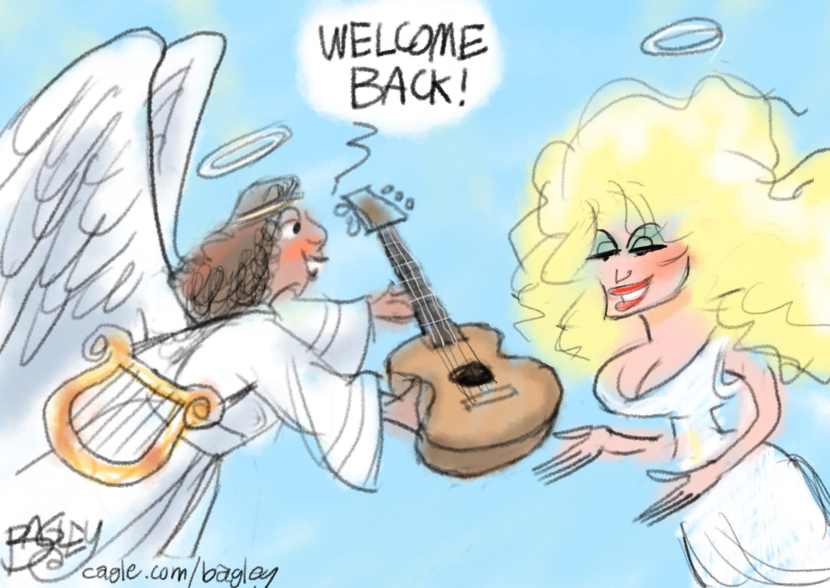
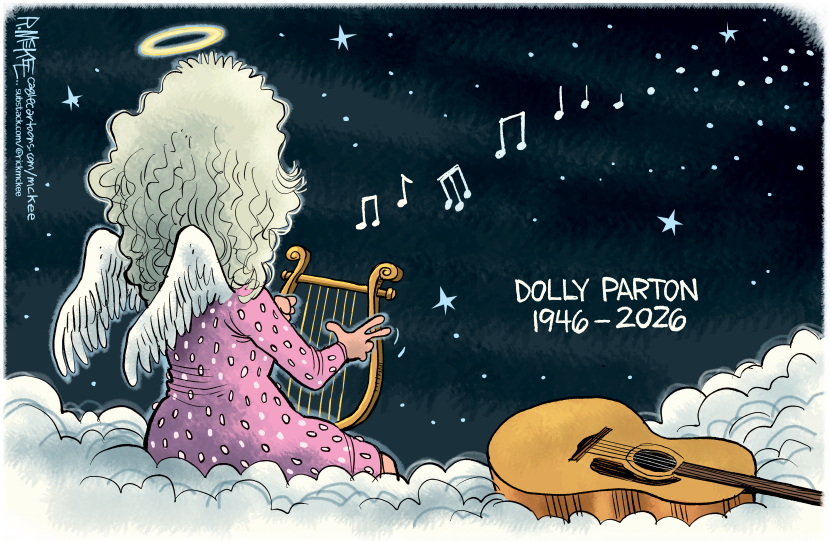
Dolly Parton, the iconic country singer and philanthropist, died in 2026. Her passing prompted widespread tributes highlighting her music, generosity, and advocacy for peace. The cartoon depicts her arrival in heaven as an angel offering a song that links heavenly welcome with prayers for peace on earth, celebrating her life and message.
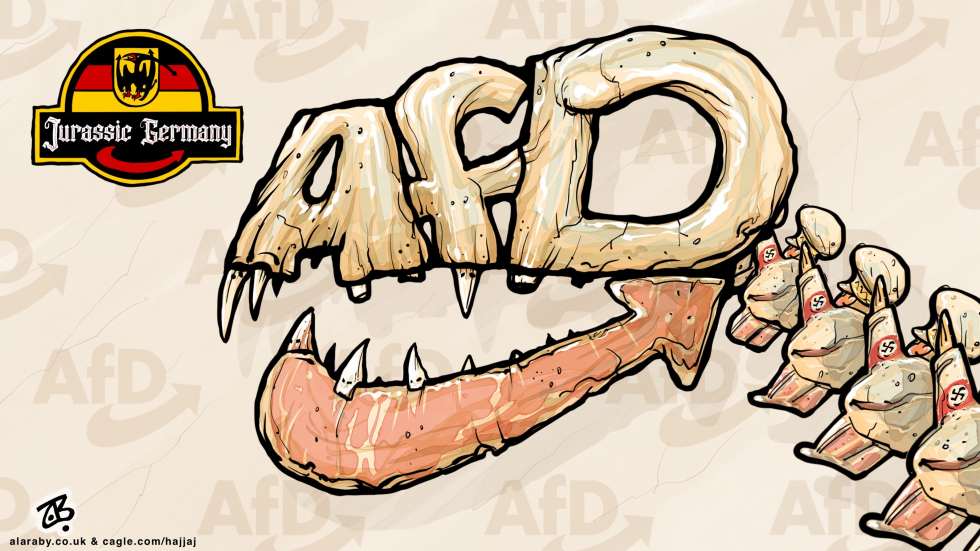
The Alternative for Germany party posted strong results in recent state and national contests, drawing renewed scrutiny over its tolerance for extremist elements. The outcome matters because AfD now holds significant parliamentary seats and influences policy debates on immigration and national identity. The cartoon argues that these gains risk normalizing symbols and rhetoric long associated with Germany's darkest chapter.
Dolly Parton receives a guitar from an angel in a lighthearted heavenly greeting. The image plays on her musical legacy and public persona as a beloved entertainer. The piece presents a warm, positive view of her cultural staying power.
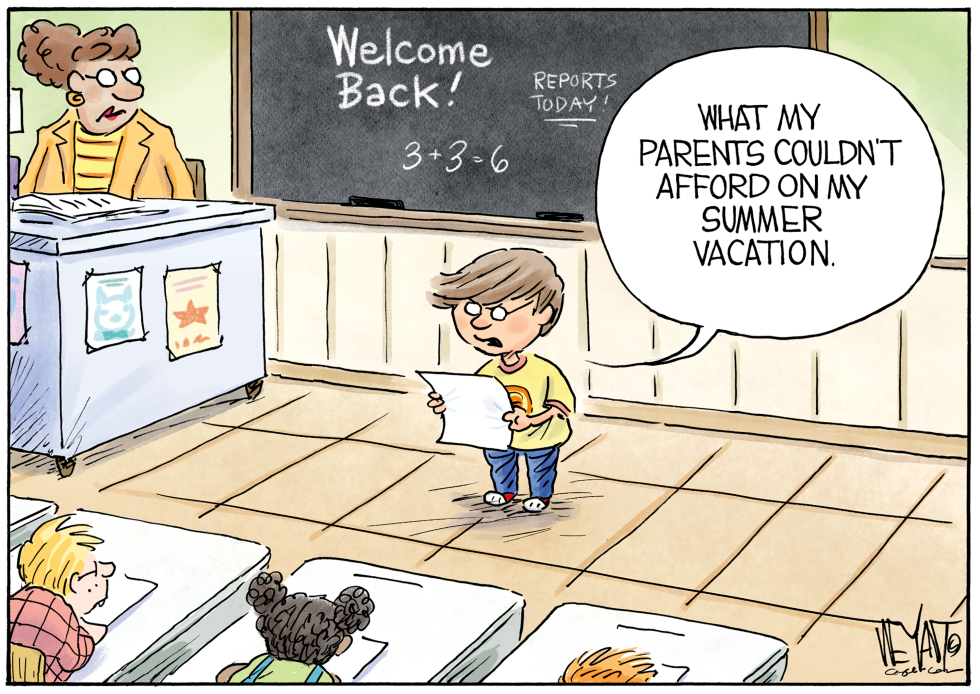
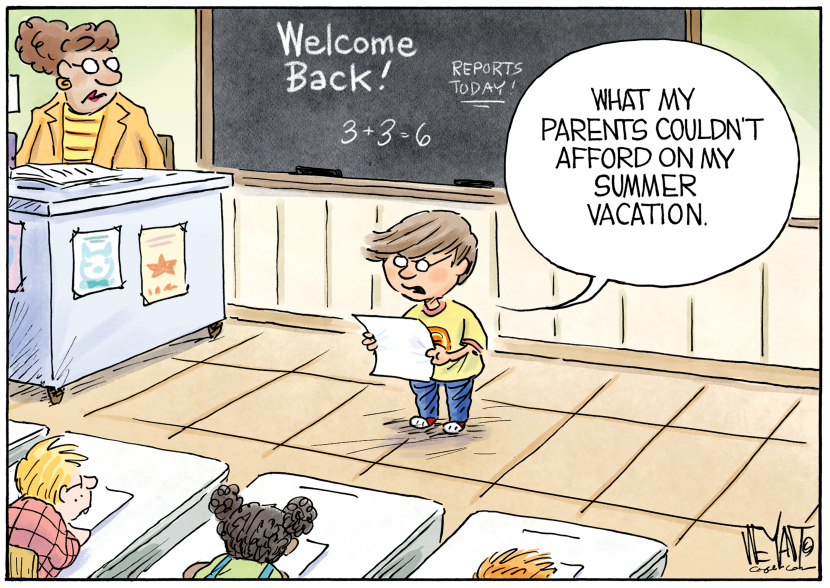
Rising living costs continue to squeeze household budgets as families navigate post-pandemic recovery and persistent price pressures on travel and leisure. A classroom scene captures one student's report on what his parents could not afford during summer break, underscoring how everyday families feel the pinch. The piece frames the issue as a direct consequence of ongoing economic conditions affecting ordinary households.
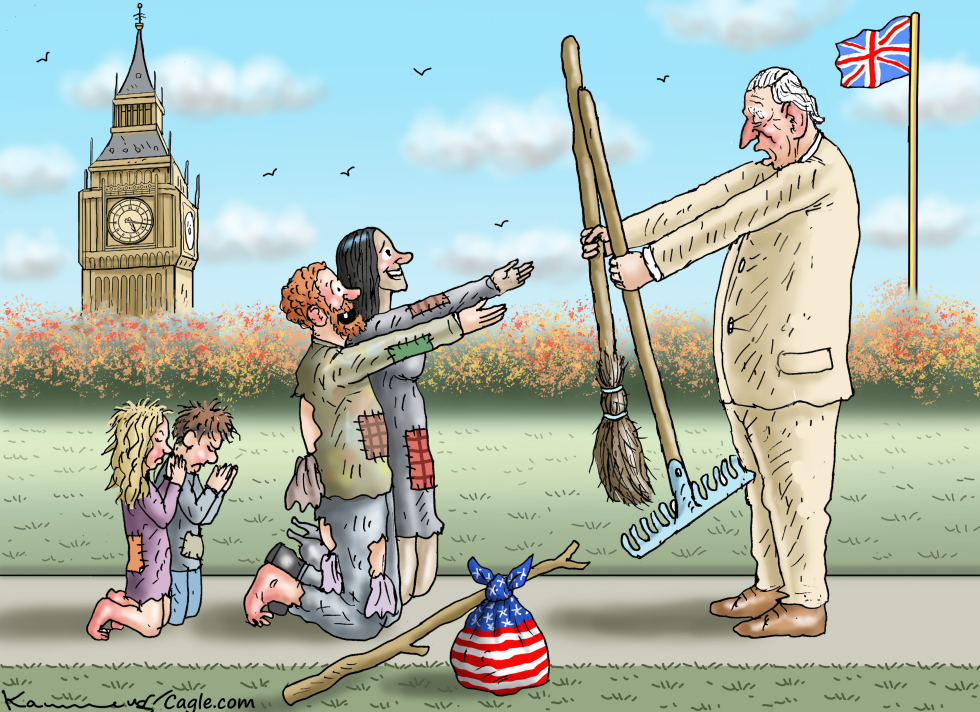
Prince Harry and family appear in tattered clothing seeking reentry to Britain as King Charles stands with a broom marked welcome near the Houses of Parliament. The scene reflects ongoing tensions over the couple's status after their move to the United States.
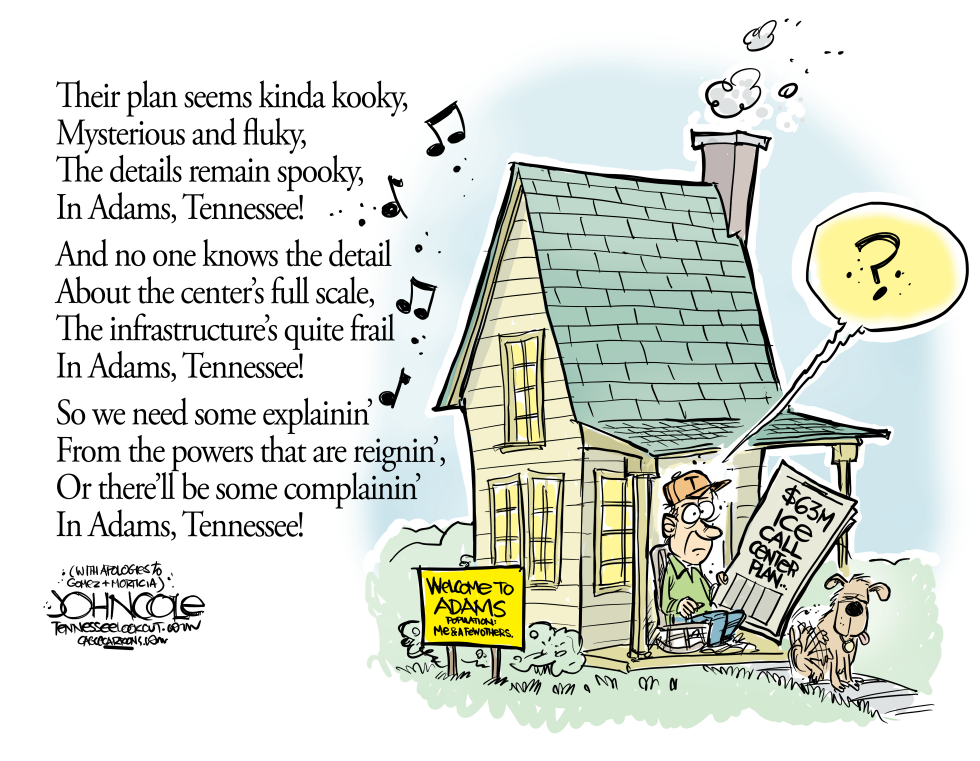
A proposed $63 million ICE call center in Adams, Tennessee has drawn local confusion over missing details on scale and infrastructure. The plan's opacity has prompted calls for clearer explanations from officials. The cartoon highlights resident frustration with the lack of transparency surrounding the project.
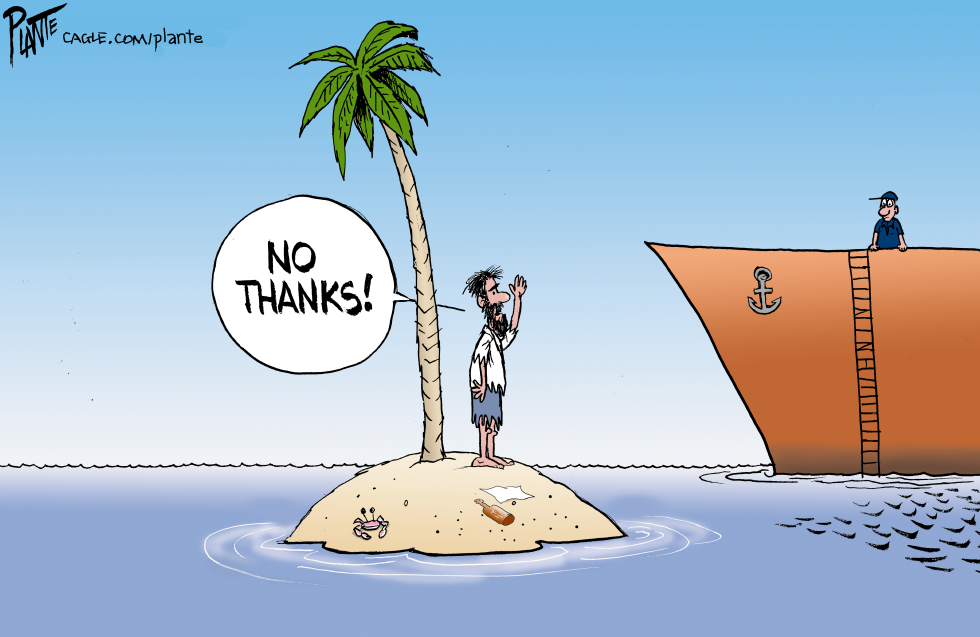
A castaway on a remote island faces an unexpected chance at rescue from a passing vessel. The situation highlights ongoing human tensions between solitude and reintegration into society. The piece takes the position that some individuals genuinely prefer isolation over returning to the outside world.
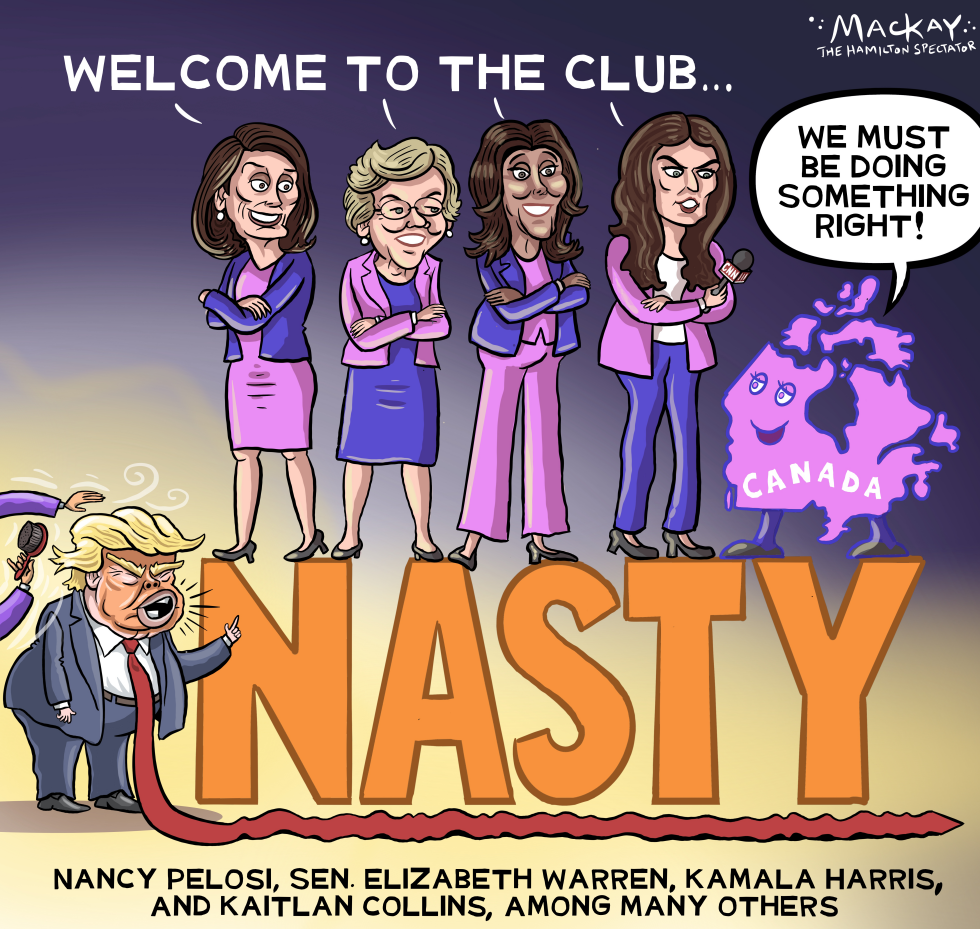
Donald Trump has repeatedly applied the term nasty to female political figures and journalists including Nancy Pelosi, Elizabeth Warren, Kamala Harris and Kaitlan Collins. The August 2026 cartoon depicts those women welcoming a personified Canada into their group, framing the label as a badge of honor rather than an insult. The piece argues that the president's rhetoric has lost its sting and now unites its targets.
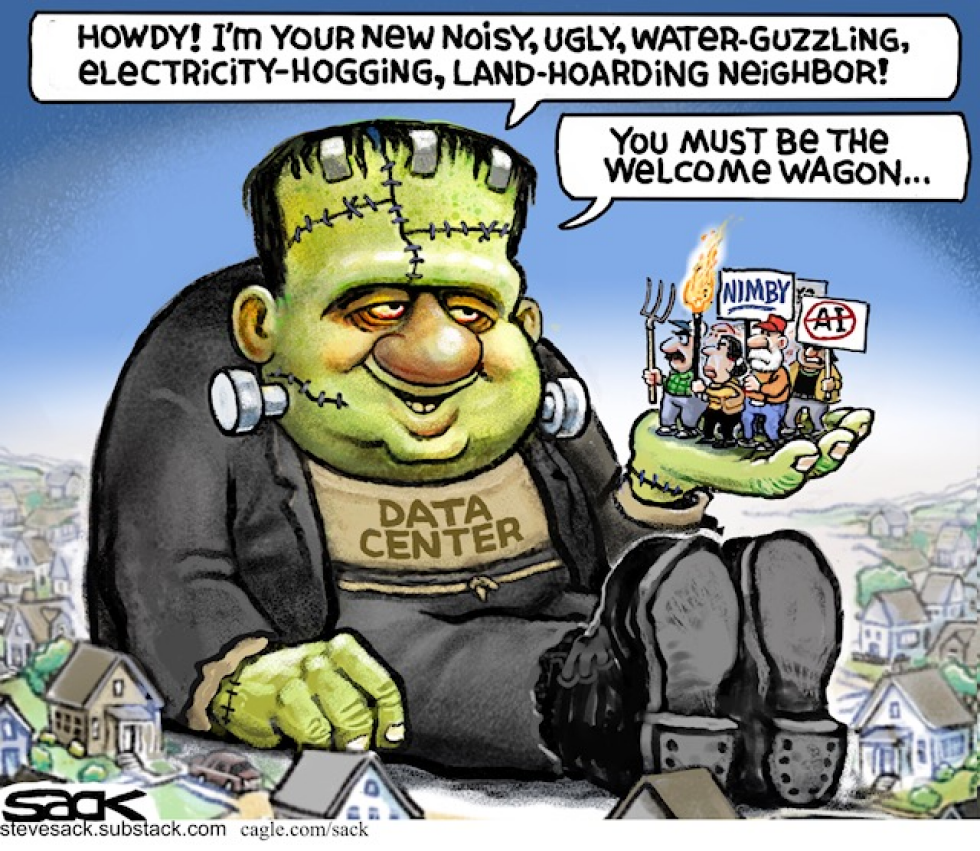
Rapid growth in AI data centers has triggered protests in suburban areas over high electricity and water consumption plus land use. Residents organized under NIMBY banners to block projects they say strain local infrastructure. The cartoon frames the facilities as intrusive newcomers disrupting neighborhoods.
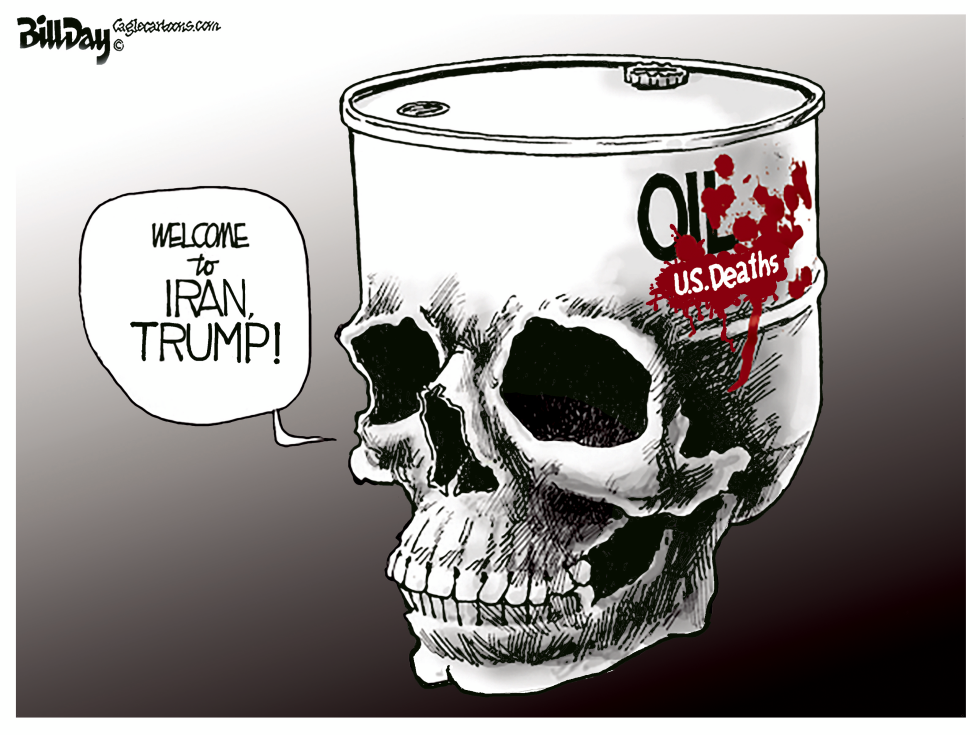
Donald Trump confronts a pointed visual rebuke linking US involvement in Iranian oil to American deaths. The image responds to persistent tensions over energy resources and foreign policy decisions in the Middle East. Critics argue such engagements carry heavy human costs without clear strategic gains. The piece takes the position that Trump's approach risks repeating costly patterns of intervention driven by oil interests rather than broader security needs.
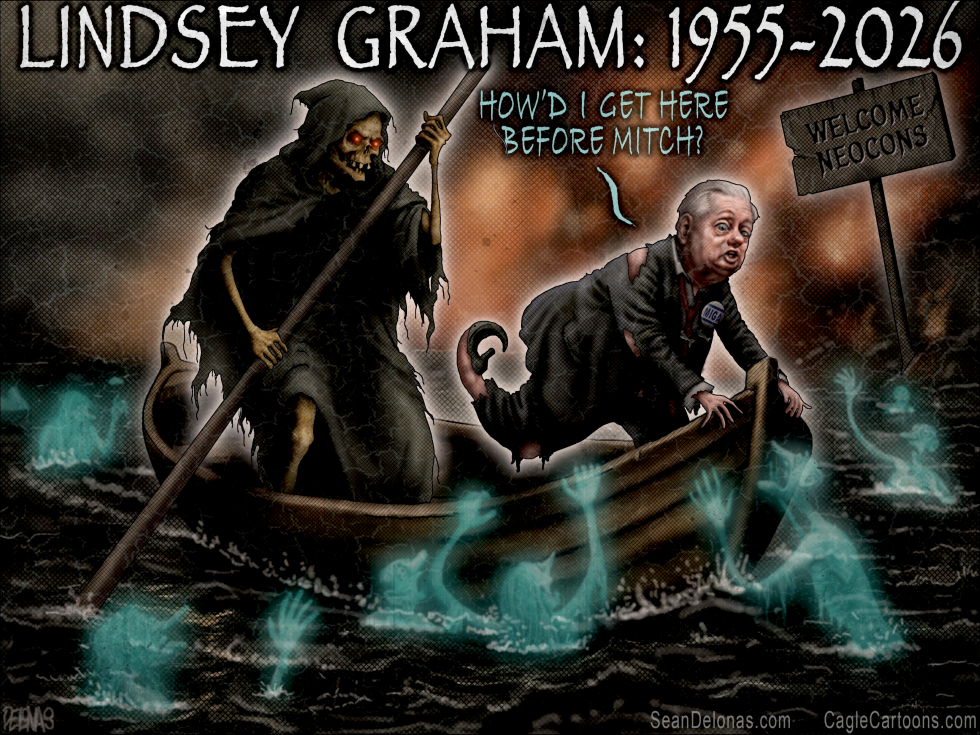
The cartoon responds to the imagined 2026 death of longtime Republican Senator Lindsey Graham. It places him in an afterlife reserved for neoconservatives, where he wonders why he arrived before Senate Minority Leader Mitch McConnell. The piece uses the scenario to comment on the enduring influence and eventual passing of prominent Republican foreign-policy figures.
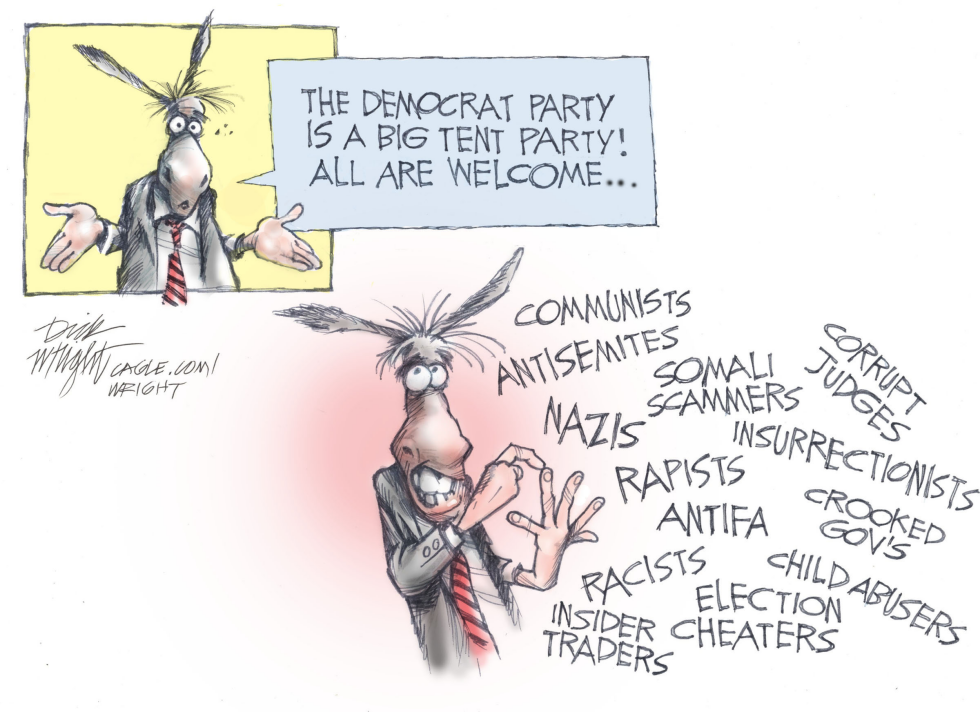
A July 2026 cartoon by Dick Wright depicts the Democrat Party's big tent claim through an inset donkey figure. The main character, also a donkey in a suit, gestures amid a cloud of labels naming groups such as communists, antisemites, Nazis, rapists, Antifa, racists, and election cheaters. The image critiques the party's inclusivity rhetoric by associating it with these categories. Publication occurs amid ongoing partisan debates over party platforms and voter bases.
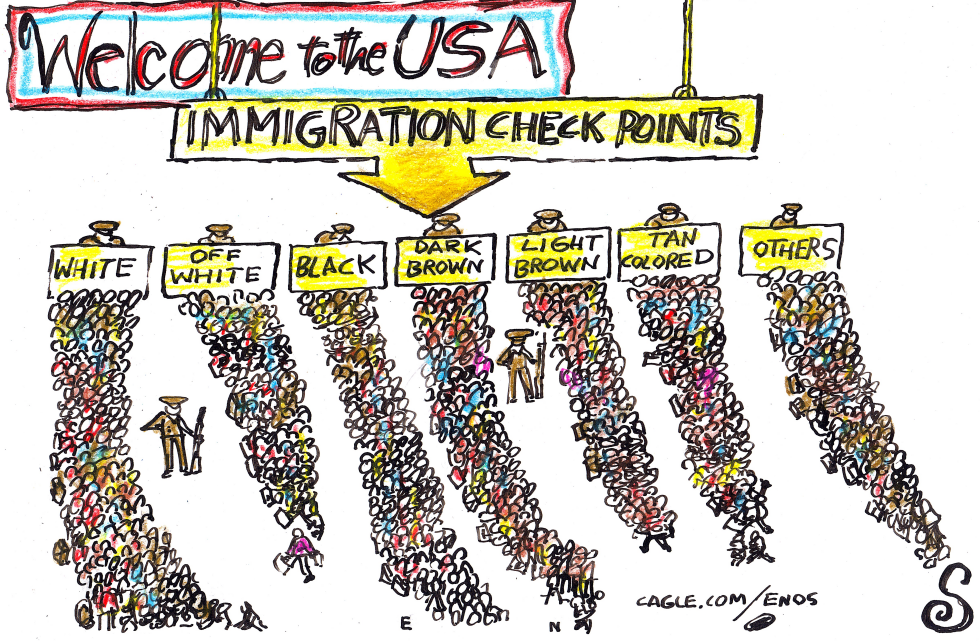
A cartoon depicts seven distinct lines of people at US immigration checkpoints, each labeled by skin color from white through off-white, black, dark brown, light brown, tan colored and others. Guards stand watch while a prominent welcome banner and immigration sign direct arrivals into the segregated queues. The image highlights the visual separation of entrants based on appearance.