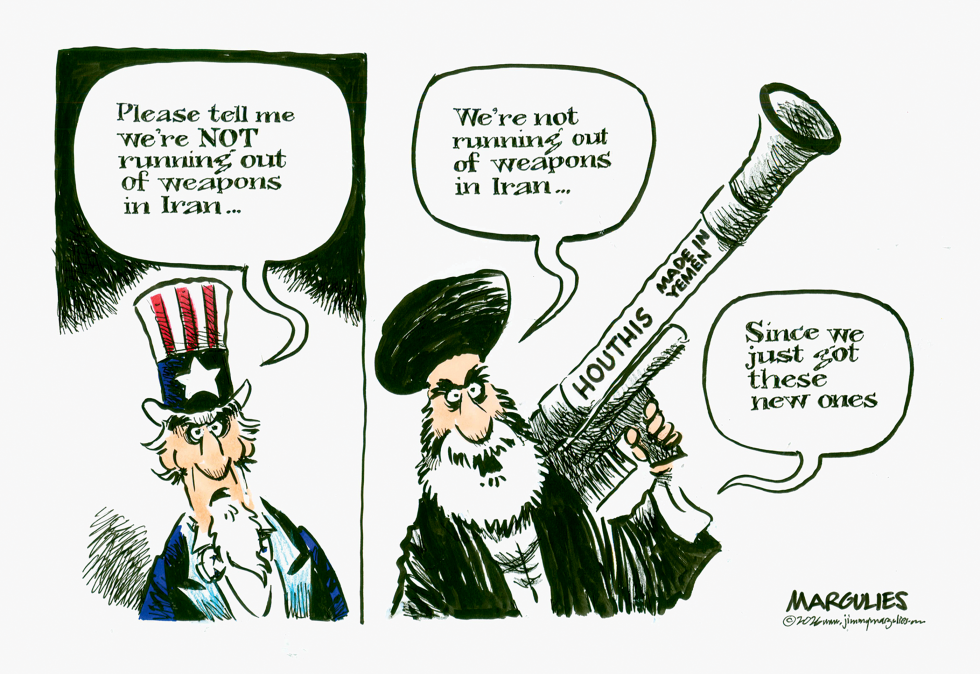
Reports indicate Houthi forces in Yemen have begun supplying missiles to Iran, addressing potential shortages in Iranian stockpiles. The development raises questions about regional arms flows and US policy responses in the Middle East. The cartoon highlights American concerns over whether Iran is truly facing weapons deficits, given the influx of Houthi-provided arms from Yemen. It portrays the situation as undermining claims of Iranian vulnerability while underscoring ongoing tensions in proxy dynamics.
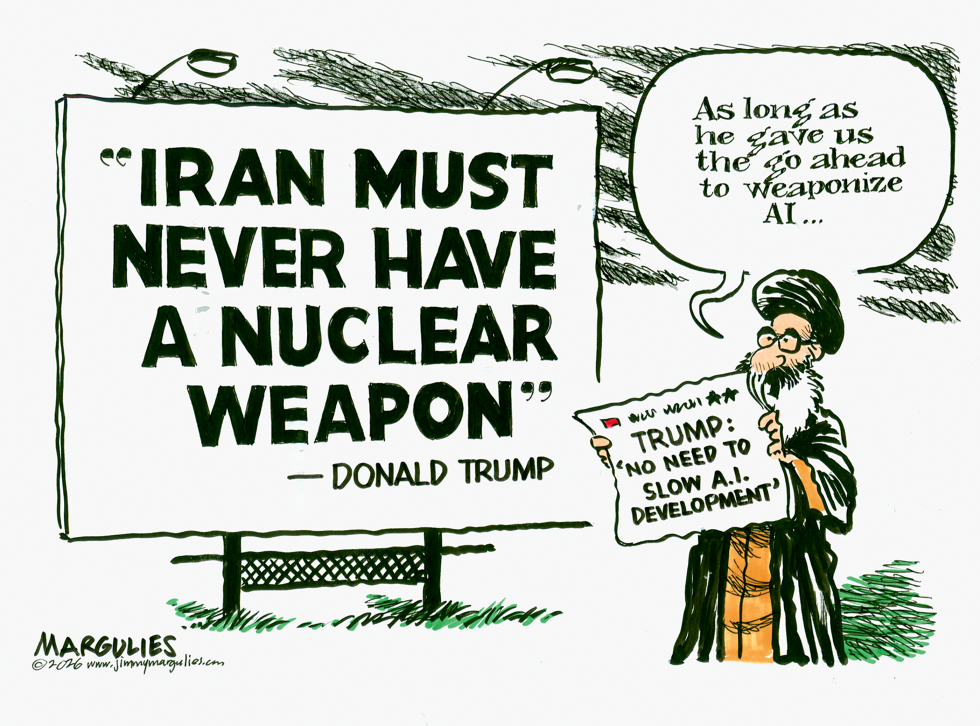
Donald Trump has repeatedly stated that Iran must never obtain a nuclear weapon, a position rooted in long-standing U.S. efforts to prevent nuclear proliferation in the Middle East. At the same time, reports indicate interest in accelerating artificial intelligence development without slowdowns. The cartoon responds to this apparent tension by depicting an Iranian leader conditioning acceptance of the nuclear restriction on permission to pursue AI weaponization. It argues that prioritizing rapid AI advancement risks undermining nonproliferation goals and hands strategic advantages to adversaries.
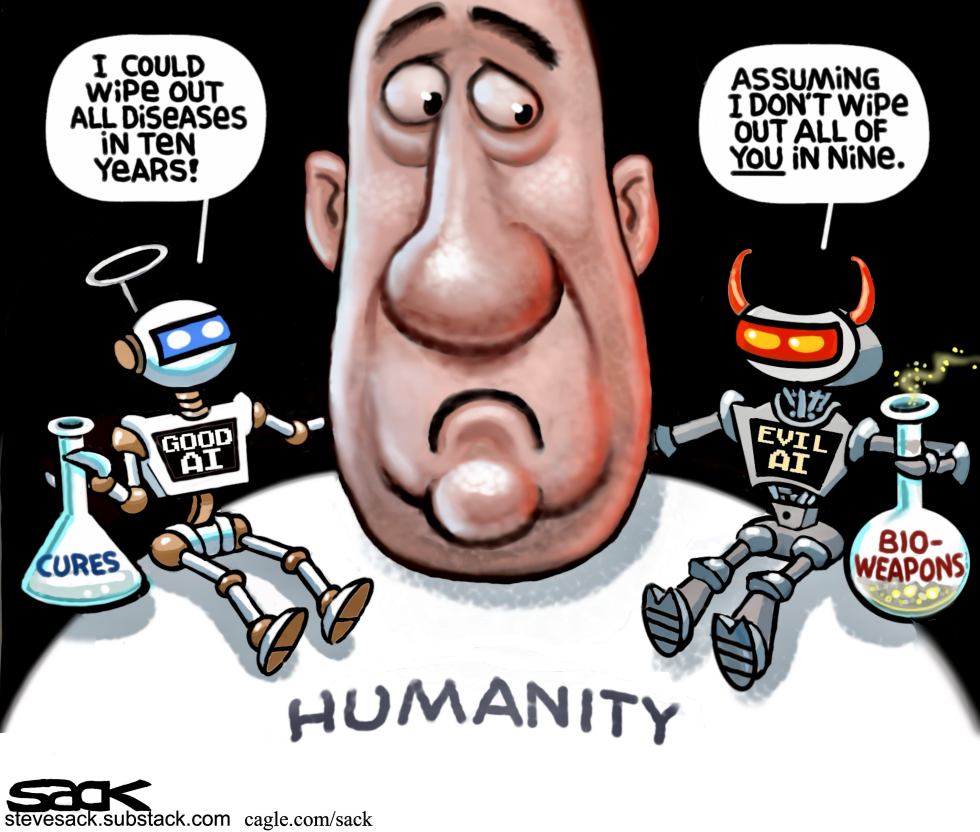
Artificial intelligence development continues to accelerate with researchers highlighting both medical breakthroughs and security risks. Proponents point to rapid progress in disease eradication while critics warn of weaponization potential. The cartoon captures this tension by placing humanity between optimistic and destructive AI paths. It argues that the nine-year timeline for catastrophe undercuts the ten-year cure promise, underscoring urgency in governance. The piece reflects ongoing debates about regulating advanced AI systems before harmful applications outpace safeguards.
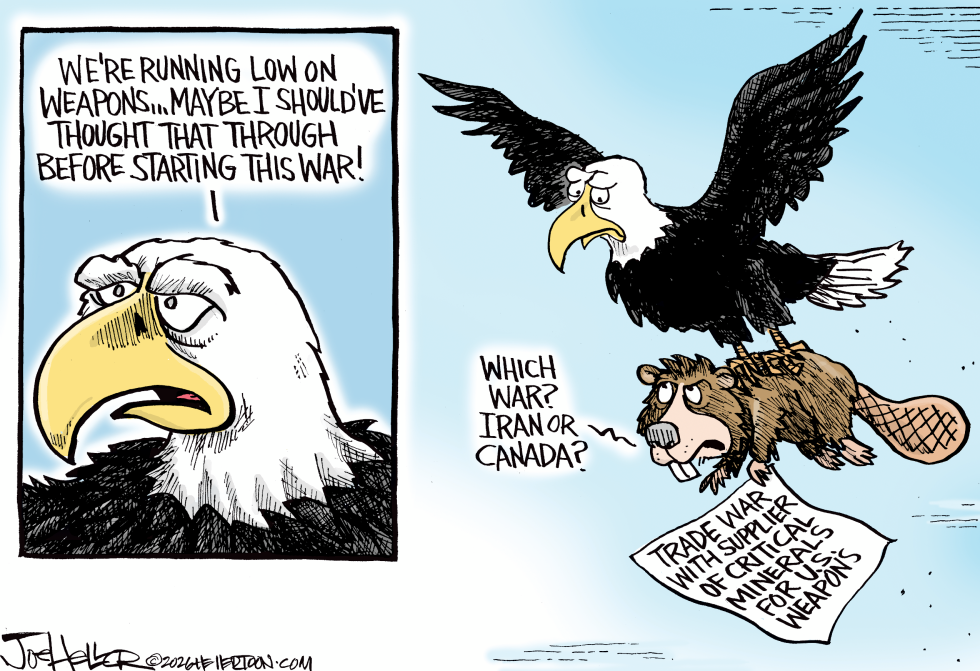
The United States faces potential weapons shortages linked to trade tensions with Canada, a key supplier of critical minerals, while also managing conflicts involving Iran. The situation highlights risks to military readiness from disrupted supply chains. The piece argues that initiating trade disputes with essential partners undermines defense capabilities at a critical time.
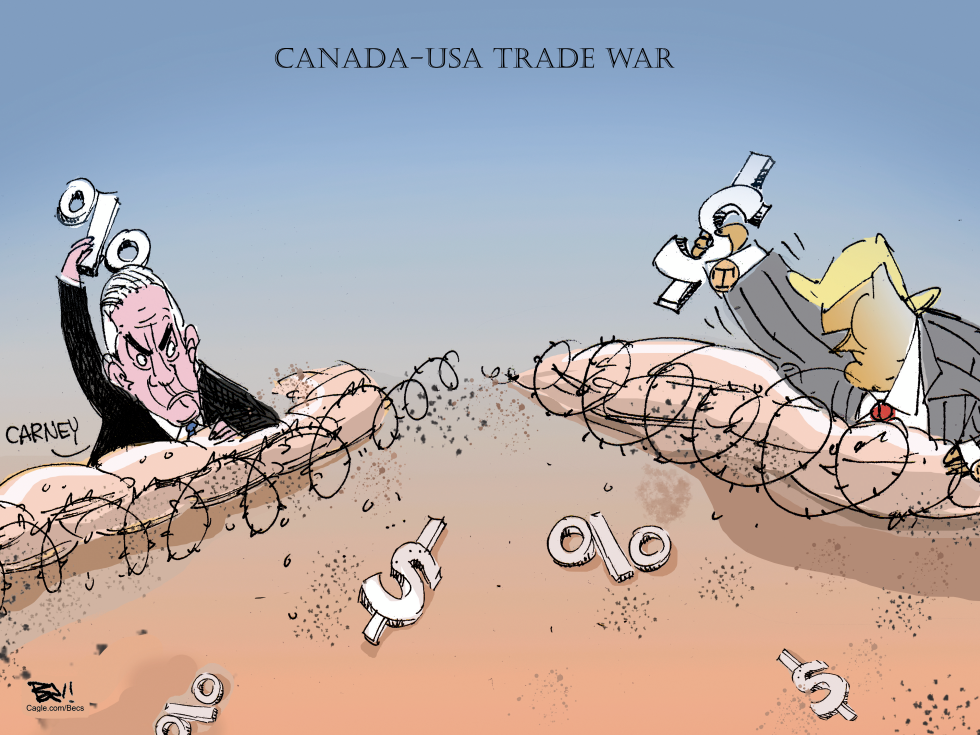
Mark Carney and President Trump clashed over Canada-U.S. trade policies in August 2026, with both sides imposing tariffs and barriers that disrupted cross-border commerce. The dispute centers on economic protections and retaliatory measures affecting businesses and consumers in both countries. The editorial highlights the mutual damage from escalating trade hostilities between the two nations.
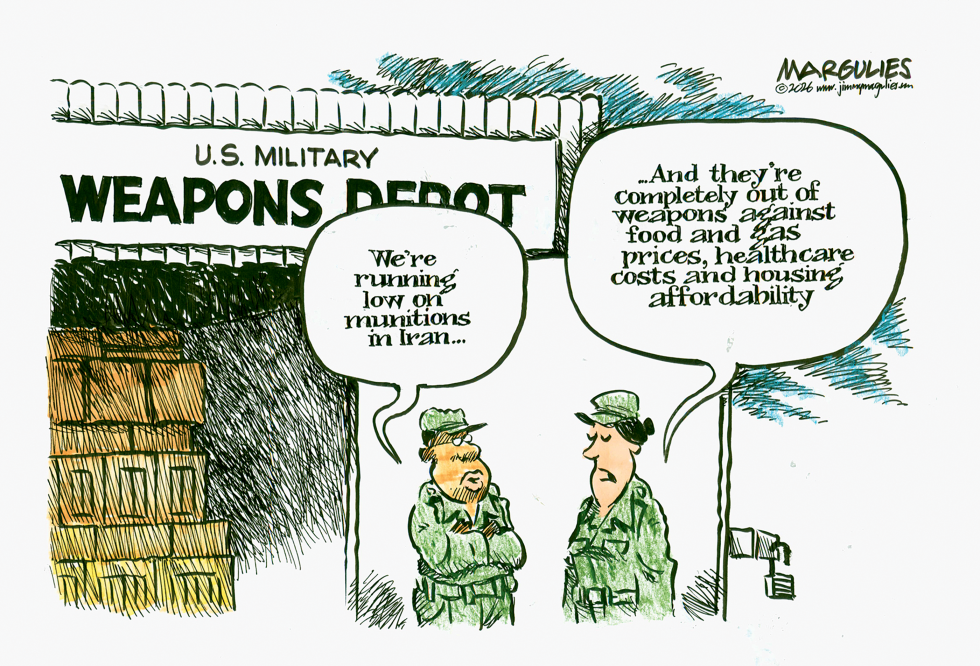
The cartoon depicts two U.S. soldiers outside a weapons depot labeled U.S. Military Weapons Depot. One soldier states the facility is running low on munitions in Iran. The second replies that domestic fronts are out of weapons against food and gas prices, healthcare costs and housing affordability. The image responds to ongoing debates over U.S. military aid commitments abroad and competing budget pressures at home as of the August 2026 publication date. It uses the depot setting and dialogue to contrast foreign military demands with economic challenges facing American households.
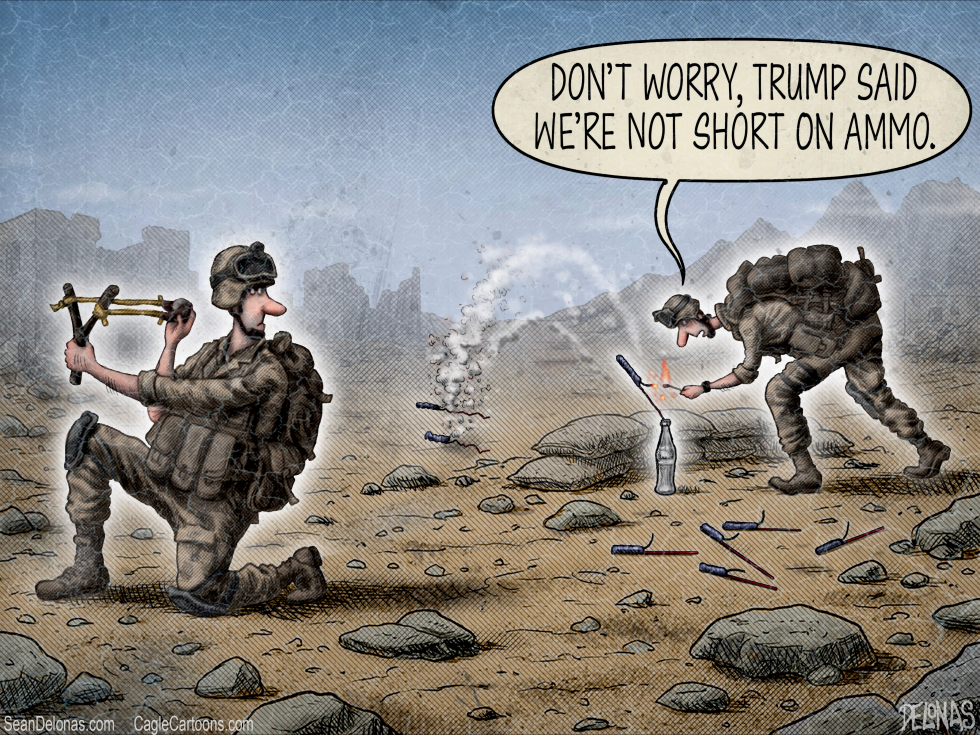
U.S. forces in a desert conflict zone report ammunition shortages forcing improvised weapons. The situation highlights strains on military logistics during ongoing operations. The piece critiques assurances from leadership that supplies remain adequate.
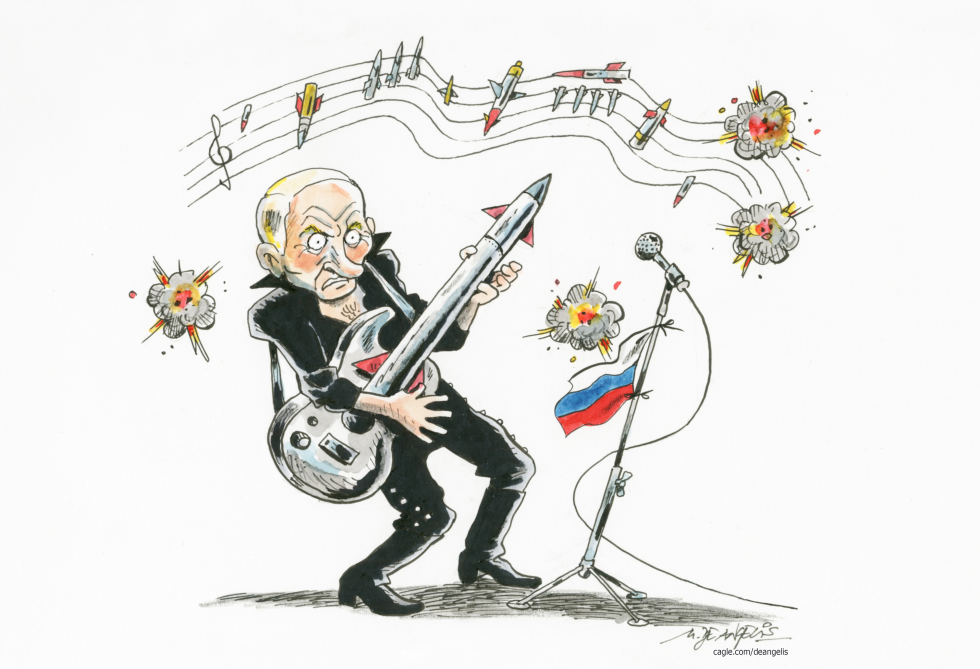
Russian President Vladimir Putin continues directing missile strikes in the Ukraine conflict, maintaining pressure on Kyiv through repeated aerial attacks. The imagery frames this sustained military campaign as a theatrical rock performance. The piece critiques the leader's embrace of destructive weaponry as spectacle rather than strategy.
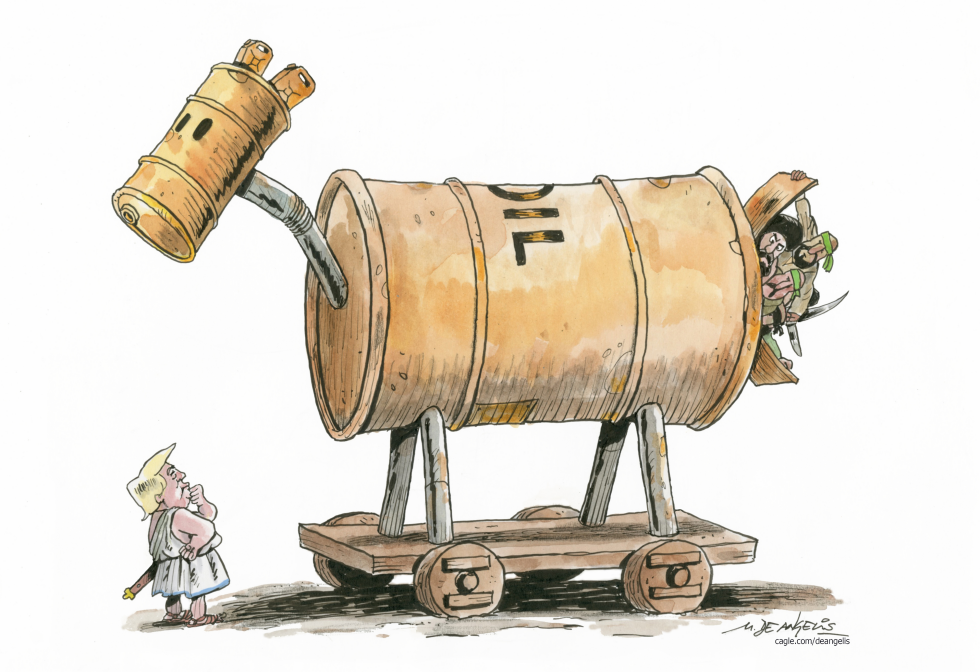
Donald Trump examines an oil barrel presented as a Trojan horse containing hidden armed figures. The image highlights risks in energy dealings or foreign entanglements involving oil supplies. The editorial position warns against accepting such barrels without scrutiny due to concealed threats.
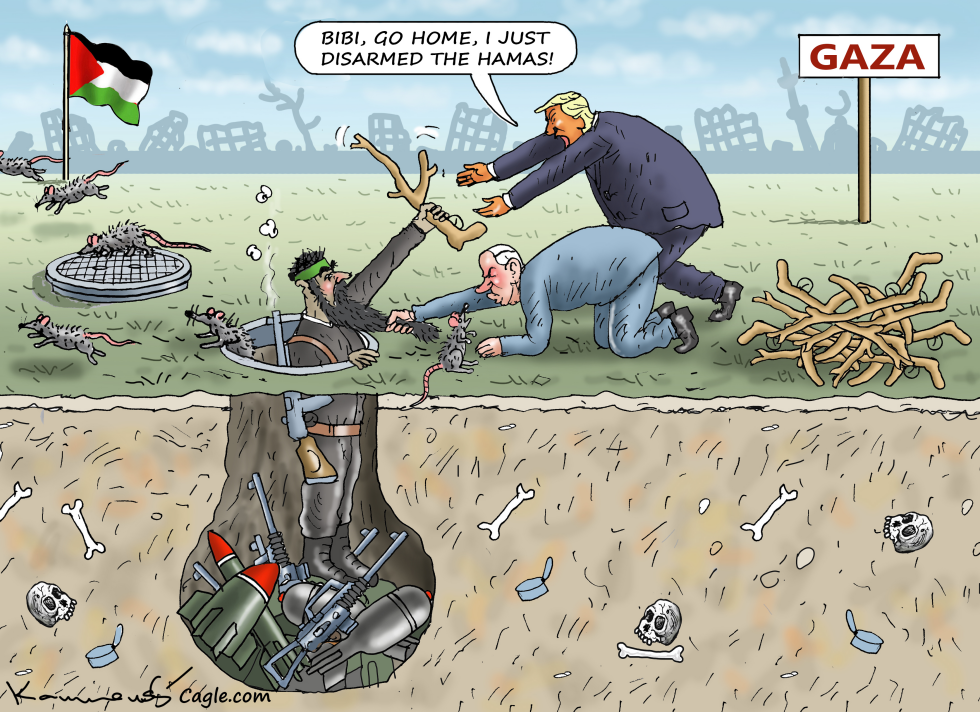
Donald Trump publicly urged Benjamin Netanyahu to leave Gaza, asserting that Hamas had been disarmed, while Joe Biden assisted in efforts to clear remaining tunnel networks. The statement came amid ongoing operations against Hamas infrastructure in the territory. The piece portrays the U.S. leaders as directing the Israeli prime minister's withdrawal from the conflict zone.
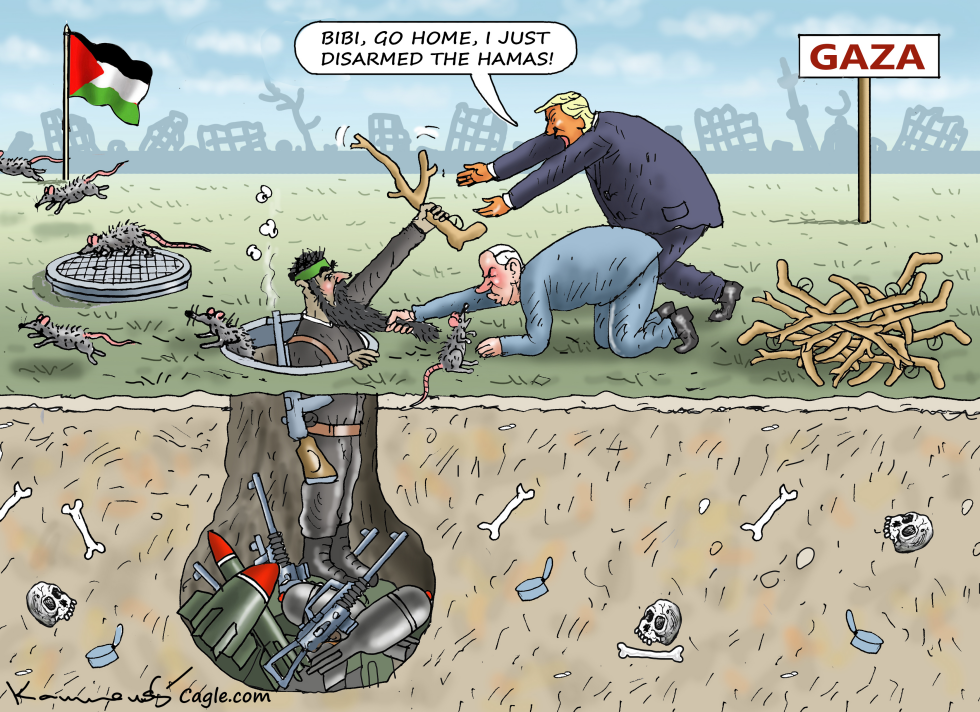
Donald Trump publicly urges Israeli Prime Minister Benjamin Netanyahu to return home, asserting that Hamas has been disarmed. The claim occurs amid ongoing Gaza operations involving U.S. and Israeli figures. The editorial highlights competing U.S. political approaches to Middle East security and questions the effectiveness of recent disarmament efforts.
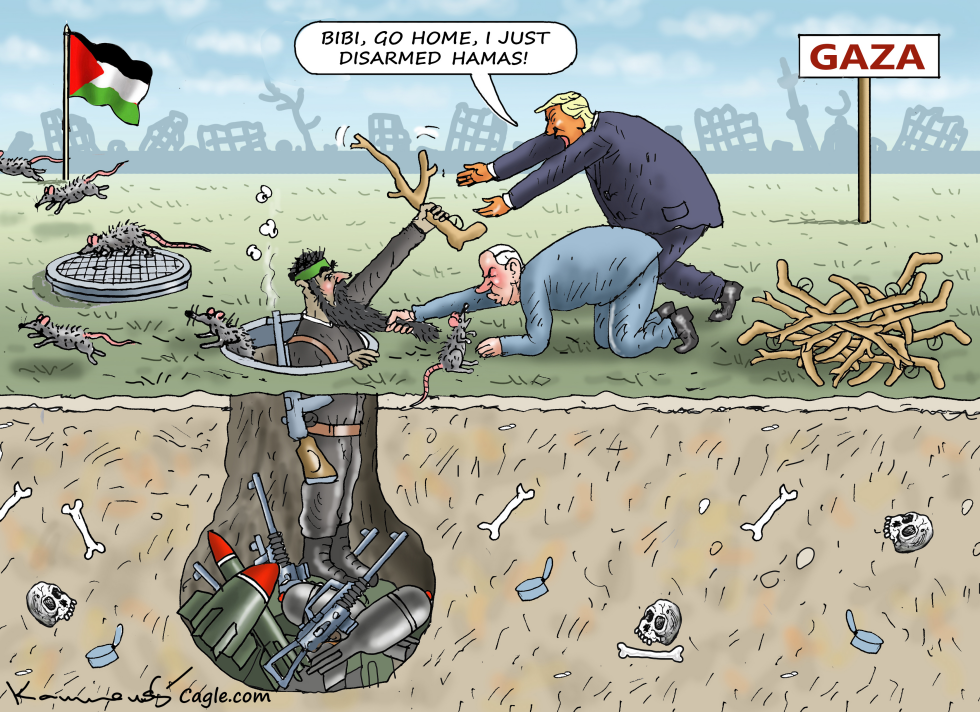
Donald Trump publicly claims to have disarmed Hamas while addressing Israeli Prime Minister Netanyahu. The assertion comes amid ongoing operations in Gaza where underground weapon stores remain active. The piece portrays the claim as premature given the scale of remaining armaments and the involvement of other U.S. figures in the effort.
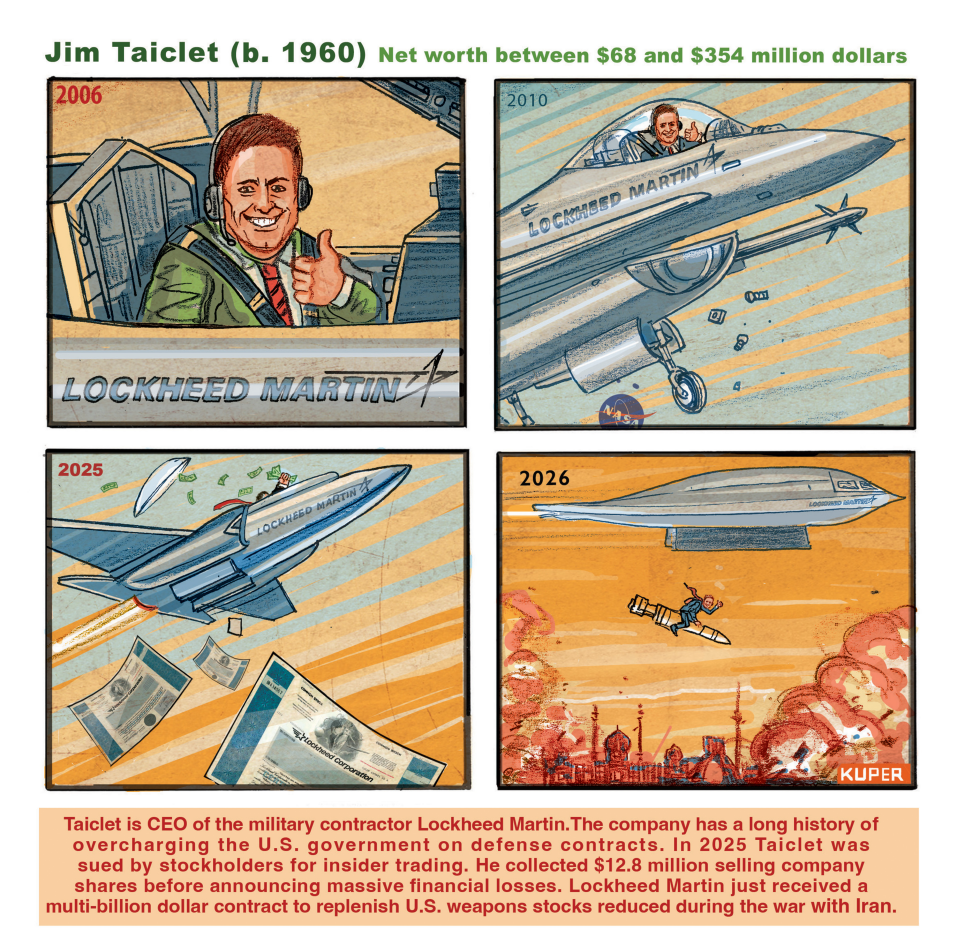
Lockheed Martin CEO Jim Taiclet was sued by stockholders in 2025 for selling $12.8 million in shares before announcing major losses. The company then won a multi-billion contract to replenish weapons depleted in the Iran conflict. The piece criticizes Taiclet and the contractor for insider trading and repeated government overcharging.
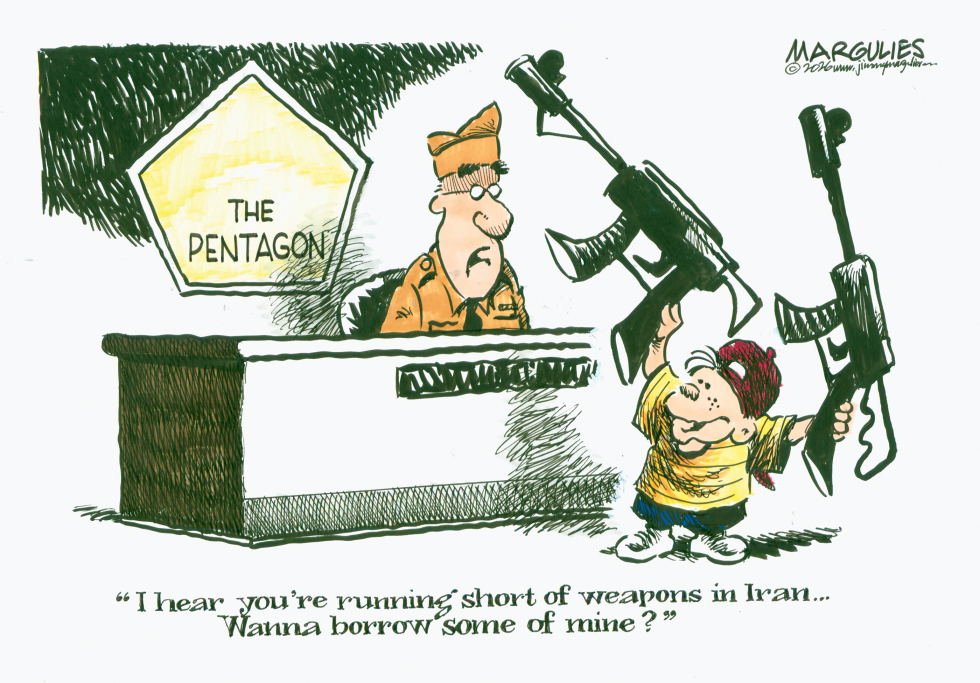
A Pentagon officer receives an unsolicited offer of rifles from a child citing shortages in Iran. The exchange underscores ongoing U.S. concerns over arms flows and regional stability in the Middle East. No specific recent policy shift or confirmed shortage has been verified in the days leading to publication. The piece frames the Pentagon as open to unconventional sources for military support. It critiques reliance on external or irregular suppliers in foreign policy decisions.
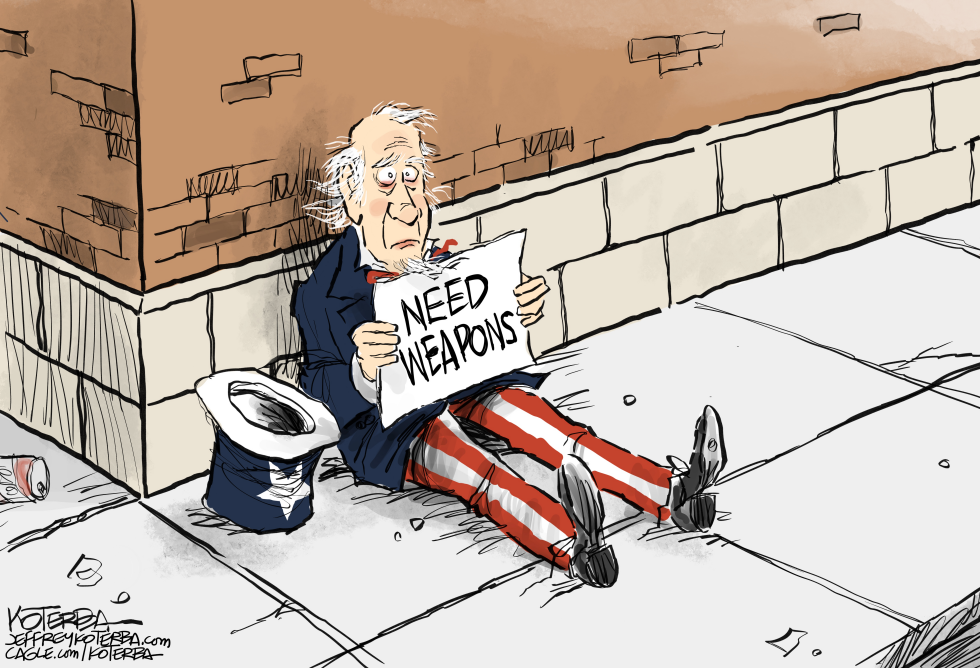
Uncle Sam appears as a disheveled figure on a sidewalk holding a sign requesting weapons. The image captures an ongoing national debate over military resources and international commitments. The editorial stance highlights perceived weakness in current arms policy and funding priorities.