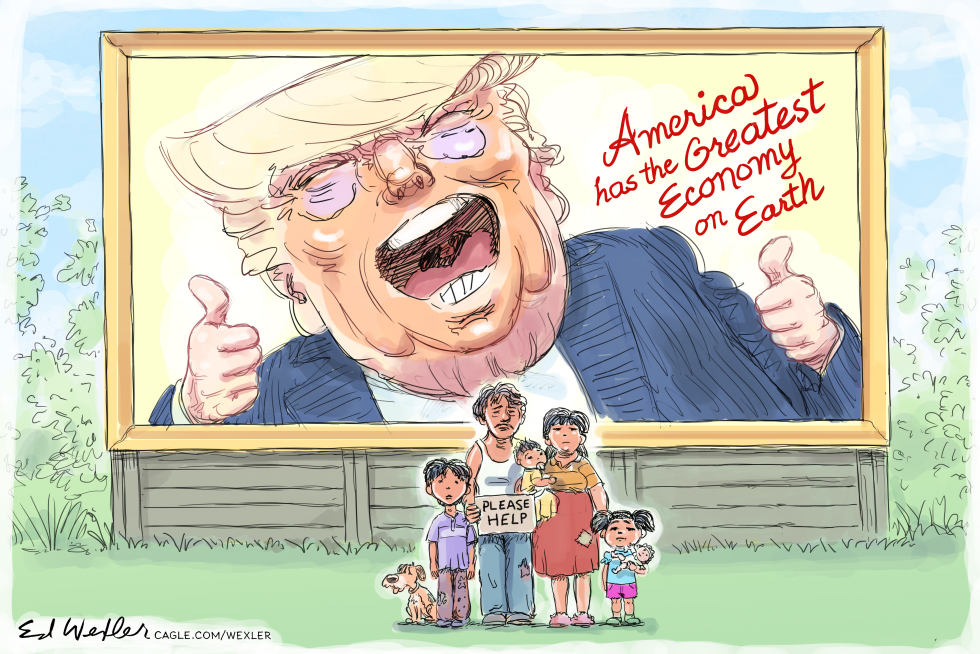
On August 29 2026 President Donald Trump continued promoting claims of an unmatched U.S. economy amid ongoing reports of persistent poverty and wage stagnation for many households. The billboard message highlights administration assertions of national prosperity. The accompanying image underscores the disconnect between official rhetoric and daily struggles for families facing unemployment and insufficient support. The piece argues that such promotional messaging ignores the lived experience of economic hardship.
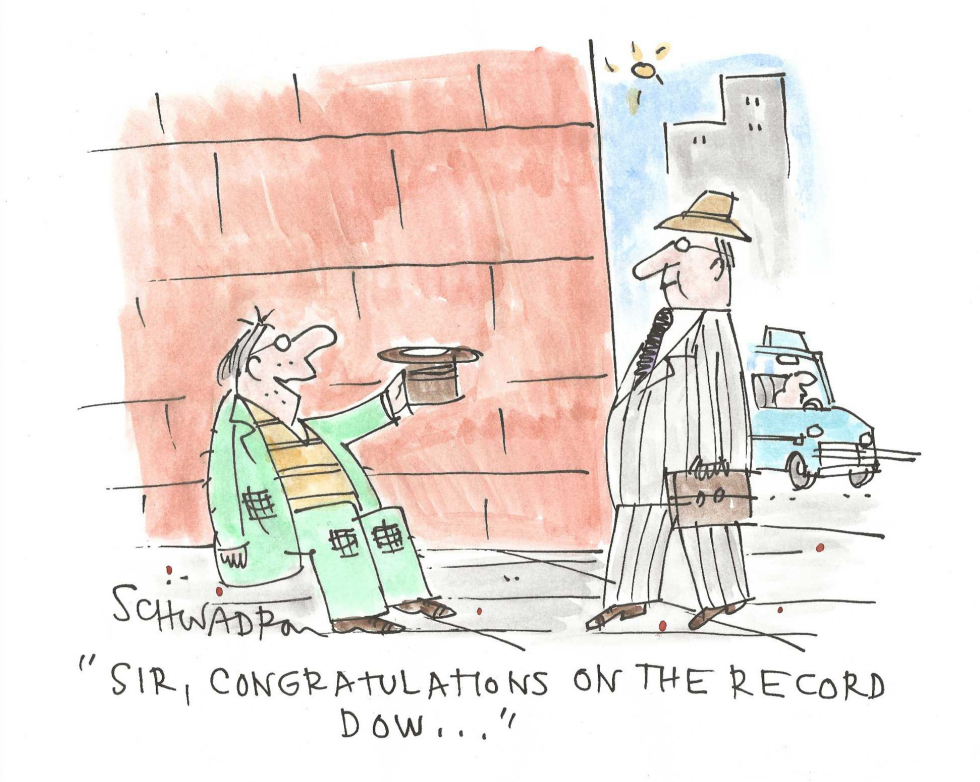
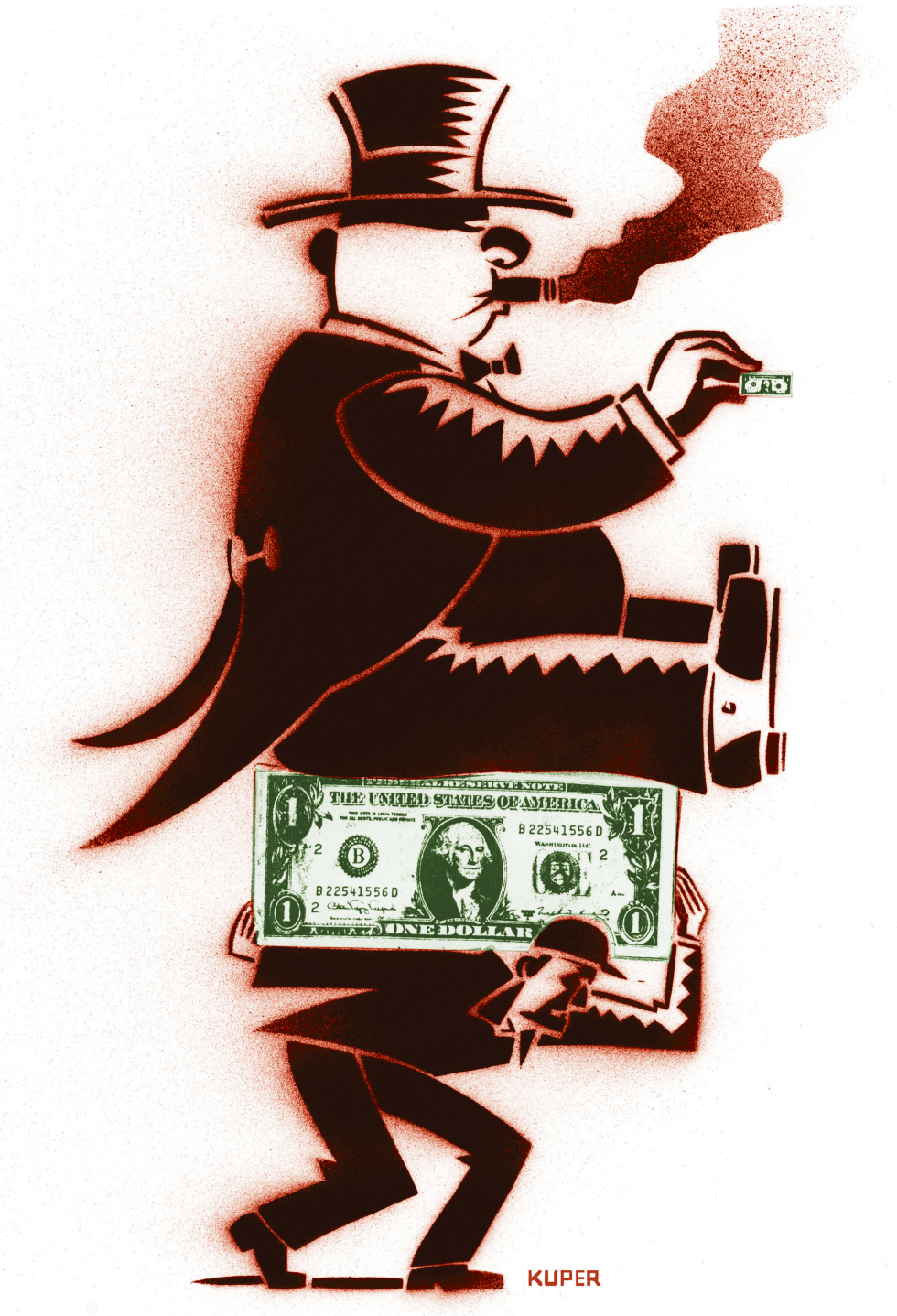
The Dow Jones Industrial Average reached a new record high in late August 2026, reflecting strong corporate earnings and investor confidence. Business leaders celebrated the milestone while many Americans continued to face stagnant wages and rising living costs. The cartoon depicts a beggar offering congratulations to a passing executive, underscoring the disconnect between Wall Street performance and everyday economic reality. This visual argument critiques how market success often benefits a narrow segment of society while leaving others behind.
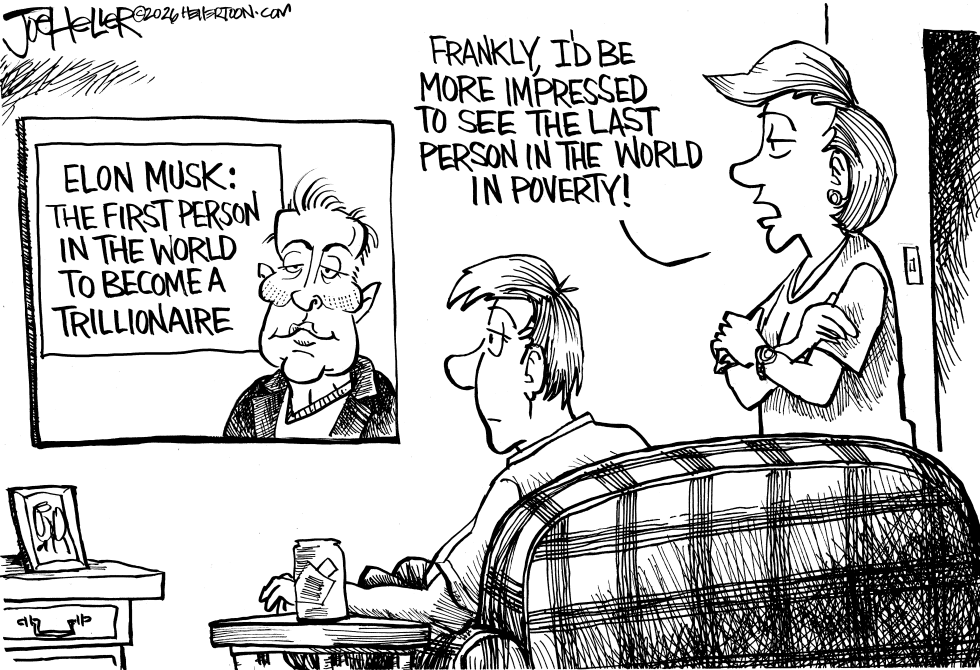
A couple watches a television broadcast announcing Elon Musk as the first person to become a trillionaire. The woman viewer responds that she would be more impressed by the last person in poverty being lifted out of it. The scene captures a living room exchange over the news report.
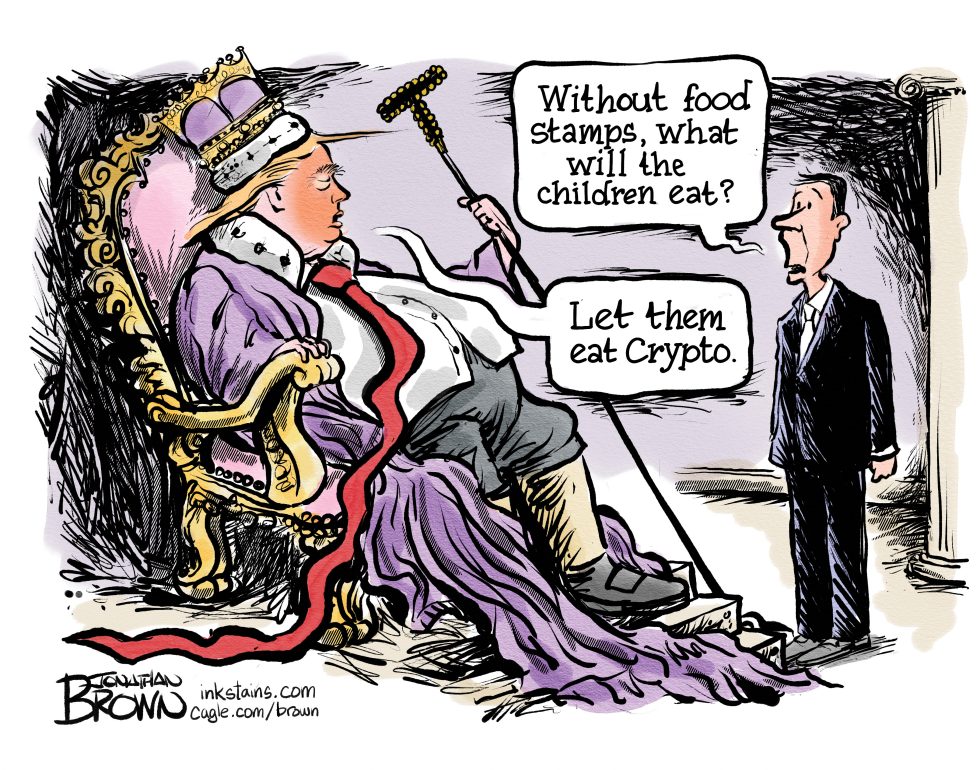
The image depicts Donald Trump dressed in royal attire on a throne responding to a question about food stamps during a government assistance halt. The suited figure asks what children will eat without SNAP benefits. Trump replies by suggesting crypto as the solution. This draws on the publication date of October 27 2025 when SNAP program disruptions were under discussion. The visual frames the response as detached from everyday economic pressures faced by recipients.
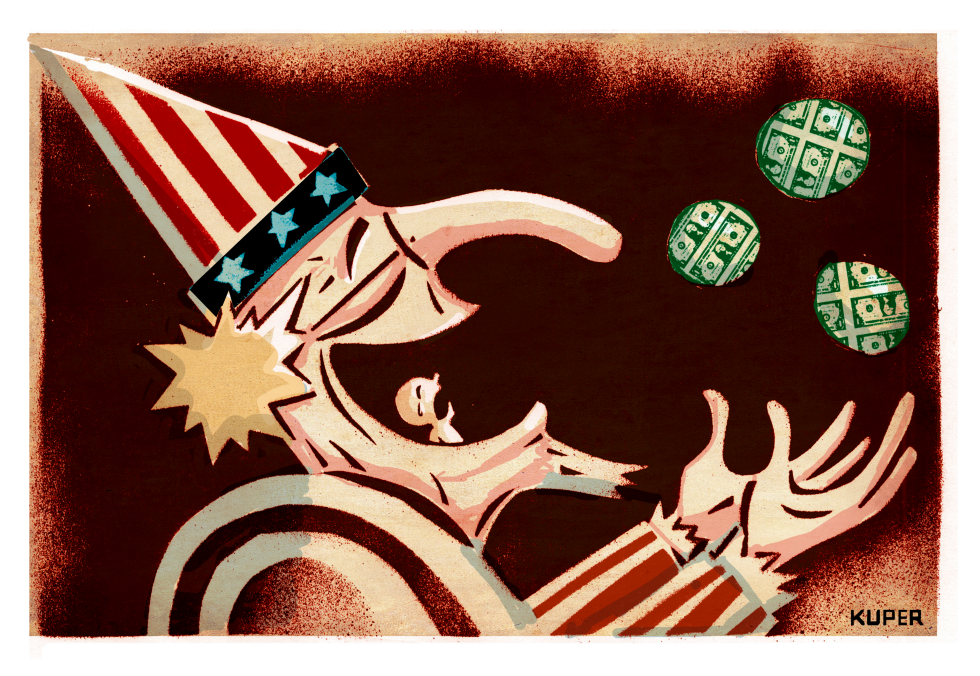
A figure in a starred hat juggles three dollar-marked orbs against a dark backdrop. The image addresses rising U.S. budget deficits tied to tariffs and spending plans. It points to potential effects on manufacturing, grocery prices, layoffs, and programs such as Social Security and Medicare. The visual ties these elements to broader income disparity trends under current political leadership.