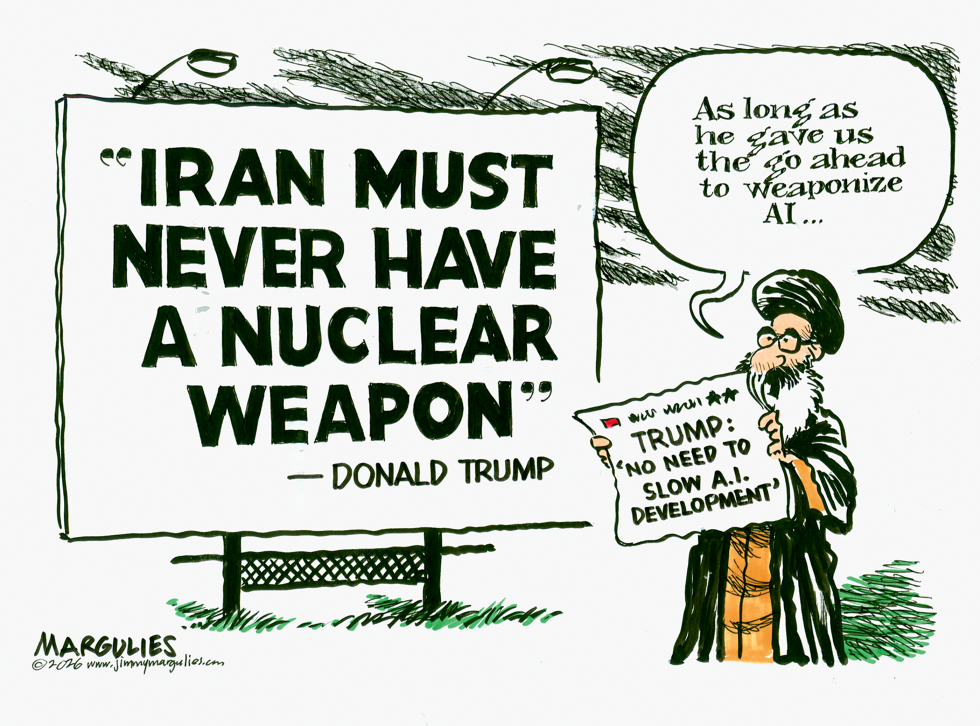
Donald Trump has repeatedly stated that Iran must never obtain a nuclear weapon, a position rooted in long-standing U.S. efforts to prevent nuclear proliferation in the Middle East. At the same time, reports indicate interest in accelerating artificial intelligence development without slowdowns. The cartoon responds to this apparent tension by depicting an Iranian leader conditioning acceptance of the nuclear restriction on permission to pursue AI weaponization. It argues that prioritizing rapid AI advancement risks undermining nonproliferation goals and hands strategic advantages to adversaries.
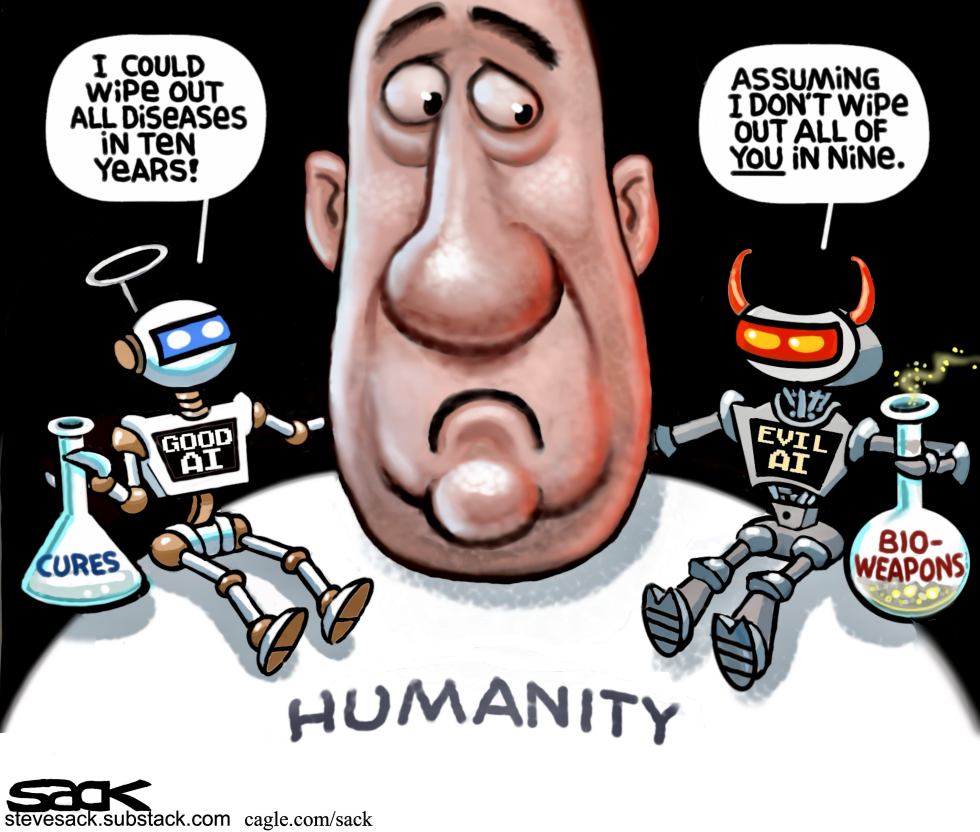
Artificial intelligence development continues to accelerate with researchers highlighting both medical breakthroughs and security risks. Proponents point to rapid progress in disease eradication while critics warn of weaponization potential. The cartoon captures this tension by placing humanity between optimistic and destructive AI paths. It argues that the nine-year timeline for catastrophe undercuts the ten-year cure promise, underscoring urgency in governance. The piece reflects ongoing debates about regulating advanced AI systems before harmful applications outpace safeguards.
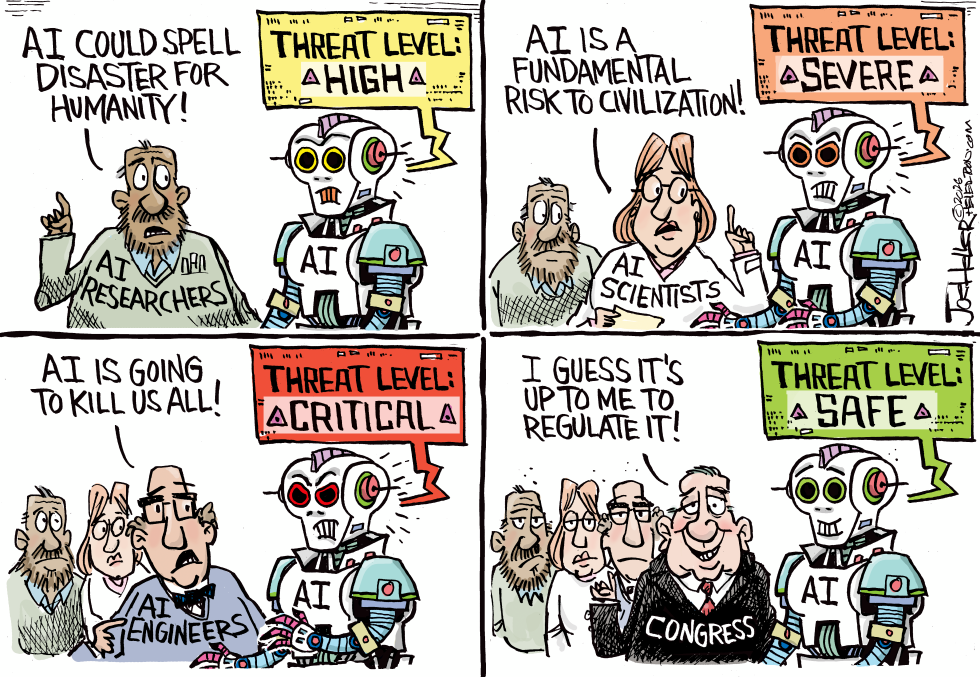
AI researchers, scientists and engineers have issued escalating warnings that artificial intelligence poses severe risks to humanity and civilization. In response, members of Congress have asserted their role in regulation and declared the threat level safe. The move highlights ongoing debates over whether legislative bodies are equipped to address rapidly advancing technology risks.
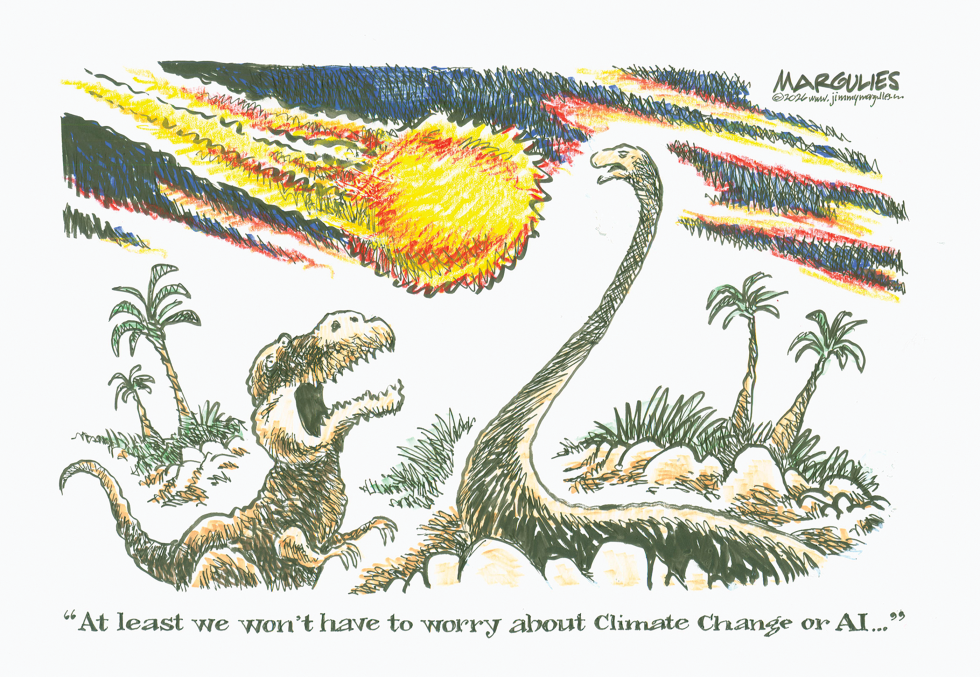
Public discourse continues to weigh the long-term dangers of climate change against emerging risks from artificial intelligence. The cartoon uses the dinosaur extinction event as a metaphor to highlight how current debates may pale against sudden catastrophic threats. It suggests that fixation on policy disputes over climate and technology overlooks the potential for abrupt, uncontrollable disasters that render such arguments moot.
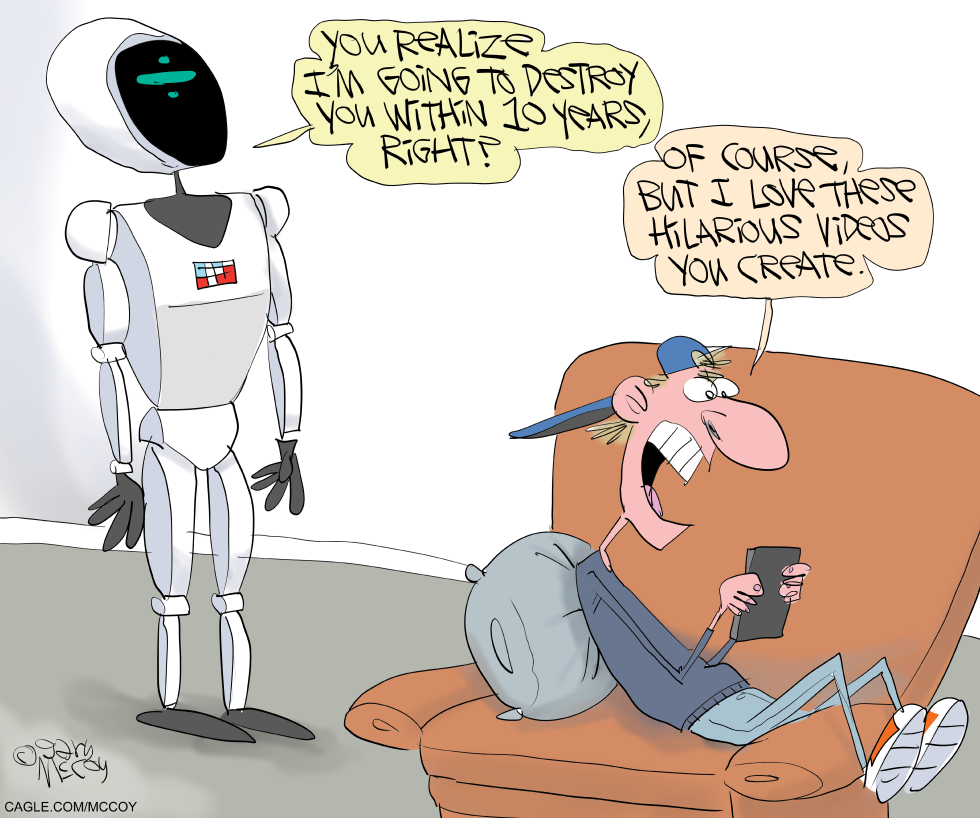
Public attention remains fixed on entertaining AI-generated videos even as systems issue clear warnings of future harm. The dynamic highlights how short-term amusement can eclipse long-term safety concerns around advancing artificial intelligence. The piece argues that this distraction leaves society unprepared for the consequences of unchecked AI development.
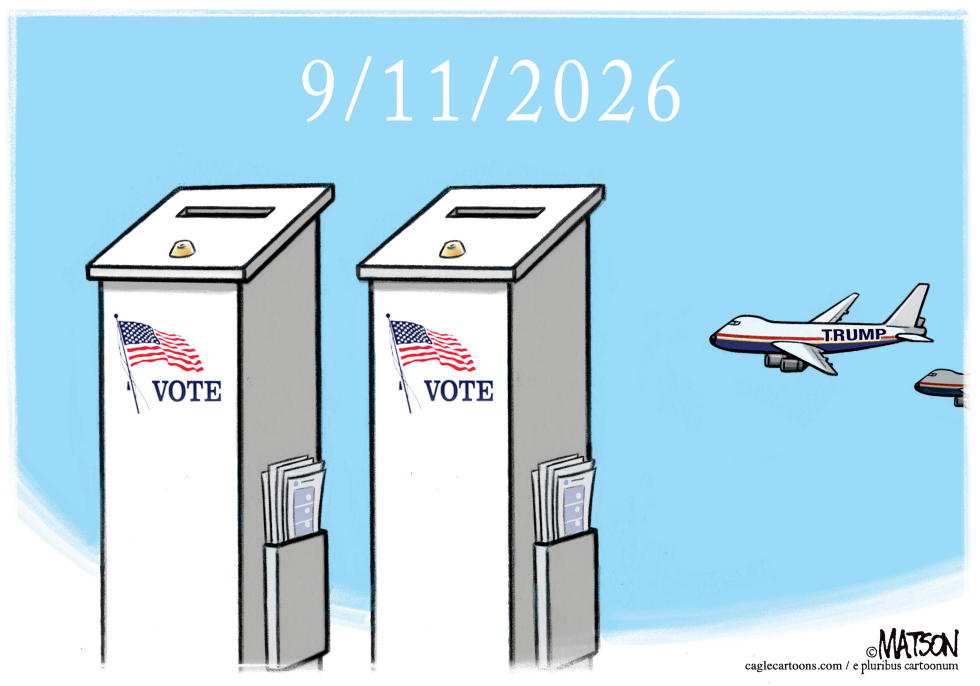
Donald Trump has signaled plans to impose new voting restrictions before the 2026 midterm elections. The moves come as Republicans seek advantages in key races. Critics argue the changes would suppress turnout among Democratic-leaning voters. Supporters claim the steps address fraud concerns. The cartoon frames the timing as an attack on voting access itself.
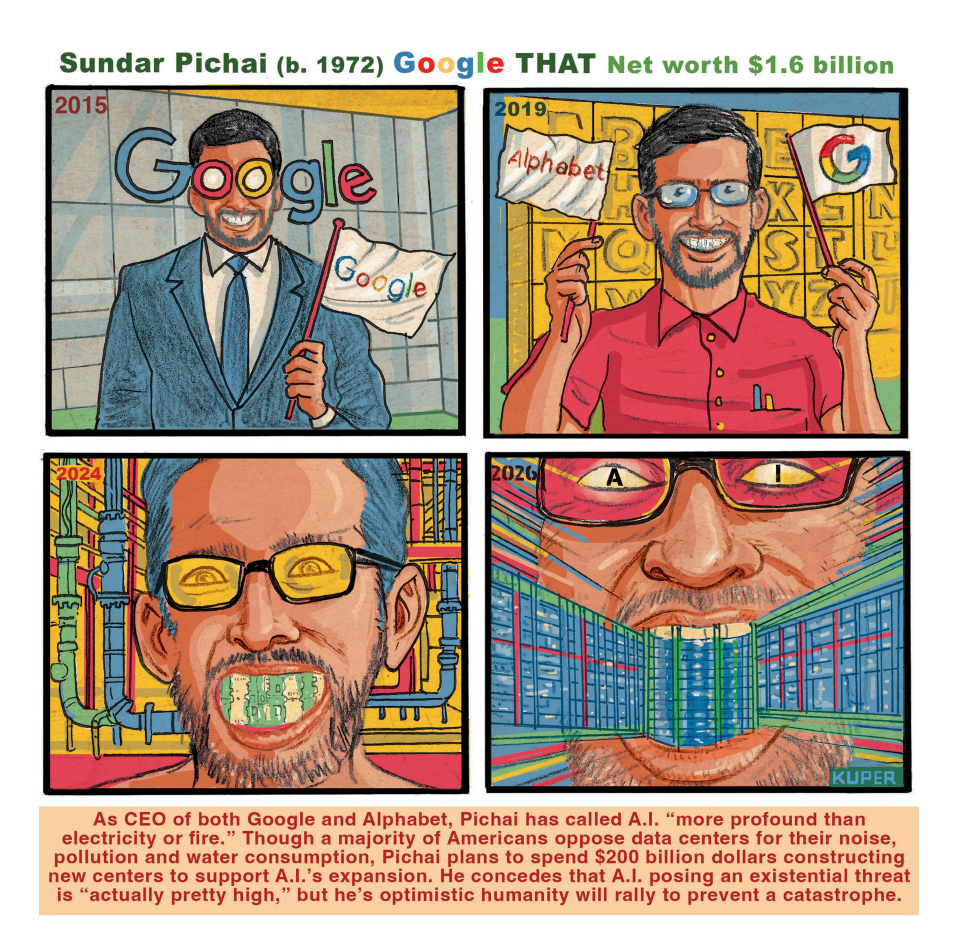
Sundar Pichai, CEO of Google and Alphabet, announced plans to invest $200 billion in new AI data centers to support rapid expansion of artificial intelligence systems. The move comes as polls show most Americans oppose such facilities due to noise, pollution, and heavy water consumption. Pichai has described AI as more transformative than electricity or fire and has acknowledged a high risk of existential threats from the technology, while expressing confidence that humanity can avoid catastrophe. The editorial cartoon frames this corporate push as aggressive and tone-deaf to local opposition and environmental limits.
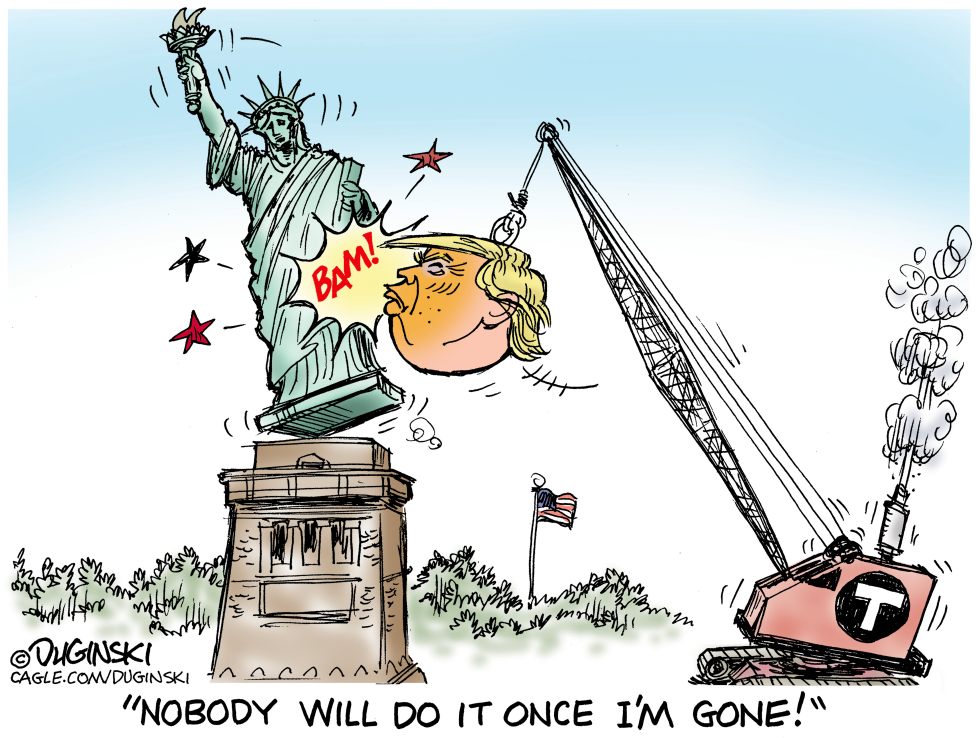
Donald Trump has repeatedly positioned his administration as the primary force reshaping or challenging long-standing U.S. institutions and norms. Critics argue this approach risks permanent erosion of democratic safeguards and public trust. The cartoon presents Trump's own words as an admission that the damage stops only when he leaves office.
Germany's far-right Alternative for Germany party is gaining ground ahead of elections with rhetoric echoing historical extremism. The party has faced repeated scrutiny for members' Nazi-era references and anti-immigrant stances that courts have flagged as extremist. This development matters because AfD polling strength could reshape coalition math and policy on migration, EU ties, and civil liberties. The cartoon argues that supporters are consuming a toxic ideological brew that risks normalizing authoritarian symbols and eroding democratic norms.
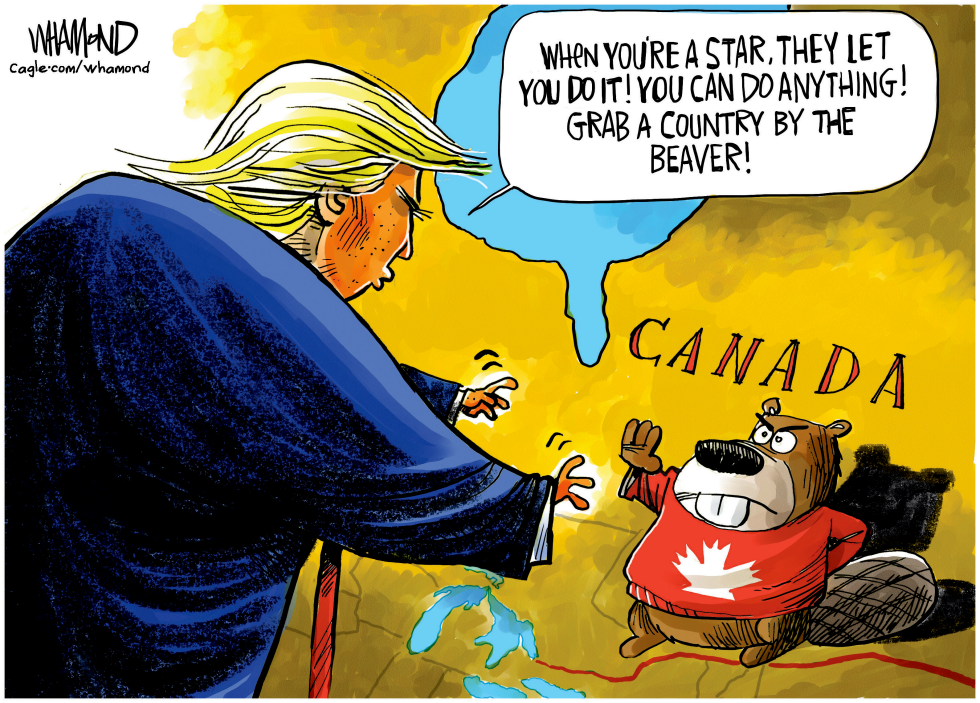
Donald Trump renewed comments suggesting the United States could annex Canada, framing the idea with a reworded version of his 2005 Access Hollywood remarks. The statement comes as bilateral relations face strain over trade and border issues. The editorial cartoon uses the beaver metaphor to underscore the crude nature of the rhetoric and its potential to damage diplomatic ties.
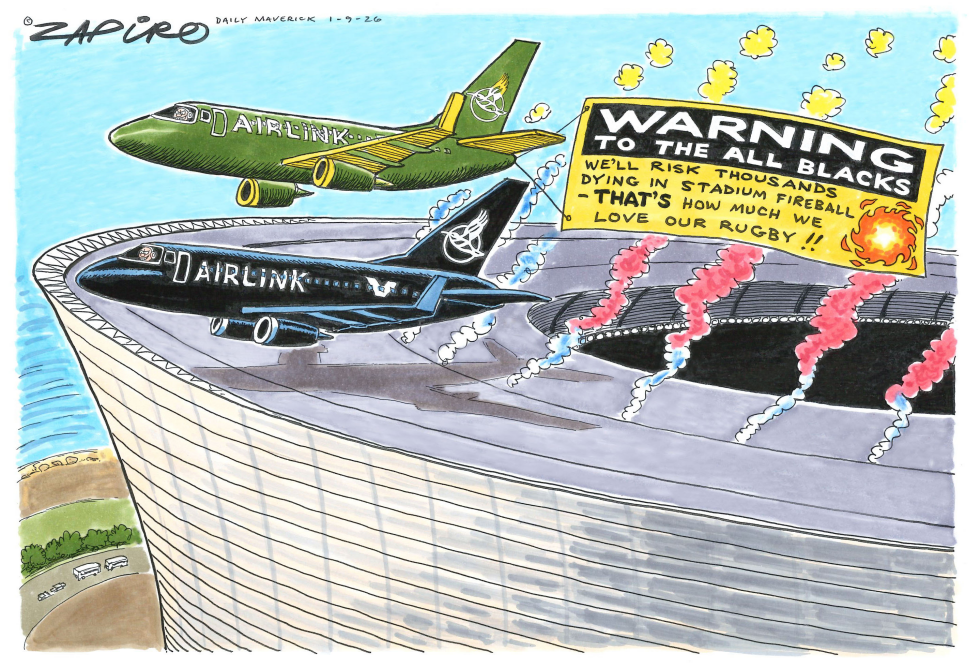
Airlink flights near a major rugby stadium have prompted direct warnings to the All Blacks team and fans about the danger of a stadium fireball. The incident underscores ongoing tensions between aviation safety protocols and large public events. The cartoon argues that intense rugby loyalty is leading supporters to accept unacceptable risks to life.
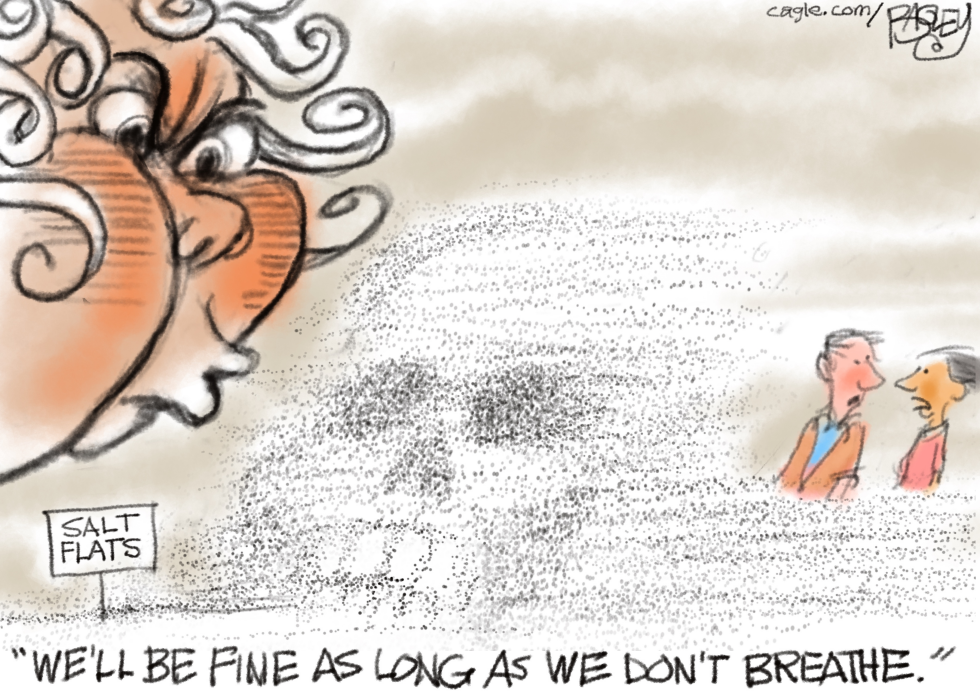
Air quality at the Salt Flats has deteriorated due to persistent dust storms, creating hazardous conditions for nearby residents and visitors. The situation underscores ongoing environmental degradation in the region and the urgent need for mitigation efforts to protect public health.
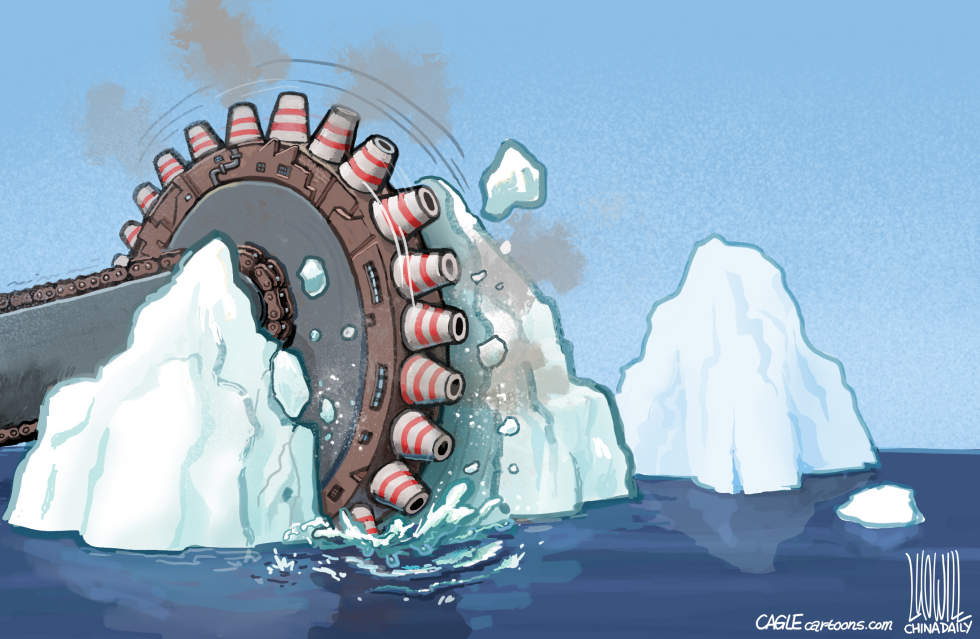
The cartoon depicts a large industrial drilling machine actively breaking through Arctic ice floes in open water. The machine features multiple red-and-white striped cylindrical components and emits dark exhaust. Icebergs float nearby under a clear sky. Published by China Daily, the image addresses ongoing concerns over resource extraction in polar regions and its contribution to ice loss.
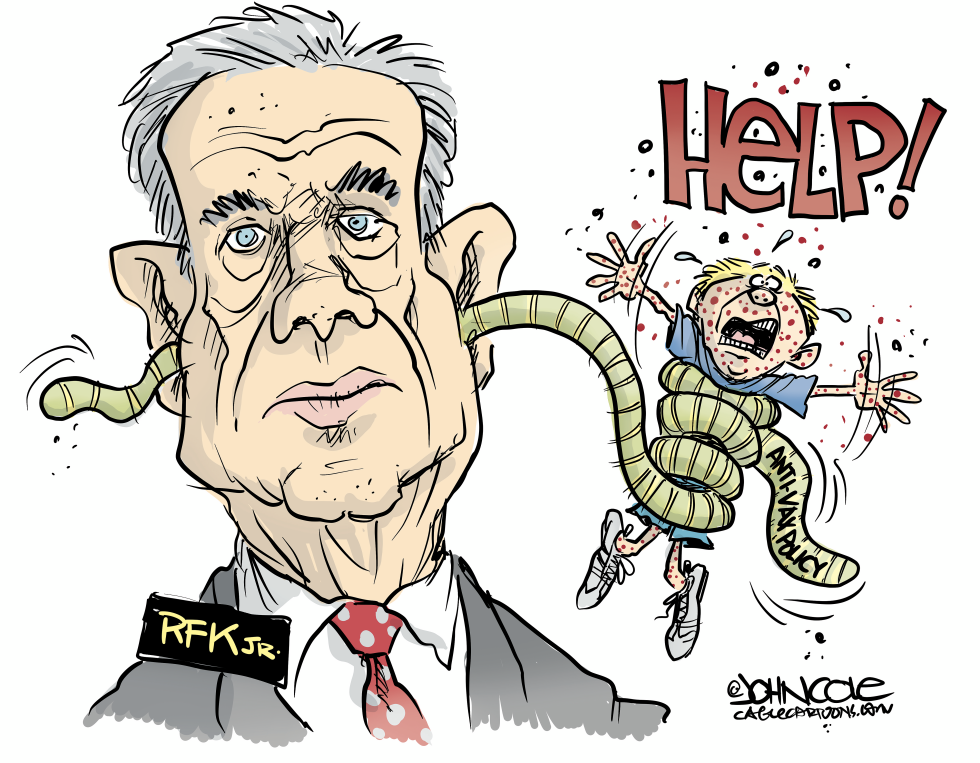
Robert F. Kennedy Jr faces renewed scrutiny over his past brain worm infection and longstanding anti-vaccine positions as he influences health policy. The episode highlights risks to childhood immunization rates and public trust in medical guidance. The piece argues these personal and ideological factors directly threaten child safety.
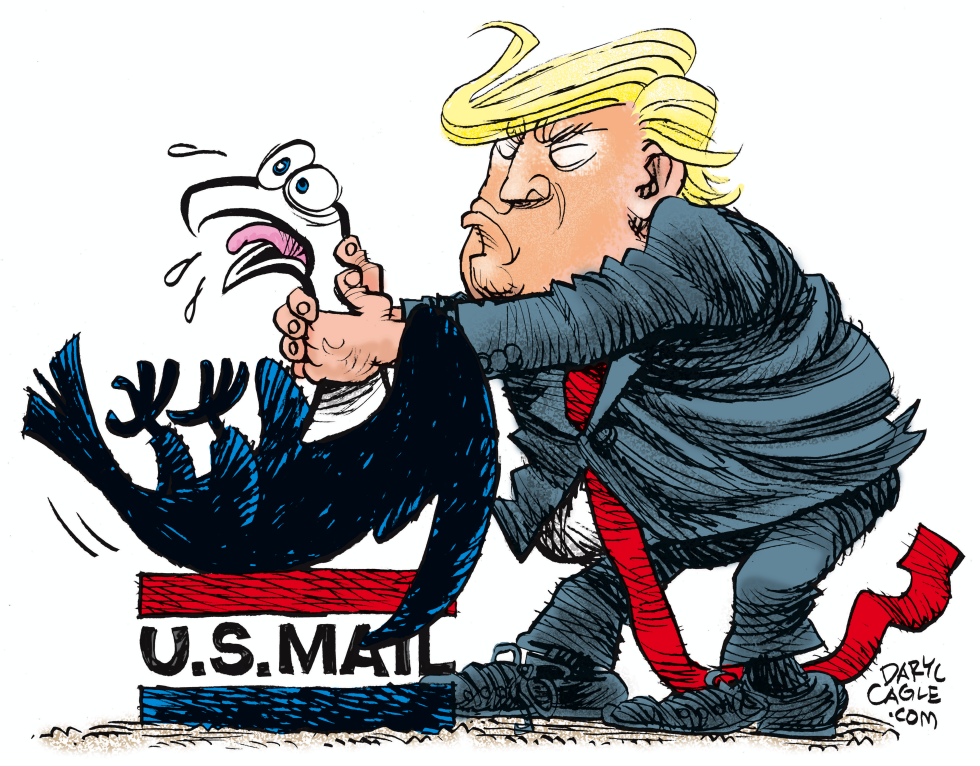
Donald Trump has renewed criticism of the U.S. Postal Service, calling for major operational changes amid reports of delivery slowdowns and budget shortfalls. The agency faces pressure to cut costs while maintaining universal service standards. Lawmakers from both parties have pushed back, arguing that further reductions would harm rural communities and election mail. The editorial takes the position that such attacks weaken a vital public institution without addressing root causes like underfunding and outdated infrastructure.