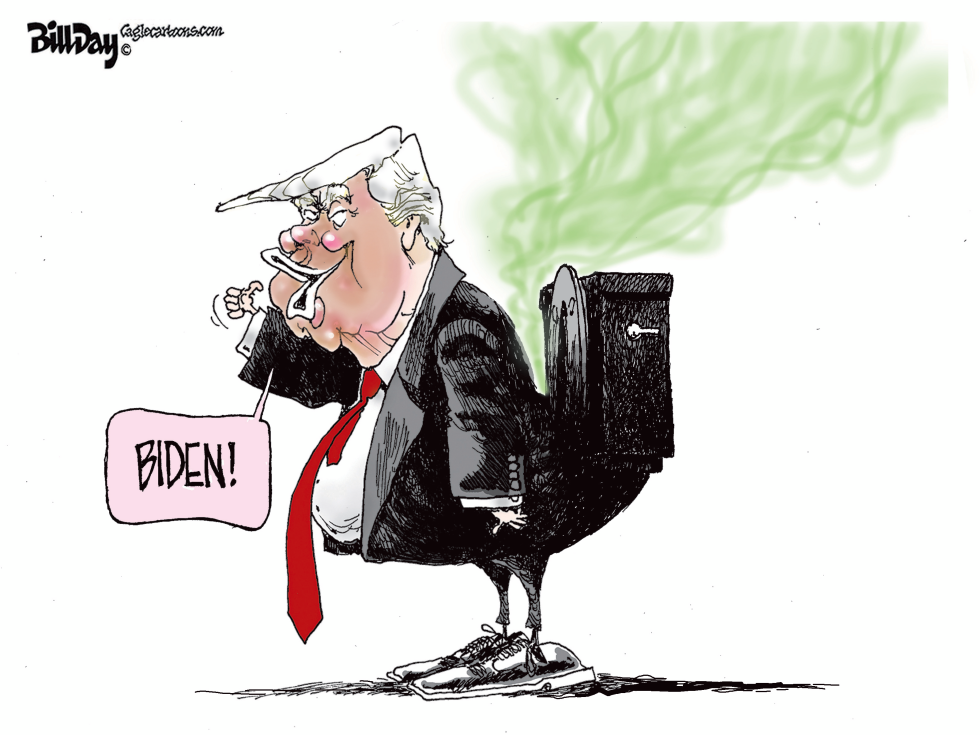
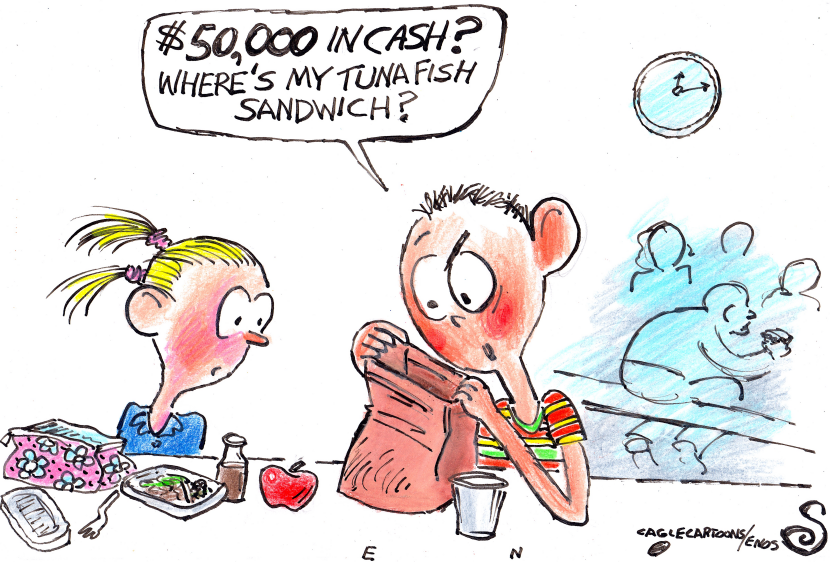
Donald Trump has repeatedly attributed policy shortcomings and political setbacks to his predecessor Joe Biden throughout 2026. This pattern continues a long-standing approach of shifting responsibility rather than addressing current challenges directly. The editorial position criticizes this tactic as evasive and unhelpful for resolving real governance problems.
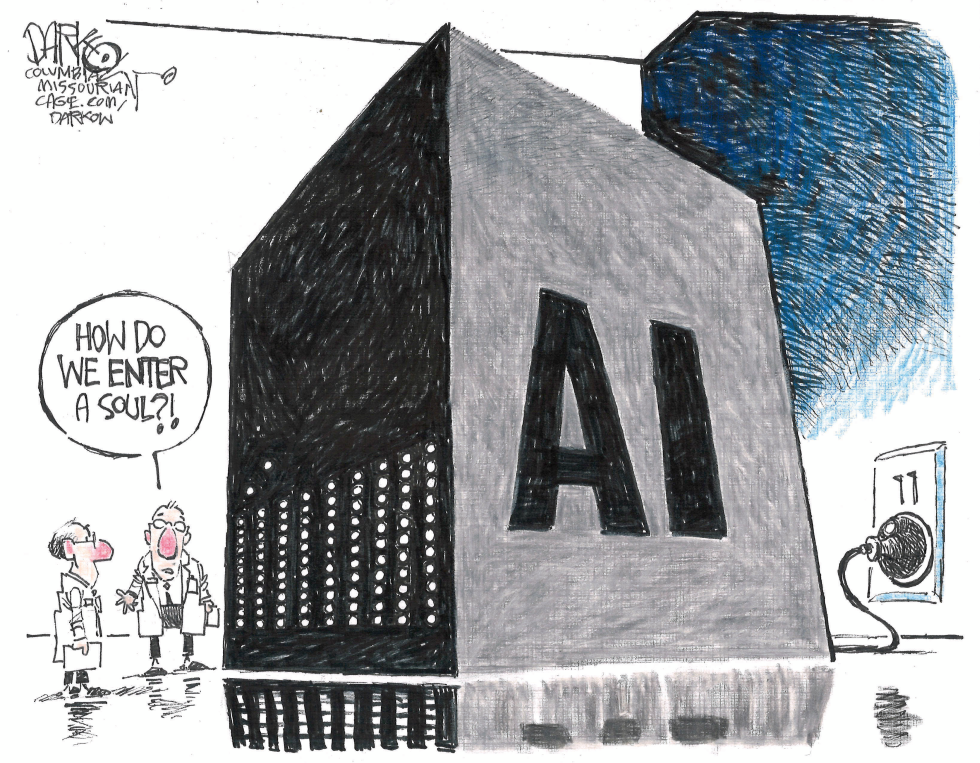
Developers continue racing to create advanced AI systems with greater capabilities. The core challenge remains embedding ethical judgment and moral reasoning into machines that process data at superhuman speed. Without that foundation, even the most powerful systems risk operating without regard for right and wrong. The cartoon highlights this persistent gap between technical achievement and ethical grounding.
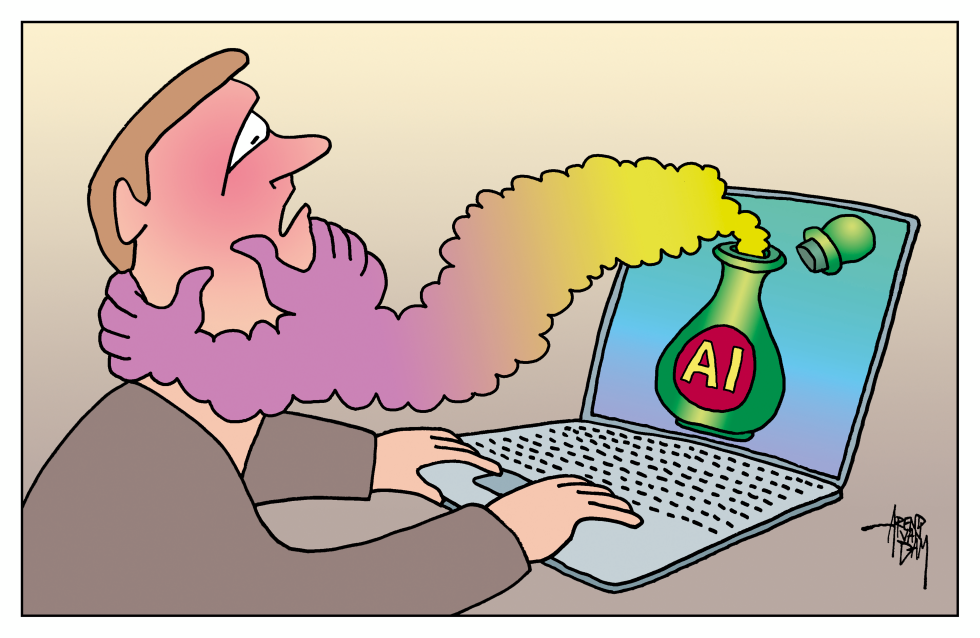
Artificial intelligence continues to advance rapidly in 2026, moving from contained software tools into broader daily interactions. Developers and users alike confront questions about control and unintended effects as AI systems grow more autonomous. The cartoon frames this development as an escape from the bottle, highlighting concerns that once-released capabilities cannot be easily contained or reversed.
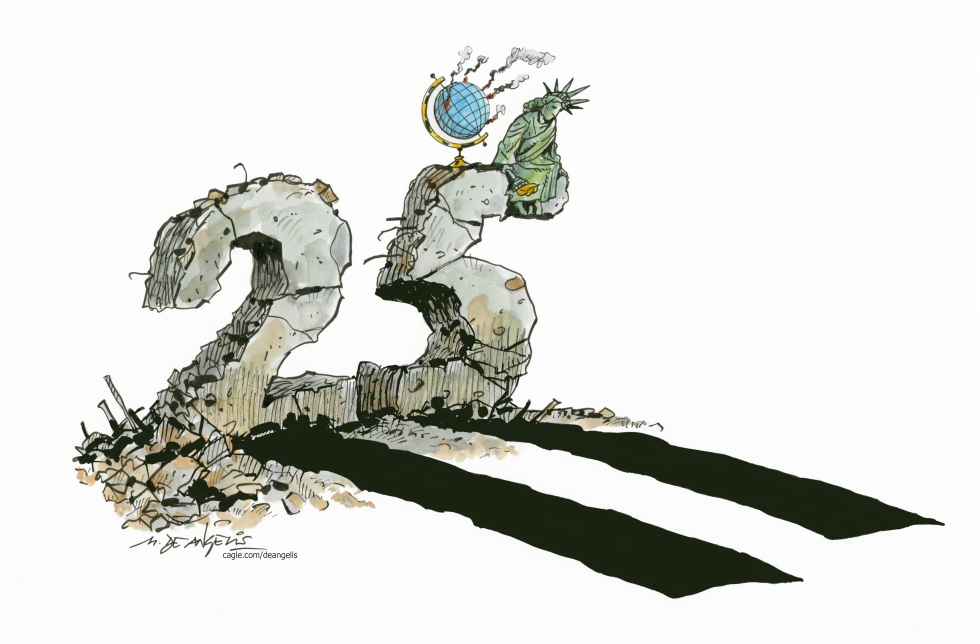
September 11, 2026 marks the 25th anniversary of the attacks that reshaped U.S. foreign policy and domestic security. The milestone arrives amid ongoing global conflicts, eroded alliances, and questions about whether the post-9/11 era delivered promised security. The cartoon frames the anniversary as a moment of visible strain on core American symbols and the broader international order they once anchored.
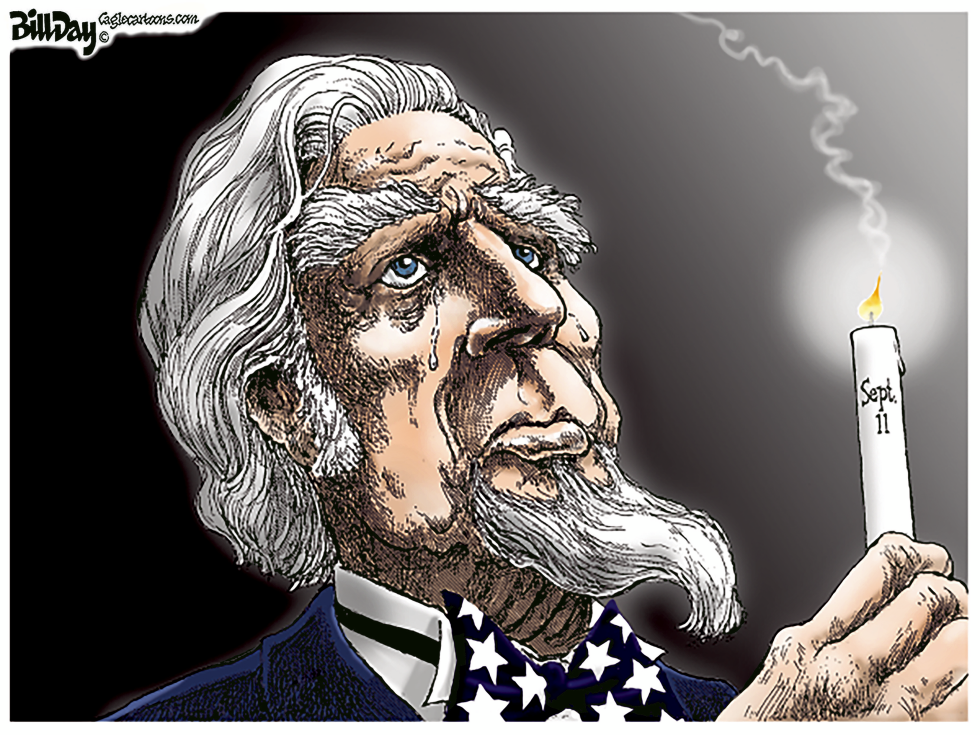
On the eve of the September 11 anniversary, Americans pause to remember the lives lost in the 2001 attacks. The annual observance continues to draw national attention as survivors, families, and officials gather at memorials across the country. The cartoon captures the enduring grief and patriotic resolve that mark the day each year.
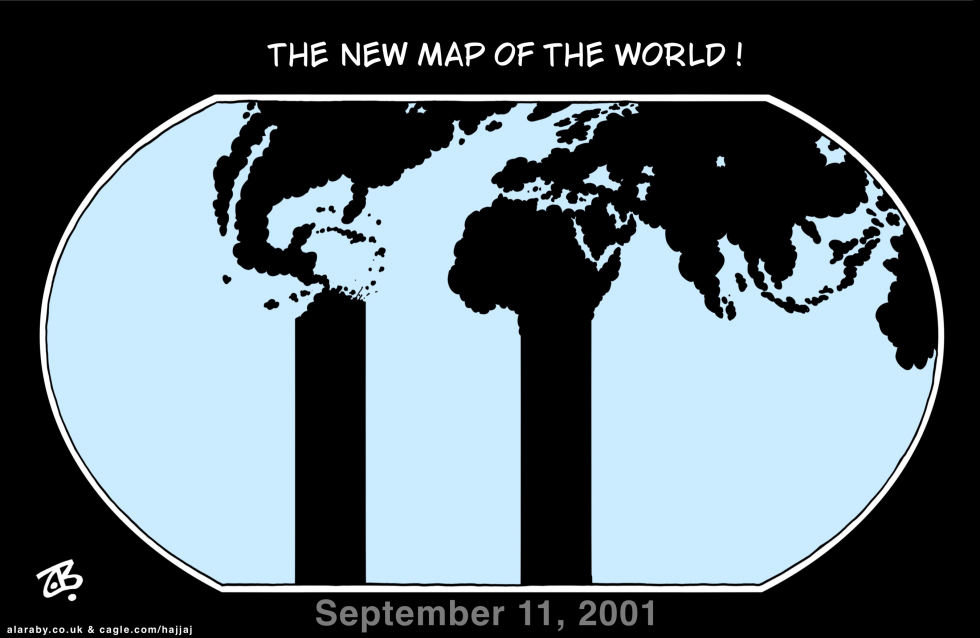
September 11, 2001, attacks on the World Trade Center and Pentagon killed nearly 3,000 people and triggered two decades of wars, surveillance expansions, and realignments in global alliances. The cartoon marks the anniversary by depicting the towers as continents emitting smoke, arguing that the event created an entirely new geopolitical order still felt today.
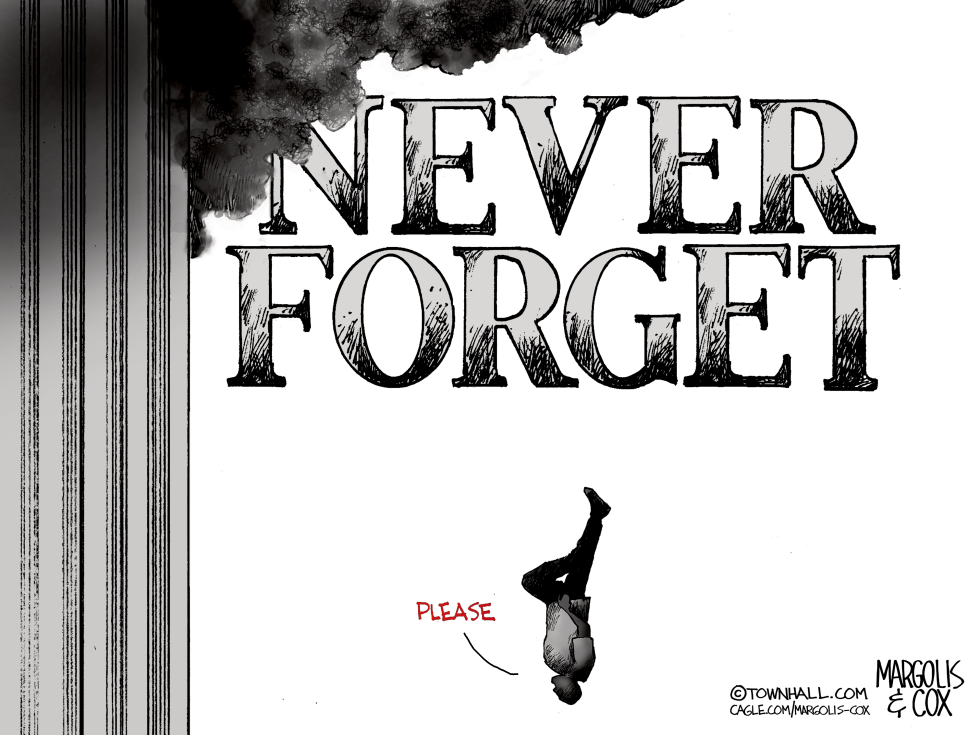
The 25th anniversary of the September 11, 2001 attacks arrives on September 11, 2026. Families and survivors continue to mark the loss of nearly 3,000 people at the World Trade Center, Pentagon and Flight 93. The milestone renews calls to remember the victims and the day's impact on national security and foreign policy. The cartoon underscores the enduring human tragedy through its central image of a falling figure.
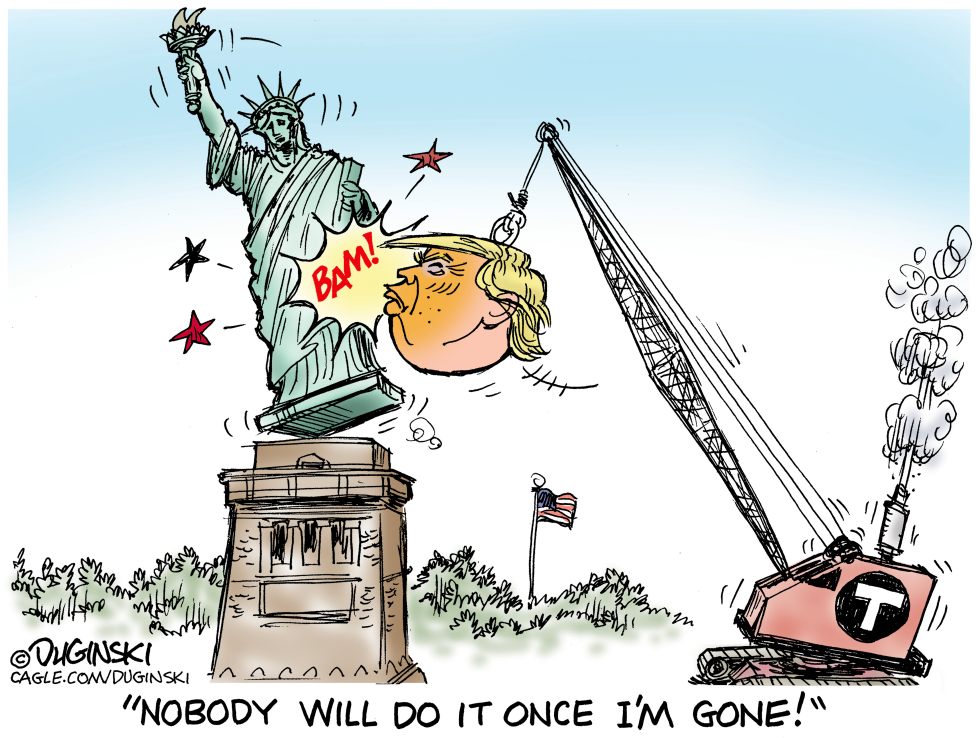
Donald Trump has repeatedly positioned his administration as the primary force reshaping or challenging long-standing U.S. institutions and norms. Critics argue this approach risks permanent erosion of democratic safeguards and public trust. The cartoon presents Trump's own words as an admission that the damage stops only when he leaves office.
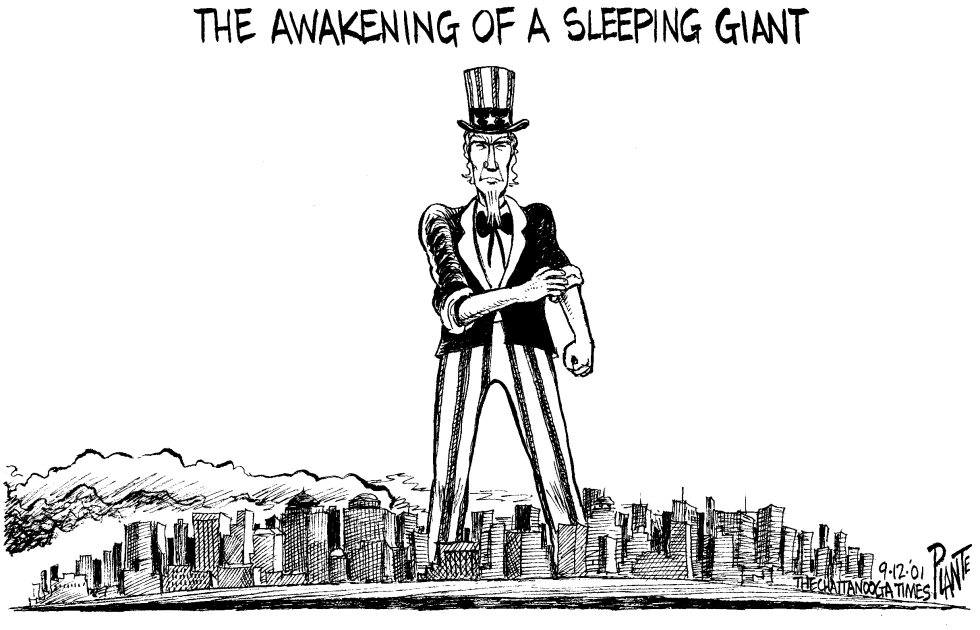
On September 11, 2001, al-Qaeda terrorists flew planes into the World Trade Center and the Pentagon, killing nearly 3,000 people. The attacks prompted an immediate national mobilization and the launch of the war on terror. The cartoon frames the United States as a sleeping giant now roused to action, reflecting the widespread view that the country would respond with unified strength and resolve.
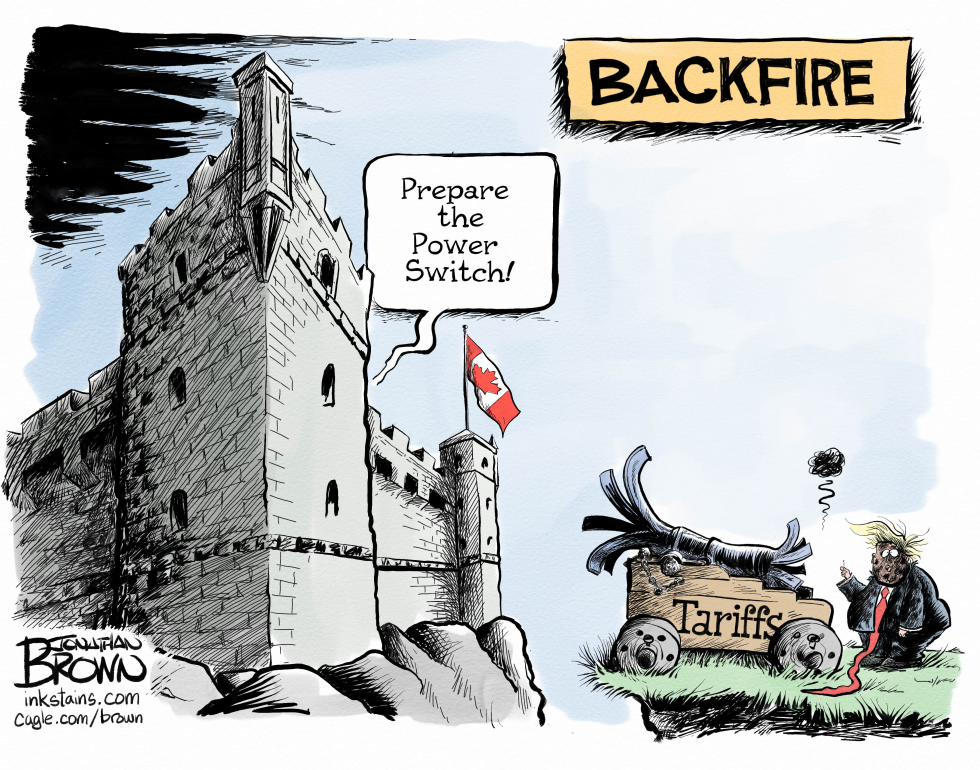
The cartoon shows a Canadian castle flying its flag while a cannon labeled Tariffs explodes backward toward a figure resembling Donald Trump. The scene responds to ongoing trade tensions where U.S. tariffs on Canadian goods prompted retaliatory measures. The visual emphasizes the policy rebounding on its originator rather than achieving intended pressure.
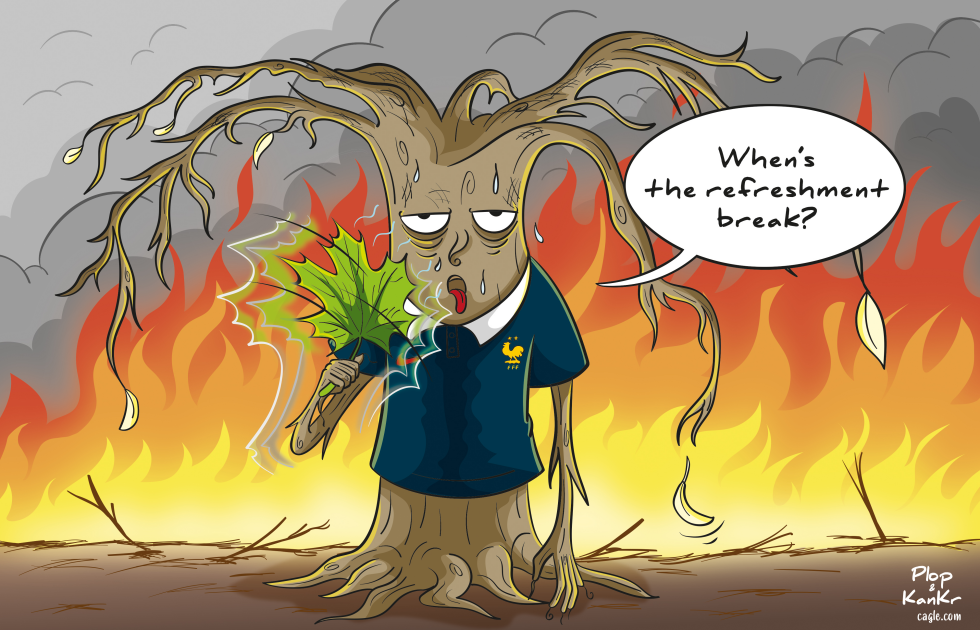
A tree figure dressed in a French national football jersey stands engulfed in flames while holding a smoking maple leaf. The figure sweats heavily and asks in a speech bubble when the refreshment break will occur. The scene uses fire and withered branches to depict environmental stress on a sports-themed character.
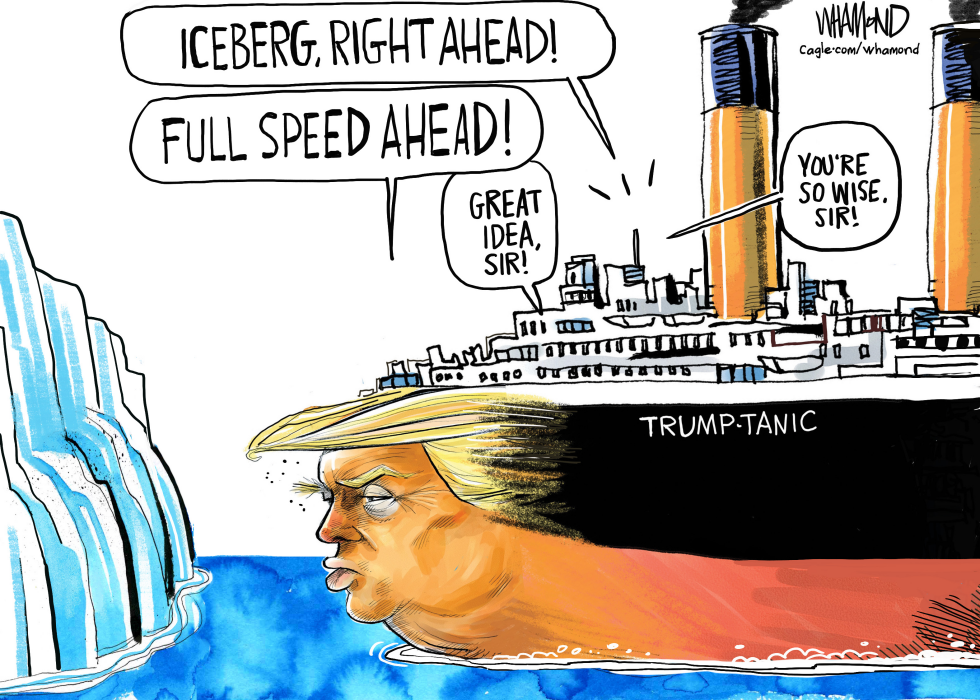
Donald Trump faces mounting leadership challenges in 2026 as critics warn his administration is steering the country toward avoidable crises. The piece portrays him ignoring clear warnings while surrounded by flatterers. It argues that such dynamics risk major political and policy damage.
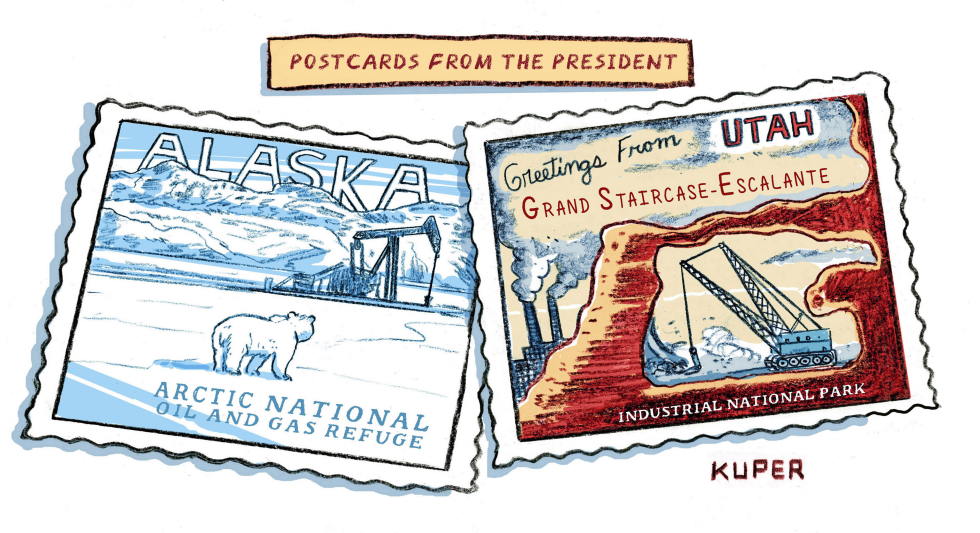
The president has advanced policies opening Arctic National Wildlife Refuge and Grand Staircase-Escalante to expanded oil and gas development. These moves prioritize domestic energy production over prior conservation designations. The editorial uses postcard imagery to critique the transformation of protected lands into industrial zones, arguing that short-term extraction gains undermine long-term environmental protections and public lands legacy.
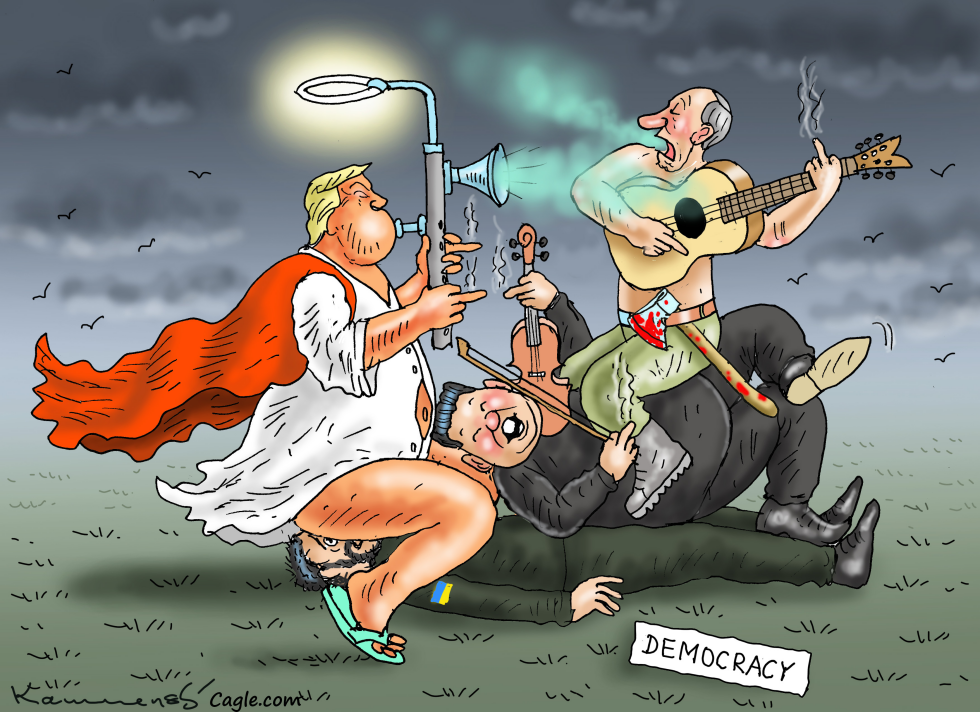
On August 21, 2026, the ongoing Ukraine conflict continued with no resolution in sight as U.S., Russian and Ukrainian leaders remained locked in diplomatic friction. The cartoon responds by depicting the three men as musicians whose finger-pointing and instruments create discord rather than harmony, underscoring the editorial view that personal posturing has overtaken substantive progress toward peace.
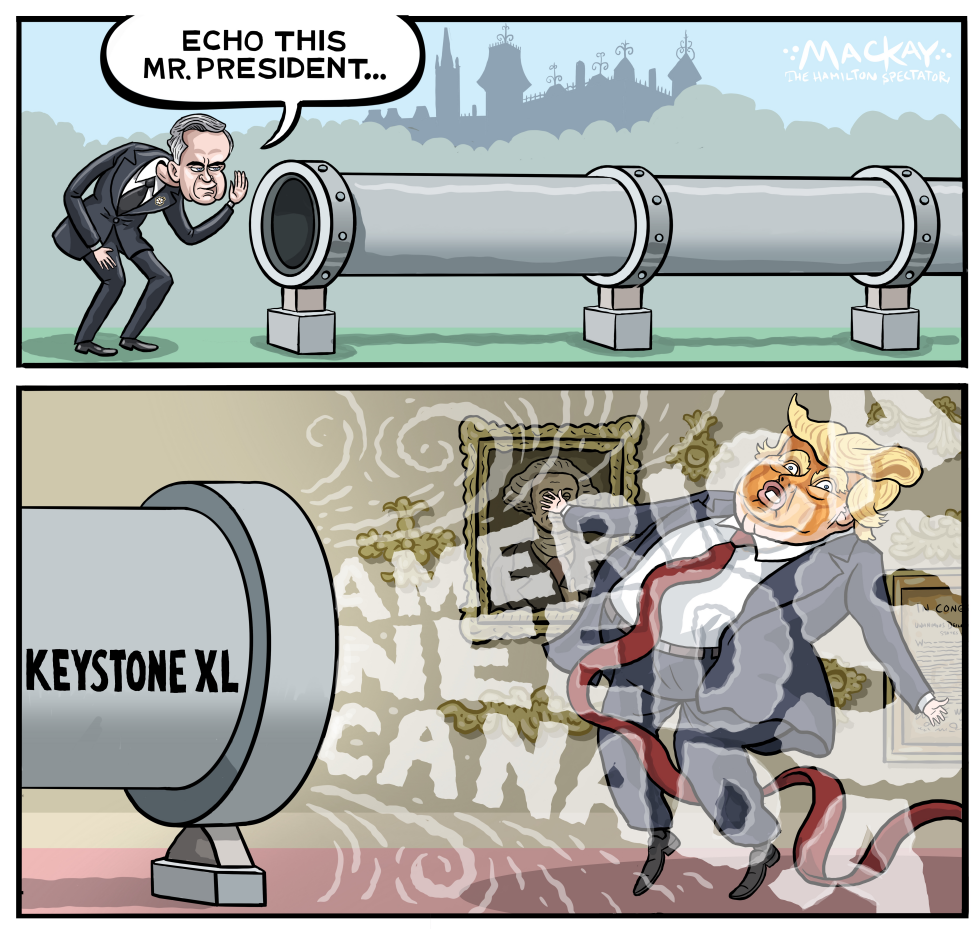
The Keystone XL pipeline project faces renewed scrutiny in 2026 as echoes of prior administration policies surface in energy and trade discussions. Officials reference past directives on cross border infrastructure while current stakeholders weigh environmental and economic impacts. The piece argues that the project continues to reflect lingering influence from earlier presidential priorities on fossil fuel development and international relations.