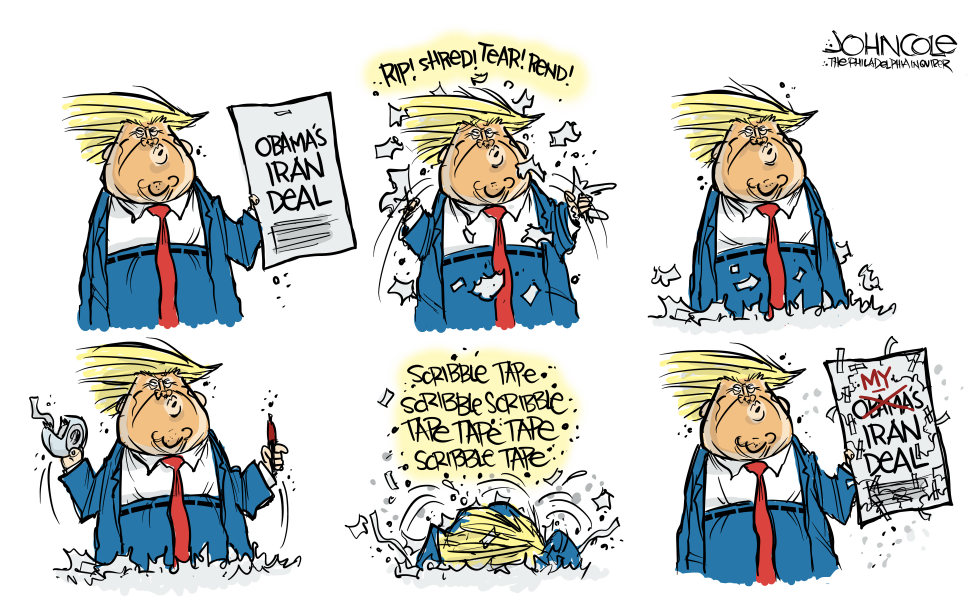
Cole depicts Donald Trump dramatically tearing up the Iran deal only to hastily tape it back together, satirizing his pattern of theatrical destruction followed by quiet reversal. The cartoon references Trump's JCPOA withdrawal and subsequent Iran negotiations. The tape-and-rip cycle captures the chaotic continuity of Trump's foreign policy.
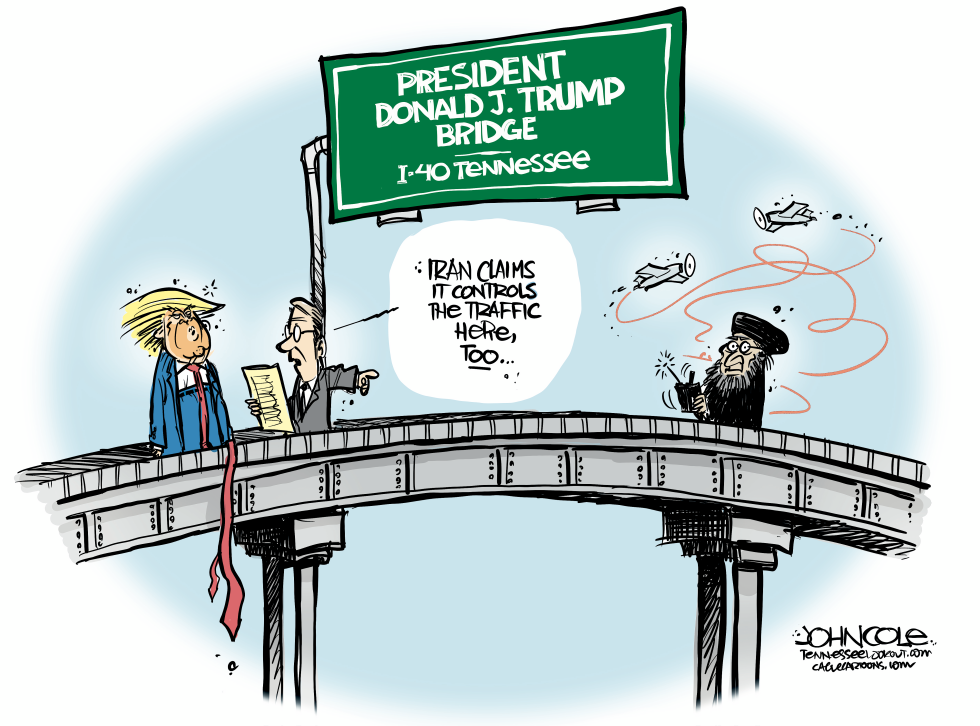
President Donald J. Trump attended the naming of the President Donald J. Trump Bridge on I-40 in Tennessee. The event drew attention when an Iranian figure appeared to claim control over traffic on the span. The development highlights ongoing tensions with Iran over shipping lanes and international routes. The cartoon frames the claim as an extension of Iran's broader pattern of asserting dominance over key passages. It positions the bridge naming as a domestic moment overshadowed by foreign threats.
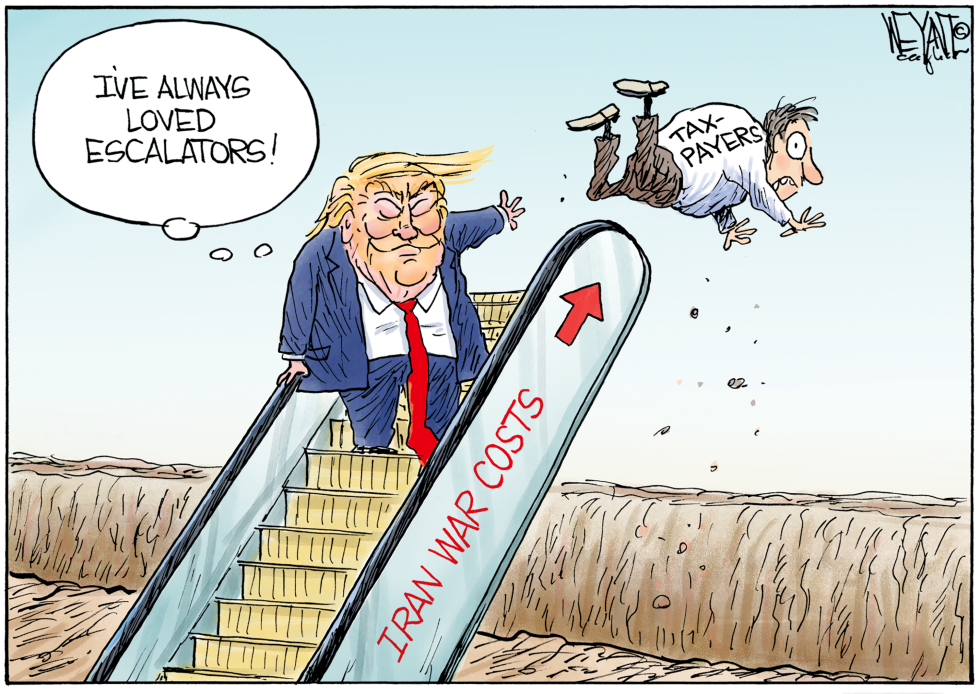
President Trump has indicated steps toward heightened U.S. military involvement with Iran, prompting fresh debate over the financial toll on American taxpayers. The move comes amid ongoing regional instability in the Middle East and questions about defense budget priorities. The piece argues that such policies place undue strain on domestic resources without sufficient justification.
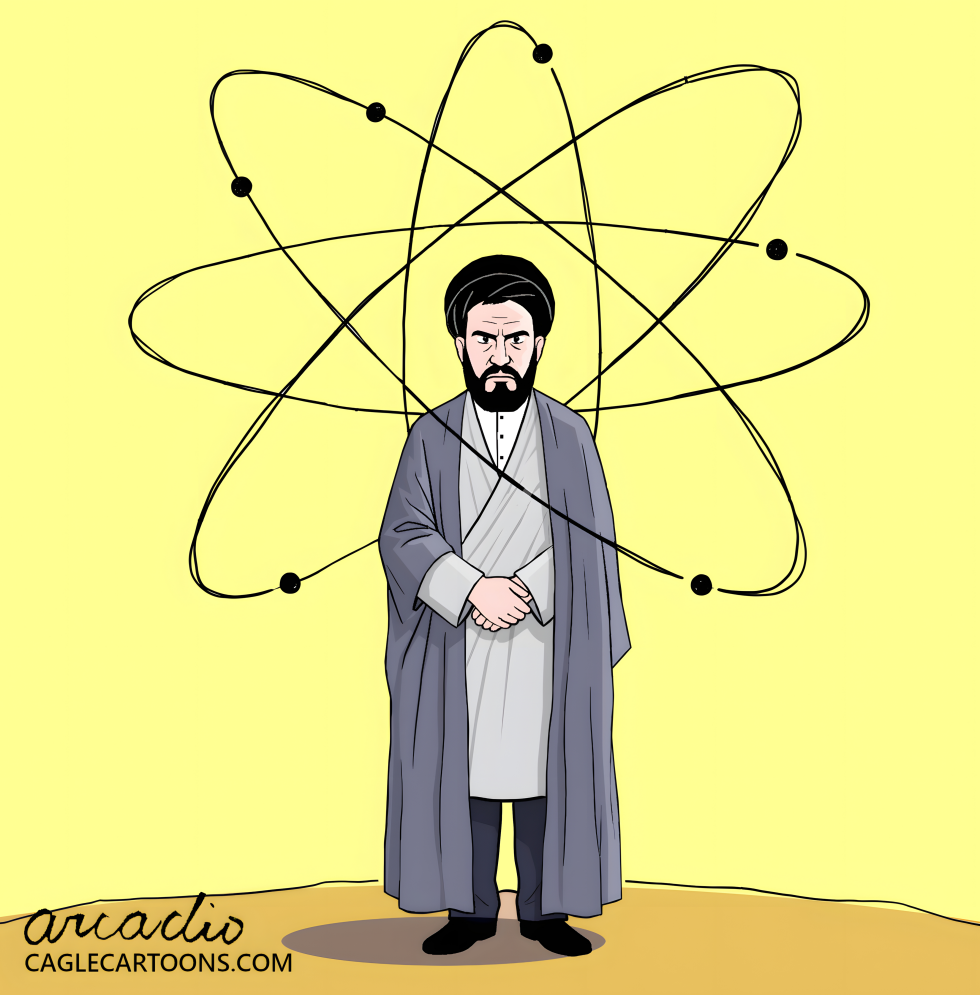
The cartoon shows Iran's supreme leader positioned in front of a large atom symbol. It responds to persistent international concerns over Tehran's nuclear activities as of mid-2026. The visual places the figure directly under the orbiting electrons, underscoring the central role of the nuclear issue in global discussions about the country.
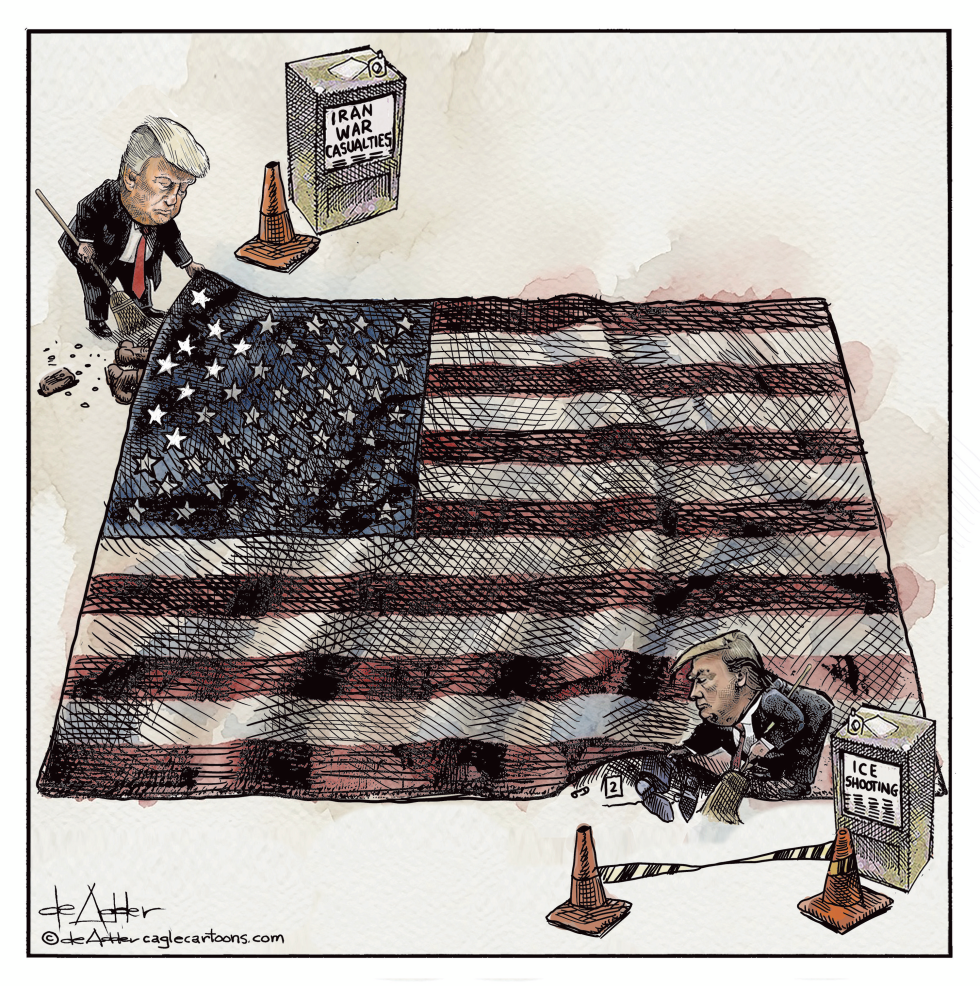
Donald Trump faces scrutiny over reported casualties from potential Iran conflict and an ICE-related shooting incident in mid-2026. The administration's handling of these events draws criticism for downplaying accountability. The piece argues that attempts to minimize these issues undermine public trust in governance.
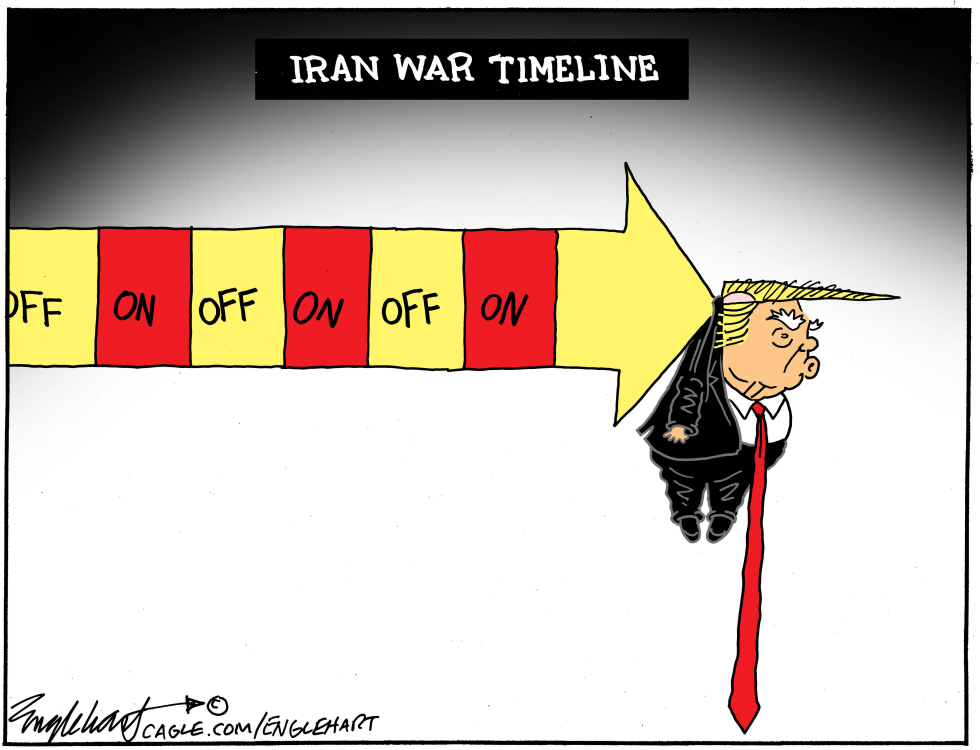
Donald Trump has repeatedly signaled shifting positions on potential military action against Iran in recent months. The timeline of statements shows repeated reversals between confrontation and restraint. Observers note the pattern raises questions about consistency in U.S. foreign policy toward Tehran. The piece portrays the back-and-forth as an erratic sequence with the latest signal pointing toward engagement.
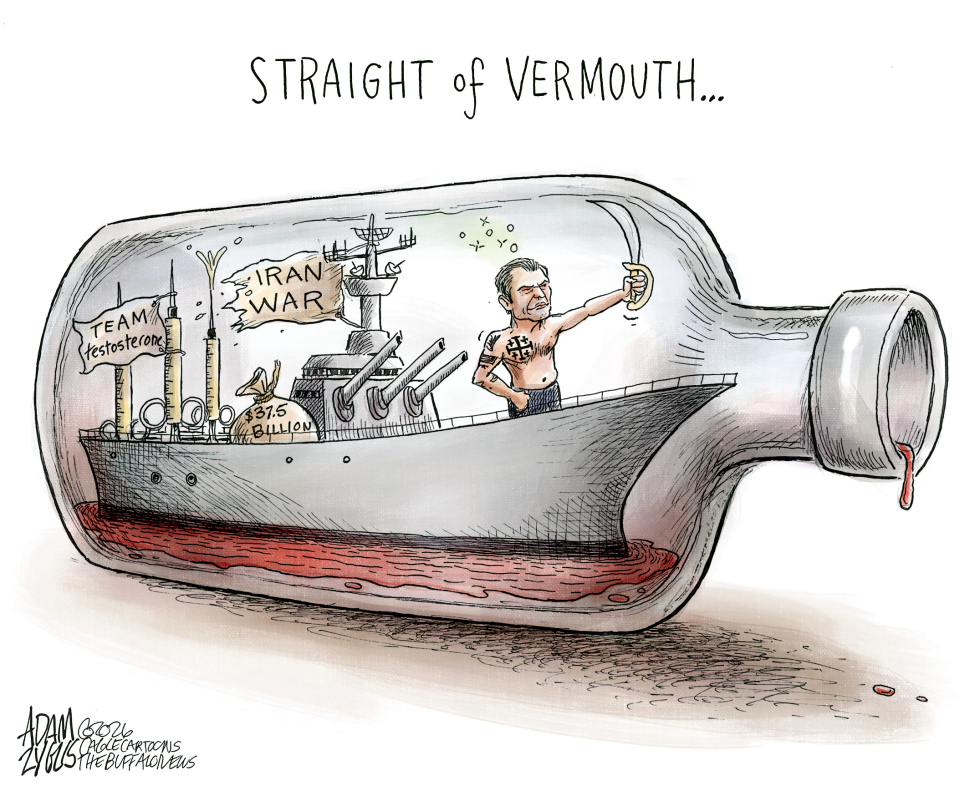
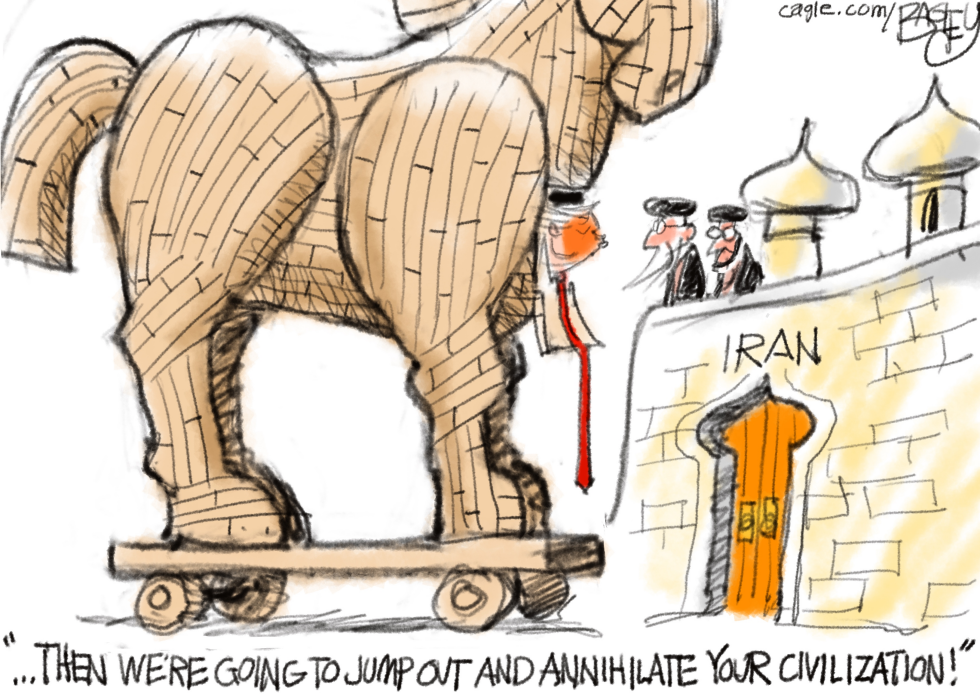
A Republican-led initiative deploys a deceptive approach toward Iran, with a prominent figure positioned to lead an abrupt escalation. The move raises questions about long-term regional stability and the reliability of stated intentions. The piece portrays the effort as a concealed threat rather than genuine diplomacy.
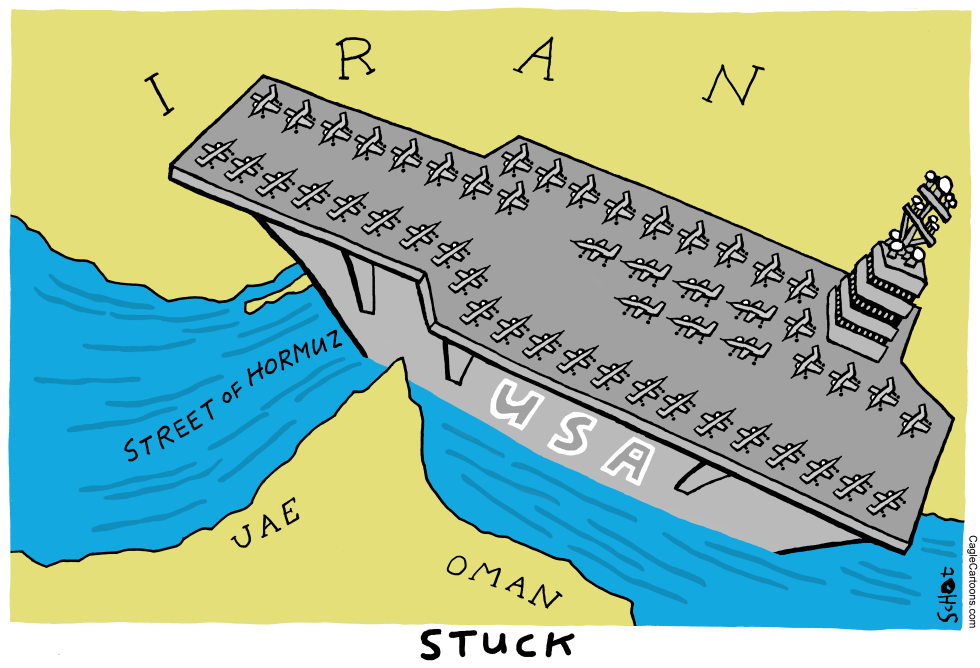
Tensions persist in the Strait of Hormuz where US naval forces maintain a presence amid ongoing disputes with Iran over shipping access and regional influence. The narrow waterway remains a critical chokepoint for global oil transit between the Persian Gulf and open seas. No single triggering incident stands out in the days before July 22 2026 yet the strategic standoff continues. The cartoon frames the US carrier as physically immobilized by the surrounding geography and neighboring states.
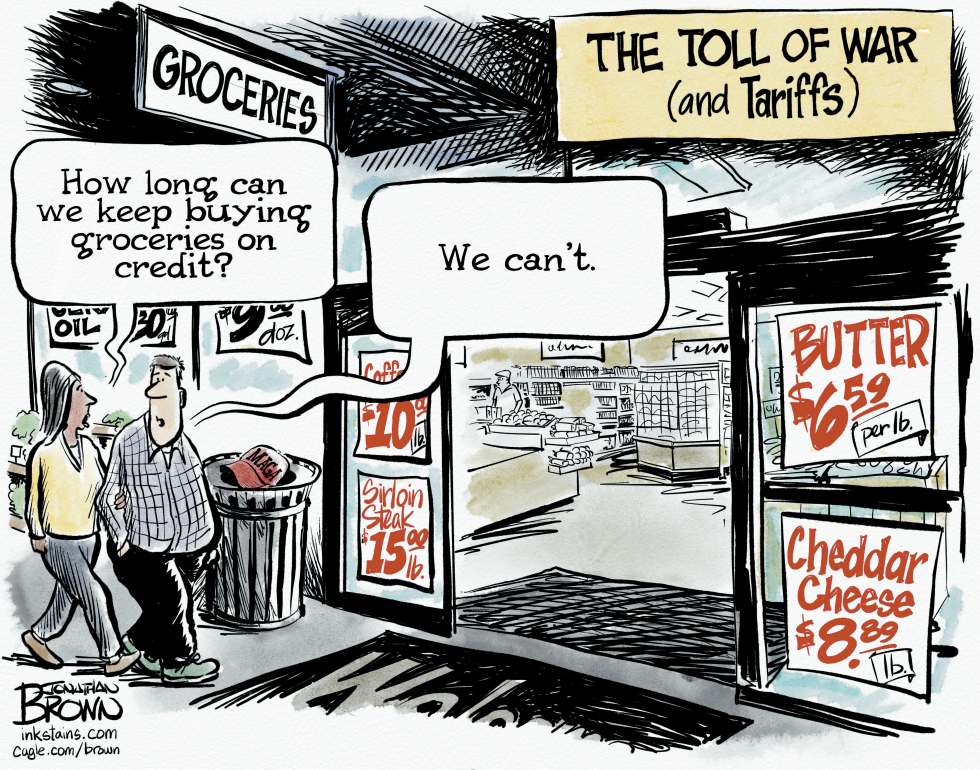
A political cartoon depicts a couple leaving a grocery store after learning they cannot continue buying food on credit. Signs inside show sharply higher prices for butter at $6.59 per pound, cheddar cheese at $8.89 per pound and sirloin steak at $15 per pound. A banner overhead reads The Toll of War (and Tariffs). The scene illustrates how ongoing conflict and trade barriers have driven up everyday food costs leaving households to rely on credit that is no longer sustainable.
President Trump has asserted that the United States is prevailing in its confrontation with Iran even as naval assets suffer losses. The claim comes amid reports of escalating maritime engagements in the region. The development raises questions about the direction and cost of the conflict. The editorial takes the position that the optimistic assessment clashes with visible setbacks and the broader risks of deeper involvement.