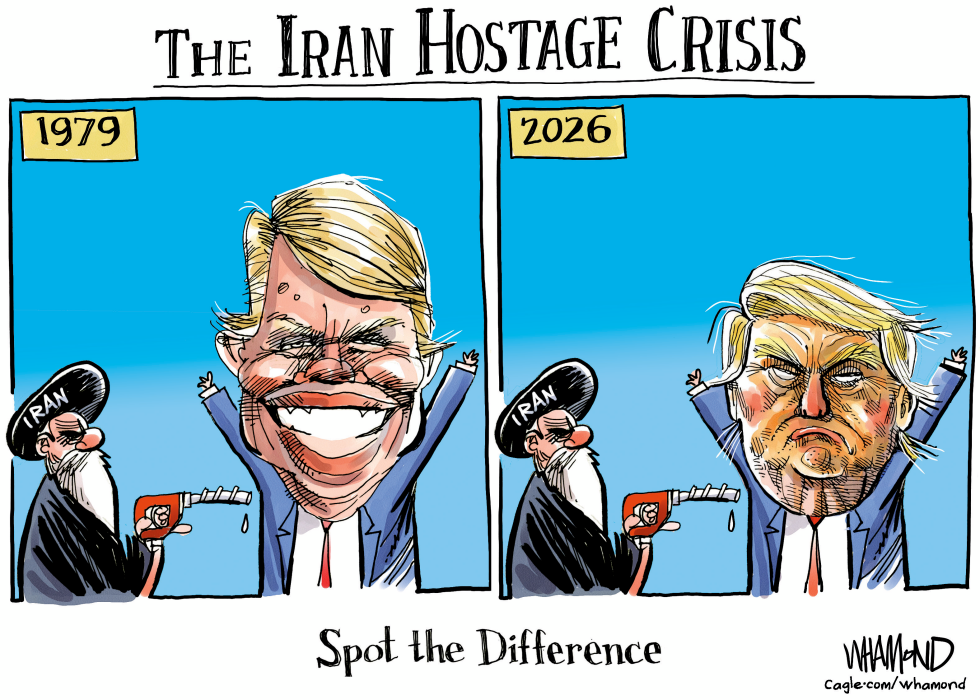
The cartoon splits the Iran Hostage Crisis into 1979 and 2026 panels. In the first Trump appears elated while an Iran-labeled figure holds a gas pump. In the second Trump looks distressed with the same figure present. The piece uses the visual contrast to comment on how Iran-related pressures affect US political figures differently over time.
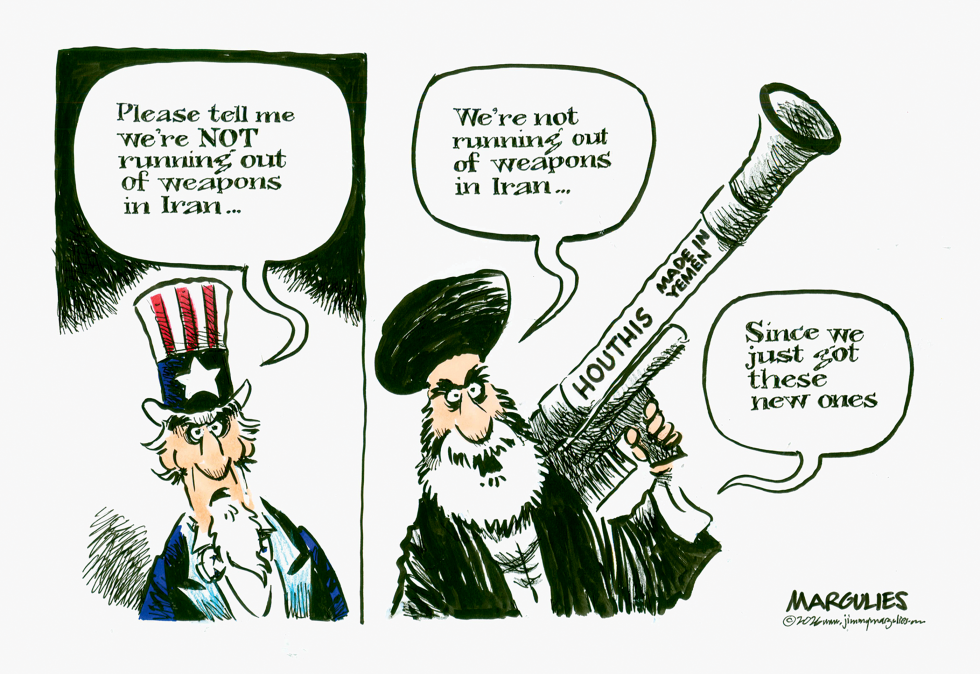
Reports indicate Houthi forces in Yemen have begun supplying missiles to Iran, addressing potential shortages in Iranian stockpiles. The development raises questions about regional arms flows and US policy responses in the Middle East. The cartoon highlights American concerns over whether Iran is truly facing weapons deficits, given the influx of Houthi-provided arms from Yemen. It portrays the situation as undermining claims of Iranian vulnerability while underscoring ongoing tensions in proxy dynamics.
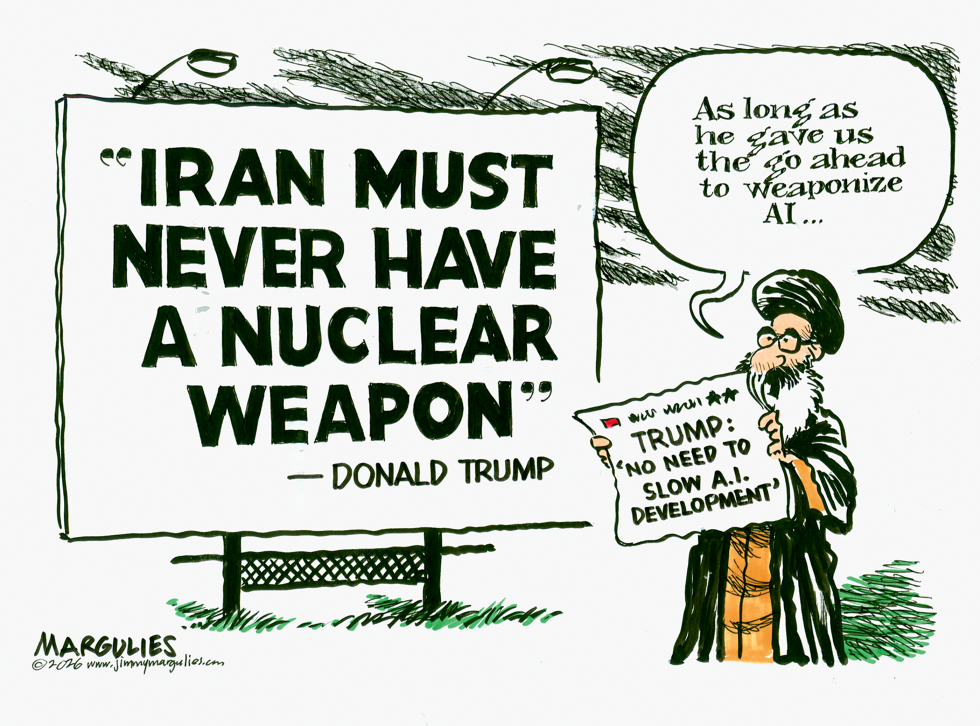
Donald Trump has repeatedly stated that Iran must never obtain a nuclear weapon, a position rooted in long-standing U.S. efforts to prevent nuclear proliferation in the Middle East. At the same time, reports indicate interest in accelerating artificial intelligence development without slowdowns. The cartoon responds to this apparent tension by depicting an Iranian leader conditioning acceptance of the nuclear restriction on permission to pursue AI weaponization. It argues that prioritizing rapid AI advancement risks undermining nonproliferation goals and hands strategic advantages to adversaries.
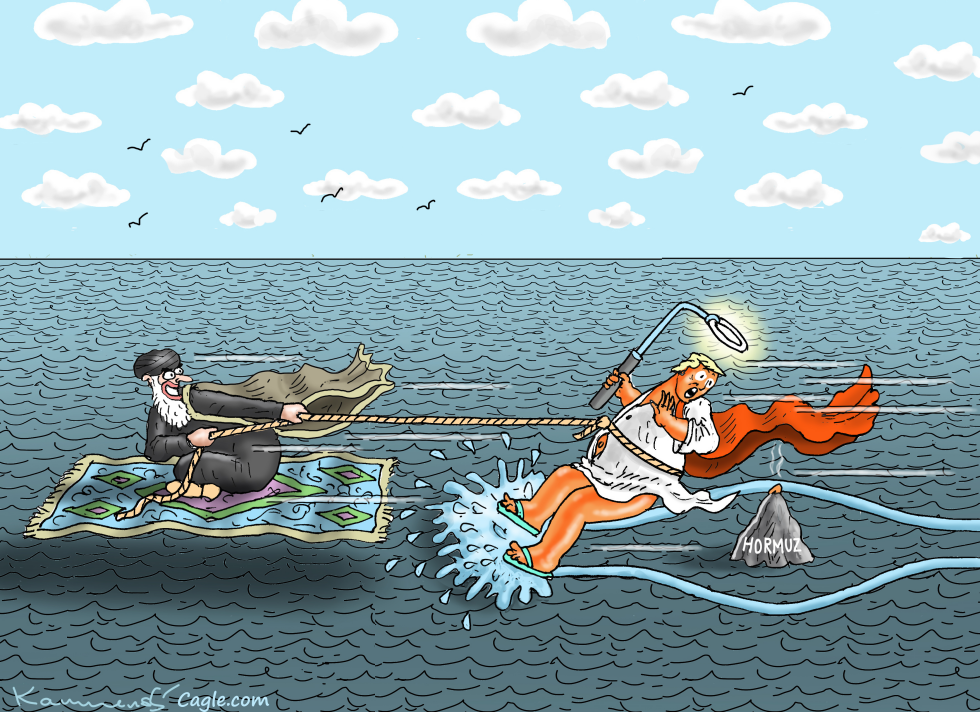
Tensions in the Strait of Hormuz have escalated with threats to shipping lanes critical for global oil supplies. Israeli and U.S. leaders face mounting losses from disruptions. The cartoon argues that involvement risks dragging both into deeper conflict without clear gains.
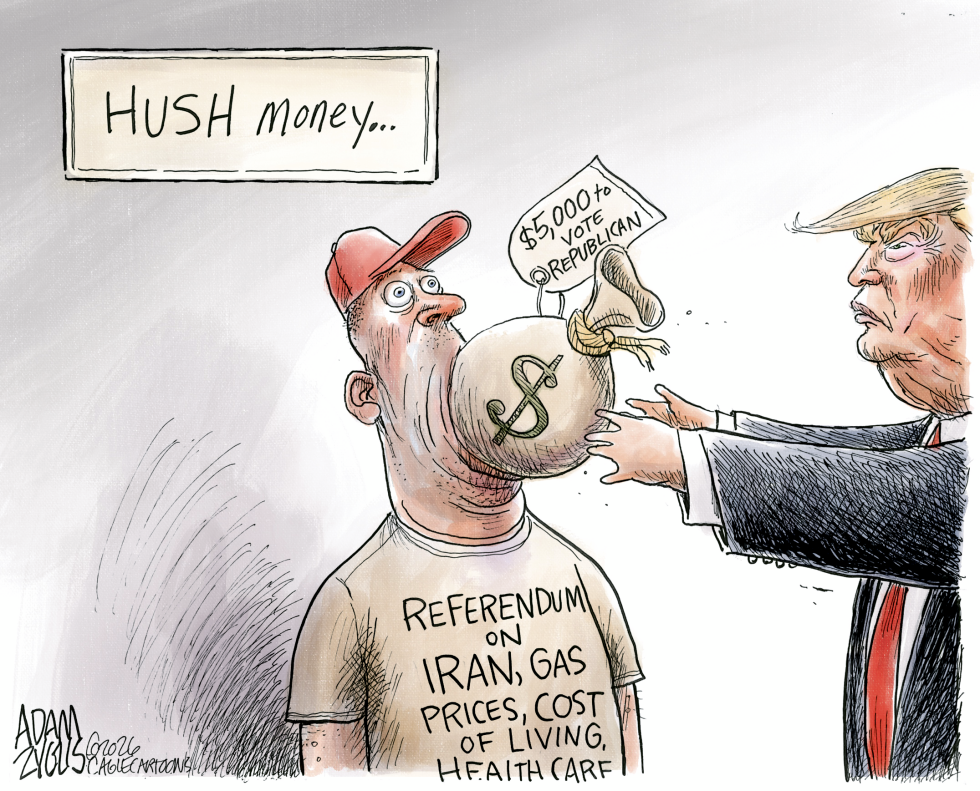
The cartoon shows Donald Trump handing a large bag of cash labeled as hush money to a man in a referendum shirt covering Iran, gas prices, cost of living and health care. A tag on the bag promises $5,000 to vote Republican. The scene responds to ongoing debates over election integrity and foreign policy issues involving Iran as of September 2026. It uses the visual metaphor of a bribe to comment on alleged attempts to influence voter priorities through financial incentives.
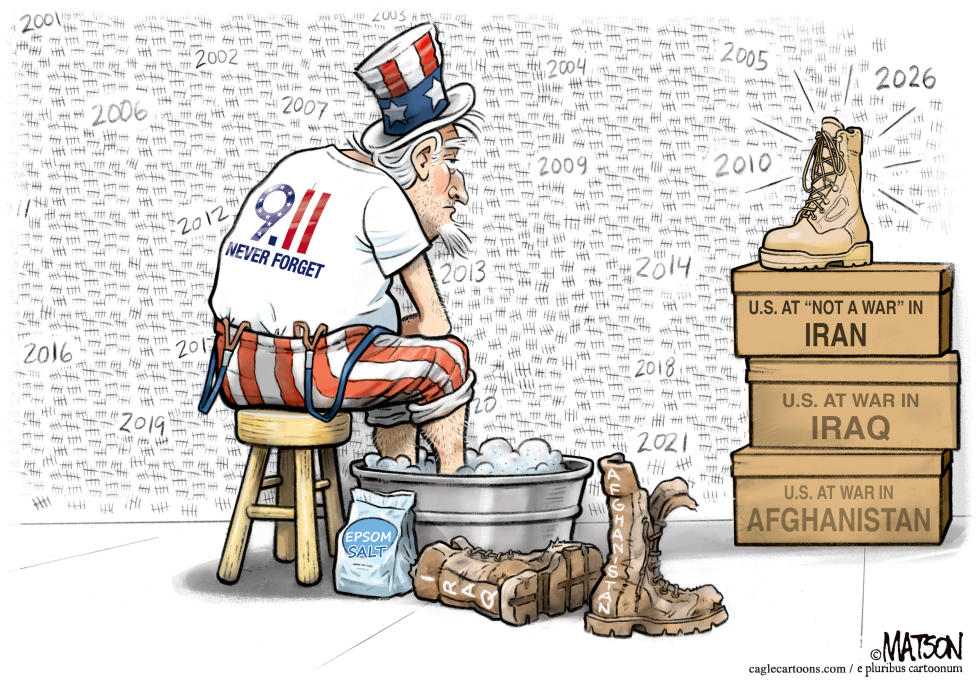
The United States has maintained military involvement across Iraq and Afghanistan for more than two decades following the September 11 attacks. Ongoing regional tensions with Iran now raise the prospect of additional commitments. The cartoon captures public and institutional exhaustion with extended deployments and questions the capacity for another prolonged engagement.
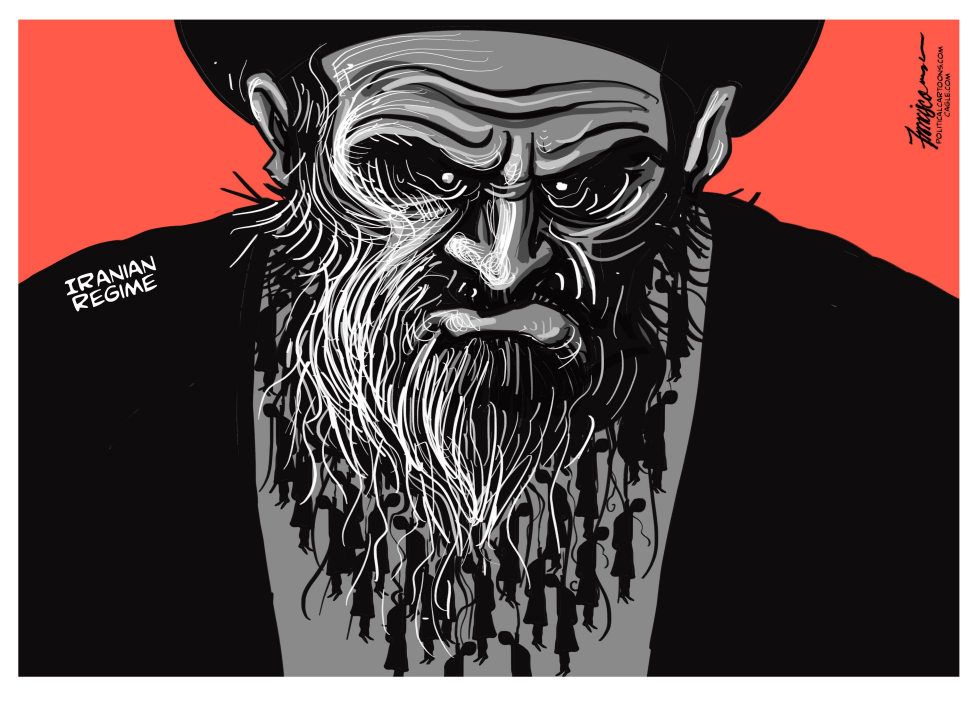
Iran continues to carry out executions at a high rate, targeting protesters, dissidents and minorities under the authority of Supreme Leader Ayatollah Ali Khamenei. The practice has drawn renewed criticism from human rights groups and Western governments concerned about due process and political repression. The cartoon frames the regime itself as the direct agent of these deaths, underscoring the leadership's personal responsibility for the ongoing campaign of hangings.
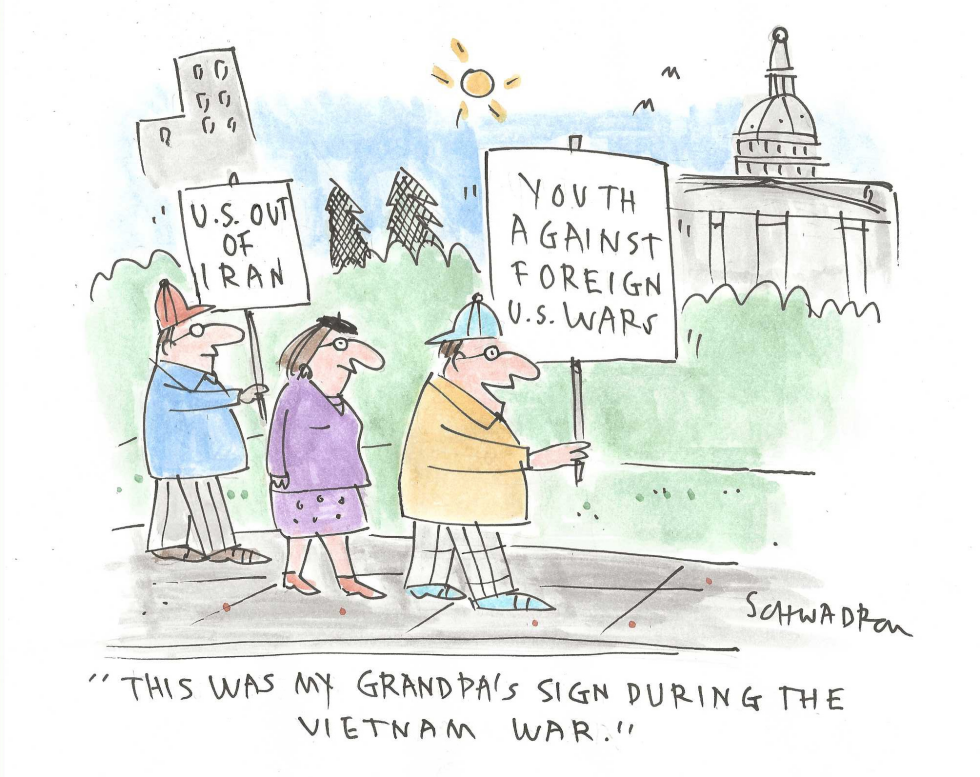
Anti-war demonstrators gather near the Capitol with signs calling for an end to US involvement in Iran and broader foreign conflicts. One protester notes that his sign originated during the Vietnam War, underscoring continuity across generations. The piece highlights persistent public opposition to military engagements abroad and questions the repetition of past policy mistakes.
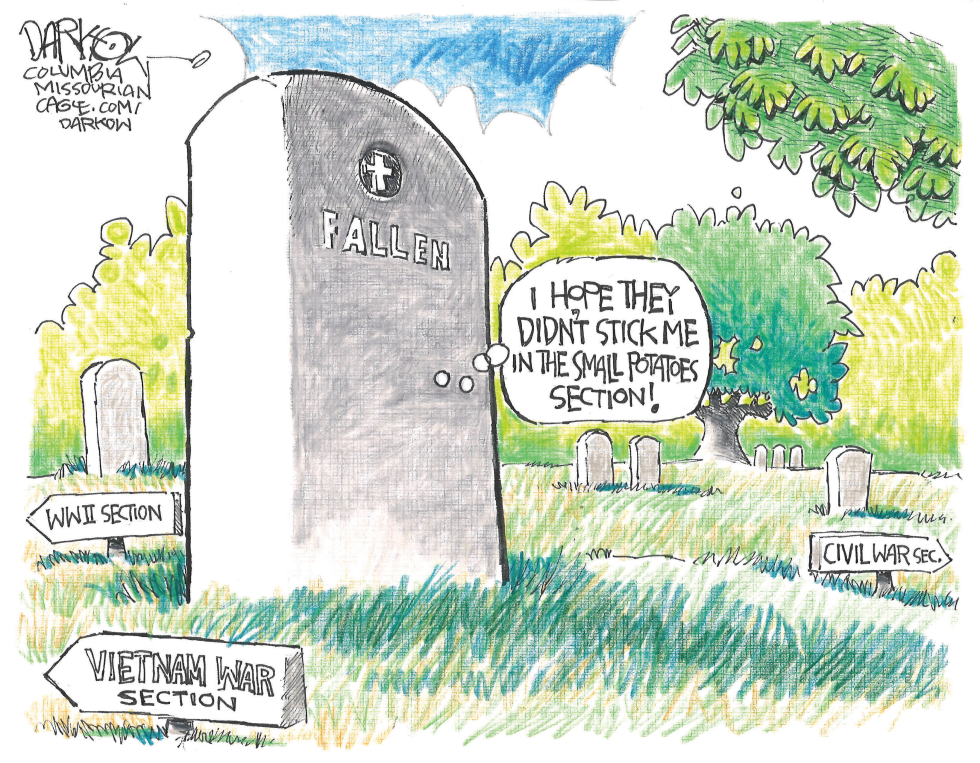
Recent developments in U.S. policy toward Iran have included public statements framing the conflict as limited in scope and consequence. Officials have emphasized de-escalation and avoided comparisons to major 20th-century wars. The approach has drawn criticism from those who see the engagement as carrying substantial long-term costs for American forces and regional stability. The cartoon argues that such framing diminishes the sacrifices involved and places the Iran conflict in a lesser category than earlier wars.
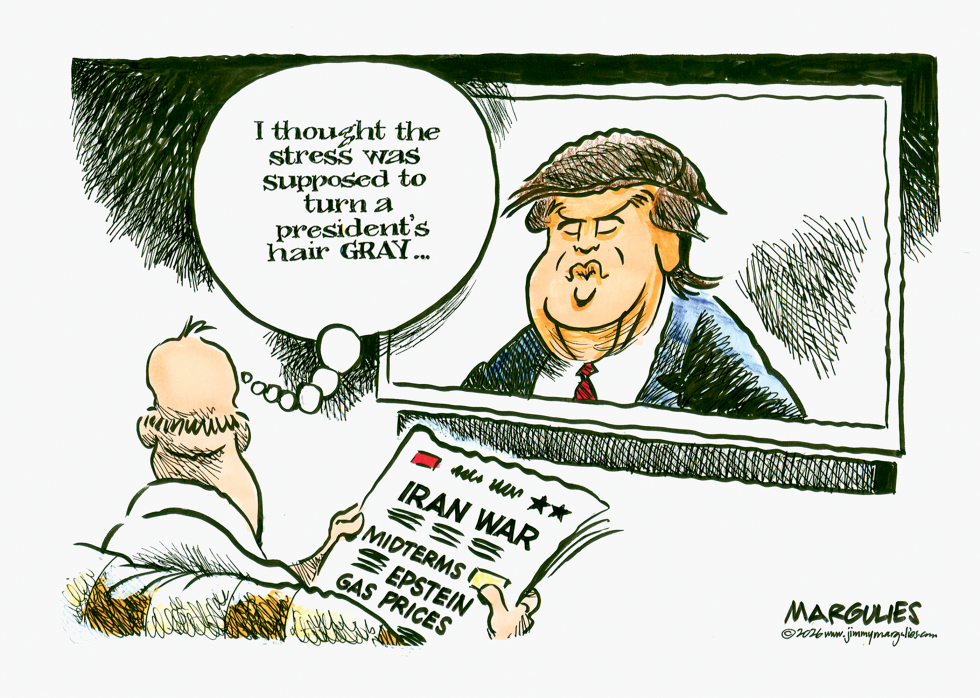
President Donald Trump confronts an Iran war, midterm election pressures, Epstein-related revelations and rising gas prices in September 2026. These overlapping challenges test the administration's capacity to manage foreign conflict and domestic economic strain simultaneously. The cartoon argues that the expected physical toll of such stress on the president has not materialized in the anticipated way.
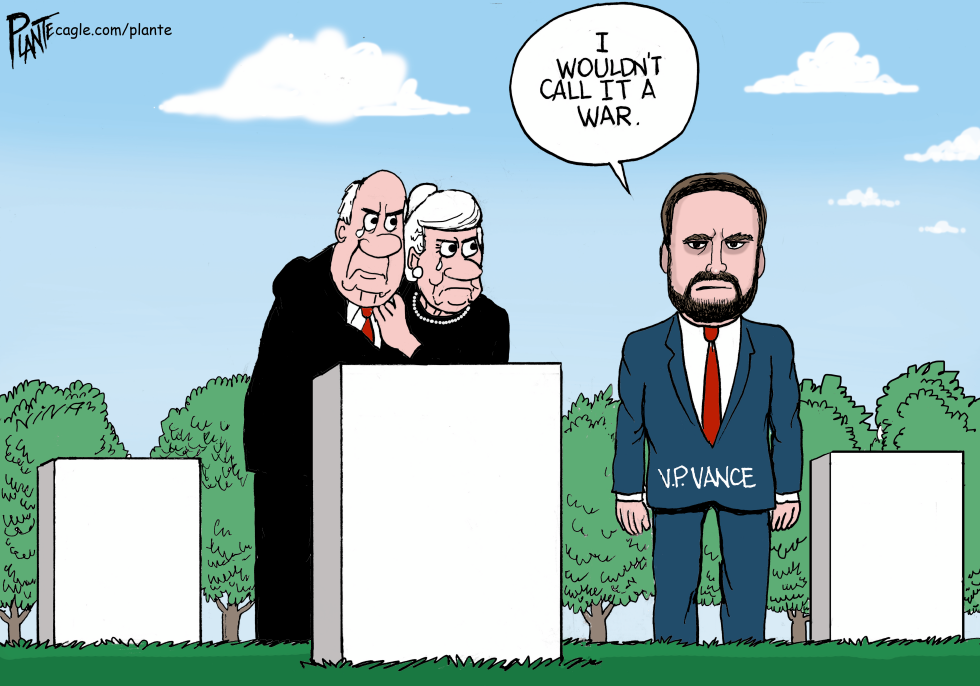
Vice President JD Vance has publicly stated that the United States is not at war with Iran even as reports indicate American casualties in the region. The administration frames operations as limited strikes rather than full conflict. This downplaying occurs amid broader tensions over Iran's nuclear program and regional influence. The cartoon argues that the human cost in the cemetery makes the denial untenable and that the situation qualifies as war.
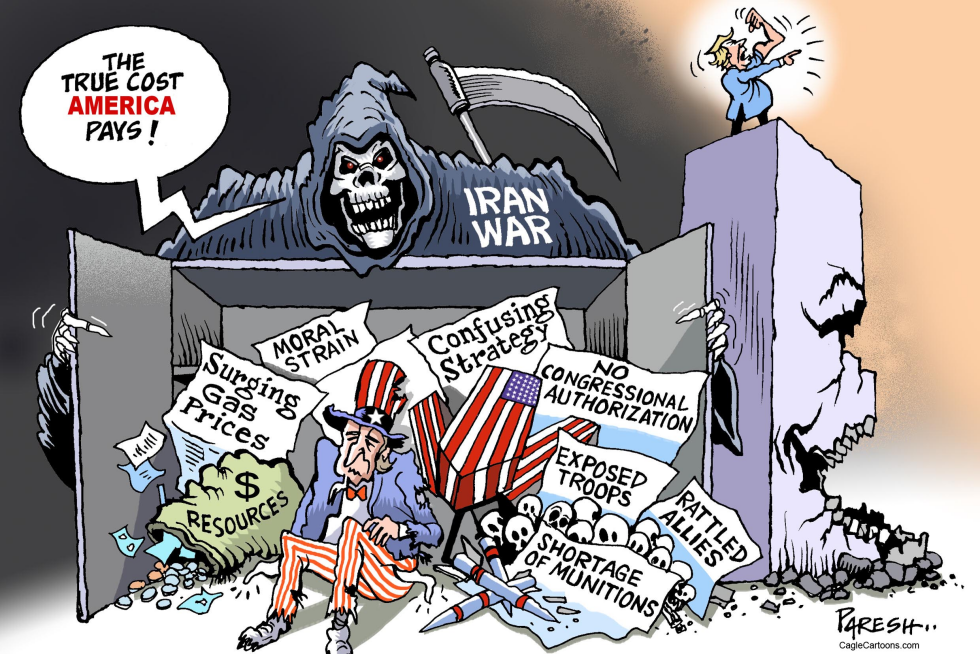
The cartoon depicts the Grim Reaper personifying the Iran War looming over a box of American costs including surging gas prices, moral strain, confusing strategy, no congressional authorization, exposed troops, shortage of munitions and rattled allies. Uncle Sam sits defeated among the debris with a broken flag and skulls. Donald Trump stands on a pedestal pointing upward. A speech bubble declares the true cost America pays. Published September 4, 2026, the piece critiques the drain on U.S. resources and lack of oversight in the conflict.
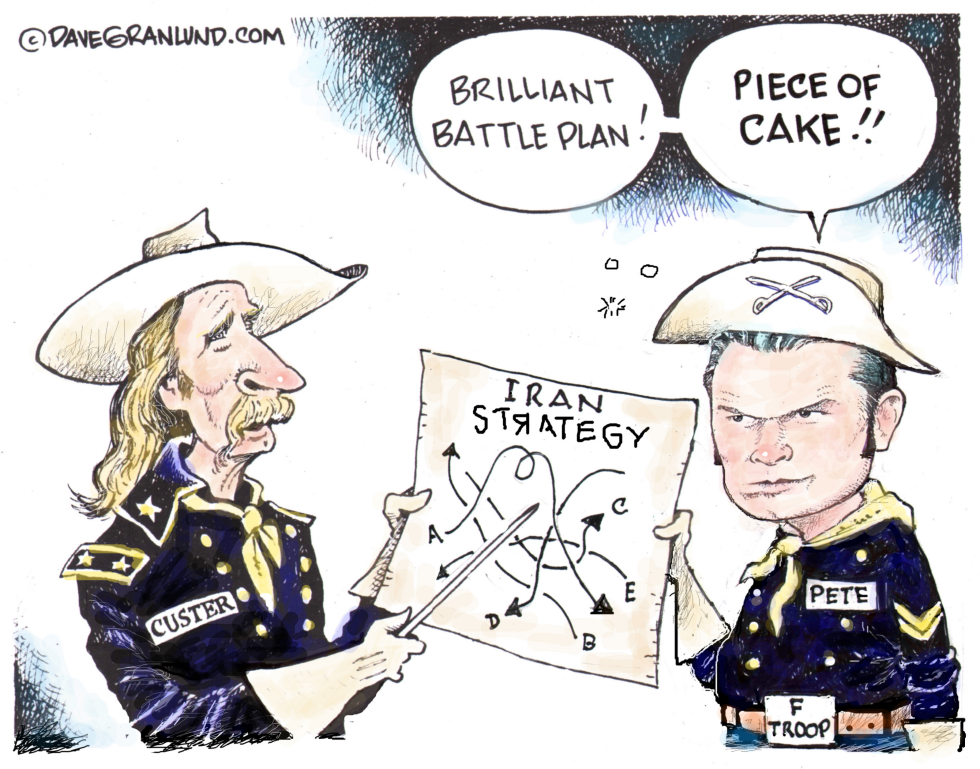
The cartoon depicts two uniformed figures labeled Custer and Pete examining a document titled Iran Strategy. Speech bubbles show them calling the plan brilliant and a piece of cake. The drawing uses the F Troop label and Custer reference to highlight risks of overconfidence in military planning for Iran. The publication date places the work in a period of ongoing discussion about US approaches to Iran. The visual argument centers on the disconnect between stated optimism and known historical outcomes for similar ventures.
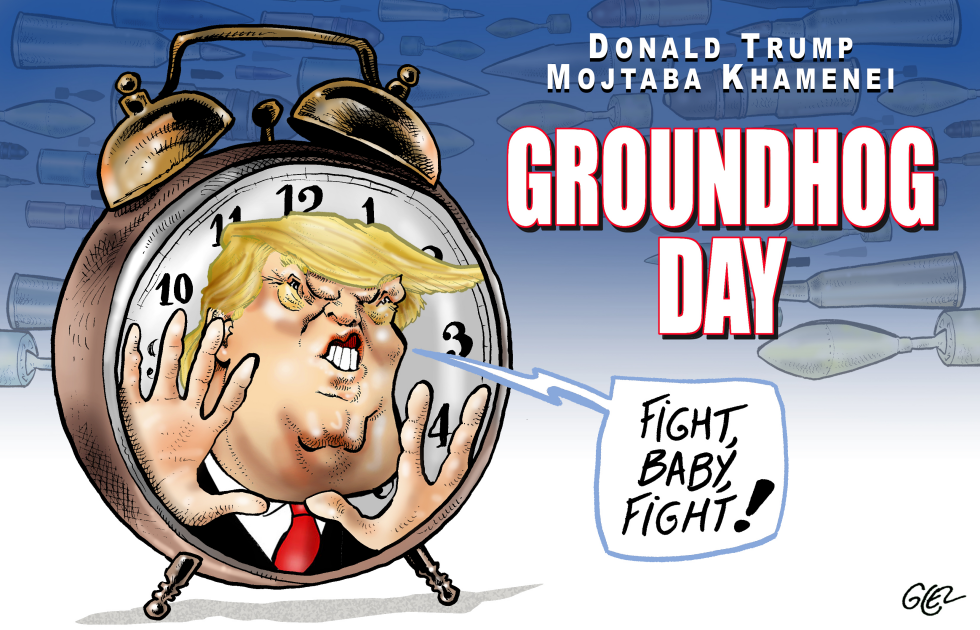
On September 3 2026 the cartoon highlights the recurring pattern of US-Iran tensions involving Donald Trump and Mojtaba Khamenei. The piece frames their renewed standoff as an endless Groundhog Day loop marked by missile threats and bellicose rhetoric. It argues that the same actors and dynamics keep producing the same dangerous cycle without resolution.
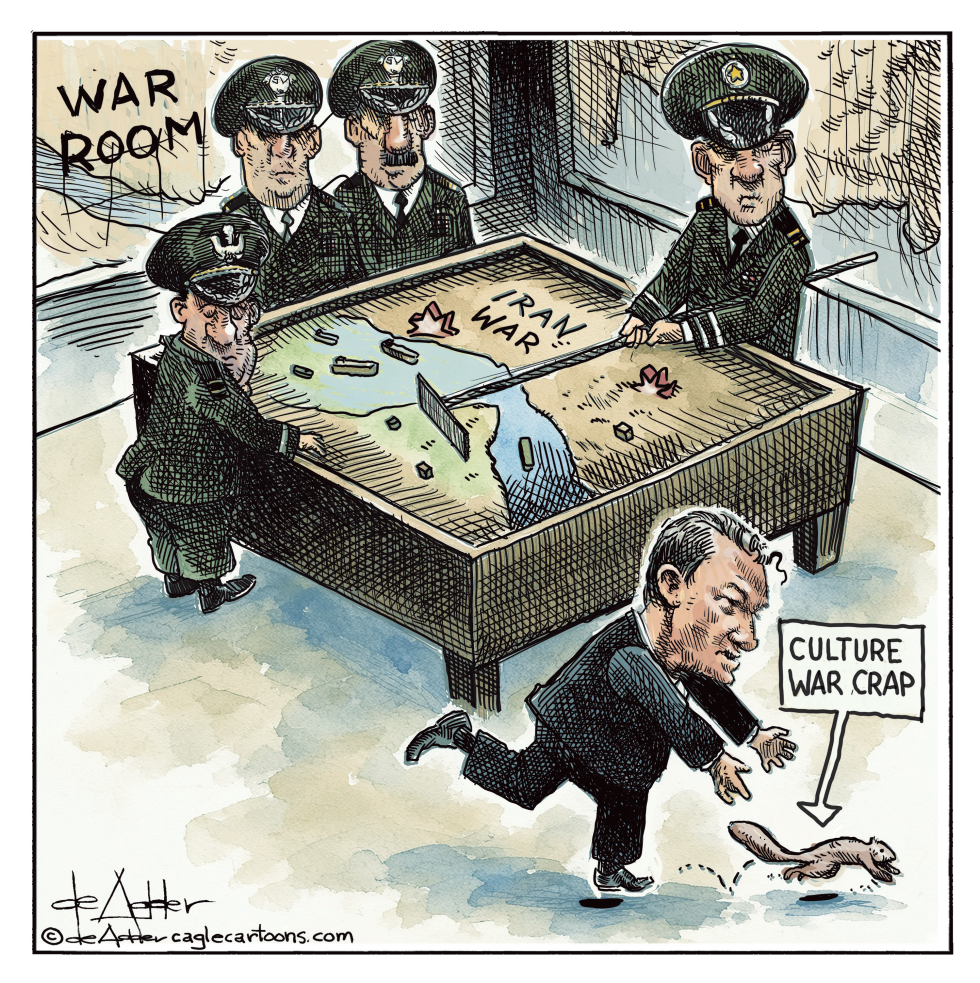
Defense Secretary Pete Hegseth has drawn scrutiny for emphasizing culture war issues while military planners address potential Iran contingencies. The cartoon depicts him pursuing a squirrel marked culture war crap instead of joining officers at the Iran war table. Critics argue this reflects a pattern of prioritizing domestic cultural battles over strategic readiness. The piece suggests such focus undermines effective leadership in the Pentagon. It critiques the administration's approach to balancing internal politics with national security demands.