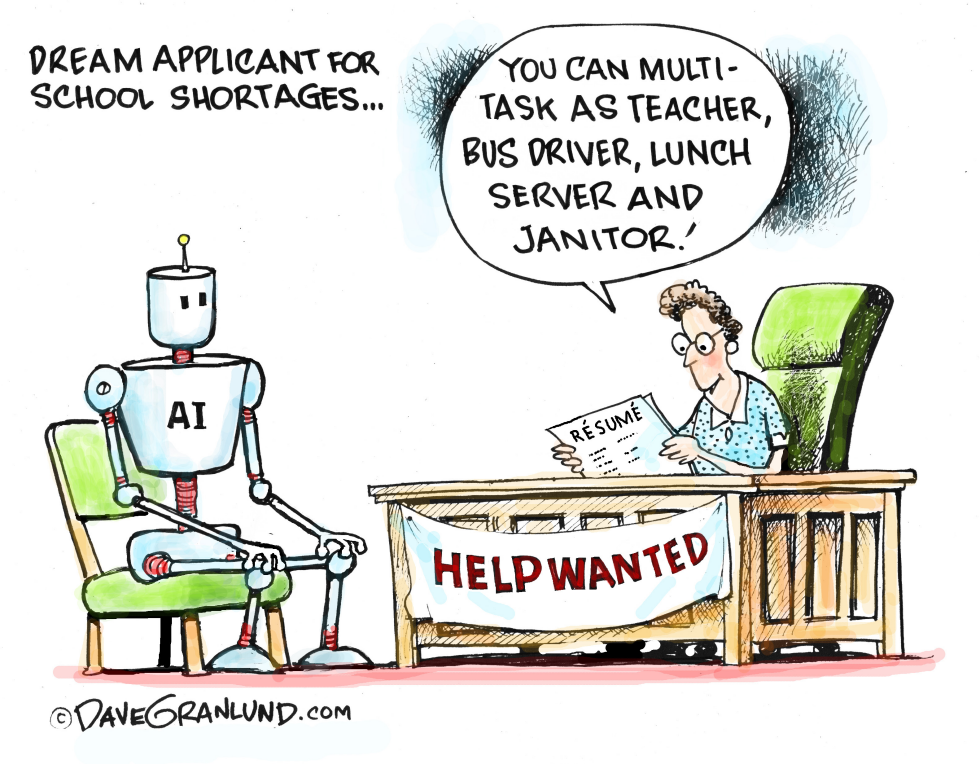
A political cartoon depicts a robot marked AI seated across from a school administrator during a job interview. The administrator holds a resume and states the applicant can serve as teacher, bus driver, lunch server and janitor. Text in the upper left identifies the robot as a dream applicant for school shortages. A help wanted banner hangs on the desk. The image comments on ongoing efforts to use artificial intelligence to ease teacher and support staff shortages in schools.
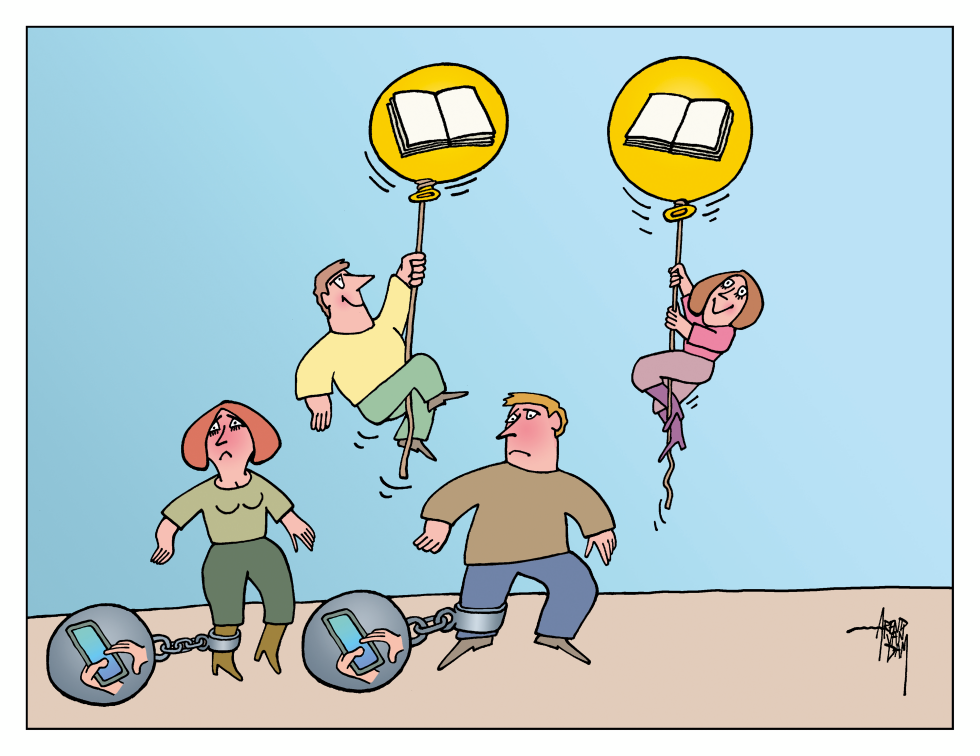
The ongoing debate over digital devices versus traditional reading materials continues to highlight how constant smartphone use can limit personal growth and mobility. Books, by contrast, offer pathways to broader perspectives and advancement. The editorial position favors reading as a superior force for individual upliftment over reliance on handheld technology.
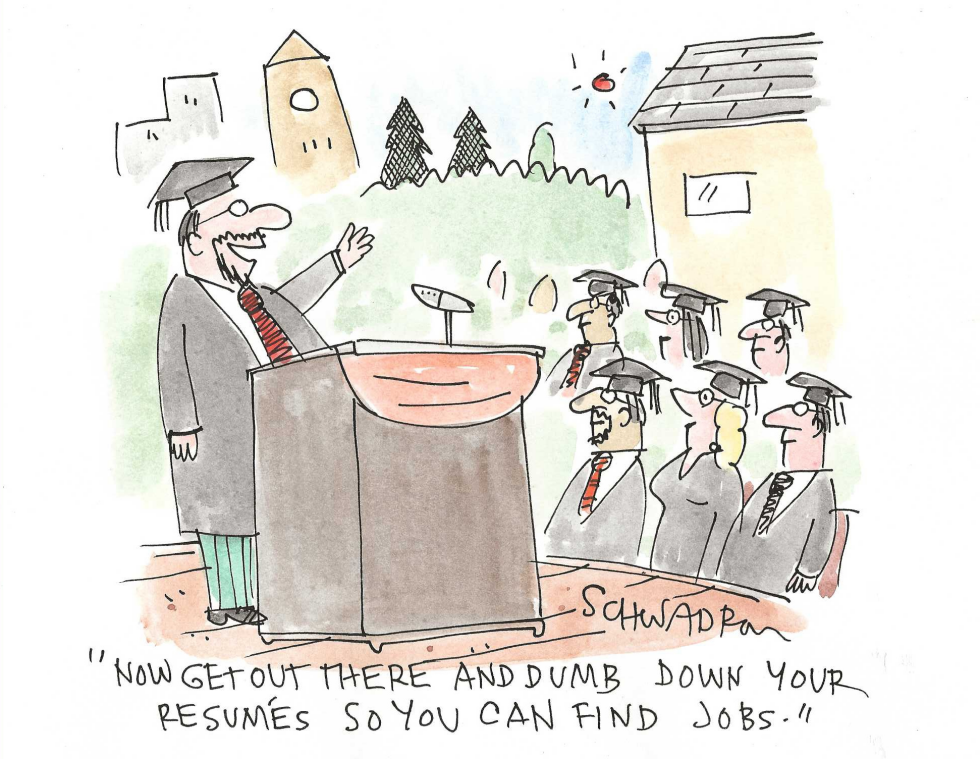
A commencement speaker at a college graduation advised new graduates to simplify their resumes by removing advanced qualifications to better compete in the current job market. The advice reflects ongoing concerns about hiring managers overlooking overqualified candidates and economic pressures limiting entry-level opportunities. The editorial takes the position that such guidance underscores systemic mismatches between higher education outcomes and employer demands rather than individual shortcomings.
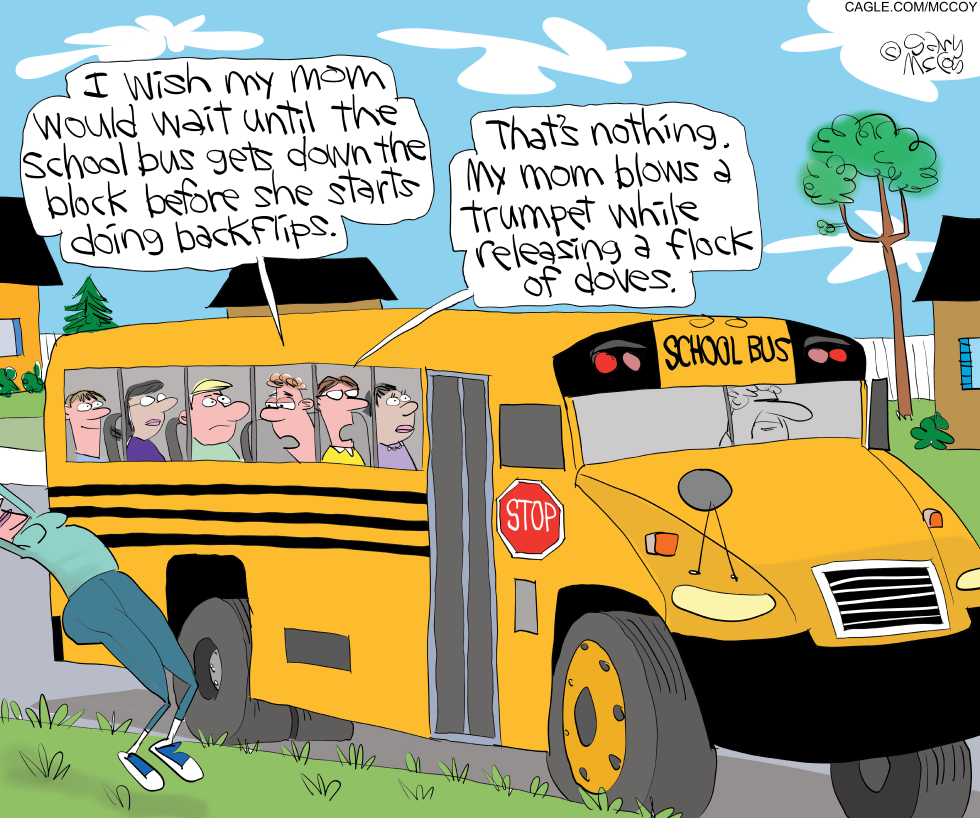
Parents often embarrass their children with enthusiastic send-offs at the school bus. The piece highlights the humorous side of overzealous maternal behavior in daily routines.
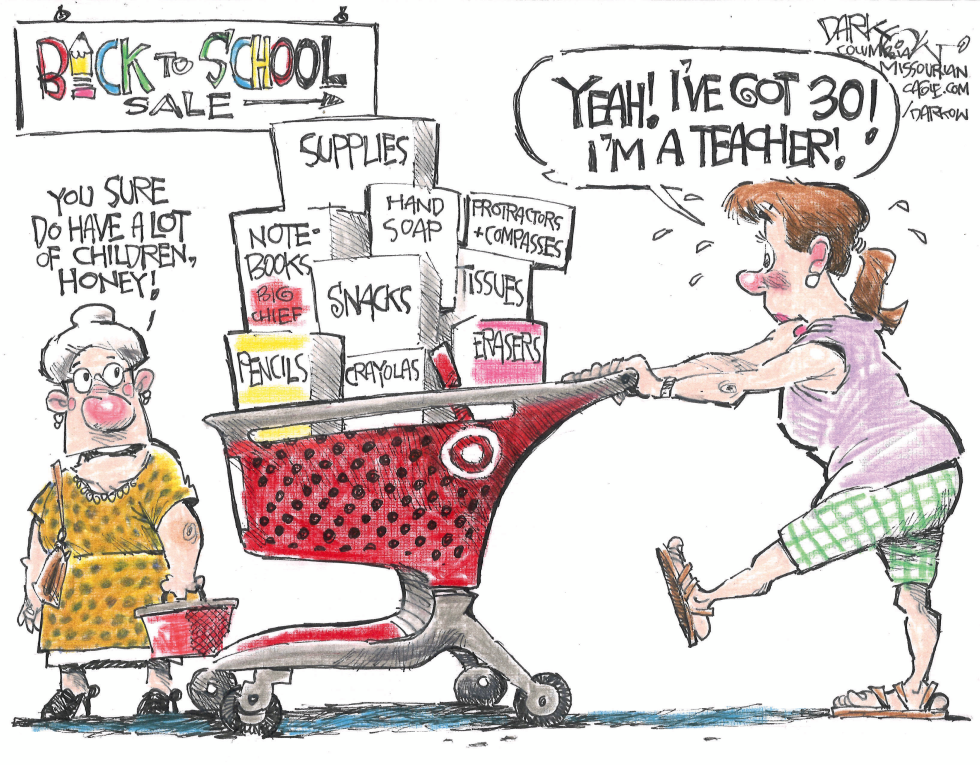
Teachers across the country routinely spend hundreds of dollars of their own money on basic classroom materials each year. With class sizes often reaching thirty students, educators must purchase notebooks, snacks, tissues, hand soap, and other essentials not covered by school budgets. The image captures this annual back-to-school reality as a teacher struggles with an overloaded shopping cart. The editorial position underscores how underfunded public schools force teachers to subsidize their own classrooms.
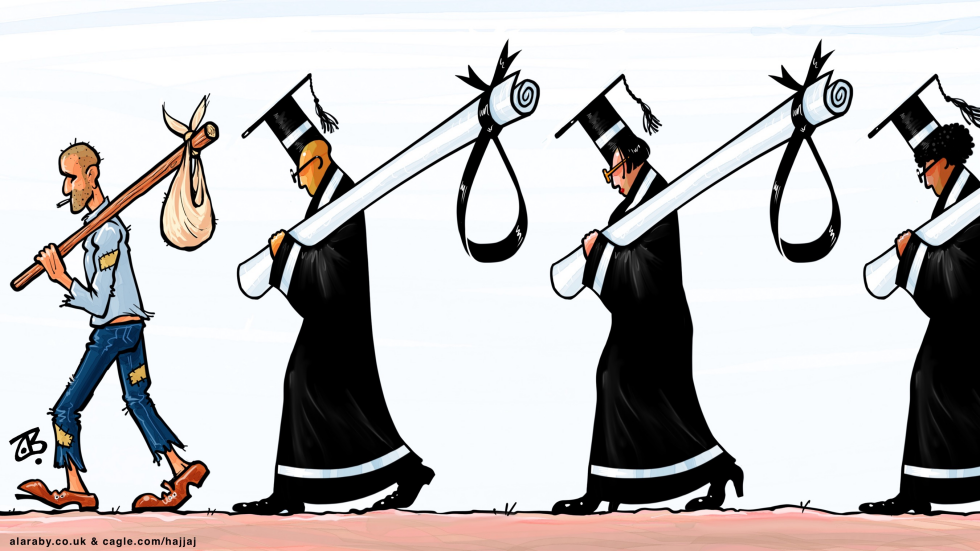
Graduates face mounting education costs that turn diplomas into symbols of debt. The image captures the procession of students weighed down by financial obligations after completing their studies. It critiques the ongoing burden placed on new degree holders.
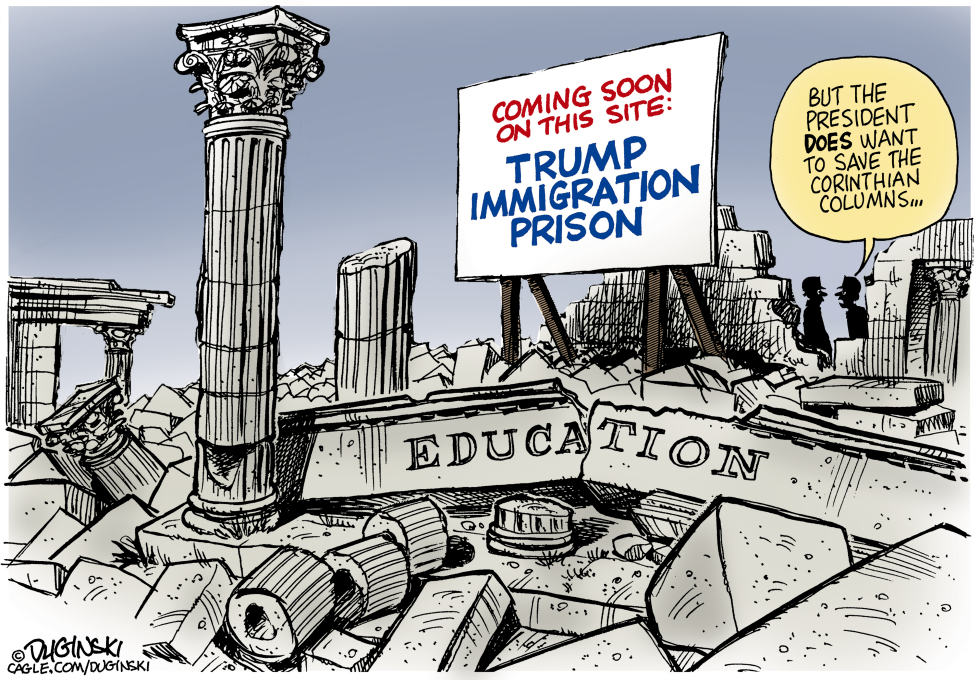
The Trump administration has moved to repurpose a site previously tied to education programs for a new immigration detention facility. The shift reflects ongoing policy emphasis on border enforcement over domestic education support. The piece argues that selective preservation of symbolic elements masks broader institutional damage.
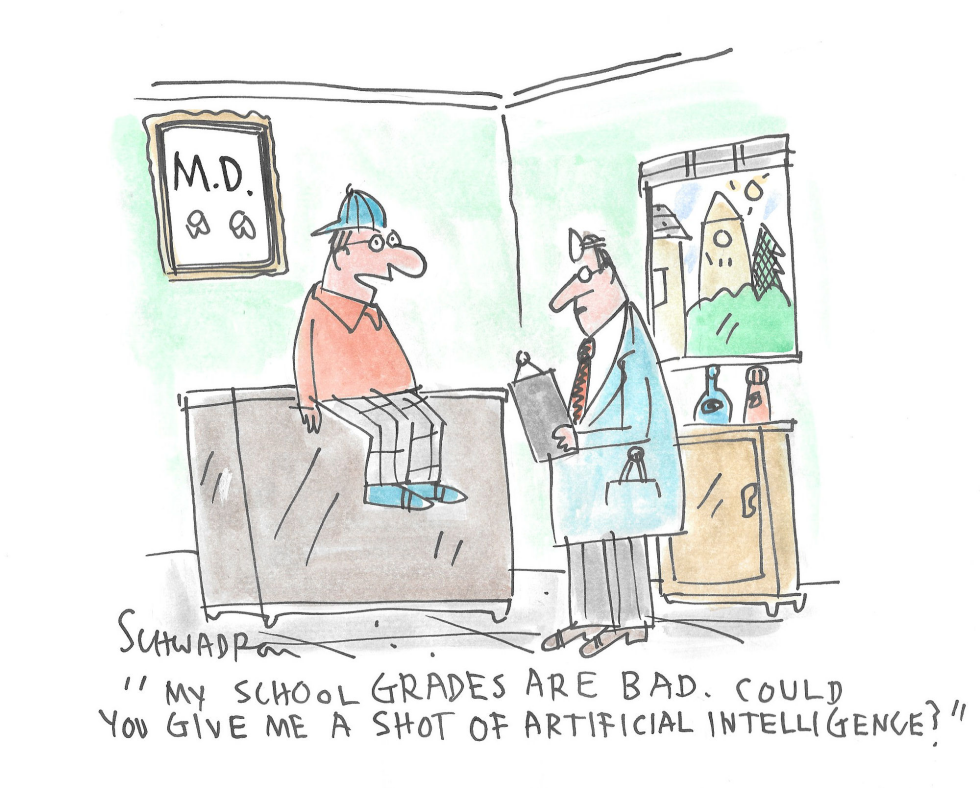
A student visits a doctor seeking an injection of artificial intelligence to improve failing school grades. The request reflects broader interest in using emerging technology to address educational challenges. The piece portrays this as a humorous but telling sign of how AI is entering everyday problem-solving discussions.
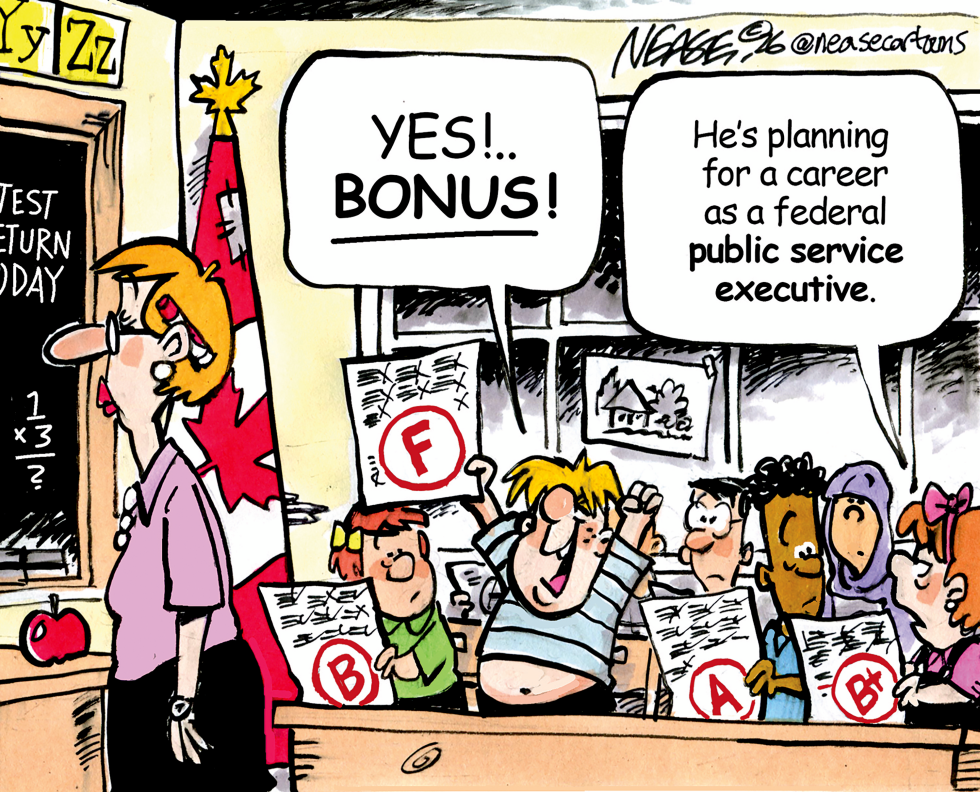
A Canadian classroom cartoon depicts a failing student celebrating a potential federal public service bonus. The piece critiques how government bureaucracy may reward poor performance through executive incentives rather than merit-based advancement.
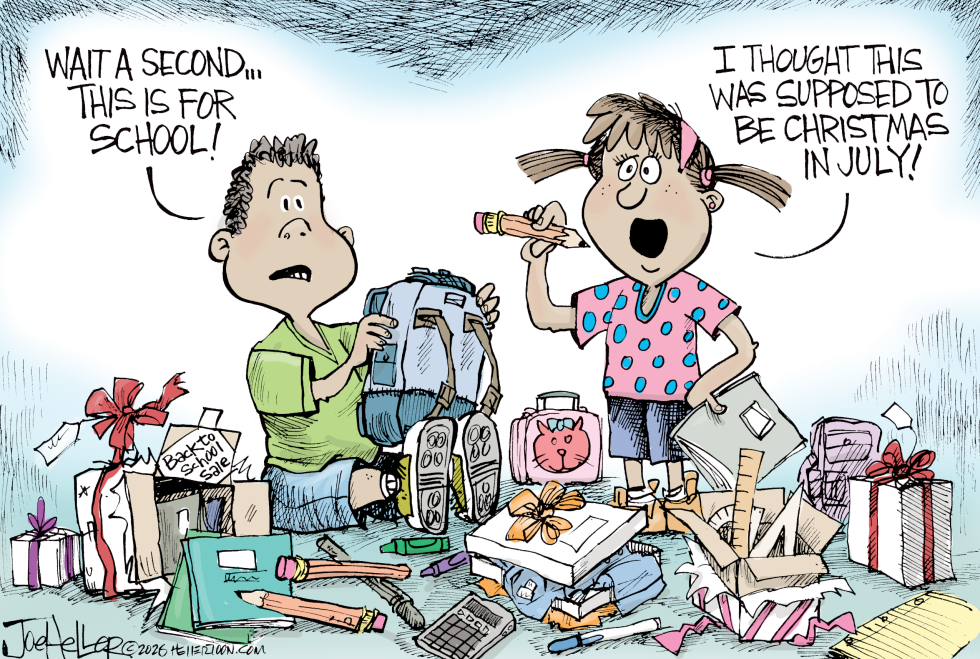
Retailers launched back-to-school promotions in late July, prompting families to stock up on supplies weeks ahead of the academic calendar. The timing overlaps with summer clearance events that mimic holiday marketing tactics. Parents and students face added pressure to buy early amid rising costs for essentials. The piece highlights how commercial calendars compress traditional shopping seasons and shift family routines.
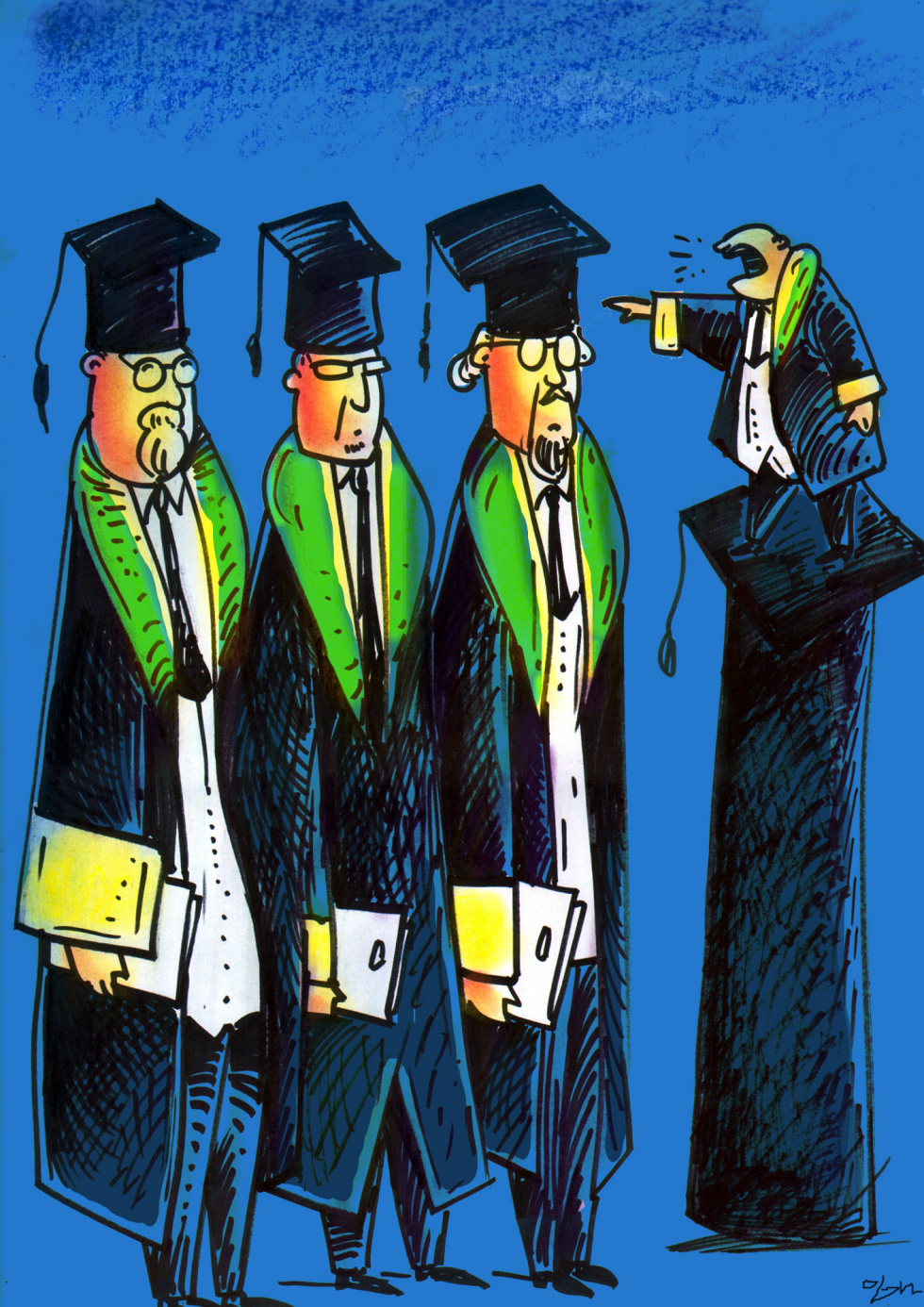
A university ceremony draws attention as an official delivers pointed remarks to administrators in academic attire. The exchange highlights ongoing tensions over leadership accountability and campus governance. The piece portrays the speaker as assertive in pressing the group on their responsibilities.