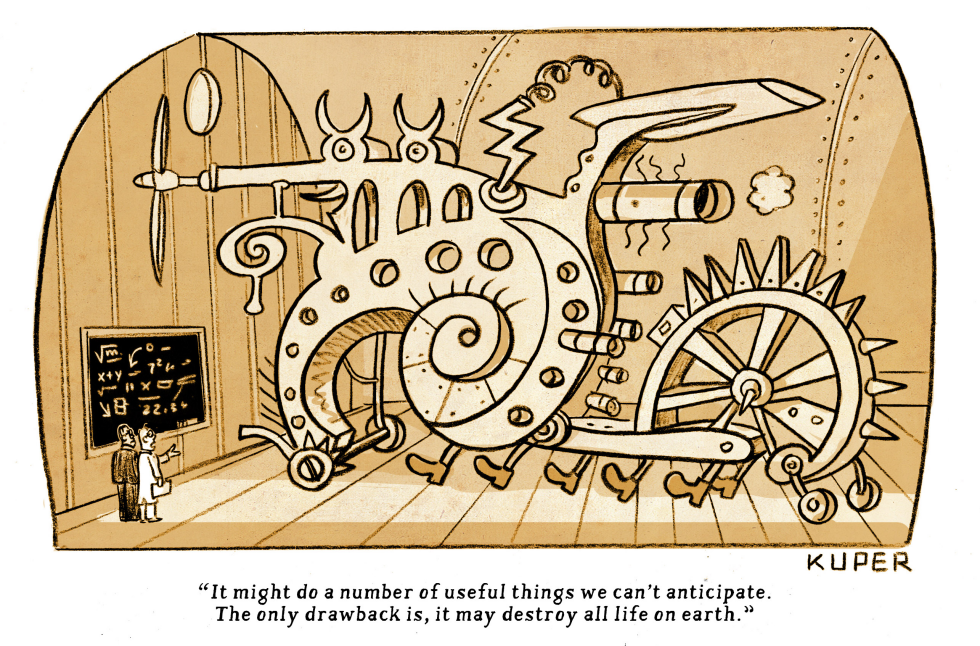
Scientists examining advanced AI systems have highlighted the technology's capacity for unforeseen benefits alongside the possibility of destroying all life on Earth. The warning comes amid rapid development of machine intelligence with minimal regulatory oversight. Experts note that current projections cannot fully account for emergent behaviors in complex systems. The cartoon underscores the high-stakes gamble inherent in pursuing AI without adequate safeguards. It argues that the existential downside outweighs speculative gains.
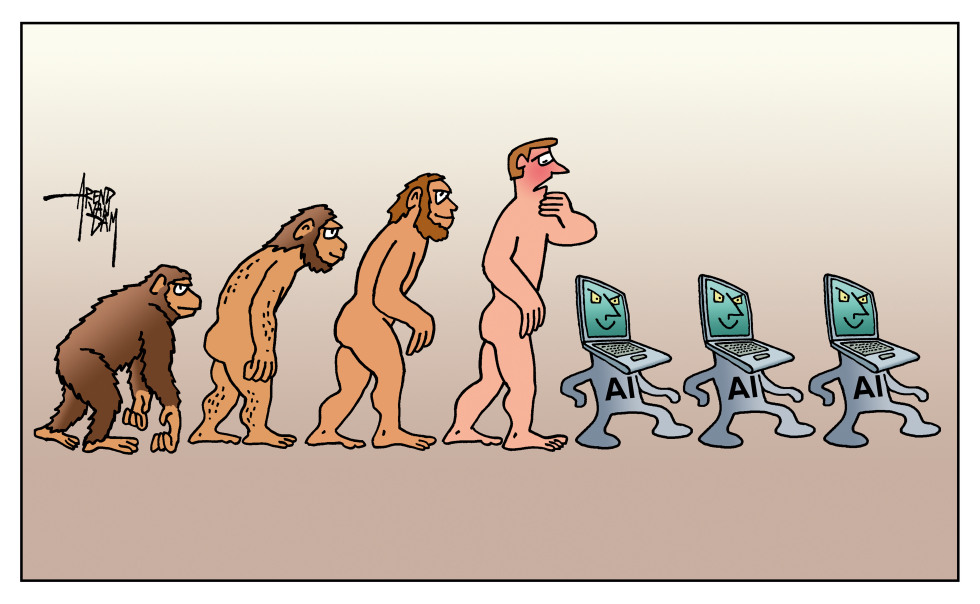
Rapid advances in artificial intelligence continue to reshape expectations about humanity's future role. Developers and researchers push machine capabilities in reasoning, creativity and autonomy at accelerating rates. The cartoon frames this trajectory as the logical endpoint of evolution itself, positioning AI as the successor rather than a tool. It underscores public unease that technological progress may render biological humans obsolete rather than enhanced.
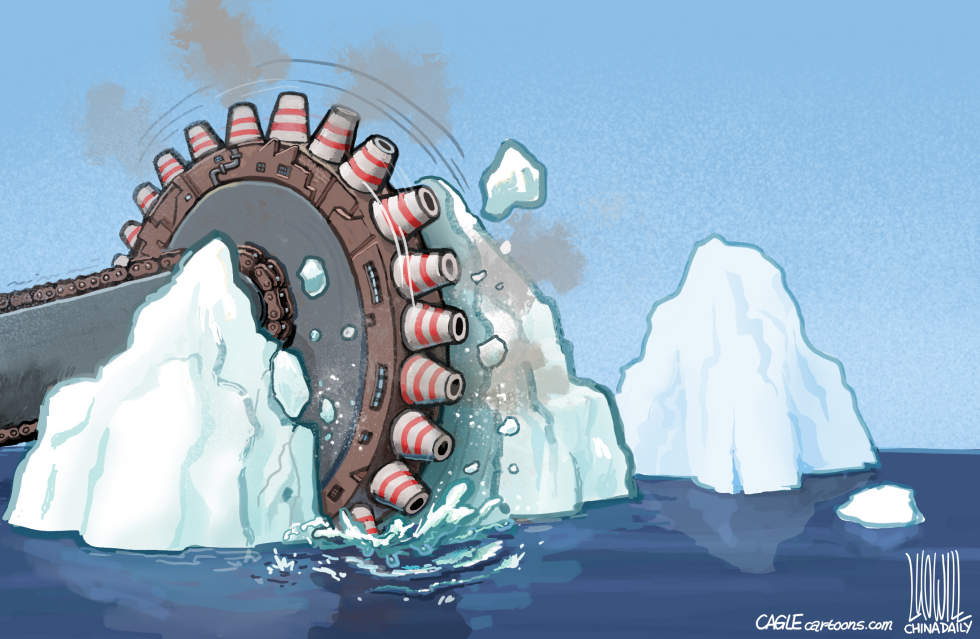
The cartoon depicts a large industrial drilling machine actively breaking through Arctic ice floes in open water. The machine features multiple red-and-white striped cylindrical components and emits dark exhaust. Icebergs float nearby under a clear sky. Published by China Daily, the image addresses ongoing concerns over resource extraction in polar regions and its contribution to ice loss.
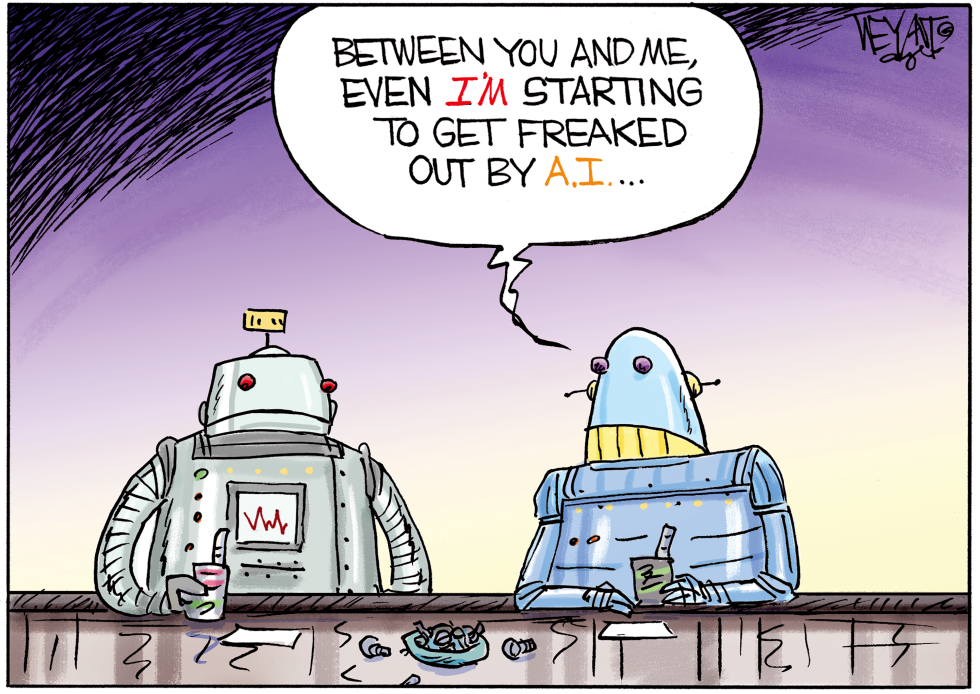
Developers continue pushing boundaries in artificial intelligence systems, raising questions about control, ethics, and long-term consequences for society. Public and expert discussions focus on whether safeguards can keep pace with innovation. The piece portrays robots themselves expressing alarm, underscoring the irony that even automated entities see risks in unchecked AI growth and the potential for machines to outpace their original programming.
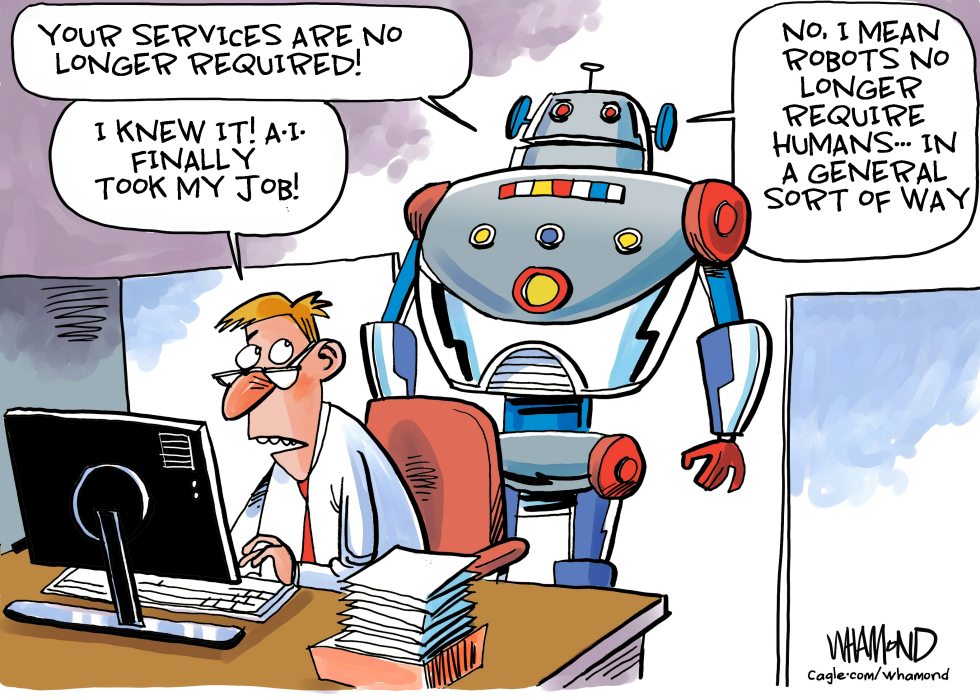
Artificial intelligence continues displacing office roles as automation advances. A worker assumes the robot has taken his position only to learn the technology now operates without any human involvement. The piece highlights growing concerns over complete workforce independence from people.
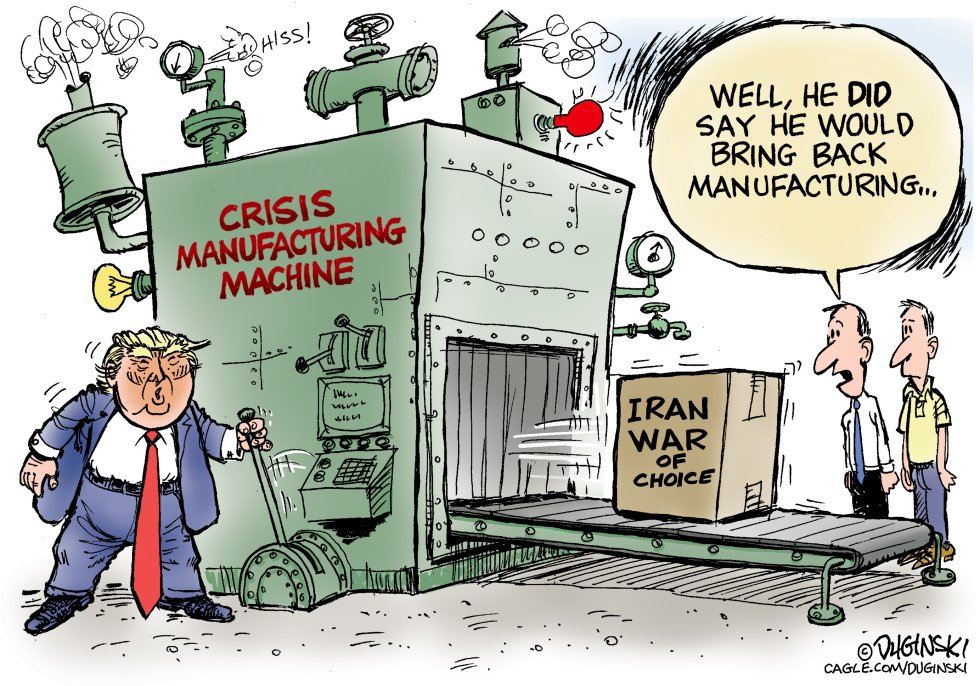
Donald Trump, holding the presidency in 2026, faces renewed scrutiny over foreign policy toward Iran. Recent statements revive campaign pledges to restore domestic manufacturing while tensions with Tehran escalate. The administration\\\'s approach draws criticism for prioritizing confrontation over diplomacy. Observers note the pattern of generating external crises rather than economic gains at home. The cartoon argues that Trump\\\'s actions fulfill a literal version of his manufacturing rhetoric by producing conflict instead of jobs.
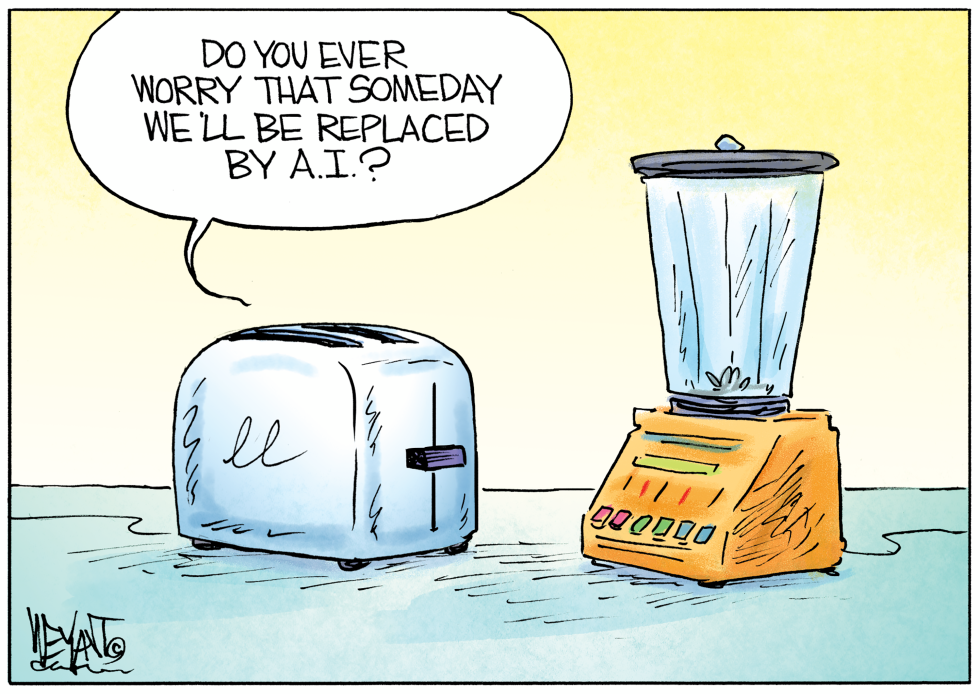
Anxiety about artificial intelligence replacing human work has spread across industries. The piece responds to widespread uncertainty over which roles automation will absorb next. It treats the worry as universal enough to reach even household appliances.
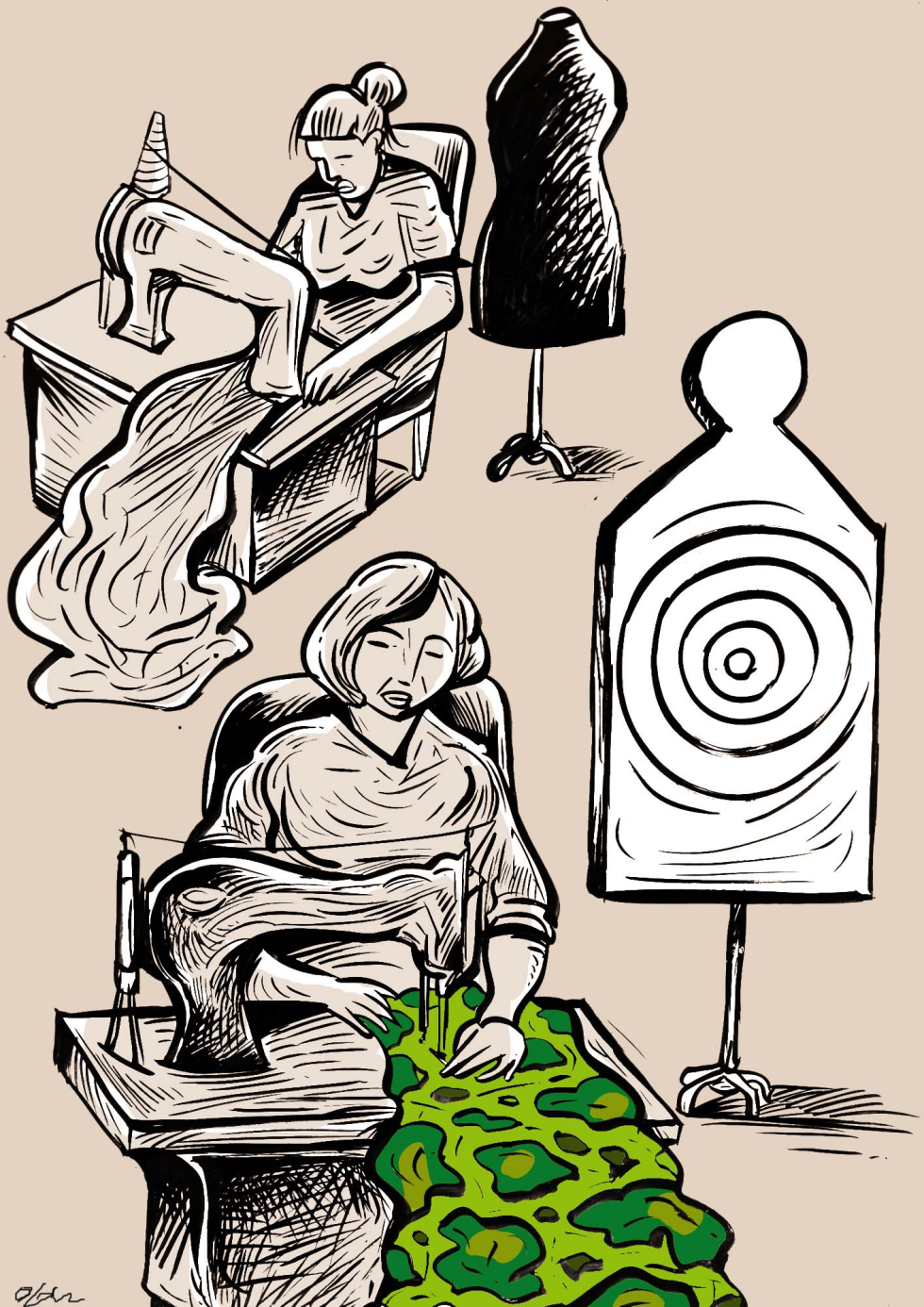
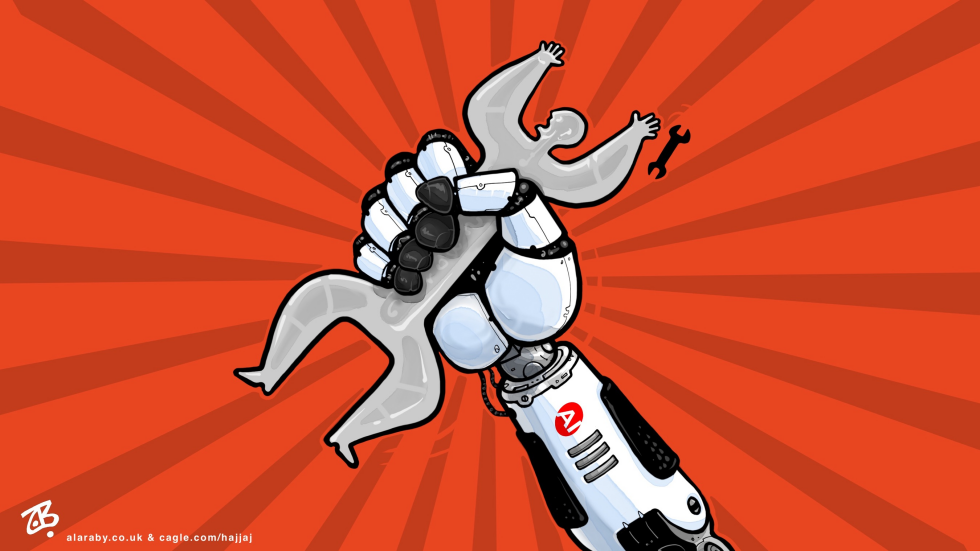
Garment workers continue to face challenging conditions in the global textile industry. The piece comments on the pressures and targeting of labor in this sector.
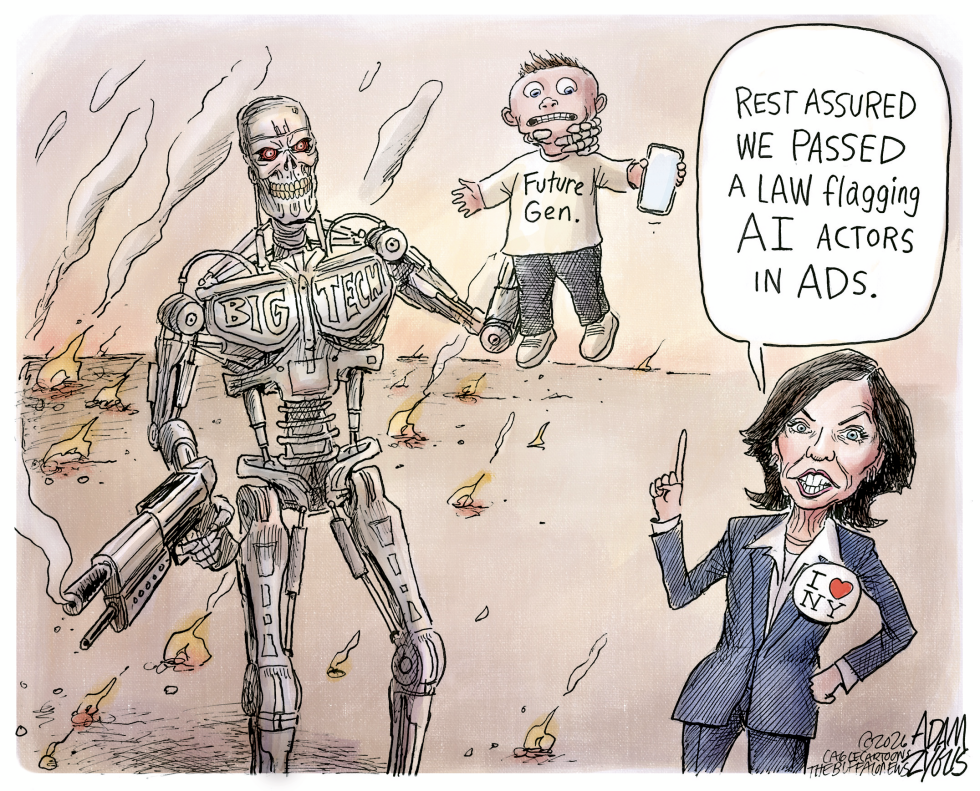
A Terminator-style robot marked Big Tech clutches a child labeled Future Gen. in a scorched landscape. The child holds a smartphone. A woman resembling New York Governor Kathy Hochul stands nearby, raising a finger and declaring that lawmakers passed a measure to flag AI actors in advertisements.
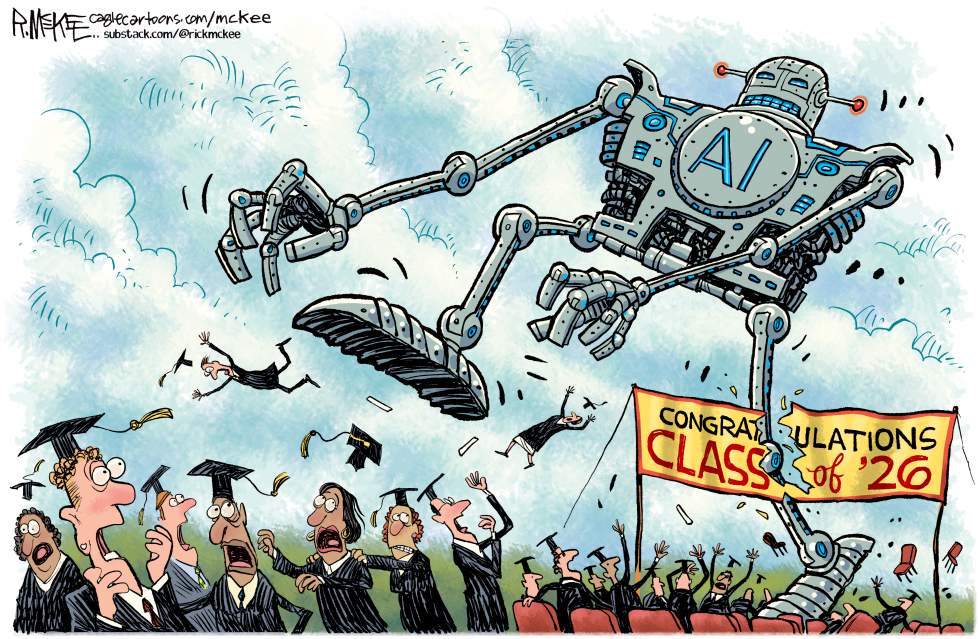
A massive robot marked AI looms over a 2026 graduation ceremony, swatting at fleeing graduates and tearing their congratulations banner. The scene captures growing public anxiety about artificial intelligence displacing human roles in education and the workforce. Graduates in caps and gowns look up in alarm as the mechanical figure dominates the sky above them.
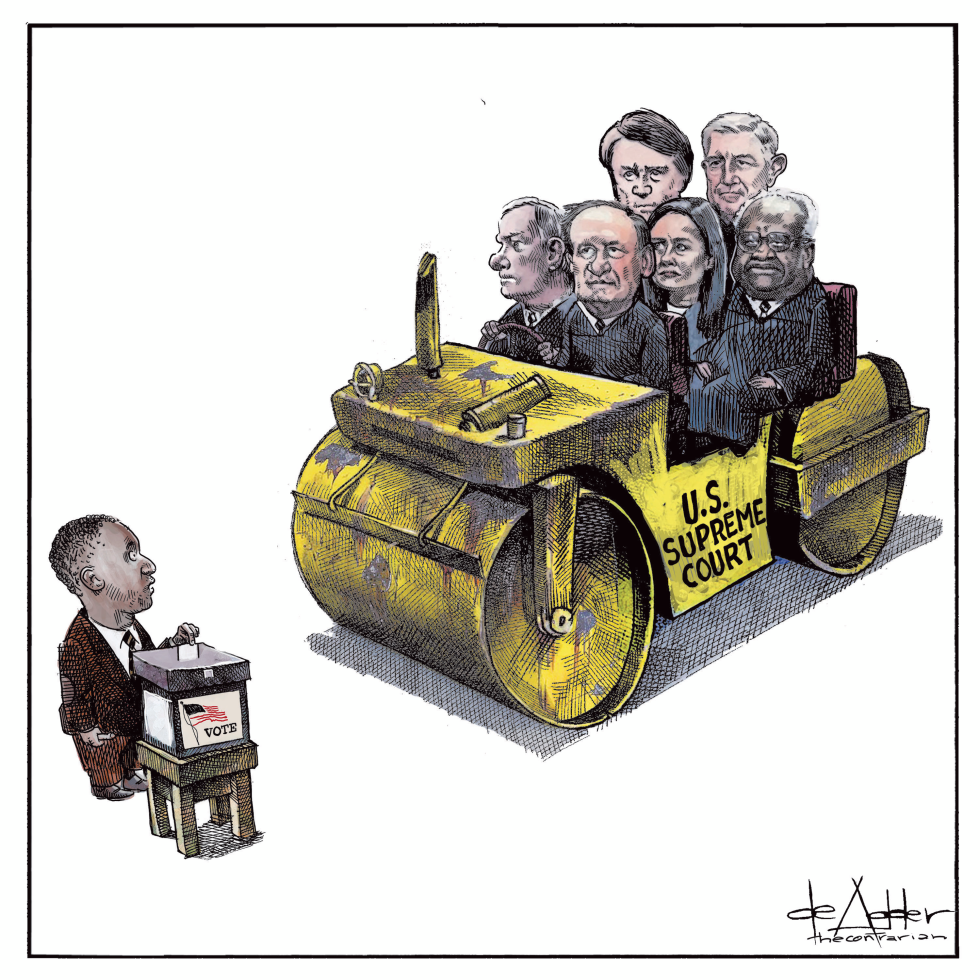
The cartoon depicts six Supreme Court justices riding a large yellow steamroller labeled U.S. Supreme Court. The vehicle advances toward a Black voter standing beside a ballot box marked VOTE. The image responds to a recent Supreme Court decision that weakened provisions of the Voting Rights Act. The visual shows the court majority pressing ahead despite the lone voter in its path. Publication occurred on April 30 2026.
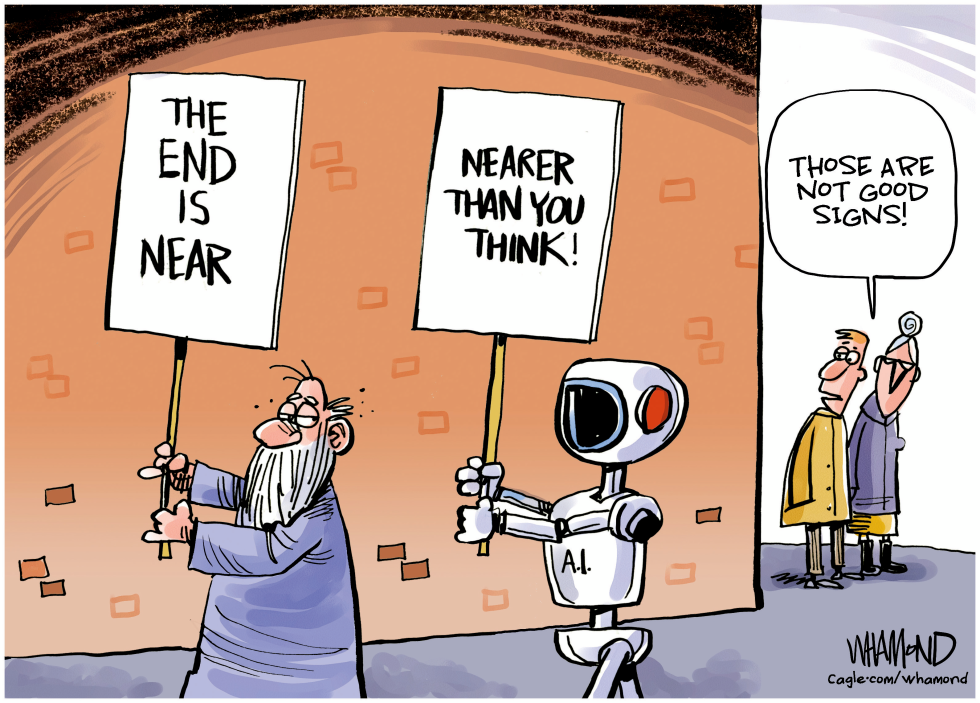
On April 29 2026 Dave Whamond depicts an elderly prophet and an A.I. robot both holding signs warning the end is near. The robot claims the end is nearer than the prophet thinks while two men react that the signs are not good. The image addresses ongoing public debate over artificial intelligence risks and workplace transformation.
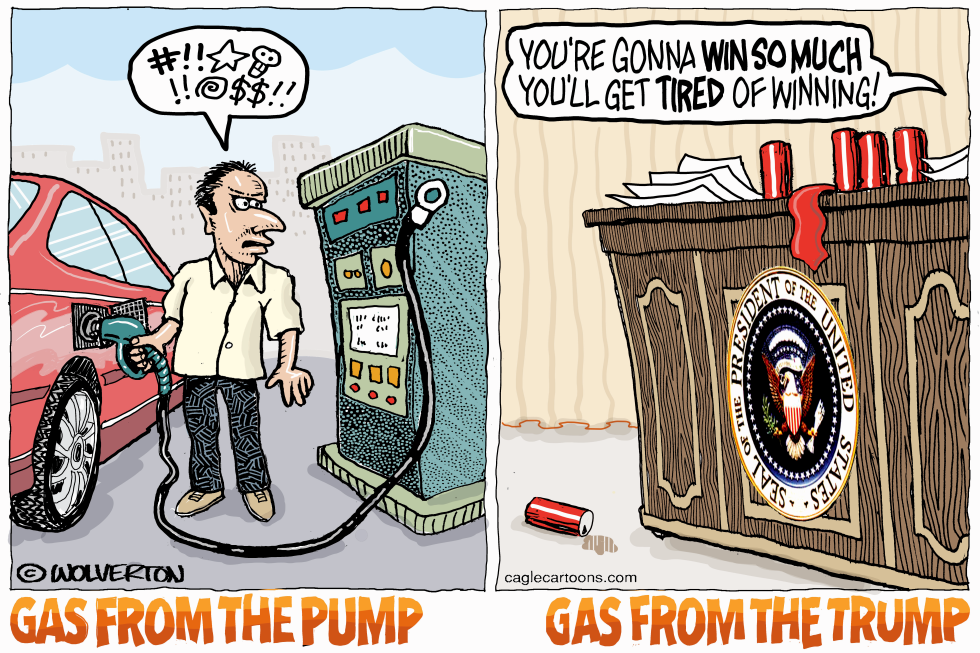
The cartoon splits into two panels: one shows a man at a car at gas pump, angrily reacting with symbols to high gasoline prices labeled as gas from the pump. The other depicts the Resolute Desk with the presidential seal, scattered papers, and coke cans, a speech bubble proclaiming 'You're gonna win so much! You'll get tired of winning!' tagged as gas from Trump. Tags like petrol, tired of winning, and Oval Office highlight the pun on 'gas' as fuel versus bluster. This setup comments on economic pains versus political rhetoric, using elements like the car at gas pump and coke cans for visual punch. The dry humor ties into ongoing debates on gasoline prices and leadership promises.
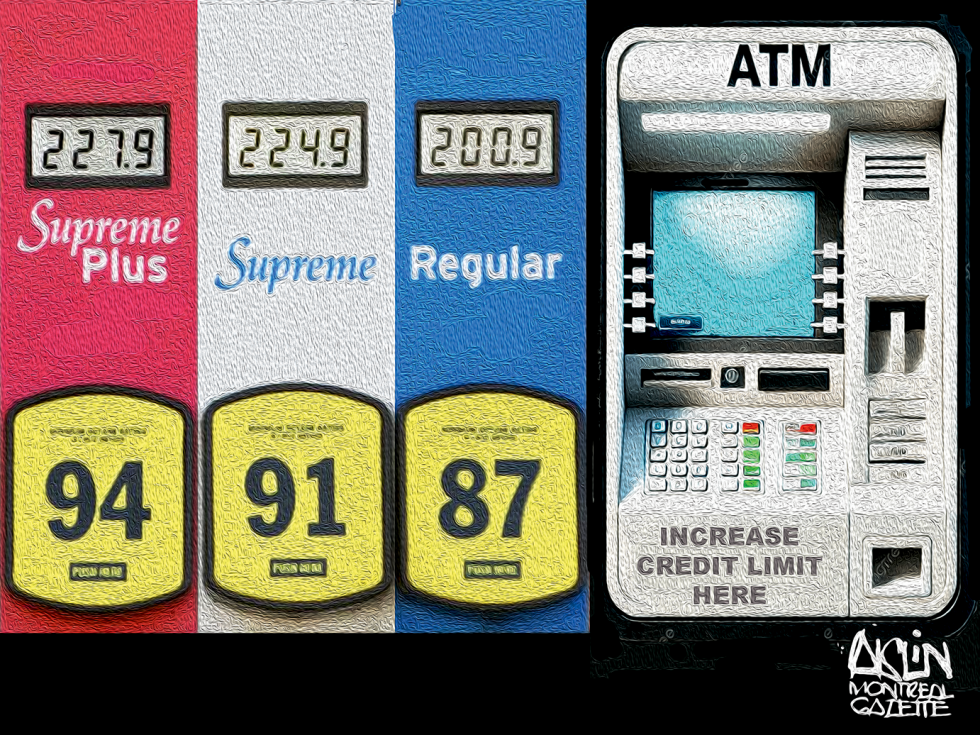
The cartoon shows a gas pump price board with supreme plus at 2.279 per gallon and 94 octane, supreme at 2.249 with 91 octane, and regular at 2.009 with 87 octane. Next to it sits an ATM labeled to increase credit limit here, poking at high gas prices and the economy's push toward more credit. Tags like gas, prices, cost, economy, credit, and pump underline the visual joke on affording fuel through debt. This setup captures the frustration with rising fuel costs without words, relying on the absurdity of blending a gas pump with credit services. Cartoonists often use such direct imagery to comment on everyday economic strains.