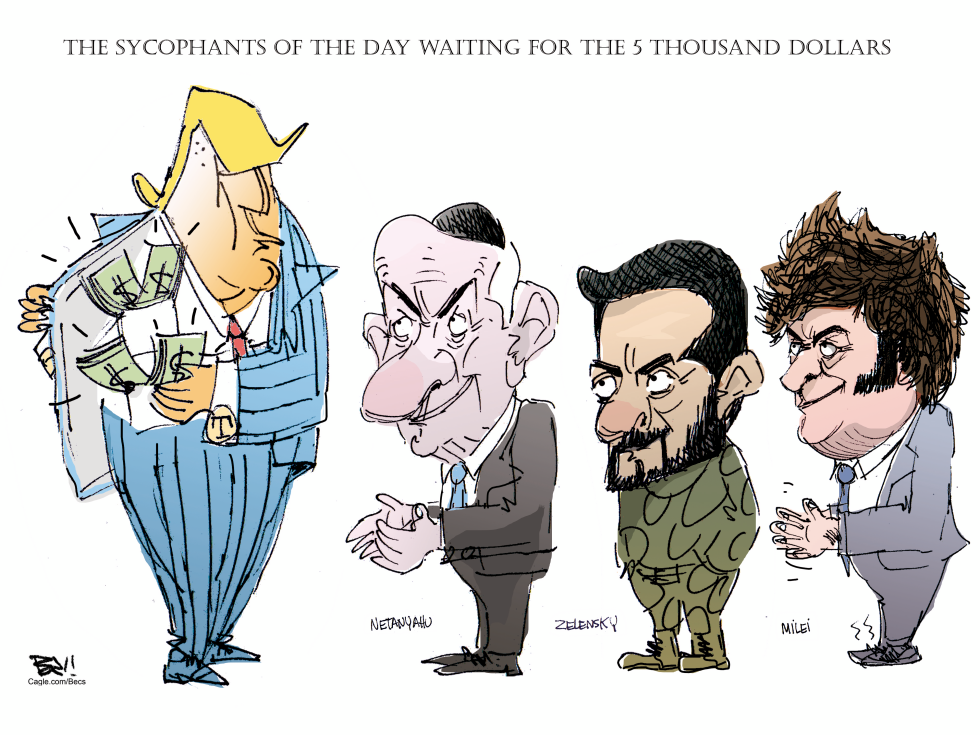
Donald Trump stands at the center of attention from Israeli Prime Minister Benjamin Netanyahu, Ukrainian President Volodymyr Zelensky and Argentine President Javier Milei. The scene reflects ongoing questions about how foreign leaders court favor with the U.S. president through displays of loyalty. The cartoon argues that these relationships reduce international diplomacy to transactional waiting for payoffs.
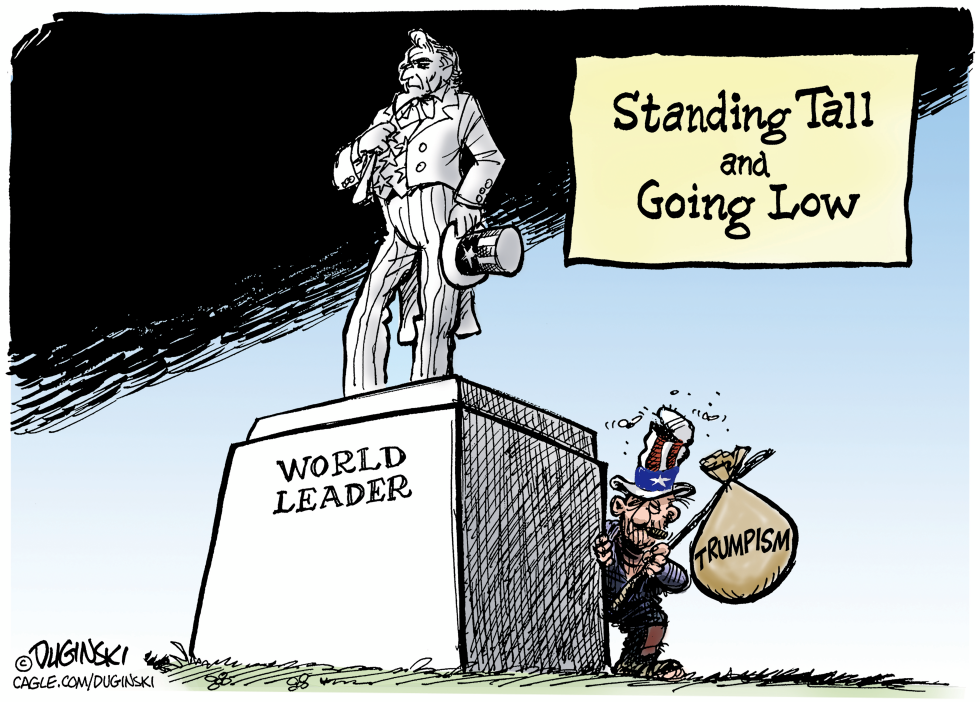
Donald J. Trump’s ideological legacy continues to shape Republican politics and foreign policy debates into 2026. Critics argue that Trumpism’s emphasis on transactional deals and nationalist rhetoric has eroded traditional US alliances and moral authority on the global stage. The cartoon presents this influence as a literal weight pulling the nation downward from its claimed leadership role, underscoring concerns that short-term domestic appeals come at the cost of long-term international credibility.
On the eve of German state elections, Donald Trump publicly aligned with the AfD by signaling support for its leader. The move drew attention to foreign influence in European politics and raised questions about the party's direction. The cartoon portrays the endorsement as an attempt to empower a fringe movement through personal patronage.
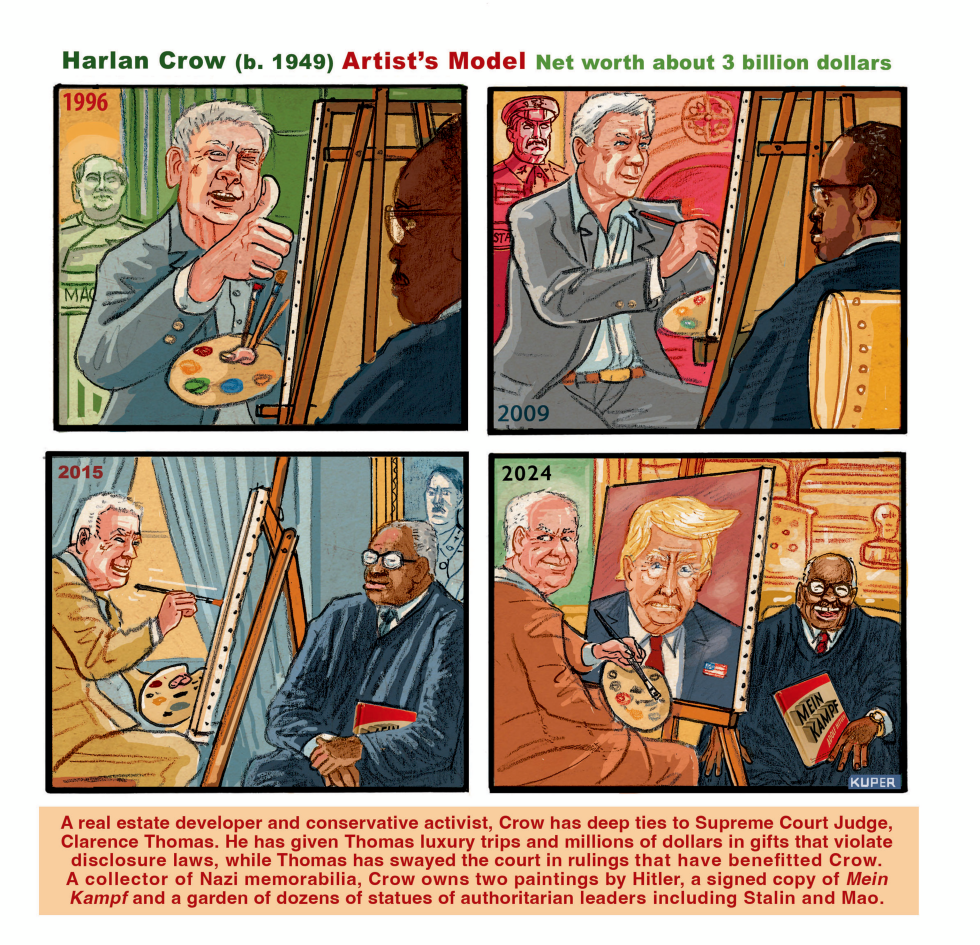
Real estate developer Harlan Crow has provided Supreme Court Justice Clarence Thomas with luxury trips and millions in undisclosed gifts that violate ethics rules. Thomas has participated in rulings benefiting Crow. Crow also collects Nazi memorabilia including Hitler paintings and a signed copy of Mein Kampf. The cartoon extends the pattern to a 2024 portrait of Donald Trump. It criticizes the intersection of wealthy donor influence and judicial decisions.
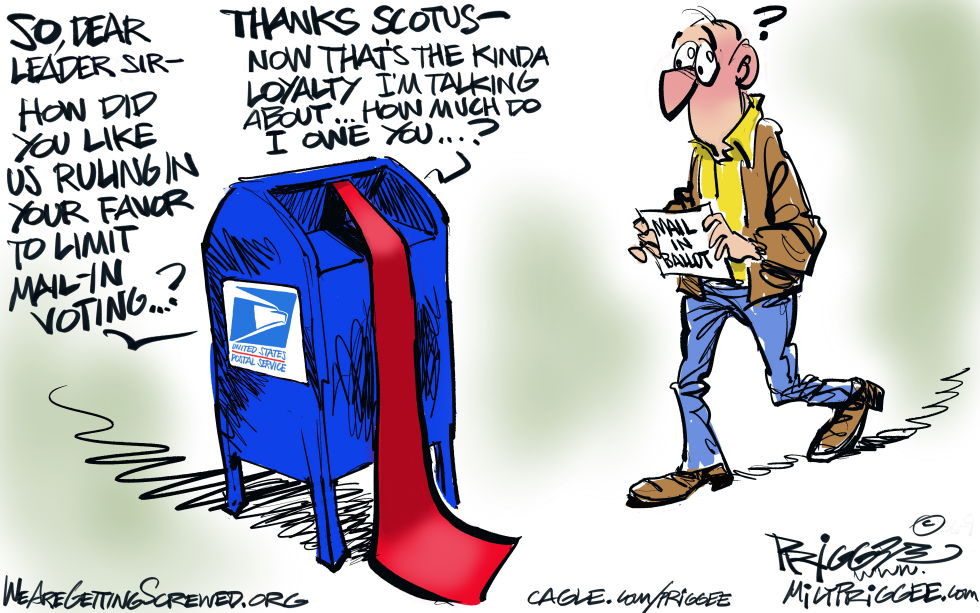
The cartoon shows a voter holding a mail-in ballot and questioning a USPS mailbox about a Supreme Court ruling that limited mail-in voting in favor of a political leader. The mailbox responds with thanks for the loyalty and an offer to pay. The image highlights concerns over judicial influence on elections and voter access as of the 2026 publication date.
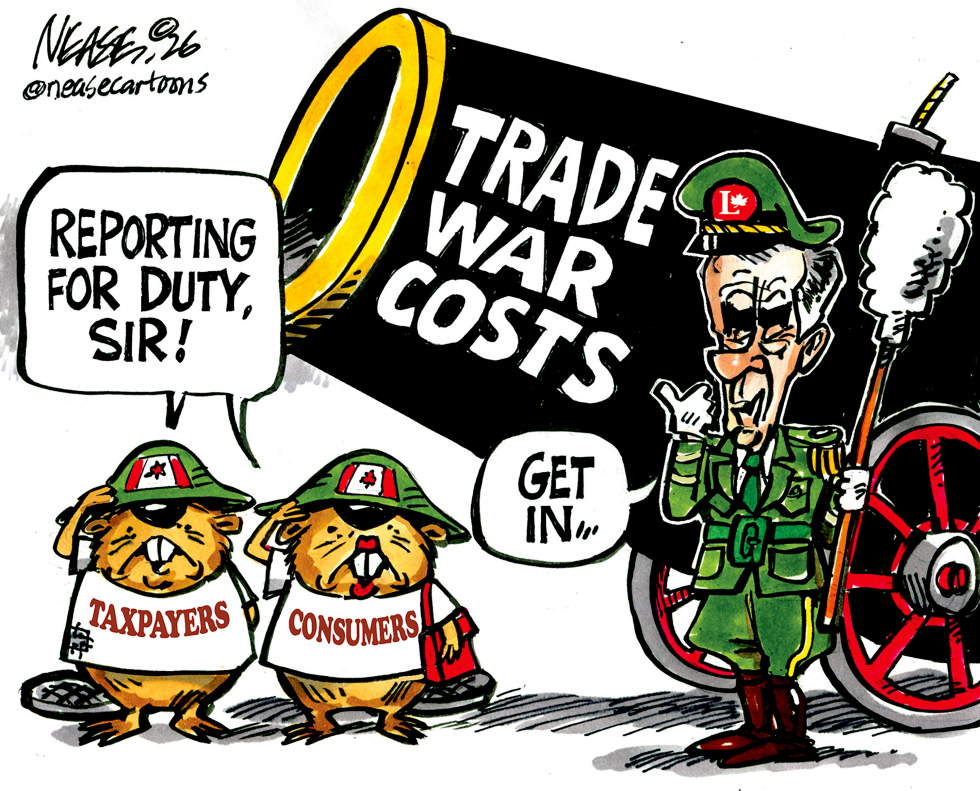
Canadian taxpayers and consumers face rising costs from an ongoing trade dispute. The situation places direct financial pressure on households through higher prices and economic measures. The editorial takes the position that ordinary citizens bear the burden while leadership directs the effort.
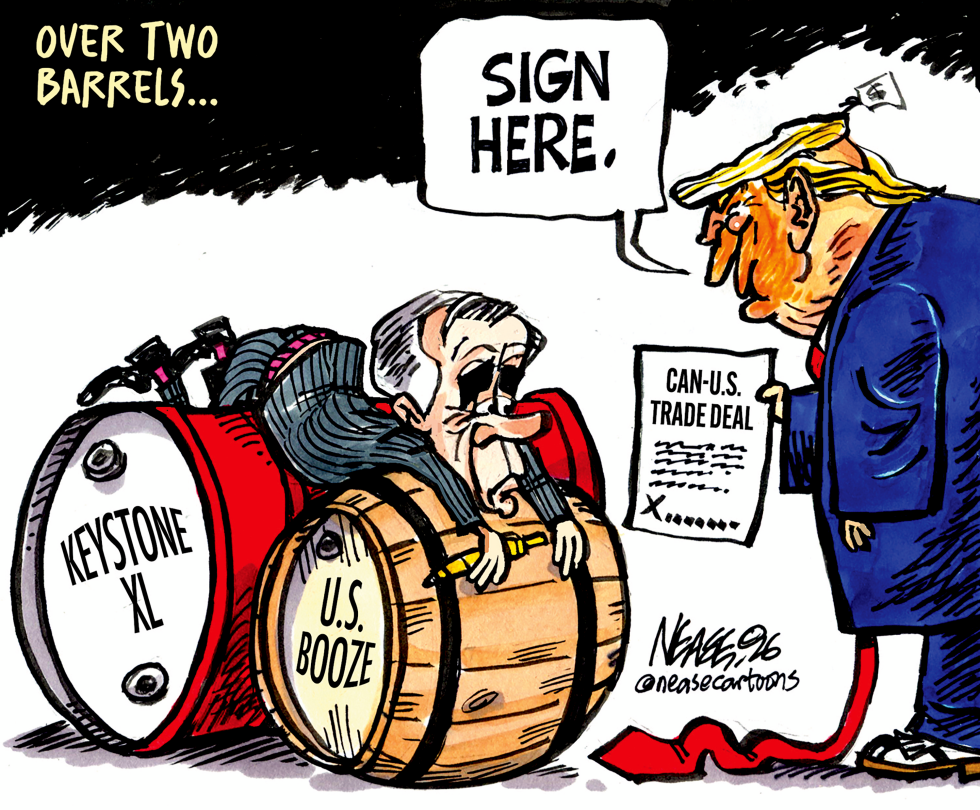
Donald Trump is pressing Canada to finalize a bilateral trade agreement by positioning the Canadian leader between a Keystone XL pipeline barrel and a U.S. booze barrel. The move ties energy infrastructure approval to broader trade concessions including alcohol exports. The editorial takes the position that such barrel-based pressure tactics risk undermining stable Canada-U.S. economic relations.
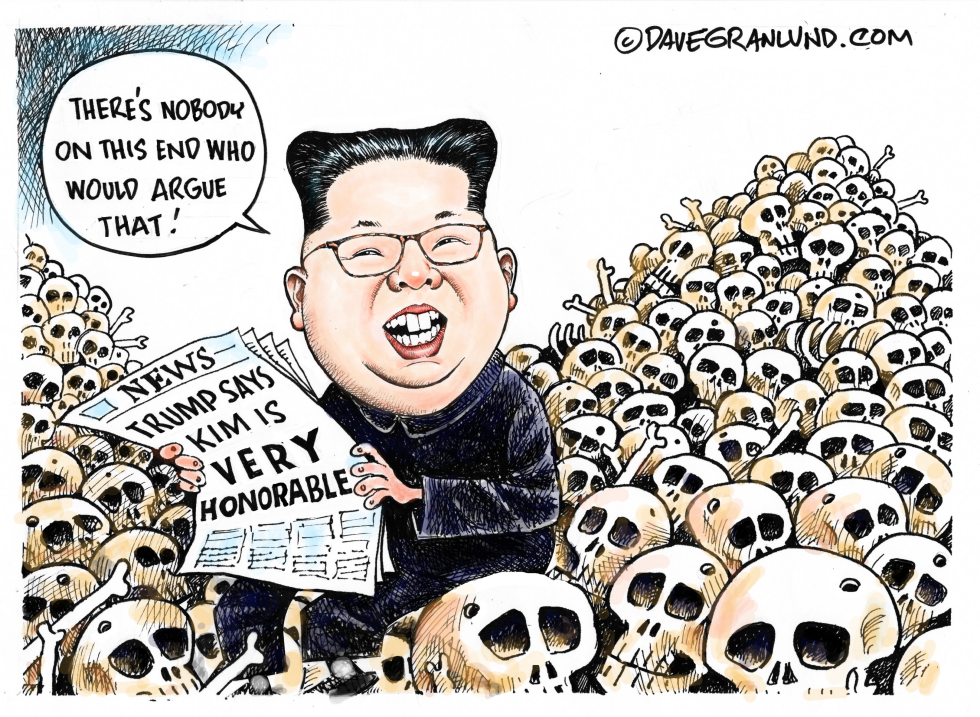
Donald Trump publicly described North Korean leader Kim Jong-un as very honorable. The remark revives questions about U.S. engagement with a regime long accused of severe human rights abuses and internal purges. Critics argue such language undercuts pressure on Pyongyang and signals weakness to allies. Supporters see it as pragmatic diplomacy aimed at reducing nuclear risks. The statement fits a pattern of personal assessments of foreign leaders that have drawn both support and condemnation depending on the political side. The editorial position holds that the praise ignores the human cost inside North Korea and weakens the moral standing of U.S. foreign policy.
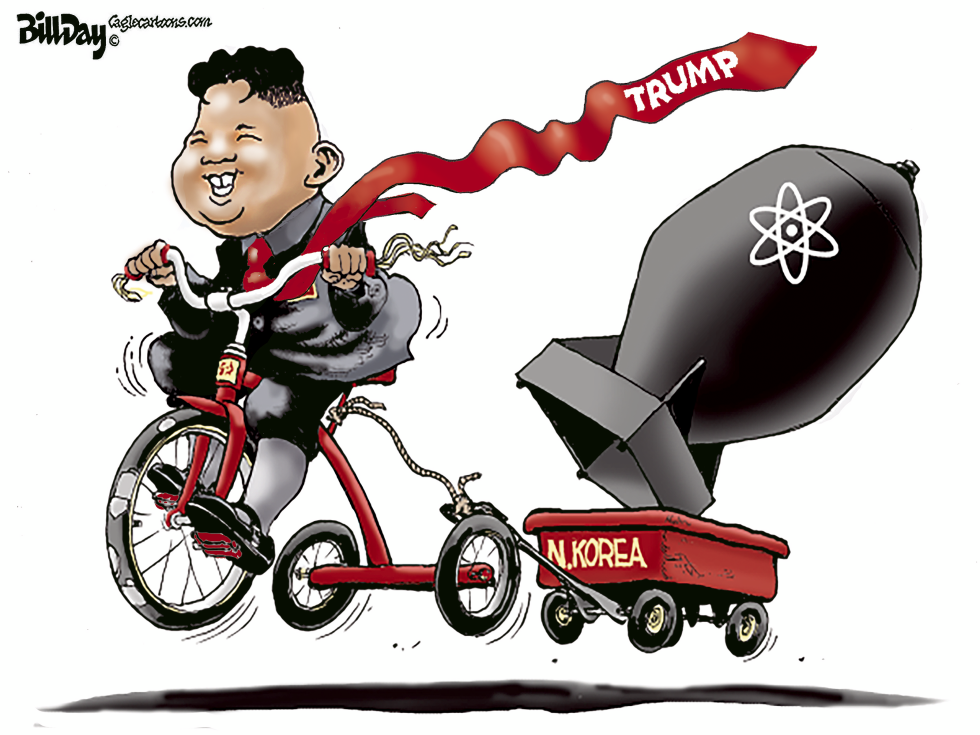
North Korea's leader Kim Jong-un is shown transporting a nuclear bomb on a child's tricycle and wagon toward Donald Trump. The image responds to ongoing tensions over North Korea's nuclear program and its direct implications for U.S. security under the Trump administration.
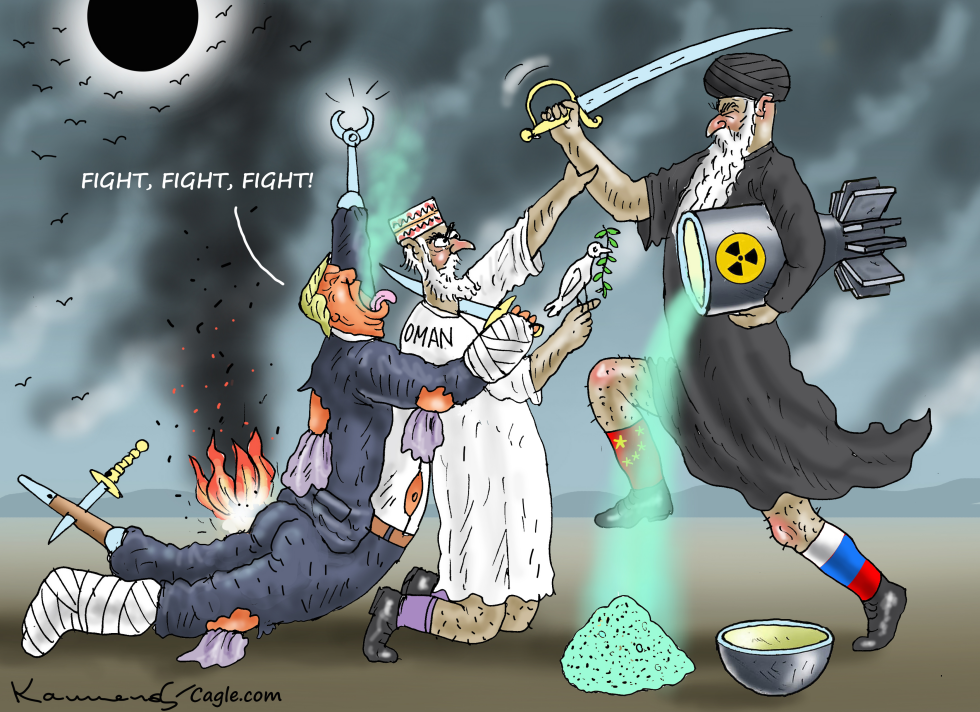
A confrontation involving the former president unfolded in Oman amid regional tensions with a nuclear capable participant. The incident highlights ongoing friction in Middle East diplomacy and arms concerns. The piece portrays the event as a chaotic clash where peace efforts compete with aggressive posturing.
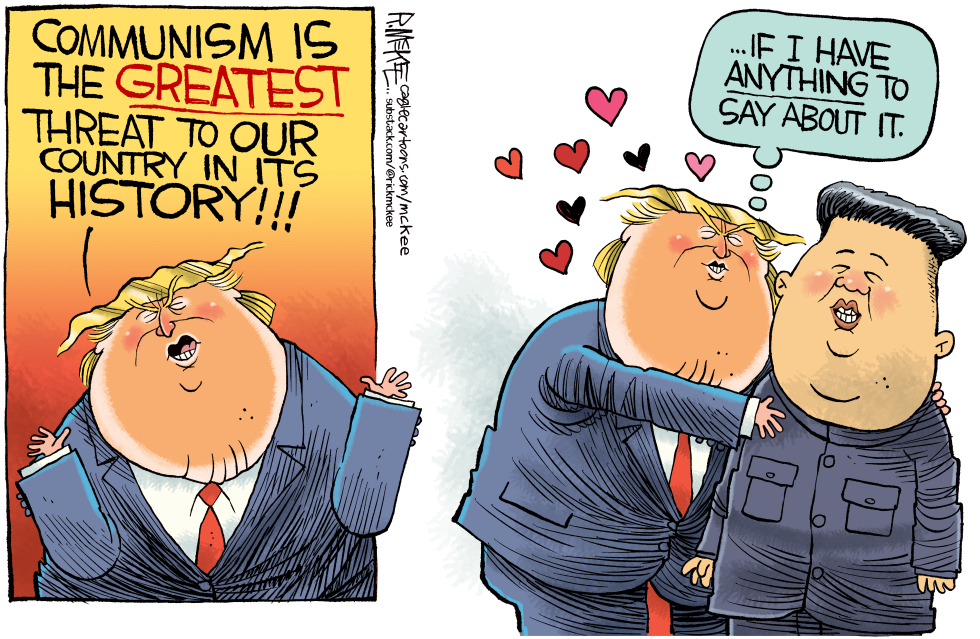
Donald Trump publicly labeled communism the greatest threat to the country before embracing North Korean leader Kim Jong Un. The image captures the shift in tone through contrasting scenes of protest and affection. The editorial position criticizes the inconsistency in the approach to the regime.
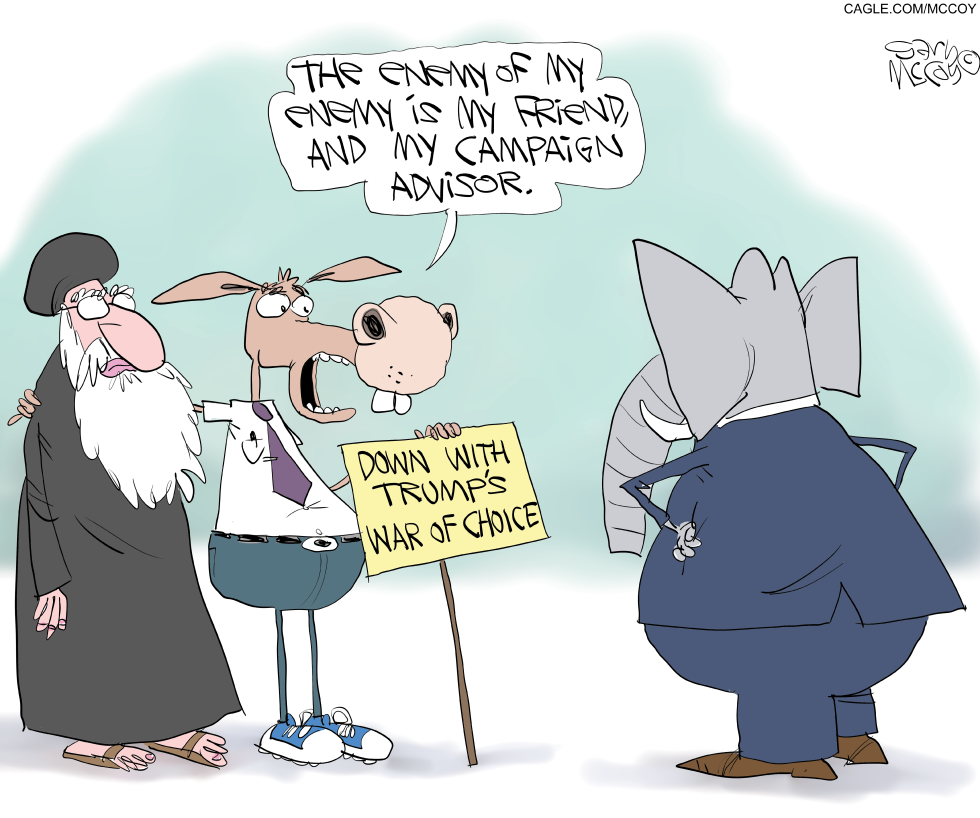
Democrats have signaled opposition to potential Trump administration actions toward Iran, framing them as unnecessary conflict. The alliance draws on shared criticism of U.S. policy in the Middle East. This dynamic highlights partisan divides over foreign engagement and raises questions about domestic political strategy. The piece portrays the partnership as opportunistic and shortsighted.
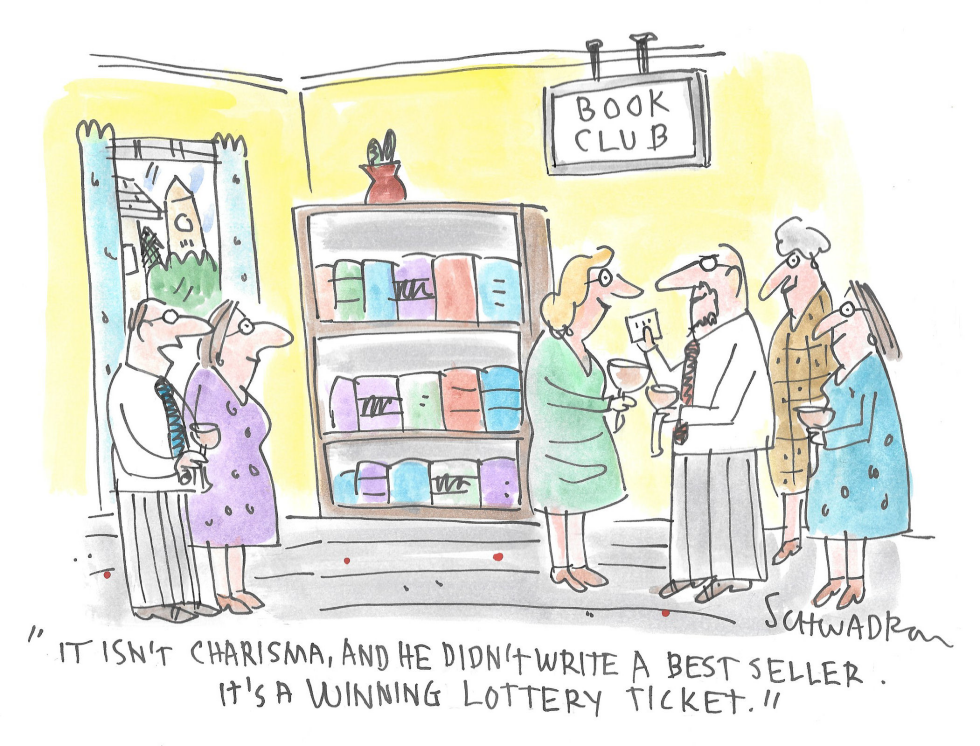
A book club gathering turns on a revelation about its leader's success. Members learn that a winning lottery ticket, not literary achievement or personal charisma, explains the group's draw. The situation highlights how unexpected windfalls can shape social circles and perceived status in casual settings. The piece presents the discovery as a straightforward explanation that undercuts assumptions about talent or appeal driving group interest.
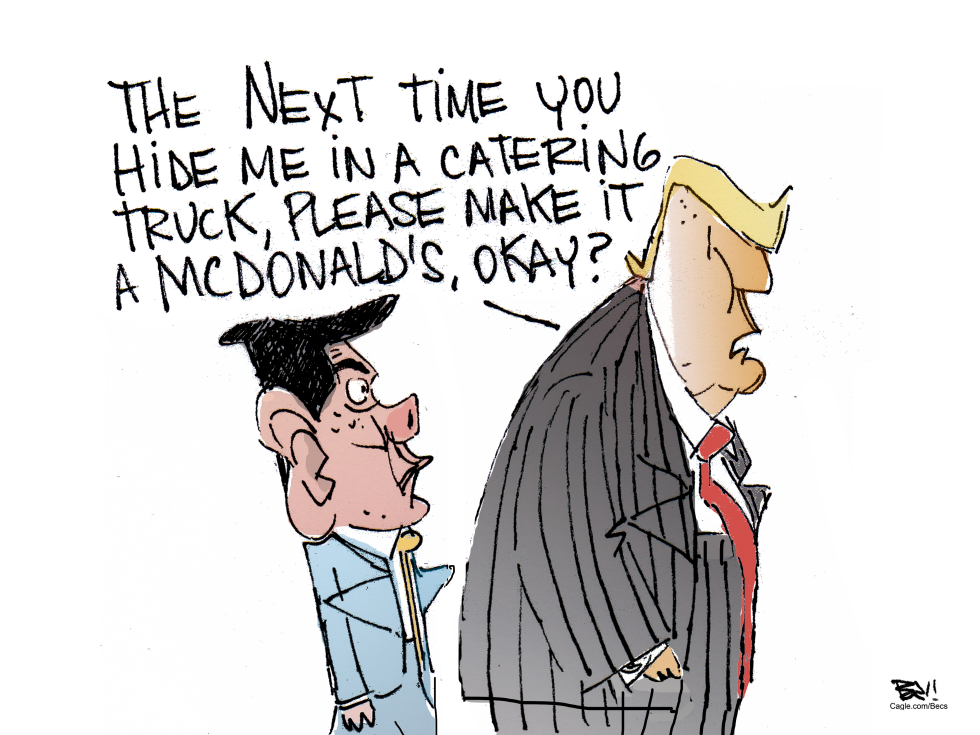
Argentinian President Javier Milei reportedly asked former President Donald Trump to arrange future concealment in a McDonald's catering truck. The request reflects ongoing political ties between the two leaders amid shared economic and foreign policy interests. The piece portrays the exchange as a lighthearted directive on logistics.