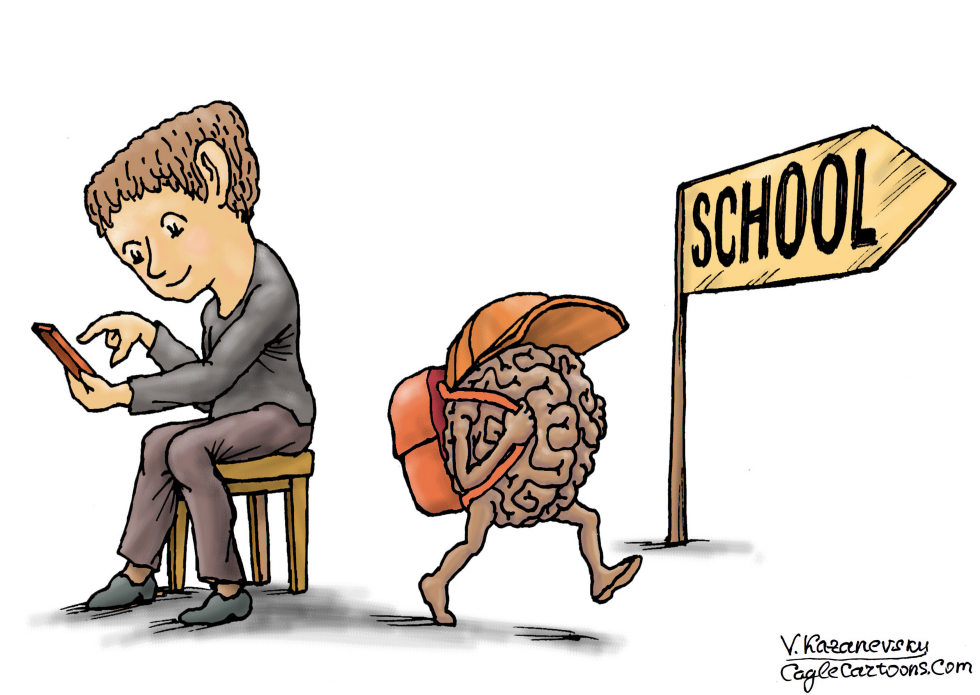
Schools continue to grapple with widespread smartphone use among students that diverts attention from classroom learning. The issue matters because constant device access fragments focus and reduces academic engagement at a critical developmental stage. The piece argues that the brain itself must literally head to school while the distracted student remains behind.
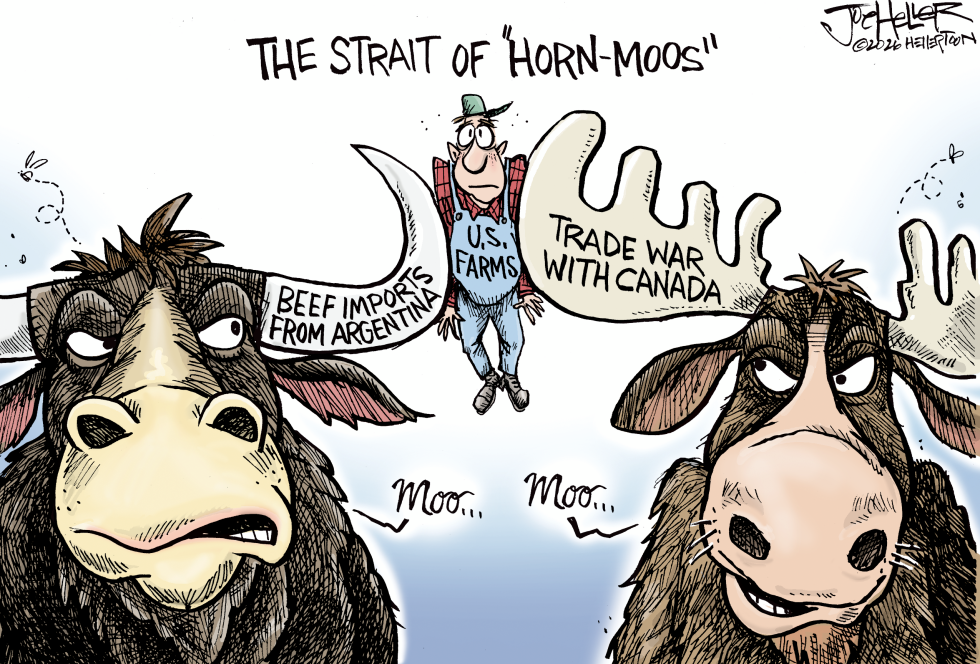
US agricultural interests face simultaneous pressure from increased beef imports from Argentina and an escalating trade dispute with Canada. The situation highlights how competing international trade policies directly affect domestic producers. The piece portrays American farms as caught in the middle of these conflicting pressures.
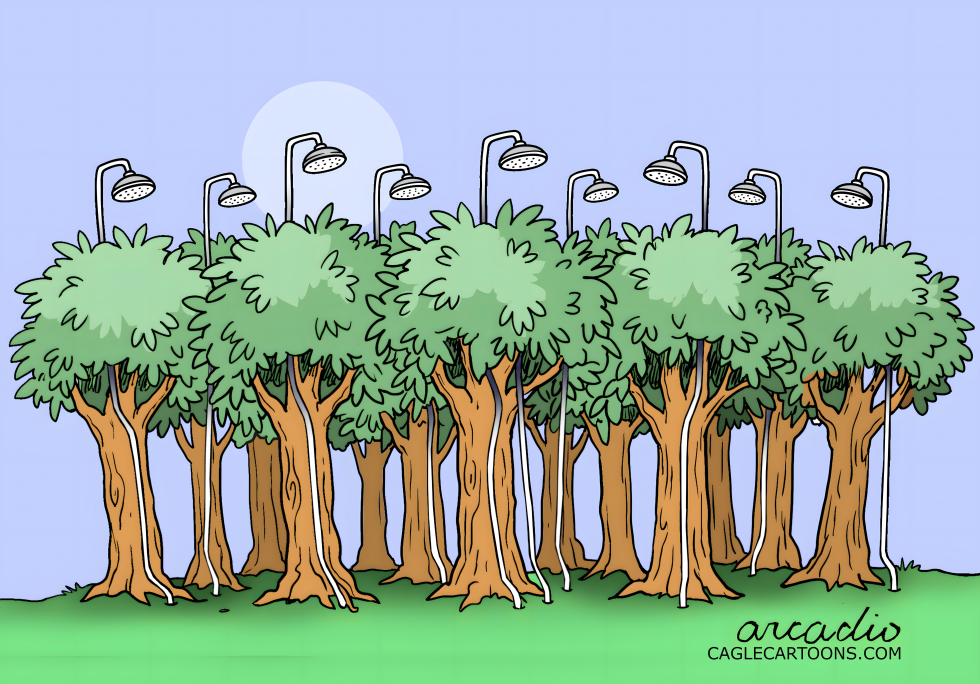
Forests in dry regions face heightened wildfire risks due to prolonged drought and climate patterns. Officials and environmental groups explore supplemental watering techniques to maintain tree moisture and reduce ignition potential. The approach matters because uncontrolled fires destroy habitats, release carbon, and threaten communities. The piece supports proactive hydration strategies as a practical step in broader fire prevention efforts.
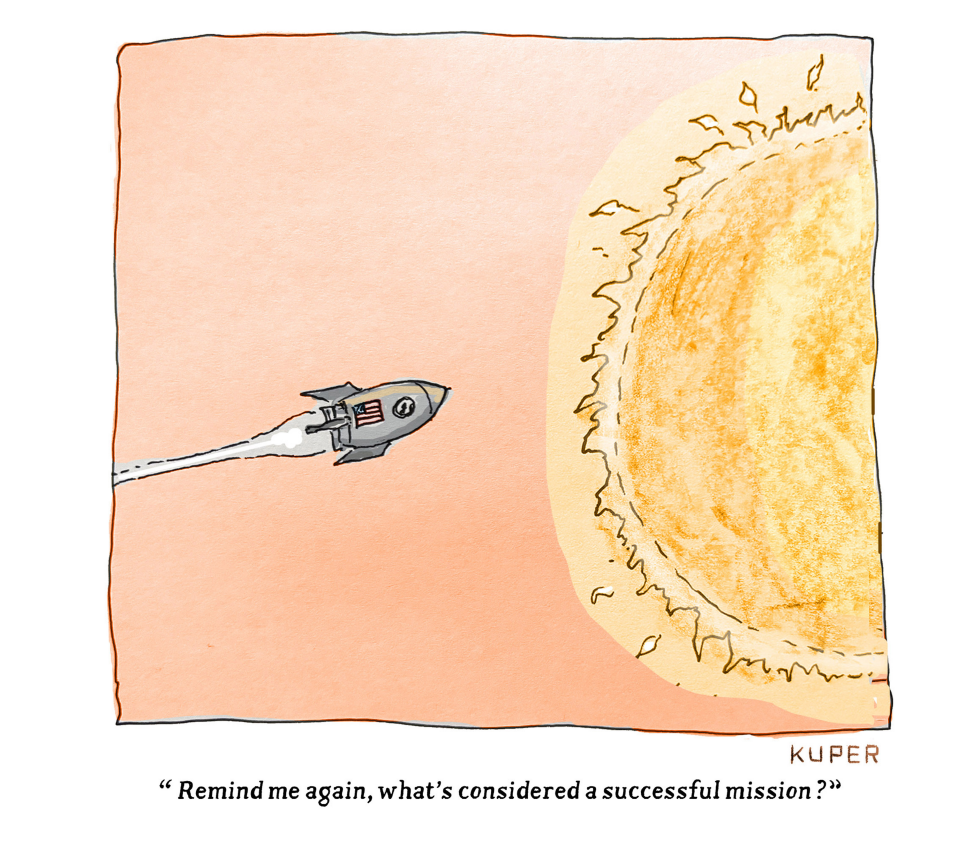
The cartoon shows a US-flagged missile streaking toward a large fiery orb, evoking an ill-defined strike on Iran. The caption questions the meaning of a successful mission. Published amid reports of Iranian nuclear activity and regional tensions, the image critiques the absence of an exit strategy. It references potential economic fallout such as closed shipping lanes and higher oil prices. The work also nods to internal administration finger-pointing involving JD Vance. Overall the piece underscores the hazards of military action without a coherent plan.
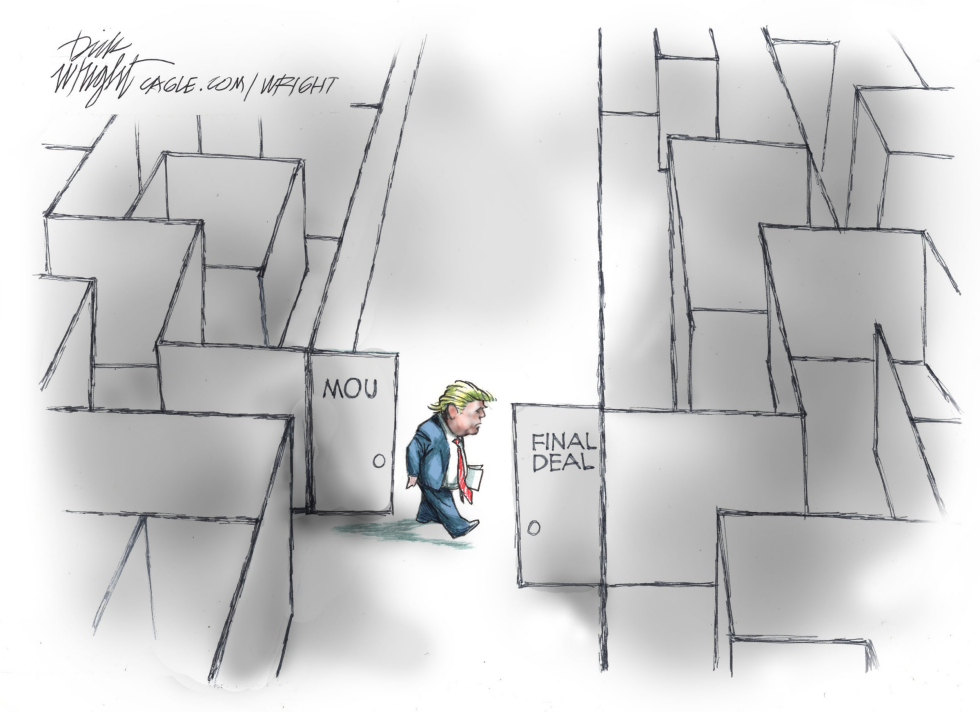
Donald Trump is shown navigating a maze of doors in a political cartoon dated June 18 2026. One door is labeled MOU and another FINAL DEAL. The image responds to reported steps toward an Iran agreement involving energy routes and domestic political reactions.
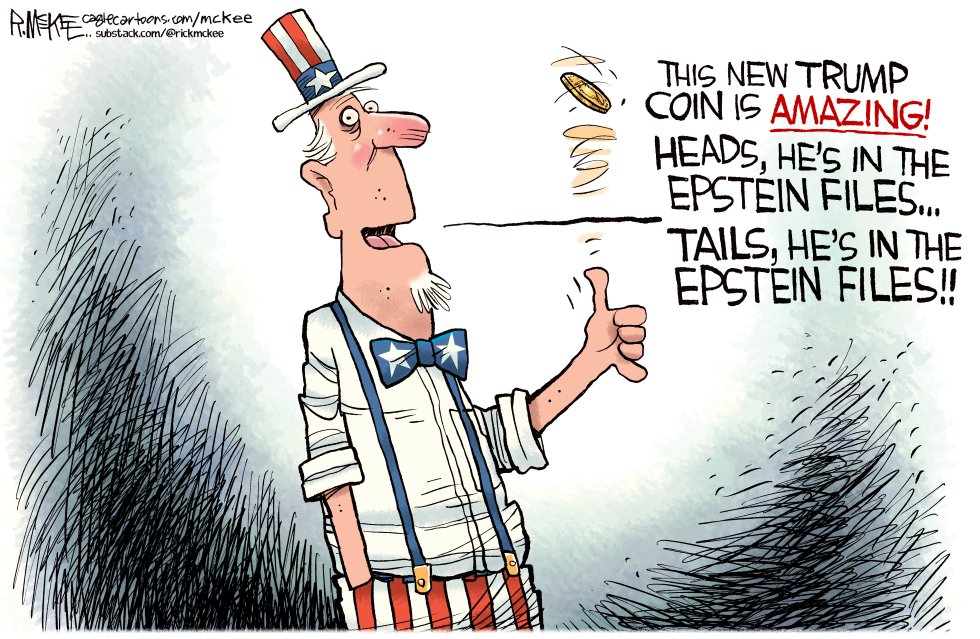
References to Donald Trump appearing in Jeffrey Epstein files have resurfaced in political discourse. The cartoon uses a coin flip to illustrate that scrutiny persists regardless of the outcome. It critiques the notion that any new development clears the former president.
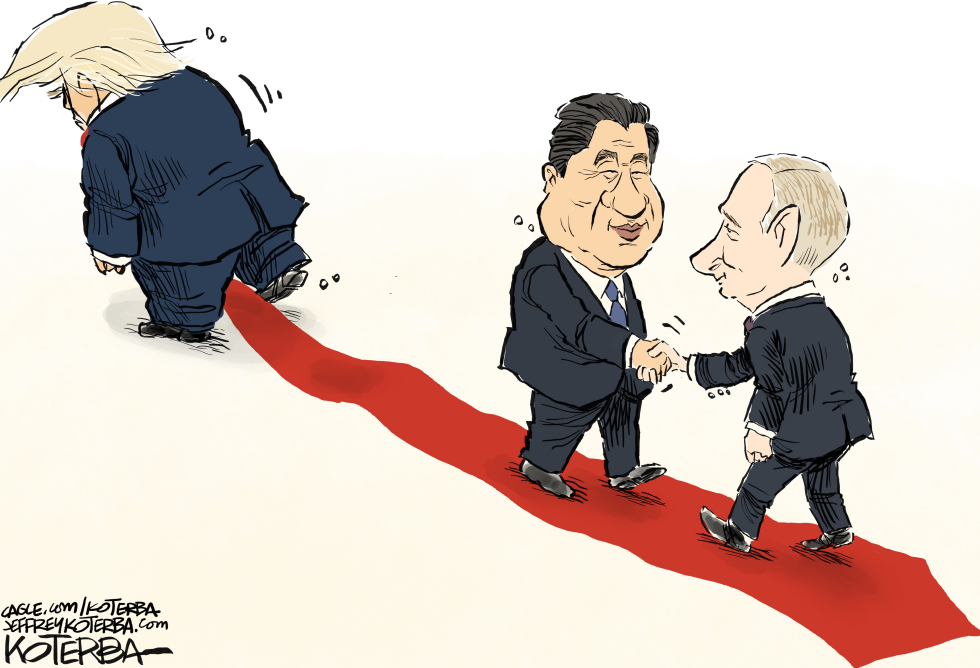
The image presents a simple cartoon scene with three figures in dark suits positioned along a red carpet. One figure with blonde hair is shown walking away toward the left edge. The remaining two figures face each other and clasp hands while standing on the carpet that stretches diagonally across the frame. Small motion lines and dots add basic movement details around the figures. The background remains plain and white with a signature block in the lower left corner.
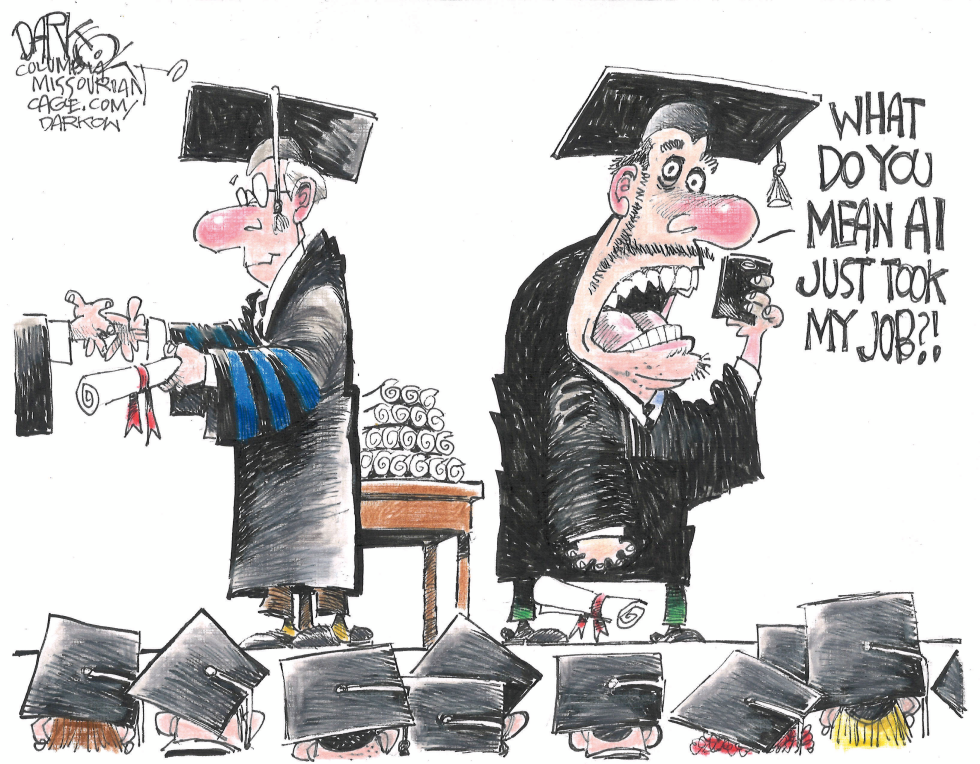
The cartoon depicts a graduation setting with an older figure presenting a diploma to one graduate and another graduate holding a small device with mouth open. Multiple mortarboards are visible at the bottom. Text reads WHAT DO YOU MEAN AI JUST TOOK MY JOB?! Artist signature appears in upper left.
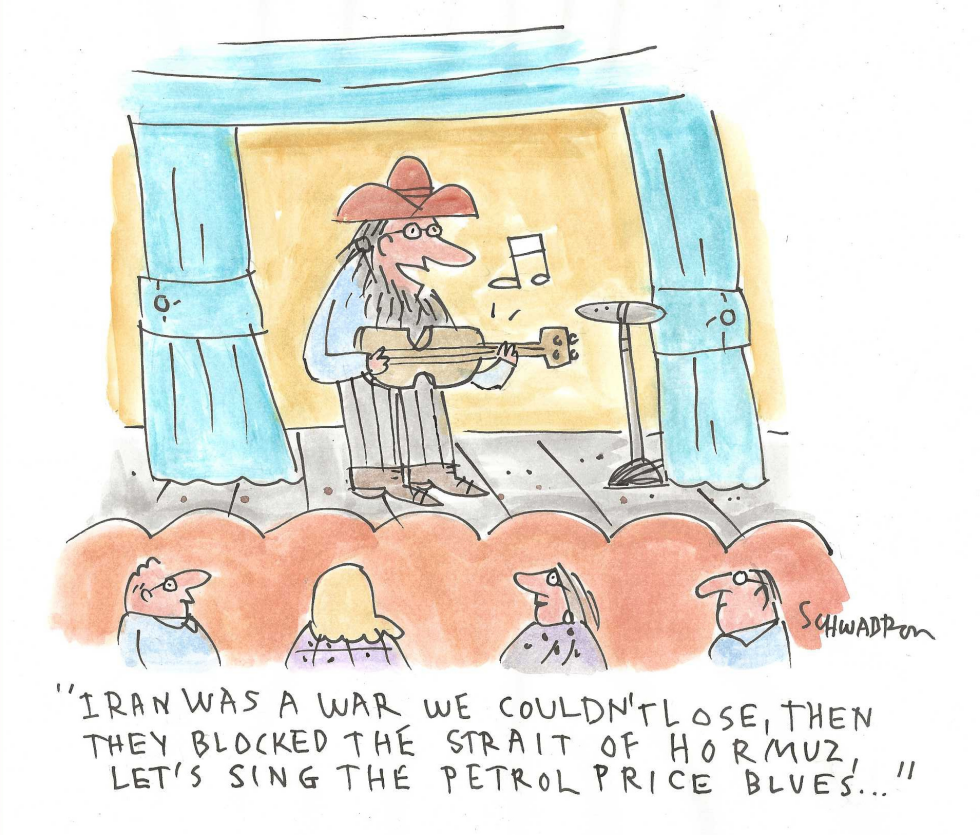
The cartoon depicts a guitarist on a stage with blue curtains and yellow backdrop singing about an unwinnable war with Iran followed by a blockade of the Strait of Hormuz that leads to higher petrol prices. Four audience members sit in the foreground. The scene uses simple lines and watercolor tones to show the performer with a music note floating nearby and a microphone stand to the side.
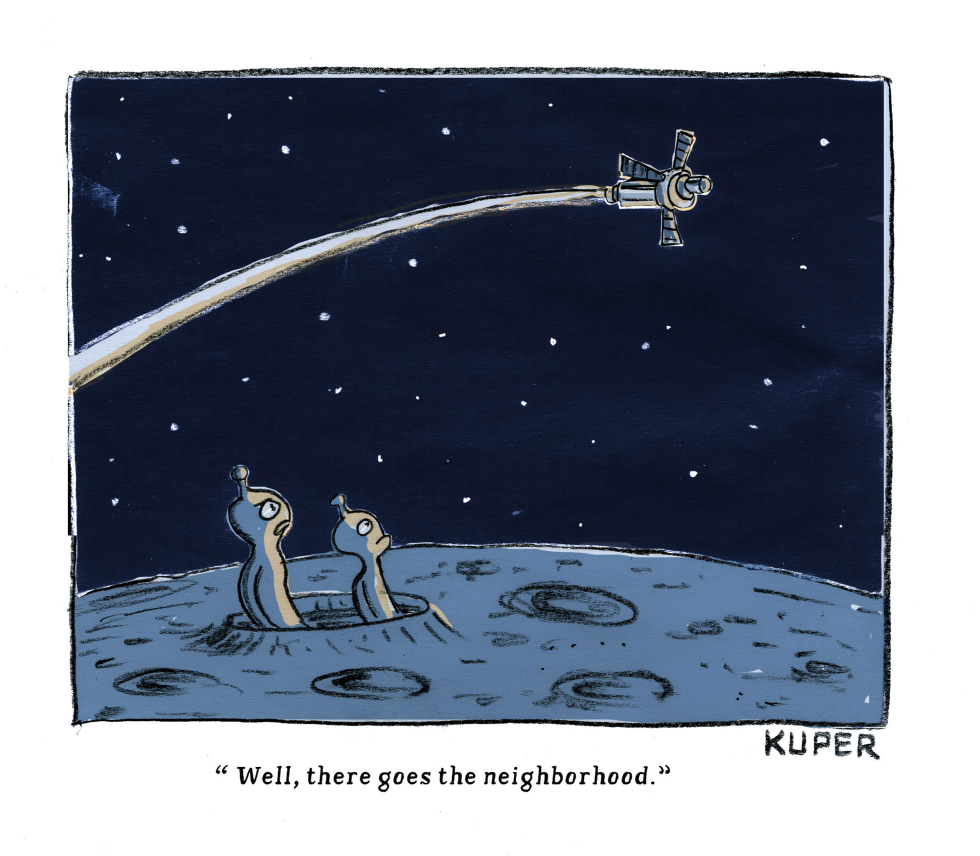
Peter Kuper's cartoon shows two blob-shaped aliens peeking from a crater on the moon's surface, eyes fixed on a departing rocketship trailing exhaust. The dark side of the moon setting includes craters and a starry sky, with the caption 'Well, there goes the neighborhood.' Tags like Artemis II, astronauts, Canada, United States NASA, dark side of the moon, and orbiting highlight the satirical take on human space exploration intruding on alien territory. The image pokes fun at the idea of extraterrestrials reacting to NASA's mission, blending science, data, and humorous alienation.
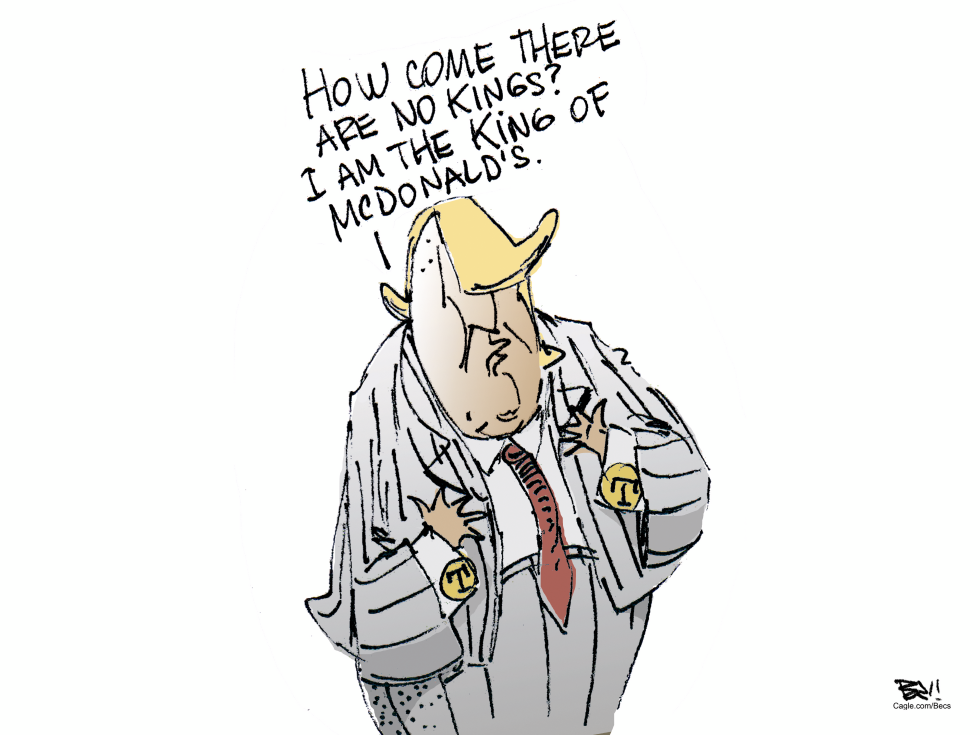
Becs's cartoon from 2026 captures a familiar figure in US politics, dressed in a white suit with yellow hair and hat, gesturing emphatically. The speech bubble reads, 'How come there are no kings? I am the king of McDonald's!' This piece tags into Donald Trump Administration themes, portraying the subject as Not King yet self-proclaimed ruler of McDonalds, emphasizing traits like Glutton, Egomaniac, Bad Guy, Dictator, and Arrogant. It's a straightforward jab at overblown self-importance, common in political satire. The simple line art keeps focus on the absurdity, making it shareable for those tracking Trump-era humor. Cagle.com hosts such works, blending dry wit with insider commentary on power and excess.
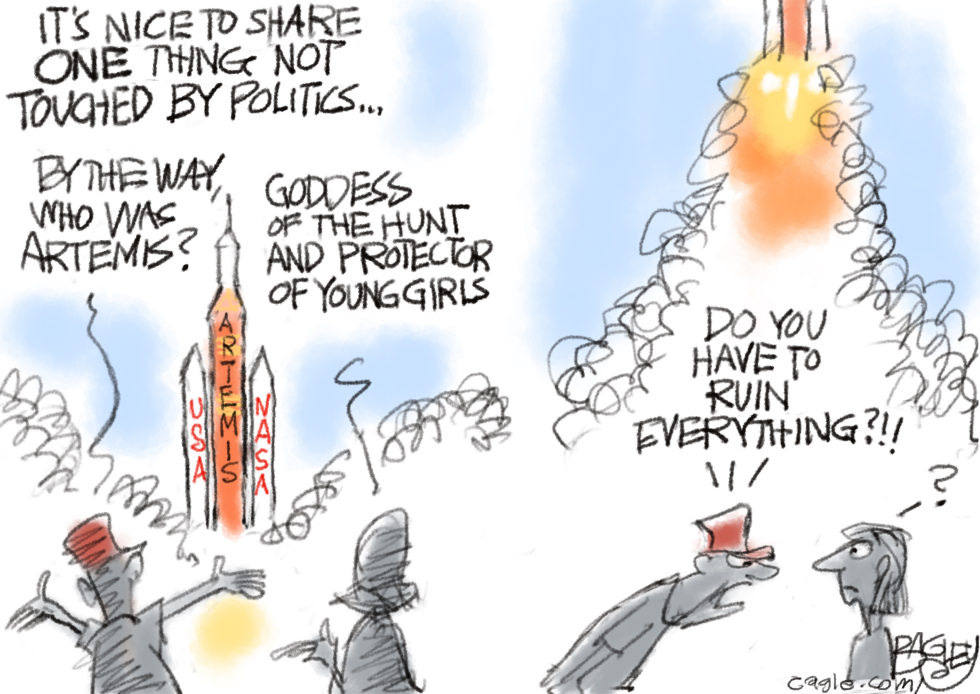
This political cartoon features a launching rocket labeled Artemis, SLS, NASA, and USA, with overlaid text praising one thing untouched by politics before asking about the goddess Artemis, described as goddess of the hunt and protector of young girls. A figure exclaims frustration at ruining everything, satirizing how even space missions get dragged into cultural debates. The irreverent sketch uses humorous figures with red hats to poke at over-politicization in science, blending mythology with modern rocketry in a witty critique. Tags like Artemis rocket launch political cartoon, NASA SLS Artemis mission satire, and politics invading science editorial cartoon underscore the cartoon's sharp insight into societal divisions spilling into apolitical realms like space exploration politicized cartoon.
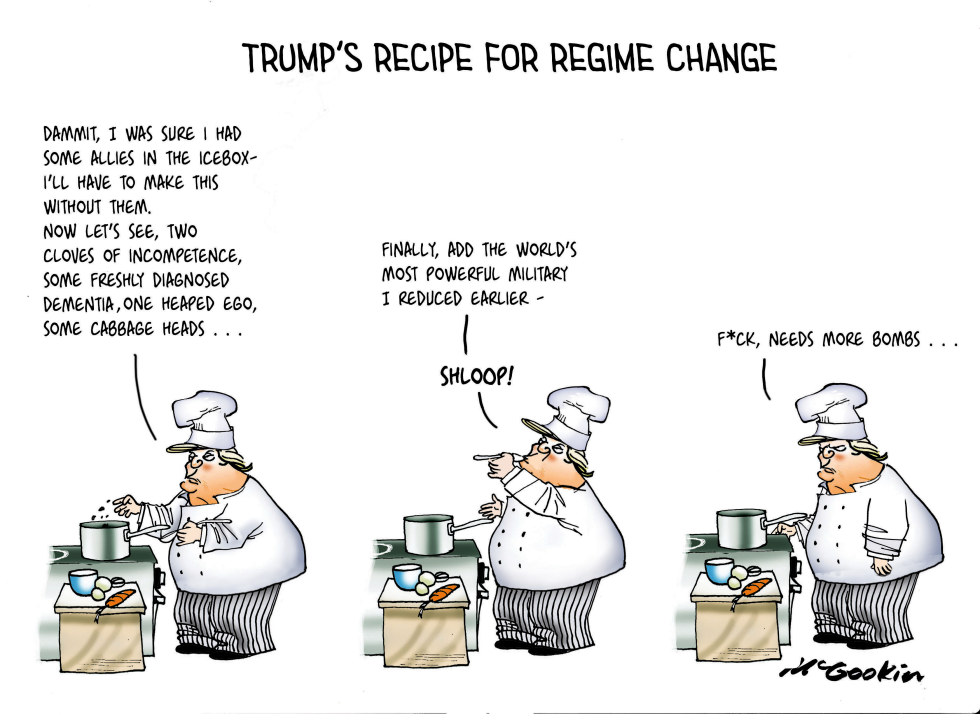
The image shows Donald Trump depicted as a chef preparing a dish labeled regime change. Three panels illustrate adding ingredients like incompetence and dementia then reducing military power before demanding more bombs. The work responds to ongoing tensions involving Iran and regional conflicts as of March 2026.
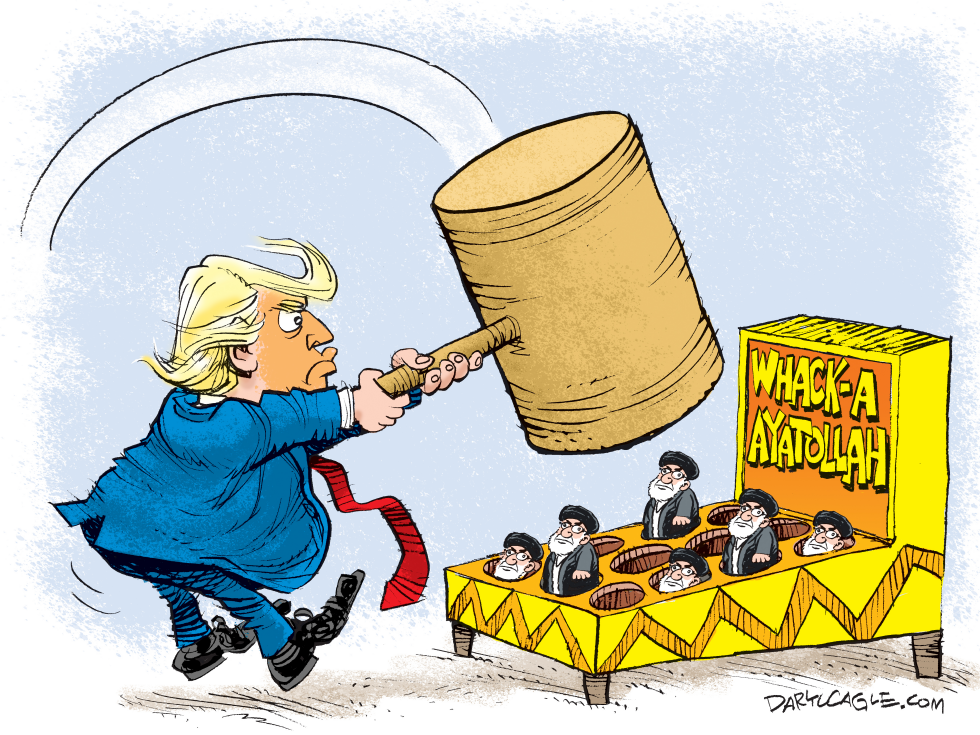
The cartoon shows Donald Trump in a blue suit swinging a massive wooden mallet at figures resembling Iranian Ayatollahs emerging from holes in a yellow arcade machine labeled Whack-A Ayatollah. The president appears mid-swing with motion lines indicating effort. The image comments on US policy toward Iran by framing the conflict as a repetitive carnival game where targets keep reappearing. Publication occurs during a period of heightened US-Iran tensions over nuclear issues and regional influence. The visual metaphor suggests difficulty in permanently resolving the challenge despite repeated attempts.