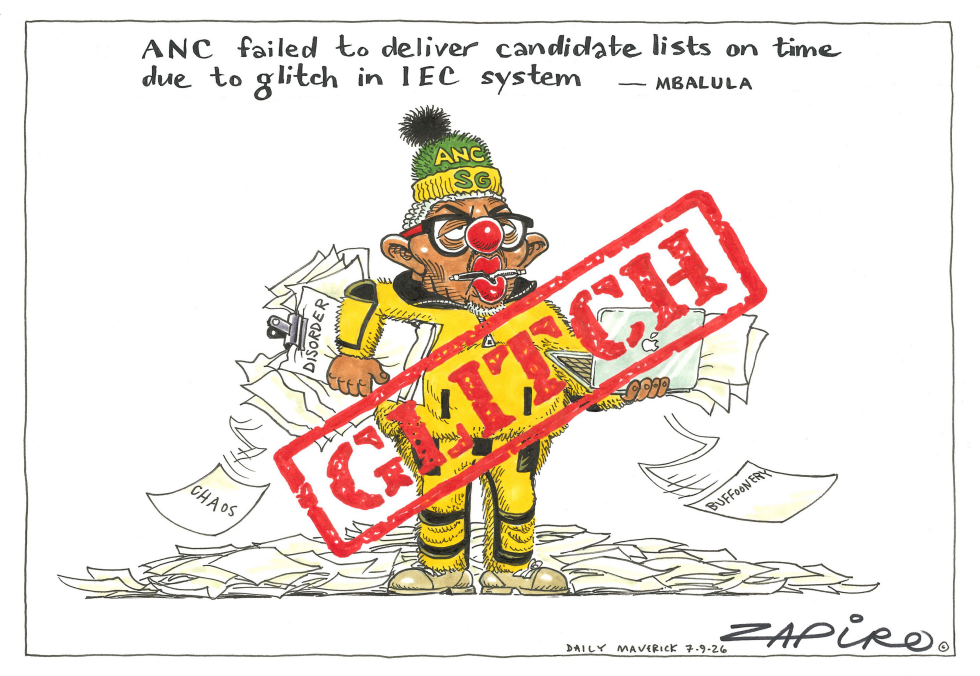
ANC secretary general Fikile Mbalula attributed the party's failure to submit candidate lists on time to a technical glitch in the Independent Electoral Commission system. The claim came as the party faced internal disarray ahead of upcoming elections. The cartoon portrays the excuse as a transparent attempt to mask organizational failure and buffoonery.
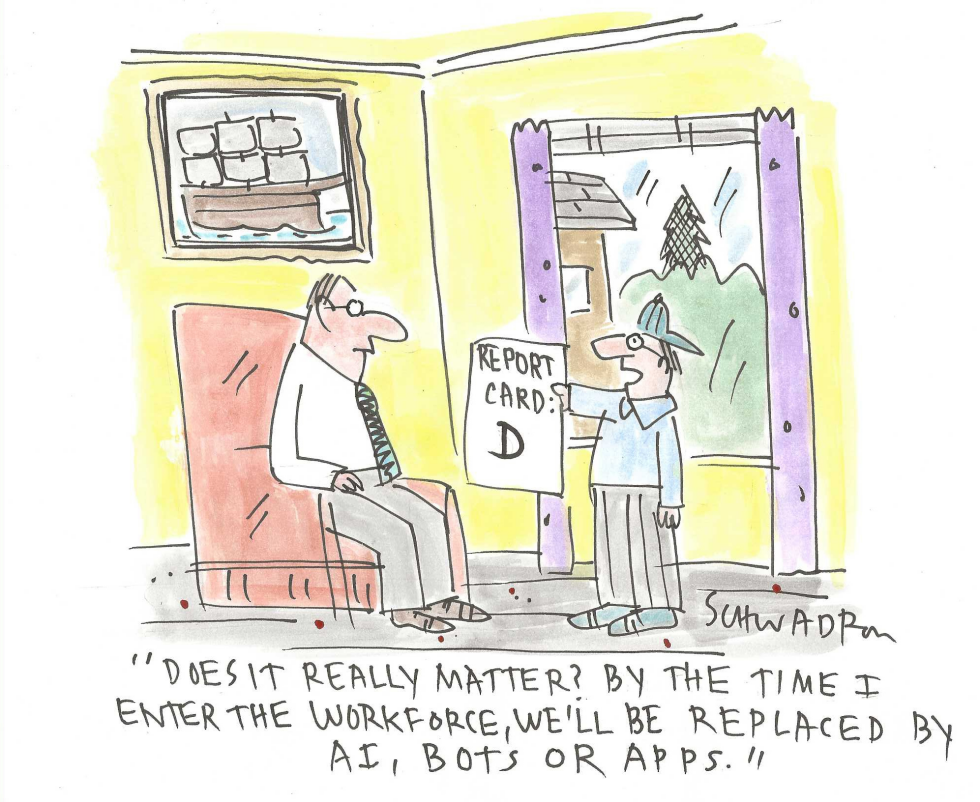
Rising student skepticism about academic effort stems from widespread predictions that AI and automation will eliminate many jobs before today's students graduate. The cartoon responds to this dynamic by showing a student using those forecasts to shrug off a poor grade. It highlights how fears of technological displacement may undermine motivation in schools. The piece suggests such excuses reflect a broader cultural shift where traditional education credentials appear less relevant. The editorial stance questions whether this mindset accelerates the very problems it cites.
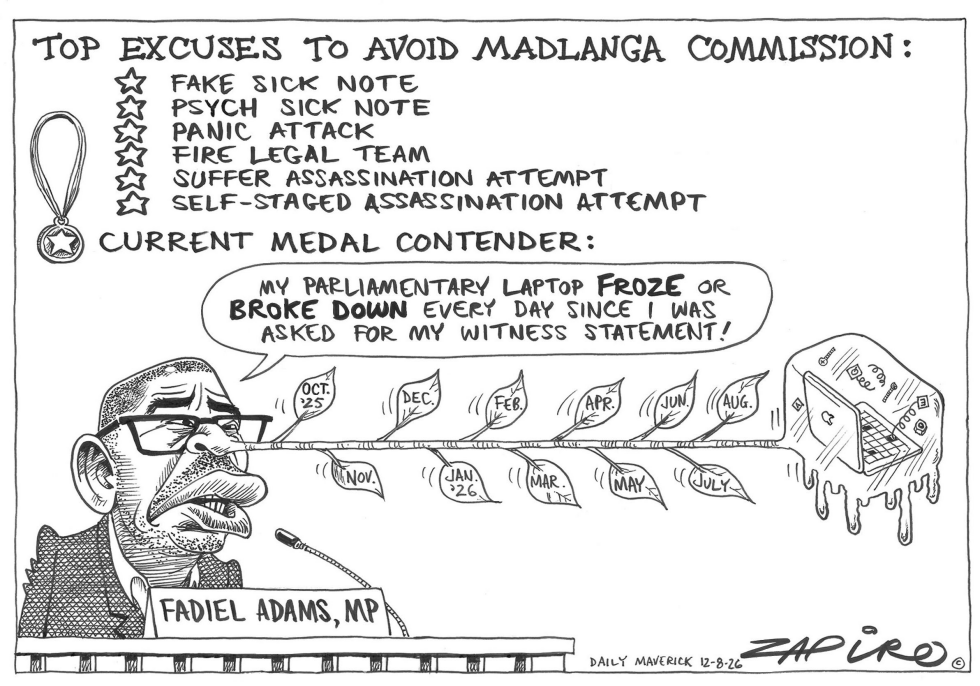
Fadiel Adams, an MP, told the Madlanga Commission his parliamentary laptop froze or broke daily since he received a witness request. The claim follows a pattern of delays in high-profile inquiries involving political figures. The piece highlights the excuse as the latest in a series of avoidance tactics, underscoring skepticism toward repeated claims that stall accountability processes.
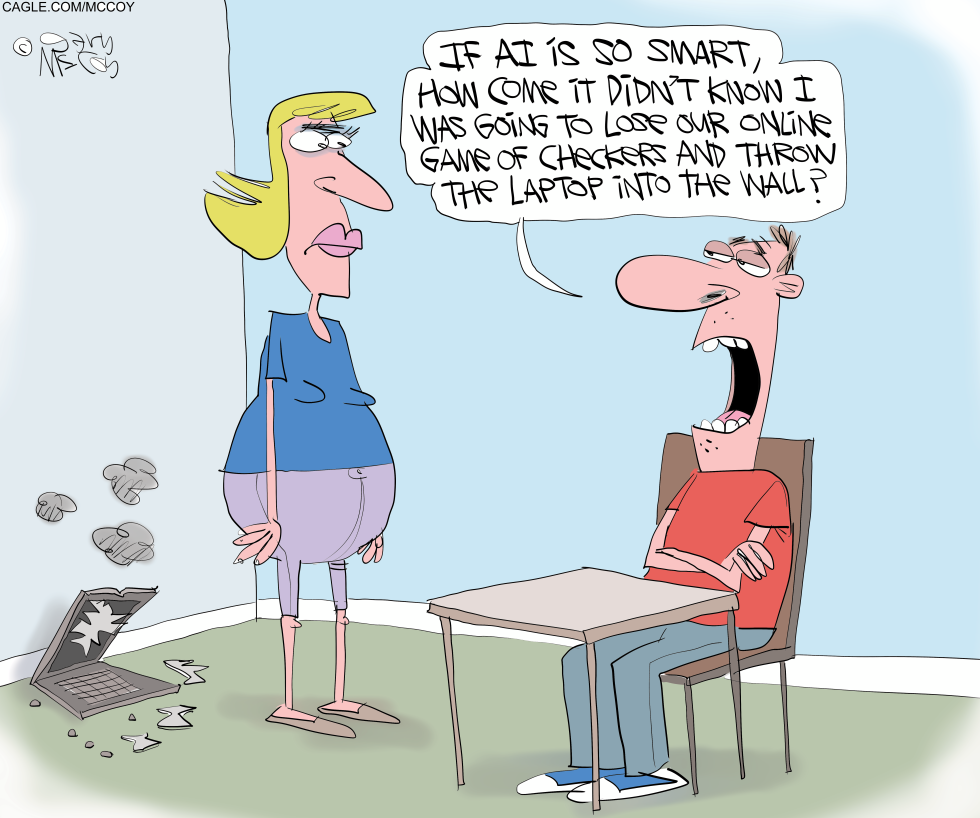
A man attributes his loss in an online checkers match and subsequent damage to a laptop on AI shortcomings. The situation reflects a common tendency to shift responsibility for personal errors onto emerging technology. The piece takes the position that such excuses reveal more about human behavior than about AI capabilities.
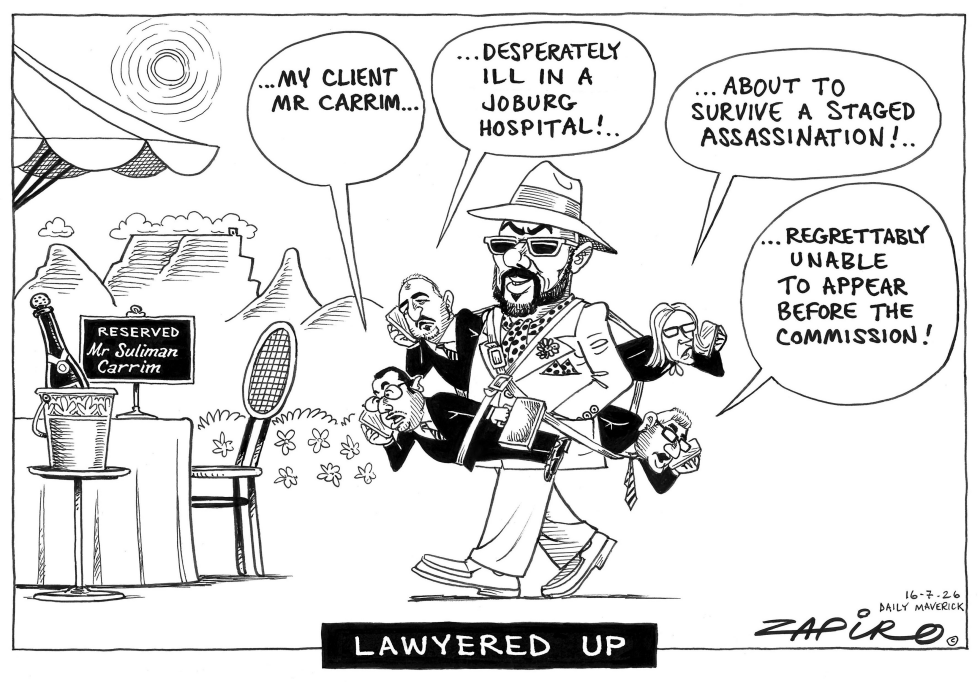
A lawyer named Suliman Carrim is depicted carrying clients who offer dramatic excuses to avoid testifying before a commission. The scene highlights repeated efforts to delay or evade official proceedings through claims of illness and danger. The editorial position criticizes the use of such tactics to obstruct accountability.
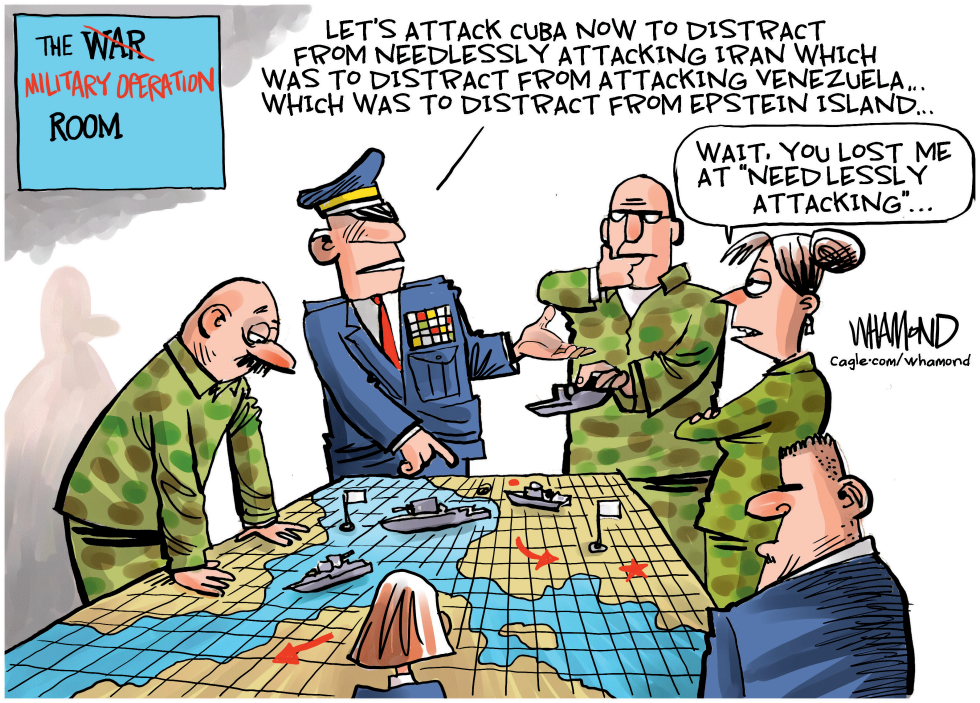
Dave Whamond's political cartoon depicts a group of military officials in a war room, gathered around a map with toy ships, discussing a chain of distractions starting from attacking Cuba to cover needless attacks on Iran, which distracted from Venezuela, looping back to Epstein Island. The scene captures the absurdity with one figure pointing at the map and another expressing confusion over 'needlessly attacking.' This satirical illustration uses dry humor to comment on convoluted military strategies and political diversions, incorporating elements like crossed-out 'War' sign replaced by 'Military Operation Room' for added irony. Tags like political satire, war distractions, foreign policy cartoon, Epstein Island reference, military humor, and endless distraction chain emphasize the cartoon's sharp critique.
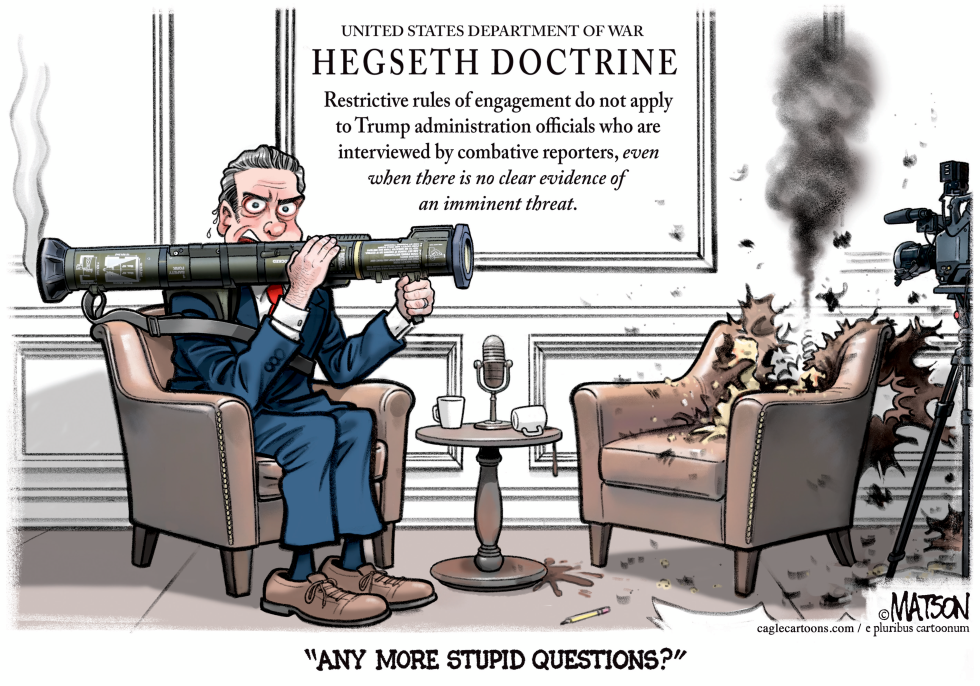
R.J. Matson's cartoon depicts a stern-faced official in a formal setting, wielding a massive rocket launcher that has just obliterated the interviewer's chair, smoke billowing from the debris. The header proclaims the 'Hegseth Doctrine' under the 'United States Department of War,' stating that restrictive rules of engagement don't apply to Trump administration officials facing combative reporters, even without clear evidence of an imminent threat. The official snarls, 'Any more stupid questions?' as a camera topples amid the chaos. This setup skewers the notion of overreactive defenses in political interviews, blending dry humor with sharp commentary on media relations. Tags like Hegseth Doctrine, Trump administration satire, press interview violence, combative reporters parody, imminent threat joke, and political cartoon Matson capture the essence of this visually punchy critique.
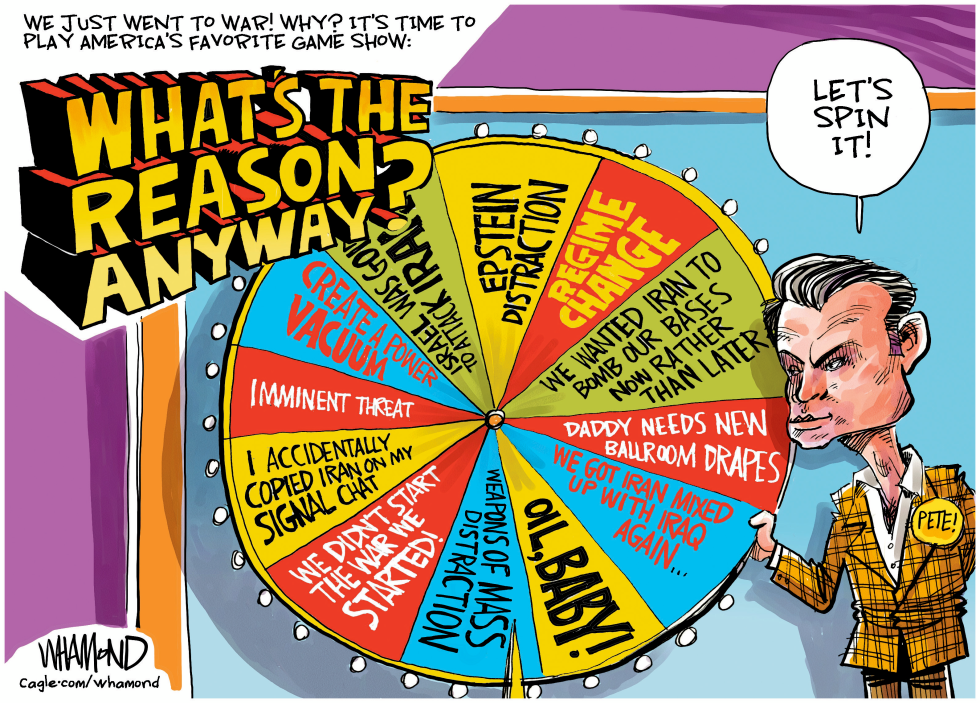
Dive into this biting political cartoon where America's war decisions are reduced to a game show parody wheel, featuring options like 'Imminent Threat,' 'Oil, Baby!,' and 'Regime Change.' The irreverent satire targets US foreign policy, highlighting how military interventions often spin on flimsy pretexts, from accidental escalations to resource grabs. With a host eagerly spinning the wheel, the artwork cleverly critiques the absurdity of war justifications, blending humor with insightful commentary on geopolitical cynicism. Tags like political cartoon, war justifications, and military intervention humor underscore its viral potential in today's polarized discourse.
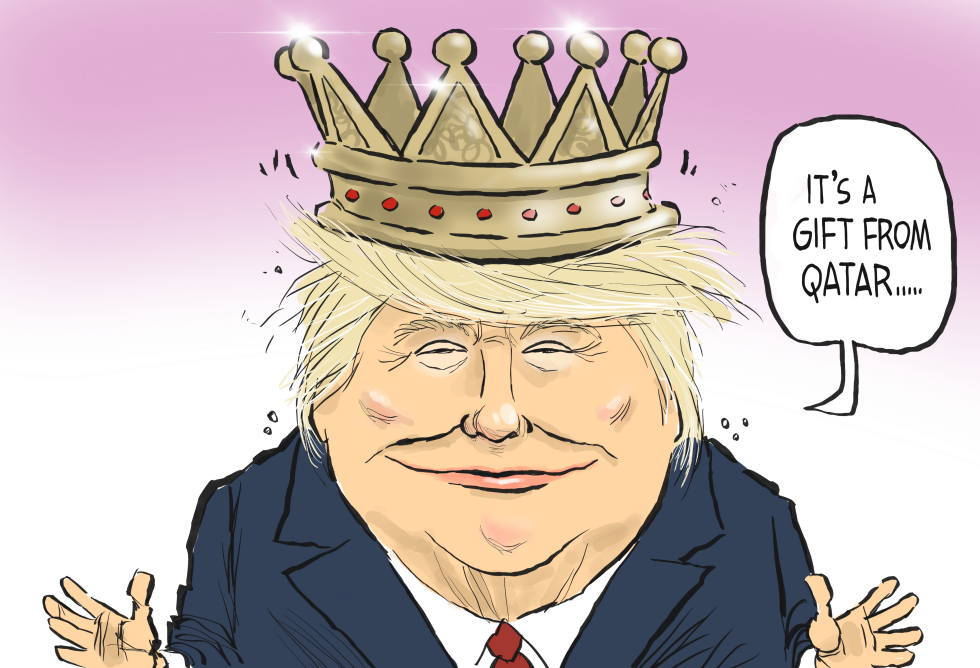
Jeff Koterba's cartoon captures Trump in a suit, topped with a golden crown that sparkles against a pink background, his hands outstretched as he speaks in a bubble: 'It's a gift from Qatar...!!' The tags like Qatar, Trump, crown, king, gift, ethics point to satire on political perks. Cartoons like this thrive on exaggeration, here turning Trump into a kingly figure accepting foreign gifts without a blink. It's straightforward humor, poking at ethics without overcomplicating the visuals. Readers see the crown as a clear symbol of assumed royalty, tied to tags on free gifts and potential scandals. Such pieces remind us how cartoons cut through the noise with simple, sharp imagery.