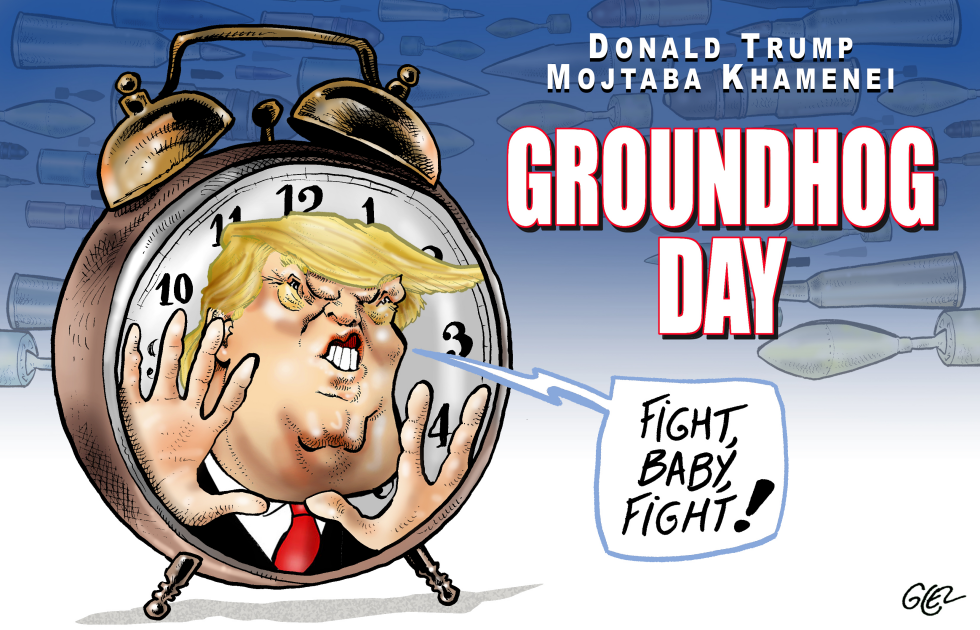
On September 3 2026 the cartoon highlights the recurring pattern of US-Iran tensions involving Donald Trump and Mojtaba Khamenei. The piece frames their renewed standoff as an endless Groundhog Day loop marked by missile threats and bellicose rhetoric. It argues that the same actors and dynamics keep producing the same dangerous cycle without resolution.
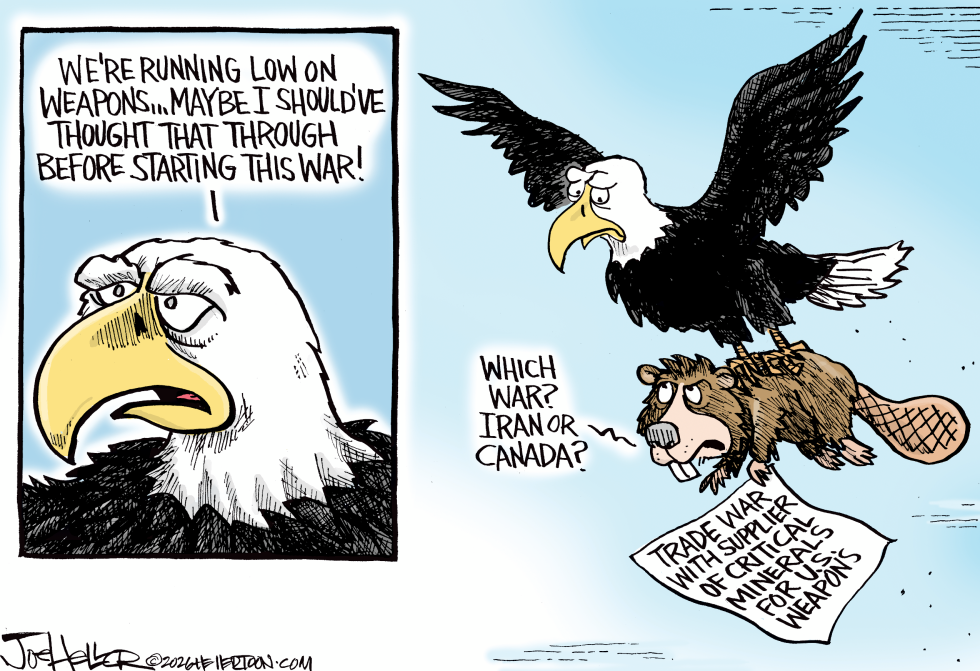
The United States faces potential weapons shortages linked to trade tensions with Canada, a key supplier of critical minerals, while also managing conflicts involving Iran. The situation highlights risks to military readiness from disrupted supply chains. The piece argues that initiating trade disputes with essential partners undermines defense capabilities at a critical time.
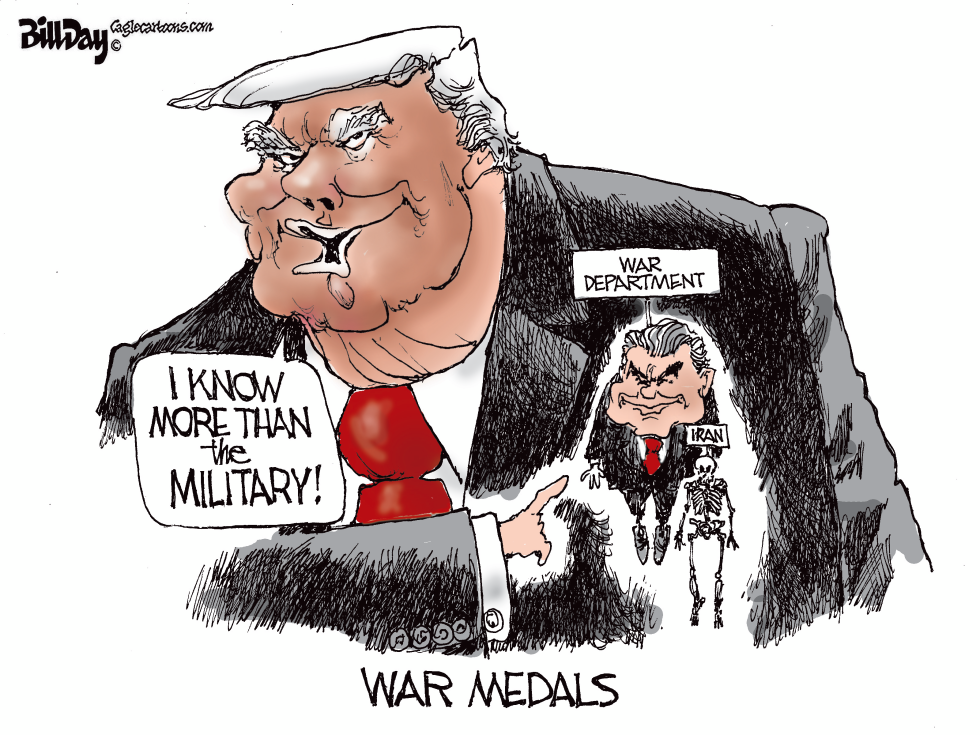
Donald Trump publicly stated he knows more than the military on defense matters as tensions with Iran persisted into late summer 2026. The remark revived questions about civilian oversight of the armed forces and the administration's approach to potential conflict. Critics argued the comment undermined professional military advice at a sensitive time. Supporters viewed it as decisive leadership. The cartoon frames the statement as hollow by linking it to a depleted war department and Iran references, suggesting the boast lacks substance and risks escalation without real expertise.
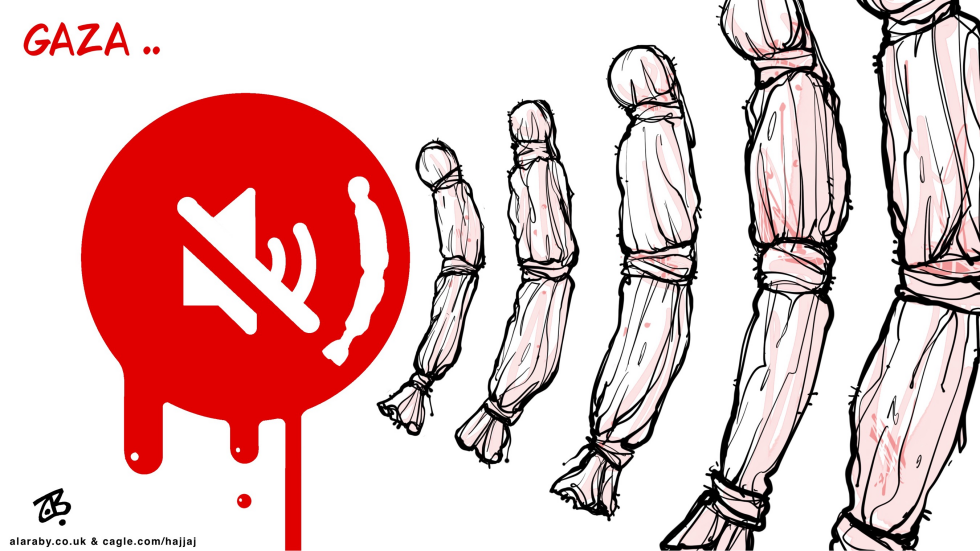
Ongoing conflict in Gaza continues to draw international attention to civilian casualties and restrictions on reporting. The piece responds to persistent calls for attention amid claims of media and global silence. It positions the mute symbol as a direct critique of inaction on reported suffering. The editorial stance emphasizes the need to break that silence and acknowledge the human cost in the region.
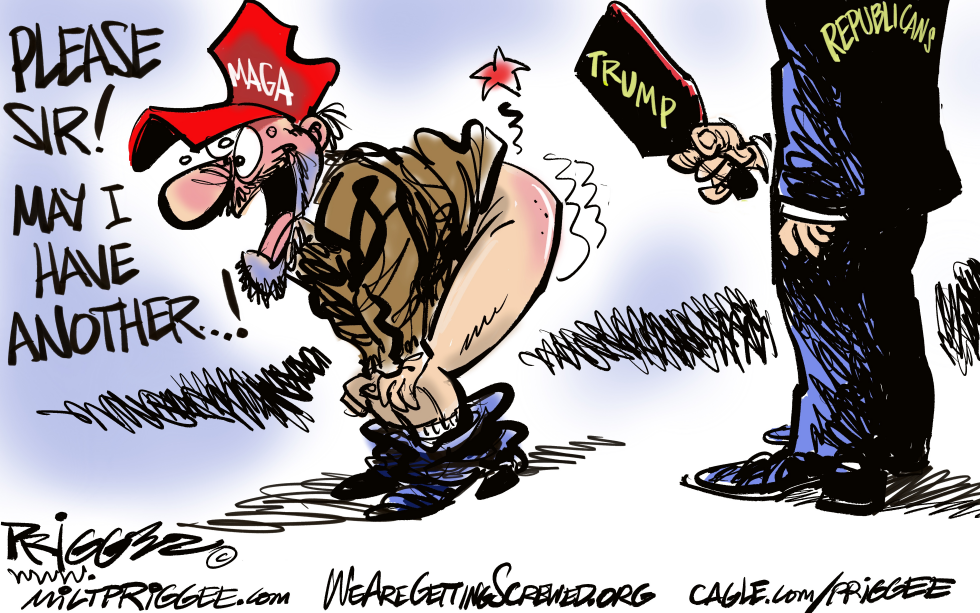
The cartoon depicts a caricature of Donald Trump bent over with pants down, pleading 'Please sir! May I have another!' while a Republican figure holds a Trump-labeled book ready to strike. Published September 1, 2026, the image comments on the power relationship between Trump and the Republican Party after recent electoral events.
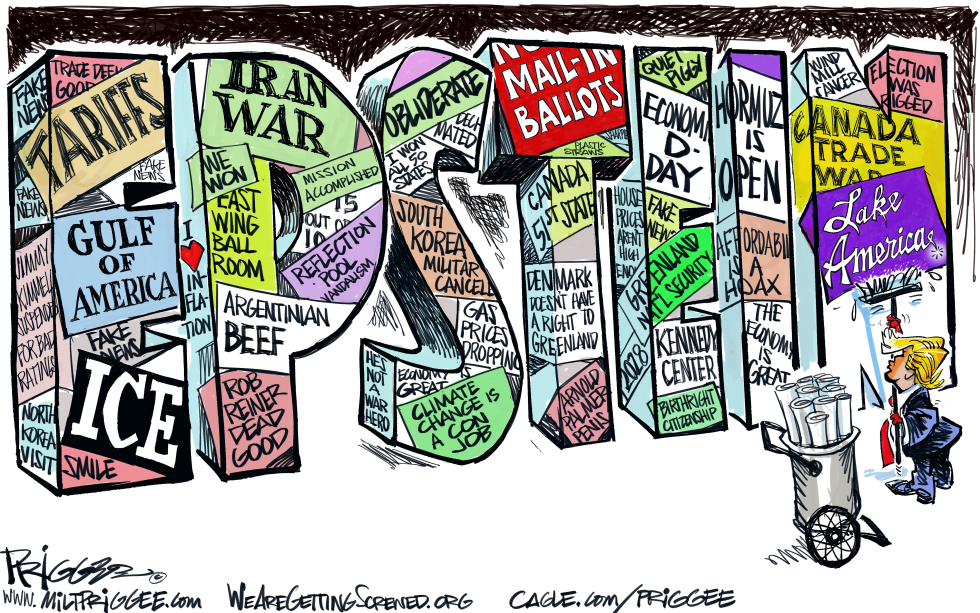
Donald Trump appears in a September 2026 cartoon pushing a cart stacked with signs promoting tariffs, questioning mail-in ballots, and asserting claims about Iran, Canada trade, and domestic issues. The image captures a pattern of public messaging that blends economic nationalism with repeated challenges to established processes. The editorial position frames these statements as a deliberate strategy to keep multiple controversies in motion at once.
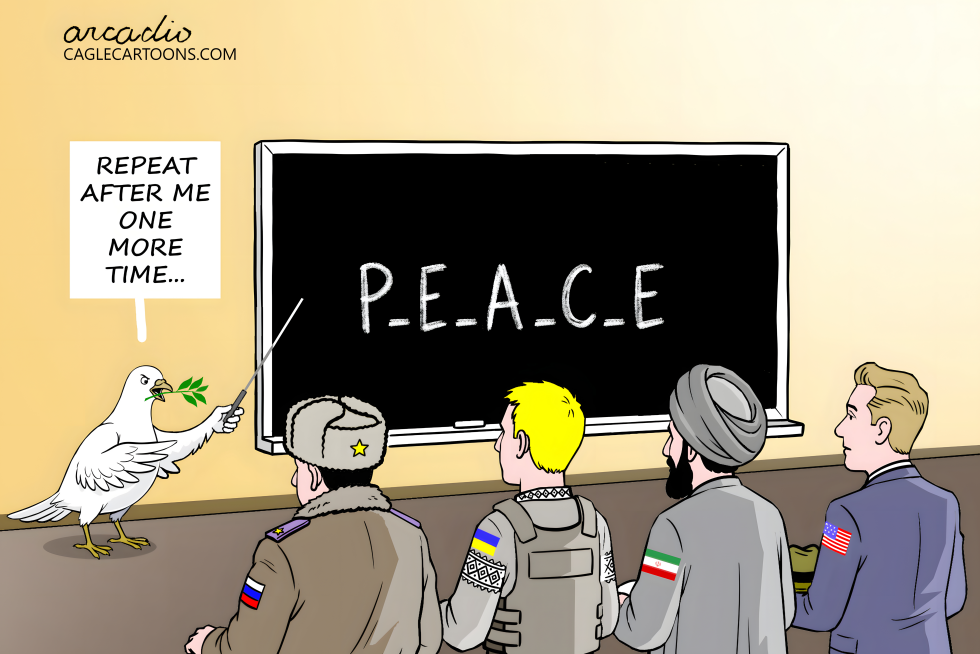
Ongoing tensions in the Russia-Ukraine war continue to draw in Iran and the United States with little progress toward resolution. The four nations remain locked in a cycle of confrontation and limited talks. The cartoon argues that the parties still cannot grasp even the simplest concept of peace despite repeated instruction.
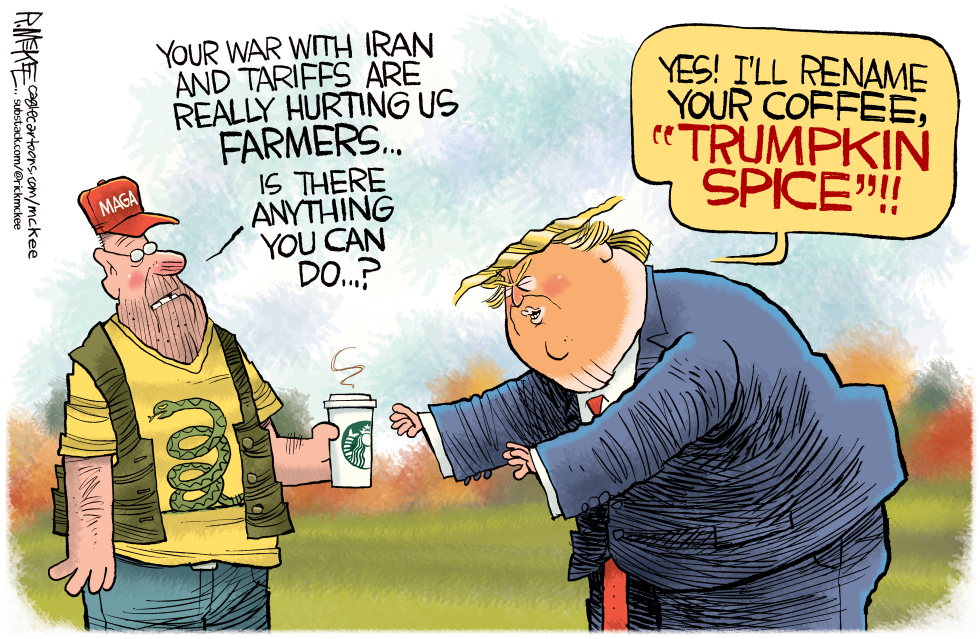
Farmers have raised concerns over the effects of tariffs and tensions with Iran on their livelihoods. President Trump responded by proposing to rename their coffee Trumpkin Spice rather than adjusting policy. The exchange underscores the administration's approach to addressing rural economic complaints through branding gestures instead of substantive relief measures. Critics argue this misses the core issues facing agricultural communities. The cartoon presents the interaction as emblematic of misplaced priorities in handling trade disputes and international relations.
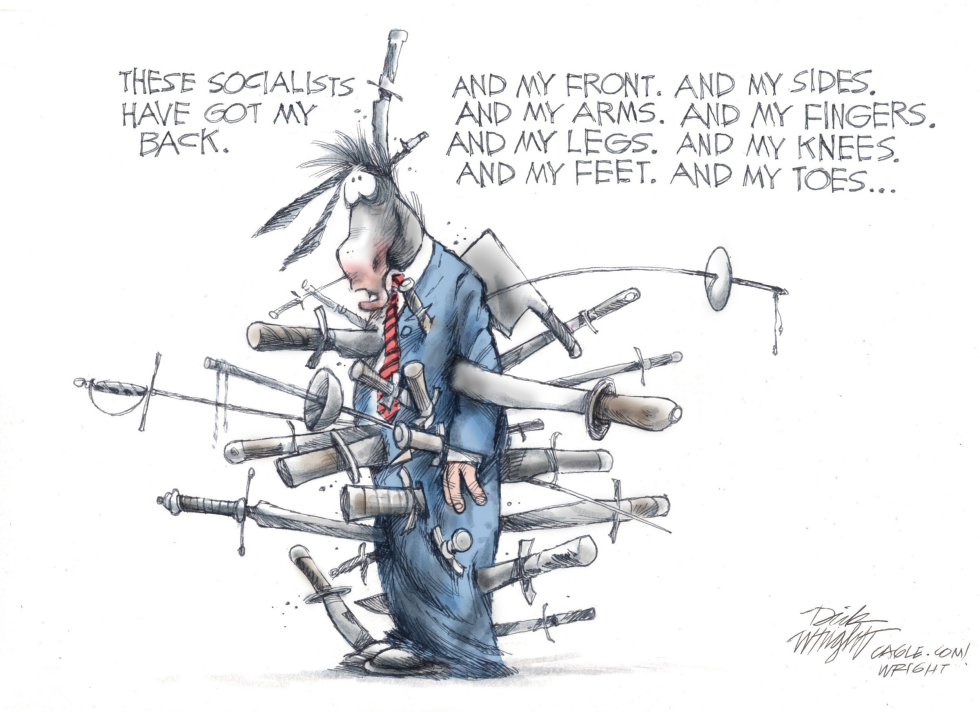
Tensions between socialist factions and mainstream Democrats continue to strain party cohesion ahead of future elections. The cartoon depicts socialists as actively harming the Democratic brand through relentless internal attacks. It argues that such infighting weakens the party's ability to govern effectively and appeal to broader voters.
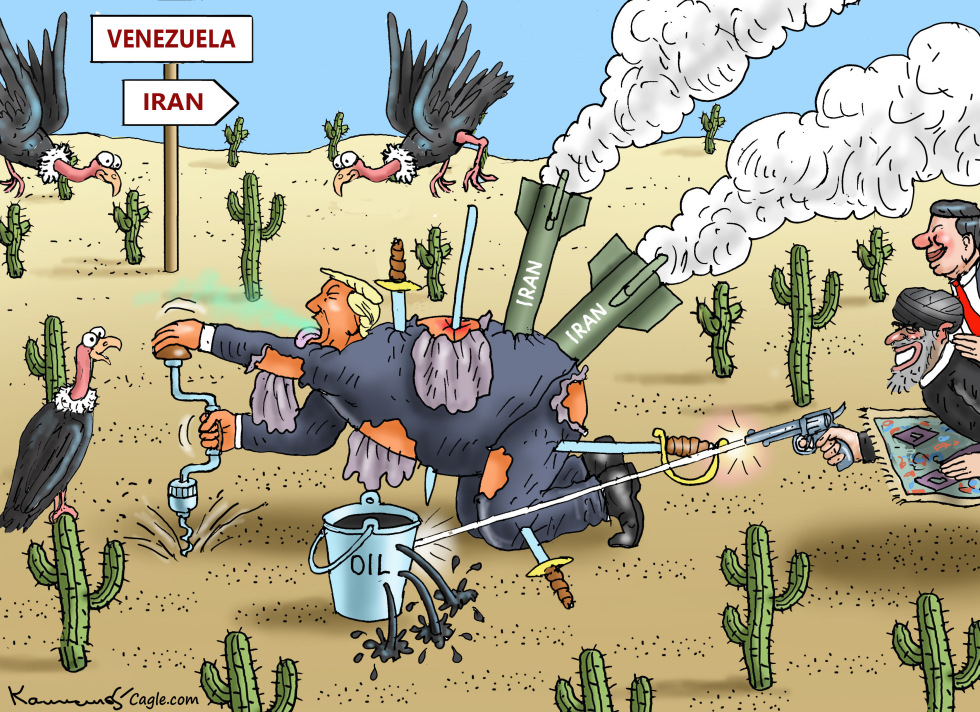
Donald Trump continued efforts to secure oil resources from Venezuela and Iran despite ongoing missile strikes and political pressure from those nations. The moves highlight US energy independence goals amid regional instability. The piece portrays these actions as defiant and opportunistic in the face of direct threats.
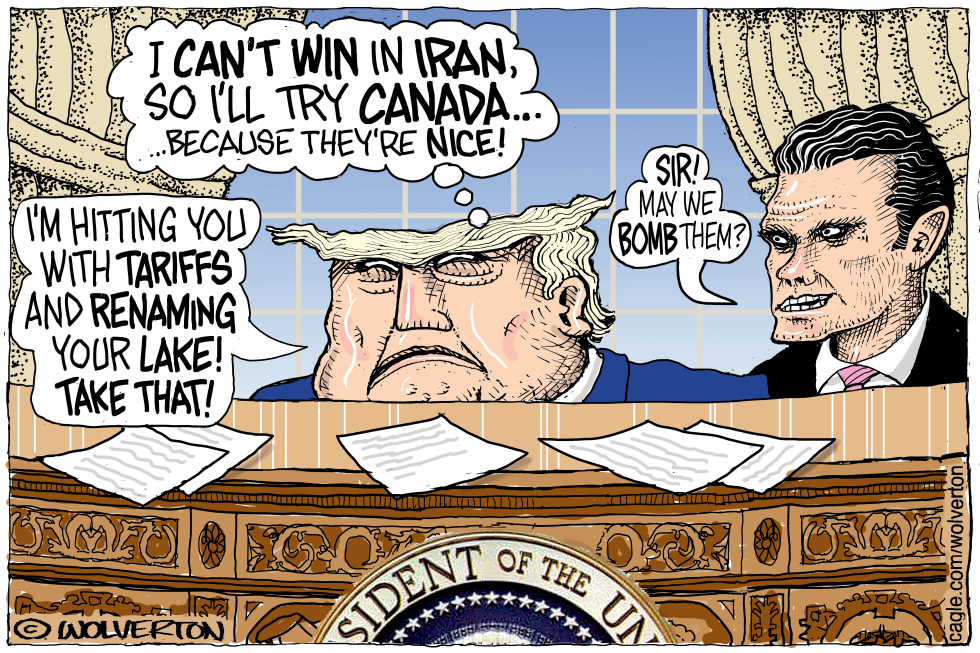
In the cartoon, President Trump appears frustrated at his desk, declaring tariffs and a lake renaming against Canada after setbacks in Iran. His advisor interjects with a suggestion to bomb the northern neighbor. The scene plays on recent trade tensions and foreign policy frustrations as of late August 2026. The visual uses speech and thought bubbles to highlight the shift in targets from a difficult adversary to a more cooperative one. This reflects ongoing debates over tariffs as leverage in international relations.
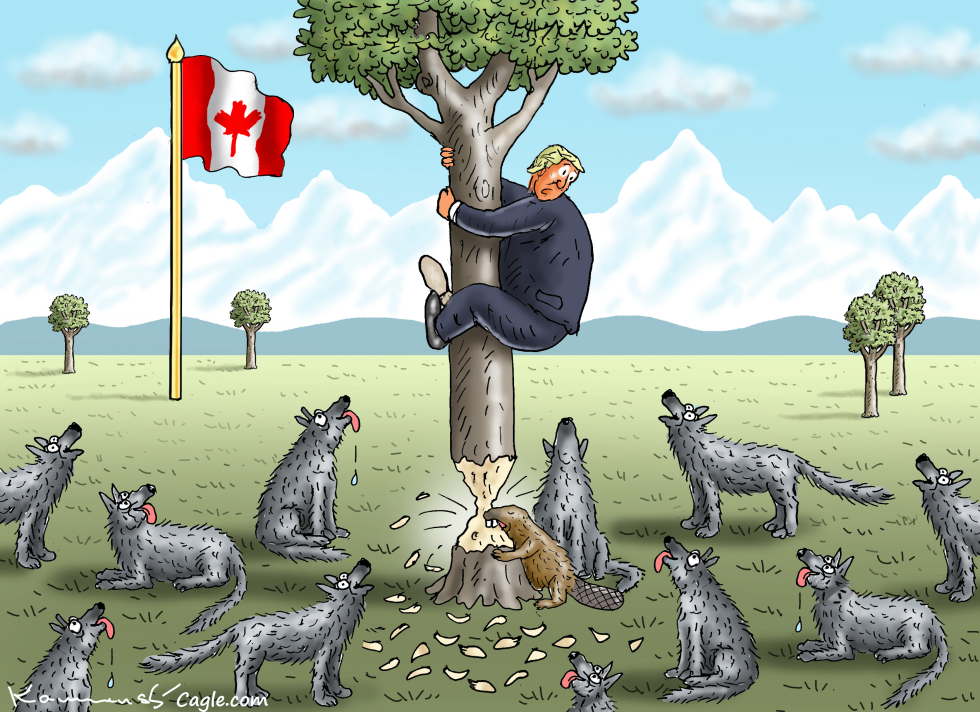
Donald Trump remains entangled in ongoing tensions with Canada over trade and border issues in 2026. The situation highlights persistent friction between the two nations on economic policy. The piece portrays Trump as increasingly isolated by Canadian actions while other actors observe the outcome.
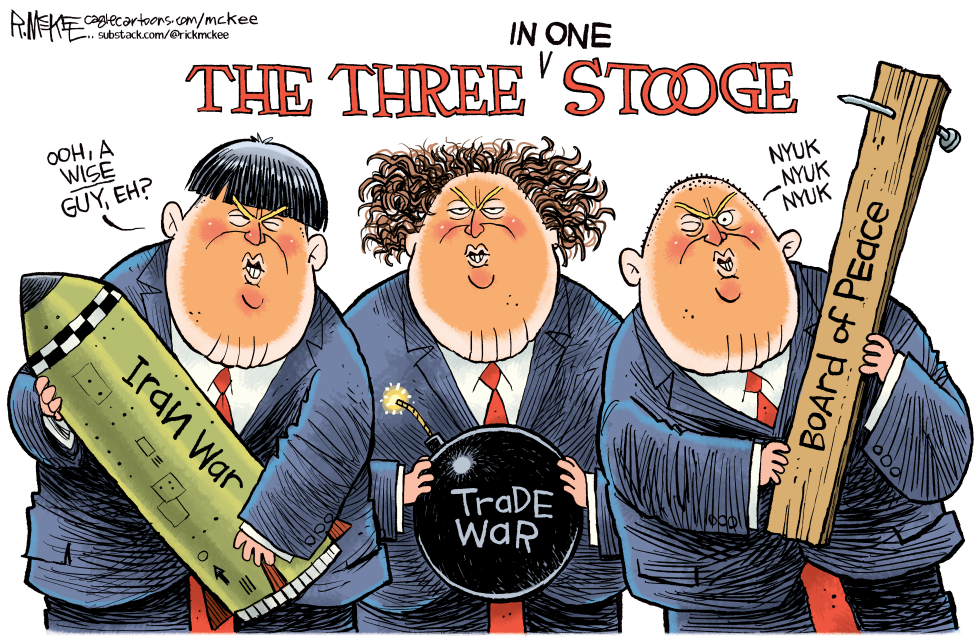
The cartoon depicts three political figures styled as the Three Stooges holding symbols of an Iran War missile, a Trade War bomb and a Board of Peace plank. It responds to ongoing tensions involving Iran policy and trade disputes by using the comedy trio to portray chaotic leadership. The visual argument suggests that efforts at peace coexist with aggressive posturing in both military and economic arenas.
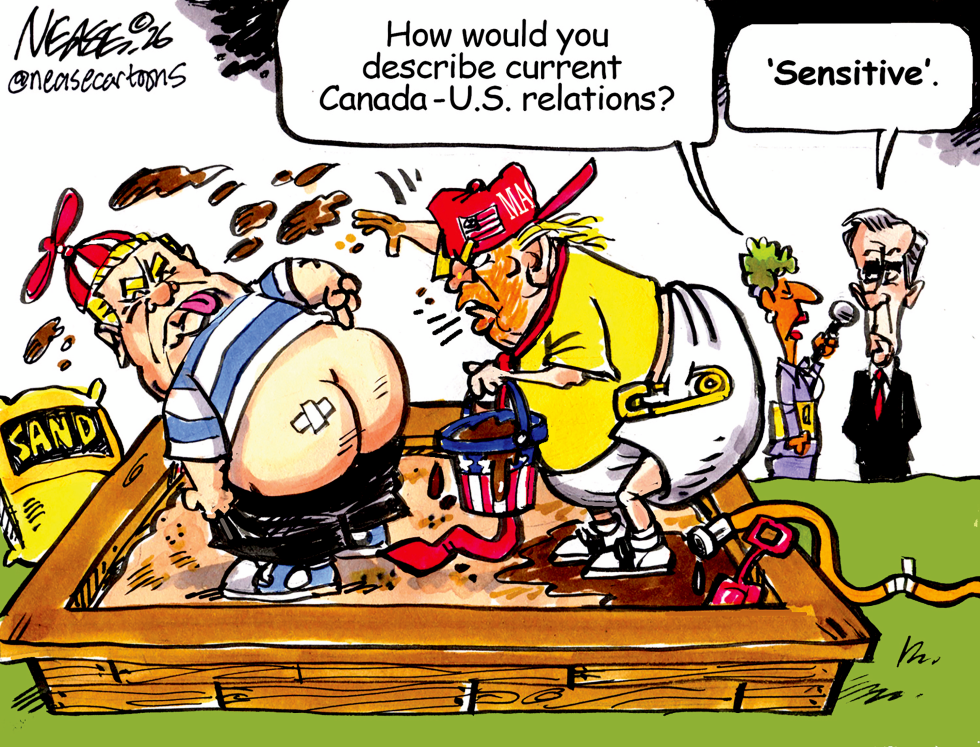
Donald Trump described current Canada-U.S. relations as sensitive during a period of ongoing trade and diplomatic friction between the two nations. The characterization came amid broader tensions over tariffs, border issues, and economic interdependence. The piece portrays the label as understated given the confrontational dynamic between the leaders.
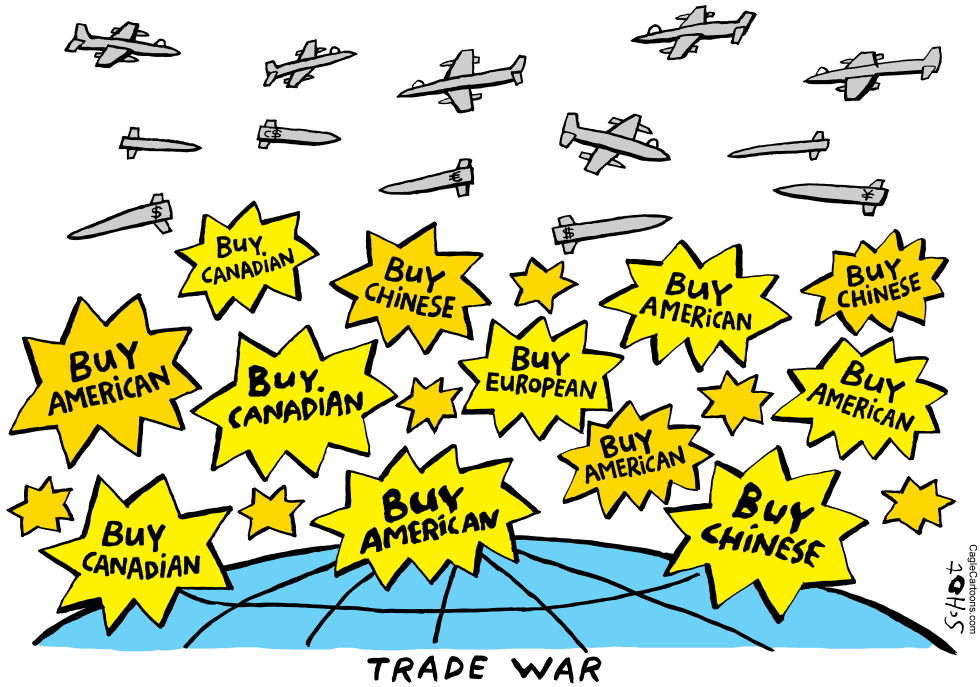
Competing buy national campaigns from multiple countries have intensified trade disputes, raising concerns over economic retaliation and supply chain disruptions. The piece argues these appeals are directly contributing to broader conflict.