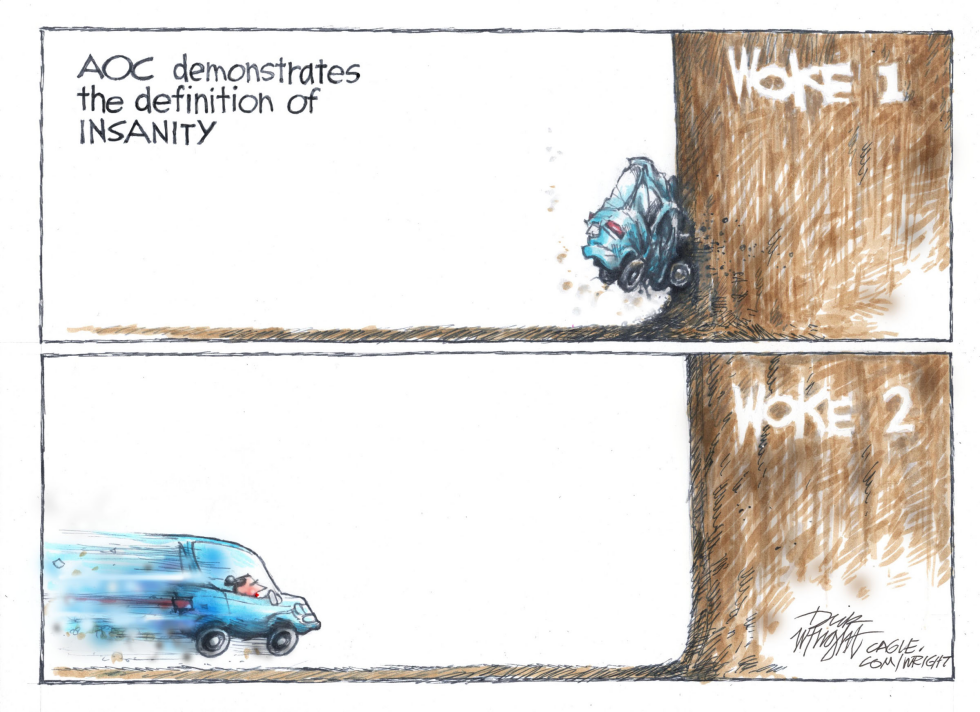
Representative Alexandria Ocasio-Cortez continues to advance progressive policy positions that encounter repeated political and practical obstacles. The cartoon frames these efforts as a cycle of collision and renewed attempts without adjustment. It argues that persistence in the same approach despite clear setbacks defines a flawed strategy.
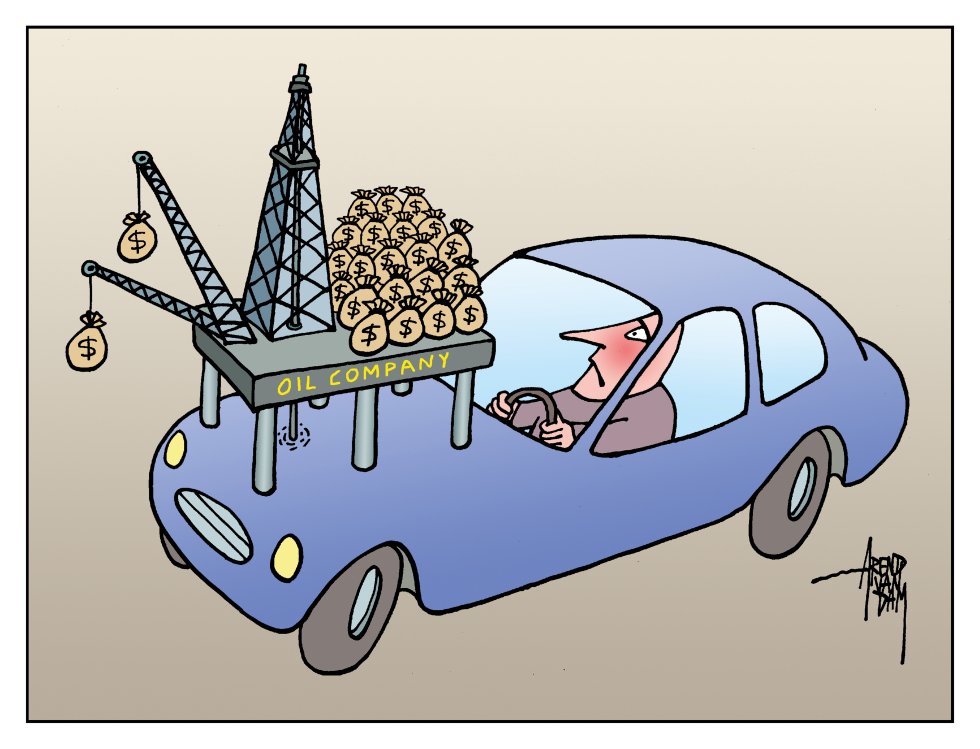
In this pointed political cartoon, an oil company platform sits atop a blue car, loaded with piles of dollar-sign money bags, while cranes dangle more profits. The frustrated motorist grips the wheel, face red with anger, illustrating how excessive profits from oil companies crush consumers at the pump. Tags like excessive profits, motorists, fuel, petrol, and refuel capture the essence, with Iran and Strait of Hormuz hinting at geopolitical tensions driving prices. This visual satire underscores the disparity between corporate windfalls and everyday drivers' pain, a timeless theme in energy politics.
Arend van Dam's cartoon shows a gray battleship marked USA, complete with guns and missiles, driven by a figure in a suit at the wheel, as it goes over a waterfall between rocky cliffs under a blue sky. The image captures the essence of strategy failure in the Strait of Hormuz, tying into themes of Iran, ayatollahs, war, battleship mishaps, Middle East conflicts, oil, gas, energy, and economy. Such visuals often poke at misguided military moves, where the ship's plunge represents a dramatic downfall in strategic planning. The dry humor lies in the absurdity of a warship treating a strait like a river rapid, underscoring potential economic fallout from regional tensions. Cartoons like this thrive on clear, exaggerated metaphors that resonate with readers familiar with global news.
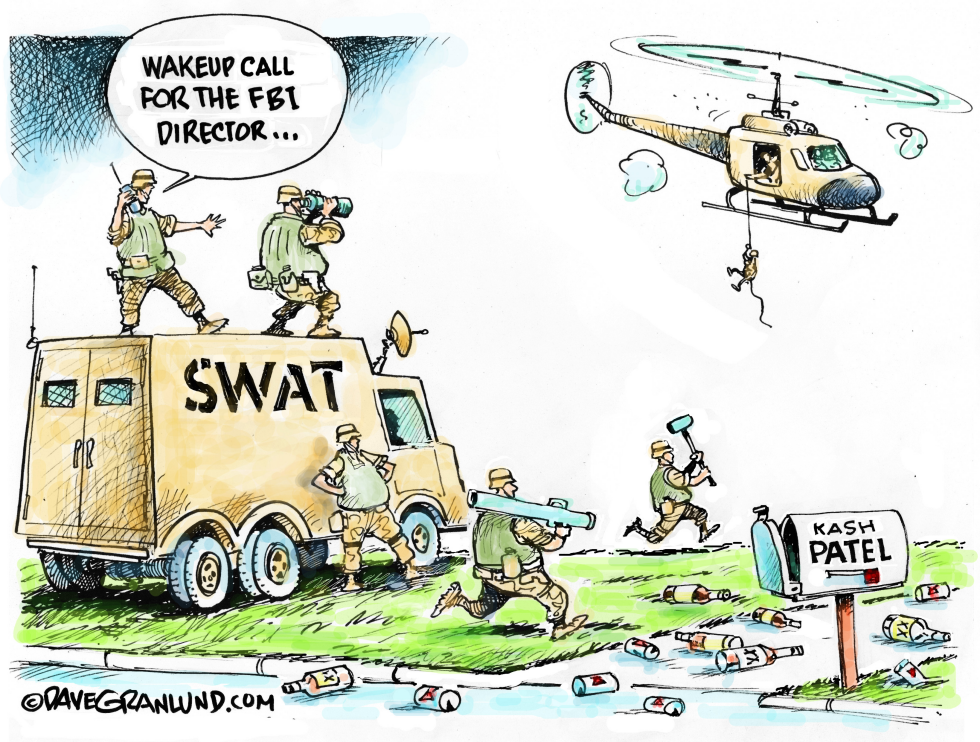
Dave Granlund's cartoon captures a SWAT team descending on Kash Patel's home, marked by a mailbox reading his name, with empty beer and booze bottles strewn across the grass. The scene includes a helicopter with a rappelling officer, a SWAT van, and armed figures advancing, one shouting a 'wakeup call for the FBI director.' Tags like FBI director, SWAT team, wellness check, party guy, alcohol, job, and beer highlight the satirical take on a nominated official's wild lifestyle clashing with high-stakes law enforcement duties. The dry humor underscores the absurdity of a raid as a morning greeting for someone eyed for such a serious position.
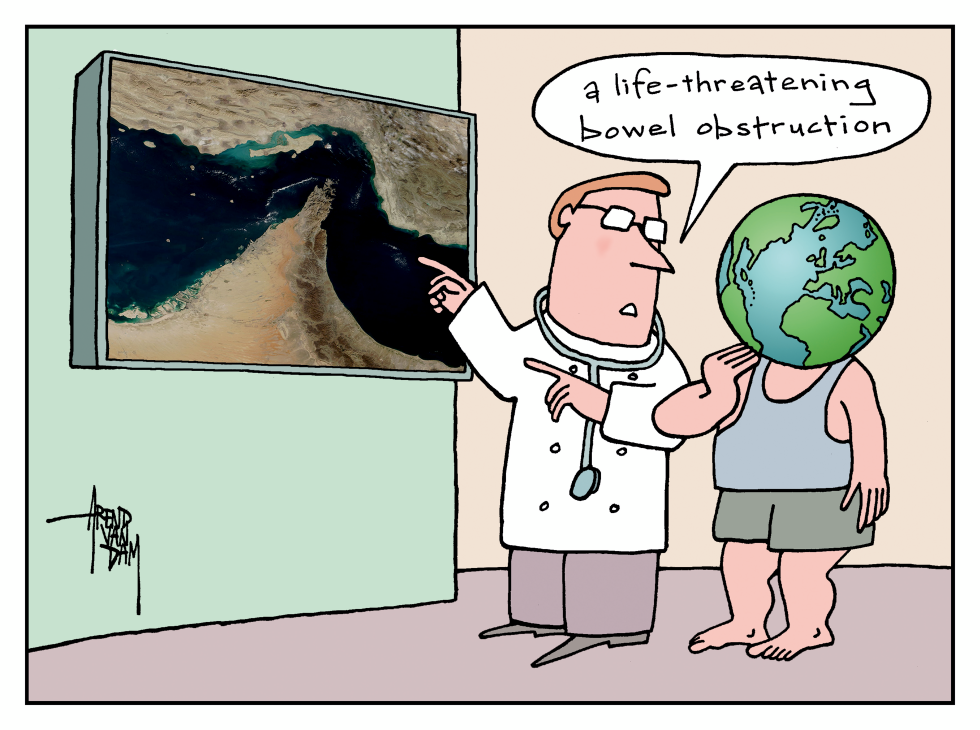
Arend van Dam\'s cartoon depicts a doctor diagnosing a child-like figure with a globe for a head, pointing to a screen showing the Strait of Hormuz as a life-threatening bowel obstruction. This visual metaphor ties into tags such as economy, world, oil, gas, obstruction, and war, illustrating how blockages in key trade routes threaten global stability. The barefoot patient in casual attire underscores vulnerability, while the doctor\'s serious demeanor adds dry humor to the geopolitical satire. Negotiations with ayatollahs and regime sanctions loom in the background, making the image a pointed commentary on how such conflicts create economic chokepoints. The overall composition blends medical analogy with international affairs for sharable impact.
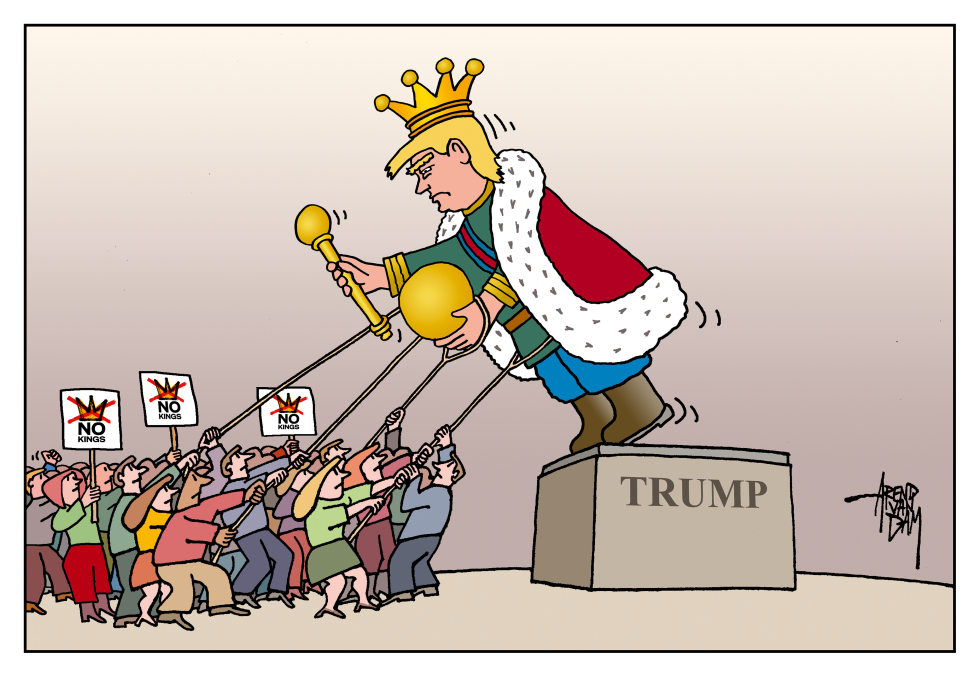
Arend van Dam's cartoon depicts a massive figure resembling Donald Trump, adorned with a crown and royal robe, perched atop a pedestal marked 'TRUMP.' A diverse group of protesters, holding signs reading 'NO KINGS,' 'NO,' and another 'NO,' tug on ropes attached to the figure's scepter, causing it to tilt as if being toppled in an act of resistance. The scene evokes themes of USA democracy clashing with autocracy, portraying a symbolic revolution against a would-be king or dictator. Protests and demonstrations fill the foreground, highlighting public outcry against unchecked power. Dated 2026, the artwork underscores ongoing concerns about authoritarian tendencies in politics.
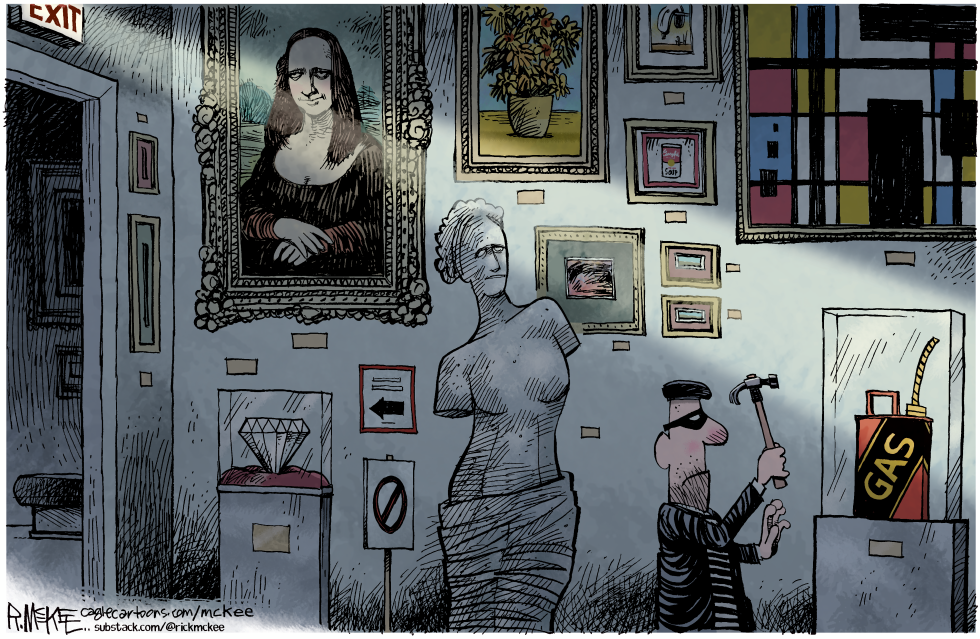
Rick McKee's cartoon depicts a dimly lit museum where a striped-shirted thief, masked and wielding a hammer, targets a display case with a red gas can marked 'GAS,' overlooking iconic pieces like the Mona Lisa portrait, Venus de Milo statue, a large diamond, Van Gogh-style sunflowers painting, abstract Mondrian-like art, and smaller framed works. An 'EXIT' sign glows above, and a 'no' symbol sign hangs nearby. The scene uses tags such as Trump, war, Iran, gas prices, oil, museum to comment on how escalating fuel costs make gasoline more valuable than cultural treasures, blending humor with commentary on energy crises.
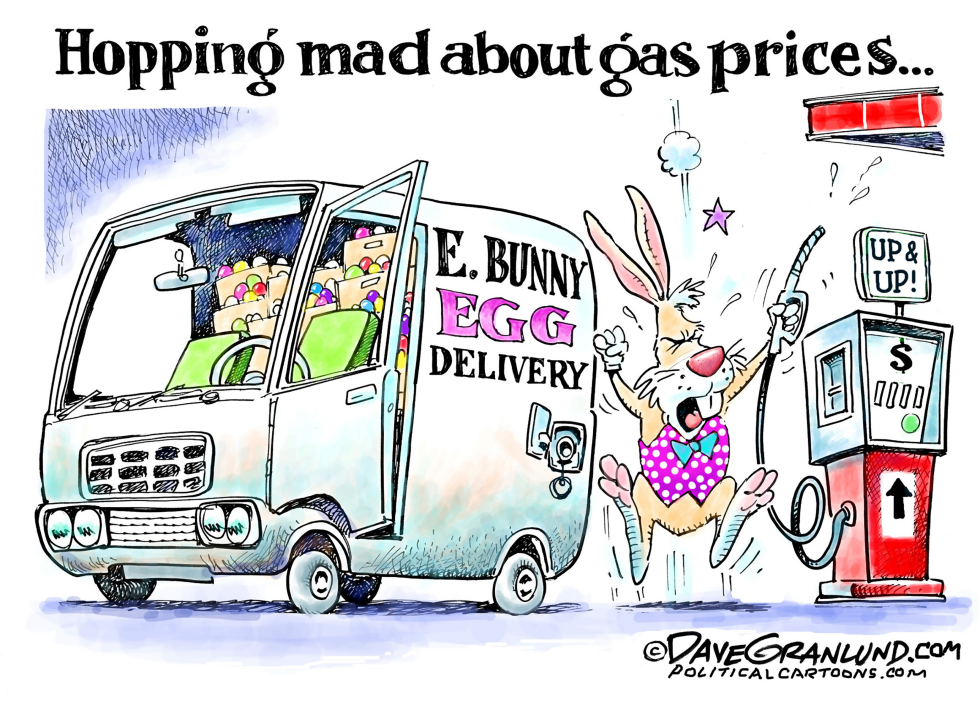
The cartoon depicts an anthropomorphic Easter bunny, dressed in a pink polka-dot outfit, leaping in frustration at a gas pump displaying 'UP & UP!' and dollar signs, while holding a fuel nozzle. Nearby stands a white delivery van labeled 'E. Bunny EGG DELIVERY,' filled with boxes of colorful Easter eggs. The headline 'Hopping mad about gas prices...' ties into the bunny's hopping nature and anger over soaring gas prices. Tags like holiday, easter egg delivery, bunny, gas prices soar, pumps, per gallon, hopping mad, iran war oil hike, and fuel disruption highlight the satire on how rising fuel costs, possibly from geopolitical events, disrupt even whimsical traditions like Easter deliveries. This visual pun combines seasonal cheer with economic frustration, making it relatable for audiences facing high per gallon rates during holiday travel.
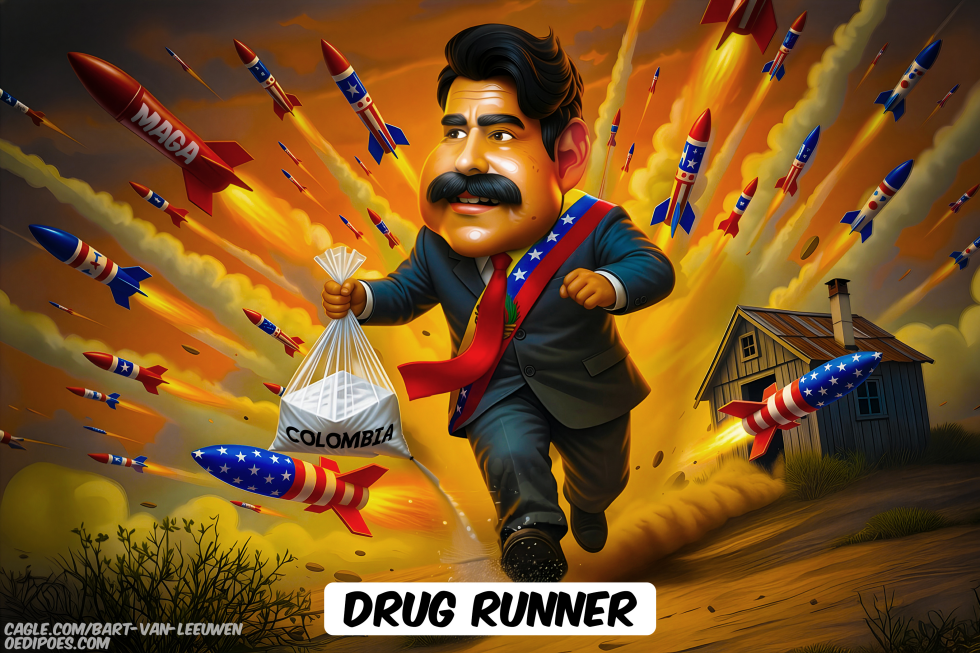
Bart van Leeuwen's cartoon shows a mustachioed man in a suit with a Venezuelan-colored sash sprinting across a dusty landscape. He grips a white bag labeled Colombia, spilling white powder, as missiles decorated with stars, stripes, and MAGA text streak through an orange sky. A small house patterned like the American flag gets hit by a rocket in the background. The bold text Drug Runner labels the scene. This image ties into tags like Nicolás Maduro, Venezuela, tensions, drug runner, regime change, military force, and Caribbean, offering a sharp visual jab at international politics with explosive humor.