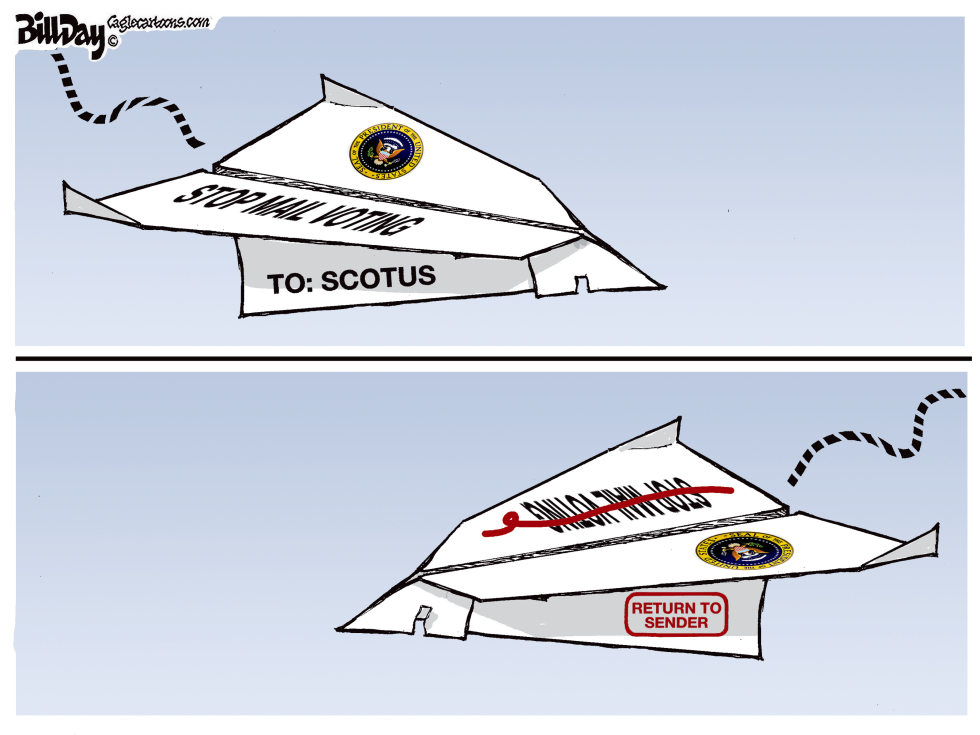
A presidential directive aimed at ending mail-in voting reached the Supreme Court but was promptly returned. The action underscores ongoing disputes over election procedures and access. The cartoon frames the effort as an unsuccessful attempt to restrict voting methods through judicial channels. It highlights institutional pushback against executive intervention in ballot processes. The piece takes the position that such restrictions lack support and are properly rebuffed.
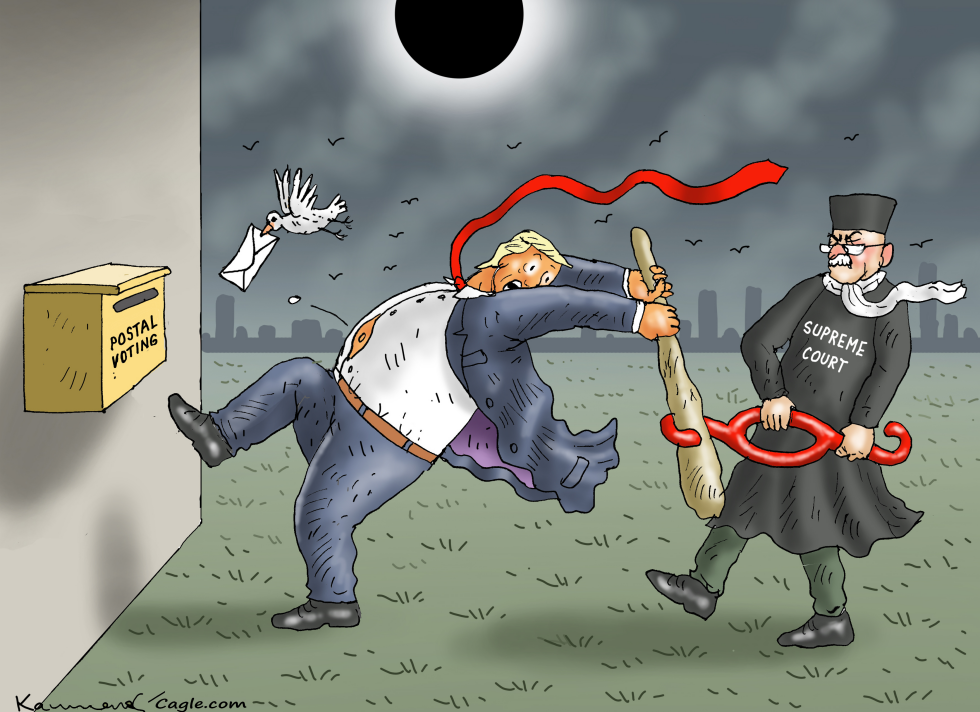
The Supreme Court has moved to restrict efforts by former President Trump to limit or challenge postal voting ahead of the 2026 midterms. The ruling comes as both parties prepare for a high-stakes contest that could determine control of Congress. Trump allies have pushed measures they say protect election integrity while critics see them as attempts to suppress turnout. The decision underscores the court's continuing role in shaping voting rules. The cartoon portrays the court as a necessary check on Trump's aggressive tactics.
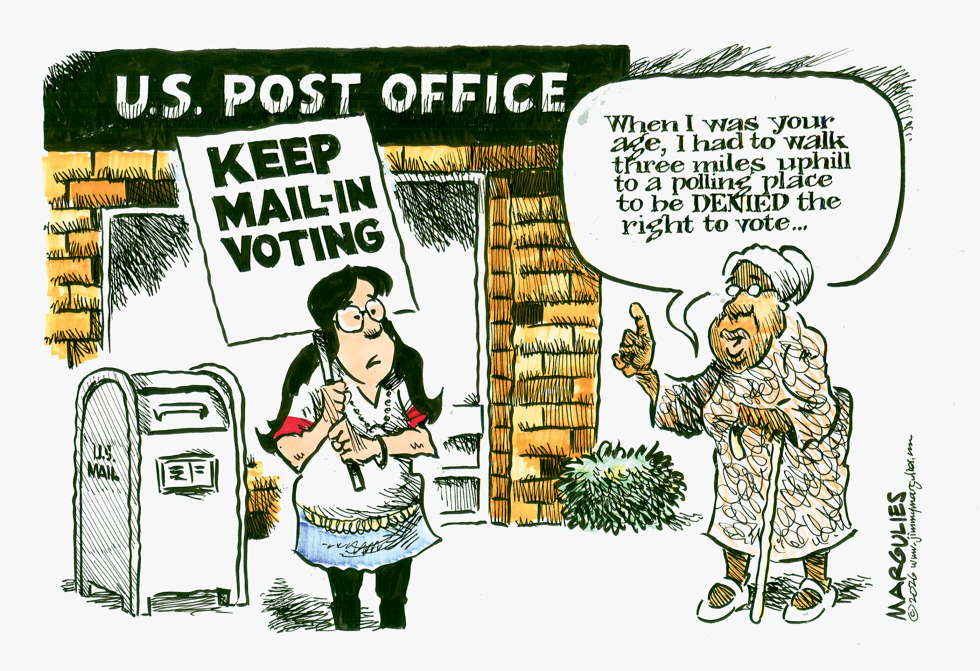
A protest sign at a U.S. Post Office calls for an end to mail-in voting. The cartoon responds to ongoing state-level efforts to restrict mail ballots after expanded use in recent elections. Such limits disproportionately affect older voters and those with mobility issues who previously faced physical barriers at polling places. The piece argues that rolling back mail-in options revives the very obstacles elderly citizens once endured, undermining broader access to the ballot.
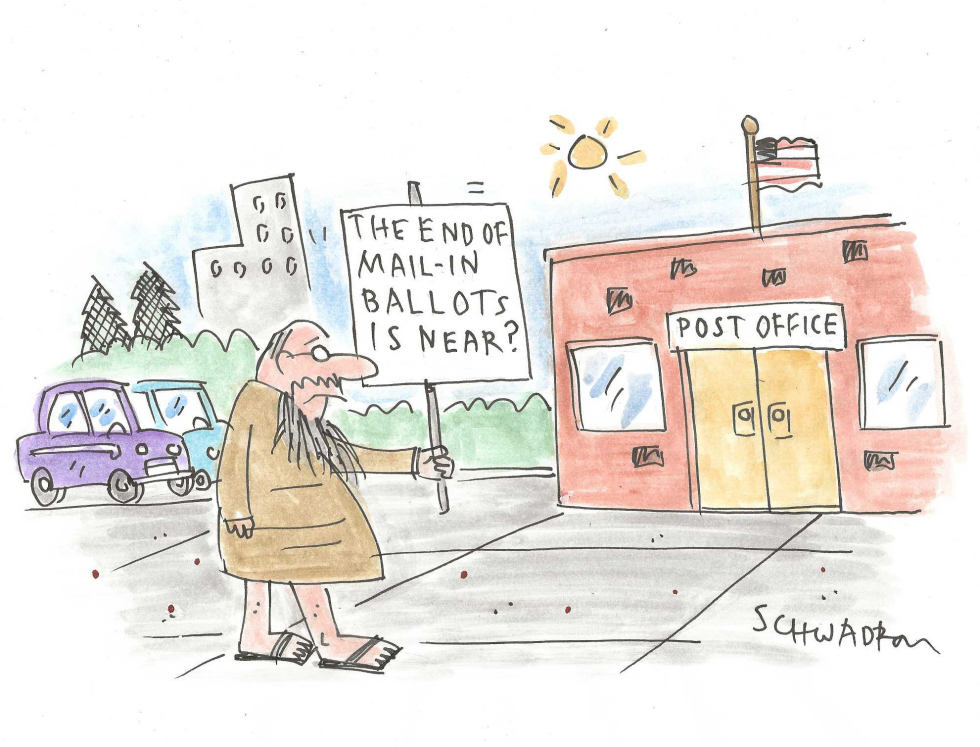
Proposals to restrict or end mail-in ballots have gained traction in several states ahead of upcoming elections, prompting concerns from voting rights advocates about reduced access for elderly, rural, and disabled voters. The post office has long served as a key conduit for absentee ballots. Critics argue the changes prioritize unproven fraud concerns over convenience and turnout. Supporters say tighter rules restore confidence in results. The cartoon frames the debate as an abrupt shift that could sideline a proven voting method.
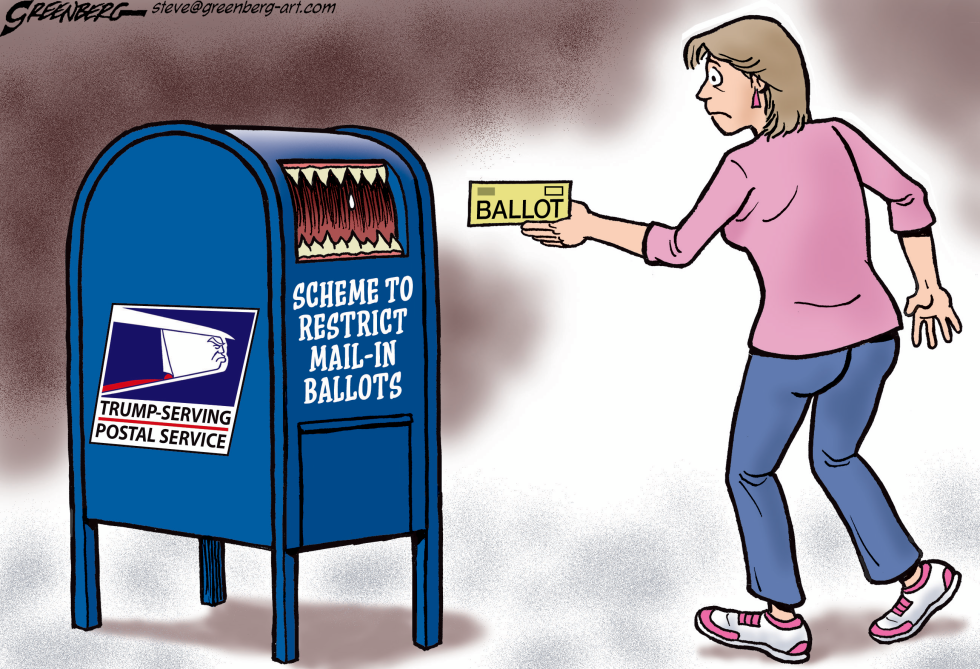
The U.S. Postal Service under Trump influence has implemented measures to restrict mail-in ballots ahead of the 2026 elections. These actions limit voter access through operational changes and heightened scrutiny of mail ballots. The moves raise concerns about equitable participation in elections. Critics argue the changes disproportionately affect certain voter groups and undermine trust in the process. The cartoon portrays the postal service as actively hostile to mail-in voting, framing the restrictions as a deliberate scheme to suppress turnout.
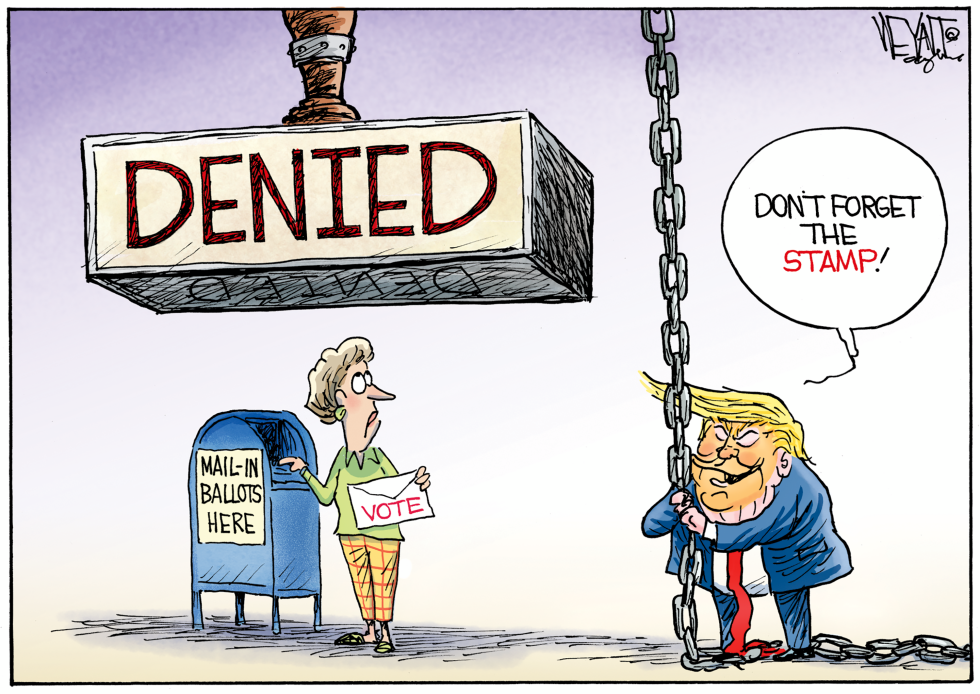
President Trump has directed efforts to deny mail-in ballots in the 2026 election cycle, citing concerns over fraud and integrity. The move affects millions of voters who rely on absentee and mail voting. Critics argue the policy suppresses turnout and favors in-person Republican voters. The cartoon portrays Trump personally enforcing the denial mechanism.
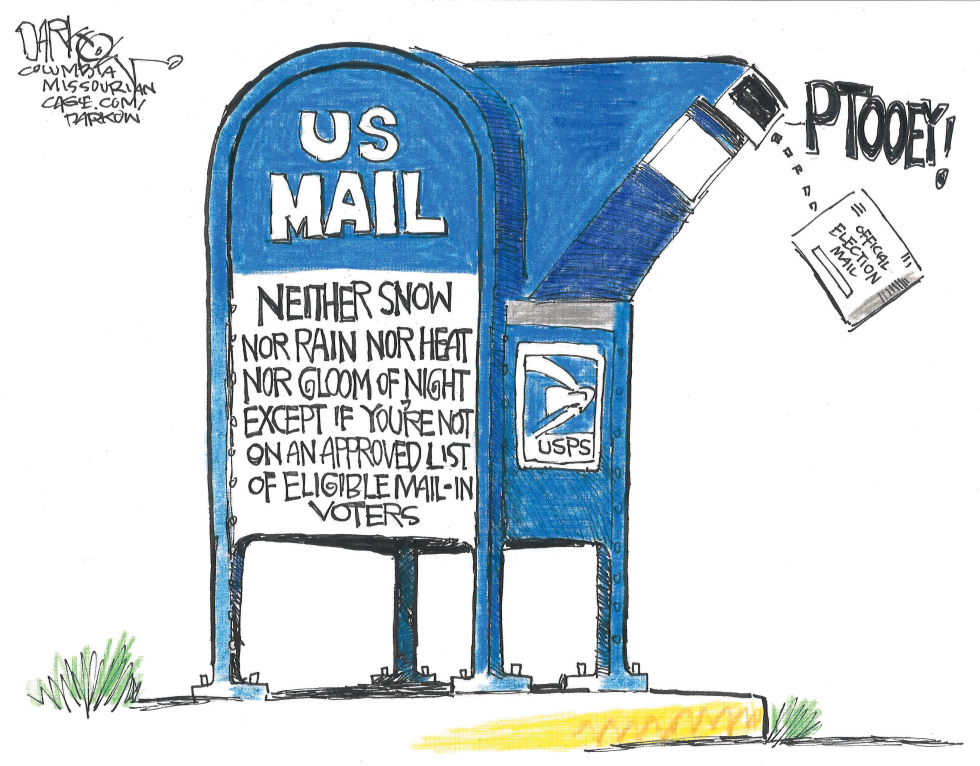
A USPS mailbox rejects mail-in ballots unless the sender appears on an approved list of eligible voters. The action highlights ongoing debates over mail voting security and access ahead of elections. Critics argue such restrictions disproportionately affect certain voter groups and undermine confidence in the postal system. Supporters claim the measures prevent fraud. The cartoon portrays the mailbox as actively enforcing these limits, suggesting institutional barriers to participation.
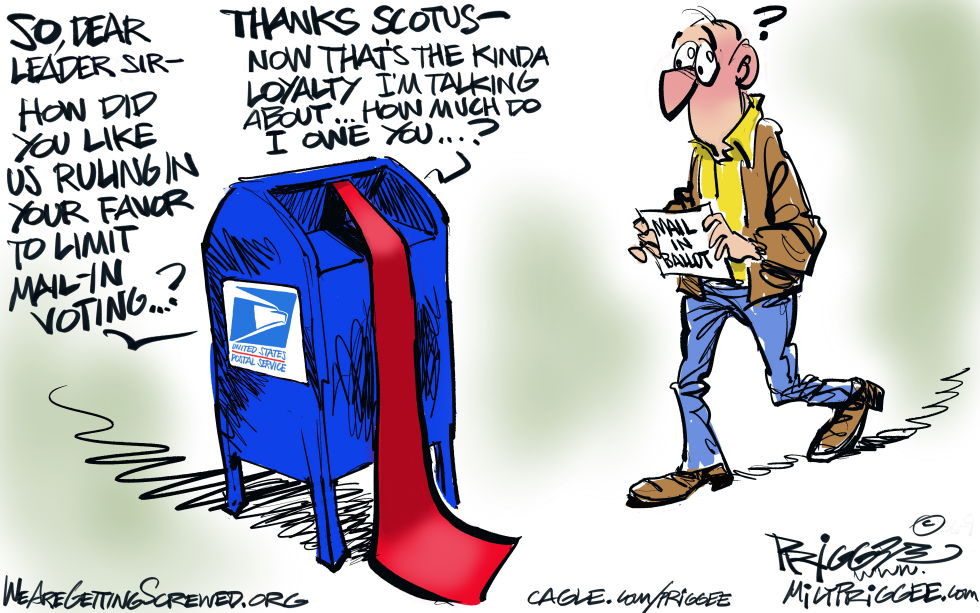
The cartoon shows a voter holding a mail-in ballot and questioning a USPS mailbox about a Supreme Court ruling that limited mail-in voting in favor of a political leader. The mailbox responds with thanks for the loyalty and an offer to pay. The image highlights concerns over judicial influence on elections and voter access as of the 2026 publication date.
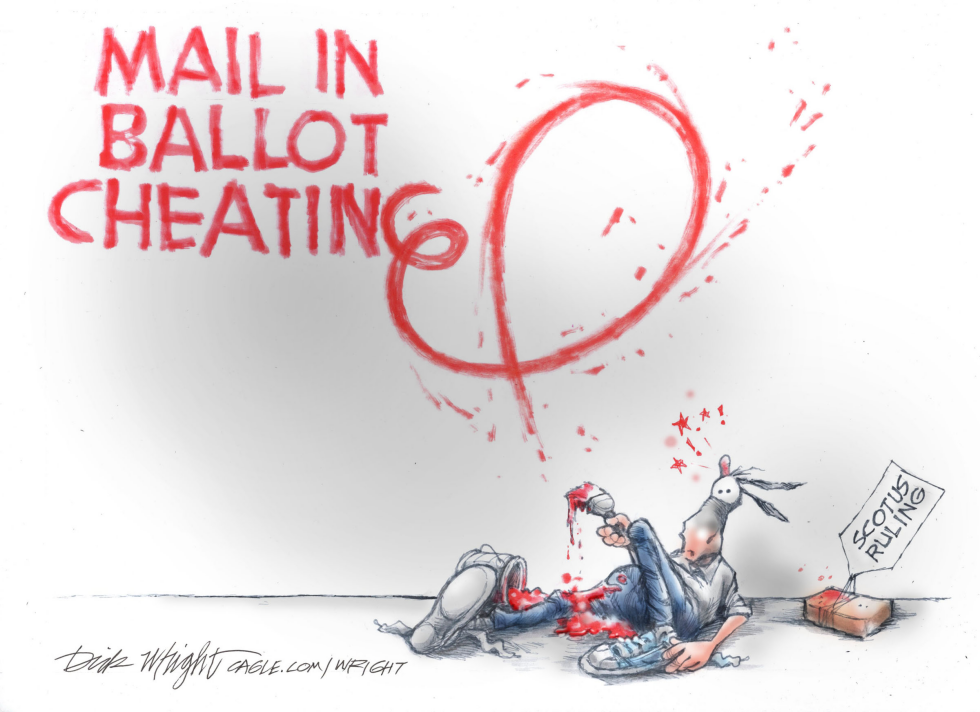
The image depicts the Democratic Party symbol as a donkey lying wounded on the ground with red liquid visible near its body. A large red prohibition symbol covers the words mail in ballot cheating at the top. A sign reading SCOTUS ruling stands nearby next to a box. The composition responds to a Supreme Court decision limiting certain mail-in ballot procedures. The visual argument centers on claims of reduced opportunities for improper voting practices. Publication occurred on August 25 2026. The work uses the party emblem to illustrate the effect of the ruling on one political side. No specific prior case details appear in the image itself.
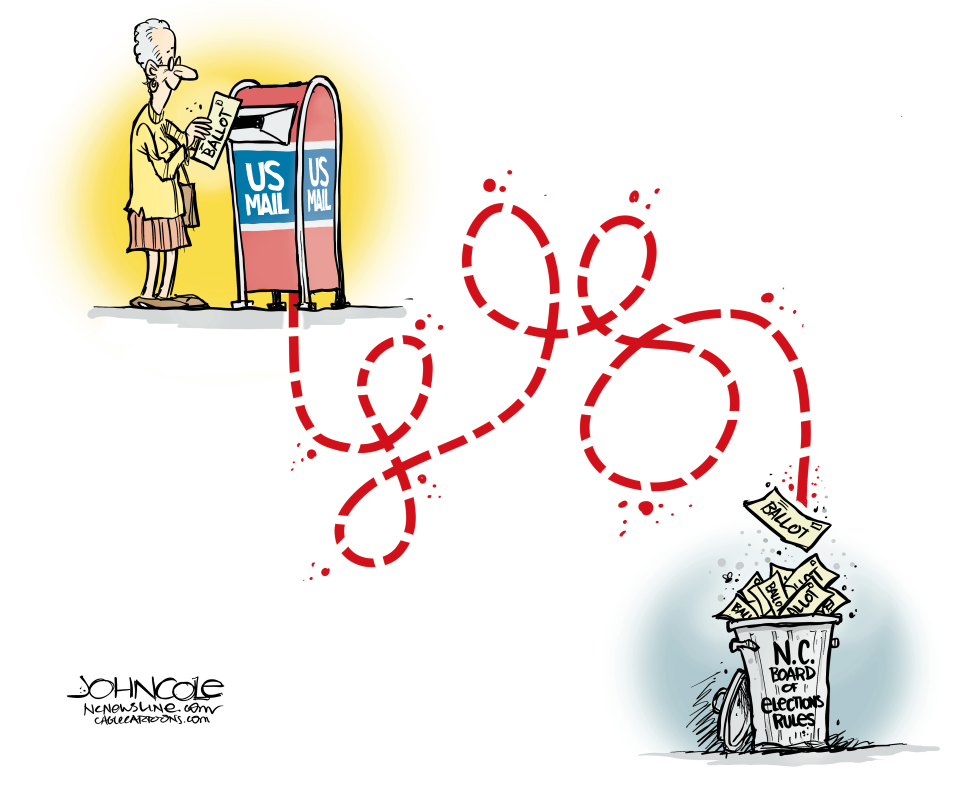
North Carolina election officials have implemented rules that invalidate or discard large numbers of mail ballots. The changes affect voter access in the state. The editorial criticizes the policy as an unnecessary barrier to participation.
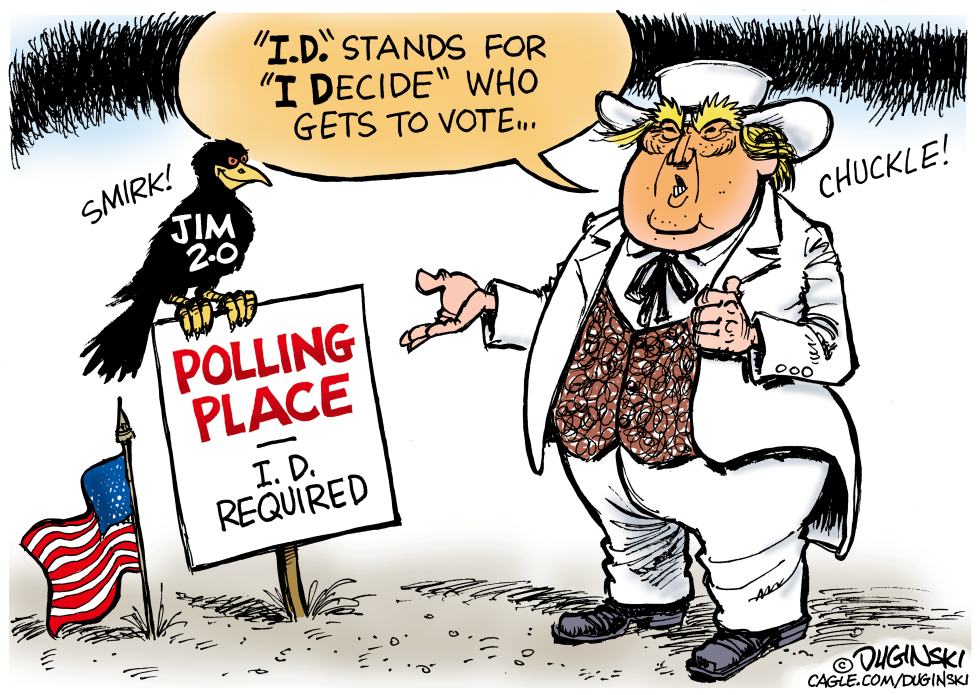
A new political cartoon depicts Donald Trump redefining voter ID requirements at a polling place. The former president, shown in a white suit and hat, gestures toward a sign stating I.D. REQUIRED while a bird labeled JIM 2.0 smirks nearby. The bird's speech bubble states that I.D. stands for I DECIDE who gets to vote. Trump chuckles at the line. The image, published July 8, 2026, uses the Jim Crow reference to comment on ongoing debates over voter identification laws and access to the ballot. The cartoon ties the visual to concerns that such rules could limit participation in elections.
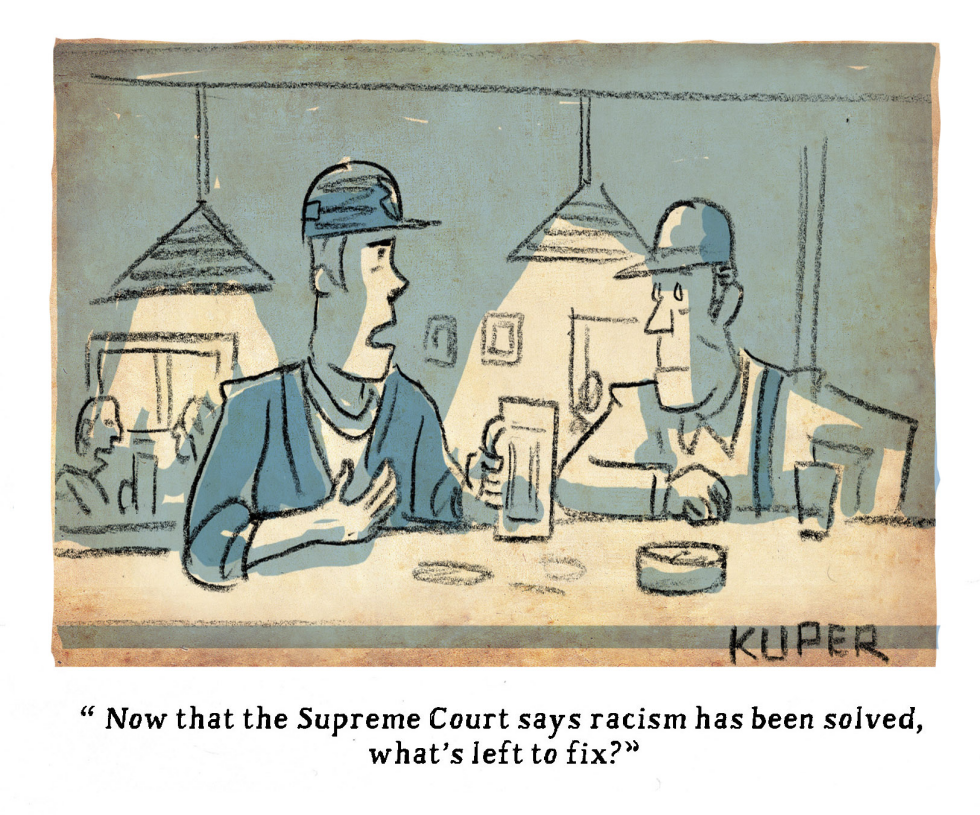
The cartoon depicts two men at a bar reacting to a Supreme Court decision on the Voting Rights Act. One asks what is left to fix now that racism is declared solved. The image responds to recent rulings affecting redistricting and voter access in states like Louisiana. Justices including Roberts and Thomas are referenced in related tags. The piece highlights ongoing debates over race and electoral rules.
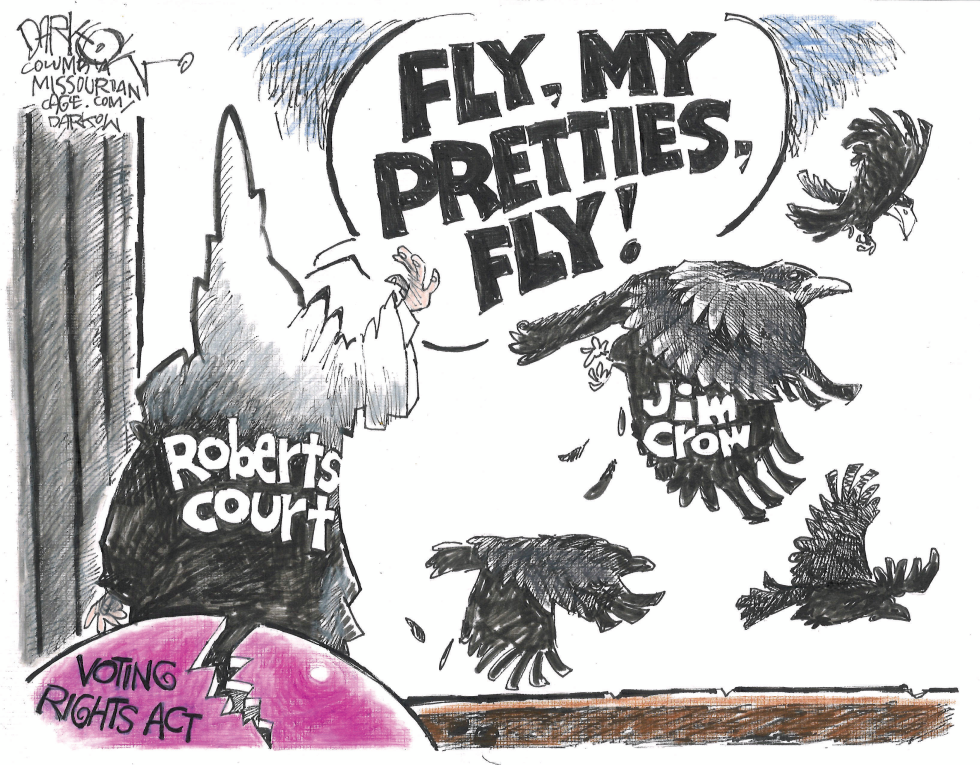
On May 2 2026 the cartoon depicts the Roberts Court as a bird-like figure shattering the Voting Rights Act. The image shows the court releasing multiple Jim Crow labeled birds into the air. This visual responds to ongoing Supreme Court actions affecting voting access and redistricting rules.
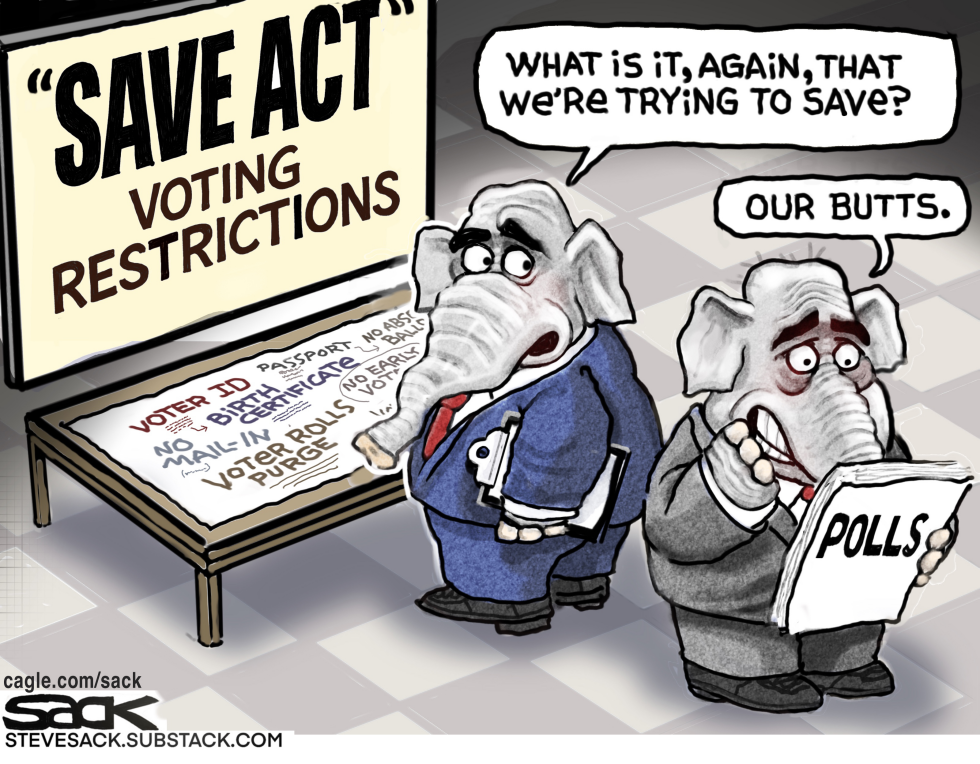
Two anthropomorphic Republican elephants stand before a large sign listing the SAVE Act and voting restrictions including voter ID, passport, birth certificate, no mail-in ballots, voter roll purges, and limits on early and absentee voting. One elephant points to the list while the other, holding a paper marked POLLS, answers a question about what they are trying to save by replying our butts. The scene comments on Republican support for the Safeguard American Voter Eligibility Act and related measures aimed at requiring proof of citizenship and tightening ballot access.